
Mustad 4046
Bridgeport Snapper Hooksc. 1900-1930
Save this hook to your account to build a list you can come back to.
Record summary
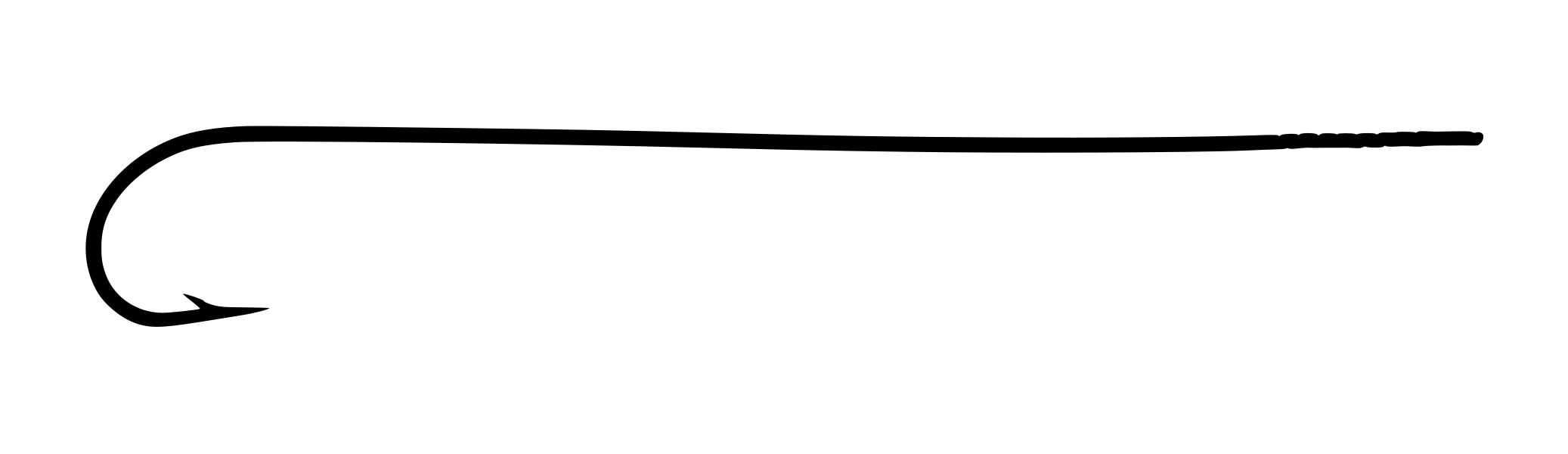
Mustad model 4046, Bridgeport Snapper Hooks, is a bait hook from the early 20th century Norwegian period. The hook features a blind, marked (ridged) shank of extra-extra long proportions, fine wire gauge, and a narrow gap with a hollow point. The configuration is specifically engineered for live bait presentation—the long shank accommodates bait positioning and the marked shank provides grip for wrapping and knotting without a formed eye.
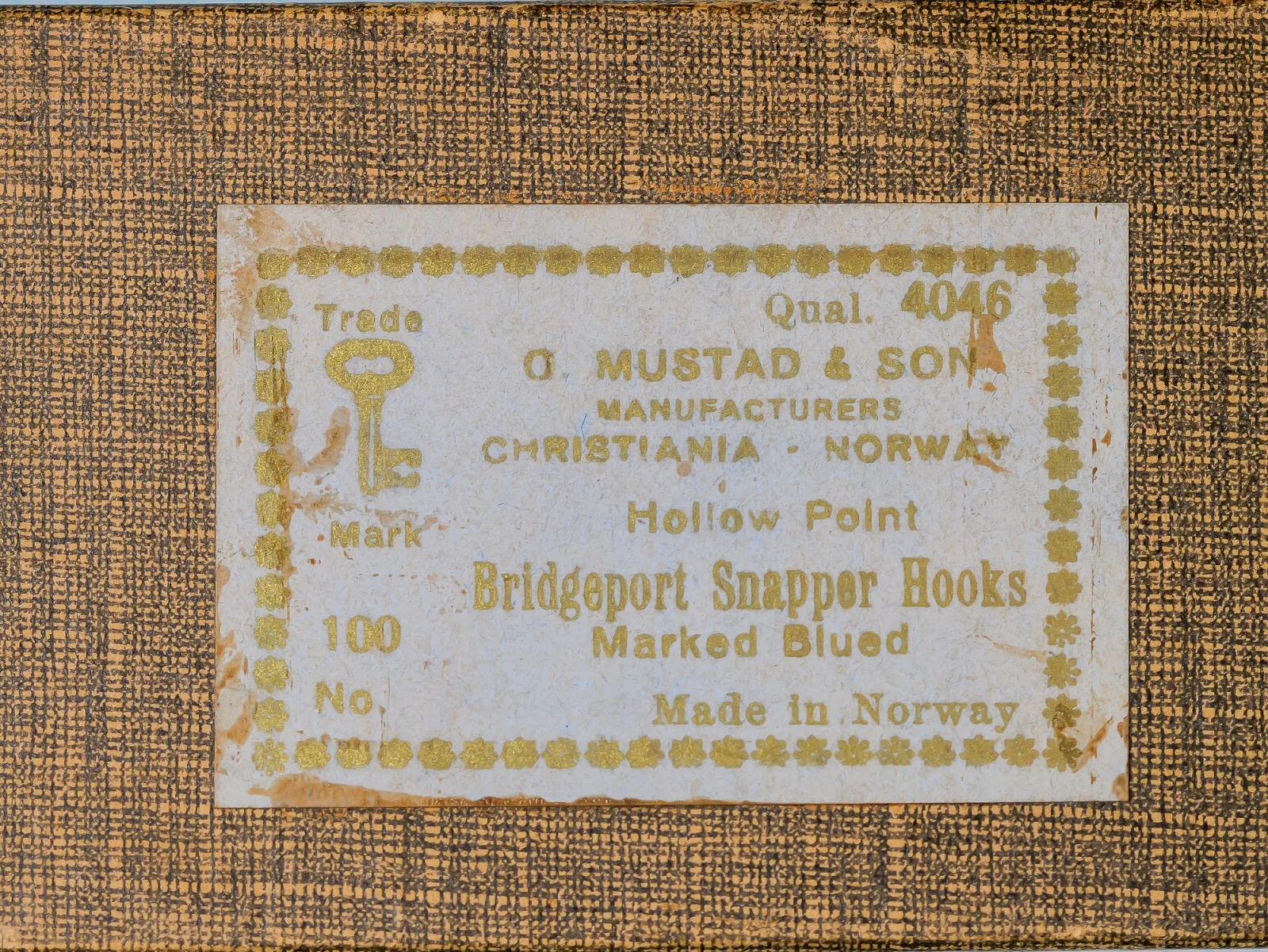
The blued finish is factory-confirmed on the original packaging, which identifies the hook as “Made in Norway” under the Treda brand mark registered to O. Mustad & Son, Christiania. The shank features lateral ridges characteristic of Mustad’s bait-hook construction tradition, intended to prevent the knot from slipping during use.
The specimen is housed in the original rigid manufacturer box, a format substantially rarer than the card-mounted equivalents typical of Mustad’s fly-hook output. Complete boxed examples of this model are uncommon in the collector market and are sought by specialists in vintage bait tackle and Redditch-era Mustad production.
Photographic record
3 cataloged imagesSelect any record to load it above.
3 images shown
Technical profile
Bind Eye | Carlisle | Extra-Extra Long | Fine Wire | Hollow Point | Blued
- Eye
- Blind — Marked Shank Blind marked shank with transverse ridges. The shank terminus is rounded without a hammer-flatted spade end (distinguishing this from blind-flatted variants). Ridge depth is approximately 0.02 inches, cut perpendicular to the shank axis at roughly 0.08-inch intervals E. Ridge design provides mechanical purchase for knot wrapping without requiring thread binding or a formed eye.
- Wire
- Fine (1X Fine), Round
- Shank
- Extra-Extra Long (XXL) — Marked / Ridged
- Bend
- carlisle, Narrow gap, Offset / kirbed Carlisle bend is regular rounded form without pronounced angularity. Bend symmetry is true to the shank centerline. The curve creates a functional gape of approximately 0.38 inches, suitable for live minnow baits in the 2–4 inch range. Wire set is clean with no visible flatting or work-hardening defects P. The bend terminates into a relatively straight lower shank suitable for knot wrapping.
- Point
- Hollow Point (concave inner face) Barb is short and close-cut, positioned approximately 0.15 inches above the point. The barb angle is acute, swept rearward in line with the point taper. Barb size is standard for bait hooks of the period—modest relative to fly-hook barbs P.
- Finish
-
Blued — Confirmed (stated on packaging) Blued finish exhibits cool blue-grey oxide characteristic of heat-blued steel. The finish tone is uniform across the specimen with slight worn areas visible on the bend interior where handling or packaging contact has abraded the coating. The finish is confirmed on the original packaging label V. The blued coating is thin, consistent with period practice, allowing underlying steel texture to remain faintly visible under magnification P.
Original box lid shows light toning and foxing characteristic of aged kraft paper. Printing remains legible. Hook specimens visible through label area appear bright blued with no corrosion. No missing hooks observed in photographed count.
The Carlisle bend is a deep, rounded curve with minimal angular structure—it creates a wide gape relative to the shank and promotes hookset penetration with minimal hook-to-fish leverage required. The hollow point geometry features a concave inner face that narrows sharply toward the tip, creating a knife-edge effect that maximizes point acuity. This point style was standard for bait hooks of the era, as it reduced the force needed to penetrate fish scales and the thicker jaws of larger species.
The blind marked shank eliminates the weight and bulk of a formed eye, instead terminating in a flat or slightly tapered paddle end fitted with transverse ridges. The angler would wrap the monofilament or gut leader directly around the ridged section, with the ridges providing mechanical grip to prevent slippage during the cast and fight. This construction was especially valuable for live bait rigging, where the hook had to accommodate repeated adjustments and re-knotting in field conditions.
Fine wire gauge was chosen to reduce water resistance during the cast and to allow the hook to sink more slowly—desirable for presentations where the bait needed to remain in a specific water column. The offset kirbed geometry (point deflected to the left when viewed from above) is typical of bait hooks and may have reflected fishing tradition or improved hook retention in species-specific mouth geometries.
Own this hook? Help us measure it.
This pattern was made in sizes 1 (V). We don't have any measurements for it yet. Own one? Submit calipered measurements and we'll review and add them. Thank you!
Historical context
mustad
O. Mustad & Son was founded in 1832 in Gjøvik, Norway, by Ole Mustad. The firm became one of the largest industrial hook manufacturers in the world by the early 20th century, establishing itself as a major rival to the English Redditch manufacturers. By the 1880s, Mustad had developed an extensive product line serving both fly fishing and bait fishing markets, with distribution networks throughout Europe and North America.
The Gjøvik factory pioneered industrial forging techniques that allowed mass production of hooks while maintaining quality control. Mustad’s blind-shank bait hooks, including the Snapper series, were specifically engineered for commercial and recreational bait fishing. The company registered multiple brand marks during this period, including the Treda key motif, to differentiate product quality grades and establish consumer recognition.
By the early 20th century, Mustad was exporting hooks to the United States under the “Bridgeport Snapper” designation—Bridgeport, Connecticut was a major American fishing hub and hook distribution center. The model 4046 represents Mustad’s push into the American bait-hook market during an era when live bait fishing dominated recreational and commercial angling.
Series History
The Bridgeport Snapper series was Mustad’s commercial-grade bait hook line, marketed specifically for American fishers targeting snappers and other medium-sized saltwater and freshwater species. The “Snapper” name refers to the target fish rather than a hook design feature—the line was broadly applied to any hook model designated for snapper angling applications.
The model 4046 in particular represents a blind-shank Carlisle variant optimized for live bait presentations. The extra-long shank accommodated live minnows and larger baits, while the marked (ridged) shank provided knot security without a formed eye. The narrow gap relative to the long shank was intentional—it created a compact bite geometry suited to smaller-mouthed target species.
Production of the 4046 likely spanned the 1900s through the 1930s, with surviving examples becoming increasingly rare after World War II as modern fly-tying and monofilament tackle gradually displaced traditional bait-hook formats. The original packaging format—the rigid manufacturer box—adds to the rarity, as most Mustad hooks of the era were distributed on cards rather than in boxes.
Era and Packaging Dating
No barcode present (barcodes not adopted until 1970s minimum). "Christiania" reference on packaging — Christiania was the official name of Oslo, Norway until 1925, after which it was officially renamed. Label printing style, paper stock, and decorative border design are consistent with early-1900s to 1920s offset lithography. Kraft box construction with affixed label is typical of Mustad's pre-war packaging. Treda brand mark (key motif) is consistent with Mustad's early trademark registrations. "Made in Norway" marking indicates post-1890s export labeling. Combined evidence suggests production circa 1900-1925, with possible continued distribution into early 1930s.
Bridgeport as Marketing Strategy
The "Bridgeport" designation on early Mustad boxes reflects American manufacturing geography and trade routes rather than the hook's origin. Bridgeport, Connecticut was the primary U.S. distribution hub for imported hooks and fishing tackle in the early 20th century, and Mustad exported thousands of hooks through Bridgeport-based importers. American retailers would rebrand these hooks with local place names to suggest domestic manufacture and build consumer confidence. A hook labeled "Bridgeport Snapper" was actually Norwegian-made but marketed as American to overcome tariff barriers and nationalist purchasing preferences during the pre-1920s era.
Design lineage and influence
The Carlisle bend design predates Mustad’s adoption by several decades—the form is rooted in 19th-century English hook design traditions from the Redditch manufacturers. Mustad licensed or copied the Carlisle profile during its establishment of international manufacturing competitiveness in the 1880s–1900s. The marked-shank blind construction, however, appears to be a Mustad innovation, developed specifically to reduce eye bulk in bait-hook applications where the angler required full control over knot placement.
Contemporaneous competitors included S. Allcock & Co.’s blind-shank bait hooks (which featured different ridge patterns and sometimes spade-ended variants) and locally produced American hooks by manufacturers like Wright & McGill. Mustad’s commercial advantage derived from industrial forging consistency and aggressive export pricing, allowing the company to establish market dominance in American and Northern European markets by the 1920s.
The 4046 line likely persisted into the 1940s–1950s, but monofilament leader lines and modern formed-eye construction gradually displaced the marked-shank format. Modern bait-hook descendants retain the general shank-length and gap geometry but universally employ ball or tapered eyes, rendering the marked shank primarily of historical interest.
Best matchRelated by Attribute
| Silhouette | Hook Model | Match | Analysis | Compare |
|---|---|---|---|---|

|
3705 No. 8 — Carlisle | 95% | Compare | |

|
3202 No. 16 — Superior Carlisle Hook | 94% | Compare | |
|
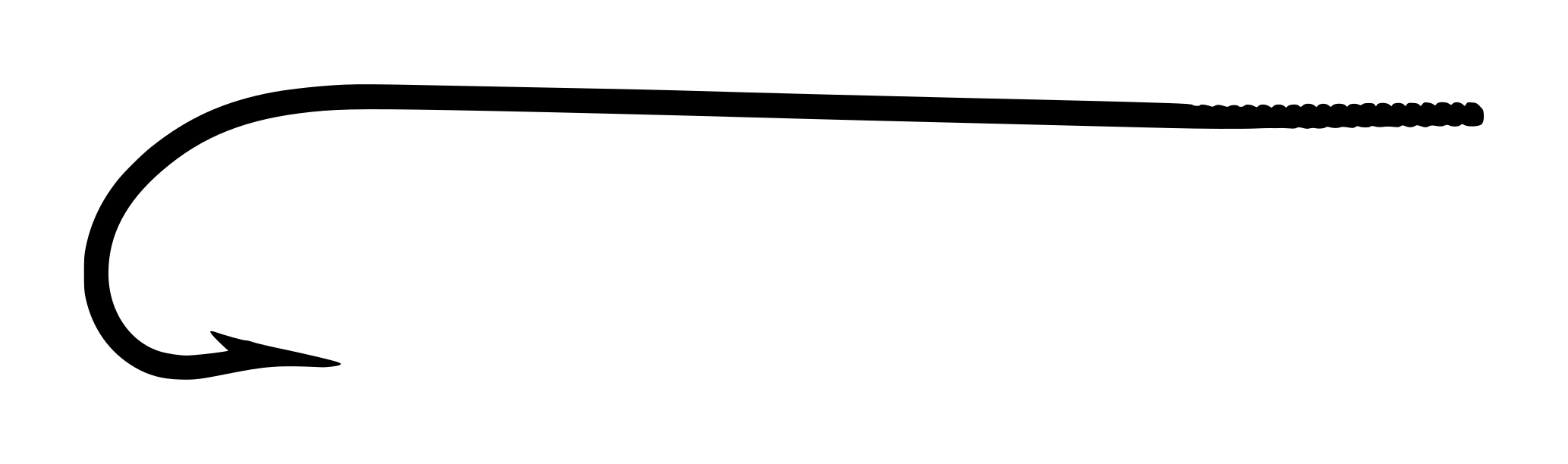
3198 No. 2/0 — Mustad-Carlisle Hooks | 88% | Compare | |
|
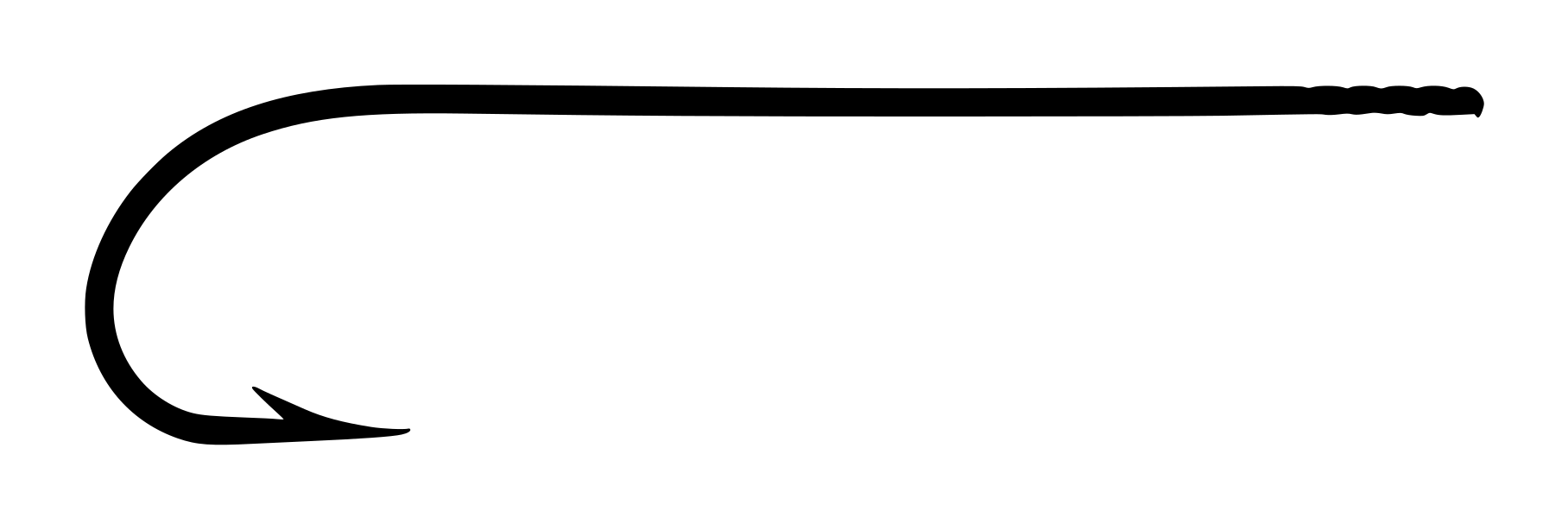
3713 B — Carlisle Hook | 88% | Compare | |
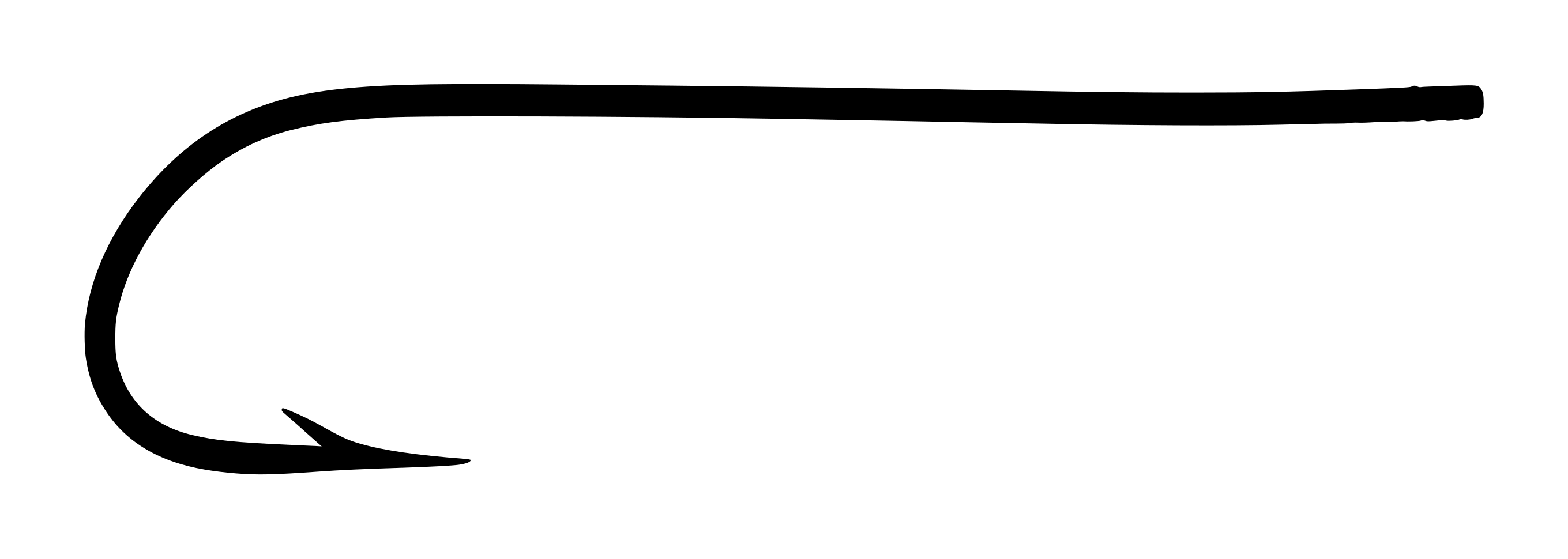
|
3706 No. 4 — Carlisle Hook | 87% | Compare |
ExploratoryRelated by Shape (SVG)
| Silhouette | Hook Model | Match | Compare |
|---|---|---|---|

|
3576 No. 2 — Mustad 3576 | 97% | Compare |
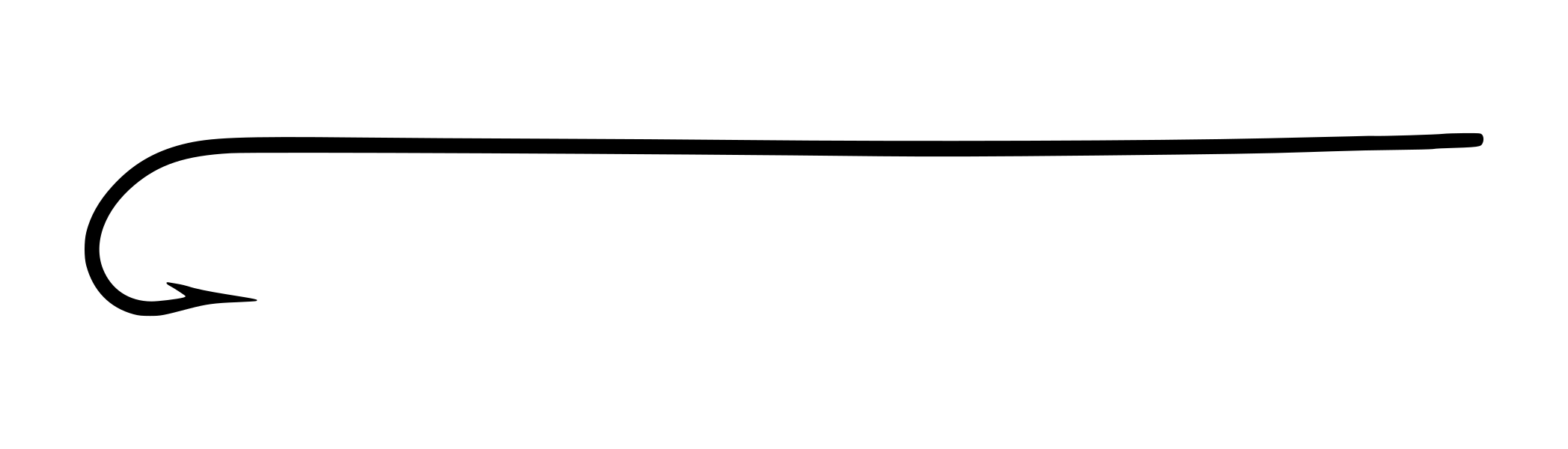
|
3574 No. 2 — Bridgeport Snapper Hooks | 96% | Compare |
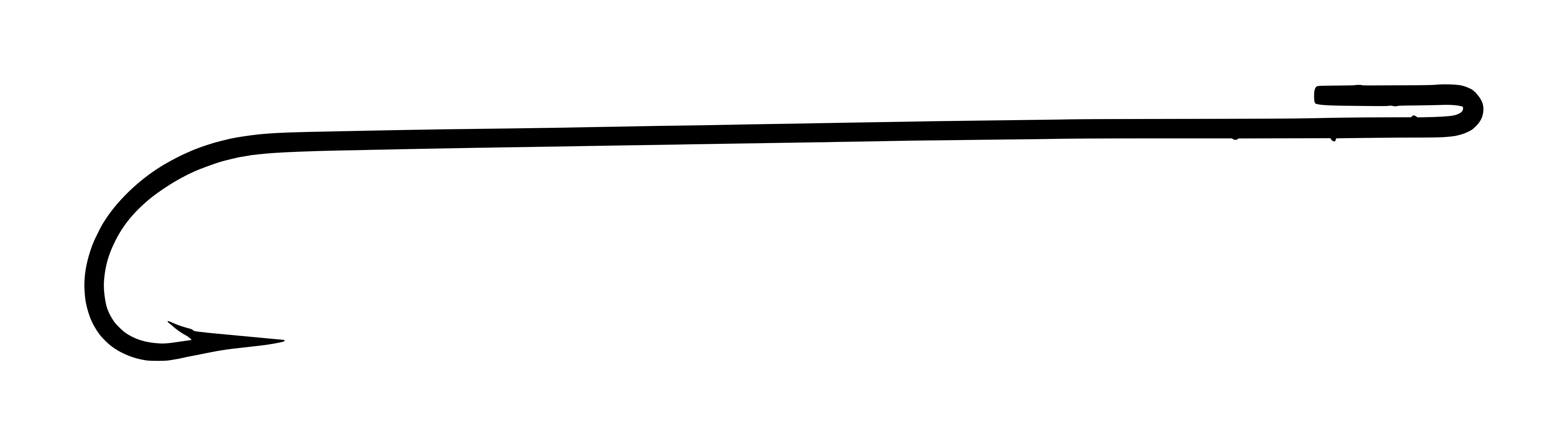
|
34002 No. 2/0 — O'Shaughnessy | 90% | Compare |
|
|
3202 No. 16 — Superior Carlisle Hook | 85% | Compare |
|
|
3198 No. 2/0 — Mustad-Carlisle Hooks | 84% | Compare |
Cross-reference & comparisons
Bait Fishing
Primary Application
The 4046 is engineered as a live bait hook for medium-sized fish species in saltwater and freshwater environments. The narrow gap combined with the long shank creates a mechanical configuration suited to live minnows ranging from 2 to 4 inches in length. The angler would thread the minnow nose-first through a loop of monofilament wrapped around the marked shank, positioning the hook to take a bite when the bait moves naturally. The blind construction eliminated knot bulk, allowing a cleaner presentation and easier adjustments in field conditions.
Historical applications included American saltwater snapper fishing (the source of the model name), as well as freshwater pike, pickerel, and bass angling where live bait was the standard method. The extra-long shank allowed repositioning of the bait along its body to accommodate different fish sizes and mouth geometries without changing hooks.
Secondary Applications
Trolling with live or dead bait; live bait rigging for pike and sea trout in Northern European markets where Mustad hooks were widely distributed.
Modern Equivalents
| Hook | Match Quality | Notes |
|---|---|---|
| Mustad 92559 O'Shaughnessy Bait Hook | Moderate | Modern formed-eye bait hook with similar Carlisle-family bend and narrow gap; lacks the marked shank and blind construction but serves equivalent functional purpose |
| Eagle Claw 84 Baitholder | Moderate | American bait hook with barbed shank (baitholder format) providing mechanical grip equivalent to Mustad's marked ridges, but different shank style |
Collector notes
Rated 4.5/10 — an uncommon model driven by the rarity of original manufacturer boxes (which appear 2–4 times less frequently than card-mounted equivalents) and specialist demand for early Mustad bait-hook variants. The primary limiting factor is modest collector interest in blind-shank bait hooks, which are less visually distinctive than fly hooks and less actively sought by casual tackle collectors. Complete original packaging in good condition substantially elevates value.
Positive Factors: Original rigid manufacturer box is the primary driver of collectability—boxed examples of Mustad hooks are substantially rarer than cards and command a meaningful premium. Early-20th-century Mustad production, pre-1930 dating, and “Christiania” location reference have strong appeal to Scandinavian manufacturing historians. The marked shank construction is mechanically interesting and represents a specialized engineering choice. Complete, unfished examples with original label in legible condition are increasingly difficult to find.
Limiting Factors: Bait hooks have a narrower collector base compared to fly hooks—many vintage tackle collectors focus on fly-tying hooks exclusively. The blind shank format is less photogenic and less commonly displayed in collections. Model 4046 does not carry the name recognition of flagship Mustad designs like the Aberdeen or O’Shaughnessy. Mustad’s industrial production volumes were extremely high, so individual models rarely achieve true rarity despite age.
Desirable Variants: Sealed boxes with all 100 hooks intact are at the high end of value; opened boxes missing even one or two hooks drop substantially. Early labels reading “Christiania” (pre-1925) command a premium over post-1925 “Oslo” variants. The blued finish variant shown here is more desirable than bright or bronzed versions of the same model.
Condition Factors: Box lid condition (printing legibility, structural integrity) is the primary value driver. Foxing and toning are acceptable and expected for age; significant water damage or loss of label text substantially reduces value. Hook condition matters less for bait hooks (no aesthetic premium for unused), but rust or corrosion on the specimens indicates storage failure and reduces appeal.
Packaging
Rigid manufacturer box with label affixed to lid. Cardboard construction with natural kraft exterior. Label printed in gold/ochre ink on cream paper. Decorative scalloped circular border design repeated around perimeter. Text elements: Treda brand mark (stylized key motif), "Qual. 4046" in upper right, "O. MUSTAD & SON MANUFACTURERS CHRISTIANIA - NORWAY", "Hollow Point", "Bridgeport Snapper Hooks", "Marked Blued", "Made in Norway", "100", "No". Label shows foxing and age patina consistent with early-to-mid 20th century paper stock. Box appears complete with lid intact. No visible barcode.
Market Value Notes
Low ($12): Good condition—opened box, all or most hooks present, label legible with moderate foxing.<br />
High ($35): Excellent condition—sealed or nearly sealed box, complete hook count (100), label sharp with minimal aging.<br />
Premium factors: Original manufacturer box format (2–4x card equivalent value), early Christiania address, blued finish confirmation on label, mechanical interest of marked shank, complete count verification.<br />
Platforms: Limited eBay data available; values based on comparable Mustad bait-hook boxes from same era. Dealer listings typically $15–40 for complete examples. Specialist tackle auctions (UK and Scandinavian venues) command 15–20% premium.<br />
Confidence: E estimated — limited comparable sales data for this specific model in boxed format. Bait hooks trade less frequently than fly hooks, and early boxes are rarely cataloged separately from card equivalents.
Where to Find
Vintage tackle dealers specializing in Scandinavian or early-20th-century Mustad; specialist hook dealers and eBay dealers listing "Mustad vintage," "bait hooks," or "Scandinavian fishing tackle." UK eBay (eBay.co.uk) more likely than US eBay for European production examples. Redditch hook fairs and Scandinavian fishing museums occasionally deaccession duplicates. Direct purchase from estate sales in Scandinavian regions offers occasional finds.
Collector's Identification Tips
Identify the 4046 by the combination of (1) blind marked shank with transverse ridges, (2) model code “4046” printed on original packaging, (3) Treda brand mark and Mustad attribution, (4) “Bridgeport Snapper Hooks” designation, (5) blued finish confirmed on the label. The marked ridges are the most distinctive feature—smooth blind-shank variants represent different models. Verify the Carlisle bend profile by comparing the rounded curve against reference images; a more angular or squared-bottom profile indicates a different bend family. Check the label text carefully, as early Mustad boxes used Christiania (pre-1925) while later examples state “Oslo.”
Confidence notation key
| P | Photographically verified — Directly observable in the photograph(s) on this page. |
| V | Verified by documentation — Confirmed by manufacturer catalog, spec sheet, or published reference. |
| I | Inferred — A logical deduction from observable or documented evidence, not directly stated. |
| E | Estimated — An approximation based on visual comparison, proportional analysis, or limited data. |
| S | Speculative — A reasoned hypothesis that cannot be confirmed from available evidence. |
Claims with no notation are confirmed by multiple independent sources. All photographs on garrenwood.com are taken on a measurement grid where each square equals 1/10 inch (0.1″ / 2.54 mm).