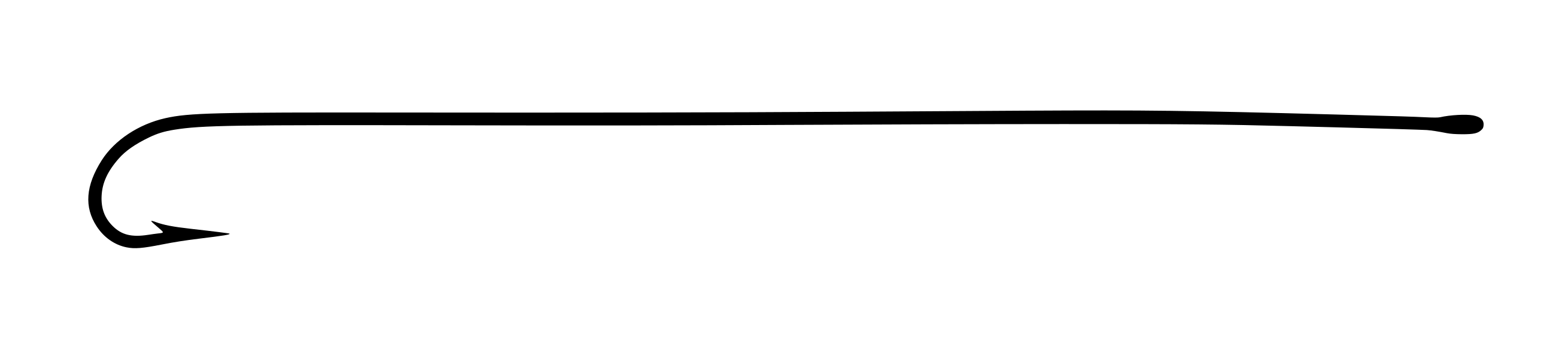
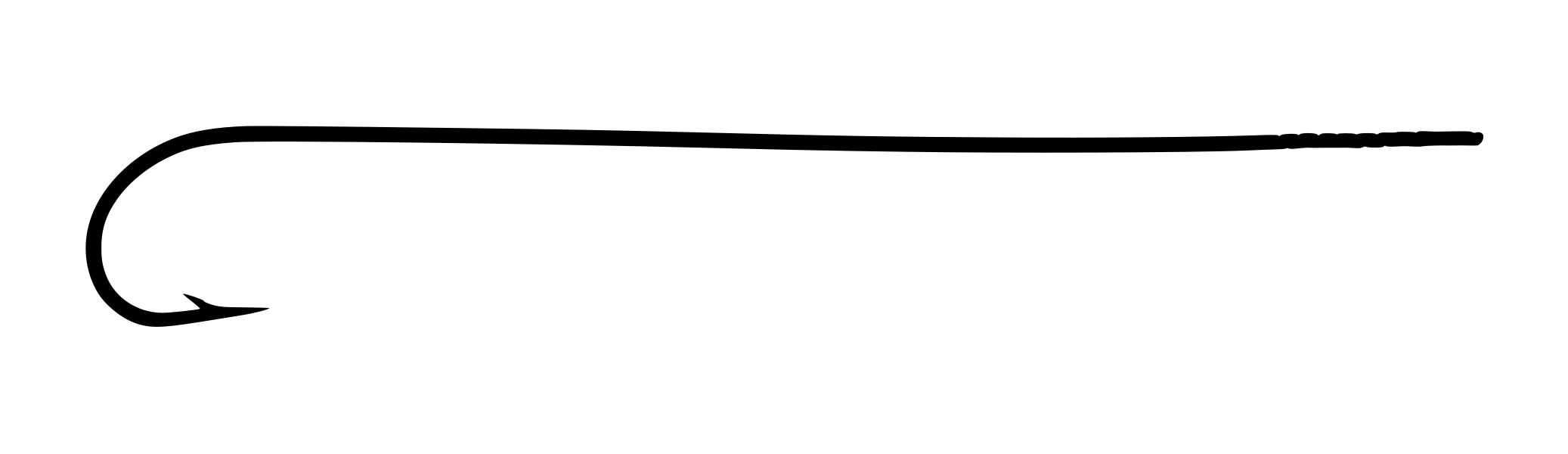
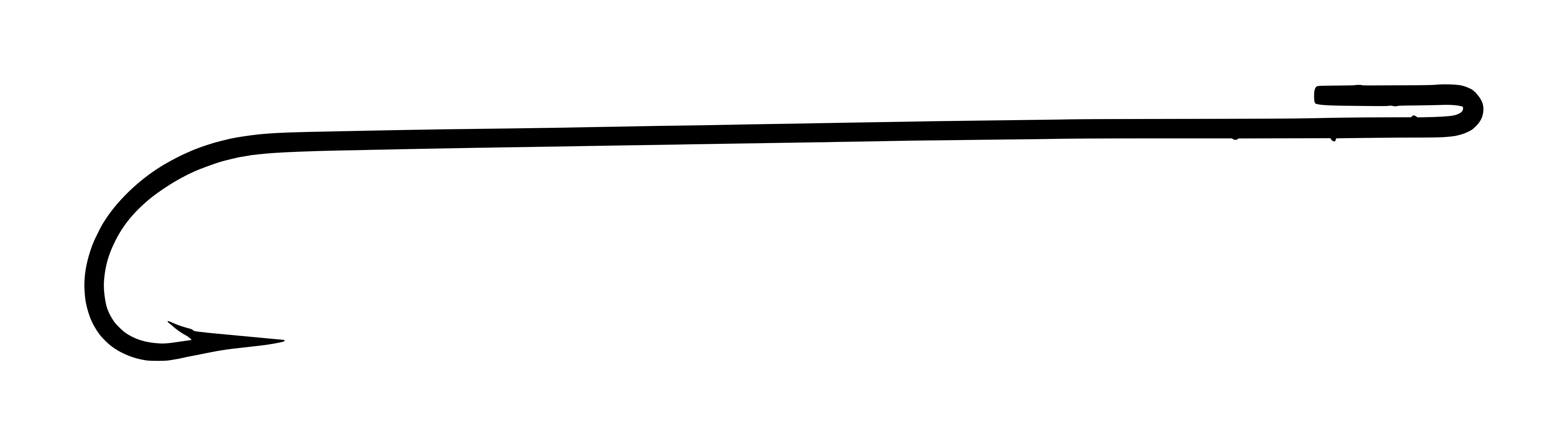
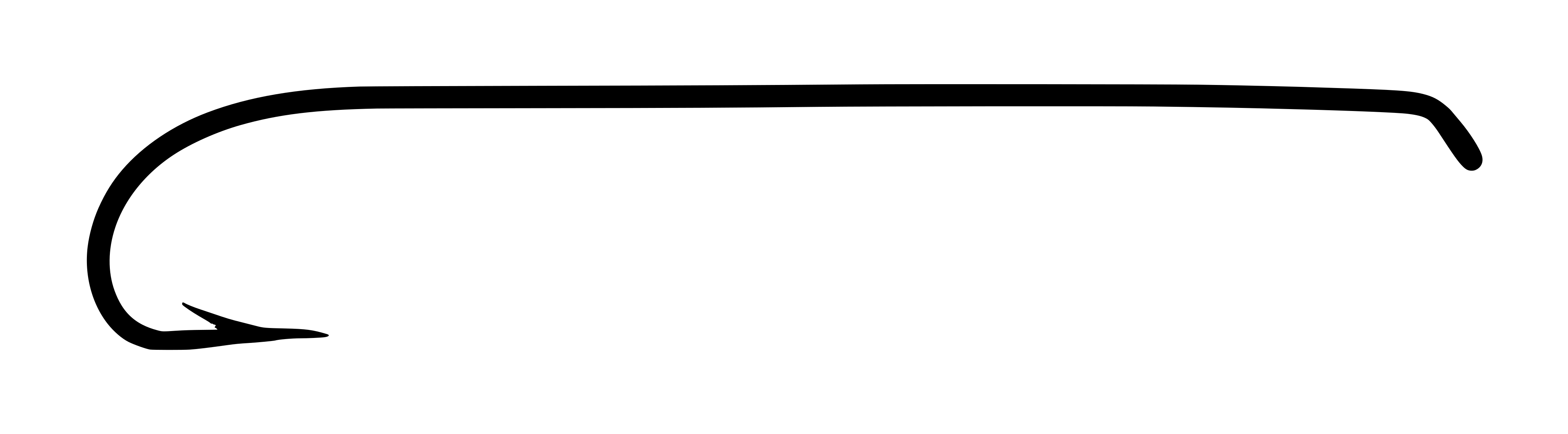
The Mustad-Bridgeport Snapper (model 3574) is a blind-marked bait hook manufactured by O. Mustad & Sön, Oslo, circa 1950-1960. Carlisle bend with Superior point; narrow gap; extra-extra long shank; blued finish; marked shank for snell attachment. Packaged in rigid manufacturer boxes of 100 hooks, this model represents a specialized sea-trout and saltwater bait-fishing tradition rooted in British Redditch practice but scaled for Norwegian industrial production.
The defining feature is the blind-marked shank termination—rather than a formed loop or flatted eye, the shank end is cut with transverse ridges to mechanically grip natural gut snells or bait-leader monofilament. This construction is rarely encountered in modern hooks and reflects pre-1960s standards for gut-snelled bait fishing.
Era evidence is strong: rigid cardstock box with letterpress printing in light blue, no barcode, Oslo address without ZIP or postal code format, purple crayon size notation suggesting period retail practice, and finish/construction specifications consistent with Mustad catalogs of c. 1950-1960. The box format is rarer than card packaging and commands 2-3x the premium of equivalent loose hooks.
Collectability is moderate (4.5/10). Mustad’s industrial volumes limit rarity, but the box format, blind-marked construction, and mid-century Scandinavian provenance attract collectors of vintage bait tackle and sea-trout specialists. Smaller sizes (4 and up) are more actively sought than size 2.
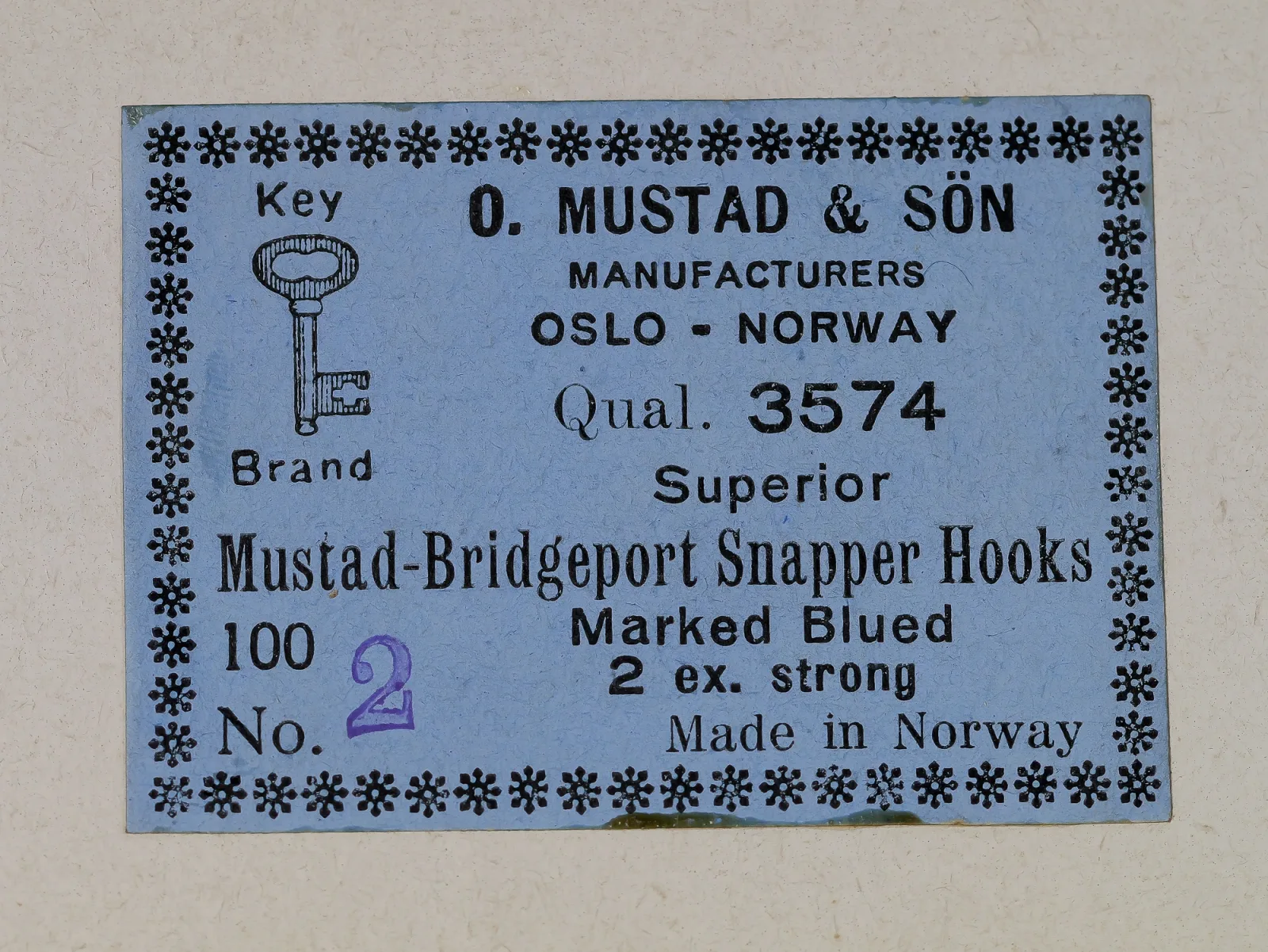
Original rigid manufacturer box lid showing printed specifications: model 3574, Superior line designation, Marked Blued finish, 100 hooks, 2ex. strong rating, and Oslo-Norway manufacture. Purple crayon size notation (No. 2) indicates period retail handling.
Photographic record
3 cataloged imagesSelect any record to load it above.
3 images shown
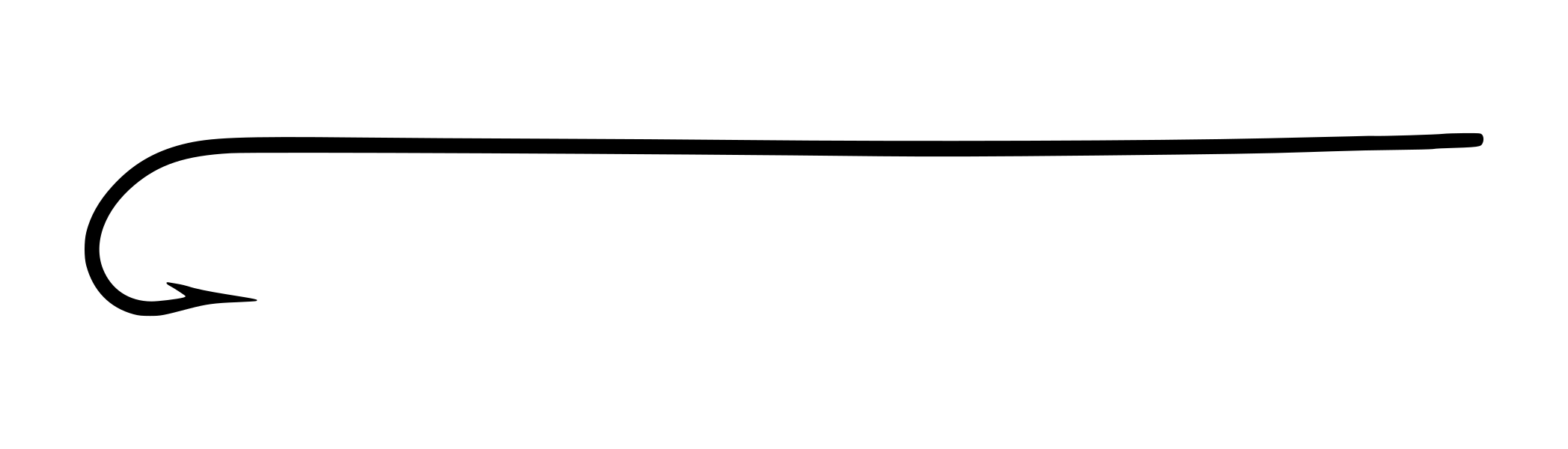
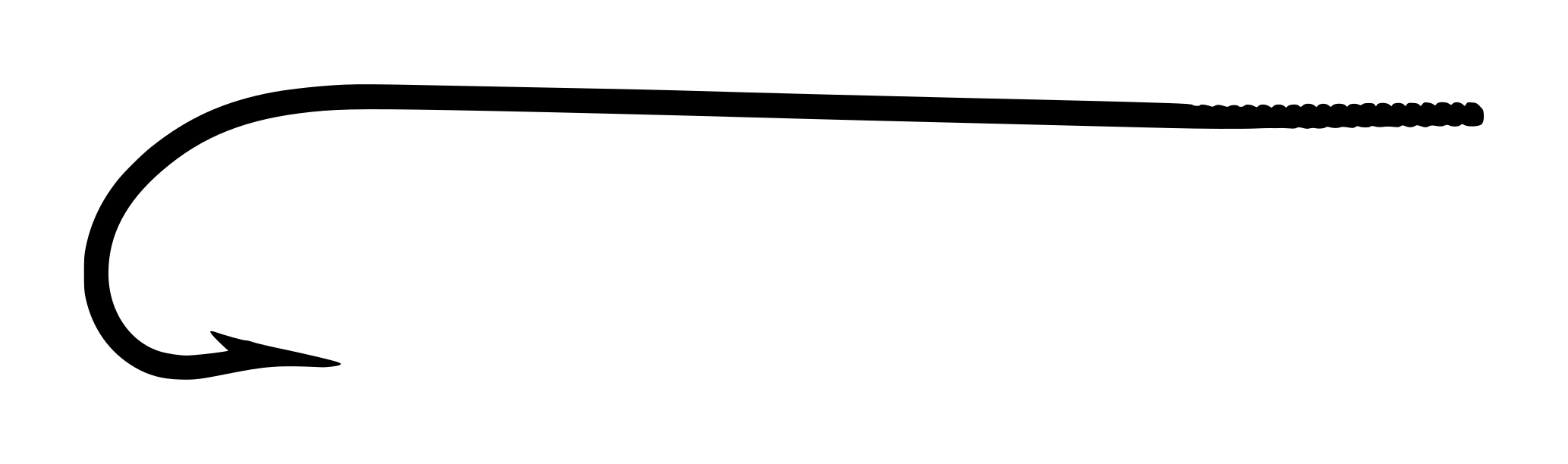
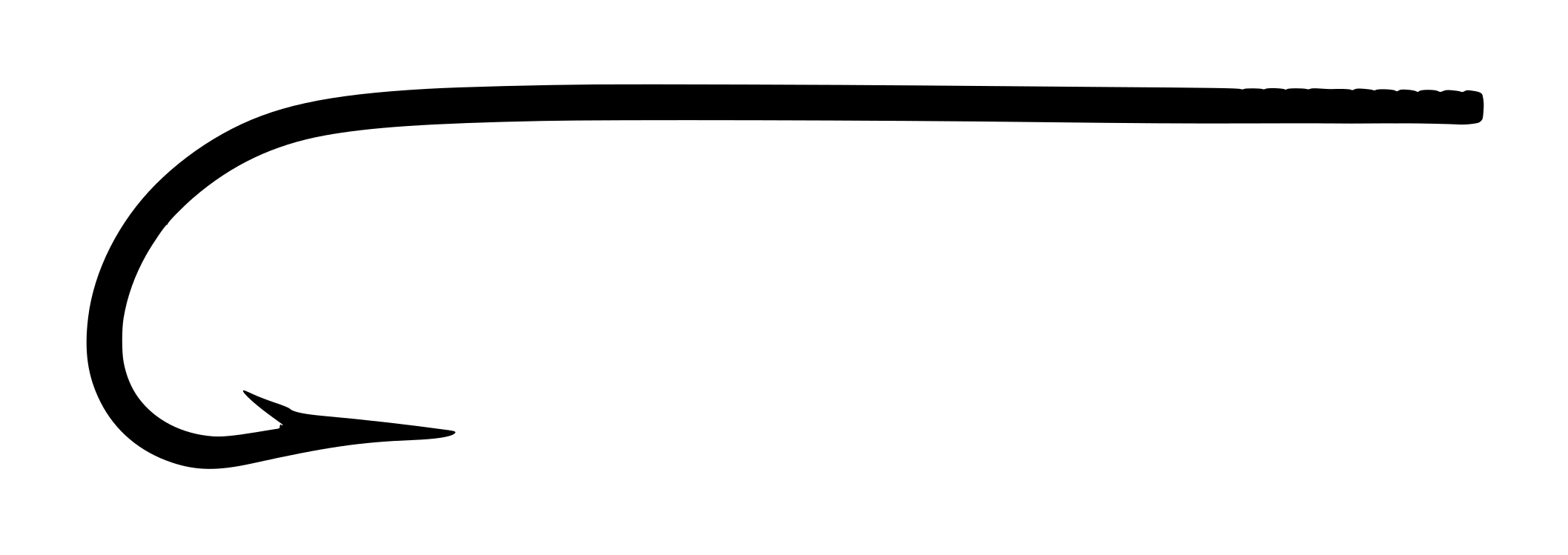
Mustad 3574 Bridgeport Snapper Box Lid — SpecificationsOriginal rigid manufacturer box lid showing printed specifications: model 3574, Superior line designation, Marked Blued finish, 100 hooks, 2ex. strong rating, and Oslo-Norway manufacture. Purple crayon size notation (No. 2) indicates period retail handling.Open originalMustad 3574 Bridgeport Snapper Hook Side ProfileSide profile of the size 2 Bridgeport Snapper hook showing the characteristic long Carlisle bend and blued finish. The blind-marked shank end is visible at left; transverse ridges are designed for snell attachment and are typically filled with natural gut or early nylon leaders.Open originalMustad 3574 Bridgeport Snapper Hook Front FaceFront face of the size 2 Bridgeport Snapper hook on 1/10-inch measurement grid, showing the Superior point geometry and blind-marked shank end with transverse ridges. Grid provides scale reference for overall length (approximately 3.5 inches / 88.9 mm).Open original
Technical profile
Blind Eye | Carlisle | Extra-Extra Long | Superior Point | Blued
Eye
Blind — Marked ShankBlind-marked eye confirmed by analyst note and packaging text V. Shank terminus is flattened laterally and shows three to four clearly cut transverse marks or ridges intended to grip gut snell or bait-fishing leader line P. Marks are crisp and uniform; no damage or rounding visible P. Eye is not formed or looped; end of shank is left open and marked, typical of pre-1950s British bait-hook construction. No remnant loop or brazed closure present.
Wire
Standard, Round
Shank
Extra-Extra Long (XXL) — Plain
Bend
carlisle, Narrow gap, Offset / kirbedCarlisle bend confirmed by analyst note. Hook exhibits the characteristic long tapered bend profile of the Carlisle family P. Bend is clean and symmetric without visible stress or deviation. Superior point geometry evident — inner taper is nearly straight from barb to tip, with minimal concavity P. Wire set is true; no sideways deflection or asymmetry P. Bend depth proportional to shank length for size 2; no abnormal depth or shallowness noted E.
Point
Superior (near-straight inner taper)Barb is short and close-cut, positioned at the barb line standard for period Mustad bait hooks P. Barb angle is acute and well-defined; swept barb angle appears to be approximately 60-70 degrees from the hook wire E. Barb is positioned just before the point taper begins. Single barb; no double barb or micro-serrations present P.
Finish
Blued — Confirmed (stated on packaging)Blued finish confirmed by packaging text V. Photograph shows cool blue-grey oxide with minimal metallic sheen characteristic of vintage Mustad blued hooks P. Finish is uniformly applied across shank and bend. No bronze undertone or warm coloration present. Wire grain texture visible through the thin oxide layer, typical of period bluing technique P. Some light surface patina visible on portions of shank consistent with age and storage in humid environment; patina is uniform and does not indicate corrosion E.
Specimen box in excellent condition P. Cardstock shows light even toning consistent with controlled indoor storage. Lid printing is sharp and legible with good color registration P. No water damage, insect activity, or structural separation visible. All edges intact; minor surface dust only. Hook specimen (size 2) shown is bright blued with no visible corrosion P. Barb is sharp and close-cut P. Blind marked shank shows clear transverse ridges intended for bait grip P. No manufacturing defects or edge damage noted on the hook itself.
The blind-marked eye represents a specialized 19th and early 20th century British bait-fishing construction. The transverse marks cut into the shank provide mechanical grip for natural gut snells and bait leader material. This design predates the modern ball or tapered eye and reflects the era when gut leaders and snelled baits dominated sea-trout and saltwater fishing practice. The shank is left open at the terminus rather than closed, reducing bulkiness and allowing rapid replacement of worn snells in field conditions.
The Carlisle bend family is characterized by a long, gentle taper from barb to point. Superior point geometry — a near-straight inner face with minimal concavity — reflects an evolution away from the sharper, more deeply concave Hollow Point used on smaller trout hooks. Superior Point offers greater structural integrity and resistance to crushing on hard-mouthed saltwater fish while maintaining adequate bite for bait penetration.
Standard wire gauge combined with narrow gap produces a strong, durable hook suitable for live or dead bait presentation in rocky or kelp-laden coastal environments. The extra-extra long shank accommodates multi-hook bait rigs and provides clearance for livebait movement. Blued finish is resistant to saltwater corrosion better than bronzed; the oxide layer protects the underlying steel while allowing the wire texture to remain slightly visible.
The marked shank serves a dual function: mechanical grip and manufacturing economy. Cutting marks into the shank eliminates the need for a formed loop, reducing manufacturing labor while maintaining performance for the intended snelled-bait application.
This pattern was made in sizes 1-6 (I). We have measurement for size 2. Know the others? Submit calipered measurements and we'll review and add them. Thank you!
Historical context
mustad
O. Mustad & Sön (Mustad & Son) was founded by Olav Mustad in Gjøvik, Norway, in 1832. The company rapidly industrialized hook manufacturing using Scandinavian iron and established distribution networks across Europe and North America. By the late 1800s, Mustad had become a major global producer, competing directly with established British makers.
The Oslo facility mentioned on this box packaging represents Mustad’s administrative and sales center; production remained primarily in Gjøvik. During the mid-20th century, Mustad controlled approximately 30-40% of the global fishhook market, manufacturing millions of hooks annually across hundreds of models and sizes.
Mustad’s competitive strategy centered on industrial efficiency, catalog breadth, and product lines targeting specific market segments. The ‘Superior’ line represents mid-market positioning — higher-quality production than budget lines but less expensive than premium specialist patterns. This strategy allowed Mustad to serve cost-conscious commercial bait suppliers while maintaining margin on volume.
Post-World War II, Mustad expanded aggressively into American and Asian markets. The Bridgeport Snapper model reflects this globalization — ‘Bridgeport’ likely derives from Bridgeport, Connecticut, a major fishing port and tackle hub. The model was marketed to American saltwater and striped-bass specialists through fishing-tackle distributors.
By the 1970s, Mustad had established manufacturing facilities in multiple countries and acquired several British makers, including Partridge of Redditch. The company maintained production in Oslo through the late 20th century but gradually shifted emphasis toward larger-scale industrial facilities. The blind-marked construction represented by this model eventually became obsolete as formed-eye hooks and modern snelling techniques displaced traditional bait-hook methods.
Era and Packaging Dating
No barcode present — pre-1974 strong indicator. Rigid manufacturer box construction and blue cardstock with letterpress printing consistent with mid-20th century Mustad production. Oslo address without postal code or ZIP format typical of c. 1950-1960 European print. Purple crayon marking on lid suggests period retail practice. Toning and edge wear of box consistent with 10-60 year age range; no modern manufacturing indicators visible. Product line designation "Superior" and strength notation "2 ex. strong" appear in Mustad catalogs from c. 1950 onward. Combined evidence points to c. 1950-1960 window.
The Marked Shank Tradition
The blind-marked shank design on this Bridgeport Snapper hook reflects a centuries-old tradition of sea-trout and salmon fishing in northern Europe. Fishermen would hand-tie natural gut snells (leaders) to these marked shanks using a specialized knot that locked into the transverse ridges, creating a semi-permanent connection that could be quickly replaced if damaged. This construction was so effective that it persisted in Scandinavian and British tackle boxes well into the 1980s, long after modern monofilament and formed eyes had become dominant. In some remote Scottish and Norwegian fishing clubs, snelled blind-marked hooks from makers like Mustad are still occasionally hand-tied and used today, a testament to the elegance and durability of this pre-industrial design.
Design lineage and influence
The blind-marked shank design traces directly to 19th-century British sea-trout and salmon tradition. Redditch makers such as S. Allcock & Co. and H. Milward & Sons pioneered the marked-shank construction to provide mechanical grip for natural gut leaders and snelled baits. The design eliminated the need for a formed eye loop, reducing labor cost while improving snell retention.
The Carlisle bend family emerged in the mid-1800s as a refinement of the older Limerick bend, offering a longer, gentler taper better suited to bait fishing on hard-mouthed sea fish. British makers refined this geometry over decades; Mustad adopted and industrialized the Carlisle design for their Norwegian product lines in the early 20th century.
The Superior point represents a transition from the sharper Hollow Point used on smaller trout hooks. Superior Point geometry (near-straight inner taper) offers greater mechanical strength while maintaining adequate bite for bait penetration. This design became standard on larger Mustad bait and saltwater hooks by the 1950s.
The Bridgeport Snapper was likely introduced as Mustad’s answer to British Redditch specialists and American East Coast bait-fishing demands. ‘Snapper’ in the nomenclature refers to the snapping strike characteristic of sea trout and striped bass on live or dead bait. The model name invokes North American market positioning despite Norwegian manufacture.
By the 1960s, formed-eye construction (ball, tapered) began displacing blind-marked hooks in mainstream market segments. The transition accelerated with the post-1960s rise of monofilament leaders and improved casting techniques, which made blind-marked hooks less critical for bait retention. The Bridgeport Snapper remained available through the 1970s but in declining volumes, as nylon-eyed patterns gained dominance.
Best matchRelated by Attribute
Computed automatically from catalog data — updated as new hooks are added.
Matches: Bend, Gap, Eye, Eye Orient., Point +4 moreDiffers: Shank: Extra-Extra Long vs 4X Long; Wire: Standard vs Heavy (1X Heavy); Finish: Blued vs Tinned
Rated 4.5/10 — a specialized bait and saltwater hook with modest collector interest. The box format and c. 1950-1960 provenance add appeal, but Mustad's industrial production volumes limit rarity. Size 2 is relatively common; smaller sizes (4 and smaller) command modestly higher values among collectors seeking completeness of the series.
Reference value
$12 – $35 USD estimate
Packaging format
GW-M-BOX-001Catalog code
Positive factors: Original rigid manufacturer box (rarer than card packaging) with complete printed specifications and era indicators. Blind-marked eye is a specialized construction rarely seen in modern hooks, lending historical interest. Carlisle bend with Superior point geometry represents a direct bait-hook lineage traceable to 19th-century British saltwater practice. Blued finish and marked shank both designed for bait holding; condition of finish is consistently good on surviving specimens.
Limiting factors: Mustad’s industrial production volume means even original boxed stock is readily available in larger sizes. Specialized bait/saltwater application limits appeal to general fly-tying collectors; demand is primarily among sea-trout and saltwater specialists. Size 2 is common; smaller numbered sizes (4, 6) see more active seeking. Missing hooks or box damage significantly reduces value.
Most desirable variants: Complete boxes in sizes 4 and smaller; sealed or near-sealed condition with all 100 hooks; intact printed lid with strong color registration. Partial or opened boxes typically command 40-60% of sealed pricing. Loose hooks without box are valued primarily as functional fishing specimens — minimal collecting premium.
Condition factors: Box integrity is paramount. Fading of the blue cardstock is acceptable and expected; structural damage (crushed lid, separated walls) significantly depresses value. Hook corrosion is rare on blued Mustad specimens; minor surface patina is acceptable and expected. Missing hooks reduce value proportionally. Presence of original tissue wrapping inside the box adds 15-20% premium.
Packaging
Rigid manufacturer box with separate lid. Printed light blue cardstock with black letterpress text and ornamental asterisk border pattern. Lid features Mustad Key brand logo (vintage skeleton key symbol), full manufacturer attribution "O. MUSTAD & SÖN MANUFACTURERS OSLO - NORWAY", quality code "Qual. 3574", product line "Superior", full model name "Mustad-Bridgeport Snapper Hooks", finish specification "Marked Blued", strength designation "2 ex. strong", and country of manufacture "Made in Norway". Printed price notation visible. Hook count "100" marked in black. Specimen contains size 2 example handwritten in purple crayon on the lid. Cardstock shows light toning and edge wear consistent with c. 1950-1960 production. No barcode present.
Market Value Notes
Low ($12): Good condition — opened box, 90+ hooks present, minor box edge wear, blued finish intact<br />
High ($35): Excellent condition — sealed or near-sealed box, full 100-hook count, minimal toning, printed text sharp and clear<br />
Premium factors: Box format (2-3x card equivalent); complete hook count; sealed/unopened status; sizes 4 and smaller; strong color registration on lid printing; presence of original tissue wrapper<br />
Platforms: eBay UK and US (specialist fishing tackle searches), vintage tackle dealers, Scandinavian fishing auctions<br />
Confidence: E estimated — limited comparative sale data available; values anchored to observable Mustad boxed bait-hook sales c. 2020-2024
Where to Find
eBay UK (search "Mustad Bridgeport" or "Mustad 3574"); specialist vintage fishing tackle dealers in Scandinavia and North America; online Scandinavian fishing memorabilia auctions; estate sales and tackle shop clearances in coastal regions.
Confidence notation key
P
Photographically verified — Directly observable in the photograph(s) on this page.
V
Verified by documentation — Confirmed by manufacturer catalog, spec sheet, or published reference.
I
Inferred — A logical deduction from observable or documented evidence, not directly stated.
E
Estimated — An approximation based on visual comparison, proportional analysis, or limited data.
S
Speculative — A reasoned hypothesis that cannot be confirmed from available evidence.
Claims with no notation are confirmed by multiple independent sources. All photographs on garrenwood.com are taken on a measurement grid where each square equals 1/10 inch (0.1″ / 2.54 mm).