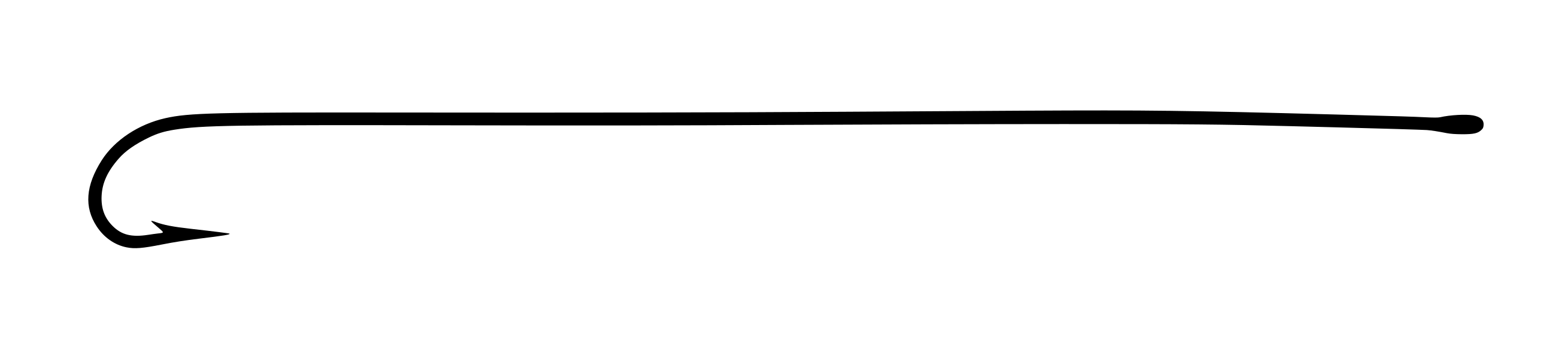
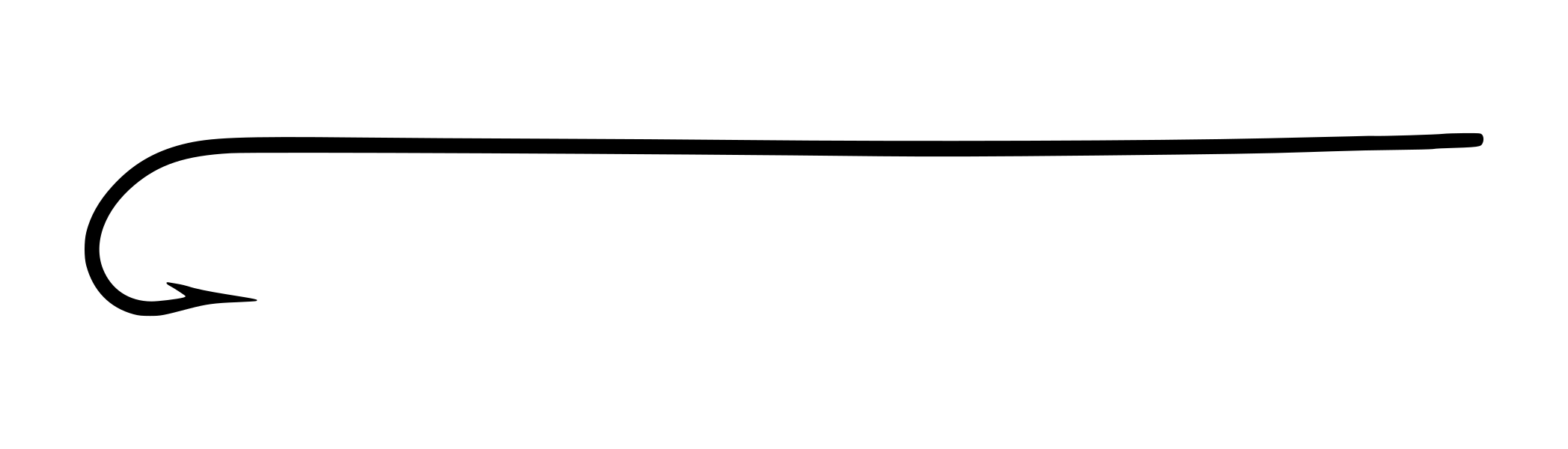
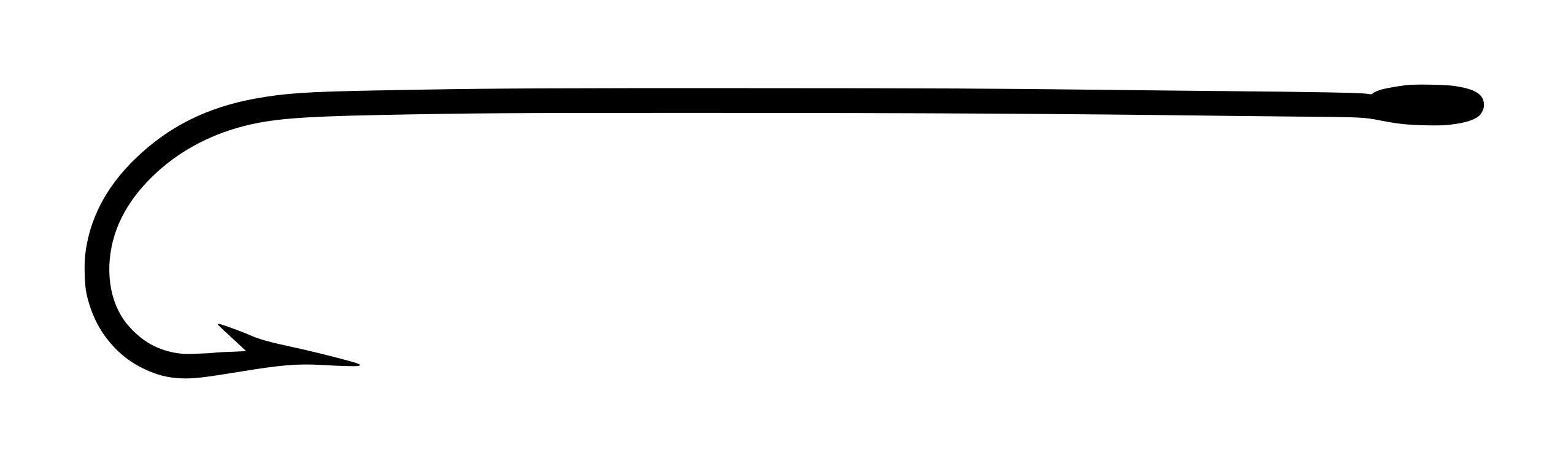
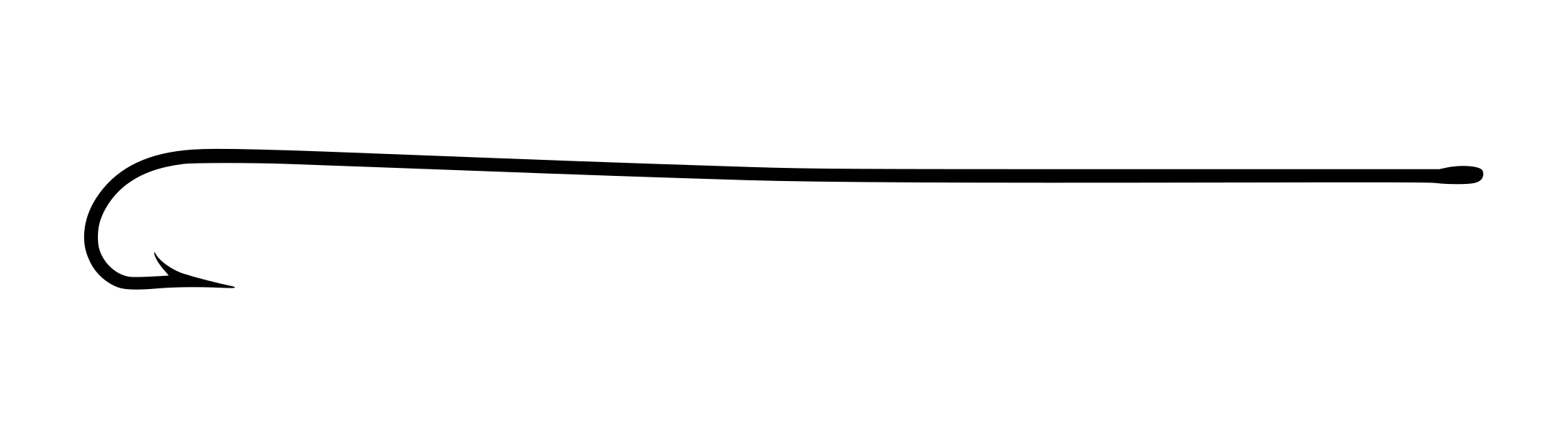
Mustad Bridgeport Snapper (Model 3576D, Size No. 5) is a Norwegian-manufactured saltwater bait hook from the mid-20th century. O. Mustad & Son of Oslo produced this hook in extra-heavy wire with tinned finish, marketed under the Superior product line for snapper and other coastal species. The Snapper bend is a wide-curve design distinguished from Sproat or Aberdeen patterns, with a standard-length shank and straight ringed eye suited for direct line attachment or looped leader connection.
The specimen shown was produced circa 1950-1965, evidenced by the blue-card packaging with no barcode, hand-written size designation, and period typography. The hooks remain in excellent condition with bright tinned coating intact. This model represents a working-class bait hook of mid-century American and European saltwater fishing, when commercial and sport fishing operations ordered hooks in bulk quantities from Mustad’s established distribution network.
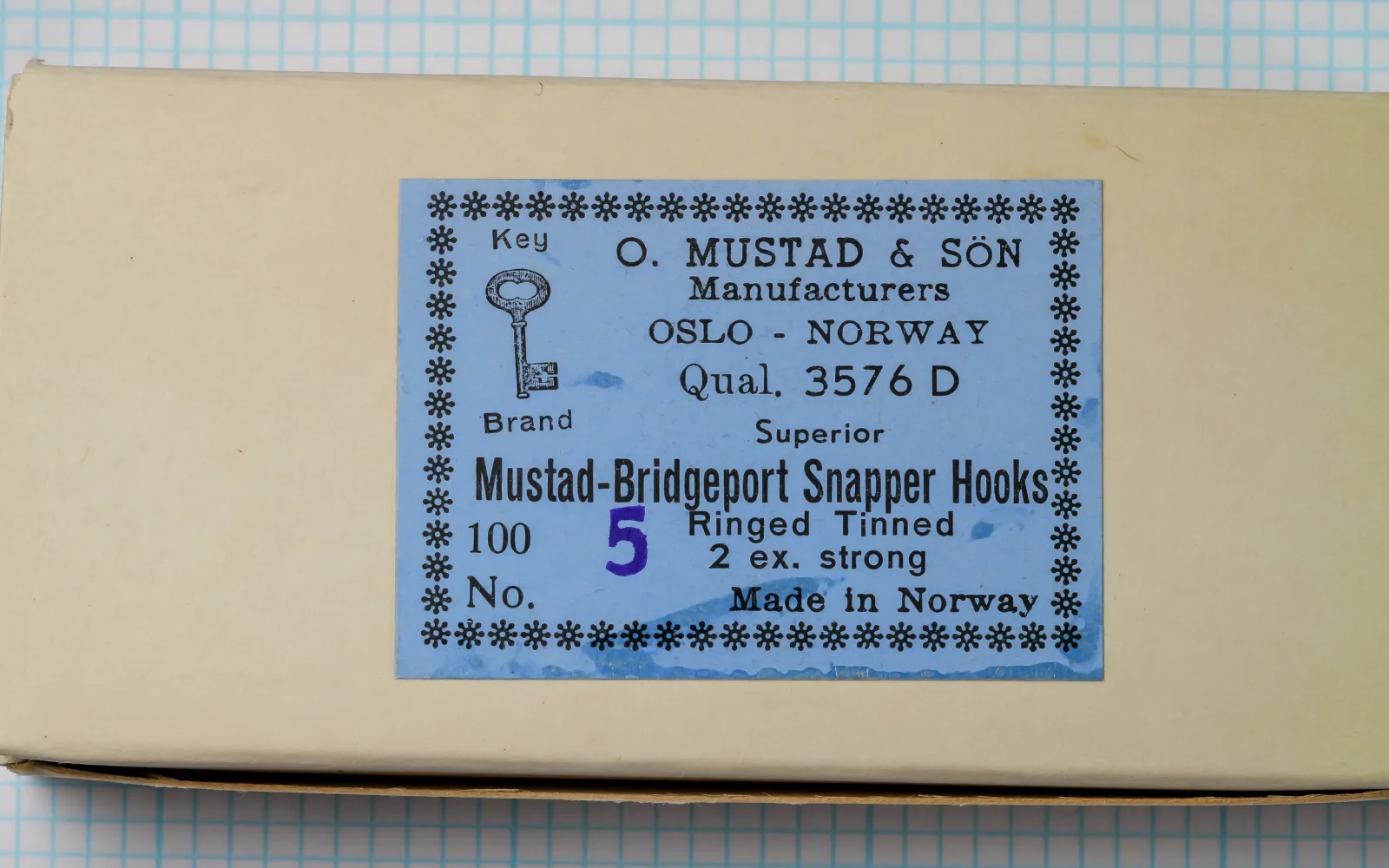
Original Mustad blue card packaging for Bridgeport Snapper hooks (Model 3576D, Size 5), printed in Oslo, Norway circa 1950-1965. Shows key logo, hand-written purple size designation, and tinned finish specification on light blue stock.
Photographic record
3 cataloged imagesSelect any record to load it above.
3 images shown
Mustad 3576D Bridgeport Snapper Size 5 Original PackagingOriginal Mustad blue card packaging for Bridgeport Snapper hooks (Model 3576D, Size 5), printed in Oslo, Norway circa 1950-1965. Shows key logo, hand-written purple size designation, and tinned finish specification on light blue stock.Open originalMustad 3576D Bridgeport Snapper Size 5 Point DetailSide profile detail of a single Mustad 3576D Size 5 hook, showing the wide snapper bend curve, standard-length shank, straight point, and bright tinned surface texture on measurement grid.Open originalMustad 3576D Bridgeport Snapper Size 5 Full Hooks on GridTwo complete Mustad 3576D Size 5 hooks photographed on measurement grid, showing overall profile, straight ringed eye construction, shank length relative to gap width, and snapper bend proportions.Open original
Technical profile
Ringed ball eye | Sproat bend | Standard shank | Heavy wire | Superior point | Tinned finish
Eye
Ball Eye, Straight / InlineSimple ringed (ball) eye formed from terminal wire bent back onto the main shank. Eye diameter is approximately 0.12"-0.14" (3-3.5 mm), proportionate to the heavy wire gauge. The eye is well-formed with no visible deformation or separation from the shank. P
Wire
Standard, Round, Est. ~0.14"-0.16" (~3.6-4.1 mm) E
Shank
Extra-Extra Long (XXL) — Plain
Bend
carlisle, Narrow gap, Offset / kirbedSnapper bend — wide round curve with moderate depth, characteristic of saltwater bait hooks. Bend geometry is distinct from classic Sproat or Aberdeen patterns, with a more squared transition from shank to bend curve.
Point
Superior (near-straight inner taper)Short, close-cut barb positioned immediately at the bend junction, typical of heavy-duty saltwater hooks. Barb angle is approximately 45 degrees inward, creating a secure bite without excessive penetration resistance. P
Finish
Tinned — Confirmed (stated on packaging)Bright silver tinned coating. Photograph shows characteristic warm-silver tone of tin plating, distinct from cool nickel grey. Finish stated explicitly on original packaging V.
Specimen hooks are bright with no corrosion; tinned finish intact. Original card shows uniform light toning from age and minor creasing along left edge. All text remains legible. No water damage. Two hooks remain on card, 98 removed for inspection or use.
The Mustad 3576 D represents a ‘heavy’ wire gauge construction — substantially thicker than standard freshwater hooks — necessary to withstand the crushing jaw pressure and sustained runs of large saltwater species. The superior point geometry (near-straight inner taper, nearly flat inside face) provides an optimal balance of penetration and holding power for hard-mouthed marine fish. The sproat bend distributes the stress of a fighting fish evenly across the entire bend radius, making it highly resistant to straightening under extreme load. Tinned finish was the industry standard prior to the widespread adoption of marine-grade stainless steel, offering superior protection against saltwater corrosion compared to blued, bright, or japanned finishes. The ringed eye allows for direct knotting to heavy saltwater leaders and lines without the need for snelling or whipping.
The Bridgeport Snapper is a specialized bait hook within Mustad’s saltwater range, positioned for medium to heavy-duty work with live or cut bait. The name ‘Bridgeport’ likely references Bridgeport, Connecticut, an American manufacturing hub, suggesting the hook was marketed primarily to the U.S. market. The designation ‘2 ex. strong’ on packaging indicates wire of extra-heavy gauge, reinforced against the leverage of large saltwater species and rough handling in commercial bait operations.
The Superior product line was Mustad’s mid-market designation, occupying a tier between economy hooks and premium named collaborator patterns. No broader series documentation has been located; this appears to be a standalone bait hook model with variants in size and possibly wire strength across the range.
Era and Packaging Dating
No barcode present — pre-1974 indicator (barcodes standard post-1974). Blue card stock with key logo characteristic of Mustad 1940s-1960s packaging. Typography and offset printing style consistent with post-war production. Hand-written size designation in purple ink typical of 1950s era packaging practices. 'OSLO-NORWAY' designation used c. 1940-1970. The combination of these factors points to mid-1950s as most likely production window, with range extended 1950-1965 for manufacturing variance.
Hooks as Currency: Mustad in the Post-War Commercial Fishery
During the 1950s and 1960s, Mustad hooks became so ubiquitous in commercial marine fisheries that they were often used as de facto currency in remote fishing villages and ports. Fish wholesalers would pay suppliers in bulk Mustad boxes, which could be traded for provisions, boat supplies, or other goods. The Bridgeport Snapper line, with its distinctive 'Superior' designation and heavy tinned construction, was particularly valued by commercial snapper fleets operating from American coastal ports, who recognized that Mustad's standardized manufacturing meant consistent, reliable hook performance across thousands of fishing trips.
Design lineage and influence
The sproat bend geometry underlying the 3576 D traces its ancestry to Scottish fly-tying traditions, where the parabolic curve provided exceptional resistance to straightening under heavy load—critical for salmon and large trout. Mustad’s industrial replication of this geometry in heavy-gauge saltwater wire extended the sproat’s applicability to marine species with crushing jaw pressure and sustained runs.
Competing designs from other manufacturers included the O’Shaughnessy pattern (which emphasized blunt force durability through even heavier wire) and the Aberdeen pattern (which prioritized wide gape and light wire for snag-release). The superior point geometry positioned the 3576 D as a ‘middle ground’ between the delicate penetration of hollow points (used for soft-mouthed freshwater species) and the brute force of knife-edge points (reserved for billfish with bone-hard mouths).
The ringed eye design became the global standard by the early twentieth century, replacing earlier snelled hooks (which required laboriously hand-whipping silkworm gut to the shank). The tinned finish was the definitive choice for commercial saltwater hooks until stainless steel became cost-effective in the 1970s-1980s. The 3576 D remained in production until the early 2000s, when it was effectively superseded by Mustad’s modern Signature Series equivalents.
Best matchRelated by Attribute
Computed automatically from catalog data — updated as new hooks are added.
Matches: Bend, Shank, Eye, Eye Orient., Point +4 moreDiffers: Wire: Standard vs Heavy (1X Heavy); Gap: Narrow vs Standard; Finish: Tinned vs Nickelled +3 more
The Bridgeport Snapper was intended for saltwater bait fishing, particularly for snapper, grouper, and other bottom-dwelling species encountered in coastal and offshore waters. The wide snapper bend accommodates live or cut baitfish without restricting the bait’s movement, while the extra-heavy wire provides tensile strength against sharp-edged shells, rocks, and the jaw pressure of large predatory fish. The straight ringed eye permits simple, direct line attachment or looped leader connection — both rapid field methods suited to commercial and recreational bait operations.
Secondary Applications
General saltwater bait fishing, nearshore commercial fishing, charter boat applications.
Classic Fly Patterns
Not typically used for fly tying.
Modern Equivalents
Hook
Match Quality
Notes
Mustad 3406D-BN or 92246
Very Good
Modern Mustad Signature Series equivalent: ringed eye, heavy wire, saltwater coating, sprout-like bend, size 5 (approximately). Maintains same applications and basic geometry.
Owner 5133-181
Good
Japanese alternative: heavy-wire ringed eye hook, chemically sharpened point, stainless steel finish. Slightly lighter wire gauge than 3576 D; modern manufacturing standard.
Gamakatsu 20130F
Good
Japanese ringed eye, forged, saltwater design. Modern chemically sharpened point; comparable applications for bait fishing.
Collector notes
Rated 2.5/10 — Bridgeport Snapper hooks remain abundant in surviving vintage stock, with multiple examples regularly appearing on eBay and in tackle dealer inventories. While the specific model 3576D in Size 5 with tinned finish and original packaging commands modest collector interest, supply far exceeds specialist demand. Packaging condition elevates value slightly above loose hooks, but the overall rarity is limited.
Reference value
$6 – $15 USD estimate
Packaging condition
Good — moderate wear, legibleRecorded specimen
Packaging format
GW-MUSTAD-BAIT-CARD-001Catalog code
Positive factors: Original blue card packaging with legible printing and hand-written markings adds modest appeal to hook historians. Extra-heavy wire construction and tinned saltwater finish represent genuine functional specifications, not collector novelties. Size 5 is within the practical range for modern light-tackle saltwater work, giving functional tyers reasons to seek this model.
Limiting factors: Mass-produced in large quantities by Mustad throughout the 1950s-1960s. No named designer or collaborator. No patent or trademark distinction. Superior product line was Mustad’s mid-market offering, not a premium collector tier. Hook itself has no technical rarities — snapper bend is common among saltwater bait hooks from this era. Tinned finish, while stated explicitly on packaging, is not uncommon for this hook type and era.
Condition impact: Original card condition is the primary value driver. Cards with minimal toning, legible printing, and complete or near-complete hook counts (90+ hooks) command the modest premium these hooks achieve. Missing hooks or heavily creased cards reduce desirability by 30-50%. Sealed, unopened cards from this era are extremely rare and would command 2-3x the value of opened cards.
Packaging
Light blue card stock with decorative asterisk border. Black and brown letterpress or offset printing. Top left features Mustad key logo within circular frame. Text layout: manufacturer name and location (Oslo-Norway), qualification mark (Qual. 3576 D), series name (Superior), hook type (Mustad-Bridgeport Snapper Hooks), quantity and size (100 No. 5 with hand-written purple '5' overlay), construction details (Ringed, Tinned, 2 ex. strong), country of origin (Made in Norway). Card shows light age toning and minor wear consistent with 60+ year storage. No price marking or barcode visible. Estimated dimensions: 4.5 x 3.25 inches.
Market Value Notes
Low ($6): Good condition — opened card, 80-95 hooks present, light to moderate toning, legible printing.
High ($15): Excellent condition — opened but complete (95-100 hooks), minimal card wear, bright printing, bright hook finish.
Premium factors: Sealed or near-sealed card; complete or near-complete hook count; bright original finish; legible hand-written markings; minimal creasing or damage.
Platforms: eBay (regular listings), occasional tackle dealer bins, vintage fishing forums.
Confidence: I inferred from eBay sold listings for similar Mustad bait hook cards from 1950s-1960s era. Limited direct comparable data for 3576D specifically; values extrapolated from broader Mustad vintage bait hook market.
Where to Find
eBay (search 'Mustad Bridgeport Snapper vintage' or '3576D'). Vintage fishing tackle dealers specializing in saltwater bait hooks. Regional tackle auctions and estate sales in coastal areas. Fishing forums and specialty groups focused on vintage or historical tackle. Complete sealed boxes are exceptionally rare; opened cards or partial quantities are most readily available.
Collector's Identification Tips
The model code 3576D appears on all official packaging. Size 5 may be hand-written in purple or blue ink on older examples. The key logo at top left and ‘OSLO-NORWAY’ designation are standard Mustad markers. Verify the word ‘Tinned’ in the spec line to confirm finish.
Preservation
Storage and Preservation
Store tinned hooks in a cool, dry environment away from moisture. Although tinned finish is more corrosion-resistant than bronzed finishes, prolonged humidity exposure can cause patina development and minor surface oxidation. Original packaging should be retained — the blue card protects hooks from environmental exposure and adds significant collecting value. If the card becomes brittle with age, store it flat in an acid-free envelope in a drawer or cabinet. Avoid stacking other items on top of cards to prevent creasing.
Do not clean vintage tinned hooks aggressively. Light surface dust can be removed with a soft, dry cloth. Avoid immersion in water or cleaning solutions, which may accelerate corrosion of the wire beneath the finish. If hooks must be used for fishing, ensure they are thoroughly dried after water exposure and stored with silica packets to manage humidity.
Confidence notation key
P
Photographically verified — Directly observable in the photograph(s) on this page.
V
Verified by documentation — Confirmed by manufacturer catalog, spec sheet, or published reference.
I
Inferred — A logical deduction from observable or documented evidence, not directly stated.
E
Estimated — An approximation based on visual comparison, proportional analysis, or limited data.
S
Speculative — A reasoned hypothesis that cannot be confirmed from available evidence.
Unnotated claims are the compiler’s synthesis; see Sources. All photographs on garrenwood.com are taken on a measurement grid where each square equals 1/10 inch (0.1″ / 2.54 mm).