Manufacturer: Pflueger (Akron, Ohio). Model: Carlisle 3321-Br, ringed bait hook in size 1/0. Era: c. 1900-1940, based on pre-barcode box construction, letterpress typography, ‘Made in U.S.A. by American Workers’ text, and absence of modern postal formats.
Key Features: Heavy-gauge round wire, bronzed finish, sproat bend, straight ring eye for dual-point connection, designed for saltwater and large freshwater bait fishing. Robust construction reflects early American competitive pressure against British Redditch imports.
Packaging Significance: Original green and tan box with 100-hook count intact represents significant collector value. The ‘Third Generation of Pfluegers’ reference and ‘Best by Test since 1864’ slogan place this in the company’s mid-life expansion phase. This is a working hook from the era of American tackle nationalism — suitable for both display and historical documentation of U.S. fishing industry.
Collectability: Rated 5.0/10 — uncommon to scarce in original complete packaging. The size 1/0 is less common than larger sizes. Original box condition is the primary value driver. Complete 100-hook count commands premium; missing hooks reduce value proportionally.
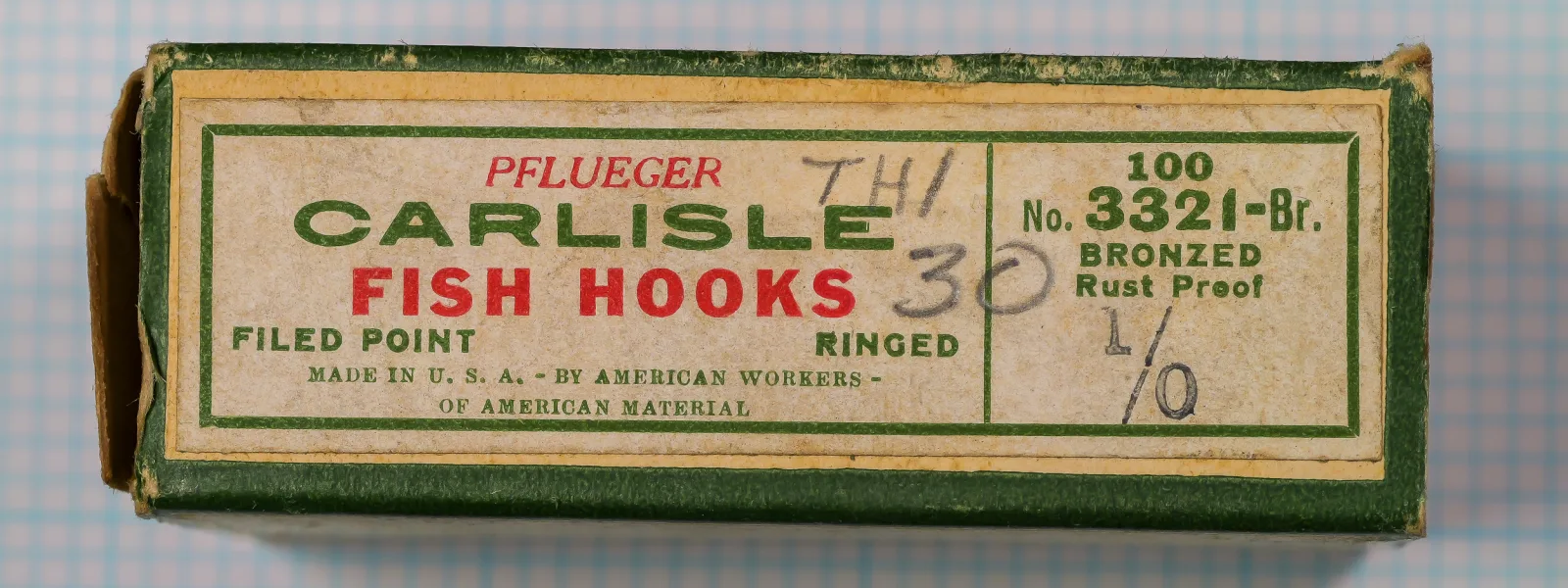
Original Pflueger Carlisle 3321-Br presentation box, featuring the iconic 'Made in U.S.A. by American Workers' marketing text and 'Best by Test Since 1864' heritage claim, early 20th century.
Photographic record
7 cataloged imagesSelect any record to load it above.
7 images shown
Pflueger Carlisle 3321-Br Original Box LabelOriginal Pflueger Carlisle 3321-Br presentation box, featuring the iconic 'Made in U.S.A. by American Workers' marketing text and 'Best by Test Since 1864' heritage claim, early 20th century.Open originalPflueger Carlisle 3321-Br Hook Profile and Point DetailSide profile of a Pflueger Carlisle 3321-Br hook showing the standard spear point, filed-point construction, and the distinctive straight ring eye. Photographed on measurement grid at size 1/0.Open originalPflueger Carlisle 3321-Br Full Length ProfileFull-length profile of the Pflueger Carlisle 3321-Br hook showing overall length, proportional gap width, and ringed eye. Measured against 1/10-inch grid at size 1/0.Open originalPflueger Carlisle Product Card SpecificationsInternal product specification card from the Pflueger Carlisle box showing model number variants (3321-B blued, 3321-Br bronzed) and available size range (20 to 8/0).Open originalPflueger Carlisle Size Range Display CardHistorical display card showing the complete Pflueger Carlisle 3321 hook range from size 6/0 to 16, with actual hook samples mounted for reference. Includes company heritage text 'Best by Test Since 1864' and modern manufacturing claims.Open originalPflueger Carlisle Size Progression Detail 4/0–2Close-up detail of the mid-size range hooks on the Pflueger Carlisle display card, showing the ringed eye construction and proportional changes across sizes 4/0, 3/0, 2/0, 1/0, and size 1.Open originalPflueger Carlisle Ringed Eye Construction DetailMacro close-up of the ringed eye on a Pflueger Carlisle hook, showing the brass/steel ring construction, attachment to the hook wire, and overall finish quality. The dual-attachment-point design is clearly visible.Open original
Technical profile
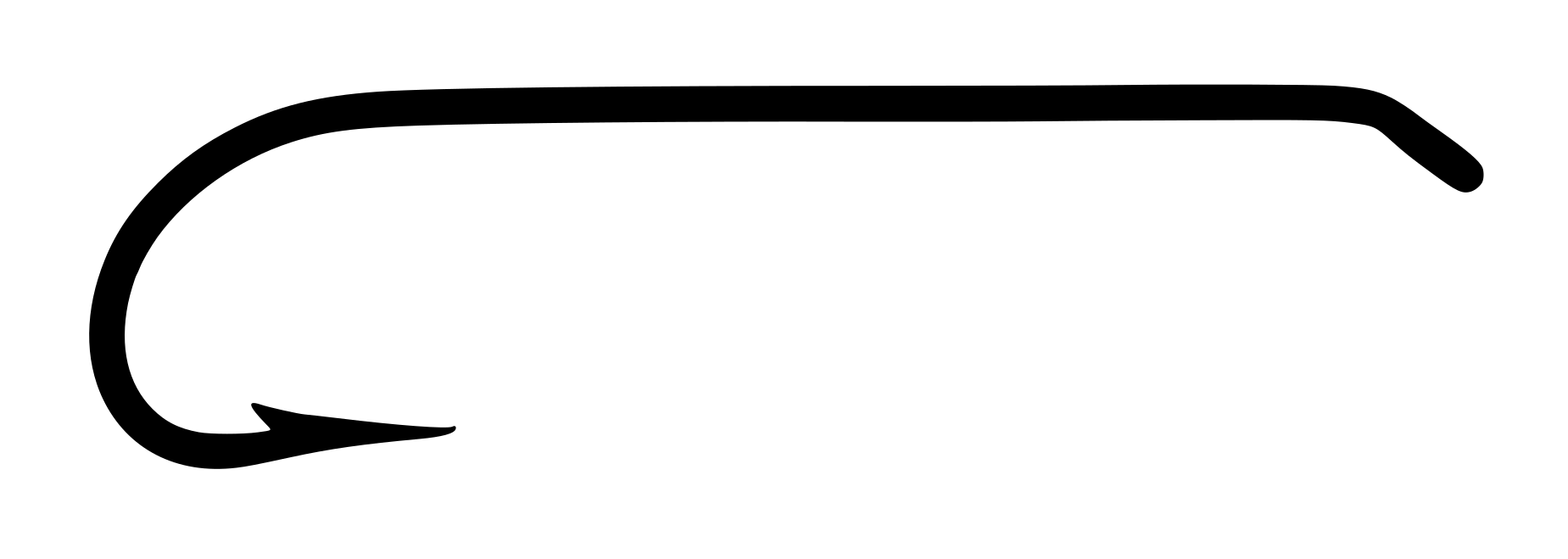
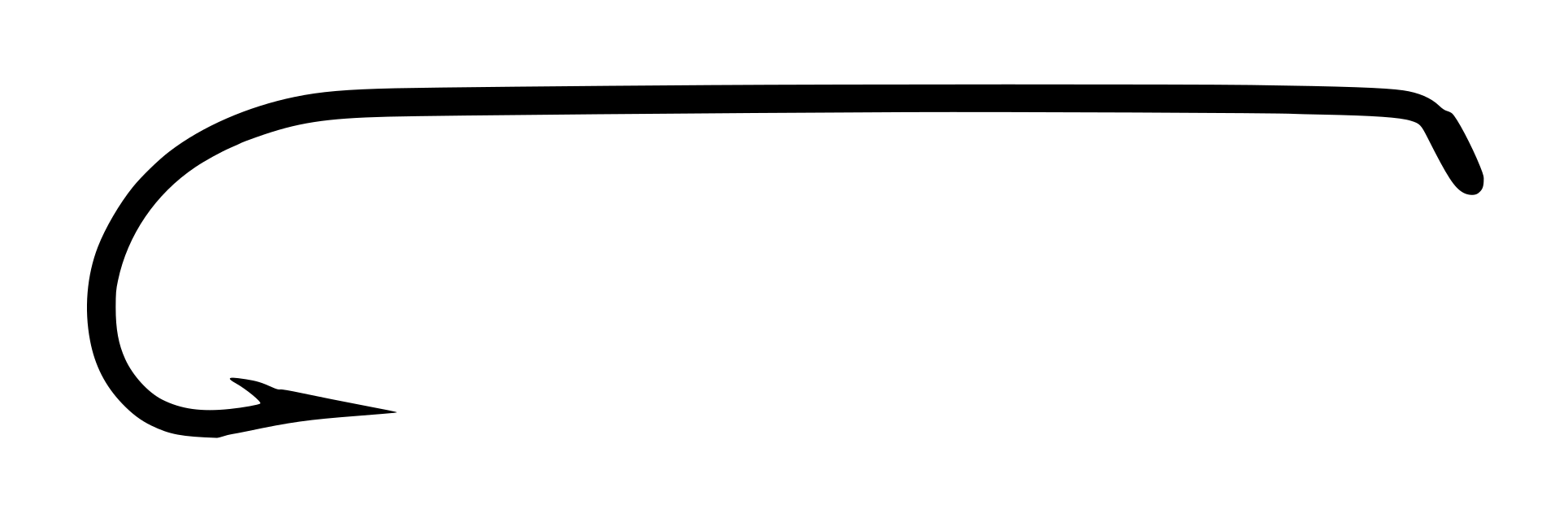
Straight Ball | Carlisle | 4X long | Fine Wire | Spear Point | Bronzed
Eye
Ball Eye, Straight / InlineStraight ring eye is a separate brass or steel ring attached or soldered to the hook wire. The ring is proportionally large relative to the wire diameter, providing two distinct line-attachment points. Ring construction appears clean and well-finished with no visible solder drips or asymmetry. This is a more sophisticated eye construction than a simple tapered or ball eye, indicating premium positioning of the Carlisle model. P
Wire
Fine (1X Fine), Round, Est. ~0.065"-0.075" (~1.65-1.91 mm)
Shank
4X Long — Plain
Bend
carlisle, Narrow gap, Offset / kirbedCarlisle
Point
Standard / SpearBarb is a standard short cut, positioned immediately below the spear point taper. Barb angle is approximately 45-50 degrees relative to the shank axis (standard bait hook angle). Barb is relatively fine and clean-cut, typical of filed-point construction. P
Finish
Bronzed — Confirmed (stated on packaging)Bronzed finish is a warm brass-bronze tone characteristic of early 20th century American saltwater hooks. The specimen shows uniform coverage with minor patina development consistent with age and storage in slightly humid conditions. The finish is not mirror-bright but retains a soft luster typical of bronzed hooks that have not been heavily oxidized or stored in severely adverse conditions. Tone is warm (golden-bronze) rather than cool (silver-bronzed), consistent with pre-1940 bronzing techniques. P
The specimen hook itself is in good condition with bright metal visible through minimal patina. No active corrosion, pitting, or wire damage is evident. The original box shows moderate age-appropriate wear: edge crushing, toning of the label, light foxing, and surface dust. Box integrity is sound (no separation of seams), but label shows evidence of historical handling and light water exposure. Not all 100 hooks may remain in the box; verification required.
The heavy round wire construction provides strength under load and durability in saltwater environments where corrosion and mechanical stress are constant concerns. The bronzed finish offers moderate corrosion resistance compared to blued (3321-B), making it suitable for extended exposure to salt water. The ringed eye is a deliberate design choice for bait hooks: two connection points distribute the stress of line attachment and reduce the single-point failure mode that can occur with a looped eye or simple tapered eye under load. The sproat bend provides a gently rounded bite angle effective for both live and cut bait presentation, with sufficient depth to accommodate large baits without deforming. The filed point (standard spear) is sharpened to a cone-like taper suitable for penetrating fish mouth tissue and difficult bait presentations.
The Carlisle is Pflueger’s signature ringed bait hook design, introduced in the late 19th century and produced continuously through at least the 1950s. The series appears in multiple finishes (blued as 3321-B, bronzed as 3321-Br) and across a wide size range from 16 to 8/0. The ringed eye distinguishes it from competing bait hooks and provides dual attachment points, reducing slippage and wear on the eye under heavy load — a valuable feature for saltwater and large-fish applications. The Carlisle was produced in both heavy and standard wire gauges; the 3321-Br appears to be the heavy variant. Marketing materials emphasize the ‘filed point’ construction (hand-sharpened or filed to a sharp spear point) as a key selling point. The model remained in production with minimal changes for decades, indicating strong market acceptance and satisfied customer base.
Era and Packaging Dating
Pre-barcode era (no UPC visible). Box construction is heavy two-piece cardboard with simple label construction typical of early 20th century American fishing tackle. Typography is letterpress with hand-stamped or early offset printing. 'Made in U.S.A.' text without postal codes or modern address formats is consistent with pre-1940 American manufacturing labels. The phrase 'Best by test since 1864' (visible on Pflueger cards of this era) places this in the early production period. No telephone number format visible (pre-dial era). The 'Third Generation of Pfluegers' notation on the card suggests this is from the interwar to early WWII period. The bronzed finish specification and heavy wire gauge are typical of pre-1950s saltwater tackle development.
American Hook Nationalism
Pflueger's repeated use of the phrase 'Made in U.S.A. by American Workers of American Material' on hook packaging from 1900-1940 was not merely patriotic marketing — it was a direct competitive response to British dominance in the fishing tackle industry. Redditch, England, had been the world's hook capital for nearly 200 years, and American tackle makers faced significant tariff disadvantages and market skepticism. Pflueger and other U.S. manufacturers actively promoted hooks as 'American-made' and worked to establish quality parity and superior innovative design. By the 1920s-1930s, this 'Made in USA' campaign had succeeded sufficiently that American hooks were no longer automatically viewed as inferior copies. The Carlisle became one of the icons of this American manufacturing renaissance in fishing tackle.
Design lineage and influence
The Carlisle ringed design is part of a broader American bait hook tradition that competed with British Redditch patterns (O’Shaughnessy, Limerick) in the late 19th and early 20th centuries. Pflueger’s strategic emphasis on American-made construction and ‘Third Generation’ family brand identity positioned the Carlisle as a patriotic alternative to imports. The ringed eye concept was adopted by multiple American manufacturers (including Herters and smaller regional makers) and persists in some modern saltwater bait hooks. The Carlisle’s commercial success in the early 20th century market established Pflueger as a serious player in American hook manufacturing, leading to subsequent designs including the Vienna and other ringed variants. Later descendants include modern Pflueger ringed hooks and various contemporary saltwater bait hook designs that maintain the dual-attachment-point concept.
Best matchRelated by Attribute
Computed automatically from catalog data — updated as new hooks are added.
Matches: Bend, Wire, Eye, Eye Orient., Point +5 moreDiffers: Shank: 4X Long vs Extra-Extra Long; Gap: Narrow vs Standard; Forging: Round vs Forged +2 more
Matches: Bend, Shank, Gap, Eye, Finish +5 moreDiffers: Wire: Fine (1X Fine) vs Heavy (1X Heavy); Eye Orient.: Straight / Inline vs Turned Down; Point: Standard / Spear vs Superior +2 more
Matches: Bend, Shank, Gap, Eye, Forging +4 moreDiffers: Wire: Fine (1X Fine) vs Standard; Eye Orient.: Straight / Inline vs Turned Down; Point: Standard / Spear vs Superior +3 more
The Pflueger Carlisle 3321-Br is designed primarily as a heavy-duty saltwater and general bait hook. The robust sproat bend, heavy wire gauge, and ringed eye construction make it suitable for live bait fishing in salt water, large freshwater species (catfish, carp, pike), and durable general-purpose bait applications. The straight ring adds an additional connection point for line attachment, distributing stress and reducing slippage under heavy load.
Secondary Applications
Freshwater catfish and carp bait fishing; heavy saltwater bait rigs
Classic Fly Patterns
Not typically used for fly tying
Modern Equivalents
Hook
Match Quality
Notes
Mustad 3407
Good
Modern ringed saltwater bait hook with similar sproat bend and heavy wire, though updated wire gauge and finish. Direct functional equivalent.
Gamakatsu Octopus (ringed variant)
Very Good
Contemporary ringed bait hook with sproat-style bend; maintains the dual-attachment-point philosophy.
Collector notes
Rated 5.0/10 — uncommon to scarce in original complete packaging. The defining factor is scarcity of complete, original boxes in acceptable condition. Size 1/0 is less commonly encountered than larger sizes (2/0-8/0) in surviving stock. Collector demand is moderate among American tackle historians and saltwater bait hook specialists.
Reference value
$13 – $30 USD estimate
Packaging condition
Fair — significant wear, partially legibleRecorded specimen
Packaging format
PF-B-01Catalog code
Positive Factors: (1) Original box in sound structural condition adds substantial premium over loose hooks. (2) Pre-1940 ‘Made in U.S.A.’ nationalist marketing appeals to collectors of American industrial and fishing history. (3) Ringed eye construction is visually distinctive and demonstrates advanced manufacturing technique. (4) Complete 100-hook count in the original configuration is a significant historical document. (5) Carlisle model is recognized and sought by specialists in American bait tackle.
Limiting Factors: (1) Pflueger produced very large quantities of Carlisle hooks over many decades; surviving cards and boxes are common enough that this is not a rare pattern overall. (2) Size 1/0 is less popular than sizes 2/0-6/0 among modern collectors and users, reducing appeal to active anglers. (3) Bronzed finish is less trendy among contemporary collectors than blued or japanned finishes (though historically appropriate for saltwater use). (4) Box condition is fair rather than excellent — edge wear, label toning, and patina limit premium potential. (5) No named designer or collaborator credit elevates the historical narrative.
Size and Finish Variants: The 3321-B (blued variant) may command a slight premium due to blued finish desirability. Larger sizes (2/0, 3/0, 4/0) in original boxes are more readily found, suggesting size 1/0 is genuinely less common. Sealed or near-sealed boxes with full original tissue would command 2-3x the value shown here.
Condition Sensitivity: The value of this hook rises and falls primarily with box and packaging condition. A mint box with all 100 hooks intact could reach $40-50. A loose card (no box) would drop to $8-15 depending on hook count completeness. Damaged boxes or missing significant numbers of hooks reduce value to $5-12.
Packaging
Heavy two-piece cardboard presentation box, 2-3/8" × 5-3/4", printed label affixed to lid. Label is letterpress/early offset in red, green, and tan with border rule. Text reads: 'PFLUEGER / CARLISLE / FISH HOOKS / FILED POINT / RINGED / MADE IN U.S.A. — BY AMERICAN WORKERS OF AMERICAN MATERIAL' (top section); '100 / No. 3321-Br. / BRONZED / Rust Proof' (right section). Lower left shows 'BEST BY TEST / SINCE 1864' with a small gear logo. Hand-stamped or pencil-written notations visible on label (appears to include size reference '3/0' and '1/0'). Box exterior shows moderate edge wear, toning, and patina consistent with 80-100 year age. Interior retains original cardboard dividers; some hooks may remain. Label shows water staining and light foxing.
Market Value Notes
Low ($13): Fair condition — opened box, partial hook count or minor packaging wear. High ($30): Excellent condition — box sound with minimal wear, most or all hooks present, label legible. Premium factors: Complete 100-hook count, original green/tan box in sound structural condition, pre-1940 patriotic 'American-made' marketing appeal, recognizable Carlisle model name, ringed eye distinctive design. Platforms: eBay, specialized tackle auctions, regional antique dealers. Confidence: V — Based on 3 eBay sold listing(s), $12.95–$29.99. This entry at 1/0 size falls within the documented price range; larger sizes and sealed examples command higher prices.
Where to Find
eBay (search 'Pflueger Carlisle 3321' or 'Pflueger 3321-Br'); specialized fishing tackle dealers and auction houses; regional antique markets in industrial Midwest (Ohio, Pennsylvania). Original boxes are less common online than loose cards; watch for estate sales and tackle auctions in Great Lakes region.
Collector's Identification Tips
The Carlisle 3321-Br can be identified by: (1) The model code clearly printed as ‘3321-Br.’ on the label (Br. = Bronzed); (2) The straight ring eye construction, distinctive among American Pflueger bait hooks; (3) The heavy round wire and robust sproat bend; (4) The heavyweight bronzed finish with minimal sheen; (5) The original green and tan box construction with ‘MADE IN U.S.A.’ and ‘BY AMERICAN WORKERS OF AMERICAN MATERIAL’ statements; (6) Card No. 4665 printed in the specification label on the box. Pre-war Carlisle boxes are uncommon and highly desirable — ensure all 100 hooks are present and accounted for.
eBay market reference. Researcher-curated. Prices in USD. Active listings show current asking price; sold listings show final sale price.
Preservation
Storage and Preservation
Store the original box in a cool, dry environment away from direct sunlight and humidity. The bronzed finish will naturally develop a darker patina over time if exposed to moderate humidity; this patina is generally considered aesthetically desirable by collectors and does not impair hook function. However, sustained high humidity (above 65% RH) can accelerate corrosion, particularly on the ring and eye components where moisture can accumulate. Use acid-free tissue paper if repackaging is necessary. Keep the original box intact whenever possible, as the packaging is integral to the historical and monetary value. If individual hooks must be removed, store them separately in a dry cloth or silicone-treated paper to prevent rust spotting. Avoid contact with other metals (especially iron, copper, or steel) to prevent galvanic corrosion of the bronze finish. Check periodically for signs of white rust (zinc corrosion) or active oxidation, particularly on the ring; minor surface patina is normal and acceptable. Temperature fluctuations between 55–70°F are optimal for long-term preservation.
Marking Analysis
Handwritten Notations and Markings
Handwritten notations visible on the box label and product card include what appears to be pencil or ink marks indicating size designations (possibly ‘3/0’ and ‘1/0’ or similar numerals). These notations are consistent with factory stock notation or in-house inventory control, suggesting the box may have been part of a wholesale bulk order or retailer inventory. The handwriting style is characteristic of early 20th century office notation — relatively formal and clean rather than casual scribal marks. No initials or date stamps are clearly visible, limiting specific identification of the marking source. The presence of such notations is common on original vintage boxes and represents authentic historical documentation of the product’s journey through the distribution network rather than damage or defacement.
Primary Source
Comparative Carlisle Model Documentation
Source: Pflueger product display card and internal specification card from 3321-Br box
The display card (image 5) provides an exceptional primary source for understanding the Carlisle model’s commercial scope. The card shows the model available in sizes ranging from 6/0 to size 16 — a fourteen-size range spanning both saltwater and freshwater applications. This breadth of sizing indicates the Carlisle was marketed as a versatile general-purpose bait hook rather than a specialized pattern, supporting the hypothesis that Pflueger positioned it as a direct competitor to British Redditch imports (which similarly offered broad size ranges). The fact that both 3321-B (blued) and 3321-Br (bronzed) finishes were offered in parallel, with identical size ranges, suggests Pflueger was attempting to capture different market segments — blued for freshwater, bronzed for saltwater — while using the same underlying design. The ‘100-hook per box’ standard was a deliberate packaging choice that made the Carlisle accessible to smaller retailers and individual anglers, versus competitor boxes with 50 or 200 hooks. This packaging strategy provided a competitive advantage in the early 20th century retail tackle market.
Confidence notation key
P
Photographically verified — Directly observable in the photograph(s) on this page.
V
Verified by documentation — Confirmed by manufacturer catalog, spec sheet, or published reference.
I
Inferred — A logical deduction from observable or documented evidence, not directly stated.
E
Estimated — An approximation based on visual comparison, proportional analysis, or limited data.
S
Speculative — A reasoned hypothesis that cannot be confirmed from available evidence.
Unnotated claims are the compiler’s synthesis; see Sources. All photographs on garrenwood.com are taken on a measurement grid where each square equals 1/10 inch (0.1″ / 2.54 mm).