
Note: Unlike massive industrial giants like Mustad or Eagle Claw, D.W. & J.D. Clark was a more specialized entity active during the “Golden Age” of hook manufacturing (late 19th to early 20th century). Much of their specific corporate timeline has been lost to history, but they remain highly regarded by collectors for the quality of their steel and specific regional hook patterns.
The Early Years: Origins in the Golden Age
- Time Period: The company appears to have operated primarily in the late 19th Century (1800s) through the early 20th Century. This was the era when fish hooks were transitioning from handmade artisan goods to high-quality industrial products.
- The “Spring Steel” Standard: D.W. & J.D. Clark built their reputation on “Best Spring Steel.” In this era, the metallurgy of a hook was its most vital selling point. “Spring steel” meant the hook was tempered to flex under pressure rather than snapping (brittle) or bending out of shape (soft).
- Redditch Connection: While the specific location of their factory is often debated by historians, their hooks bear all the hallmarks of the Redditch, England tradition—the global capital of hook making at the time. It was common for American firms to import hooks from Redditch masters (like Allcock or Milward) and brand them, or for smaller Redditch families to export under their own names.
The “Chestertown” Legacy
The company’s most enduring legacy—and the reason they are still discussed today—is their association with the Chestertown hook pattern.
- The Pattern: The Chestertown is a distinct, niche hook style featuring a long shank and a quirky, specific bend (often a “Kirby” or offset bend) designed originally for winter flounder and similar species. It is named after Chestertown, Maryland, a historic fishing hub on the Chester River.
- The Clark Version: D.W. & J.D. Clark’s iteration of this hook is considered the “gold standard” by vintage enthusiasts. They produced these hooks with “Blind Eyes” (no loop for the line, requiring a snell knot directly to the shank) long after eyed hooks became common, catering to traditional commercial fishermen and conservative anglers who preferred the sleek presentation of a snelled hook.
Mid-Era: The Peak of Quality
During their peak operations:
- Product Line: They specialized in Japanned finishes (a heavy, black lacquer baked onto the hook for rust proofing) and Blued steel.
- Market Position: They were likely a premium or “trade” brand. Their packaging—often paper packets or small boxes with intricate typography—suggests they sold to serious bait shops and outfitters rather than mass-market general stores. They were not the largest manufacturer, but they were known for consistency.
Decline and Dissolution
- Technological Shift: As the 20th century progressed, the hook industry consolidated rapidly. Giant firms like Mustad (Norway) and eventually Eagle Claw (USA) automated production with faster, cheaper machines. The labor-intensive processes used by firms like Clark (hand-tempering, japanning, specialized blind eyes) became economically unviable.
- Disappearance: Sometime in the early-to-mid 20th century, the D.W. & J.D. Clark name vanished from active commerce. They likely either folded due to competition or were absorbed by a larger Redditch conglomerate (a fate shared by dozens of small hook makers like W. Bartleet and Henry Milward).
The Present: A Collector’s Gem
Today, D.W. & J.D. Clark exists not as a company, but as a rare collectible.
- Fly Tying Revival: Classic Atlantic Salmon fly tiers prize D.W. & J.D. Clark hooks. The “Blind Eye” hooks they made 100+ years ago are now used to tie authentic, vintage-style salmon flies. The geometry of their bends is considered aesthetically superior to modern hooks.
- Value: A sealed packet of vintage D.W. & J.D. Clark hooks, particularly the Chestertown pattern, can command high prices on eBay or at tackle auctions, often selling for more than a modern bulk pack of 1,000 hooks.
- Legacy: They represent a lost art of metallurgy where the “spring” of the steel was tested by hand, and the hooks were made to last a lifetime.
D.W. & J.D. Clark Hook Reference
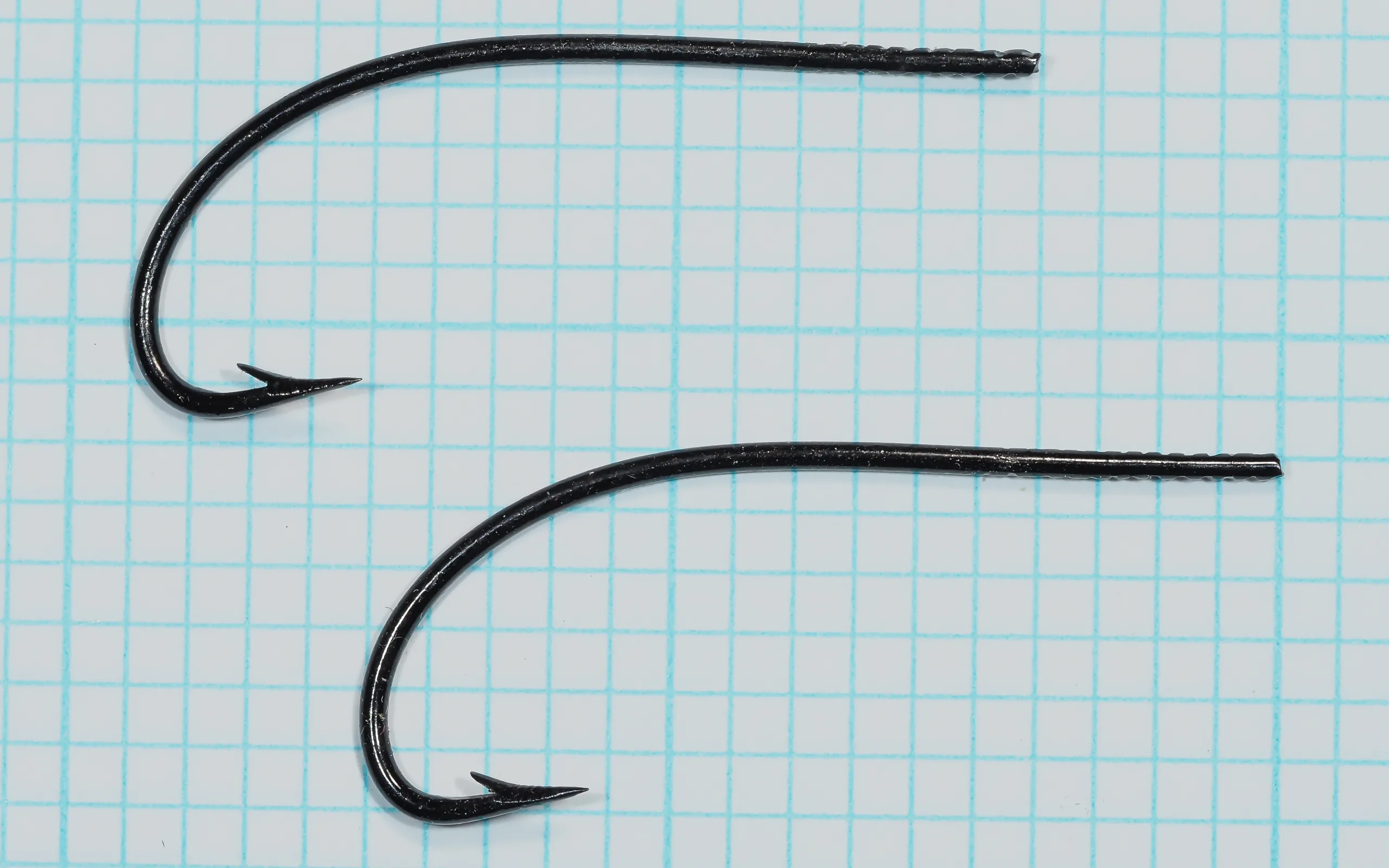
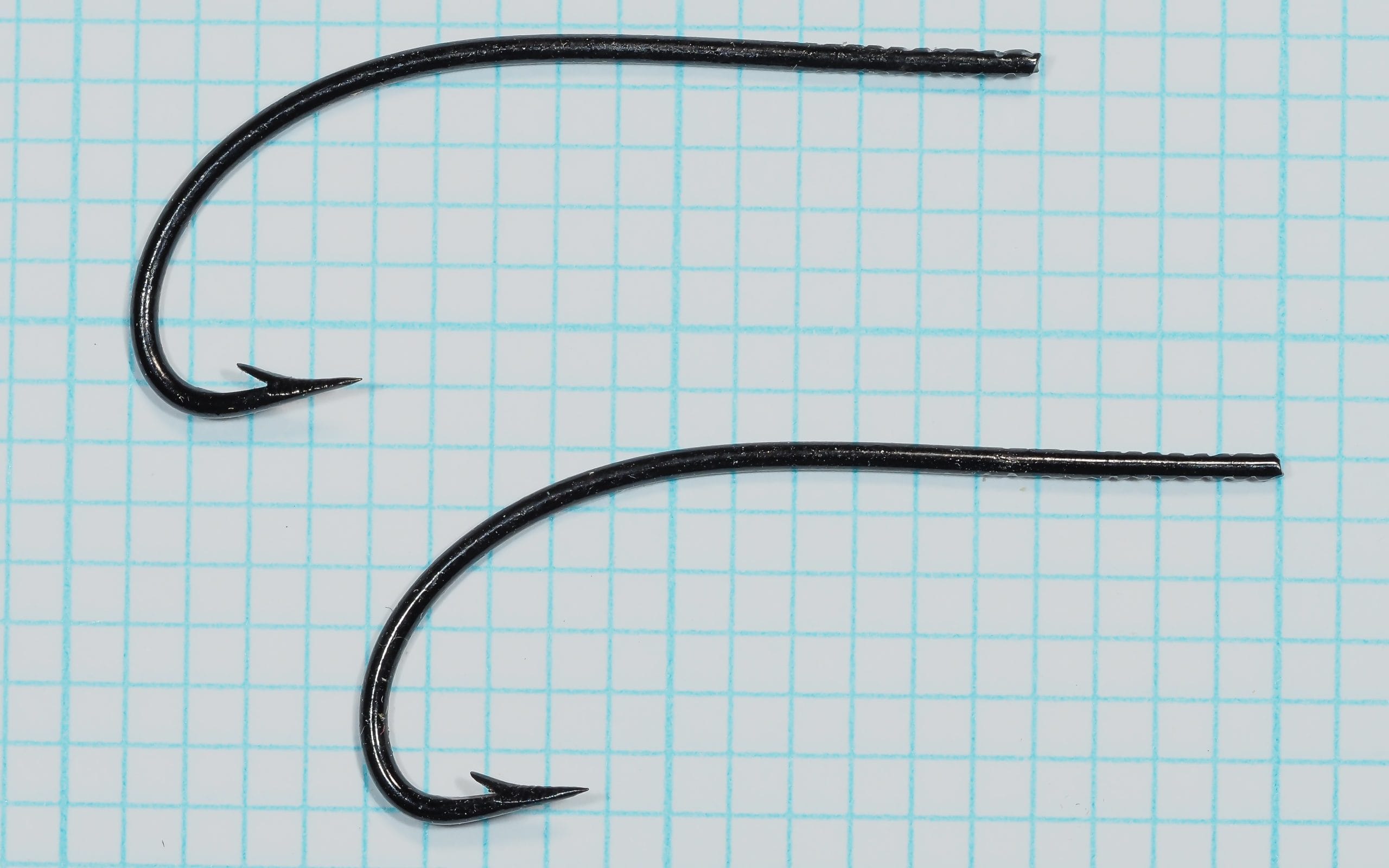
DW and JD Clark’s Chestertown Hooks size 5 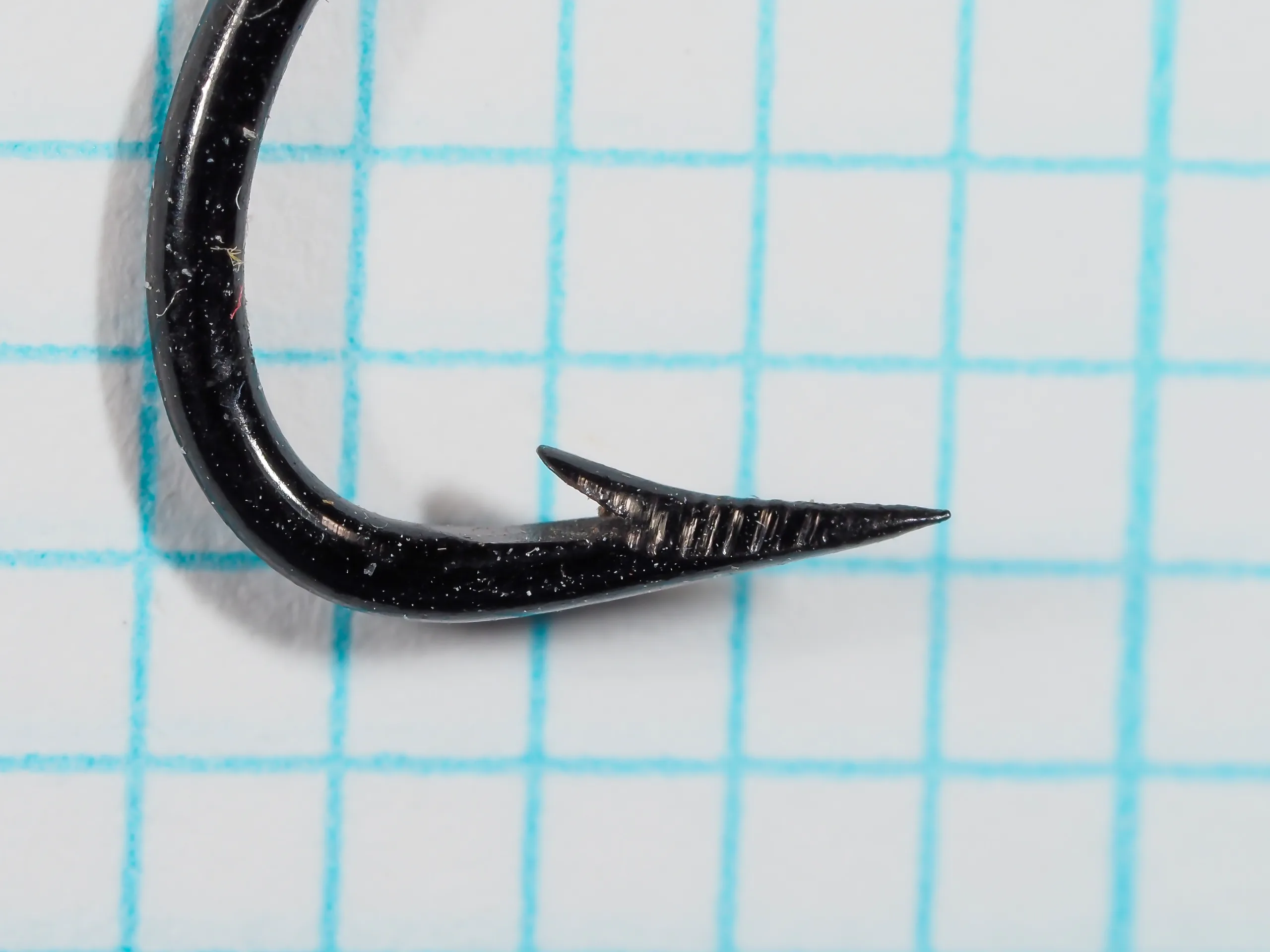
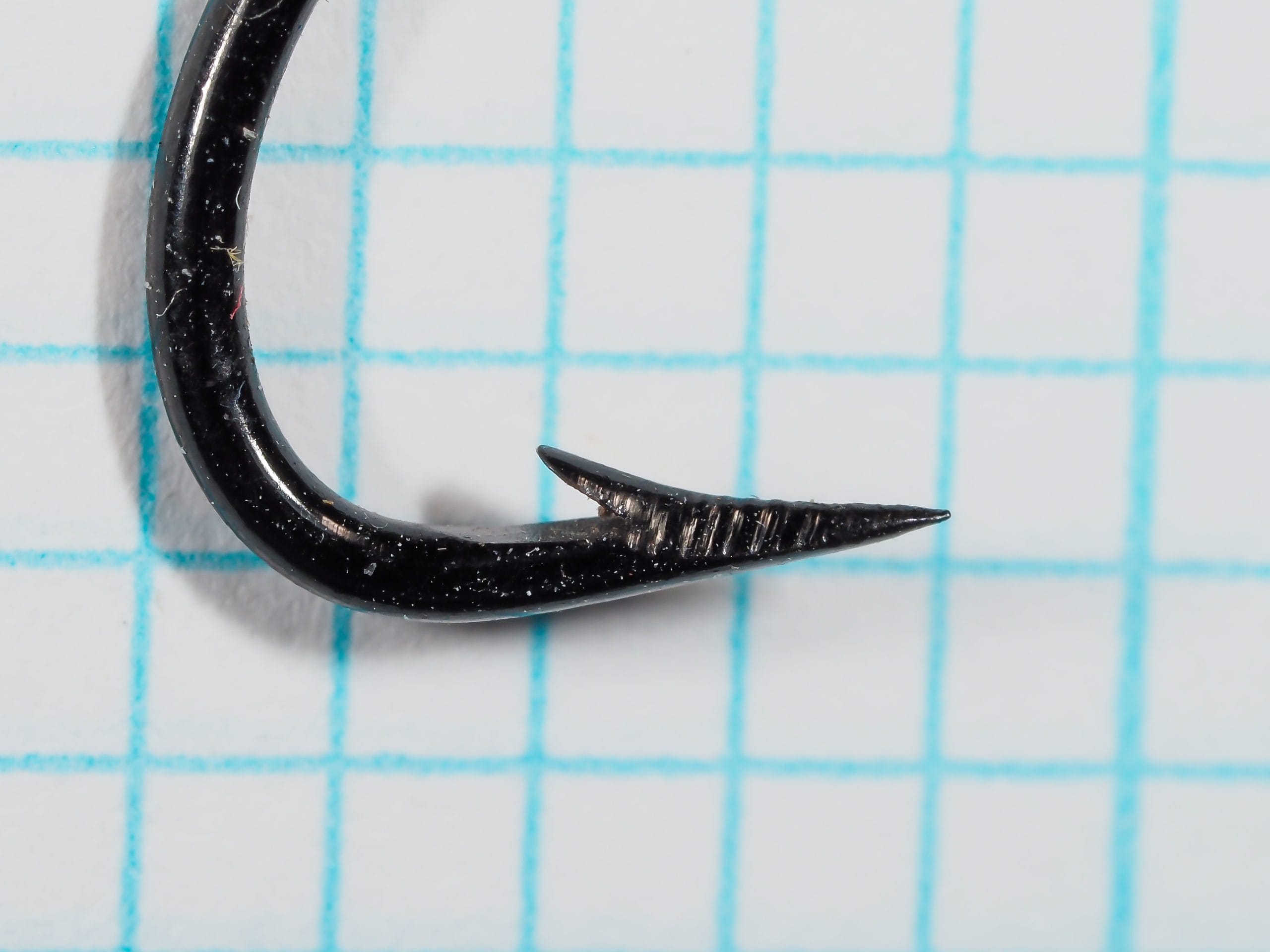
DW and JD Clark’s Chestertown hook point size 5 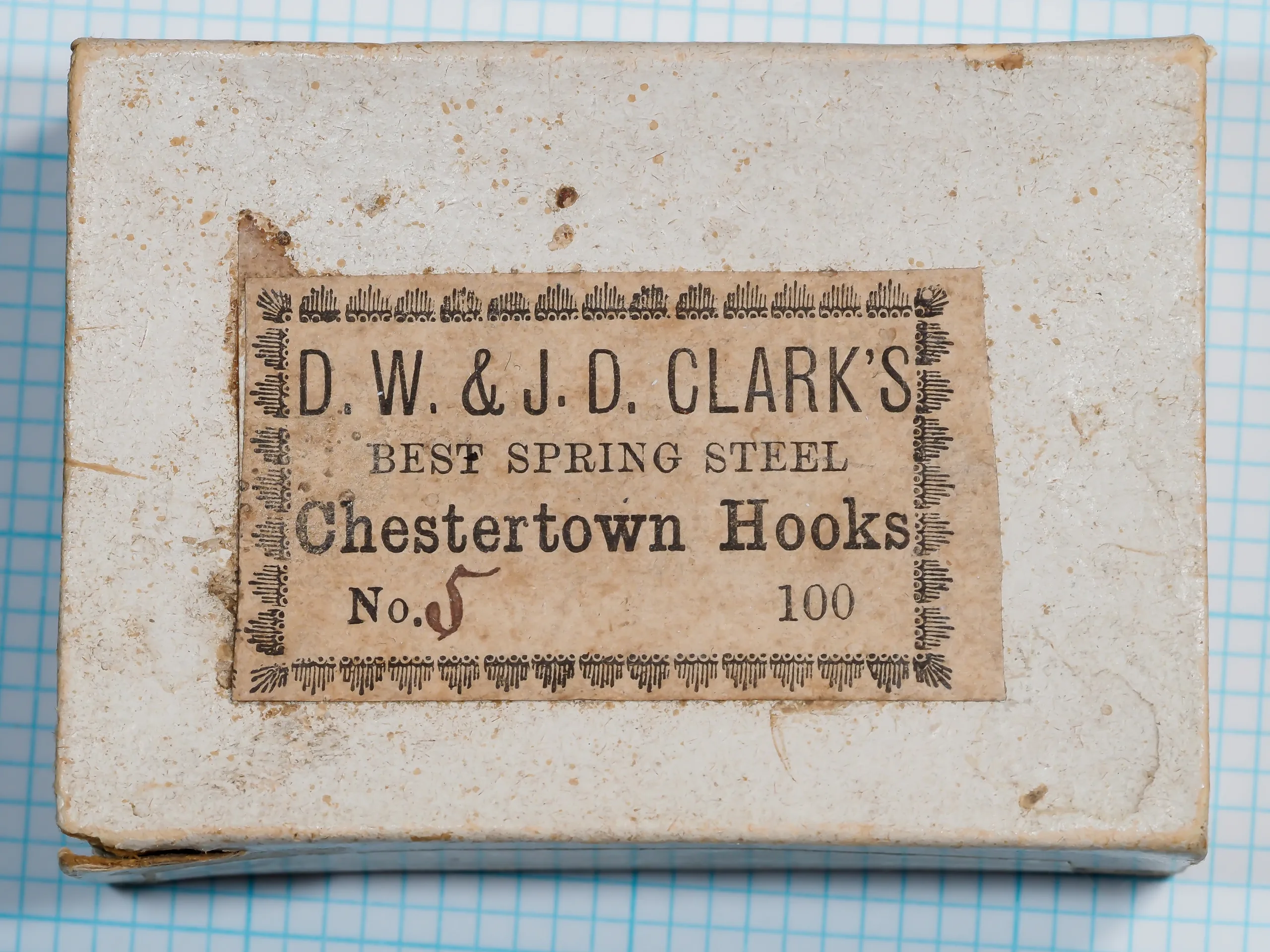
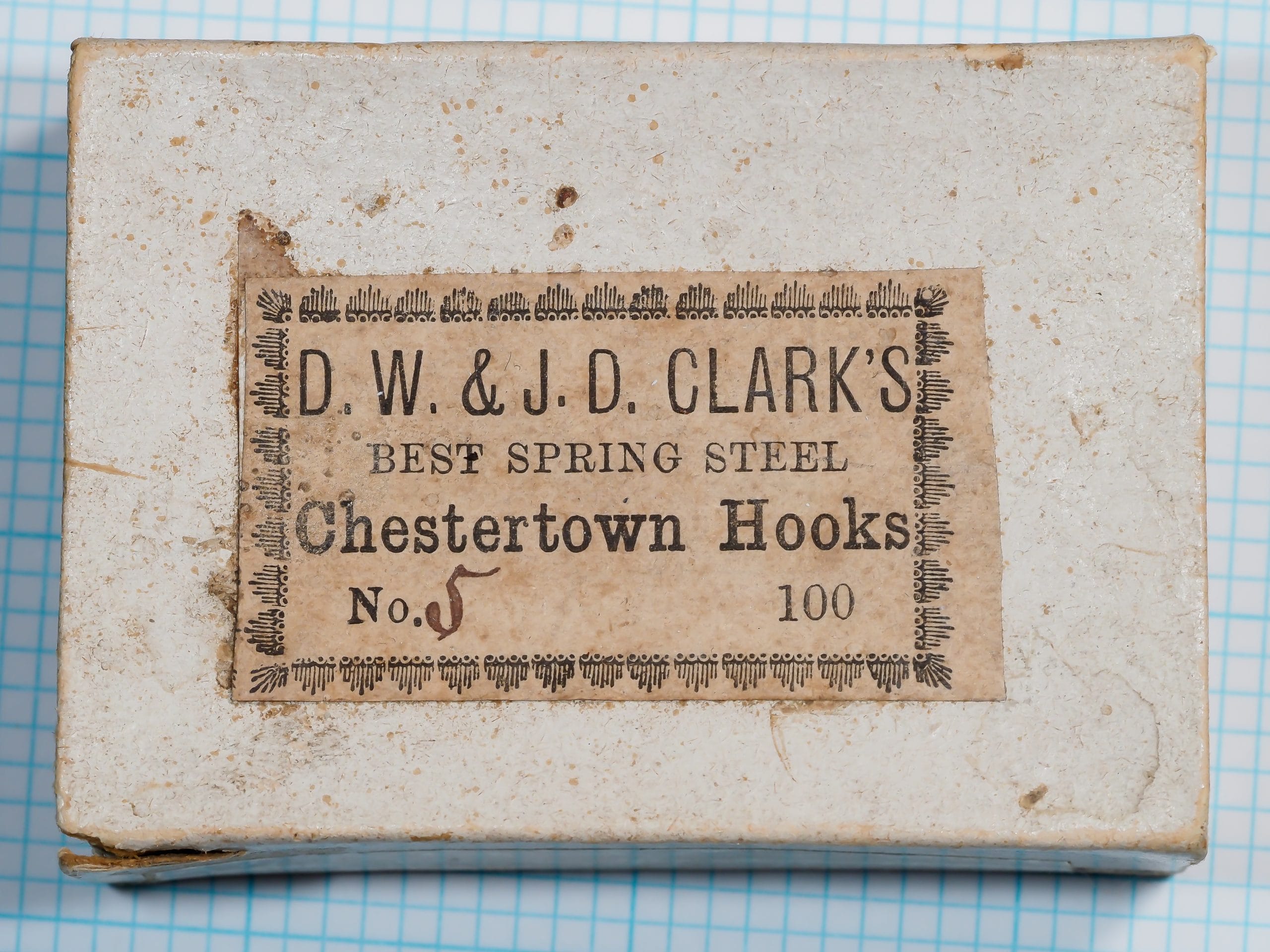
DW and JD Clark’s Chestertown box and label size 5
D.W. & J.D. Clark’s – Additional Info
1. Identification
- Brand: D. W. & J. D. Clark’s
- Model/Code: Chestertown Hooks (Pattern Name)
- Size: No. 5 (Handwritten annotation)
- Quantity: 100 count
- Estimated Era:1880s – 1920s.
- Reasoning: The typography (specifically the “bracketed” serif font used for the brand name), the decorative border style, and the construction of the box (pasteboard with a glued paper label) are characteristic of the late Victorian to early Edwardian era. The term “Best Spring Steel” was a common marketing indicator of quality metallurgy during this period, often implying the hooks were imported from Redditch, England, but packaged by American hardware merchants like Clark.
2. Technical Specifications
Note: As the box is closed, these specifications describe the traditional “Chestertown” pattern contained within.
- Eye: Blind Eye
- Wire: Fine to Standard (designed to be threaded with delicate bait).
- Shank/Bend: Long Shank with a Narrow Gape and a slight Kirby (Offset) Bend.
-
- Finish: Likely Japanned (black enamel) or Blued. This was the standard finish for salt/brackish water hooks of this era to prevent corrosion.
-
3. Historical Context
The “Chestertown” Pattern The “Chestertown” is a legendary American hook pattern, though less known to fly fishermen than the Sproat or Limerick. It was a regional specialty designed specifically for the Winter Flounder fisheries of the Northeastern United States (New York, Connecticut, Rhode Island).
D. W. & J. D. Clark During the turn of the century, it was common for hardware stores, general stores, and dry goods merchants to commission tackle from major manufacturing hubs (usually Redditch, England, or early American foundries) and package them under their own “House Brand.” D. W. & J. D. Clark was likely one such merchant. The packaging is utilitarian but implies quality (“Best Spring Steel”), targeting the subsistence or serious recreational angler rather than the wealthy fly fisherman.
Fun Fact: The Chestertown hook’s geometry is unique because of its Narrow Gape (the distance between the point and the shank). This was intentionally designed for the Winter Flounder, which has a very small mouth relative to its body size. The long shank allowed the angler to thread a whole sandworm or bloodworm onto the hook, while the narrow gape ensured the hook could fit into the flounder’s mouth without being ejected.
4. Usage & Equivalents
Best Used For:
- Vintage Bait Fishing: This is strictly a bait hook. It is the “Holy Grail” hook for traditionalists fishing for Winter Flounder or Blackback Flounder using marine worms.
- Display: Due to the pristine condition of the label and the “Old World” typography, this box is better suited for a collector’s shadow box than actual use.
Modern Equivalent: If you wanted to fish this style today without opening a 100-year-old box, the closest modern descendants are:
- Mustad 3388 (The classic Chestertown pattern, still made).
- Eagle Claw 214 (Aberdeen style—similar long shank and light wire, though with a slightly wider gape).
- Gamakatsu Flounder Hook (A modern, chemically sharpened evolution of this shape).
Summary Timeline
| Era | Status |
| Late 1800s | Active. Producing high-grade “Spring Steel” hooks, likely leveraging Redditch manufacturing techniques. |
| Early 1900s | Peak. Known for the “Chestertown” pattern and blind-eye hooks for the American market (Maryland/East Coast). |
| Mid-1900s | Defunct. Ceased operations amidst industry automation and consolidation by Mustad and others. |
| Present | Collectible. Highly valued by antique tackle collectors and classic fly dressers for their superior vintage aesthetic. |