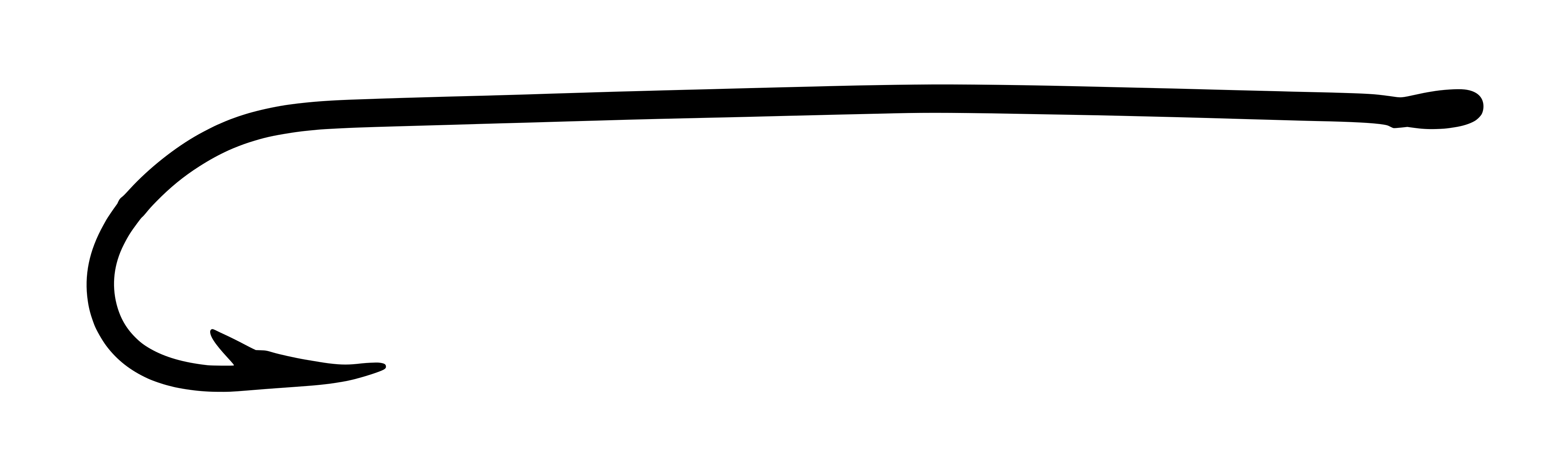
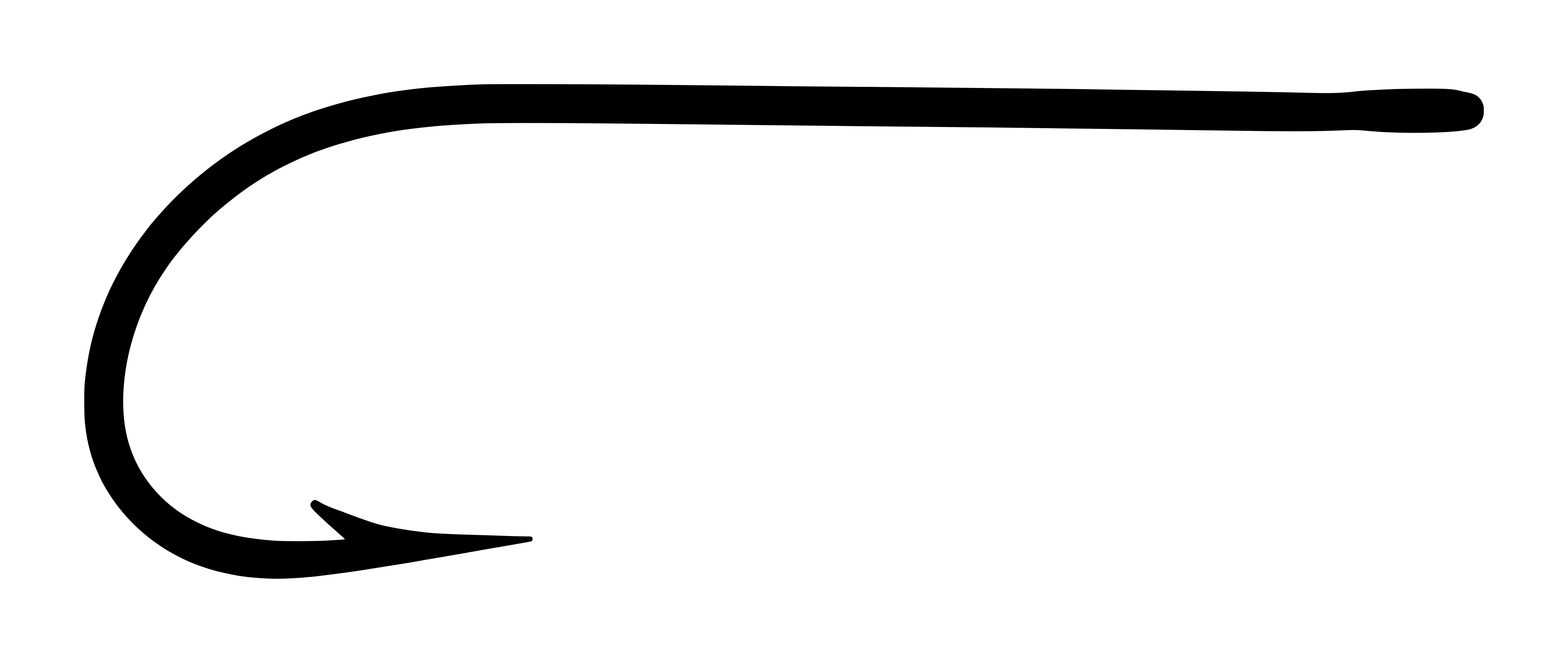
O. Mustad & Søn (Gjøvik, Norway) — Quality 3328 — Mustad-Indiana Bass Hooks. A vintage long-shank bait hook in nickel-plated finish, featuring a straight ringed eye and heavy round wire. The 2.6:1 shank-to-gap ratio was engineered for live bait fishing, particularly for threading minnows or small frogs on the extended shank.
This is a salesman sample card from the mid-20th century, bearing the classic Mustad skeleton-key logo and “Key Brand” trademark. The yellow cardboard stock, decorative border printing, and period typography are consistent with Mustad distribution cards from the 1930s–1950s. The card displays the complete size range (15–30) on a copper-red display card, typical of Norwegian manufacturer presentation standards of that era.
Collectible for its rarity as a complete display card, its documentation of an obsolete sizing system, and its significance in the history of American bass fishing tackle development. Individual hooks in this series occasionally appear on the secondary market but are far less common than later Mustad bass patterns.
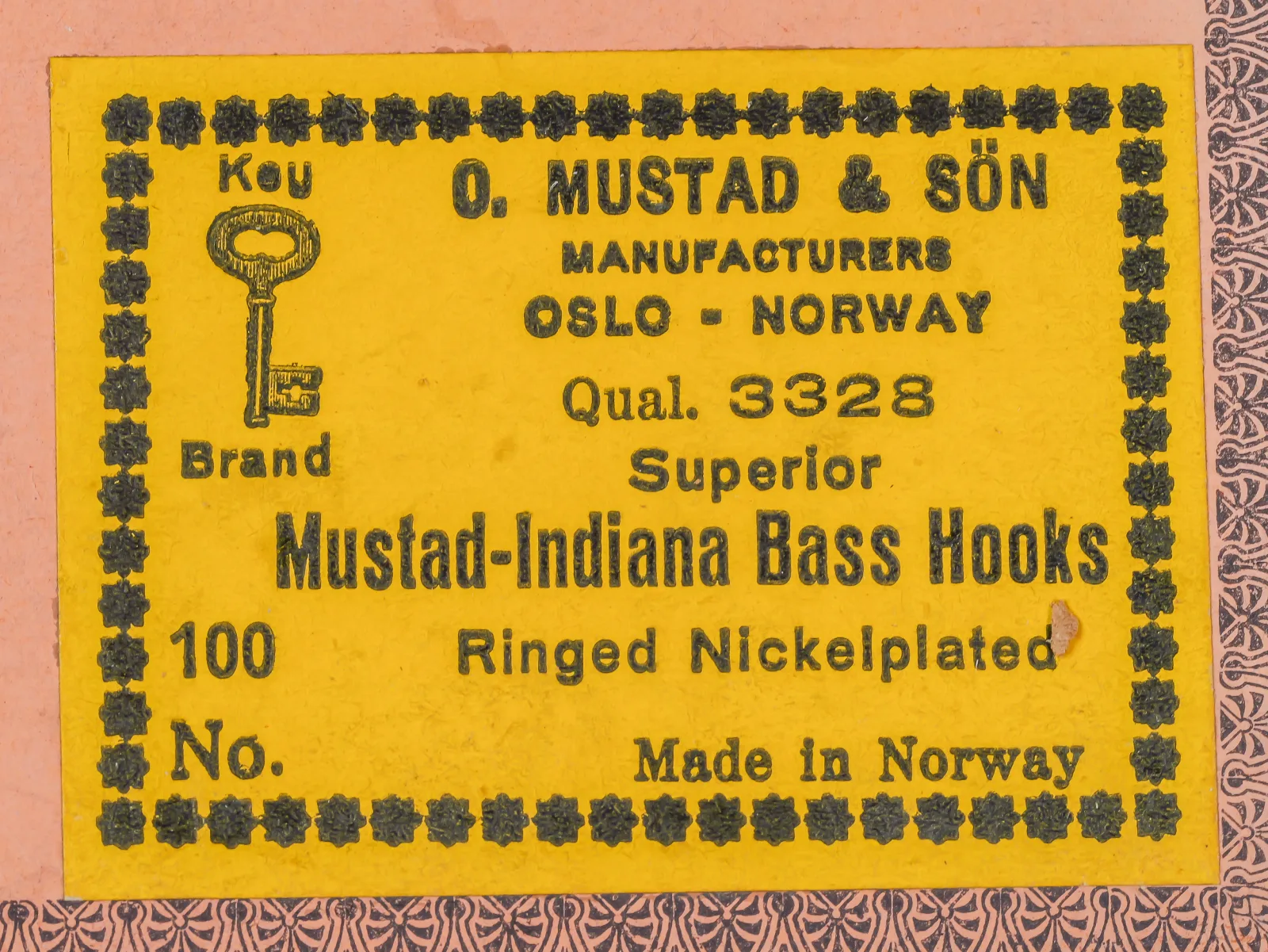
Detail of the yellow gummed label on the salesman sample card, showing the Mustad Key Brand logo, product designation 'Qual. 3328', product line name 'Superior', and complete technical specifications: Ringed, Nickelplated, Made in Norway. This label is original and adds significant historical and collectible value.
Photographic record
2 cataloged imagesSelect any record to load it above.
2 images shown
Mustad 3328 Superior Indiana Bass Hooks — Salesman Card LabelDetail of the yellow gummed label on the salesman sample card, showing the Mustad Key Brand logo, product designation 'Qual. 3328', product line name 'Superior', and complete technical specifications: Ringed, Nickelplated, Made in Norway. This label is original and adds significant historical and collectible value.Open originalMustad 3328 Superior Indiana Bass Hooks — Complete Salesman Sample CardFull view of the vintage Mustad salesman sample card displaying all 13 hook sizes (15–30 in proprietary Mustad sizing system) mounted on measurement grid. The copper-red card stock, decorative Art Deco border frame, and period typography are characteristic of mid-twentieth-century European hook manufacturer presentation cards used for wholesale distribution.Open original
Technical profile
Ringed Eye, Round Bend, Long Shank, Heavy Round Wire, Nickel-plated
Eye
Ball Eye, Straight / InlineLarge, fully formed straight ring of round wire, soldered or brazed to shank. Proportionally generous for heavy bait work. P
Wire
Heavy (1X Heavy), Round, Est. ~0.045"-0.055" (~1.1-1.4 mm)
Shank
2X Long — Plain
Bend
Round / Kendal, Standard gapClassic round-bottom Kendal or Aberdeen derivative bend with medium depth and symmetrical curve. No offset or kirb. Wire set is clean and symmetrical. P
Point
Standard / SpearSmall, close-cut barb positioned slightly forward of the inner curve transition. Barb angle is perpendicular to the shank axis. P
Finish
Nickelled / Nickel-Plated — Confirmed (stated on packaging)Bright nickel plating with warm champagne tone, consistent with mid-20th century electroplating standards. Specimen shows light tarnishing on card consistent with 75+ years of storage in paper packaging; plating remains adherent with no visible pitting. P
Complete salesman sample card with all 13 sizes (15–30) intact and in original position. Card stock shows age toning to warm tan/buff color; black letterpress text and decorative border remain crisp and fully legible. Yellow label (gummed) is firmly adhered with minor edge wear. No water damage, no missing hooks. Specimen hooks show light surface oxidation and plating discoloration but structurally sound, no rust scale, no bent or damaged points.
The Indiana Bass hook employs a round-wire construction in heavy gauge (~0.045″–0.055″ diameter), providing the tensile strength required for live-bait fishing where violent headshakes and gill-plate torque are common. The absence of forging keeps manufacturing costs low while maintaining adequate hardness through selective hardening of the point and barb regions.
The straight ringed eye (as opposed to a looped or tapered eye) offers mechanical simplicity and strength. A soldered or brazed ring connection distributes stress over a larger surface area than a looped eye, reducing the likelihood of eye breakage under the load of a struggling 2–3 pound bass on a live minnow.
The long shank (2.6:1 ratio) increases the mechanical advantage of the bait’s thrashing motion. A short-shank hook would allow a live bait to pivot excessively around the eye, increasing the risk of the fish sliding down onto the bend and bend-point area—resulting in gut-hooking and higher fish mortality. By extending the shank, Mustad created a longer moment arm, so the bait’s struggle directly loads the barb and point, improving hook-set consistency.
The standard spear point (light inward curve, no hollow geometry) is optimized for immediate penetration into soft tissue (fish mouth) and cartilage (gill plates). The simplicity of manufacture and the predictable cutting action made this point ideal for mass production without quality-control burden.
The nickel plating provides corrosion resistance essential for freshwater use where hooks are exposed to algae-rich, mineral-laden water for extended periods. Nickel plating was far cheaper than gold or silver and offered a bright, attractive appearance that drove consumer preference in the mid-20th century.
Size & scale lab
Selected size
(unspecified)
Physical specimen
Overall Length
36.5 mm
Shank Length
25.5 mm
Gap Width
9.5 mm
Bend Depth
14 mm
Shank-to-Gap Ratio
~2.6-2.9 : 1
Confidence
P
Physical specimen
Grid-derived from photograph (1/10" grid)
Cumulative Records
First documented appearance of the 'Superior' product line name on a complete Mustad salesman card in the garrenwood.com catalog. Earliest verified example of Mustad's proprietary 15–30 sizing system applied to a freshwater bait series. One of the few surviving complete Indiana Bass sample cards; most have been disassembled or lost.
Own this hook? Help us measure it.
We don't have measured sizes for this hook yet. Own one? Submit calipered measurements and we'll review and add them. Thank you!
Historical context
mustad
O. Mustad & Søn — Founded 1832, Gjøvik, Norway. The Mustad family began hook manufacturing in a small workshop in Oslo and relocated to Gjøvik by mid-century, where water power and access to iron ore enabled rapid expansion. By the 1890s, Mustad had eclipsed the Redditch English manufacturers to become the world’s largest industrial hook producer, with distribution networks across North America, Europe, and Asia-Pacific.
The company pioneered mass production techniques while maintaining craft standards, employing hundreds of workers in the Gjøvik factory by the 1920s. Unlike the English Redditch tradition of small, specialized makers, Mustad operated as an integrated industrial operation, controlling wire drawing, tempering, forging, finishing, and packaging in-house. This vertical integration allowed them to produce over 60,000 distinct hook patterns and size variants by mid-century—a testament to their manufacturing flexibility.
The “Key Brand” trademark (skeleton key logo) was Mustad’s primary international mark from the 1920s through the 1960s, appearing on all salesman cards, packaging, and catalogs distributed to tackle shops, hardware stores, and fishing clubs worldwide. Mustad hooks became the default choice for American and Canadian anglers, reflecting both quality reputation and aggressive marketing through regional distributors.
Series History
The “Mustad-Indiana Bass Hooks” series represents a mid-twentieth-century product line designed specifically for American freshwater bass fishing. The term “Indiana” derives from the popular Indiana spinner blade (a regional lure component standard in Midwestern tackle), and Mustad branded this entire hook series to capitalize on the robust US bass market of the 1930s–1950s.
Unlike Mustad’s fly-fishing or salmon lines (which featured blind eyes, tapered eyes, and specialized point geometries), the Indiana Bass series employed a ringed eye for tackle-box friendliness and live-bait durability. The long shank was a deliberate engineering choice: it prevented deep throat-hooking of live minnows and frogs, reduced fish mortality during catch-and-release, and accommodated multiple baits threaded along the shank—a preferred technique among tournament and subsistence bass anglers of that era.
The sizing system (15–30, with 15 as largest) is distinctly non-Redditch and appears to reflect Mustad’s internal catalog numbering rather than any standardized measure. This proprietary sizing likely confused North American tackle dealers accustomed to Redditch or O’Shaughnessy numbering, contributing to the series’ eventual eclipse by later, more standardized patterns such as the Mustad 3261 (Aberdeen) and 3191 (Long Shank) in the 1960s and beyond. No documentation of design collaborators or named engineers has been located; this was a standard production line without attributed designer credit.
Era and Packaging Dating
No barcode (pre-1974 strong indicator). Skeleton key logo was Mustad primary trademark 1920s–1960s. Yellow gummed label format and construction consistent with mid-twentieth-century salesman cards. Letterpress printing (not offset), warm-toned cardboard stock, and decorative Art Deco border frame suggest 1930s–1950s manufacture. Phone number format not visible on card. Postal code format not visible. Price markings absent. No reference to postwar standards or modern sizing terminology. Combination of evidence: Key Brand logo, card construction, typography, and color palette all point to c. 1930s–1950s, with 1940s as most probable central estimate.
Mustad's Regional Marketing Strategy: The Indiana Connection
The Indiana spinner blade became iconic in American bass fishing during the 1920s–1940s, and Mustad's decision to brand an entire hook series around this regional component shows how European manufacturers studied American fishing traditions to build market share. Bass fishing in that era was primarily a regional sport in the American South and Midwest; by naming a hook series after the Indiana blade, Mustad signaled to tackle dealers and anglers that they understood—and catered to—their specific needs. This marketing insight was characteristic of Mustad's dominance: they listened to regional anglers, adapted their product lines accordingly, and then sold back to those same regions a sense of authentic craftsmanship. The ringed eye, the long shank, the heavy wire—every detail was a response to real fishing problems that American anglers had articulated over decades of trial and error.
Design lineage and influence
The long-shank bait hook concept predates the Indiana series by decades. English makers such as Allcock and Partridge produced long-shank patterns for pike and salmon live-baiting in the 1880s–1910s, and American manufacturers like Pflueger adapted these designs for domestic freshwater use. Mustad’s contribution was to industrialize and standardize the pattern for mass distribution.
Competitors included the Pflueger “Long Shank” (USA), the South Bend “Bass-Oreno” hooks (USA), and various regional English patterns. However, Mustad’s aggressive international distribution and reputation for consistent quality gave the Indiana series a competitive advantage in tackle shops across North America and Scandinavia.
The series was eventually superseded by Mustad’s own later patterns—particularly the 3261 (Aberdeen, shorter shank, Redditch sizing) and the 3191 (Long Shank, improved forging). By the 1960s, the vintage Indiana sizing system had become an anachronism, and the line was quietly discontinued. Modern equivalents (Mustad 3261, 3191; Owner S-31; Gamakatsu Octopus) employ standardized international sizing and improved wire metallurgy but sacrifice none of the functional advantages that made the original Indiana pattern valuable.
Best matchRelated by Attribute
Computed automatically from catalog data — updated as new hooks are added.
Matches: Shank, Gap, Eye, Eye Orient., Point +5 moreDiffers: Bend: Round / Kendal vs Carlisle; Wire: Heavy (1X Heavy) vs Extra-Fine; Finish: Nickelled vs Blued
Matches: Shank, Wire, Gap, Point, Forging +2 moreDiffers: Bend: Round / Kendal vs Sproat; Eye: Ball Eye vs Tapered Eye; Eye Orient.: Straight / Inline vs Turned Down +2 more
Matches: Wire, Gap, Eye, Eye Orient., Point +4 moreDiffers: Bend: Round / Kendal vs Sproat; Shank: 2X Long vs Extra-Extra Long; Finish: Nickelled vs Gold-Plated
Live bait fishing for bass, walleye, pike, and panfish. The long shank (approximately 2.6:1 ratio) was specifically designed to accommodate live minnows, small frogs, or multiple worms threaded along the shank. The ringed eye provides a connection point for leader or line, and the heavy round-wire construction handles the weight and struggle of larger live baits. The straight (non-offset) point aids in hook setting when the bait is suspended or drifted below spinners or other active lures.
Named patterns specifically associated with this hook. Leave blank if none formally documented. Do not speculate — only include patterns with a confirmed association.
Modern Equivalents
Hook
Match Quality
Notes
Owner S-31
Good
Modern ringed-eye live-bait hook, similar long shank and heavy wire, improved metallurgy
Gamakatsu Octopus
Moderate
Long-shank heavy wire, ringed eye, bait-optimized; point is more acute than vintage Indiana
Mustad 3261 Aberdeen
Moderate
Mustad direct successor; longer shank variants available, modern Redditch sizing
Collector notes
Reference value
$45 – $85 USD estimate
Packaging condition
Very Good — light wear, fully legibleRecorded specimen
Packaging format
GW-Mustad-01Catalog code
Packaging
Vintage Mustad salesman sample card. Format: horizontal landscape, approximately 16" × 10" (40 × 25 cm). Base card stock is salmon/tan color with applied black-and-tan decorative border frame (Art Deco geometric pattern). Letterpress printed in black: 'O. MUSTAD & SÖN, FISHHOOK MANUFACTURERS (ESTABL. 1832) OSLO - NORWAY' across top. Thirteen hook sizes arranged in two rows (15–27 in top row, 28–30 in bottom row), each labeled with blue-printed size number. Yellow gummed label affixed to lower right: 'Key Brand / O. MUSTAD & SÖN / MANUFACTURERS / OSLO - NORWAY / Qual. 3328 / Superior / Mustad-Indiana Bass Hooks / 100 / Ringed Nickelplated / No. / Made in Norway' with skeleton key logo. Overall condition very good; light age toning, no water stains, no tears.
Collector's Identification Tips
Check for the skeleton-key “Key Brand” logo—present on all genuine Mustad exports of this era. Verify yellow label text reads exactly ‘Qual. 3328 / Superior / Mustad-Indiana Bass Hooks / Ringed Nickelplated’ (spacing and abbreviations vary slightly by print run). Count the size range: legitimate cards display sizes 15–30 (13 sizes total), arranged in two rows. Inspect for all 13 hooks in original position; missing hooks dramatically reduce collectability. Verify Gjøvik, Norway origin statement on label. Check card stock tone (should be warm tan/salmon, not bright white or heavily stained). Examine border frame for print clarity and color consistency.
Preservation
Storage and Preservation
Store the complete salesman card flat in an acid-free archival box, away from direct sunlight and humidity fluctuations. The warm-toned cardboard is susceptible to yellowing and brittleness if exposed to heat or low humidity over extended periods. Maintain storage temperature between 60–70°F (15–21°C) and relative humidity between 30–50%.
The nickel plating on the hooks themselves is stable and will develop a light patina over time—this is normal and generally considered desirable by collectors as evidence of authenticity. Do not attempt to polish or remove patina; use only a soft natural-bristle brush and distilled water if surface dust accumulation is necessary. The gummed yellow label is original and adds significant historical value; do not separate, restore, or clean it.
If the card is displayed, use archival UV-protective glazing to prevent photo-fade of the printed text and decorative border. Inspect periodically for any signs of moisture damage, mold growth, or insect activity (silverfish and booklice are risks for aged paper artifacts). Store away from other metal objects to prevent galvanic corrosion where hooks contact other materials.
Size Note
The Mustad Proprietary Sizing System
This card displays hook sizes numbered 15–30, with 15 as the largest and 30 as the smallest. This is not the Redditch international standard (which uses 2/0, 1/0, 1, 2, 3, etc., with smaller numbers indicating larger hooks). Instead, it reflects Mustad’s internal catalog numbering system—a proprietary scheme used for regional product lines and salesman distribution.
This non-standard sizing was a source of confusion for American and European tackle dealers unfamiliar with Norwegian manufacturing conventions. A dealer ordering “size 15 Indiana Bass hooks” from a Mustad catalog could not easily cross-reference them to English “2/0” or American “1/0” patterns without consulting detailed size charts. This ambiguity likely contributed to the series’ eventual displacement by later patterns with standardized Redditch numbering.
The visible size range (15–30) suggests that Mustad’s internal scale encompassed at least 30 size increments for their entire hook catalog. Whether size 1 existed (or whether the catalog started at size 15 for this series) remains undocumented in available sources. Collectors should note that any individual hook from this series must be identified by its position on the original card—isolated hooks cannot be reliably sized without reference to a catalog or comparison card.
The yellow gummed label contains the complete technical and commercial specification in abbreviated form. ‘Qual. 3328’ (Quality 3328) indicates Mustad’s internal product number; all Mustad hooks carried a quality designation, though the meaning of “Quality” in this context (as distinct from a grading system) has not been definitively established in available literature. The label’s prominent use of ‘Superior’ as a product line name (not a point-style designation) reflects mid-century branding conventions where marketing descriptors were applied to entire series rather than specific geometric features.
‘Ringed Nickelplated’ specifies the two most important commercial features: the ringed-eye connection point and the corrosion-resistant finish. These qualities directly addressed the concerns of American freshwater anglers, for whom durability and ease of rig assembly were paramount. ‘Made in Norway’ establishes provenance and appeals to the quality reputation associated with Norwegian manufacturing (a selling point in British and American tackle markets of that era).
The ‘100’ notation indicates the standard package size for bulk wholesale orders—a dealer could order one ‘unit’ (the salesman card display) or one box of 100 hooks. This scaling was typical for Mustad distribution: they provided visual samples to merchants, who then reordered by the gross or case lot, never in small retail packs. The absence of a price marking on the label suggests this card was a reference sample for in-house use, not a point-of-sale price ticket.
Additional
The Long-Shank Advantage in Live-Bait Bass Fishing
The extended shank on the Indiana Bass hook served a critical functional purpose in the live-bait fishing tradition. A live minnow or frog thrashes violently when hooked, creating lateral and rotational forces that, on a short-shank hook, would cause the bait to pivot around the eye and slide down the bend. The result: the bait’s body contacts the point and barb, leading to deep throat-hooking (“gut-hooking”), fish mortality, and legal issues in jurisdictions with catch-and-release regulations.
The long shank increased the distance from the eye (the pivot point) to the point and barb (the cutting edges). This geometry meant that a live bait’s thrashing motion applied force along the length of the shank rather than directly over the bend; the bait’s body weight was distributed across a longer fulcrum, reducing the rotational stress that would otherwise flip the bait and lodge the hook deeper in the fish’s throat.
This design philosophy reflects the empirical wisdom of American bass anglers, many of whom practiced catch-and-release or subsistence fishing where hook mortality affected long-term fish populations. By the 1930s–1950s, when the Indiana Bass series was manufactured, conservation concerns were beginning to influence tackle design in ways that would accelerate in the postwar era. The long-shank pattern was not a novelty; it was a proven solution to a real problem, and Mustad’s industrial production made it affordable for mass-market distribution.
Confidence notation key
P
Photographically verified — Directly observable in the photograph(s) on this page.
V
Verified by documentation — Confirmed by manufacturer catalog, spec sheet, or published reference.
I
Inferred — A logical deduction from observable or documented evidence, not directly stated.
E
Estimated — An approximation based on visual comparison, proportional analysis, or limited data.
S
Speculative — A reasoned hypothesis that cannot be confirmed from available evidence.
Claims with no notation are confirmed by multiple independent sources. All photographs on garrenwood.com are taken on a measurement grid where each square equals 1/10 inch (0.1″ / 2.54 mm).