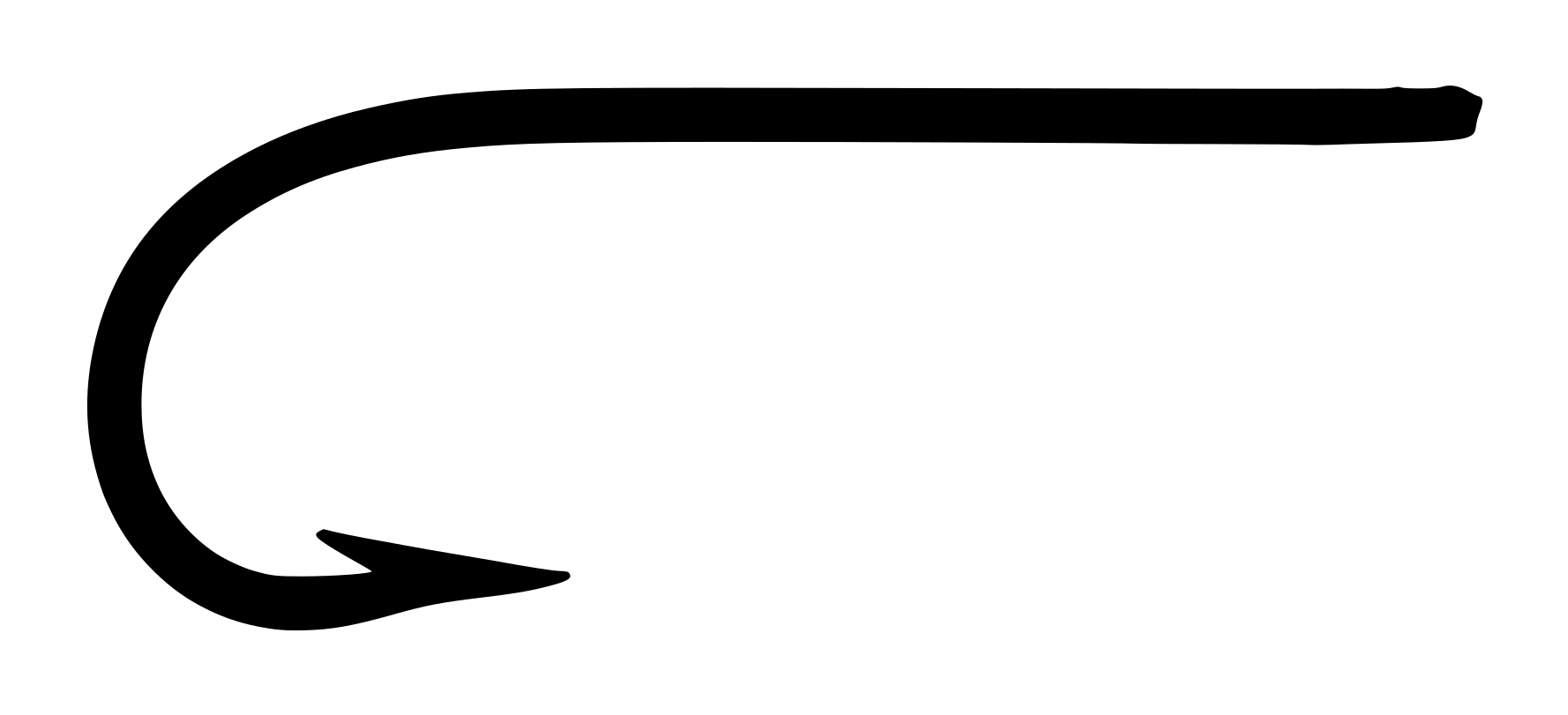
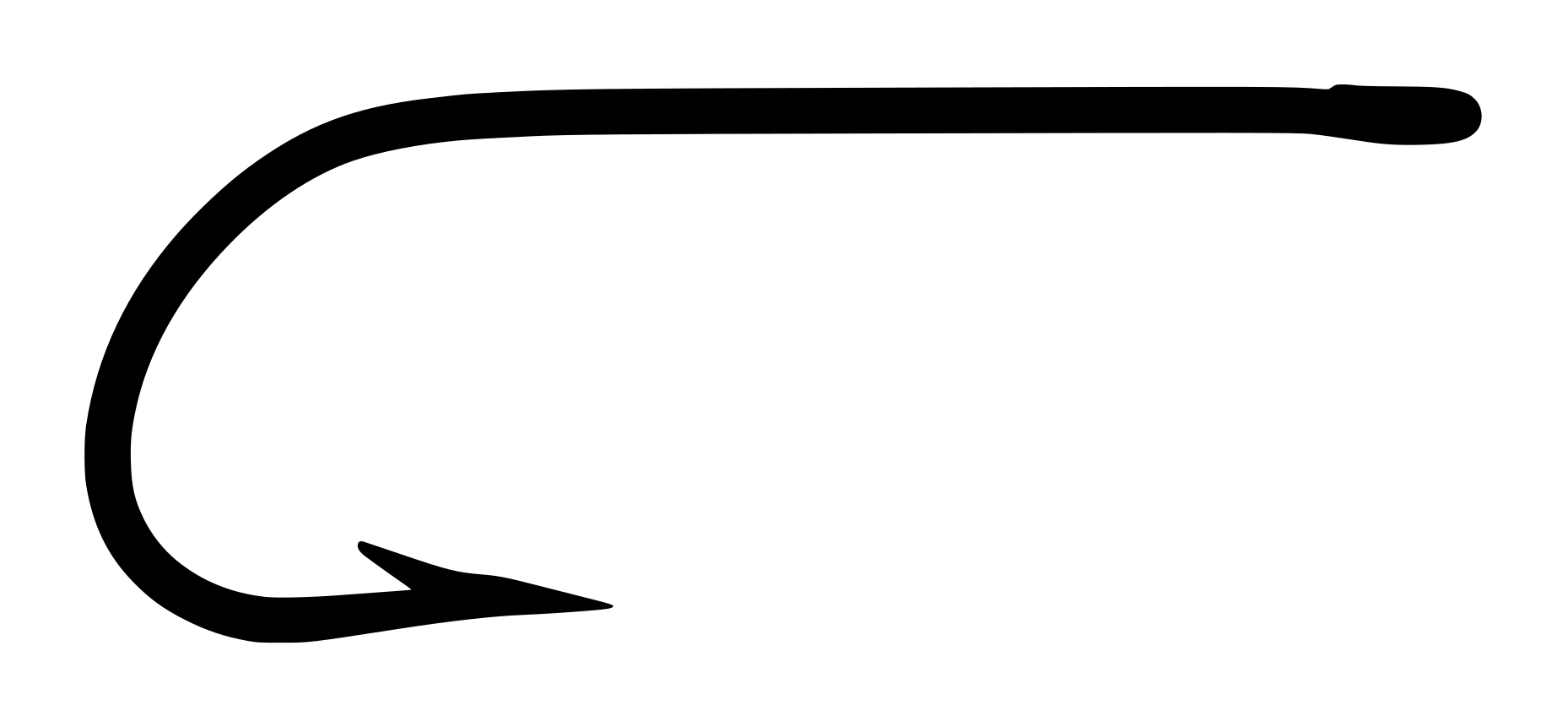
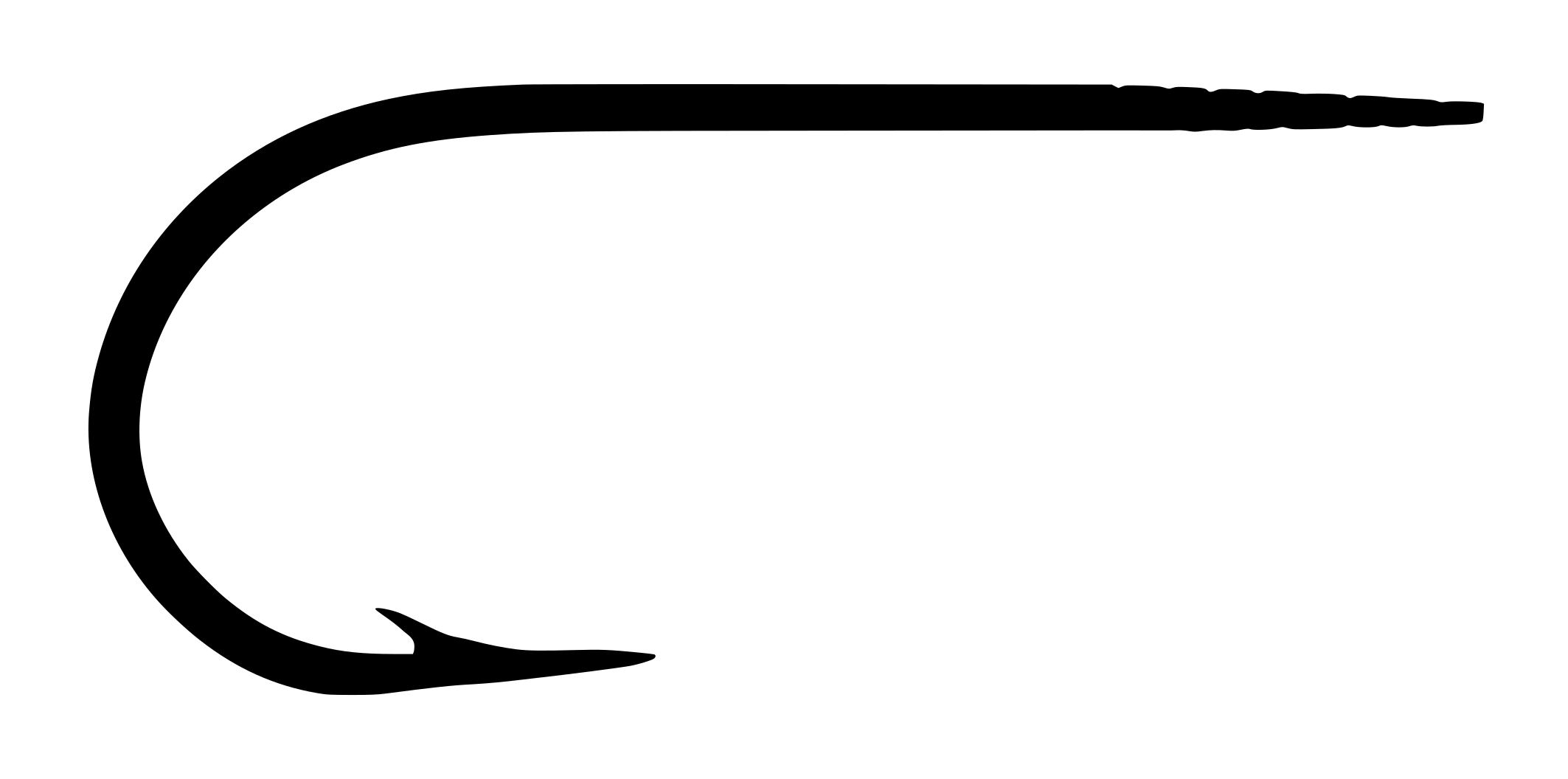
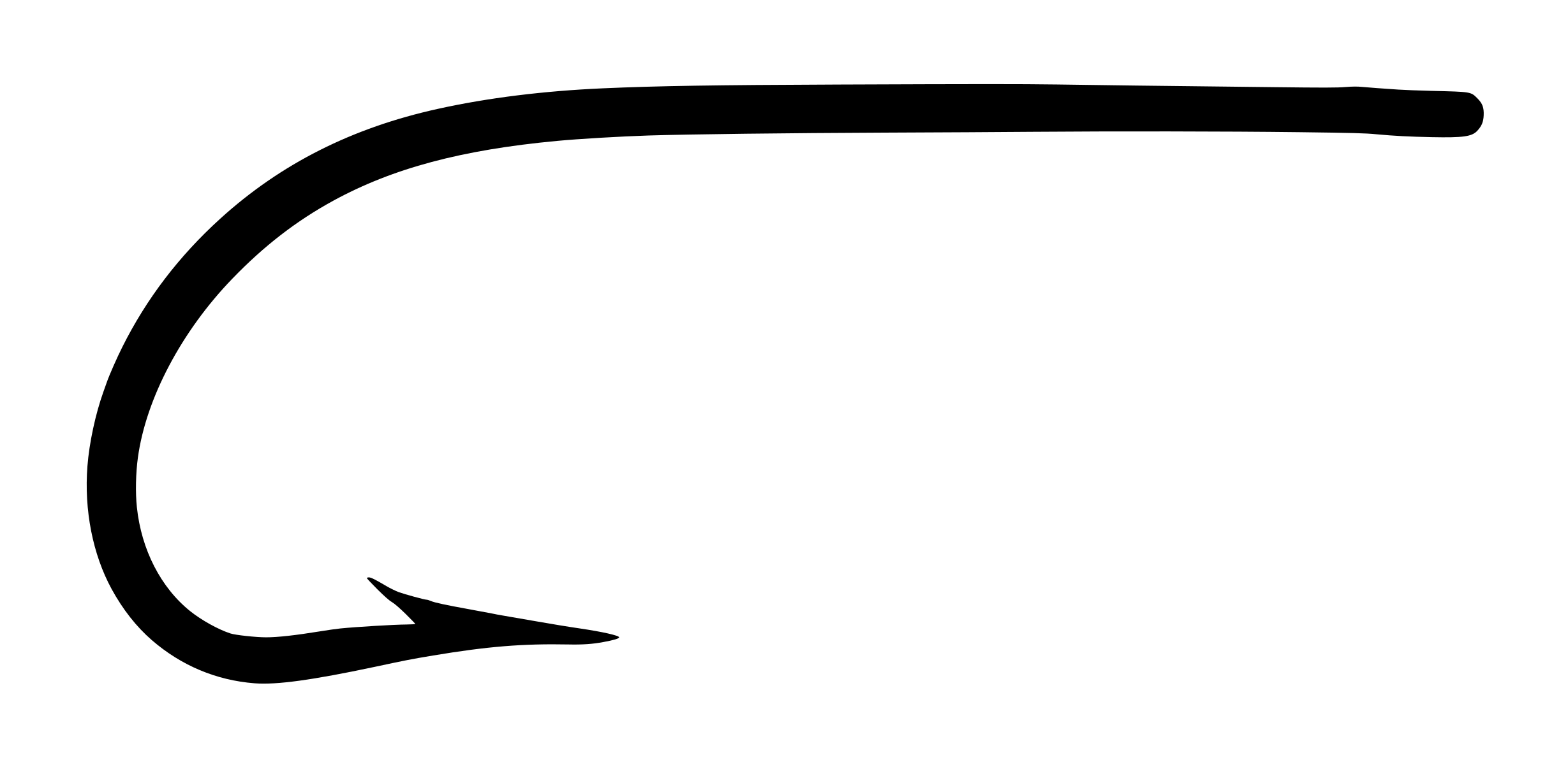
The Mustad Quality 3750 is a classic Cincinnati Bass Hook from the early 20th century, manufactured in Christiania, Norway. This blind-eye bait hook represents a pivotal transition period in angling history when anglers snelled their own hooks rather than purchasing pre-tied flies or modern eyed hooks.
The defining feature is the wide-gape Cincinnati bend—a regional American pattern that Mustad reverse-engineered and mass-produced for export. The marked (scored) shank prevented the snell knot from slipping under the strain of a fighting fish. The hollow point provided rapid penetration for soft-mouthed freshwater species.
The presence of ‘Christiania’ on the label—the name of Norway’s capital until 1925—serves as a definitive dating anchor. This hook is highly prized by collectors for its artifact quality and its documentation of manufacturing practices before the modern era of standardized eyed hooks and monofilament.
Original cardboard label for the Mustad Quality 3750 Cincinnati Bass Hook, size 15, showing the distinctive orange cardstock with gold letterpress printing and the Christiania (pre-1925) location marker.
Photographic record
6 cataloged imagesSelect any record to load it above.
6 images shown
Mustad 3750 Size 15 Original Packaging LabelOriginal cardboard label for the Mustad Quality 3750 Cincinnati Bass Hook, size 15, showing the distinctive orange cardstock with gold letterpress printing and the Christiania (pre-1925) location marker.Open originalMustad 3750 Size 28 Original Packaging LabelOriginal cardboard label for the Mustad Quality 3750 Cincinnati Bass Hook, size 28, showing the identical orange cardstock and gold letterpress design with Christiania location, photographed on measurement grid.Open originalMustad 3750 Size 15 Hollow Point DetailMagnified view of the hook point and barb geometry (size 15) showing the distinctive concave hollow-point design and close-cut barb on a measurement grid.Open originalMustad 3750 Size 28 Hollow Point DetailMagnified view of the hook point and barb geometry (size 28) showing the identical hollow-point design at a smaller scale on a measurement grid.Open originalMustad 3750 Size 15 Full Hook ProfileFull-profile side view of the size-15 hook showing the blind flatted end, marked shank with scoring, parabolic sproat bend, and overall proportions on a measurement grid.Open originalMustad 3750 Size 28 Full Hook ProfileFull-profile side view of the size-28 hook showing identical geometry to size 15 at a proportionally smaller scale on a measurement grid.Open original
Technical profile
Eye
Blind — Marked ShankBlind end with visible scoring marks to grip the snell knot.
Wire
Standard, Round
Shank
Standard — Marked / Ridged
Bend
Beak / Reversed Point, Standard gap, Offset / kirbedSproat-like parabolic curve with slightly deeper profile than standard modern versions. Symmetrical, no pronounced offset. Designed to distribute stress evenly across the bend during heavy bait presentations. P
Point
Hollow Point (concave inner face)Short, close-cut barb positioned at the inner bend. Barb angle is near-perpendicular to the inner shank face. Not overly prominent, reflecting the engineering balance between penetration and holding power. P
Finish
Bright / Uncoated Steel — Confirmed (stated on packaging)Bright polished steel with minimal oxidation on examined specimens. Cool metallic tone without any japanning or tinning coating visible. The bright finish provided maximum underwater flash for attracting predatory fish. P
Specimen shows bright metal with no significant corrosion. Original cardboard packaging exhibits light toning and wear consistent with age but remains legible. Two sizes documented: No. 15 and No. 28.
The hollow point geometry creates an exceptionally fine, razor-sharp tip with a concave inner face, enabling rapid penetration into soft tissue with minimal applied force. This point style was engineered for soft-mouthed fish (crappie, panfish, trout) where a heavy, violent hook-set would tear friable flesh and result in a lost catch.
The marked (scored) shank served a critical mechanical function: the small grooves or raised ridges prevented the silk or gut snell from sliding off the tapered end under the violent head-shakes of a hooked fish. The bright steel finish reflected maximum light in the water column, attracting predatory fish while providing no barrier to line attachment through snelling.
The Cincinnati bend distributes stress evenly across the parabolic curve, resisting the sudden straightening-out that would occur under a sharp bend design. This geometry was deliberately chosen for live-bait applications where the fish could exert sustained, multi-directional force during prolonged fights.
This entry documents one of the earliest documented Mustad Cincinnati Bass patterns in the garrenwood.com catalog. The Christiania designation places it in the pre-1925 era, making it a temporal anchor for all subsequent Mustad entries. The blind-eye construction with marked shank represents a manufacturing convention now obsolete, making this a valuable educational reference for hook evolution.
Own this hook? Help us measure it.
We don't have measured sizes for this hook yet. Own one? Submit calipered measurements and we'll review and add them. Thank you!
The Mustad 3750 Cincinnati Bass Hook belongs to the Cincinnati pattern family—a distinctly American regional bend that Mustad reverse-engineered in the late 1880s to capture the burgeoning freshwater bass market. The Cincinnati bend was favored heavily by the ‘Indiana School’ of bass fishermen who specialized in still-fishing with bulky live baits.
The 3750 represents the mid-tier quality offering in Mustad’s Cincinnati lineup (models 1000-3999 range). This pattern remained in production through the mid-20th century, eventually transitioning to ringed-eye versions as fishing line technology evolved. The blind-eye variant with marked shank (found in the 3000-series) was progressively discontinued as modern direct-knotting became standard.
Era and Packaging Dating
Line 3 of the label reads 'Christiania - Norway.' Oslo's official name change from Christiania occurred on January 1, 1925. Any Mustad box bearing the Christiania designation must predate 1925. The printing method (letterpress on orange cardstock with gold ink), the absence of a barcode, the lack of a postal/ZIP code system reference, and the stylized 'Key Brand' logo are all consistent with early 20th-century Scandinavian commercial printing. The packaging materials and construction methods are consistent with 1900-1924 production. No modern era dating can be later than 1924 based on the Christiania designation alone.
Regional Patterns as a Global Monopoly Strategy
In the early 20th century, regional bass fishermen developed such specific hook preferences that Mustad produced over 60,000 distinct hook model variations to serve hyper-local markets. A Cincinnati angler would fish only Cincinnati-pattern hooks; an Indiana angler would demand Indiana patterns. Mustad's genius was not inventing these patterns, but mechanizing their production with such precision and speed that they could undercut regional blacksmiths worldwide. The 3750 Cincinnati Bass Hook represents the exact moment this industrial strategy conquered global markets—Norwegian factories mass-producing American Midwestern fishing traditions faster and cheaper than any local maker could match.
Design lineage and influence
The Cincinnati pattern predates Mustad’s version and originated among Midwestern American blacksmiths serving the Indiana and Ohio bass-fishing communities. Mustad’s engineering innovation was not the bend itself, but the ability to mass-produce it with tolerances and consistency unattainable by hand forging. The wide-gape Cincinnati influenced numerous companion patterns, including the Virginia Bass Hook and regional ‘Indiana-pattern’ variants.
The blind eye with marked shank represents the final evolutionary step before the transition to ringed eyes. Post-1925, Mustad introduced ringed-eye versions of the Cincinnati pattern (e.g., 3300-series), making the 3750 a snapshot of a manufacturing and angling convention at its endpoint.
Best matchRelated by Attribute
Computed automatically from catalog data — updated as new hooks are added.
Matches: Bend, Gap, Eye, Eye Orient., Forging +5 moreDiffers: Shank: Standard vs 1X Long; Wire: Standard vs Heavy (1X Heavy); Point: Hollow Point vs Standard / Spear +2 more
Matches: Gap, Eye, Eye Orient., Point, Finish +4 moreDiffers: Bend: Beak / Reversed Point vs Kirby (offset); Shank: Standard vs 1X Long; Wire: Standard vs Fine (1X Fine) +1 more
Matches: Bend, Wire, Gap, Eye Orient., Forging +2 moreDiffers: Shank: Standard vs 1X Long; Eye: Blind — Marked Shank vs Blind — Flatted; Point: Hollow Point vs Standard / Spear +3 more
Matches: Shank, Gap, Eye, Eye Orient., Forging +4 moreDiffers: Bend: Beak / Reversed Point vs Kirby (offset); Wire: Standard vs Heavy (1X Heavy); Point: Hollow Point vs Superior +3 more
The Mustad 3750 Cincinnati Bass Hook was designed for freshwater bait fishing with live minnows, crayfish, and worms targeting bass, perch, and panfish. The wide gape and Cincinnati bend geometry provided secure bait retention and positive hook-sets with hard-fighting fish. The blind eye required traditional snelling to a braided silk or gut snood, placing it in the era before ringed-eye commercialization. The marked shank prevented the snell knot from slipping under tension during the fight.
Secondary Applications
Display, tackle collecting, historical recreation of vintage snelled presentations.
Classic Fly Patterns
Not typically used for fly tying in the modern sense; snelled as a live-bait rig.
Modern Equivalents
Hook
Match Quality
Notes
Mustad 3366 Sproat Wet Fly
Very Good
Modern ringed-eye Sproat with similar bend geometry; used for fly tying rather than bait
Gamakatsu Octopus
Good
Modern octopus-bend bait hook with similar wide gape and heavy wire for live-bait applications
Owner Mutu Light Circle
Moderate
Modern circle-hook design offers snag resistance and self-setting features absent from vintage Cincinnati pattern
Collector notes
The 3750 is highly collectible due to its Christiania-pre-1925 provenance, the rarity of blind-eye specimens, and its documentation of the snelled-hook era. Limited surviving examples in original packaging command strong collector demand. However, the model is not as scarce as true antique Redditch patterns, and many specimens are in poor condition.
Reference value
$35 – $65 USD estimate
Packaging condition
Good — moderate wear, legibleRecorded specimen
Packaging format
GW-M-02Catalog code
Positive Factors: Pre-1925 Christiania designation places this in the historic early phase of Mustad’s global dominance. Blind-eye construction is less common than later ringed-eye versions, making intact specimens scarcer. Original packaging with legible graphics greatly enhances collector interest. The hook documents an entire era of American regional fishing traditions (the Cincinnati pattern) and the snelled-hook methodology. No barcode or modern markings confirm vintage status.
Limiting Factors: The model is not exceptionally rare—many thousands were produced. Condition issues (corrosion, missing hooks, damaged packaging) are common for hooks over 100 years old. The hook is primarily of display value; modern anglers have no practical use for a blind-eye, marked-shank bait hook. Sizing conventions of the era (No. 15, No. 28) differ from modern standards, potentially confusing non-specialist buyers. Competition from more famous contemporary patterns (Mustad 3304, 3371) means this model does not command the premium of true rarities.
Packaging
Orange cardstock box label with gold letterpress printing. Dimensions approximately 2.5 in × 1.5 in (6.4 cm × 3.8 cm). Eight-line typographic format per Mustad standard: Line 1: 'O. MUSTAD & SÖN' in large caps. Line 2: 'MANUFACTURERS' in smaller caps. Line 3: 'CHRISTIANIA - NORWAY'. Line 4: 'Qual. 3750'. Line 5: 'Hollow Point'. Line 6: 'Cincinnati Bass Hooks'. Line 7: 'Marked'. Line 8: 'Bright' with 'Made in Norway' on a separate line. Bottom left corner: 'No. [size]' (either 15 or 28). Decorative circular logo (Key Brand downward-pointing skeleton key) positioned upper left. Box borders formed by repeated ornamental dot patterns. Orange background with gold metallic ink showing patina appropriate to age. Two variants documented: Size 15 and Size 28.
Market Value Notes
Pricing depends heavily on packaging condition and lot size. A single hook in original box on eBay typically commands $40-75 USD (2024-2025). A lot of 5-10 original packets may reach $150-250 USD total. Premium prices ($65+) are driven by exceptional packaging condition, both size variants together, and documented provenance. Dealer sales through specialist tackle sites may achieve 15-20% premiums over eBay. Condition of the hook itself matters less than packaging rarity for collectors.
Where to Find
eBay vintage fishing tackle auctions (search 'Mustad Christiania' or '3750'); specialist tackle dealers focusing on pre-1930 hooks; European fishing-museum gift shops; estate sales of angler collections; online vintage-tackle forums and sales groups.
Collector's Identification Tips
The Christiania location is the primary identifier—any Mustad box with this designation is pre-1925 and highly desirable. Verify that the Quality code reads exactly ‘Qual. The marked shank is visually distinctive; feel for the small ridges or scoring with a fingertip. Blind-eye versions are rarer than ringed-eye successors, making specimens in good condition particularly valuable. Original packaging adds 30-50% premium to hook value.
Preservation
Storage and Preservation
Store original packaging in a cool, dry environment away from direct sunlight and humidity. The orange cardstock is susceptible to fading and moisture absorption, which can lead to mold growth on older paper stocks. Keep hooks on the original card whenever possible; do not remove or use them for fishing, as the collector value resides entirely in the vintage packaging and documentation.
If you own multiple packets, store them flat in an acid-free archival box with silica-gel packets to control moisture. Avoid contact with other metals or ferrous materials, which can cause galvanic corrosion despite the bright steel finish. Check periodically for insect activity (silverfish, book lice) which are attracted to old cardstock. A light application of microcrystalline wax to the metal (without touching the card) can provide additional corrosion protection if the hooks are ever unboxed for examination.
Display in a glass cabinet or photograph case where they are protected from dust and handling. If the box is damaged, consider professional conservation before attempting home repairs.
Marking Analysis
Printed and Handwritten Markings
The label is entirely letterpress printed with gold ink on orange cardstock. No handwritten annotations are visible on the examined specimens. The size marking (‘No. 15’ or ‘No. 28’) appears to be printed in a smaller font at the bottom left corner, consistent with factory production labeling rather than post-production marking.
The repeated circular dot pattern around the box border is a decorative die-cut feature common to Mustad’s early 20th-century packaging aesthetic, not an indication of individual lot or date marking.
Size Note
Non-Standard Sizing: Cincinnati Pattern Scale
The documented sizes (No. 15 and No. 28) appear to violate modern hook-sizing conventions. In modern fly-hook systems, a No. 15 is a medium-sized dry fly hook approximately 0.75 in long. However, the measured Mustad 3750 No. 15 is 2.2 in overall length—far larger than any modern No. 15 fly hook.
This discrepancy arises because the Cincinnati Bass Hook used a completely different sizing scale than modern fly hooks. In the Cincinnati pattern system, numbering was based on the regional bait-fishing traditions of the American Midwest, not the British imperial fly-hook scale (which uses descending numbers: 1, 2, 4, 6, 8, 10, 12, etc.). Historical Mustad catalogs indicate that Cincinnati No. 15 was a mid-sized bait hook for panfish and small bass, while Cincinnati No. 28 was microscopic by comparison.
Collectors should note that direct comparison of Mustad Cincinnati hook sizes to modern hook sizes is meaningless. A modern equivalent bait hook would be something like a No. 6 or No. 4 in contemporary scale.
Additional
The Snelled Hook Era: A Vanished Angling Tradition
The Mustad 3750’s blind eye represents an entire fishing methodology now virtually extinct in Western angling: the practice of snelling—manually lashing a hook to a fishing line using hand-tied knots and specialized techniques. Before ringed eyes became standard (1920s-1930s), fishermen and tackle makers routinely snelled their own hooks, a meticulous process requiring skill, materials (braided silk, gut, pitch), and time.
A snell involved soaking a length of braided silkworm gut (a natural fiber harvested from the silkworm’s digestive tract) in water until pliable, then whipping it tightly to the hook shank using fine silk thread wrapped in a spiral. The snell was then sealed with pitch or shellac to make it waterproof and rigid. The marked shank on the 3750—with its small grooves or raised ridges—prevented the wrapping thread from slipping off the tapered end under the stress of a fighting fish.
This tradition connected directly to centuries of English fly-dressing practice and regional American bait-fishing conventions. By the 1930s, the invention of reliable knots (the improved clinch knot, the arbor knot) and the availability of cheap monofilament line eliminated the need for snelled rigs in most contexts. The blind-eye hook became a relic within a single generation, making the 3750 a material artifact of a lost technical tradition.
Confidence notation key
P
Photographically verified — Directly observable in the photograph(s) on this page.
V
Verified by documentation — Confirmed by manufacturer catalog, spec sheet, or published reference.
I
Inferred — A logical deduction from observable or documented evidence, not directly stated.
E
Estimated — An approximation based on visual comparison, proportional analysis, or limited data.
S
Speculative — A reasoned hypothesis that cannot be confirmed from available evidence.
Unnotated claims are the compiler’s synthesis; see Sources. All photographs on garrenwood.com are taken on a measurement grid where each square equals 1/10 inch (0.1″ / 2.54 mm).