
R. Turner and Sons
- Founded
- 1820Redditch, England
- Documented entries
- 6Catalog records
- Era range
- 1880–19006 dated entries
R. Turner & Sons was a family-owned manufacturer of needles, pins, fish hooks, and fishing tackle based in Redditch, England. During the 19th century, Redditch was one of the world’s most important centers for needle and fish-hook production, supported by generations of workers skilled in drawing, pointing, shaping, and tempering steel wire. Within this industrial community, R. Turner & Sons developed into a substantial manufacturer with an active export trade and a wide range of hooks for freshwater, saltwater, and fly-fishing applications.
Origins under Joseph Turner
The company used an establishment date of 1820 on its later letterhead. However, surviving records do not confirm the business under that name so early. The first known trade-directory entry dates from 1835, when Joseph Turner was listed as a manufacturer of needles and fish hooks. It is therefore most accurate to describe the firm as traditionally established around 1820, with documented operations beginning by 1835.
Joseph Turner was also associated with an important development in Redditch needle manufacture. Contemporary and later accounts credit him with reviving the practice of hardening needles in oil around 1840. That change reportedly caused unrest among local workers, who feared that new production methods would reduce wages or eliminate skilled positions. The episode illustrates how closely the Turner business was connected to the technical development of Redditch’s needle trade.
Richard Bourne Turner and the Old Factory
By 1855, Joseph Turner had disappeared from local trade listings, and his son Richard Bourne Turner, born in Redditch in 1827, was recorded as a needle maker on Bromsgrove Road. In 1861, the business appeared as R. Turner & Co., operating from the Old Factory on Bromsgrove Road. By 1865, the Old Factory was recorded on Bates Hill, the location with which the company would remain associated for the rest of its documented history.
Under Richard Turner, the business expanded considerably. Census records indicate that the factory employed approximately 46 people in 1871 and 136 by 1881. Men, women, and children all worked within the operation, reflecting the labor structure of the Victorian needle and hook industries. An 1882 exhibition catalog described the firm’s products as including steel and brass pins, needles of many descriptions, fish hooks, patent needles, and gauges.
Trade directories indicate that the company name changed from R. Turner & Co. to R. Turner & Sons sometime between 1876 and 1878. The precise reason for the change is not recorded. Although it signaled the continuation of the business as a family concern, Richard Turner’s sons were still young at the time, so it should not automatically be assumed that they had already taken active roles in the factory.
International Exhibitions and Export Trade
R. Turner & Sons participated in at least five major international exhibitions:
Philadelphia in 1876, Paris in 1878, Melbourne in 1880, Paris again in 1889, and Chicago in 1893.
Participation in these exhibitions placed the Turner name before international buyers and helped promote Redditch-made products in important overseas markets. The company received a silver medal at the Melbourne International Exhibition of 1880–1881 for its sewing needles. Although Turner exhibited at all five events, the surviving evidence does not establish that it won medals at every exhibition.
North America appears to have been an important market. Frank Gilbert Turner, Richard’s youngest son, made several business trips to the United States and Canada between 1905 and 1910, traveling to destinations including New York and Toronto. These journeys provide direct evidence that the company maintained commercial relationships across the Atlantic during the early 20th century.
R. Turner & Sons Fish Hooks
The surviving record of Turner’s hook production is incomplete, but original boxes, labels, and individual specimens demonstrate that the company manufactured a broad selection of traditional hook patterns. Documented examples include Sproat, Sneck, Chestertown, Pacific Bass, blind-eye salmon, ringed, and double hooks. Surviving specimens are found in japanned, bronzed, blued, and other finishes.
Turner’s blind-eye salmon hooks are particularly familiar to collectors and dressers of traditional Atlantic salmon flies. A blind-eye hook has no formed metal eye; instead, it was originally attached to a loop of gut or another leader material. Many surviving Turner examples have heavy wire, long points, carefully formed bends, and black japanned finishes characteristic of late Victorian and early Edwardian salmon-hook production.
Turner hooks were not limited to salmon fishing. Surviving packaging documents smaller wet-fly and general-purpose patterns, bass hooks intended for the North American market, and heavier hooks for bait and saltwater use. Because the company manufactured hooks alongside needles and pins, its production depended on the same fundamental skills: selecting suitable wire, forming consistent bends, cutting or forging barbs, producing sharp points, heat-treating the steel, and applying a protective finish.
Incorporation and the Final Years
Richard Bourne Turner retired sometime between 1901 and 1911. His son Frank Gilbert Turner, born in 1871, had worked in the business since at least the 1890s and became its director. In 1909, the company was incorporated as R. Turner & Sons Ltd. Richard Turner died at Old Factory House on Bates Hill in 1916 at the age of 89.
The precise date on which R. Turner & Sons ceased manufacturing remains uncertain. The firm was still listed at Bates Hill in 1912 and appeared in a Birmingham commercial yearbook in 1914. Correspondence dating from 1925 through 1929 records Frank Gilbert Turner selling substantial quantities of remaining needle boxes and related material that appear to have come from the company’s unsold or retirement stock. The available evidence therefore suggests that independent production ended sometime after 1914 but before the middle of the 1920s. This timeframe should be treated as provisional until additional directories or company records are located.
The Old Factory no longer survives. Historical map comparisons place it on the south side of Bates Hill, close to the route later taken by Redditch Ringway. The building was probably demolished during the extensive redevelopment of the town and construction of the road system in the 1970s.
The Turner Legacy
Today, R. Turner & Sons is remembered through surviving hooks, packets, needle cases, advertisements, correspondence, and exhibition records. Its products represent a period when Redditch manufacturers supplied anglers and merchants throughout Britain, Europe, North America, and other overseas markets.
For hook collectors, original packaging is often as historically important as the hooks themselves. Turner boxes can document pattern names, sizes, finishes, intended markets, trademarks, and changes in company identification. Hooks marked or packaged under R. Turner & Co., R. Turner & Sons, and R. Turner & Sons Ltd. may also help establish approximate production periods.
Among classic fly dressers, Turner’s blind-eye and japanned salmon hooks remain especially desirable because they are original products of the period in which many traditional salmon flies were developed and first dressed. More broadly, R. Turner & Sons deserves recognition as a significant member of the Redditch needle and fish-hook industry—a family firm whose surviving products preserve the materials, manufacturing methods, and commercial reach of Victorian and Edwardian British hook making.
Complete index
6 entries
| Model | Name | Specification | Application | Era | Collectability | |
|---|---|---|---|---|---|---|
|
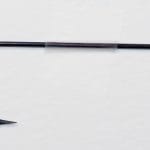
Aberdeen | Aberdeen | AberdeenStdBlued | Bait Salmon | c. 1900–1935 | |
|
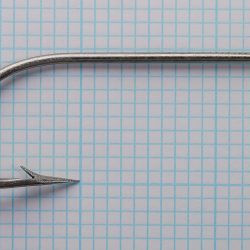
CBH | Cincinnati Bass Hooks | KirbyFine1XLBright | SW Bait | c. 1880–1920 | |
|
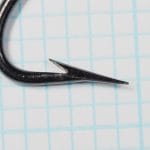
Chestertown | Chestertown | SproatStdJapanned | Bait Sea trout Salmon | c. 1900-1925 | |
|
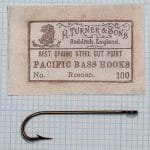
Pacific Bass | Pacific Bass | SproatHeavyBronzed | Bait SW | c. 1900-1930 | |
|
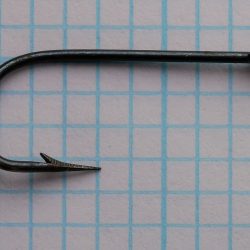
Sneck | Sneck Ringed | SneckStdJapanned | Dry Wet Nymph | c. 1900-1950 | |
|
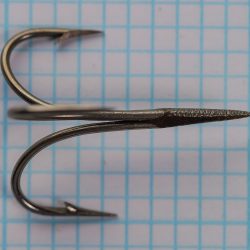
Treble | Tapered Treble | SproatStdPolished | SW Bait | c. 1890-1920 | — |