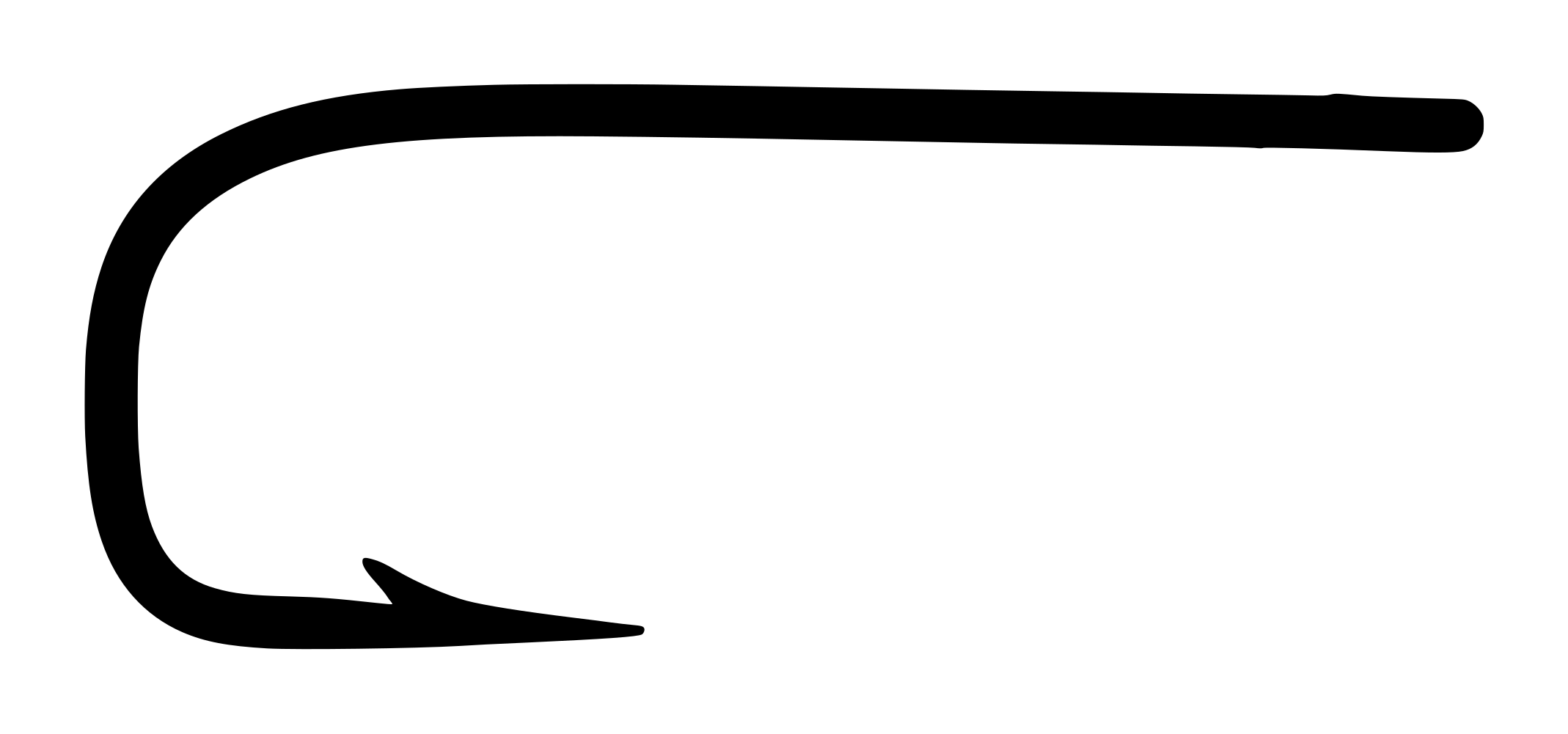
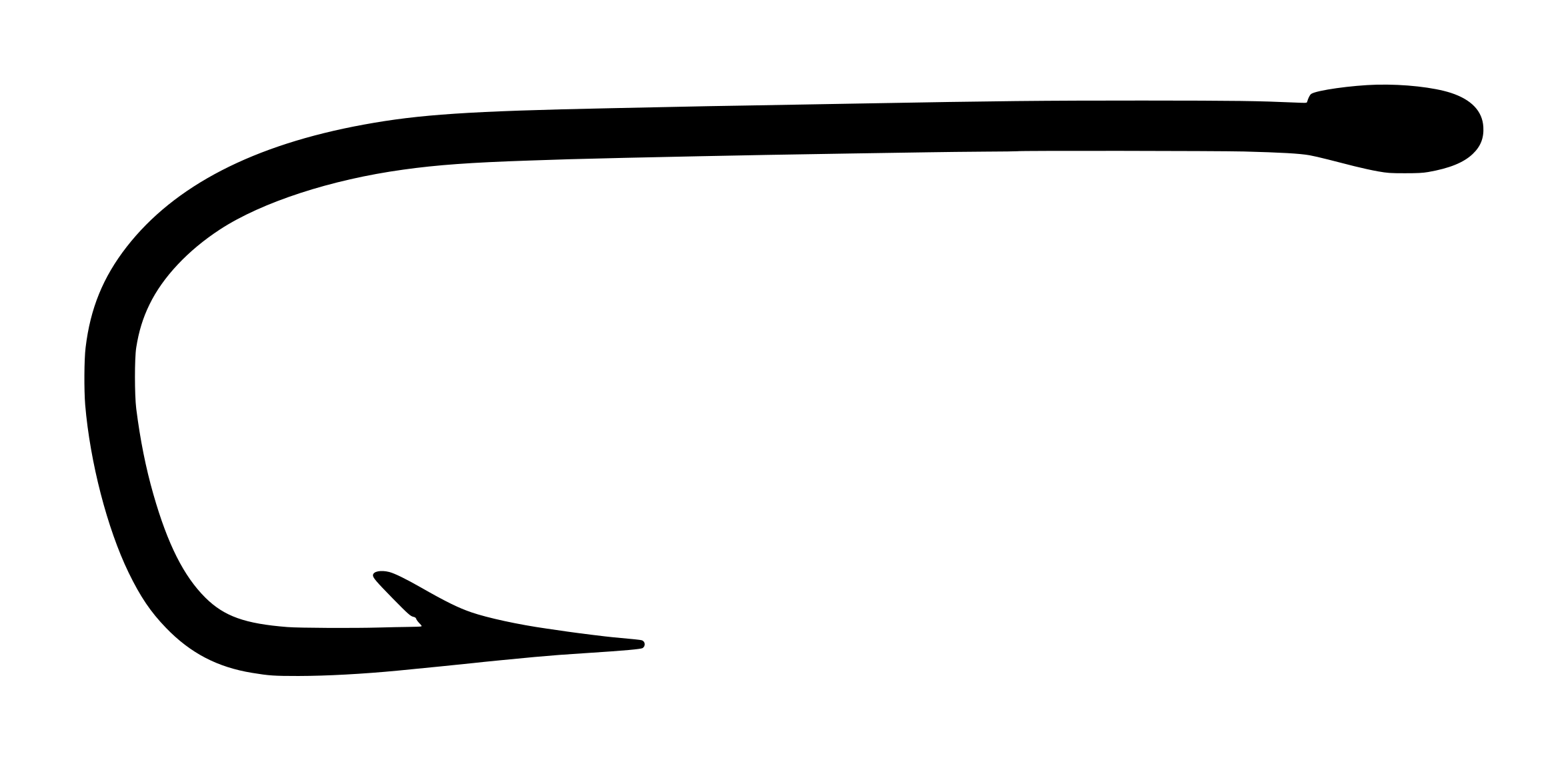
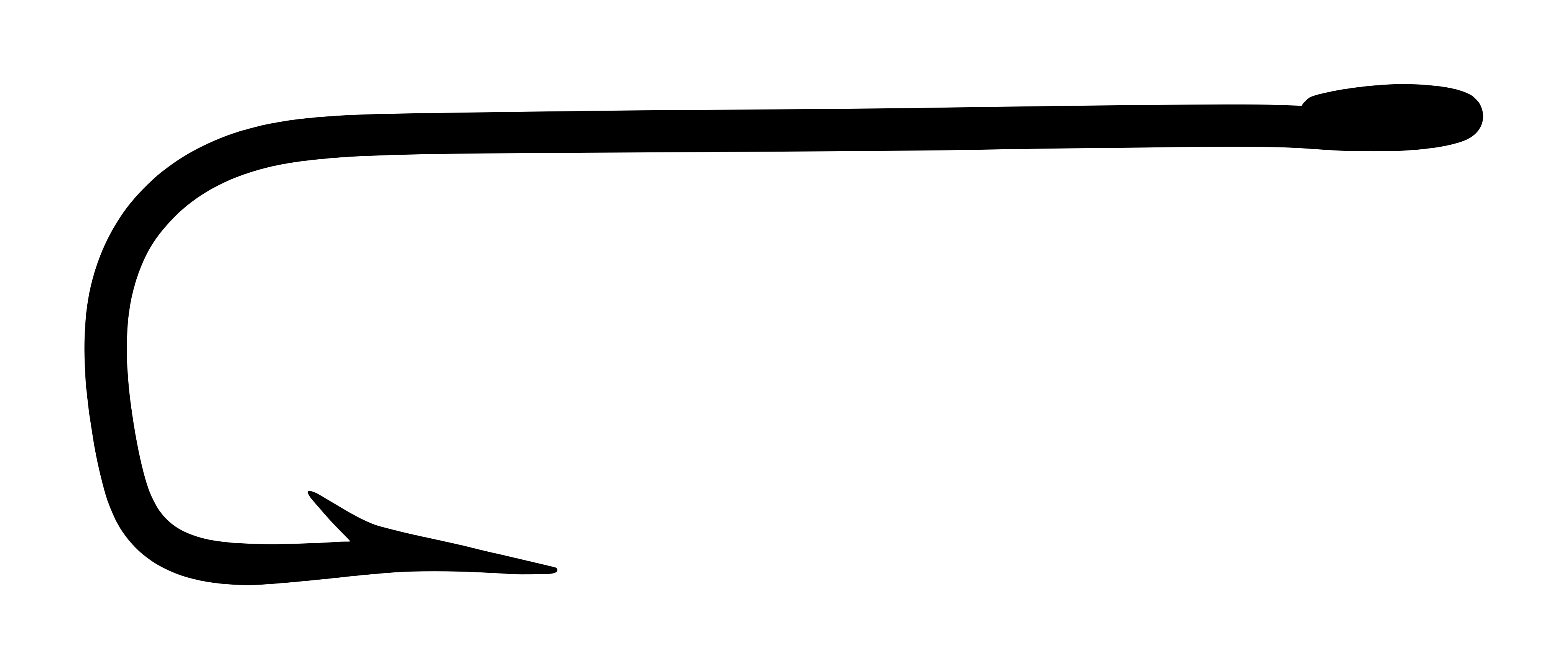
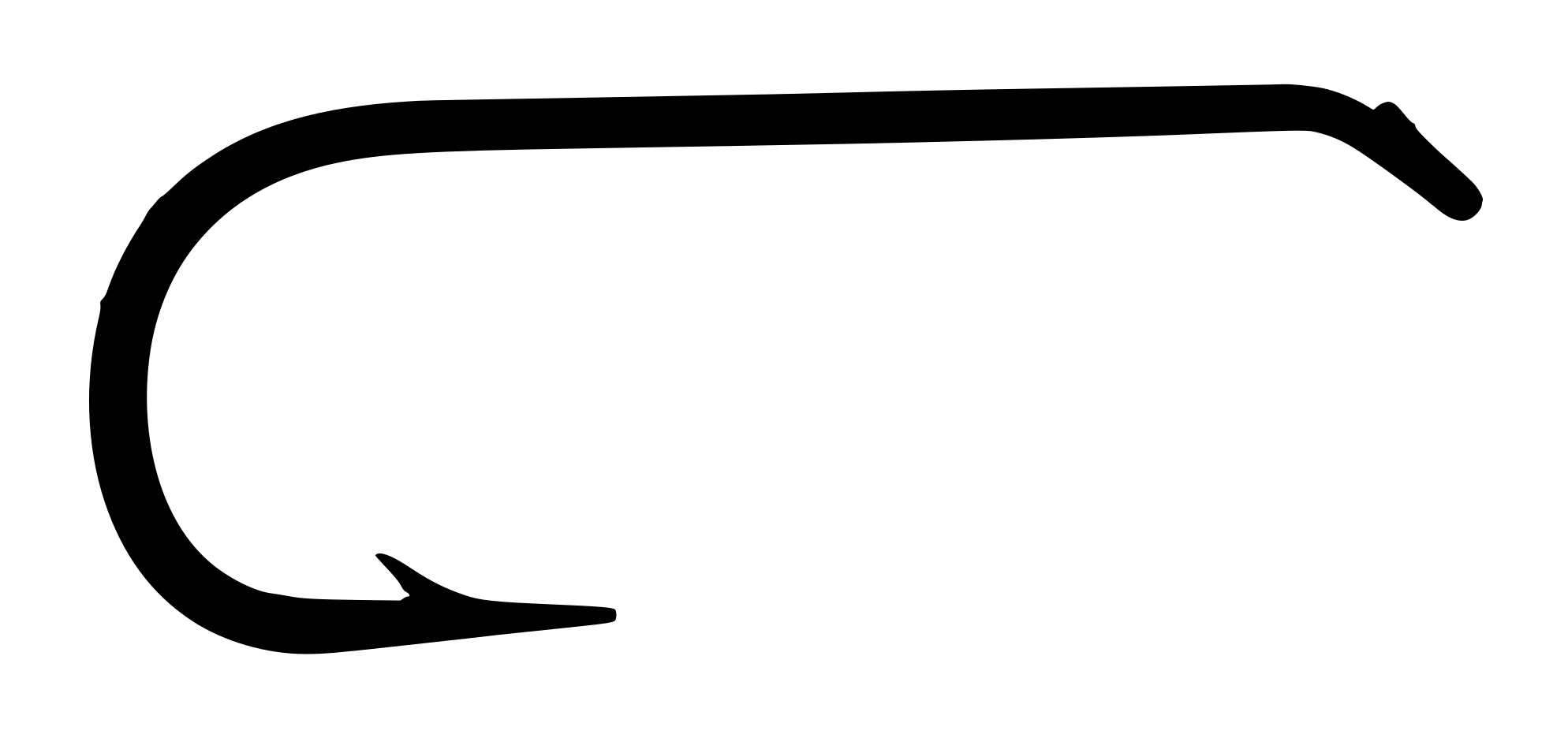
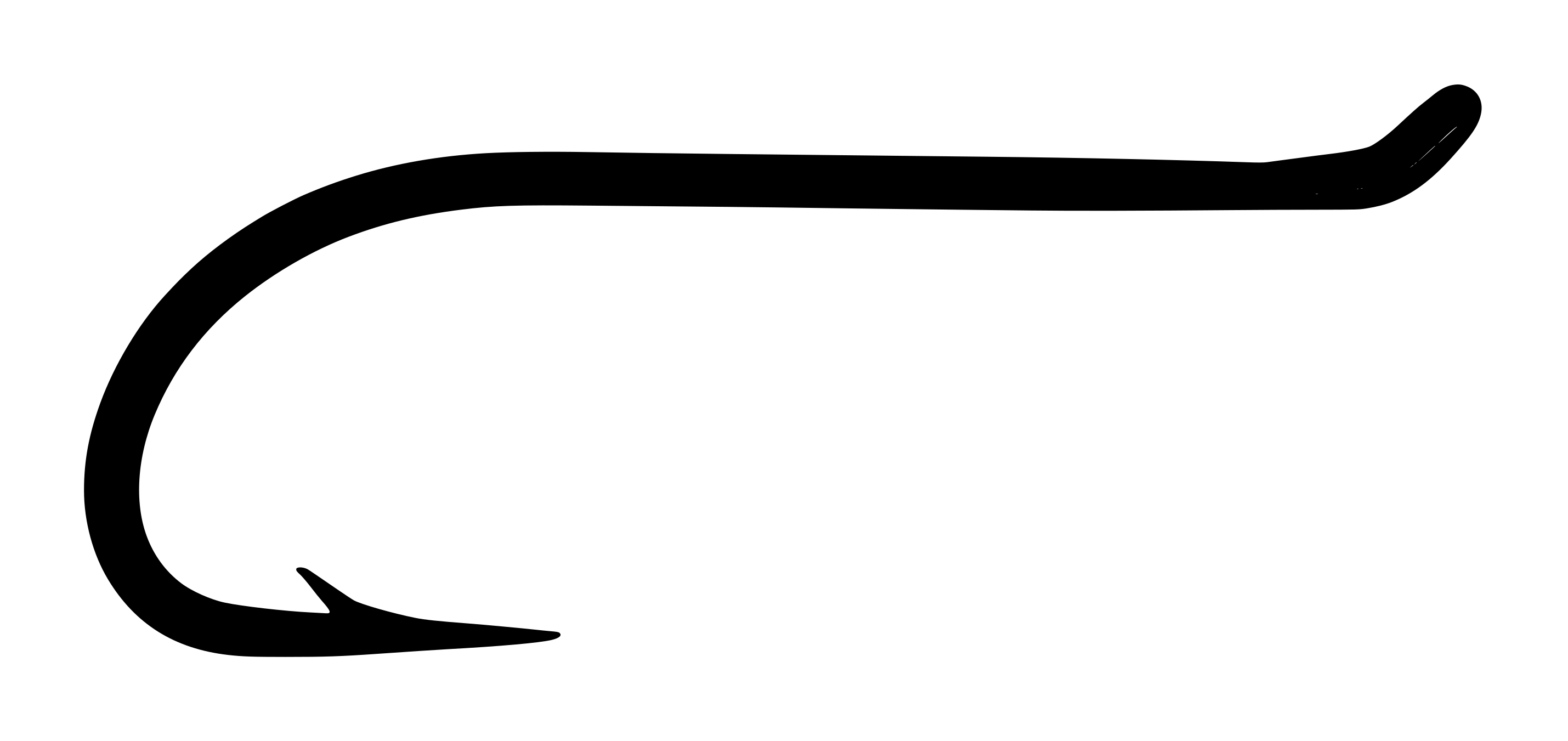
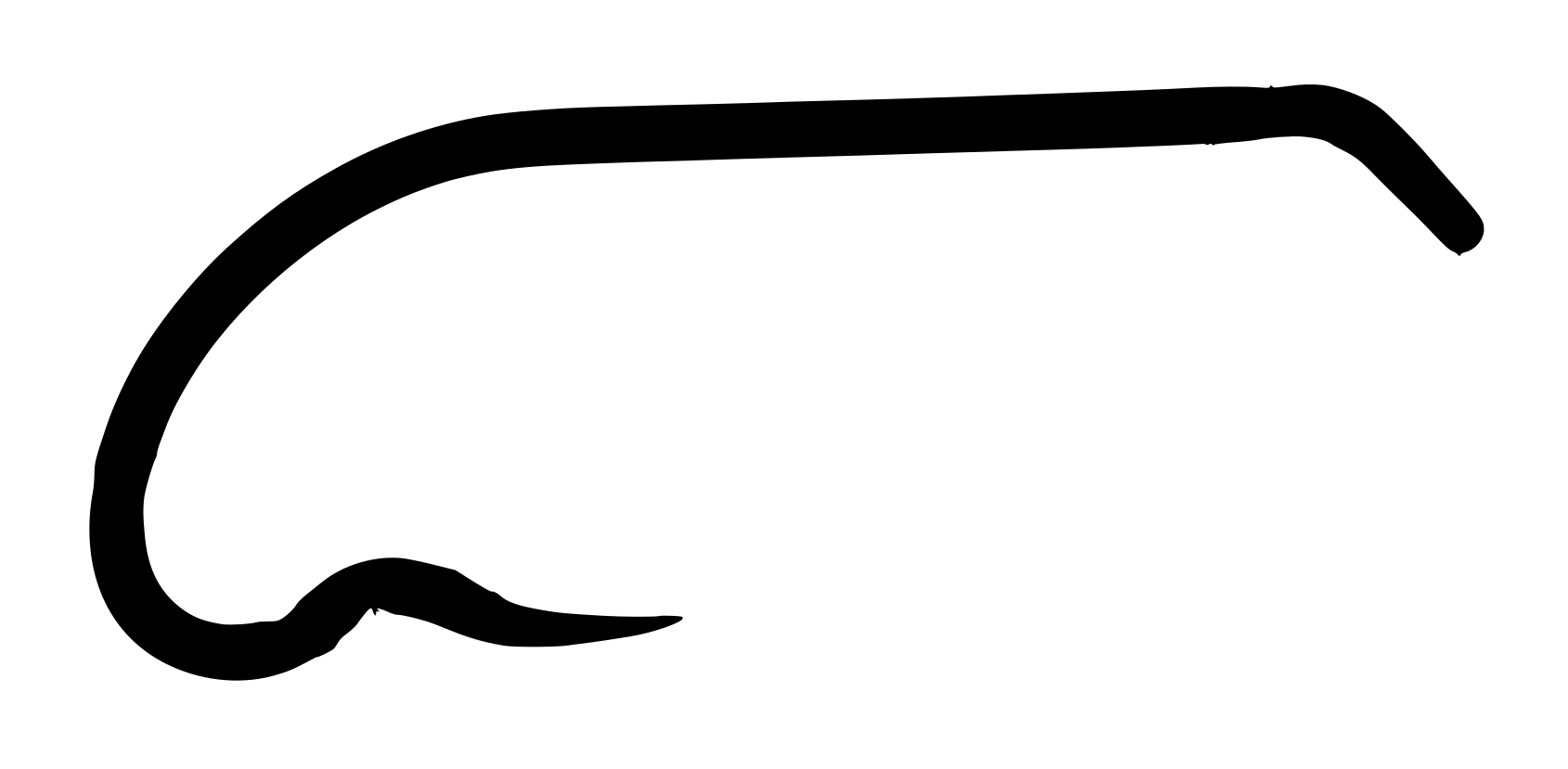
Turner & Sons Sneck Ringed, a standard-shank trout hook in the sneck bend family, made in Redditch, England. The hook features a straight ball eye, hollow point, and japanned (black lacquered) finish characteristic of late Victorian and Edwardian English fly-hook production. This specimen is size No. 10, intended for wet-fly and traditional dry-fly fishing on chalk streams and rivers.
The packaging is a manufacturer box marked “BEST SPRING STEEL” with the maker’s name and “Redditch, England” imprint. The box construction and paper stock, along with the absence of any barcode, date this example to the pre-1974 era — most likely c. 1900-1950s. Sneck hooks remain popular among traditional fly tyers but are less common than Sproat or Limerick patterns in surviving vintage stock.
The sneck bend geometry — a short, sharp downward turn with minimal offset — makes this hook effective for soft-bodied patterns and traditional wet flies where a direct point entry is desired. The hollow point concentrates pressure and penetration. Collector interest is modest; Turner & Sons hooks are sought by Redditch specialists and period fly-tyer research communities, but production volumes limit rarity.
Original manufacturer box for Turner & Sons Sneck Ringed hooks, showing embossed letterpress label with coat-of-arms device, "Best Spring Steel" marking, and Redditch address. Box construction and label style date to early-to-mid 20th century.
Photographic record
3 cataloged imagesSelect any record to load it above.
3 images shown
Turner and Sons Sneck Ringed Original Box LabelOriginal manufacturer box for Turner & Sons Sneck Ringed hooks, showing embossed letterpress label with coat-of-arms device, "Best Spring Steel" marking, and Redditch address. Box construction and label style date to early-to-mid 20th century.Open originalTurner and Sons Sneck Ringed Hook Point ProfileClose-up profile view of the Turner & Sons Sneck Ringed hook (size No. 10) showing the hollow point taper, short acute barb, and tight sneck bend geometry. The japanned finish presents as glossy black with minimal wear.Open originalTurner and Sons Sneck Ringed Hook Full ProfileFull-length profile of the Turner & Sons Sneck Ringed hook (size No. 10) showing the straight-oriented ball eye, standard-length shank, and sneck bend structure. Japanned black finish is uniform and well-preserved. Measurement grid provides scale reference.Open original
Technical profile
Straight Ball | Sneck | Hollow Point | Japanned
Eye
Ball Eye, Straight / InlineBall eye is clean and well-formed. Straight orientation (inline with shank) is consistent with wet-fly and traditional dry-fly hooks of the Redditch school. No visible damage or deformation. P
Wire
Standard, Round
Shank
Standard
Bend
Sneck, Standard gapSneck bend is tightly defined with a sharp downward turn characteristic of the pattern. The bend radius is compact relative to the shank length, creating a pronounced knee at the bend entry point. No visible offset or kirb. Wire set is clean. P
Point
Hollow Point (concave inner face)Barb is short and close-cut, positioned just above the point. Angle is acute. Not visible in side profile but implied by the hollow point geometry; barb placement is typical of Redditch standard production. I
Finish
Black Japanned — Estimated (uncertain)Japanned finish presents as glossy black lacquer. The coating is thick and opaque, obscuring most underlying wire texture except at the point taper and hook eye where wear and age have exposed bare steel. The finish is uniform across the shank and bend. No visible corrosion beneath the lacquer, though age has caused localized crazing on the package box. P
Hook specimen shows no corrosion and presents in very good condition. The japanned finish remains intact and glossy. The point and barb are sharp and undamaged. Packaging (manufacturer box) shows age toning and minor surface wear consistent with 100+ year storage, but all printed text remains legible and structural integrity is sound. No hooks are missing from the box.
The sneck bend achieves its mechanical function through a tight, angular downward turn that brings the point nearly perpendicular to the shank. This geometry concentrates the hook’s turning moment at the bend entry, transferring stress efficiently from the bend radius to the point taper — an important consideration when fishing soft-bodied patterns where early hook-set penetration is critical.
The hollow point reinforces this mechanical advantage by creating a blade-like geometry at the inner face, which concentrates cutting pressure and initial penetration load. The combination of sneck bend and hollow point was particularly effective against the soft jaws and delicate palates of grayling and small chalk-stream trout.
The use of high-carbon spring steel (referenced as “Best Spring Steel” on Turner’s boxes) provided the elastic memory and hardness necessary for repeated strikes without permanent deformation. The japanned finish protected against corrosion in damp storage and stream conditions, though it offered no functional advantage in the water.
Size & scale lab
Known manufactured size range:
Not determinable from packaging
This pattern was made in sizes Not determinable from packaging. We don't have any measurements for it yet. Own one? Submit calipered measurements and we'll review and add them. Thank you!
Historical context
turner
R. Turner & Sons was a Redditch hook maker active during the late Victorian and Edwardian eras through the mid-20th century. The company was part of the broader Redditch hook-manufacturing cluster that dominated global tackle production from the 1850s onward. Turner specialized in wet-fly and trout hooks, producing patterns in the sneck, sproat, and limerick bend families.
Redditch, England was the primary center of hook manufacturing in Britain, home to dozens of competing makers who shared raw materials, labor, and design traditions. Turner competed directly with larger concerns like S. Allcock & Co., Partridge of Redditch, and H. Milward & Sons. The company’s “Best Spring Steel” marking reflected the use of high-carbon blister steel, the standard forged-hook material before industrial wire-drawing became universal.
Turner’s distribution extended throughout the British Isles and to colonial markets via tackle wholesalers. The company produced both retail packaged hooks and bulk orders for tackle dealers and fly-tyers. Like many small to medium-sized Redditch makers, Turner’s market presence declined after World War II as Mustad and other industrial manufacturers consolidated production. The company’s ultimate fate and closure date are not well documented in public sources.
Series History
The Sneck bend is one of the oldest hook patterns in continuous use, documented in British fly-fishing literature from at least the 18th century. The sneck geometry — a short, angular downward turn — was favored for soft-bodied patterns and proved particularly suited to wet-fly fishing on chalk streams and upland rivers where delicate presentations were required.
Turner & Sons offered the Sneck Ringed as part of their standard wet-fly range, typically in sizes 2 through 16. The “Ringed” designation refers to the ball eye construction, which was the modern standard for Turner’s trout hooks by the early 1900s. Earlier versions of the Sneck (circa 1850s-1880s) often featured blind eyes or looped eyes, but the ringed (ball eye) version became the commercial standard.
The Sneck Ringed remained in production through the mid-20th century but was gradually displaced by more versatile Sproat and Limerick patterns. By the 1970s, the sneck had become a specialty pattern rather than a volume seller. Modern reproductions exist (notably from Partridge of Redditch under heritage-pattern marketing), but original Turner examples are no longer in common circulation.
Era and Packaging Dating
No barcode visible on packaging (primary indicator: pre-1974). Box construction uses traditional printed label affixed to natural cardboard with minimal coating. Paper stock and letterpress print style are consistent with late Victorian/Edwardian manufacturing. Logo treatment and typography match Turner & Sons house style from early 1900s. No price marking visible, but the box style and materials are consistent with early-to-mid 20th-century British hook production. Japanned finish was standard for Turner throughout this period. No modernization markers (no UPC, no metric conversion statements, no dated postal codes) visible.
The Redditch Specialization Economy
The Redditch hook-manufacturing industry operated on a principle of specialization and sub-contracting that was unique among Victorian industrial centers. While Turner & Sons maintained their own finishing and packaging operations, the actual forging of hook blanks was often done by independent "nail-smiths" or specialist wire-benders who supplied multiple competing makers. This created a culture of design convergence — competitors' hooks often looked remarkably similar because they were literally made from the same dies or using the same forging techniques, with differentiation primarily in finish, packaging, and marketing. Turner's "Best Spring Steel" claim was thus a marketing assertion rather than a technical specification; the steel came from the same Sheffield and Staffordshire suppliers used by Allcock and Partridge. The Redditch cluster remained the world's dominant hook-making center until global industrial consolidation after 1950.
Design lineage and influence
The sneck bend traces its origins to 18th-century English fly-hook design, where it competed with the sproat, kirby, and limerick patterns. The sneck was favored by traditionalist tyers on south-country chalk streams, while the sproat dominated in Scotland and the midlands. By the late 1800s, the sneck had become a recognized sub-category of the broader “round-bend” family, distinguished from the sproat by its more acute downward angle and tighter radius.
Competing designs from other manufacturers included the Allcock Sneck (very similar geometry) and various proprietary “special sneck” variants from smaller Redditch makers. The pattern remained largely unchanged from its Victorian form through the early 20th century — an indication of its design stability and lack of perceived functional deficit.
Modern successors include Partridge of Redditch’s heritage Sneck Ringed (still in production) and various reproductions by Japanese manufacturers (Tiemco, Gamakatsu) marketed under traditional pattern names. However, the sneck has not displaced the sproat or limerick in contemporary fly-tying, and modern interest is primarily historical and regional (British traditionalist communities).
Best matchRelated by Attribute
Computed automatically from catalog data — updated as new hooks are added.
Matches: Bend, Shank, Wire, Gap, Eye +4 moreDiffers: Finish: Black Japanned vs Blued; Application: Dry Fly, Wet Fly, Nymph vs Wet Fly, Nymph, Bait; Length: 23 mm vs 17 mm
Matches: Bend, Wire, Gap, Point, Forging +1 moreDiffers: Shank: Standard vs 1X Long; Eye: Ball Eye vs Tapered Eye; Eye Orient.: Straight / Inline vs Turned Down +2 more
Matches: Bend, Shank, Wire, Gap, BarbDiffers: Eye: Ball Eye vs Tapered Eye; Eye Orient.: Straight / Inline vs Turned Down; Point: Hollow Point vs Standard / Spear +3 more
The Sneck Ringed was historically employed for wet-fly fishing on British chalk streams and upland rivers, primarily for brown trout and grayling. The short, angular bend provided excellent hook-hold geometry for soft-bodied flies — particularly the traditional palmered patterns, hackle-body wets, and March Brown variants favored by Victorian and Edwardian fly-tyers.
The hollow point and direct entry angle made the sneck well-suited to dry-fly work as well, though the pattern saw heavier use in wet-fly applications. The standard shank and standard gap made it a generalist tool rather than a specialist design, and it served as a foundation pattern for size variation across multiple fly categories.
On hard-fished chalk streams like the Test and Itchen, the sneck was preferred by professional river-keepers and hotel fishing-masters who valued its predictable hook-hold on carefully dressed soft flies. The pattern represented the conservative, proven tradition of Redditch hook design — reliable rather than innovative, but undisputed in its function.
Secondary Applications
Light terrestrial patterns, traditional Scottish east-coast soft-hackle designs
Classic Fly Patterns
Named patterns specifically associated with this hook. Leave blank if none formally documented. Do not speculate — only include patterns with a confirmed association.
Collector notes
Rated 4.5/10 — Turner & Sons hooks are uncommon but not rare; available to collectors willing to search specialized dealers and British tackle auctions. Redditch-school enthusiasts and period fly-tyer researchers seek Turner examples, but production volumes were modest compared to Mustad, Allcock, or Partridge. Original packaging significantly increases appeal and value. Size No. 10 is standard and readily available; smaller and larger sizes command modest premiums.
Reference value
$6 – $18 USD estimate
Packaging condition
Very Good — light wear, fully legibleRecorded specimen
Packaging format
TUR-BOX-01Catalog code
Positive Factors: Turner & Sons was a recognized, independently operated Redditch maker with documented market presence and quality reputation. The Sneck Ringed is a historically important pattern associated with chalk-stream fly-fishing tradition. Original packaging (box) is intact, legible, and in good condition, adding substantial collector appeal. The japanned finish is well-preserved with minimal wear. The specimen represents typical Victorian/Edwardian English hook production and serves as a reference example for Redditch manufacturing techniques.
Limiting Factors: Turner’s production was smaller than contemporary industrial manufacturers, and surviving examples are less abundant than Mustad, Allcock, or Partridge hooks. The Sneck pattern is less iconic than the Sproat or Limerick, limiting demand among casual collectors. Size No. 10 is common; rarity is higher in sizes 4-6 and 14-16. Loose hooks (without original packaging) command minimal premium over functional value. The hook has no designer attribution or named collaborator, reducing biographical interest.
Variant Desirability: Complete, sealed boxes are extremely desirable and command 3-4x the price of opened examples. Early Turner examples (pre-1920s, if datable) attract specialist interest. Sizes below No. 10 (12, 14, 16) are less commonly encountered and valued higher. The japanned finish is preferred over later tinned or nickelled variants (if they exist in the Turner catalog).
Condition Premium: Boxes showing age toning and minor wear trade at 30-50% of mint value. Hooks missing from boxes reduce value by the equivalent of individual hook market value. Corrosion or japanned finish loss reduces appeal to reference collectors but does not eliminate interest from anglers seeking functional stock.
Packaging
Manufacturer box constructed of natural kraft cardboard with inset printed label. Label measures approximately 4" × 3" (10 × 7.6 cm) and features embossed letterpress text: "BEST SPRING STEEL / SNECK HOOKS / No. [size] / RINGED. / [coat of arms or shield device] / R. TURNER & SONS / Redditch, England." The label text is in serif typeface typical of late Victorian commercial printing. The box is closed with simple tucked flap, no staples or adhesive visible on exterior. Paper stock shows age toning (cream to tan), consistent with 80-120+ year storage. The box has housed multiple hooks in original tissue or paper wrapping, now partially deteriorated. Dimensions approximately 4.5" × 3.5" × 0.75" (114 × 89 × 19 mm). No price marking, barcode, or modern labeling visible. Structural integrity is sound; minor creasing and edge wear consistent with period storage in a fishing kit or tackle box.
Market Value Notes
Low ($6): Good condition — opened box, all or most hooks present, minor packaging wear, hooks bright and functional<br />
High ($18): Excellent condition — sealed or near-sealed box, complete count, minimal packaging defects, japanned finish intact<br />
Premium factors: Sealed/unopened box (2-3x multiplier), early production dating (pre-1920s), smaller sizes (12, 14, 16), complete set documentation, Redditch specialist interest<br />
Platforms: eBay UK, British tackle auctions (Bonhams, Christie's South Kensington), specialist dealers (UK and US)<br />
Confidence: E estimated — limited comparable sales data for Turner specifically; ranges based on observed Redditch maker pricing patterns and comparative Allcock/Partridge data
Where to Find
British eBay (eBay.co.uk) occasionally lists Turner hooks under vintage fishing tackle. Bonhams and Christie's South Kensington (London) conduct sporting tackle auctions that regularly feature Redditch maker lots. Specialist UK dealers in Redditch heritage tackle (Partridge of Redditch shop; through their heritage pattern network) may have Turner examples or lead to sources. US dealers are less likely to stock Turner; when available, typically through general vintage fishing tackle sellers or dedicated British hook specialists.
Collector's Identification Tips
Turner & Sons hooks are identified by the maker’s name stamped or printed on the original packaging. The company’s logo features a shield device with heraldic treatment. Turner hooks are less frequently encountered than Allcock, Milward, or Partridge examples, making them desirable to Redditch specialists. The “Best Spring Steel” marking is consistent across Turner’s product line. Sneck patterns are recognizable by the tight, angular downward bend and relatively compact gap. The ball eye (ringed) form distinguishes later Turner production from earlier blind-eye or looped versions. Original packaging (box) is a strong indicator of authenticity and age; loose Turner hooks are harder to verify without examining the forging characteristics and finishing details.
Preservation
Storage and Preservation
Store the box in a cool, dry environment away from moisture and direct sunlight. The japanned finish is stable and resistant to corrosion but may develop additional patina with humidity exposure, which collectors often consider desirable aging. Avoid contact with other metals or acidic materials (newspaper, cardboard without acid-free treatment) that may accelerate finish degradation.
Keep the box intact if possible — opening it reduces value significantly. If access to the hooks is necessary, handle the box carefully to avoid further creasing or label loss. Original tissue or paper wrapping (if still present between hooks) should be preserved even if deteriorated; it documents original packing methods and adds authenticity.
Do not attempt to clean the japanned finish or box label with solvents or abrasive materials. Age toning and patina are markers of authenticity and are valued by collectors. Light dust removal with a soft, dry brush is acceptable. Store away from fishing oils, fly-tying materials, and temperature fluctuations that encourage condensation.
Primary Source
Reading the Turner Box Label
Source: R. Turner & Sons, Redditch, England. Manufacturer box label, c. 1900-1950, original artifact.
The label text ‘BEST SPRING STEEL’ was a marketing claim that referenced the use of high-carbon blister steel in the hook forging process. This was not a proprietary material but rather the industry standard for English hook production from the 1860s through the 1940s. The claim appeared on packaging from multiple Redditch makers and was intended to distinguish forged-steel hooks from the lower-quality drawn-wire hooks produced by some continental manufacturers.
The coat-of-arms or shield device on the label (partially visible in the photograph) was Turner’s maker’s mark — a deliberate branding strategy to convey heritage and quality. Redditch hooks were explicitly marketed as English-made and Redditch-made, leveraging the region’s reputation as the world’s premier hook center. The serif typeface and letterpress printing method are consistent with commercial ephemera from the period 1890-1950.
The label does not include a size range or indicate how many hooks were packaged per box, which is typical for retail Turner boxes. The size notation (No. [blank]) was filled in by hand or printed separately for each size variant. This flexible labeling system allowed Turner to use a single printing die for multiple sizes, reducing production costs.
Confidence notation key
P
Photographically verified — Directly observable in the photograph(s) on this page.
V
Verified by documentation — Confirmed by manufacturer catalog, spec sheet, or published reference.
I
Inferred — A logical deduction from observable or documented evidence, not directly stated.
E
Estimated — An approximation based on visual comparison, proportional analysis, or limited data.
S
Speculative — A reasoned hypothesis that cannot be confirmed from available evidence.
Claims with no notation are confirmed by multiple independent sources. All photographs on garrenwood.com are taken on a measurement grid where each square equals 1/10 inch (0.1″ / 2.54 mm).