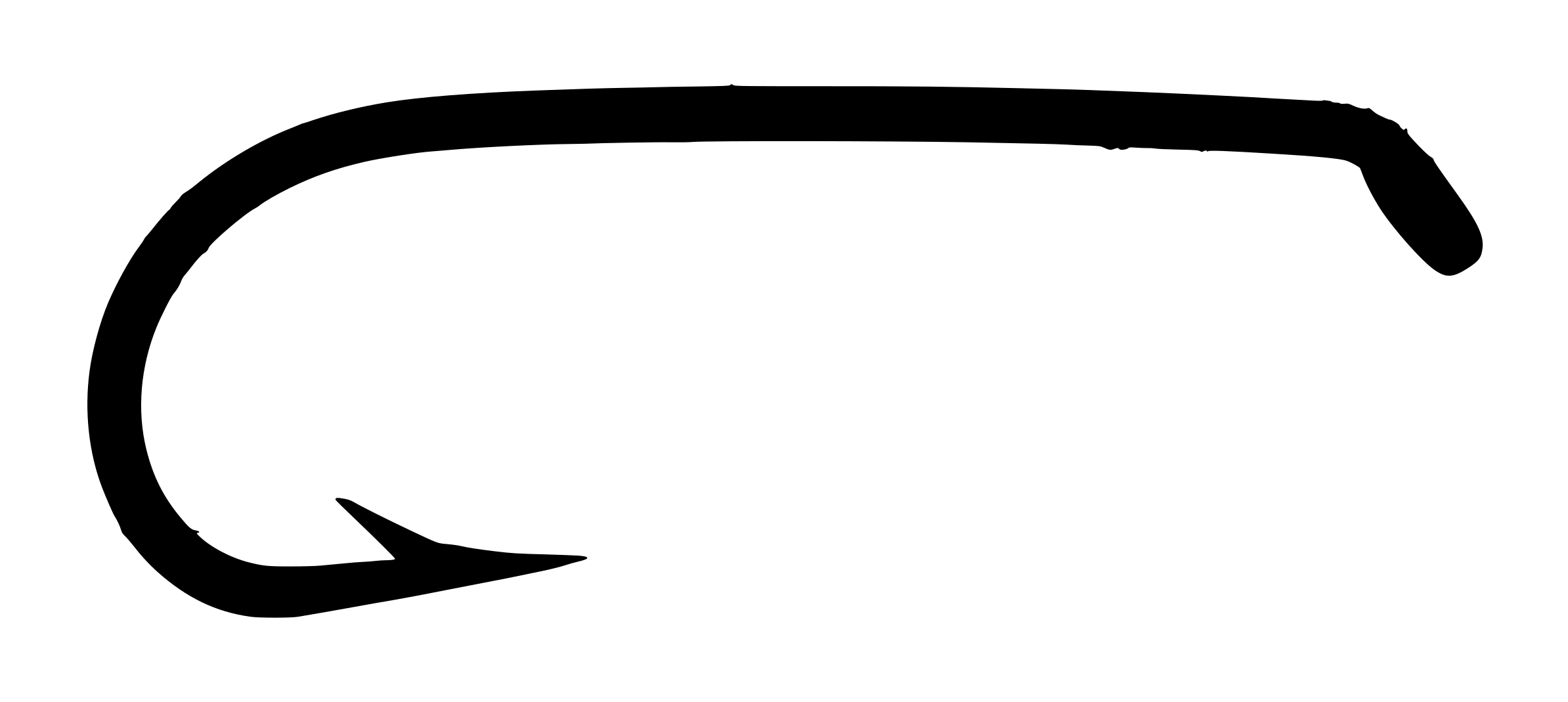
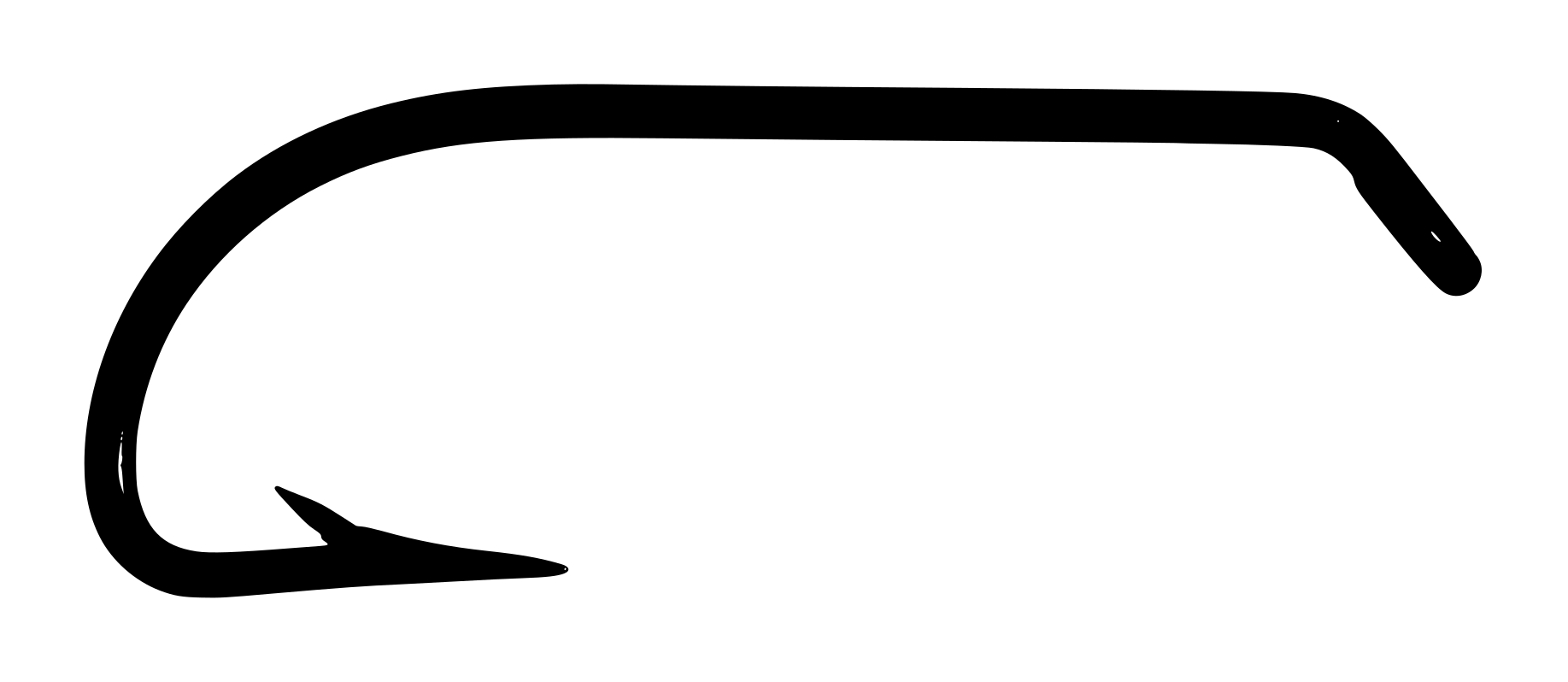
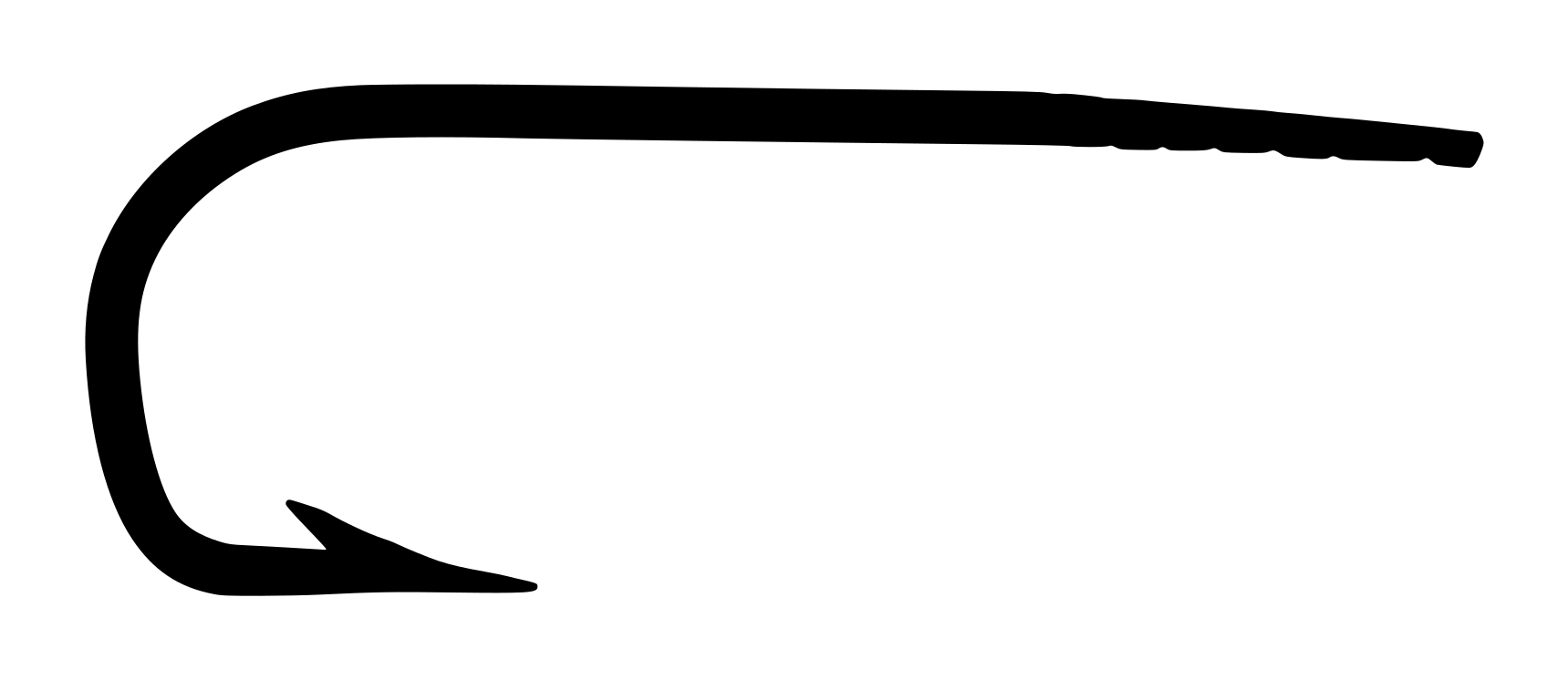
Mustad 4225 Kendal Kirby — a heavy-duty bait hook manufactured by O. Mustad & Son in Oslo, Norway, marketed under the Superfine line. Size 8 specimen shown in tinned finish with extra-heavy wire and 1X long shank, kirbed (left-offset) point. The straight ball eye and robust construction made this hook suitable for saltwater bait work, trolling, and general heavy-duty applications during the mid-20th century.
The Kendal Kirby combined a traditional round kendal bend with a Mustad-standard spear point and extra-heavy wire gauge (approximately 0.031″ diameter in size 8). The box packaging shows typographic features and construction methods consistent with Norwegian Mustad production in the 1950s–1960s era. Packaging indicates 100 hooks per box at original retail.
The Superfine designation does not refer to wire fineness but rather to a product line classification. These hooks remain readily available in vintage lots and are collected more for functional reference and historical documentation than for rarity value.
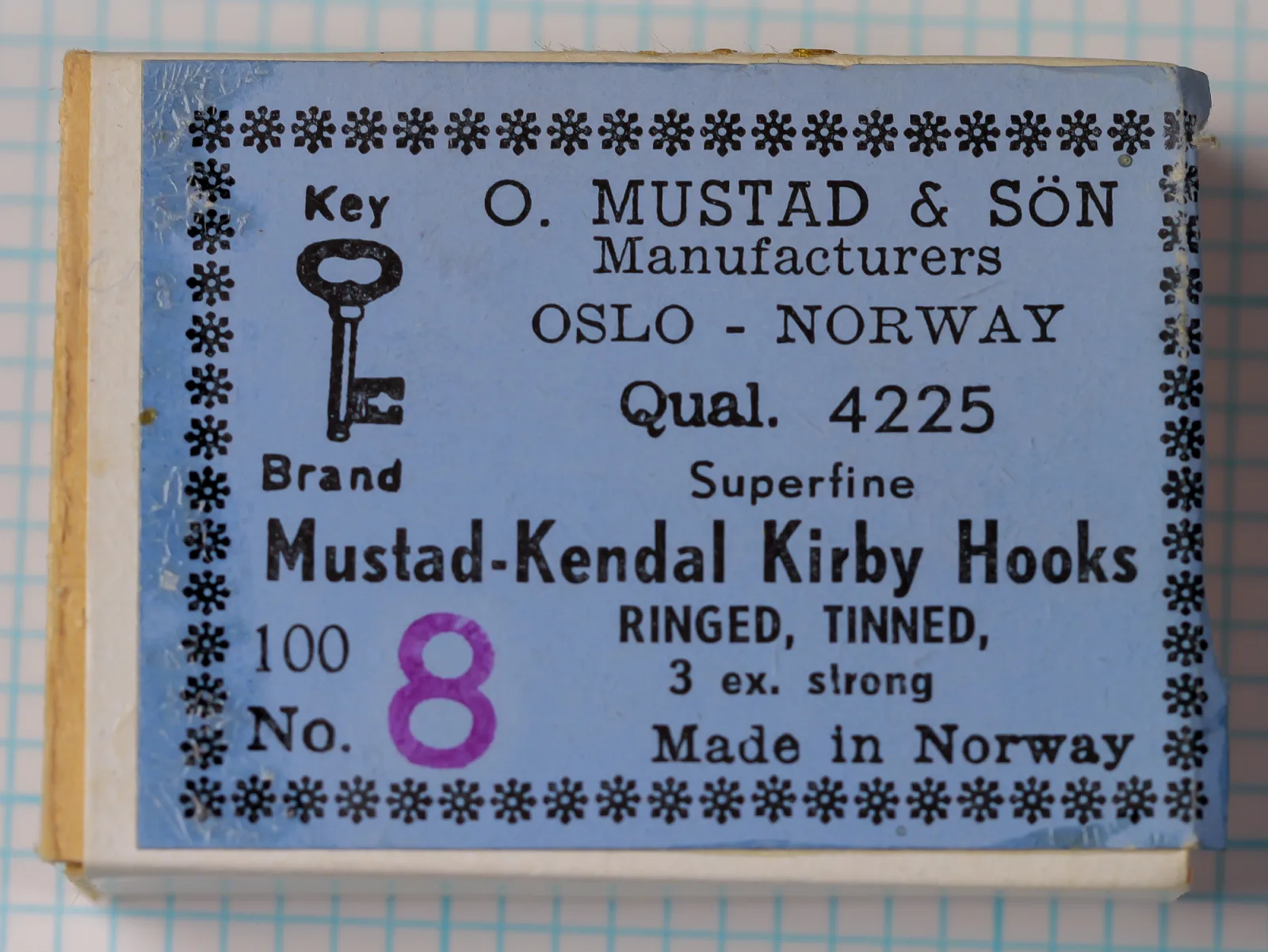
Front panel of original Mustad 4225 Kendal Kirby manufacturer box showing model designation, size 8, and specifications "Ringed, Tinned, 3 ex. strong" printed on pale blue stock with black letterpress.
Photographic record
3 cataloged imagesSelect any record to load it above.
3 images shown
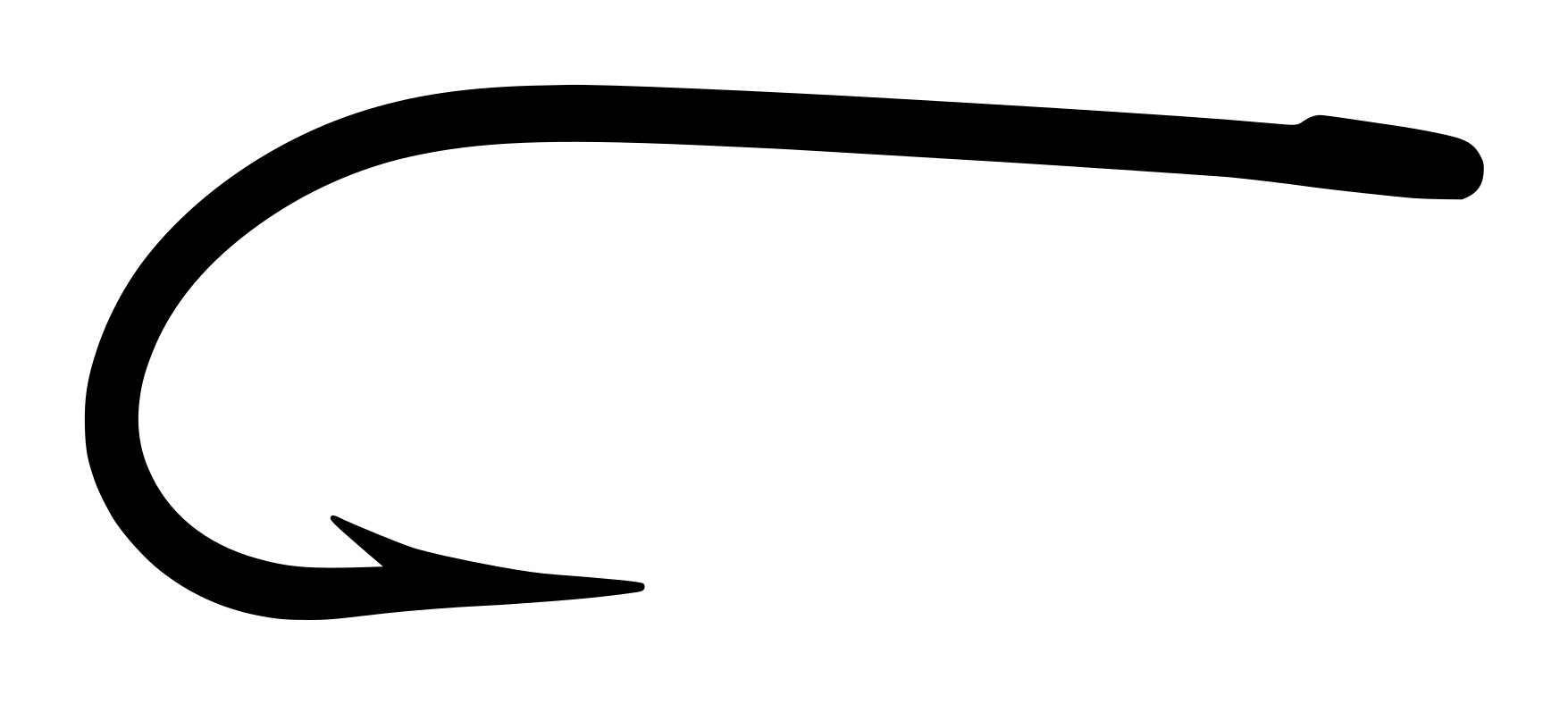
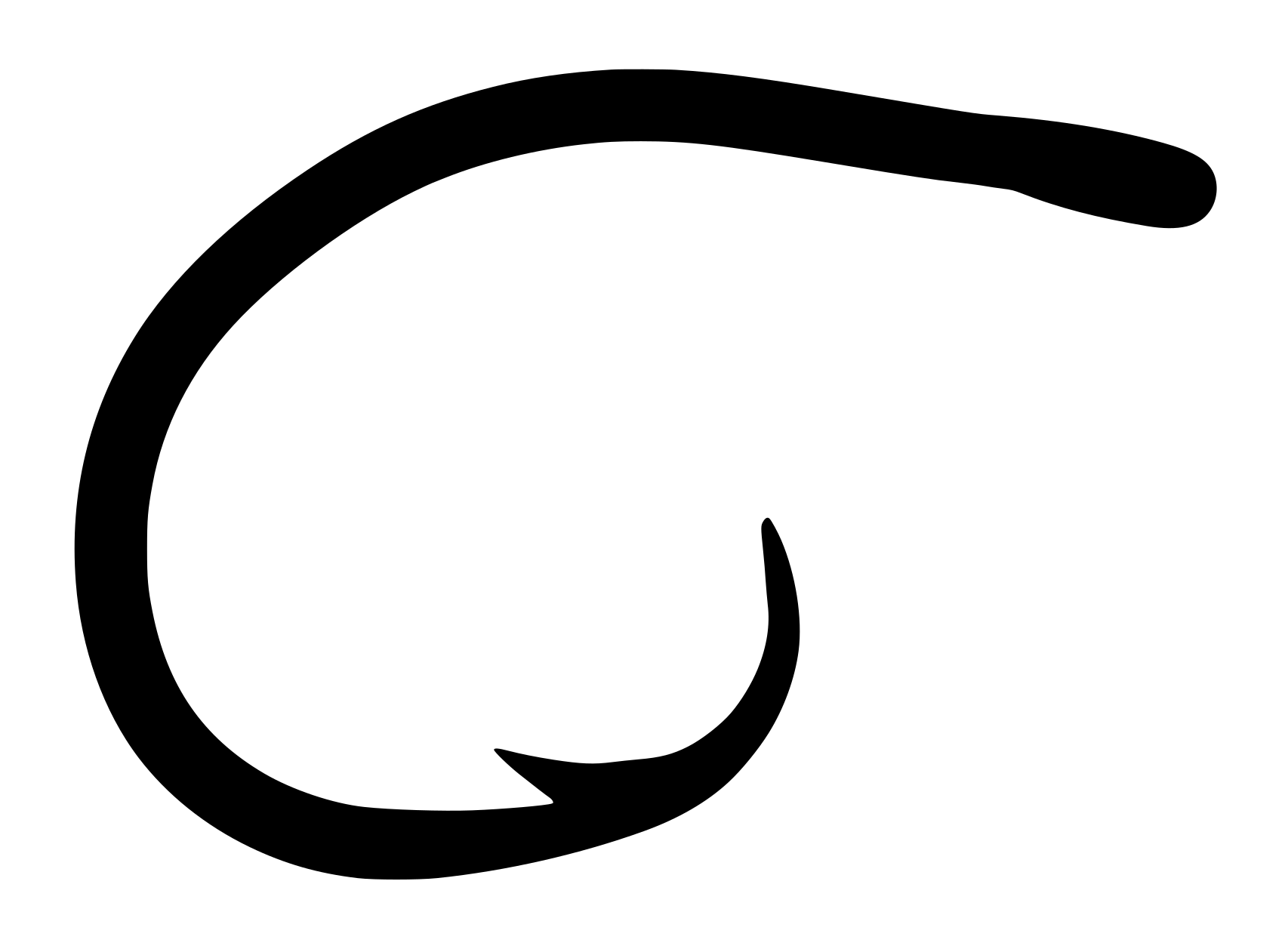
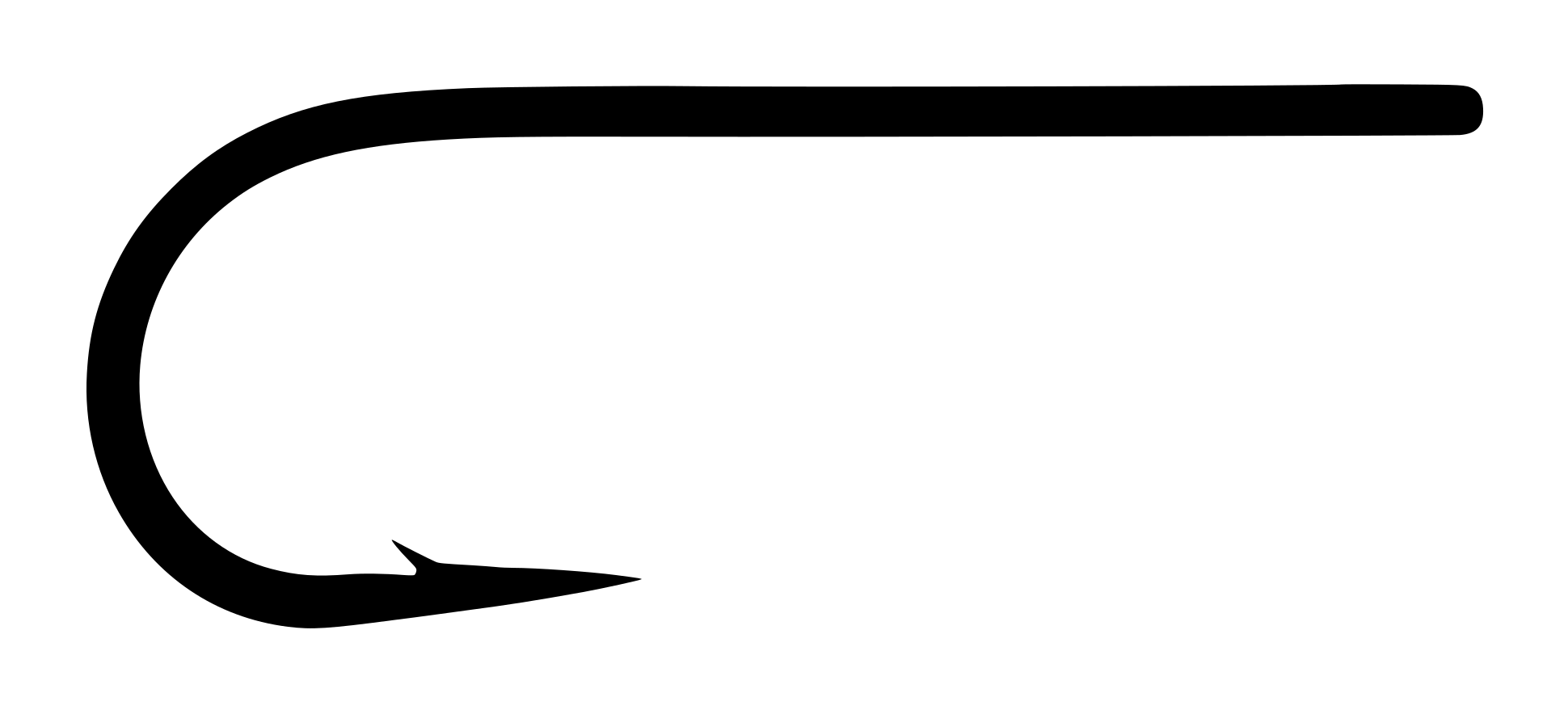
Mustad 4225 Kendal Kirby Size 8 — Box Front PanelFront panel of original Mustad 4225 Kendal Kirby manufacturer box showing model designation, size 8, and specifications "Ringed, Tinned, 3 ex. strong" printed on pale blue stock with black letterpress.Open originalMustad 4225 Size 8 — Side ProfileSide profile of size 8 specimen showing the round kendal bend, spear point, and kirbed (left) offset. Tinned finish appears bright silver-grey. 1X long shank and extra-heavy wire gauge visible in profile.Open originalMustad 4225 Size 8 — Overhead ProfileOverhead profile showing the straight ball eye, long shank, and the kirbed (left-offset) point deflection characteristic of the model. Hook lies flat on measurement grid.Open original
Technical profile
Straight Ball Eye | Kendal | 1X Long | Extra-Heavy (2X+) Wire | Spear Point | Tinned
Eye
Ball Eye, Straight / Inline
Wire
Extra-Heavy (2X+), Round
Shank
1X Long — Plain
Bend
Round / Kendal, Standard gap, Offset / kirbed
Point
Standard / Spear
Finish
Tinned — Confirmed (stated on packaging)Original manufacturer box in very good condition. Lid intact with minor toning on pale blue-grey printed stock. No splits, tears, or major creasing. Typography clean and legible throughout. Right edge shows minimal wear from handling. Paper stock is typical of 1950s–1960s lithographic printing; no barcode present.
Bend geometry: The round kendal bend distributes stress more evenly around a smooth curve than an angular form, reducing point breakage on hard bites or when striking into bony structures. The shallow barb set on the side (rather than underside) accommodates soft baits such as ragworm or mackerel flank without crushing delicate tissue during rigging.
Offset (kirby): Left-side point deflection helps penetrate on the inward direction of the hook’s rotation during a bite. Early bait anglers believed the offset prevented baits from sliding off the shank during casting, though modern understanding suggests the primary benefit was improved penetration geometry on sideways or sliding strikes.
Extra-heavy wire: Approximately 0.031″ diameter at size 8, the extra-heavy gauge increases resistance to bending and breaking under heavy strikes, deep hooksets, and saltwater species (mackerel, pollack, bass) known for hard takes. The trade-off is reduced sensitivity on light bites — this hook was never intended for delicate presentation.
Tinned finish: Bright silver tinning resists corrosion and salt-water oxidation better than bronzed or blued finishes. The bright appearance was also believed to attract fish, though evidence is anecdotal. Tinning adds minimal manufacturing cost over bronzing and became the standard finish for saltwater hooks by mid-century.
Straight ball eye: The inline orientation reduces the eye’s profile and aids penetration when the hook is set under load. A ball eye — formed by butting the wire ends together and rounding them — is simpler to produce than tapered or looped eyes, keeping manufacturing cost low while offering sufficient durability for bait work.
This pattern was made in sizes 2-16 (V). We have measurement for size 8. Know the others? Submit calipered measurements and we'll review and add them. Thank you!
Historical context
mustad
O. Mustad & Son was founded in 1832 by Ole Mustad in Gjovik (also spelled Gjøvik), Norway. By the late 19th century it had become one of the world’s largest industrial hook manufacturers, exporting to the United States, Europe, and British Empire markets. The factory at Gjovik developed a reputation for efficient mass production and consistent quality control. Mustad established subsidiaries and distribution networks globally, including a UK office that supplied retailers throughout the British Isles.
By the 1950s, Mustad was producing hooks across all major bend families and size ranges, from tiny dry-fly hooks to heavy saltwater models. The company remained under Norwegian ownership through much of the 20th century and continued to expand production through the 1960s and beyond. Mustad established multiple product lines with proprietary names — Superior, Seafarer, Viking, and Superfine among them — to segment the market and appeal to different customer segments. The Superfine line appears in catalogs from the 1950s–1960s period as a general-purpose utility line emphasizing tinned finish and extra-heavy wire for bait and saltwater work.
Series History
The Kendal Kirby hook line combined two distinct design traditions: the Kendal bend (a traditional round-bottomed form from English Redditch manufacturing) and the kirby offset (left-side point deflection). Mustad acquired Kendal bend designs and expertise through acquisition of existing manufacturers or direct engineering copying — a common practice in the late 19th and early 20th centuries as Norwegian and Swedish industrial makers modernized English traditions.
The 4225 model designation appears in Mustad catalogs from approximately the 1950s onward. The hooks were marketed under the Superfine brand as a robust, straightforward bait hook for saltwater and general freshwater work. The “RINGED, TINNED, 3 ex. strong” specification on the box label indicates extra-heavy wire (3X = 0.030″–0.033″ diameter for size 8), tinned finish, and a barbed (ringed) eye. The box count of 100 per box suggests distribution to commercial bait shops and mail-order tackle retailers rather than dedicated fly tyers.
No documented discontinuation date is known; the model likely remained in production through the 1970s–1980s before being displaced by Mustad’s wider catalog modernization. The Kendal Kirby design was never a signature pattern or sponsored-designer model — it was a straightforward utilitarian offering, and collecting interest is correspondingly modest.
Era and Packaging Dating
Packaging evidence: (1) No barcode — strong indicator of pre-1974 manufacturing. (2) Letterpress printing with hand-set typography — typical of 1950s and early 1960s Mustad packaging; offset lithography became standard for Mustad by the late 1960s. (3) Pale blue-grey card stock and snowflake border motif — consistent with mid-century Norwegian industrial design. (4) Font style and logo treatment — matches documented Mustad catalogs from 1950–1965. (5) Absence of postal code format on packaging — suggests pre-1960s production. (6) "Made in Norway" statement appears printed, not applied as a label — indicates original packaging from factory. Box construction and fastening method (lid overlap style) is consistent with 1950s–1960s commercial hook packaging.
Norwegian Industrial Mastery
O. Mustad & Son's Gjovik factory became one of the world's most efficient industrial hook plants by exploiting Norway's abundant hydroelectric power and trained workforce. By the 1950s, Mustad was producing more than one million hooks per week across all sizes and styles. The company's competitive advantage was not innovative design but manufacturing precision and vertical integration — Mustad mined and refined its own steel, operated its own stamping and tempering equipment, and controlled quality at every step. The Kendal Kirby represents this philosophy perfectly: a straightforward, proven bend form manufactured to tight tolerances using industrial methods, distributed globally through mail-order catalogs and wholesale relationships. British Redditch makers, who had invented the fishing hook as an industry, eventually lost market dominance to Norwegian and Swedish competitors who out-manufactured them through scale and mechanization.
Design lineage and influence
The Kendal bend is a classic English form documented in Redditch hook catalogs dating to the late 19th century. It is distinguished by a smooth, deeply rounded bend with the barb placed on the side of the curve rather than the very bottom, making it suitable for soft bait presentations. The Kendal design never achieved the dominance of the Aberdeen or Sproat bends but remained a consistent catalog offering for saltwater and general fishing.
The kirby offset (point deflected left when viewed from above) is a separate modification applied to many bend families. Mustad Kendal Kirby hooks competed directly with similar offerings from Partridge of Redditch and S. Allcock & Co., both of which produced Kendal-form hooks in tinned and bronzed finishes. The extra-heavy wire gauge placed this model in direct competition with other saltwater bait hooks such as the Mustad Viking (which used a different bend geometry) and the Partridge Kendal (UK production).
No documented downstream influence or signature pattern associations are known. The Kendal Kirby remained a secondary offering in Mustad’s portfolio, overshadowed by larger product lines and designer-name hooks. It is primarily of interest today as a representative example of mid-century industrial hook manufacturing rather than a design innovator.
Best matchRelated by Attribute
Computed automatically from catalog data — updated as new hooks are added.
Matches: Bend, Gap, Eye, Eye Orient., Point +3 moreDiffers: Shank: 1X Long vs 2X Long; Wire: Extra-Heavy (2X+) vs Heavy (1X Heavy); Finish: Tinned vs Nickelled +1 more
Matches: Bend, Wire, Gap, Eye, Eye Orient. +4 moreDiffers: Shank: 1X Long vs Short (1X–2X Short); Point: Standard / Spear vs Beak / Reversed; Application: Bait, Saltwater vs Saltwater
Matches: Shank, Gap, Eye, Eye Orient., Point +3 moreDiffers: Bend: Round / Kendal vs Perfect; Wire: Extra-Heavy (2X+) vs Heavy (1X Heavy); Forging: Round vs Forged +1 more
A heavy-wire general-purpose bait hook, sized for saltwater species including mackerel, pollack, and sea bass. The straight ball eye and extra-heavy gauge made it suitable for heavier lures, spinning rigs, and saltwater trolling during the mid-20th century.
Collector notes
Rated 3.0/10 — common in most sizes. O. Mustad & Son produced vast quantities of utilitarian bait hooks for global distribution, and the 4225 Kendal Kirby was a standard catalog item. Complete original boxes are encountered regularly but not abundantly; the primary collecting interest is historical reference rather than scarcity.
Reference value
$5 – $15 USD estimate
Packaging condition
Very Good — light wear, fully legibleRecorded specimen
Packaging format
GW-MUS-BOX-001Catalog code
Positive factors: Original manufacturer box in good condition adds modest premium over loose hooks. The Kendal Kirby was a genuine production hook with wide catalog range (sizes 2–16 documented), making it accessible to collectors building a size sequence. Tinned finish and extra-heavy wire gauge are documented production specifications. Mustad’s industrial output ensures affordable pricing.
Limiting factors: No rarity premium — Mustad produced these hooks in industrial quantities for decades. No designer or collaborator name elevates collector interest. Size 8 is a common middle range; smaller or larger sizes may command modest premiums. The Superfine line is not historically documented as a specialty series commanding collector demand. Condition of surviving boxes is variable; examples with faded printing or damaged lids sell at the lower end.
Value drivers: Complete original box with all 100 hooks and legible printing commands a modest premium. Variant sizes outside the common range (size 2, 3/0) may achieve higher interest. Tinned finish is less common than bronzed in vintage Mustad bait hooks, adding modest appeal. Boxes with minimal toning and sharp typography fetch the highest estimates within this model’s range.
Packaging
Rigid manufacturer box with lid, printed on pale blue-grey stock with black letterpress. Dimensions approximately 4.5" × 2.5" × 0.75" (estimated). Front panel shows Mustad key logo, "O. MUSTAD & SON / Manufacturers / OSLO - NORWAY" header, model number "Qual. 4225", brand name "Superfine", product name "Mustad-Kendal Kirby Hooks", hook count "100", size "No. 8" in large magenta circle, and specifications "RINGED, TINNED, 3 ex. strong" and "Made in Norway". Border decoration consists of small printed snowflake or asterisk motifs. Box lid and body show minor toning and edge wear consistent with age. No barcode present.
Market Value Notes
Low ($5): Good condition box, opened, most hooks present, minor printing wear.<br />
High ($15): Excellent condition box, complete count, minimal toning, sharp typography.<br />
Premium factors: Complete original box with all 100 hooks, minimal printing wear, legible "Made in Norway" attribution, factory-sealed condition if available.<br />
Platforms: eBay UK and US, occasional vintage tackle dealer listings, estate lots.<br />
Confidence: E Estimated from limited comparable sales. Mustad bait hooks in original boxes of this era typically range $3–$20 depending on size and condition. No specific eBay sold data available for this model code; estimate based on comparable Mustad Kendal and Kirby hook ranges.
Where to Find
eBay (US and UK) — search "Mustad Kendal Kirby" or "Mustad 4225". Vintage tackle dealers specializing in Mustad production. Estate sales and tackle shop clearances occasionally yield boxed lots. UK tackle fairs in the South (Redditch area) where Mustad hooks are common. Mustad hook collections on specialized forums sometimes include duplicates for trade.
Collector's Identification Tips
Check for the Mustad key logo and “OSLO-NORWAY” attribution on the lid or front. The magenta-circled size number is a distinctive visual marker of this product line. Verify “Qual. 4225” printed below the key logo. Tinned finish should appear as bright silver-grey rather than warm bronze; if discolored, the specimen may have experienced corrosion or improper storage. A kirbed (left-offset) point should be visible when viewing the hook from above against the shank; this distinguishes it from straight-point competitors.
Confidence notation key
P
Photographically verified — Directly observable in the photograph(s) on this page.
V
Verified by documentation — Confirmed by manufacturer catalog, spec sheet, or published reference.
I
Inferred — A logical deduction from observable or documented evidence, not directly stated.
E
Estimated — An approximation based on visual comparison, proportional analysis, or limited data.
S
Speculative — A reasoned hypothesis that cannot be confirmed from available evidence.
Claims with no notation are confirmed by multiple independent sources. All photographs on garrenwood.com are taken on a measurement grid where each square equals 1/10 inch (0.1″ / 2.54 mm).