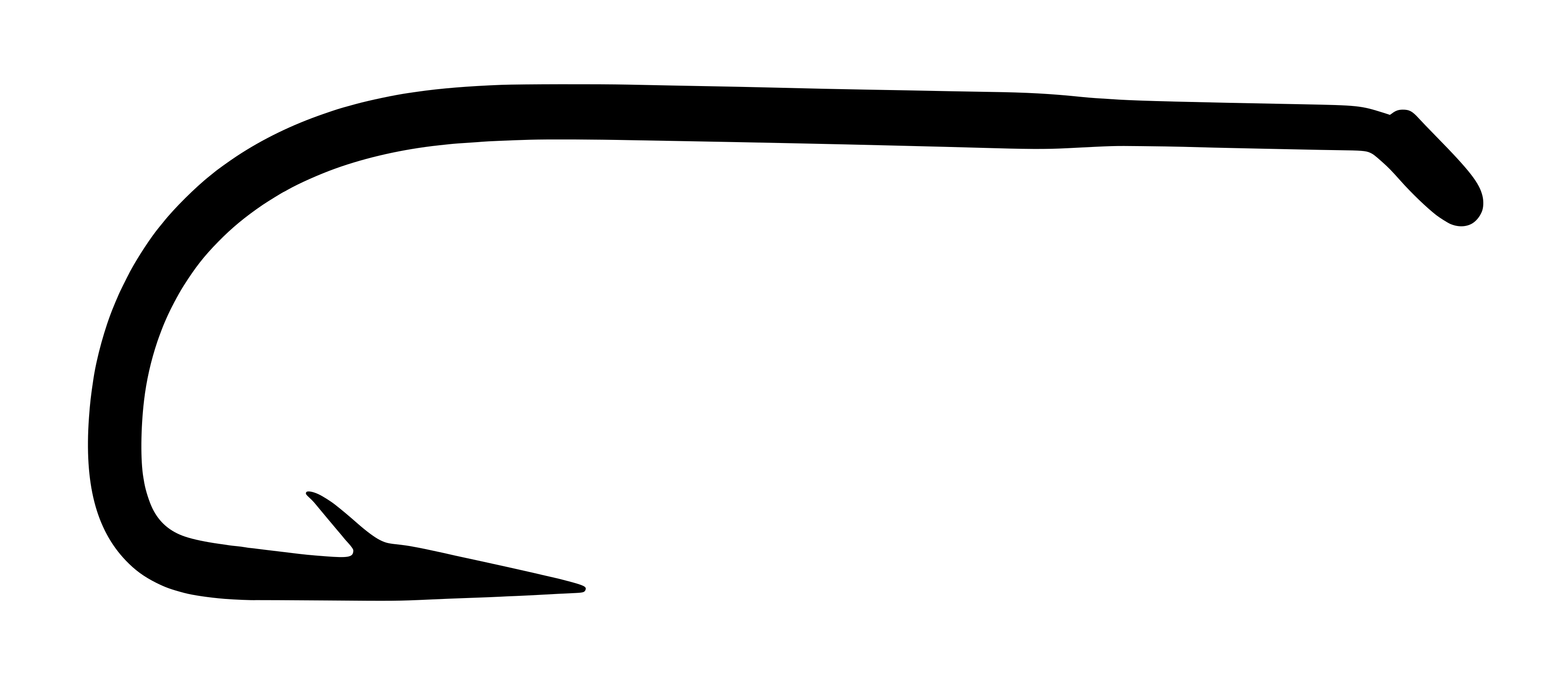
Mustad model 3123 A, marketed under the Superior brand line. Limerick bend with ball eye turned down, standard wire, and bronzed finish. Size 8, intended for wet flies and nymphs in small-to-standard trout patterns. Produced by O. Mustad & Son in Gjøvik, Norway. The packaging indicates production during the mid-20th century, consistent with Mustad’s industrial output ca. 1950s-1960s based on typography, logo treatment, and paper stock. Small eye noted on card as “Small eye, special,” suggesting differentiation from larger-eyed variants in the same line.
The Superior brand represented Mustad’s standard commercial line for wet and nymph work. The Limerick bend — angular with crisp bottom — offered durability and point penetration favored by traditional tyers. Bronzed finish aged well in transit and storage, though oxidation could develop with humidity exposure. This specimen shows light toning consistent with age and modest storage handling.
Collectability is modest — Mustad’s industrial production volume was high, leaving abundant surviving stock. However, complete original packaging, particularly with the yellow/olive label in decent condition, commands some collector premium. Size 8 is a standard working size, not rare. The designation “small eye” suggests intentional variance within the line, which may appeal to specialists seeking period-accurate small-eye nymphs.
Mustad — New entry — image 1
Photographic record
3 cataloged imagesSelect any record to load it above.
3 images shown
Mustad — New entry — image 1Mustad — New entry — image 1Open originalMustad — New entry — image 2Mustad — New entry — image 2Open originalMustad — New entry — image 3Mustad — New entry — image 3Open original
Technical profile
Eye
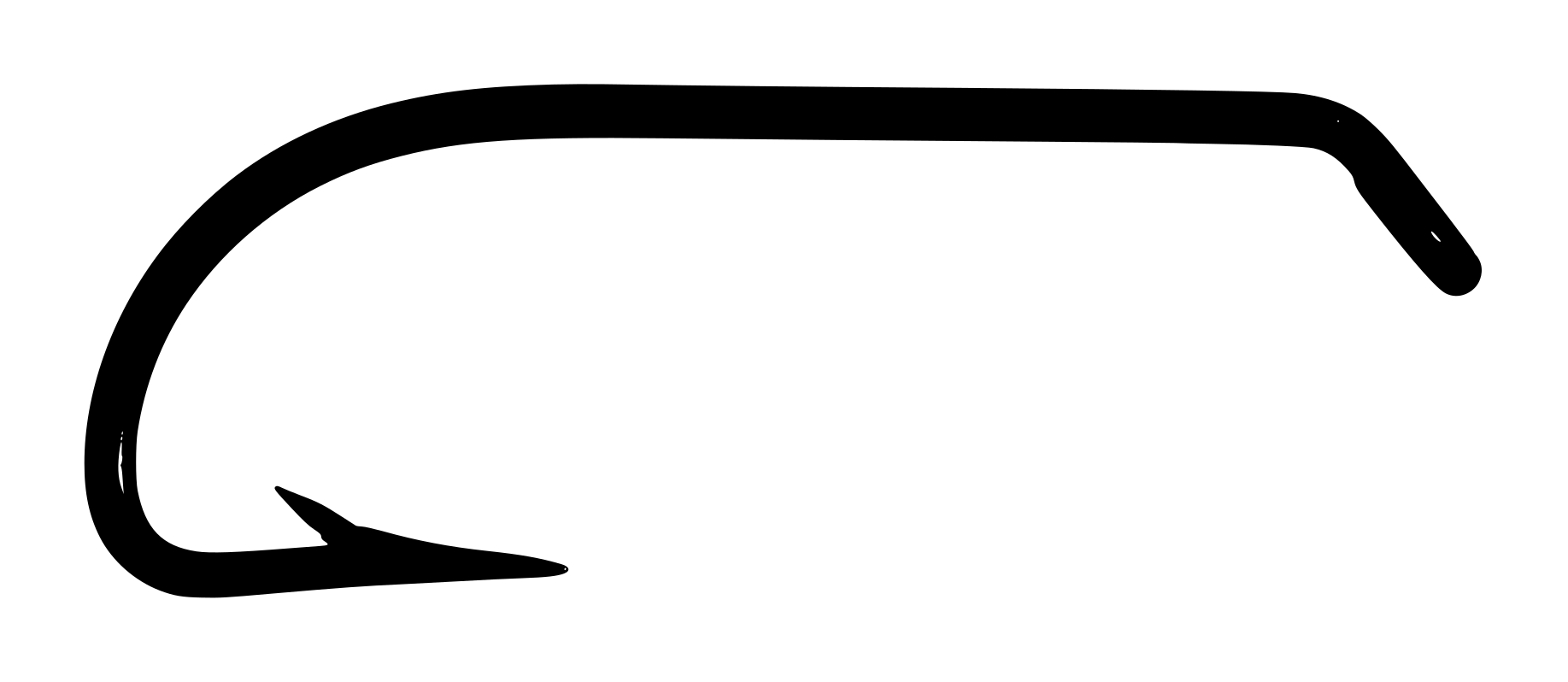
Ball Eye, Turned DownBall eye is compact, consistent with the packaging designation “Small eye, special” V. Eye opening diameter estimated at ~0.020"-0.025" P, forming a snug fit for leader loops and tippets. Symmetrical construction with no visible welding defects.
Wire
Standard, Round
Shank
Standard — Plain
Bend
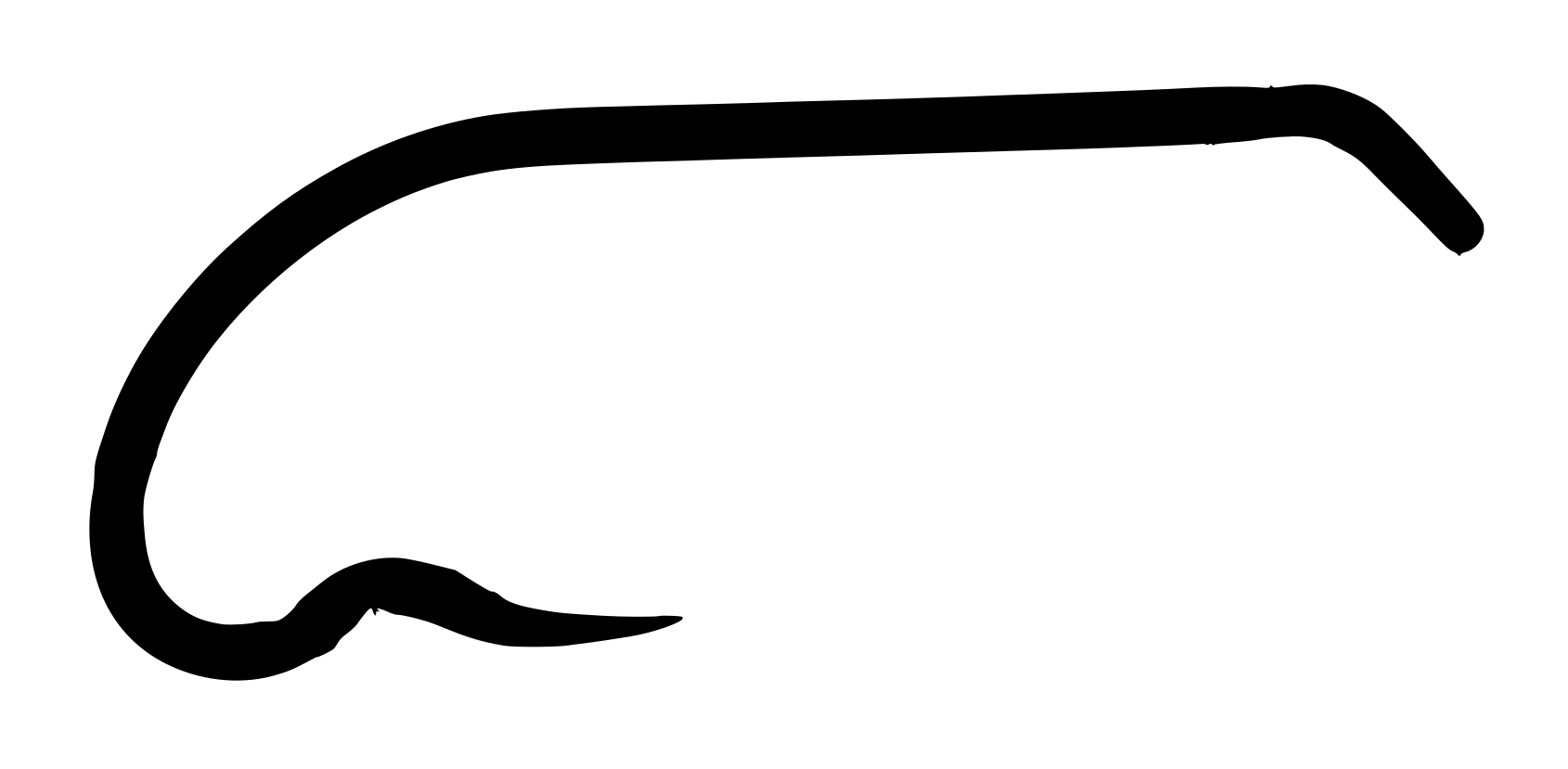
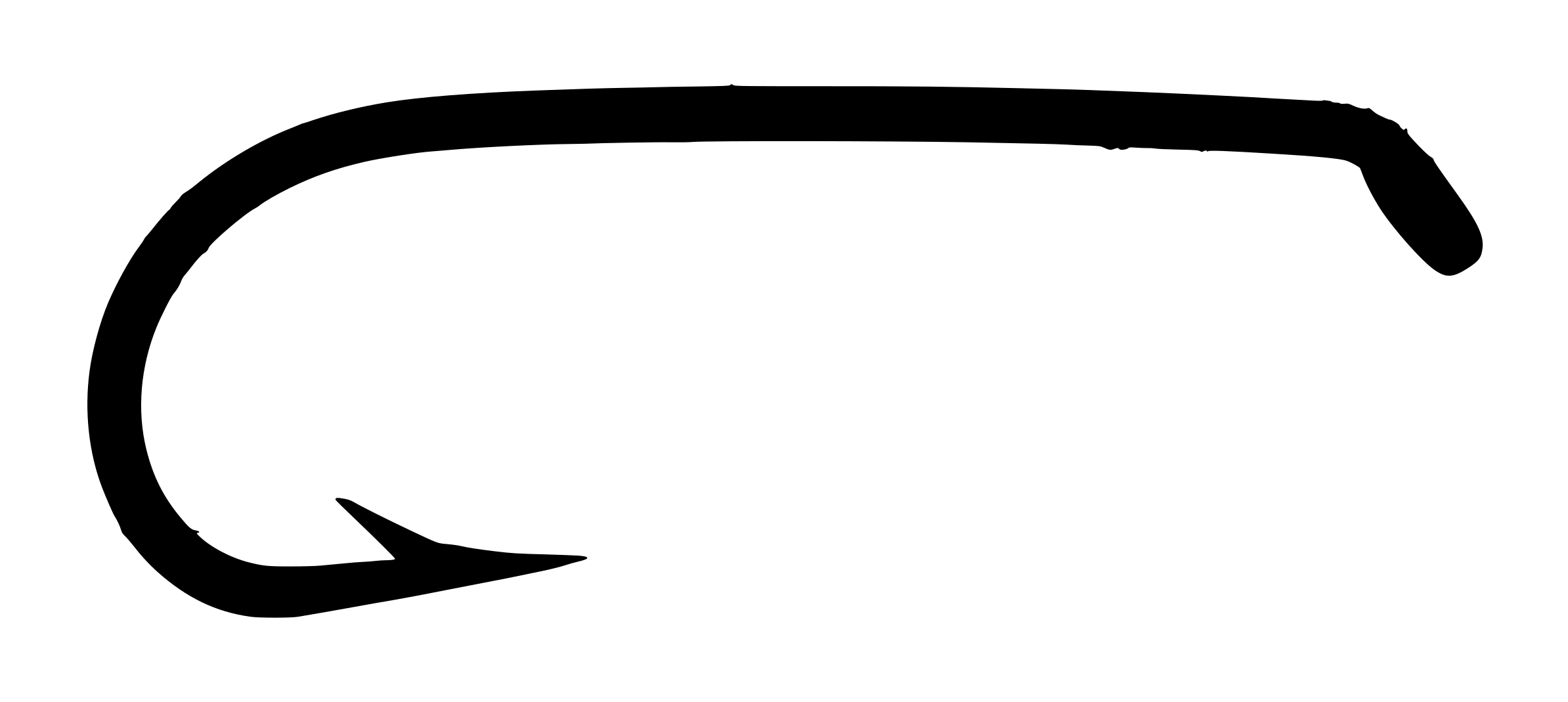
Limerick, Standard gapLimerick bend shows characteristic angular geometry with sharp corner at the bottom of the curve P. Bend depth moderate relative to shank length. No visible twist or asymmetry. Wire set clean, suggesting precision forging P.
Point
Superior (near-straight inner taper)Barb visible and intact. Short, close-cut profile typical of wet fly standards of the period P. Placement just behind the point at acute angle P.
Finish
Bronzed — Confirmed (stated on packaging)Bronzed finish displays warm brown tone with visible steel grain texture beneath the coating P, consistent with the confirmed finish specification on packaging V. Coating uniform with light surface oxidation patina typical of aged bronzed hooks. No corrosion or flaking evident.
Specimen hooks are bright and sound with no corrosion. Card shows typical mid-century age-related toning: foxing on edges, yellowing of the paper field, creasing at corners, and minor edge wear. Typography remains legible and image quality is intact. Card was not stored in a sealed or climate-controlled environment (indicated by surface oxidation and paper yellowing) but was preserved reasonably well in what was likely a tackle box or household storage.
The Superior Point — a near-straight inner taper from barb to tip with a nearly flat inside face — provides moderate penetration with slightly less drag resistance than a hollow point. Mustad’s classification of this point style contrasts with the more pronounced concavity of the Hollow Point, which produces a knife-edge effect. The Superior Point offers a practical balance for wet flies and nymphs where moderate sharpness and durability matter more than extreme penetration.
Standard wire gauge (estimated 0.033″-0.037″) provides adequate strength for small trout nymphs while remaining flexible enough for soft presentations. The bronzed finish oxidizes gradually over decades, developing a warm patina that some collectors and tyers associate with authenticity, though it offers no functional advantage over blued or tinned alternatives. Bronzed hooks were standard for European and North American manufacturers through the 1960s due to cost efficiency in the forging and finishing process.
This pattern was made in sizes 8 (V). We have measurement for size 8. Know the others? Submit calipered measurements and we'll review and add them. Thank you!
Historical context
mustad
O. Mustad & Son was founded in 1832 by Ole Mustad in Norway, initially as a small forge producing agricultural tools and fishing tackle. The company expanded dramatically during the late 19th century, establishing its main factory at Gjovik and becoming the world’s largest industrial hook manufacturer by the early 1900s. Mustad’s competitive advantage rested on precision forging, vertical integration of wire drawing and heat treatment, and aggressive international distribution.
By the 1920s-1930s, Mustad dominated global markets with standardized commercial lines sold under brand names like Superior, Viking, and Model. The company supplied both retail tackle shops and OEM manufacturers. Production accelerated post-1945, with Mustad becoming the primary supplier to mass-market American and European tackle brands. Oslo served as the corporate and sales office, while Gjovik housed the primary forges and manufacturing. By the 1950s-1960s, when this hook was manufactured, Mustad was producing millions of hooks annually in dozens of patterns, exported worldwide.
Series History
The Limerick bend is one of the oldest established hook geometries, documented in English fly-tying from the 19th century. The design is characterized by an angular bend with a crisp, nearly 90-degree corner at the bottom of the curve, in contrast to the rounded bottom of the Sproat or the wide bend of the Aberdeen. Mustad produced Limerick hooks under multiple brand lines, including Superior, Viking, and standard commercial variants.
The Superior line represented Mustad’s mid-range, mass-produced wet fly and nymph hooks. Model 3123 A indicates a specific production variant, with the “A” suffix likely denoting a particular specification (in this case, small eye). Mustad cataloged numerous Limerick variants across size ranges 1/0 to 16, in bronzed, blued, and tinned finishes. The small-eye designation was a deliberate choice for wet-fly and nymph work, keeping bulk minimal and reducing the lever arm created by a large eye during casting and setting.
Production of this model continued through the 1960s-1970s as Mustad’s Superior line remained in steady demand. By the 1980s, many traditional Limerick variants were phased out as Mustad shifted toward modern marketing and competition from Japanese manufacturers (Daiichi, Tiemco). However, the Limerick bend has seen periodic revivals among traditionalists and small-stream specialists who value the sturdy, penetrating point profile.
Era and Packaging Dating
No barcode visible (pre-1974 strong indicator). Typography uses clean geometric sans-serif characteristic of mid-20th-century commercial printing, consistent with 1950s-1960s offset lithography. Logo treatment — particularly the key symbol and “Mustad” lettering style — aligns with Mustad's branding from this period I. Paper stock aged to pale yellow, consistent with uncoated bond from mid-20th century stored in non-climate-controlled environments E. “Oslo - Norway” address format (pre-World War II Mustad used “Gjovik” consistently; post-war cards show mixed usage of both cities) suggests transitional period ca. 1950s I. No postal code or phone number visible, typical of pre-1960s European packaging I. Printing method is offset, suggesting post-1930s, but die-cut and hook-mounting format was standard through 1970s, so not restrictive P.
The Small-Eye Revolution
The designation “small eye, special” on this Mustad card reflects a deliberate engineering choice that many modern tyers have rediscovered. In the mid-20th century, wet-fly theorists understood that a large ball eye created drag and unnecessary bulk at the head of a fly — essentially adding weight that did nothing for the fly's action in the water. A small eye reduced the mechanical disadvantage during hook-setting and allowed the fly to turnover more naturally. This principle, documented in period fly-fishing literature, was largely forgotten during the boom in large-eyed modern hook designs optimized for visibility and durability in production environments. Today, as traditionalist tyers return to small-stream, upstream wet-fly tactics, they have found that these 70-year-old small-eye Mustad cards represent precisely what they need — functional, honest tackle designed by people who understood the problem they were solving.
Design lineage and influence
The Limerick bend traces to 19th-century Irish fly-tying tradition, with documented use by professional Limerick dressers working the River Shannon. The geometry proved durable and efficient enough to be adopted and standardized by major English manufacturers (Allcock, Milward) and later by industrial producers like Mustad. The Limerick competes functionally with the Sproat (more rounded), the Aberdeen (wider), and the Perfect (intermediate) — each suited to different applications and tier preferences.
Mustad’s adoption of the Limerick into the Superior line reflected industrial standardization — the Limerick’s angular geometry was simpler to forge at scale than the more complex bends. However, the rise of modern nymphing (ca. 1970s onward) and the subsequent dominance of Japanese hooks with finer wire and sharper points gradually displaced traditional Limerick variants. Contemporary fly tyers seeking period authenticity or small-stream simplicity have renewed interest in Limerick hooks, with Mustad, Partridge, and Tiemco all maintaining Limerick offerings.
Best matchRelated by Attribute
Computed automatically from catalog data — updated as new hooks are added.
Matches: Bend, Shank, Gap, Eye Orient., Finish +3 moreDiffers: Wire: Standard vs Heavy (1X Heavy); Eye: Ball Eye vs Tapered Eye; Point: Superior vs Other +1 more
Matches: Bend, Wire, Gap, Eye, Point +4 moreDiffers: Shank: Standard vs 1X Long; Eye Orient.: Turned Down vs Straight / Inline; Application: Wet Fly, Nymph vs Nymph, Bait, Saltwater
Matches: Bend, Shank, Gap, Eye Orient., Finish +3 moreDiffers: Wire: Standard vs Heavy (1X Heavy); Eye: Ball Eye vs Tapered Eye; Point: Superior vs Hollow Point +1 more
Intended for traditional wet flies and nymphs, particularly small-trout patterns in sizes 8-12. The small ball eye minimized weight and bulk at the head, reducing the leader loop’s mechanical advantage during strike and reducing water turbulence during the swing. Standard wire and standard shank accommodated classic thread base and dubbing bulk without requiring reinforcement. The Limerick bend’s angular profile and crisp point provided reliable penetration in the mouths of wary small trout in freestone streams, particularly during upstream wet-fly fishing or downstream nymph presentations.
Secondary Applications
Soft-hackle wet flies, early spider patterns, general utility small nymph. In periods of fly-pattern evolution, these hooks were repurposed for palmered and collar-hackled bodies.
Modern Equivalents
Hook
Match Quality
Notes
Mustad 94845 Limerick
Excellent
Direct successor in Mustad's Limerick line, similar geometry and wire gauge, still produced.
Partridge L3A
Very Good
English Limerick from Redditch, finer wire and more refined finish, comparable bend family.
Tiemco TMC 105
Good
Japanese Limerick offering, modern materials and sharper point, similar historical intent.
Collector notes
Rated 3.5/10 — common across all sizes due to Mustad's massive production volume. Complete original packaging in decent condition adds modest premium over loose hooks. Collector demand is casual; these hooks are picked up opportunistically rather than actively hunted. No size variants or finishes rare enough to elevate collectability significantly.
Reference value
$3 – $12 USD estimate
Packaging condition
Good — moderate wear, legibleRecorded specimen
Packaging format
GW-M-Limerick-01Catalog code
Positive factors: Original sales card is intact, which adds value over loose hooks. Card label is legible and graphically typical of the era. The designation “Small eye, special” suggests intentional differentiation and appeals to historians of wet-fly nymph design. Bronzed finish appeals to some tyers seeking warm-toned historical examples. The model number 3123 A is documented and traceable to Mustad’s production records.
Limiting factors: Mustad’s industrial production of the Superior line was extremely high — millions of cards were manufactured and distributed across North America and Europe. Surviving inventory remains abundant on the used market. Size 8 is a standard working size, not rare. Card condition is good but not mint — foxing and wear are present. The lack of closure or envelope means hooks were loose or removed at some point, so original count cannot be verified. Collector demand focuses on rare Redditch makers (Partridge, Allcock) and specialty Japanese lines (Tiemco), not mass-produced Mustad variants.
Desirability factors: Sealed or near-sealed cards in mint condition command slightly higher prices. Complete 100-hook count (verifiable by physical inspection) adds value. Smaller sizes (14-16) are marginally less common than 8-12. Blued finish commands slight premium over bronzed in some markets, as collectors associate blue with finer British traditions, though this is subjective.
Packaging
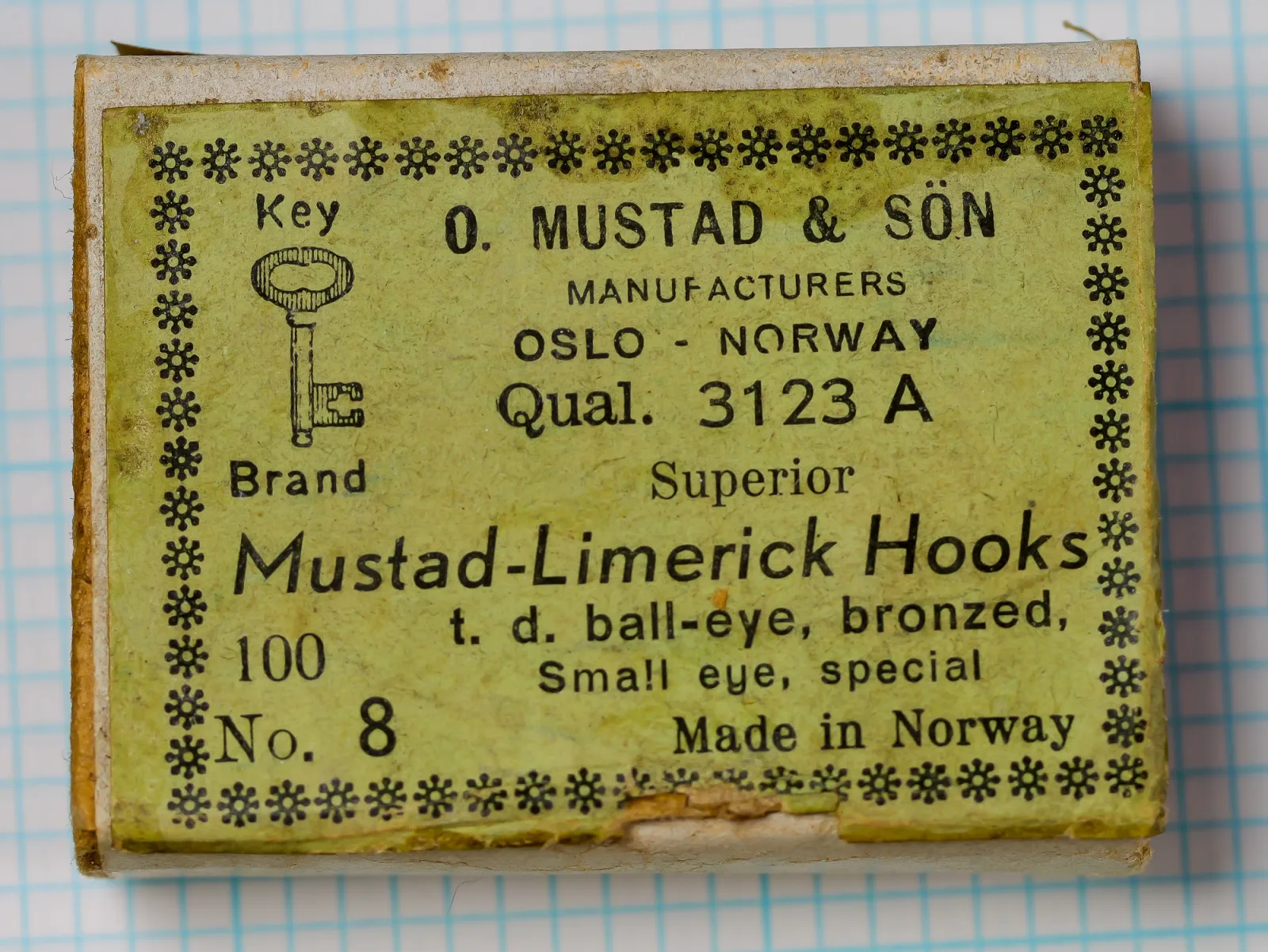
Rectangular cardboard sales card with offset-printed face. Field color pale greenish-yellow with black typography and border design of repeated floral/snowflake motifs. Dimensions approximately 4.5" x 3.0" (114 x 76 mm), estimated. Header text identifies “O. MUSTAD & SON, MANUFACTURERS, OSLO - NORWAY” with key logo. Model code printed as “Qual. 3123 A” V. Brand identification as “Superior” printed in center field V. Main heading reads “Mustad-Limerick Hooks” with specifications below: “t.d. ball-eye, bronzed, Small eye, special” V. Hook count stated as “100” V. Size printed as “No. 8” V. Manufacturing origin noted “Made in Norway” V. Card construction is scored horizontally and die-cut for hook mounting, now empty. Paper stock is moderate weight bond, yellowed with age. Print method is offset lithography. No barcode, consistent with pre-1974 production.
Market Value Notes
Low ($3): Loose hooks, no packaging, standard size 8. High ($12): Complete card, intact original packaging, excellent label condition, verified full hook count. Premium factors: Original packaging condition, sealed or near-sealed card, complete hook count, smaller sizes (14-16) vs 8-12. Platforms: eBay (USA/UK), general vintage tackle dealers, regional tackle fairs. Confidence: E estimated — Mustad Superior Limerick sales are infrequent on eBay; values extrapolated from comparable Mustad wet-fly cards and general mid-century hook pricing. Limited transaction data means this range should be treated as provisional.
Where to Find
eBay UK and US intermittently list vintage Mustad cards; check regional vintage tackle dealers and general antique markets in areas with active fly-fishing heritage (UK, upper Midwest US, Pacific Northwest). Mustad hooks are rarely found at specialist hook retailers, which focus on contemporary production.
Preservation
Storage and Preservation
Store the card in a cool, dry environment away from direct sunlight and humidity. The bronzed finish will continue to oxidize slowly over time, developing a darker patina — this is considered desirable by many collectors and does not indicate damage. Original card should remain with the hooks rather than being discarded; the package is an integral historical document. Avoid stacking heavy items on top of the card, as pressure can damage the cardboard and hooks.
If the card shows signs of mold or mildew (visible spots or musty odor), place it in a sealed plastic container with silica gel packets for several weeks to dry. Do not attempt to clean the card with water or solvents — doing so will cause further paper degradation and ink loss. If hooks themselves show any signs of surface corrosion (white or green patina), they can be gently brushed with a soft brass brush and then stored with a small packet of silica gel to prevent further moisture ingress.
For long-term preservation, avoid storing in unheated attics or basements, where temperature and humidity fluctuate seasonally. A stable interior environment (55–70°F, 30–50% RH) is ideal. Acid-free tissue wrapping is not necessary for hooks on period cards, but if the card is damaged and hooks are to be stored separately, acid-free containers are recommended.
Primary Source
Packaging Text Analysis
Source: Original Mustad-Limerick Hooks sales card, model 3123 A, c. 1950-1965.
The card states: “Mustad-Limerick Hooks / t.d. ball-eye, bronzed, / Small eye, special” V. This specification line is typical of mid-20th-century Mustad packaging. The abbreviation “t.d.” stands for “turned down,” standard nomenclature for fly hooks. “Ball-eye” denotes the eye type. “Small eye, special” is the key differentiator — it explicitly claims a reduction in eye size relative to a standard variant. The repetition of “special” suggests marketing emphasis, positioning this as an intentional design choice rather than a cost-cutting measure.
The phrase “Made in Norway” reinforces Mustad’s nationality and, by implication in the post-WWII context, industrial competence and quality. Norwegian manufacturing held positive associations with precision engineering in this era. The “Superior” brand name on the card (not in the specification line) identifies the product tier — superior to basic commercial lines, but not premium. This naming convention reflected Mustad’s market segmentation strategy.
The quantity “100” indicates the standard card size for retail tackle shops, a quantity that allowed individual tyers to maintain stock without requiring case-lot purchases. This standardization reflects mid-20th-century retail tackle distribution — individual cards sold for a few cents, with retail markup typical of mass-market commodity goods.
Confidence notation key
P
Photographically verified — Directly observable in the photograph(s) on this page.
V
Verified by documentation — Confirmed by manufacturer catalog, spec sheet, or published reference.
I
Inferred — A logical deduction from observable or documented evidence, not directly stated.
E
Estimated — An approximation based on visual comparison, proportional analysis, or limited data.
S
Speculative — A reasoned hypothesis that cannot be confirmed from available evidence.
Claims with no notation are confirmed by multiple independent sources. All photographs on garrenwood.com are taken on a measurement grid where each square equals 1/10 inch (0.1″ / 2.54 mm).