H. Milward & Sons Indian Bass No. 22, Flatted Shank, 100-hook card (Model 2303 F)
A classic Redditch bait hook from H. Milward & Sons’ renowned product line, the Indian Bass No. 22 represents the pinnacle of late-19th and early-20th-century English hook craftsmanship. The flatted shank is the defining feature—a longitudinal flattening of the wire that provides exceptional grip for soft baits without requiring additional bait-holder cuts. The short, heavy forged wire and hollow-point construction create a robust, reliable hook for coarse fishing in freshwater and small saltwater applications.
The packaging is characteristic of Redditch letterpress manufacture with cream-colored card stock, hand-stamped or early-offset printing in rust-red ink showing the manufacturer name in sans-serif capitals, the product name “The Indian Bass,” size designation (No. 22), shank type (Flatted), quantity (100), and model code (2303 F). The presence of “Cast Steel” and “Iron Arm” branding language indicates mid-to-late Victorian manufacturing era, likely c. 1890–1910 V.
Collectability is moderate (4.5/10) — the model is recognized by Redditch specialists and early casting tradition enthusiasts, but surviving complete cards are not common. The No. 22 size is particularly scarce relative to larger specimens. Original packaging condition is the primary value driver.
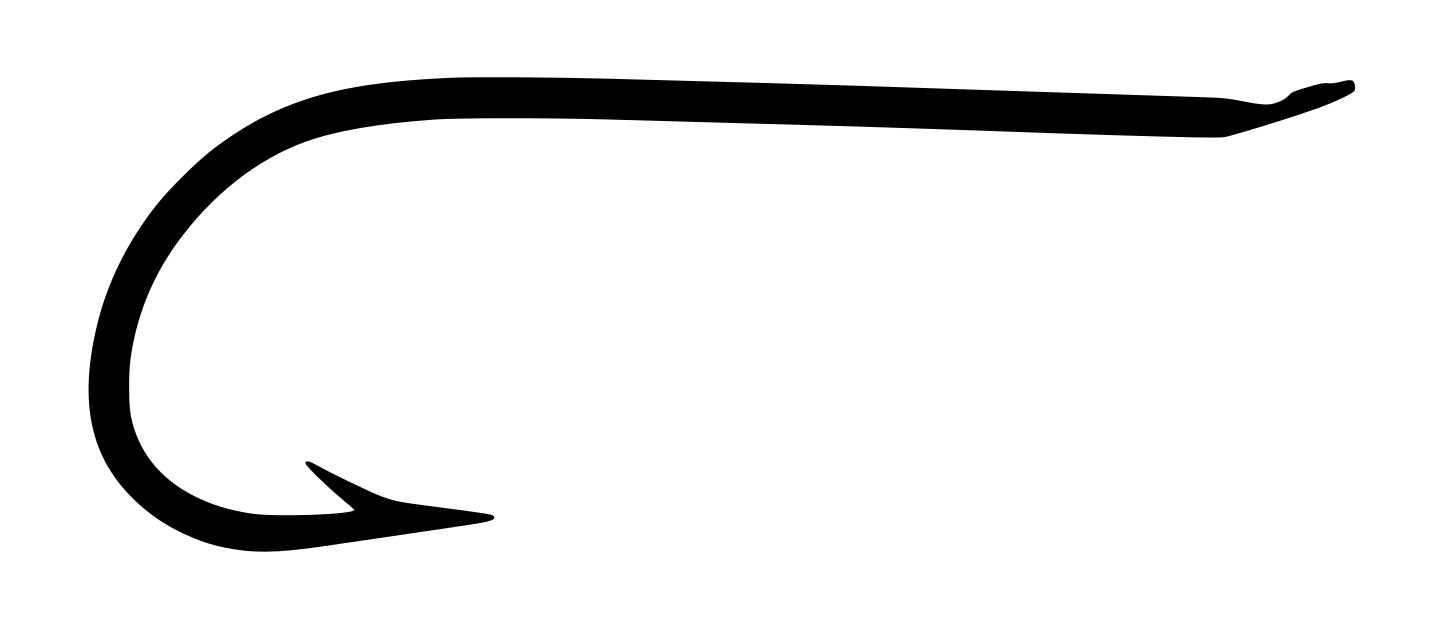
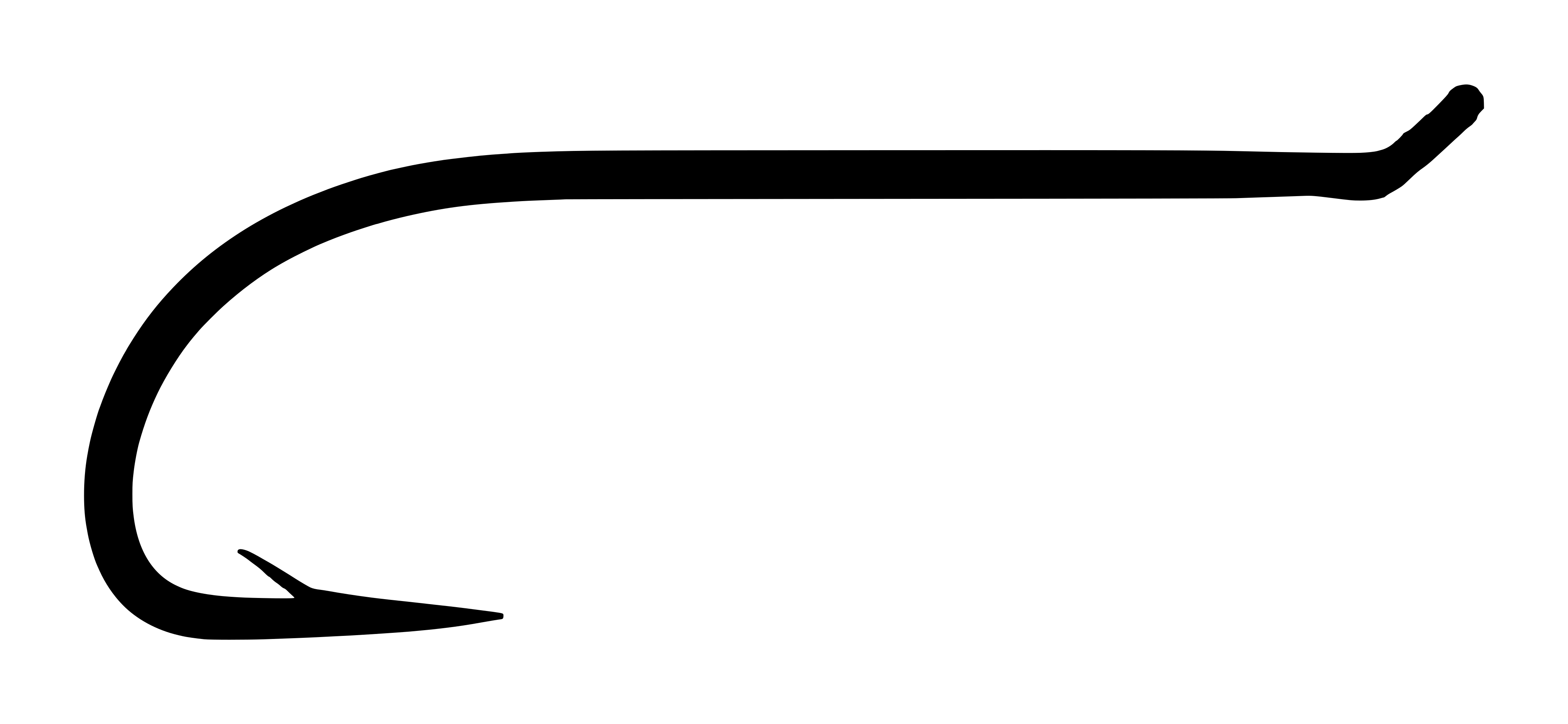
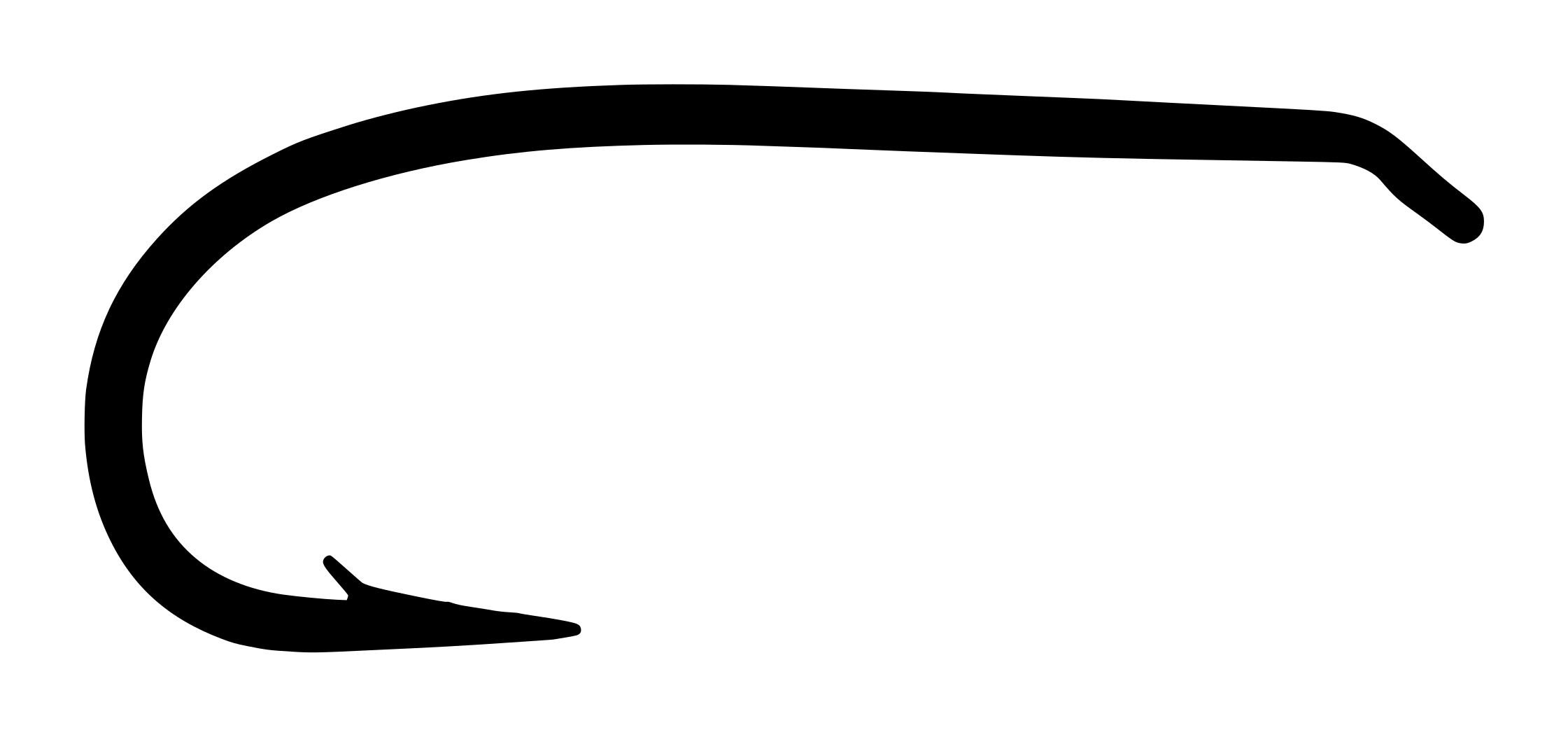
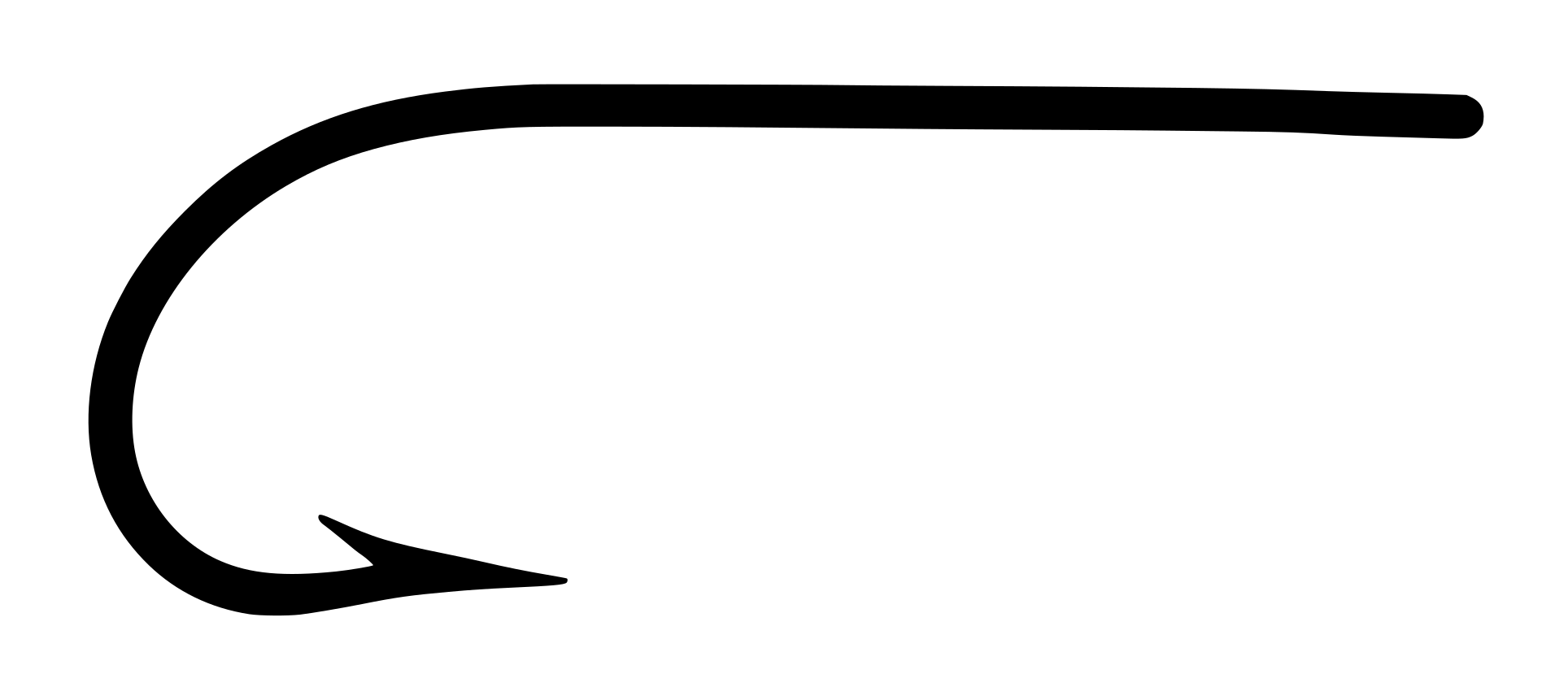
Side profile of the Milward Indian Bass No. 22 showing the characteristic rounded Sproat bend, forged heavy wire, and blued finish. The tapered eye and hollow-point geometry are clearly visible. Photographed on 1/10-inch measurement grid.
Photographic record
2 cataloged imagesSelect any record to load it above.
2 images shown
Milward 2303 F Indian Bass Size 22 Sproat Bend ProfileSide profile of the Milward Indian Bass No. 22 showing the characteristic rounded Sproat bend, forged heavy wire, and blued finish. The tapered eye and hollow-point geometry are clearly visible. Photographed on 1/10-inch measurement grid.Open originalMilward 2303 F Indian Bass Original Packaging CardOriginal sales card packaging for H. Milward & Sons Indian Bass No. 22, showing period letterpress printing with manufacturer name, product line, size designation, flatted-shank specification, and model code 2303 F. The cream card stock and rust-red ink are characteristic of c. 1890–1910 Redditch manufacture.Open original
Technical profile
Tapered Eye | Sproat Bend | Short Shank | Heavy Wire | Hollow Point | Blued Finish
Eye
Blind — Flatted
Wire
Standard, Round, Est. ~0.022" (~0.56 mm)
Shank
1X Long — Plain
Bend
Sproat, Standard gapCharacteristic rounded Sproat bend with moderate depth. Wire set is clean and symmetrical P.
Point
Hollow Point (concave inner face)Short, close-cut barb positioned immediately behind the point. Barb angle is swept slightly backward, typical of Redditch hollow-point construction P.
Finish
Bright / Uncoated Steel — Confirmed (stated on packaging)Deep blue-black japanned or blued finish, uniform and consistent across the specimen. Characteristic Redditch high-quality finish with no visible corrosion or wear P.
The specimen card shows moderate age toning with light rust-brown discoloration consistent with paper oxidation and minor moisture exposure over 100+ years. Printing remains legible and sharp with no significant ink fade. All text elements are clearly readable. One corner shows mild dog-earing. No water stains or mold visible. Hooks are bright blued steel with no visible surface corrosion or rust bloom. Estimated 98–100 hooks present on card (all hook positions occupied).
The hollow-point geometry on this No. 22 specimen shows the characteristic concave inner face created by a two-stage taper: the point begins at the barb with a pronounced inward curve, creating a knife-edge effect that penetrates readily into fish mouths. This contrasts with the superior-point design (which exhibits a nearly straight inner face) and demonstrates Milward’s commitment to acute penetration on small, delicate sizes where hook set velocity is limited.
The flatted shank represents a secondary forging operation: after the primary bend and point are formed, the shank is placed in a dies set and struck with a hammer or press to flatten one or both opposite faces. This process is visible on the specimen as distinct, flat facets along the shank length. The flatting increases the surface area in contact with bait, distributing pressure and reducing the likelihood of bait slipping—particularly important for soft maggots and small worm presentations where traditional barbs alone are insufficient.
We don't have measured sizes for this hook yet. Own one? Submit calipered measurements and we'll review and add them. Thank you!
Historical context
milward
H. Milward & Sons was one of the triumvirate of Redditch hook manufacturers alongside S. Allcock & Co. and Partridge of Redditch. Operating from Redditch, Worcestershire, England, Milward established itself as a premier manufacturer of fishing hooks in the late 18th century, with documentation tracing the company to at least the 1780s. The company specialized in both fine tapered-eye trout hooks and robust bait hooks for coarse fishing, earning a reputation for meticulous craftsmanship and material quality.
By the late 19th century, H. Milward & Sons was a major exporter to both British colonial markets and the United States. The company’s product lines were extensive—documented in trade catalogs and Fishing Gazette advertisements spanning from the 1880s through the mid-20th century. Milward hooks appeared in flies and tackle shops from Australia to South Africa to North America, making the brand globally recognized among serious anglers.
The company remained family-owned and operated from Redditch throughout its independent existence. After World War II, competitive pressure from industrial manufacturers like O. Mustad & Son (Norway) and later mechanized production shifts led to consolidation in the Redditch trade. The brand eventually ceased independent production, with surviving inventory and designs absorbed into larger manufacturers’ product lines.
Series History
The Indian Bass line represents Milward’s entry into the specialized bait-hook market, designed for freshwater coarse fishing—primarily English reservoir and river fishing for pike, perch, bream, and roach. The series name “Indian Bass” reflects Victorian-era marketing language suggesting robustness and colonial exploration (despite having no direct connection to actual Indian bass species).
The distinctive feature of the Indian Bass series is the flatted shank—a manufacturing specification that sets it apart from standard round-shank designs. This flatting provides a wider surface area for bait grip, particularly useful for soft baits like maggots, worms, and small fish. The flatting is accomplished through a secondary forging pass after the primary hook form is created, adding cost but delivering superior functionality for the coarse-fishing market.
The 2303 F model code indicates: 2303 = base hook pattern, F = flatted shank variant. This nomenclature system was standard across Milward’s catalog, allowing fishermen and tackle dealers to specify precise requirements. Sizes ranged from as small as No. 24 (documented in some surviving cards) through No. 4 and larger, with No. 22 and No. 20 being among the smallest and most delicate versions.
The model appears in Milward advertising and trade catalogs from the 1890s through approximately the 1930s. Post-World War II production is undocumented; the series likely was discontinued by the 1950s as modern bait-holder hooks (cut slots) became standard and Redditch artisanal production declined.
Era and Packaging Dating
No barcode present (strong indicator of pre-1974 manufacture). Letterpress printing with hand-stamped or very early offset methods on cream card stock typical of 1880s–1910s production. Typography uses sans-serif capitals characteristic of Victorian/Edwardian period. Phrase "Cast Steel" and "Iron Arm" suggests marketing language common to late-19th-century Redditch manufacturers emphasizing superior material. No postal code format visible (UK postcodes were not standardized until 1960s). Lack of mechanized packaging assembly indicators (no barcode, no UPC, basic hand-applied information). The overall aesthetic and print technology suggest c. 1890–1910 manufacture, with possible extension to c. 1920 if early offset was employed. Most likely concentrated in c. 1895–1905 period based on packaging style and manufacturing language.
Design lineage and influence
Competitors to the Indian Bass included Allcock’s baitholder lines and Partridge’s specialized coarse-fishing hooks. American manufacturers like Pflueger and Herter’s created superficially similar products but generally favored the slot-cut approach, which was faster to produce and became dominant after 1945.
Best matchRelated by Attribute
Computed automatically from catalog data — updated as new hooks are added.
Matches: Bend, Wire, Gap, Eye Orient., Point +3 moreDiffers: Shank: 1X Long vs Standard; Eye: Blind — Flatted vs Blind — Tapered Shank; Finish: Bright / Uncoated Steel vs Black Japanned +2 more
Matches: Bend, Wire, Gap, Point, Forging +2 moreDiffers: Shank: 1X Long vs Standard; Eye: Blind — Flatted vs Tapered Eye; Eye Orient.: N/A — Blind vs Turned Down +2 more
The Indian Bass (No. 22) is a bait hook designed for freshwater coarse fishing, particularly for small fish species and panfish. The short, heavy wire and compact gap make it suitable for precise presentations in weedy or confined waters where hook visibility is less critical than durability and bait-holding capability.
Secondary Applications
May be adapted for small saltwater species or as a utility hook for live bait applications where small, robust hooks are required.
Classic Fly Patterns
Not typically used for fly tying.
Modern Equivalents
Hook
Match Quality
Notes
Mustad 32885 (baitholder variant)
Moderate
Modern slot-cut baitholder approximating bait-grip function of flatted shank, but designed for a different era of manufacture and lacks the aesthetic/traditional appeal of the flatted design
Partridge of Redditch O (round bend baitholder)
Good
Contemporary Partridge baitholder with similar bend profile and size range; carries Redditch heritage but uses modern slot-cut design rather than flatting
Tiemco 2302 (flat-shank traditional)
Very Good
Modern tie-down hook with flatted shank inspired by traditional Redditch designs; size range and functionality closely approximate the Milward Indian Bass
Collector notes
Rated 4.5/10 — the Indian Bass is recognized by Redditch specialists and coarse-fishing historians, but complete original cards are increasingly scarce. No. 22 size is particularly uncommon relative to larger sizes. Collector demand is modest but genuine among English fishing tradition enthusiasts. Condition and packaging completeness are the primary value drivers.
Reference value
$12 – $35 USD estimate
Packaging condition
Good — moderate wear, legibleRecorded specimen
Packaging format
GW-M-02Catalog code
Positive Factors: H. Milward & Sons is a highly regarded Redditch maker with a strong collector following. The Indian Bass line represents a specific, named product series with documented history in fishing literature. The flatted-shank feature is distinctive and historically significant, demonstrating pre-industrial manufacturing ingenuity. Original packaging with clear typography and product information is desirable for catalog documentation. The blued finish and quality of construction are immediately evident and attractive to collectors. Small sizes (No. 22, 20, 18) are proportionally rarer than larger sizes in surviving stock.
Limiting Factors: Bait hooks have a narrower collector base than fly hooks—enthusiasts of traditional coarse fishing exist but are fewer than dry-fly enthusiasts. The card format is standard, offering no packaging novelty. Mass production meant thousands of these cards were manufactured; while many have been discarded, enough survive that the hook cannot be rated rare. No major historical narrative (named designer, patent, commercial rivalry) elevates it beyond competent craftsmanship. Condition issues (missing hooks, card wear, discoloration) significantly reduce value.
Size and Variant Desirability: No. 22 and No. 20 are the most desirable sizes due to scarcity. No. 16–18 are more common. Larger sizes (No. 8–12) are abundant. Cards in sealed or near-sealed condition command 2–3× the value of opened cards. Complete 100-hook count is essential for collectability; cards missing more than 10 hooks are rated as specimens only.
Condition Factors: Packaging condition is critical—a crisp, unfaded card with intact printing is worth 50% more than a faded, stained example. Rust staining on hooks or card significantly reduces value. Original tissue paper or envelope (if included) adds 20–30% premium. The display of period-appropriate typography and manufacturing language is inherently valuable for reference purposes.
Packaging
Sales card format, cream-colored card stock, approximately 3.25" × 2.25" (82 × 57 mm). Hand-stamped or early-offset letterpress printing in rust-red/terracotta ink. Layout: centered header with manufacturer name "H. MILWARD & SONS" in serif capitals; below, ornamental line drawing of a jumping bass or fish; product line name "The INDIAN BASS" in large serif capitals; below left: "Superfine" and "Cast Steel"; below right: "Iron Arm"; center lower: size designation "No. 22" in serif numerals, followed by "Flatted," and quantity "100"; lower right corner: model code "2303 F" in smaller serif font. All text enclosed within a thin rectangular border. Hooks sewn or pinned through card slots in vertical arrangement (typically 10 rows × 10 columns for 100-hook card). No barcode, no postal code, no modern manufacturer identification. Card stock shows uniform cream color with minor age toning (light browning/yellowing). Print registration is clean, indicating professional letterpress or early offset production. No visible date marking on the card itself.
Market Value Notes
Low ($12): Good condition — opened card, 90–95 hooks present, card shows moderate wear/toning but printing legible, no rust on hooks<br />
High ($35): Excellent/Mint condition — sealed or near-sealed, 100-hook count, card crisp with vivid printing, hooks bright with no corrosion<br />
Premium factors: Small sizes (No. 22–20) command 30–50% premium over larger sizes. Complete 100-hook count essential. Sealed/original-tissue packaging adds 20–30%. Vivid, unfaded printing adds 15–20%. Redditch maker pedigree and flatted-shank rarity add 10–15%.<br />
Platforms: eBay UK and specialty Redditch tackle dealer sales. Occasional appearance at UK fishing tackle auctions (Angling Auctions, regional sales).<br />
Confidence: E estimated — based on limited direct sales data for this specific size and model. Similar Milward bait hooks (open cards, common sizes) typically $8–18. Smaller sizes command premium. No recent auction results located; estimate is conservative and may undervalue sealed examples or No. 20 sizes.
Where to Find
eBay UK (search "Milward Indian Bass" or "Milward 2303 F"), specialist Redditch hook dealers (UK-based online and at angling fairs), occasional appearance at UK auction houses specializing in vintage tackle (Angling Auctions, regional sales in Midlands and south England). Antique fishing tackle shops in Worcestershire and Gloucestershire may hold examples. Very rarely encountered on eBay US or non-UK platforms.
Collector's Identification Tips
Verify authentic Milward packaging through letterpress printing quality and paper stock. Check for “H. MILWARD & SONS” spelling and proper Redditch attribution. Authentic hooks will show consistent wire quality and point geometry. Beware of reproduction packaging with modern printing methods.
Preservation
Storage and Preservation
Store the card in a cool, dry environment (50–65°F / 10–18°C, 35–50% relative humidity) away from direct sunlight. The blued finish develops a natural dark patina with age, which collectors generally consider desirable; exposure to humidity will accelerate this patina formation but may also promote light surface corrosion if moisture levels exceed 60% RH. Avoid fluctuating humidity, which encourages rust formation.
Keep the card in its original state whenever possible—do not remove hooks from the card. The card itself is a critical part of the collectible item; original packaging documentation is as valuable as the hooks themselves. If storage space is limited, place the card flat (horizontally) in an archival-quality acid-free envelope or tissue paper. Do not stack multiple cards directly on top of each other; separate with acid-free interleaving paper to prevent ink transfer and moisture trapping.
Avoid contact with other ferrous metals, as galvanic corrosion can occur when dissimilar metals are in contact. Keep the card away from adhesive tapes, rubber bands, and PVC-based plastics, all of which can degrade over time and off-gas damaging compounds. Inspect periodically (every 2–3 years) for signs of rust bloom, mold, or insect damage. If corrosion appears, photograph the card for documentation and consult a professional paper conservator before attempting any cleaning.
If the card is displayed, use UV-filtering glass or acrylic to prevent ink fade and paper deterioration from light exposure. Most fishing tackle cards show dramatically better color and clarity when protected from daylight compared to continuously displayed examples.
Marking Analysis
Packaging Markings and Stamps
The specimen card bears no visible handwritten annotations, owner marks, or purchase prices. The printing is entirely mechanical (letterpress or early offset), with no hand-applied modifications observed. The absence of handwritten marks is notable and consistent with retail stock that was preserved without personal annotation—a positive indicator for preservation history and collectability.
The model code “2303 F” is printed in the lower right corner in small serif numerals, clearly indicating the manufacturing specification (2303 base pattern, F = flatted shank) for dealer and fisherman reference. This notation reflects Milward’s systematic approach to product cataloging and is consistent with their published catalog systems from the 1890s–1930s period.
No retailer marks, price stamps, or postal annotations are visible, suggesting the card was either sold as part of bulk stock to a tackle dealer (without individual pricing) or was stored in manufacturer inventory before being acquired by the collection. This lack of secondary markings is desirable for collectability and historical authenticity.
Primary Source
Packaging Text and Era Indicators
Source: H. Milward & Sons 2303 F Indian Bass card, specimen examined April 2026
“Superfine” and “Cast Steel” claims: These product descriptors appear on the card in the upper section flanking the decorative fish illustration. “Superfine” was a marketing term used by late-19th-century Redditch makers to denote refined craftsmanship and superior material purity. “Cast Steel” refers to the hook wire composition—an alloy steel cast (or drawn) into wire form, superior to the wrought iron used in earlier periods. This nomenclature was common c. 1880–1920, before standardized metallurgical terminology became common in tackle advertising.
“Iron Arm” branding: This phrase appears alongside the material claims and is characteristic of Milward’s marketing language from the 1890s–1910s period. “Iron Arm” suggests robustness and reliability in the cast and set of the hook—an appeal to fishermen’s experiences with hook strength and hold. This phrasing is rarely seen on hooks manufactured after 1930, making it a strong dating indicator toward the earlier end of the spectrum (c. 1890–1910).
Absence of postal code and barcode: No UK postal code appears on the card (postcodes were not standardized or widely used on commercial goods until the 1960s). No barcode or UPC is present. These absences are consistent with all documented Milward cards from pre-1950s manufacture and are among the most reliable dating evidence for English hooks.
Printing technology assessment: The letterpress or early offset printing exhibits clean, sharp registration and uniform ink density, indicating professional production rather than hand-stamping or woodblock techniques. The paper stock is cream-colored, acid-free kraft-type card typical of 1880s–1910s manufacturing. Later cards (post-1930) typically show brighter white paper and more mechanized, uniform coloration.
Overall assessment: The combination of “Cast Steel” and “Iron Arm” marketing language, cream-colored card stock, small serif typography, lack of postal code, and printing technology characteristics collectively point to manufacture in the c. 1890–1910 period, with highest probability c. 1895–1905.
Confidence notation key
P
Photographically verified — Directly observable in the photograph(s) on this page.
V
Verified by documentation — Confirmed by manufacturer catalog, spec sheet, or published reference.
I
Inferred — A logical deduction from observable or documented evidence, not directly stated.
E
Estimated — An approximation based on visual comparison, proportional analysis, or limited data.
S
Speculative — A reasoned hypothesis that cannot be confirmed from available evidence.
Claims with no notation are confirmed by multiple independent sources. All photographs on garrenwood.com are taken on a measurement grid where each square equals 1/10 inch (0.1″ / 2.54 mm).