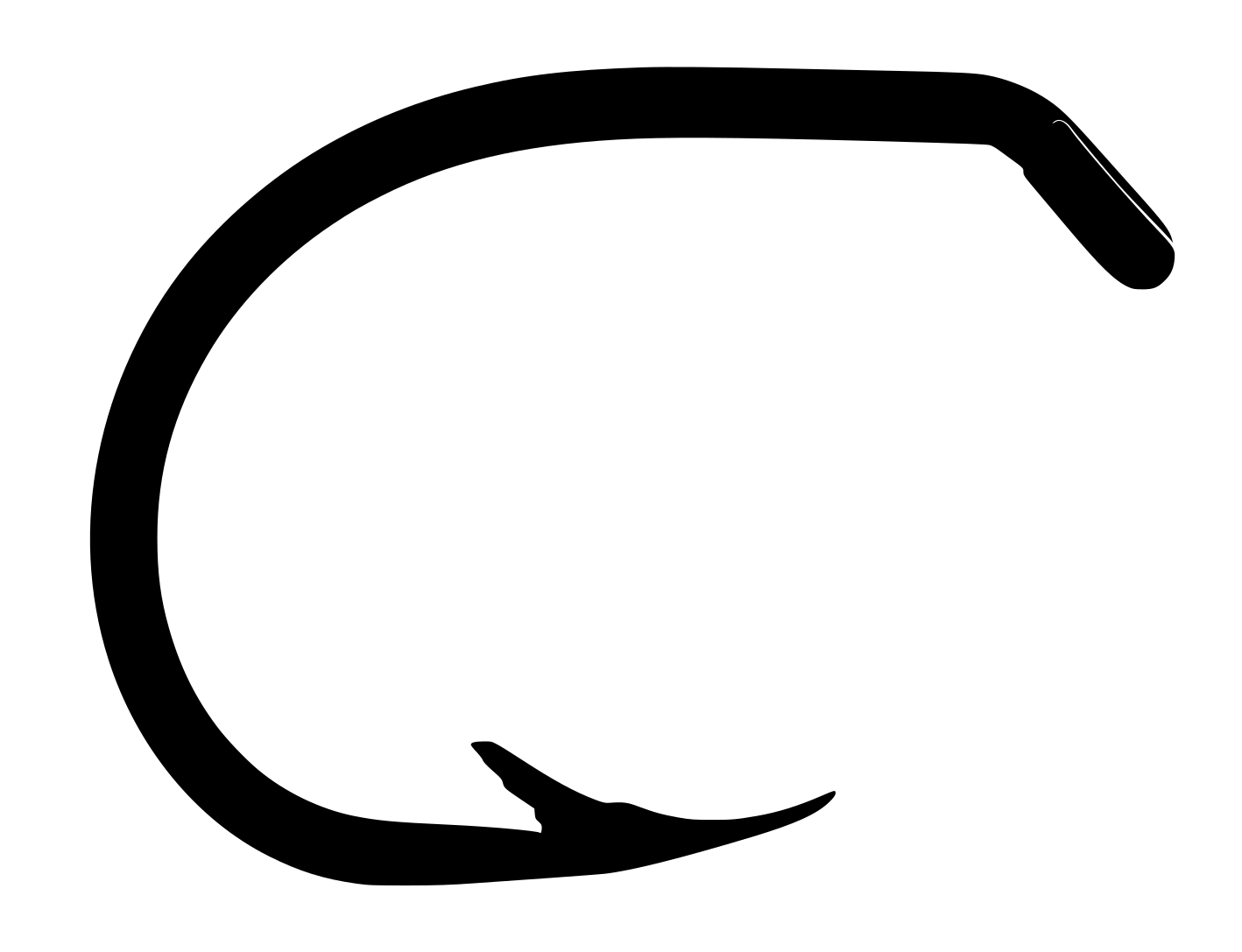
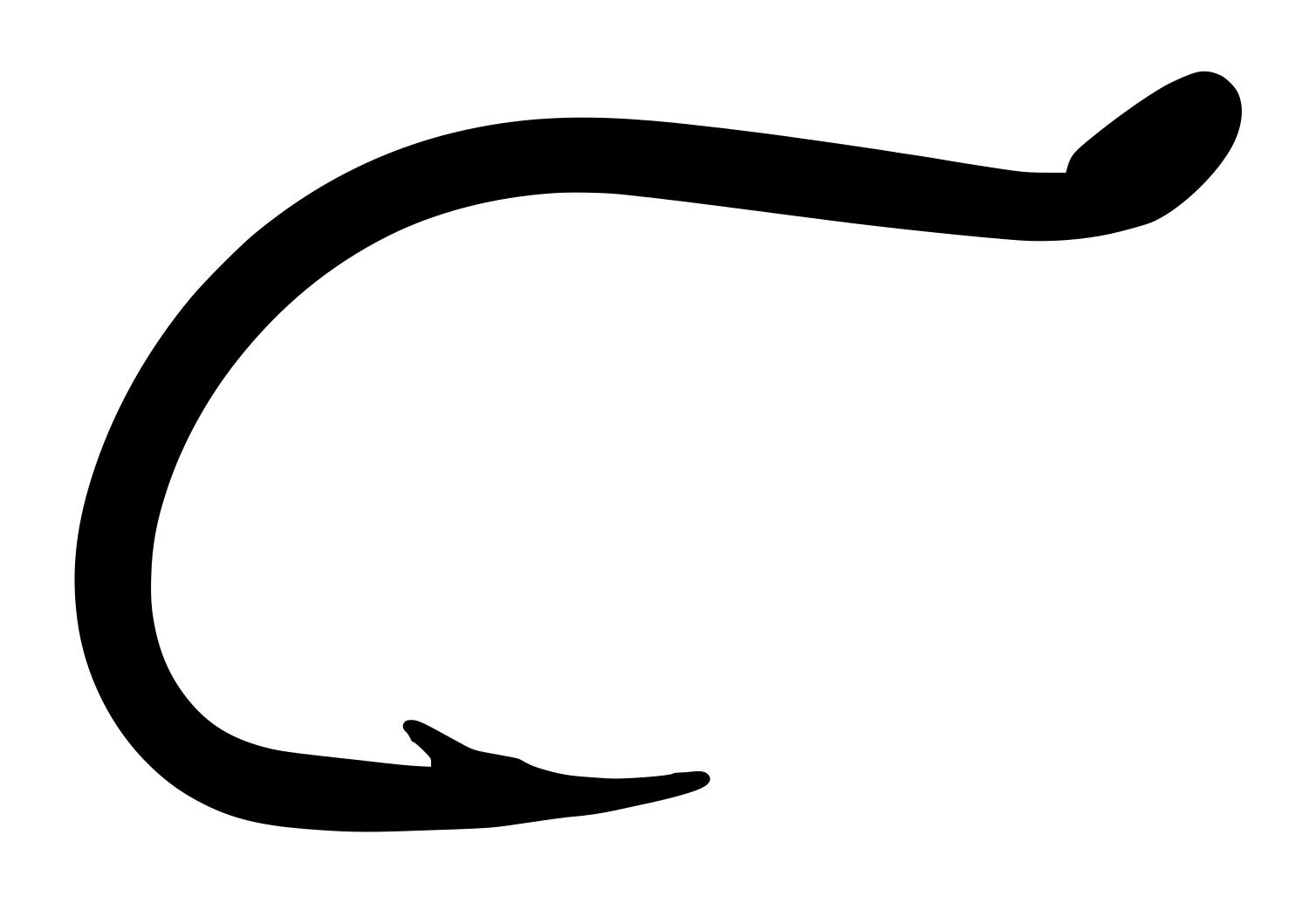
Edgar Sealey & Sons S 4320, a short-shank, down-eyed hook made in Redditch, England, c. 1930–early 1960s, documented here in size 12 from an original 100-count box. Round bend, turned-down ball eye, beak-style incurved point, and bright silver-grey plating identified as nickel from the photographs P. The label’s Renversé indicates a reversed lateral offset I, though the offset is not visible in the side-view photograph. The packaging does not state an intended application; the very short shank, wide gap and reversed offset are also common on bait hooks, so wet-fly use should be treated as unconfirmed S.
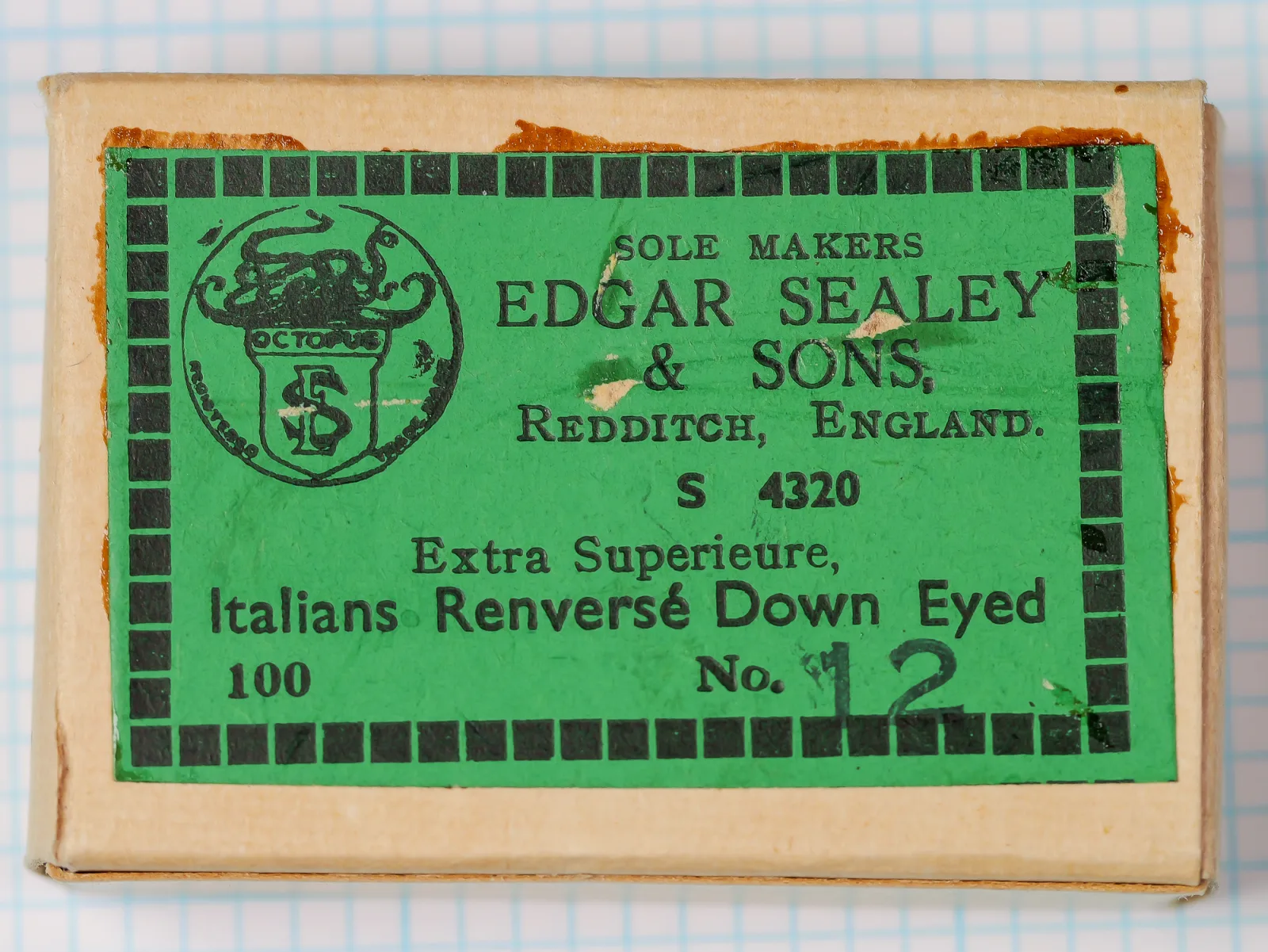
Original packaging label for Edgar Sealey & Sons S 4320 Extra Superieure, Italians Renversé Down Eyed hooks, size 12, quantity 100. Green printed label with octopus trademark and Redditch address.
Photographic record
2 cataloged imagesSelect any record to load it above.
2 images shown
Edgar Sealey S 4320 Original Box LabelOriginal packaging label for Edgar Sealey & Sons S 4320 Extra Superieure, Italians Renversé Down Eyed hooks, size 12, quantity 100. Green printed label with octopus trademark and Redditch address.Open originalEdgar Sealey S 4320 Size 12 Hook DetailSingle Edgar Sealey S 4320 hook showing round Kendal bend, nickelled finish, down eye, and reversed (right) offset point geometry. Wire gauge consistent with size 12 proportions.Open original
Technical profile
Turned Down Ball | Round Bend | Beak Point | Nickelled
Eye
Ball Eye, Turned DownTurned-down loop eye, photographed edge-on P. Classed as a ball eye (formed from full-diameter wire, not tapered) on visual evidence I; a view through the eye would confirm.
Wire
Standard, Round
Shank
Short (1X–2X Short) — Plain
Bend
Round / Kendal, Standard gap, Offset / kirbedNear-constant-radius round bend with a very short shank; the point runs roughly parallel to the shank and curves slightly inward at the tip P. 'Italians' on the label is probably Sealey's name for the pattern S. Reversed offset stated by 'Renversé' on the label I but not visible in the side-view photograph.
Point
Beak / Reversed (incurving)
Finish
Nickelled / Nickel-Plated — Confirmed (stated on packaging)Bright, cool silver-grey plating with mirror-like highlights, consistent with nickel P. The label does not state a finish; identification is photographic only. Distinguished from tinning by the cooler, darker grey tone of the reflections I.
The point is a beak-style point: the tip curves slightly inward toward the shank, with a long, prominent barb cut well back from the tip P. “Extra Superieure” on the label is read here as a quality grade rather than a point style, consistent with the “Extra Quality” wording on other Sealey labels I.
The bend is of near-constant radius (round/Kendal) with a very short straight shank ahead of it P. The label’s Renversé indicates a reversed lateral offset I; the offset cannot be seen in this side-view photograph and should be confirmed with an overhead shot. No thickening of the bend is visible from the side, but whether the bend is forged is best checked from above.
The eye is a turned-down loop eye, photographed edge-on P. It is classed as a ball eye (formed from full-diameter wire, not tapered) on visual evidence only I; a view through the eye would confirm this.
This pattern was made in sizes 2-16 (S). We have measurement for size 12. Know the others? Submit calipered measurements and we'll review and add them. Thank you!
S 4320 is a pattern number in Sealey’s S-series; the size is not part of the code. On this box the size numeral “12” is in a much larger face than the rest of the label and appears to have been applied separately to a label printed for the pattern as a whole I. The label names the pattern Extra Superieure, Italians Renversé Down EyedP, which reads as a quality grade (Extra Superieure), a pattern name (Italians), a laterally offset point (Renversé) and a turned-down eye I.
No catalog page for S 4320 has yet been located, so its production span, size range and relationship to other Sealey patterns are undocumented. Sealey’s c. 1950 sample book listed patterns by traditional names such as Sproat, Sneck and Limerick; “Italians” is most likely a pattern name in the same sense S.
Era and Packaging Dating
Edgar Sealey & Sons was established c. 1930 and is listed in Kelly's Directory of 1932 V, which sets the earliest date. The green label with black block border and Octopus trade mark roundel is the firm's house style before the early 1960s; the octopus badge was reportedly retired around 1963 S, giving a probable latest date. This label reads 'Edgar Sealey & Sons' without 'Ltd.', whereas the S 4310 LS label reads '& Sons, Ltd.'; if the incorporation date can be established it may narrow the range S. The sans-serif lines appear to be set in Gill Sans or a close relative, a face introduced in 1928, consistent with the c. 1930 start I. The absence of a barcode is uninformative for British packaging of this period.
The Octopus Trade Mark
The octopus roundel on this label was Edgar Sealey's registered trade mark: an octopus above a shield lettered 'OCTOPUS' with an interlaced monogram, encircled by the words 'Registered Trade Mark' P. The firm used the Octopus name across its hooks and, later, its tackle, and its c. 1950 sample book was issued as 'Octopus Brand' I. Why Sealey chose an octopus is not documented S. The trade mark should not be confused with the modern 'octopus' bait-hook pattern, which is a separate and later usage.
Design lineage and influence
The round (Kendal) bend is one of the oldest named Redditch patterns: a bend of near-constant radius, distinct from the Sproat, whose parabolic curve varies in radius. This specimen shows a near-constant-radius bend with the point running roughly parallel to the shank and curving slightly inward at the tip P, a combination close to what Mustad and others sold as beak hooks. Whether Sealey’s “Italians” was a distinct pattern with its own proportions, or a trade name for a round-bend beak form, is not documented S. Nickel plating was one of several finishes Redditch makers offered alongside bronzed, blued and japanned; the packaging gives no reason for its use on this pattern.
Best matchRelated by Attribute
Computed automatically from catalog data — updated as new hooks are added.
Matches: Bend, Shank, Gap, Eye Orient., Offset +3 moreDiffers: Wire: Standard vs Fine (1X Fine); Eye: Ball Eye vs Tapered Eye; Point: Beak / Reversed vs Superior +2 more
Matches: Bend, Wire, Gap, Eye Orient., Forging +4 moreDiffers: Shank: Short (1X–2X Short) vs Standard; Eye: Ball Eye vs Tapered Eye; Point: Beak / Reversed vs Hollow Point +1 more
Matches: Bend, Shank, Eye, Finish, Offset +2 moreDiffers: Wire: Standard vs Heavy (1X Heavy); Gap: Standard vs Wide; Eye Orient.: Turned Down vs Turned Up +3 more
Matches: Bend, Shank, Wire, Eye Orient., Offset +2 moreDiffers: Gap: Standard vs Wide; Eye: Ball Eye vs Tapered Eye; Point: Beak / Reversed vs Hollow Point +3 more
Rated 6.0/10 — Boxed Edgar Sealey hooks from the Octopus trade-mark era appear infrequently E and interest collectors of Redditch packaging; value depends heavily on label condition and completeness of count.
Reference value
$18 – $45 USD estimate
Packaging format
GW-EC-02Catalog code
Edgar Sealey hooks are collected mainly by specialists in Redditch tackle and British hook packaging. The firm’s green, block-bordered labels with the Octopus trade mark are a recognizable house style, and complete original boxes attract more interest than loose hooks.
Limiting factors: boxed Sealey hooks appear less often than Mustad or Partridge equivalents in similar sizes E, but demand is also narrower. Size 12 is a working size rather than a specialty size. Missing hooks, damaged labels or poor box condition substantially reduce value.
Premium factors: an intact original label, a full count and a clean box raise value. The descriptive pattern name (Italians Renversé Down Eyed) and S-series pattern number appeal to catalog completionists and hook historians.
Packaging
Small lidded pasteboard box with cream/buff covering and a green printed label glued to the top P. Approximately 4.0" × 2.75" by the photo grid E; confirm with a ruler. Label has a black square-block border and a circular trade mark roundel at left: an octopus above a shield lettered 'OCTOPUS' with an interlaced monogram, encircled by 'REGISTERED TRADE MARK' P. Label text: 'SOLE MAKERS / EDGAR SEALEY & SONS, / REDDITCH, ENGLAND. / S 4320 / Extra Superieure, / Italians Renversé Down Eyed / 100 / No. 12' P. The size numeral '12' is in a much larger face than the rest of the label and appears to have been applied separately I. Brown adhesive staining around the label edges, small areas of surface loss near 'SONS' and on the roundel, light toning and edge wear to the box P. Printing appears to be letterpress I. Box interior, contents and underside not photographed. No barcode.
Market Value Notes
Low ($18): Good condition, opened box, 80-95 hooks present, label intact, minor toning
High ($45): Excellent condition, full count of 100, label bright, no defects
Premium factors: complete count, original label condition, clean box
Platforms: eBay UK, specialist tackle dealers, UK online auctions
Confidence: E estimated — limited recent comparable sales data for Edgar Sealey size 12
Where to Find
eBay UK and specialty British tackle dealers; occasionally at UK regional tackle fairs and auction houses specializing in vintage fishing tackle. Scarce on US eBay.
Preservation
Storage and Preservation
Store the original card in a cool, dry environment away from direct light and humidity. The nickelled finish is resistant to corrosion but not immune to oxidation in very damp conditions. Keep the card horizontal to prevent hooks from shifting and abrading the label. The printed label is irreplaceable and adds substantial value—avoid handling the label surface directly; hold the card by its edges only.
If the hooks are to be used for fly tying, inspect them for corrosion or brittleness before use. Vintage hooks can develop stress fractures if stored in high humidity or temperature fluctuation. Test a hook by flexing it gently; if it feels brittle or shows white stress marks, discard it. The card itself should not be exposed to insect activity (silverfish, bookworms); store in acid-free tissue or a sealed archival box.
Do not attempt to clean the label with water or solvents. Light surface dust may be removed with a soft dry brush. Original packaging dramatically exceeds the value of loose hooks; preserve it as primary artifact.
Primary Source
The Nomenclature System: Extra Superieure, Italians Renversé Down Eyed
Source: Packaging label, Edgar Sealey & Sons, Redditch, c. 1930-1955
Extra Superieure — a quality designation indicating premium hand-forged construction, not the point style. Sealey used this term on their finest offerings to distinguish them from machine-made competitor hooks.
Italians Renversé — Renversé is French for reversed, indicating the point is offset to the right (when viewed from eye toward barb). This geometry was favored by Italian and Central European fly tyers for wet flies and soft-hackle patterns. The offset aids hook penetration and reduces twisting during drift. This is distinct from the straight-point geometry of contemporary English wet flies.
Down Eyed — specifies the eye orientation: turned down toward the point rather than up toward the shank. Standard for wet flies and nymphs of this era; turned-up eyes were reserved for dry flies.
This formal nomenclature system reflects Sealey’s European market focus and the level of specialization expected in inter-war fly-tying. Modern hook manufacturers use abbreviated model codes (e.g., Mustad 3906); Sealey’s baroque naming convention was already becoming anachronistic by the 1950s.
Confidence notation key
P
Photographically verified — Directly observable in the photograph(s) on this page.
V
Verified by documentation — Confirmed by manufacturer catalog, spec sheet, or published reference.
I
Inferred — A logical deduction from observable or documented evidence, not directly stated.
E
Estimated — An approximation based on visual comparison, proportional analysis, or limited data.
S
Speculative — A reasoned hypothesis that cannot be confirmed from available evidence.
Unnotated claims are the compiler’s synthesis; see Sources. All photographs on garrenwood.com are taken on a measurement grid where each square equals 1/10 inch (0.1″ / 2.54 mm).