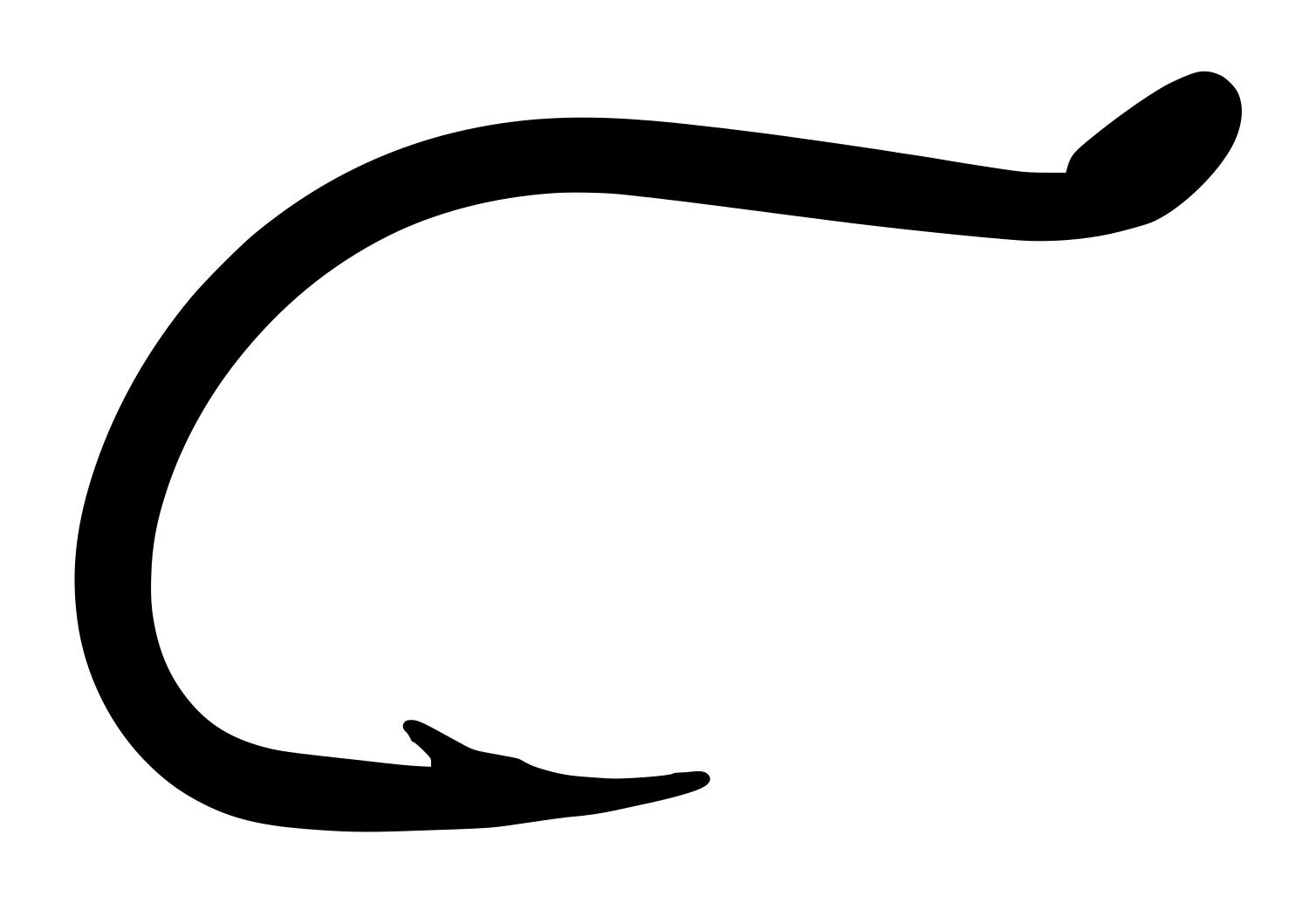
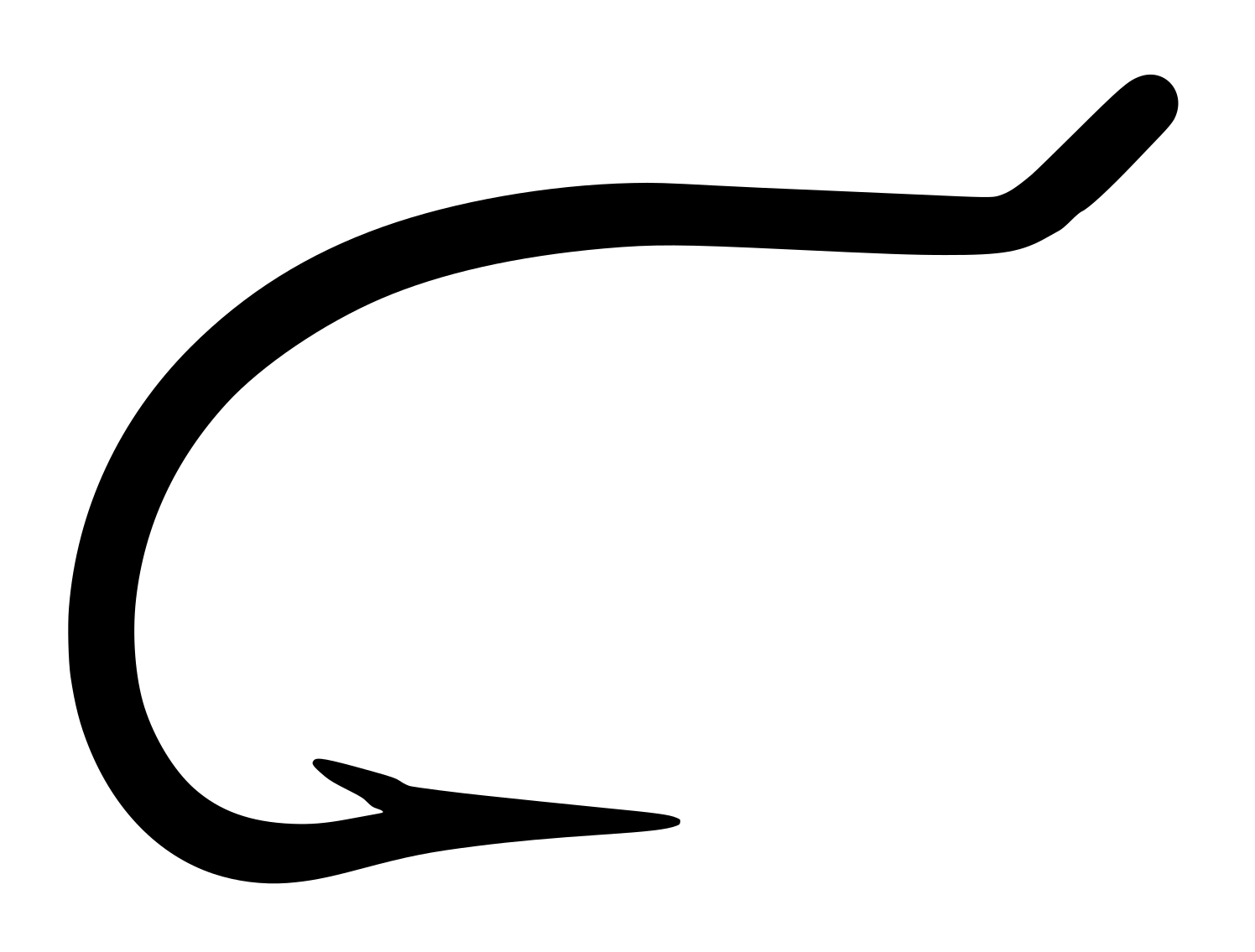
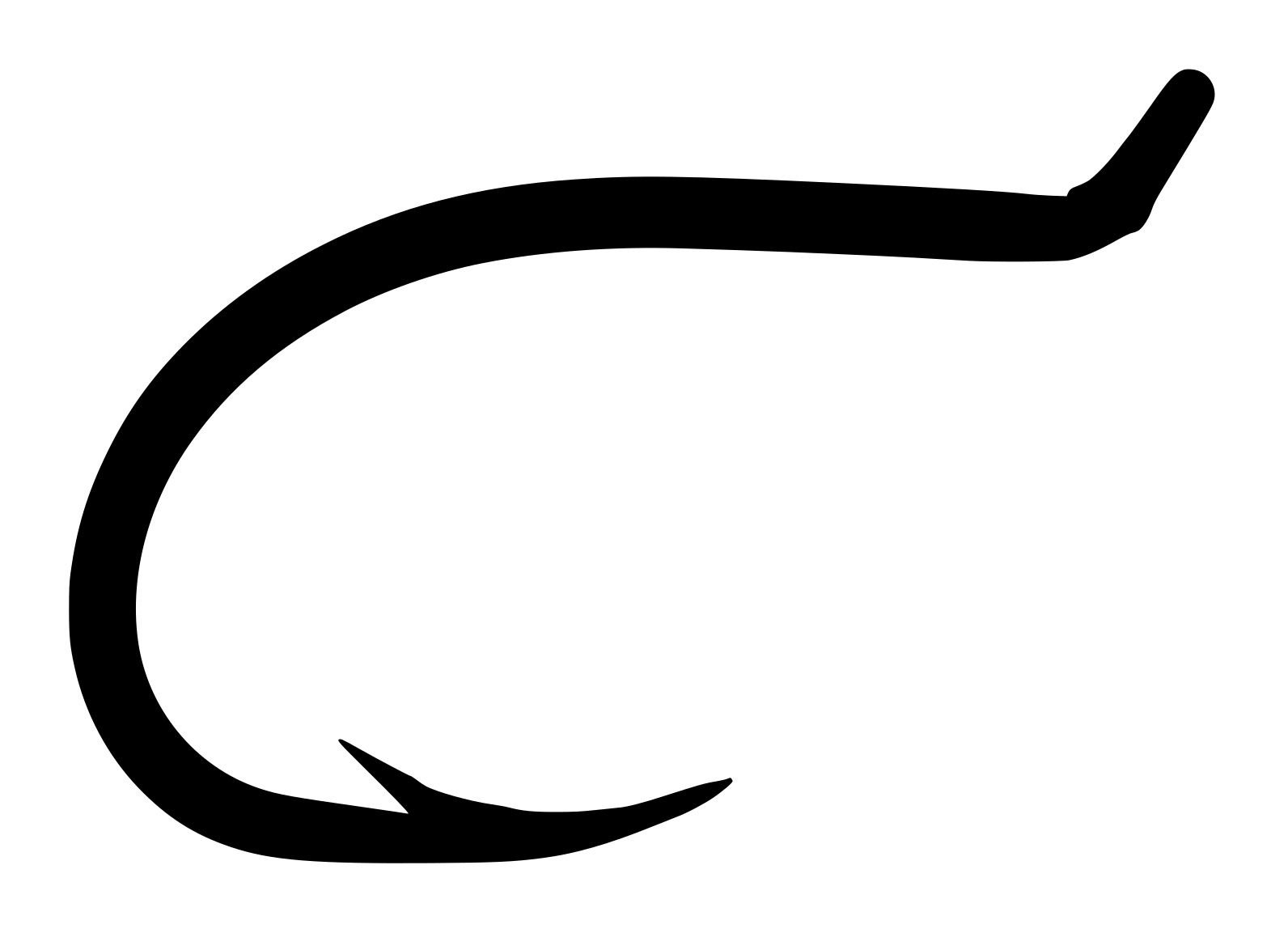
Sheffield Gripper Short Stout (model 333T1/2 2XN, size 10) made by Herter’s of Waseca, Minnesota, a mass-market distributor sourcing handmade hooks from Sheffield, England. The hook combines a round/Kendal bend with a turned-up ball eye, short heavy-gauge shank, and wide gap characteristic of wet-fly and nymph patterns. Built on genuine Sheffield steel (.095 carbon content) with double-nickel plating, kirbed point offset, and hollow point geometry.
The packaging — a rigid kraft box with yellow and red label — bears the claim “Guaranteed Made Entirely by Hand” and credits the Sheffield Gripper Bend as “Invented in England.” This label language and box construction indicate production c. 1930s–1950s, when Herter’s was repositioning itself as a modern mail-order sportsman’s outfitter.
The Gripper Short Stout occupies a specific niche within Herter’s catalog: a compact, stout-bodied hook for wet flies, small nymphs, and bait applications where a wide gap and shortened shank are preferred. The heavy gauge and forged construction indicate durability in hand-twist applications rather than casting finesse. Collector interest is moderate — the hook is neither rare nor common, and the handmade heritage claim adds historical interest for tackle historians focused on the Sheffield craft tradition and Herter’s role as a distributor.
Original Herter's packaging for Sheffield Gripper Short Stout hooks, Size 10. Label states hand-forged construction, 2X stout shank, and double nickel plating. Box indicates genuine Sheffield steel with 0.095 carbon content and notes the Gripper bend was invented in England.
Photographic record
2 cataloged imagesSelect any record to load it above.
2 images shown
Herter’s 333T1/2 2XN Sheffield Gripper Box LabelOriginal Herter's packaging for Sheffield Gripper Short Stout hooks, Size 10. Label states hand-forged construction, 2X stout shank, and double nickel plating. Box indicates genuine Sheffield steel with 0.095 carbon content and notes the Gripper bend was invented in England.Open originalHerter’s 333T1/2 2XN Sheffield Gripper HookSize 10 Sheffield Gripper Short Stout hook with round Kendal bend, turned-up eye, and nickelled finish. Wire gauge consistent with 2X stout specification for the size and era.Open original
Technical profile
Turned Up Ball Eye | Round / Kendal | Short (1X–2X Short) | Heavy (1X Heavy) Wire | Hollow Point | Nickelled / Nickel-plated
Eye
Ball Eye, Turned UpBall eye is cleanly formed and well-proportioned to the shank diameter. Turned-up orientation is distinct and properly formed P. The ball itself shows slight patina consistent with age and the nickel finish.
Wire
Heavy (1X Heavy), Forged
Shank
Short (1X–2X Short) — Plain
Bend
Round / Kendal, Wide gap, Offset / kirbedRound/Kendal geometry is shallow and rounded, typical of wet-fly and general utility bend. The bend appears symmetrical with no obvious wire-setting irregularities P. The kirbed (left-offset) point is consistent with traditional Sheffield wet-fly construction.
Point
Hollow Point (concave inner face)Barb is standard short-cut design typical of Sheffield tradition P; appears to be positioned close to the point taper with moderate sweep angle. Barb length is proportionate to shank gauge.
Finish
Nickelled / Nickel-Plated — Confirmed (stated on packaging)Cool silver-grey tone confirms nickel-plated finish P. Finish is uniform across the visible surfaces with no obvious rust or corrosion on the specimen shown. Some edge wear and patina evident on the ball eye and shank, consistent with age and use or storage.
Box exterior shows light toning and surface wear consistent with age; corners show minor compression. Label printing remains crisp and legible with no significant fading. Lid shows light dust and minor creasing. Interior condition not visible in photographs, but box appears structurally sound. Hooks not counted or individually inspected in provided images.
The Sheffield Gripper Short Stout belongs to the Gripper family of bends, which were marketed as having been “Invented in England” — suggesting a specific Sheffield maker’s innovation that Herter’s licensed and distributed. The Gripper line within Herter’s catalog included multiple variants: the Short Stout (model 333T1/2 2XN) shown here is one of several size and shank-length combinations.
The designation “Short Stout” identifies a shank-length and wire-weight combination within this model series. Other variants would have included standard-length, long-shank, and different wire weights — creating a matrix of options for wet-fly tyers. The model code 333T1/2 2XN breaks down as: 333 (base model), T (size group designation), 1/2 and 2XN (variant specifiers for stout wire and short shank).
No specific introduction date is documented in the available evidence. The packaging language and construction suggest this model was actively marketed by Herter’s during the 1930s–1950s period, when the company’s catalog was emphasizing “handmade” heritage and Sheffield tradition as selling points to American anglers seeking authentic British tackle.
Era and Packaging Dating
Box construction is pre-war or early postwar — kraft cardboard with offset-printed labels, no barcode (barcode adoption began 1974). The yellow and red label color palette and sans-serif letterpress-style type are consistent with 1930s–1950s packaging. The phrase "Guaranteed Made Entirely by Hand" and emphasis on the Sheffield Gripper Bend invention are marketing claims typical of Herter's repositioning period in the 1930s–1940s. The Herter's address listed as Waseca, Minnesota has not changed across the era; phone number format is absent, which is consistent with pre-1950s mail-order catalogs. The red band at bottom listing Herter's as sole world agents for Sheffield hooks and citing "Since 1893" places the box within Herter's postwar expansion period. No specific date is printed on the box itself.
Herter's and the Sheffield Import Pipeline
Herter's founder George Leonard Herter was a visionary of mail-order democratization — he realized that American anglers would buy Sheffield hooks at American prices if the company could absorb import logistics and bulk purchasing. By the 1940s–1950s, Herter's mail-order catalogs (which ran to 300+ pages) were the primary way American fly tyers and bait fishers accessed European hooks without traveling to specialty shops in major cities. The claim "Sole World Agents"; on this box reflected Herter's dominance in North American distribution — not manufacturing. Ironically, many American anglers who cast these Sheffield hooks had no idea they were using a product made in England, and Herter's marketing (calling them "guaranteed handmade") was designed to reinforce quality without emphasizing foreign origin at a time when "American made" was beginning to dominate marketing psychology.
Design lineage and influence
The Round/Kendal bend family has roots in traditional English fishing tackle design, particularly in Yorkshire and Redditch wet-fly construction dating to the 19th century. The Kendal variant — with its shallow, rounded bottom — was a versatile utility bend used across wet-fly, nymph, and small-streamer applications.
The Gripper name and the specific claim that the bend was “Invented in England” suggests a Sheffield maker’s proprietary design, though the documentation does not specify the original inventor. Herter’s exclusive distribution claim indicates they had contractual rights to this model from a Sheffield manufacturer — likely one of the established shops such as Edgar Sealey, S. Allcock, or H. Milward.
Downstream influence: The short stout shank configuration became a template for modern compact nymph and wet-fly hooks. Contemporary equivalents (Tiemco 100, Daiichi 1510) follow this general pattern — short shank, wide gap, appropriate for nymph and soft-hackle work. However, no direct lineage is documented between the Gripper and modern hooks; rather, the design principle proved durable across the 20th century and continues.
Best matchRelated by Attribute
Computed automatically from catalog data — updated as new hooks are added.
Matches: Bend, Shank, Gap, Eye Orient., Point +3 moreDiffers: Wire: Heavy (1X Heavy) vs Standard; Eye: Ball Eye vs Tapered Eye; Finish: Nickelled vs Gold-Plated +2 more
Matches: Bend, Shank, Gap, Point, Forging +3 moreDiffers: Wire: Heavy (1X Heavy) vs Standard; Eye: Ball Eye vs Tapered Eye; Eye Orient.: Turned Up vs Turned Down +2 more
The Sheffield Gripper Short Stout, with its round bend, short heavy shank, and wide gap, was designed for wet flies and small nymphs tied with heavier materials — particularly chenille, wool, and peacock herl bodies on size 10 hooks. The short shank reduced displacement in the water and allowed for more compact fly profiles compared to standard-length hooks of the same bend family.
This hook was also employed in bait fishing for trout and coarse fish, where the wide gap accommodated larger baits (small minnow sections, larval insects) and the heavy wire resisted deformation under casting stress or from a hooked fish pulling against the bend. The turned-up eye and kirbed point were traditional features suited to hand-twisting applications in wet-fly dressing — the offset point aided the tyer in maintaining consistent wrap direction without requiring sophisticated vises.
Secondary Applications
General utility hook for small streamers and hackled wet flies; traditional bait hook for trout and coarse fish.
Classic Fly Patterns
Traditional English wet flies tied on short shanks (Partridge and Orange, Snipe and Purple, various soft-hackle nymphs)
Collector notes
Rated 4.5/10 — this is an uncommon hook, not frequently encountered on open market, but neither rare. Collector demand is moderate among Herter's specialists and Sheffield tradition enthusiasts. The handmade heritage claim and original box in good condition drive value; condition of hooks themselves (which are not visible in these photographs) would be the primary limiting factor.
Reference value
$8 – $22 USD estimate
Packaging condition
Good — moderate wear, legibleRecorded specimen
Packaging format
GW-HERTERS-BOX-01Catalog code
What makes this hook collectible: The Sheffield Gripper Short Stout represents a tangible link to the British craft-hook tradition and Herter’s mid-20th-century role as a major distributor. The original rigid box with intact printing and the “Guaranteed Made Entirely by Hand” claim are significant — Herter’s did not make hooks domestically, and packaging that honestly credits Sheffield makers appeals to historians of the hook industry. Size 10 is a practical, usable size, which keeps demand steady among tyers who tie vintage patterns.
What limits the rating: The hook is not rare — Herter’s produced and distributed substantial quantities of Sheffield product during the 1930s–1950s. Complete boxes still appear at online auctions and specialty tackle dealer sites with reasonable regularity. The model code 333T1/2 2XN is not uniquely desirable compared to other Sheffield wet-fly hooks (e.g., Partridge, Allcock, or direct Sheffield makes) that are often more specialized or carry stronger craft-tradition cachet.
Variant desirability: Smaller sizes (14, 16) would be scarcer and more desirable. Larger sizes (6, 8) are more common. Original boxes command a 2–4× premium over loose hooks; sealed boxes with complete hook counts are the highest-value examples.
Condition factors that affect value: Structural integrity of the box (corners, lid closure), legibility of the label printing, and completeness of the hook count are primary value drivers. Evidence of the hooks themselves — rust, corrosion, bent or missing specimens — would reduce value substantially. Original tissue wrapping, if visible inside the box, would add a meaningful premium.
Packaging
Rigid kraft cardboard box with separate lid. Exterior: yellow kraft stock with offset-printed labels front and back. Front label: yellow background with black sans-serif type reading "GUARANTEED MADE ENTIRELY BY HAND / SHEFFIELD GRIPPER SHORT STOUT HOOKS / [Sheffield shield trade mark] Gripper Bend Invented in England / SIZE 10 / QUALITY No. 333T1/2 2XN"; left column lists "Forged Shank, 2X Stout Shank, Double Nickel Plated"; right column lists "Turned Up Eye, 5X Short Shank, Hollow Points." Bottom strip: red/maroon background with gold ink reading "Guaranteed The World's Finest Guild Quality / Made Of Genuine Sheffield Steel.095 Carbon Content In Britain / SOLE WORLD AGENTS / HERTER'S INC. WASECA, MINN., U.S.A. — SINCE 1893." Lid: plain kraft with minimal printing. Original tissue or wrapper not visible in photographs.
Market Value Notes
Low ($8): Good condition — box structurally sound, label legible, some wear and toning visible, hook count 70–95% complete, hooks bright or with light patina.
High ($22): Excellent condition — box with minimal wear, label printing crisp, 100% hook count or nearly so, hooks in excellent condition with no corrosion or defects.
Premium factors: Complete original box, sealed or near-sealed condition, 100% hook count, size 10 (most practical), label printing legible and vibrant, no staining or odor in packaging.
Platforms: eBay.com (US and UK), specialist tackle auctioneers (UK), dealer stock.
Confidence: E estimated — limited comparable sales data for this specific model. Herter's hooks generally appear at $5–25 per original box depending on model and condition. This model falls in the mid-range due to uncommon status. Values may vary by region and dealer familiarity with Herter's product.
Where to Find
eBay (UK and US auctions, watchful searching required); specialty vintage fishing tackle dealers in the American Midwest and UK; estate auctions in regions with strong fishing heritage. Herter's boxes are occasionally found in bulk lots at online auctions; single boxes require patience. UK regional dealers may have better stock of Sheffield-sourced product.
Collector's Identification Tips
The printed model code 333T1/2 2XN on the box is the definitive identifier. The phrase “Sheffield Gripper Short Stout” should appear on the front label. Look for the Sheffield shield trade mark and the red Herter’s banner at the bottom. Size is printed as “10” — larger or smaller sizes indicate variant models. Verify that the box interior remains intact; if hooks are visible, check that the ball eye is turned up (not down), the shank is clearly short relative to gap, and the wire is noticeably heavy/stout.
Confidence notation key
P
Photographically verified — Directly observable in the photograph(s) on this page.
V
Verified by documentation — Confirmed by manufacturer catalog, spec sheet, or published reference.
I
Inferred — A logical deduction from observable or documented evidence, not directly stated.
E
Estimated — An approximation based on visual comparison, proportional analysis, or limited data.
S
Speculative — A reasoned hypothesis that cannot be confirmed from available evidence.
Unnotated claims are the compiler’s synthesis; see Sources. All photographs on garrenwood.com are taken on a measurement grid where each square equals 1/10 inch (0.1″ / 2.54 mm).