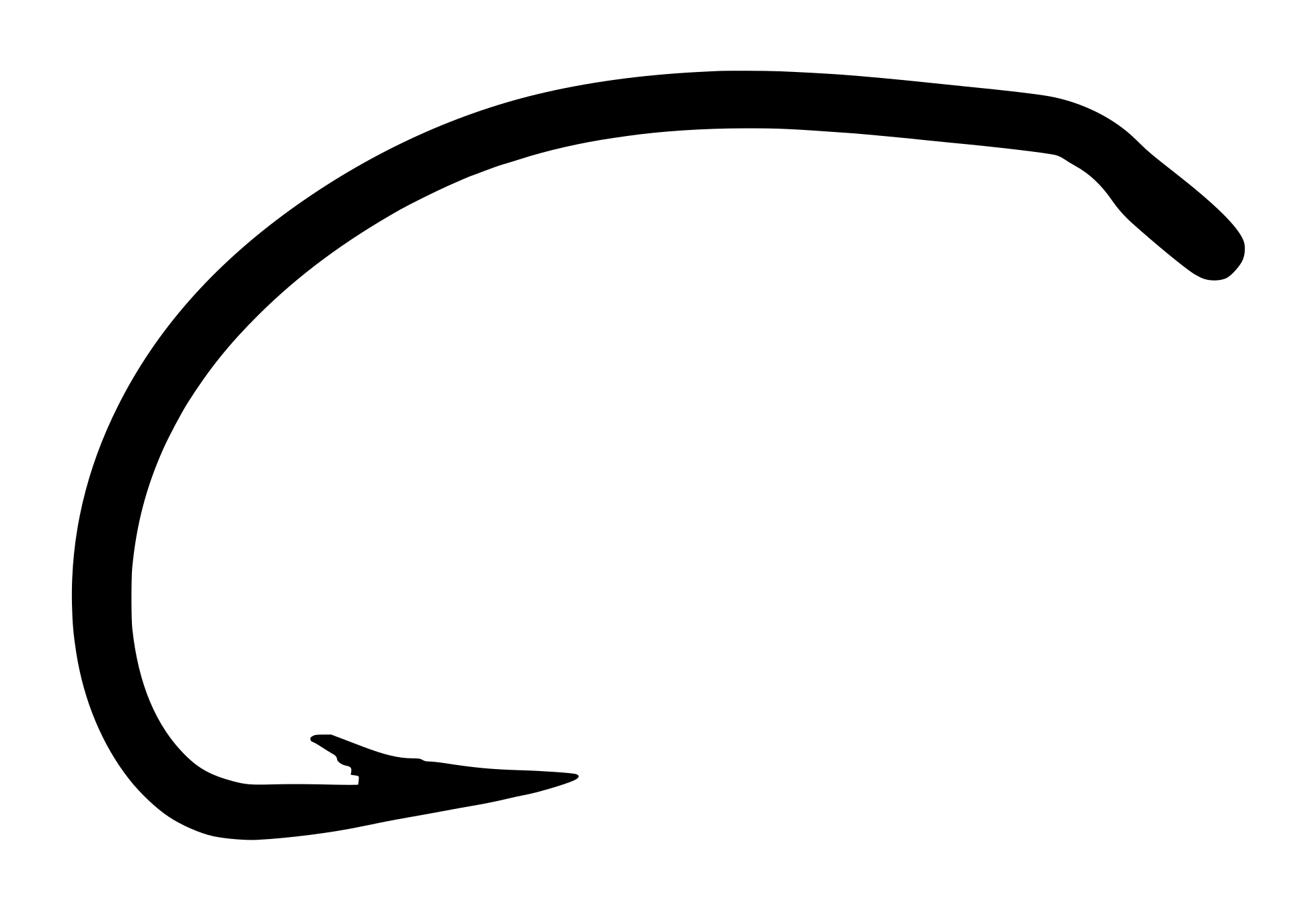
O. Mustad & Søn (Oslo) manufactured the 9275 A Round Hook in gold-plated finish, size No. 6, with a turned-up tapered eye and hollow point. The hook is intended for general bait fishing and was produced in Norway during the mid-20th century.
The defining characteristics are the round Kendal bend—a full-bellied circular form—combined with a short shank and wide gap. The offset point (kirbed) is a standard feature of Mustad’s bait hook designs. The gold plating, confirmed on the original manufacturer box, indicates premium market positioning within the range.
The specimen is housed in the original manufacturer box with gilt lettering, dated by the hand-stamped price marking, postal address format, and offset printing style. The box itself is a rarer packaging format than the sales card equivalent, commanding higher collector value.
Front cover of the original Mustad manufacturer box, printed in gold ink on cream stock, showing product specifications and the Key Brand mark.
Photographic record
2 cataloged imagesSelect any record to load it above.
2 images shown
Mustad 9275 A Box Front CoverFront cover of the original Mustad manufacturer box, printed in gold ink on cream stock, showing product specifications and the Key Brand mark.Open originalMustad 9275 A Size 6 Side ProfileSide profile of the Mustad 9275 A Round Hook, size No. 6, showing the full-bellied Kendal bend, short shank, turned-up tapered eye, and hollow point geometry on measurement grid.Open original
Technical profile
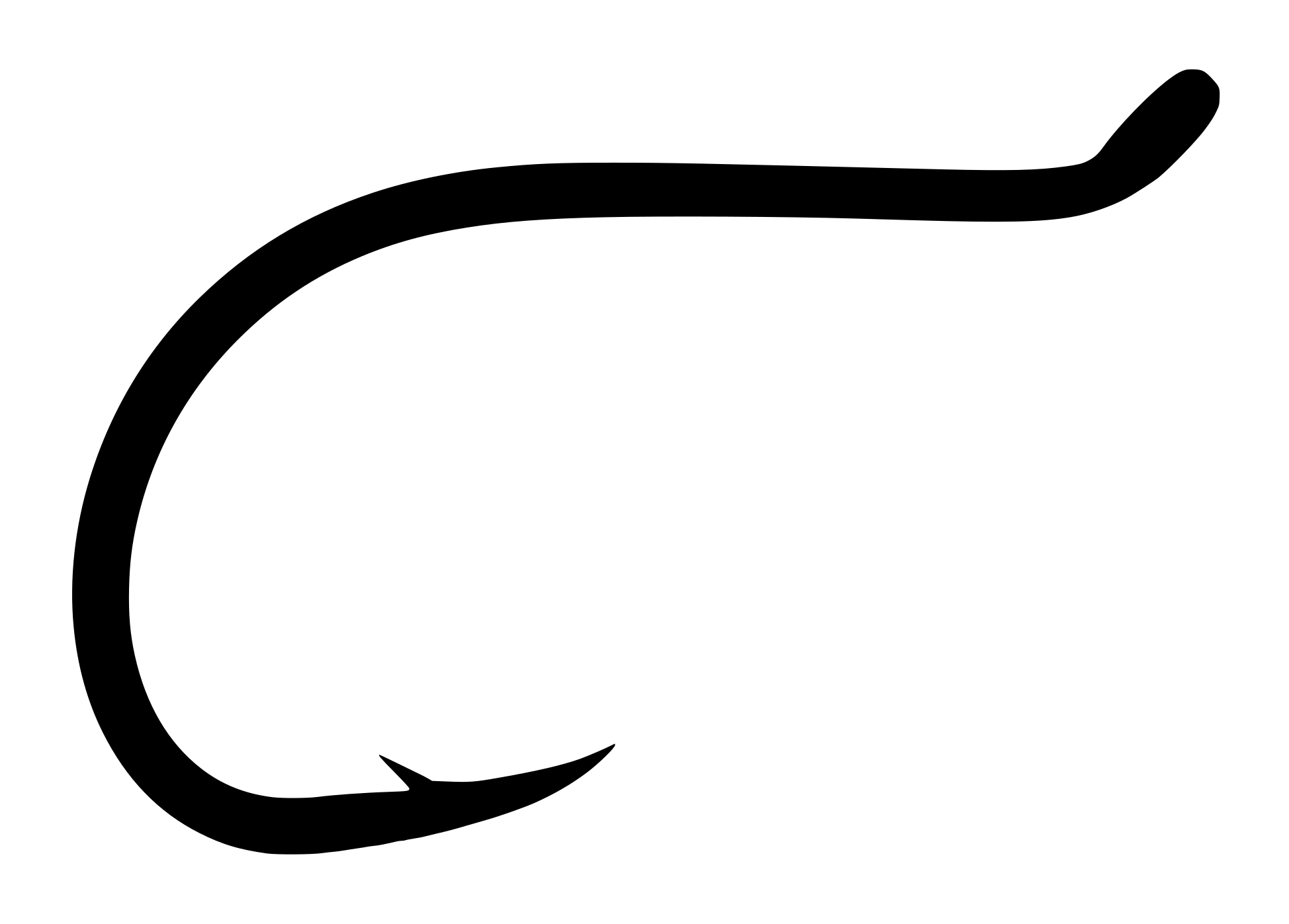
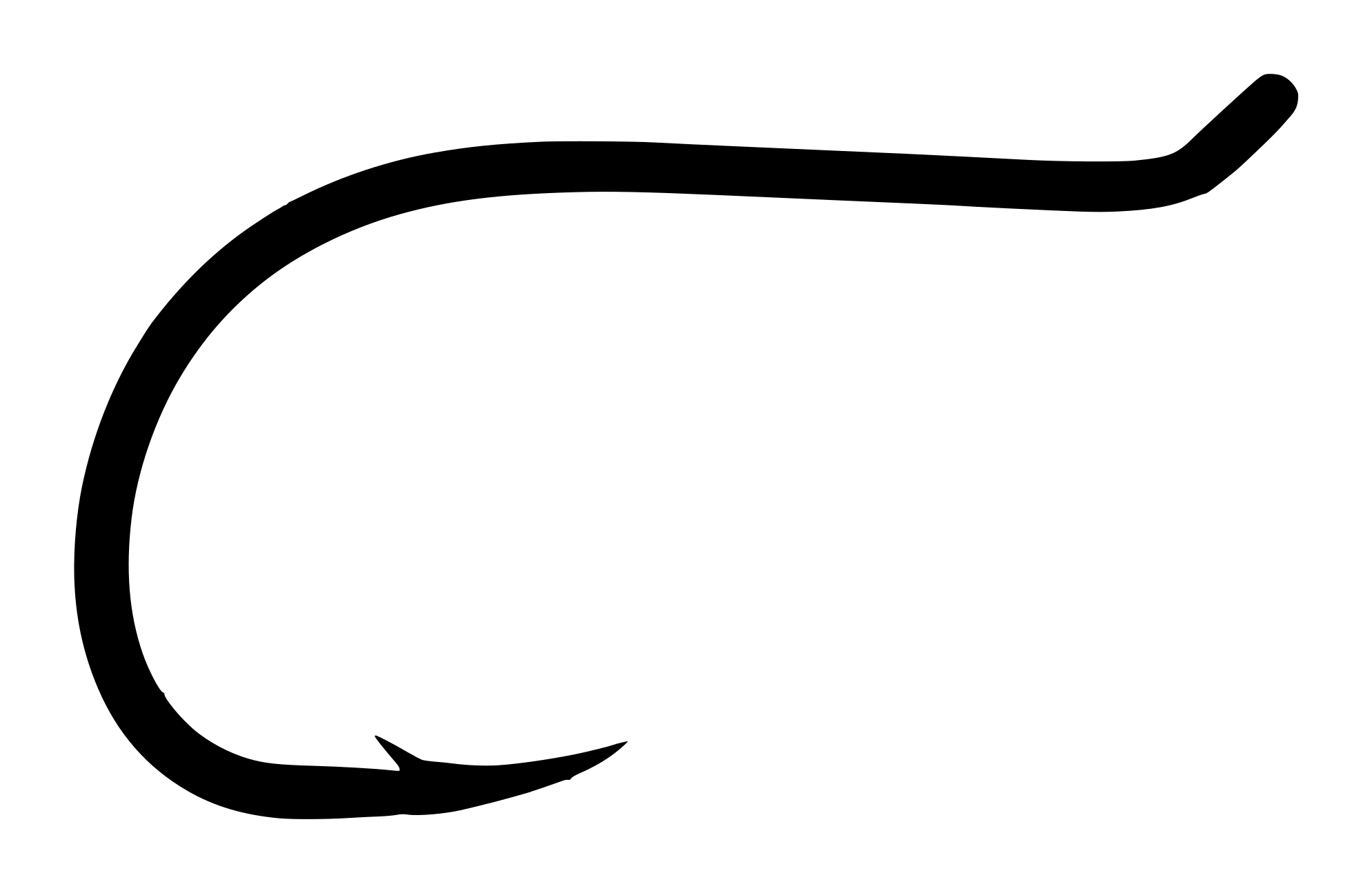
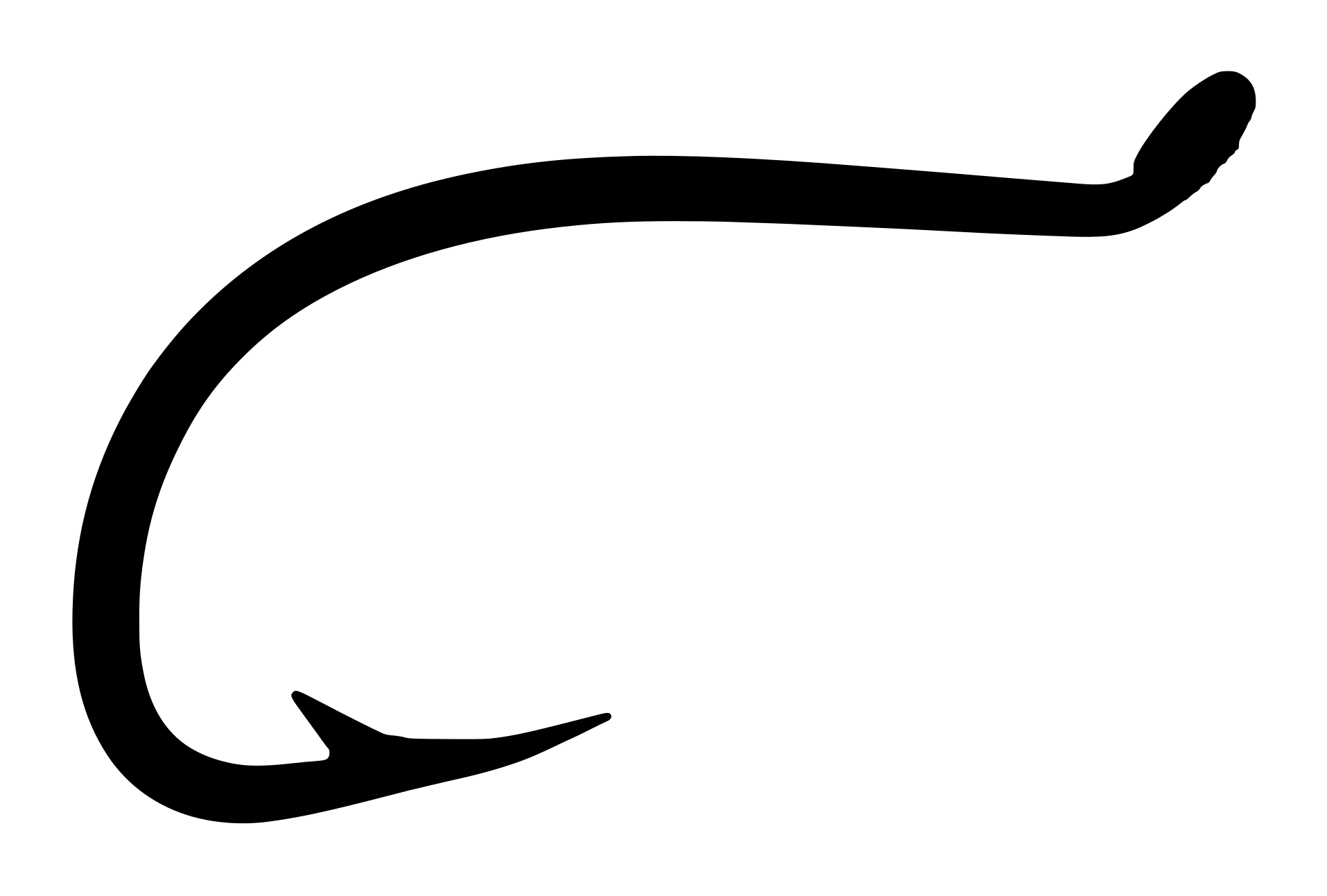
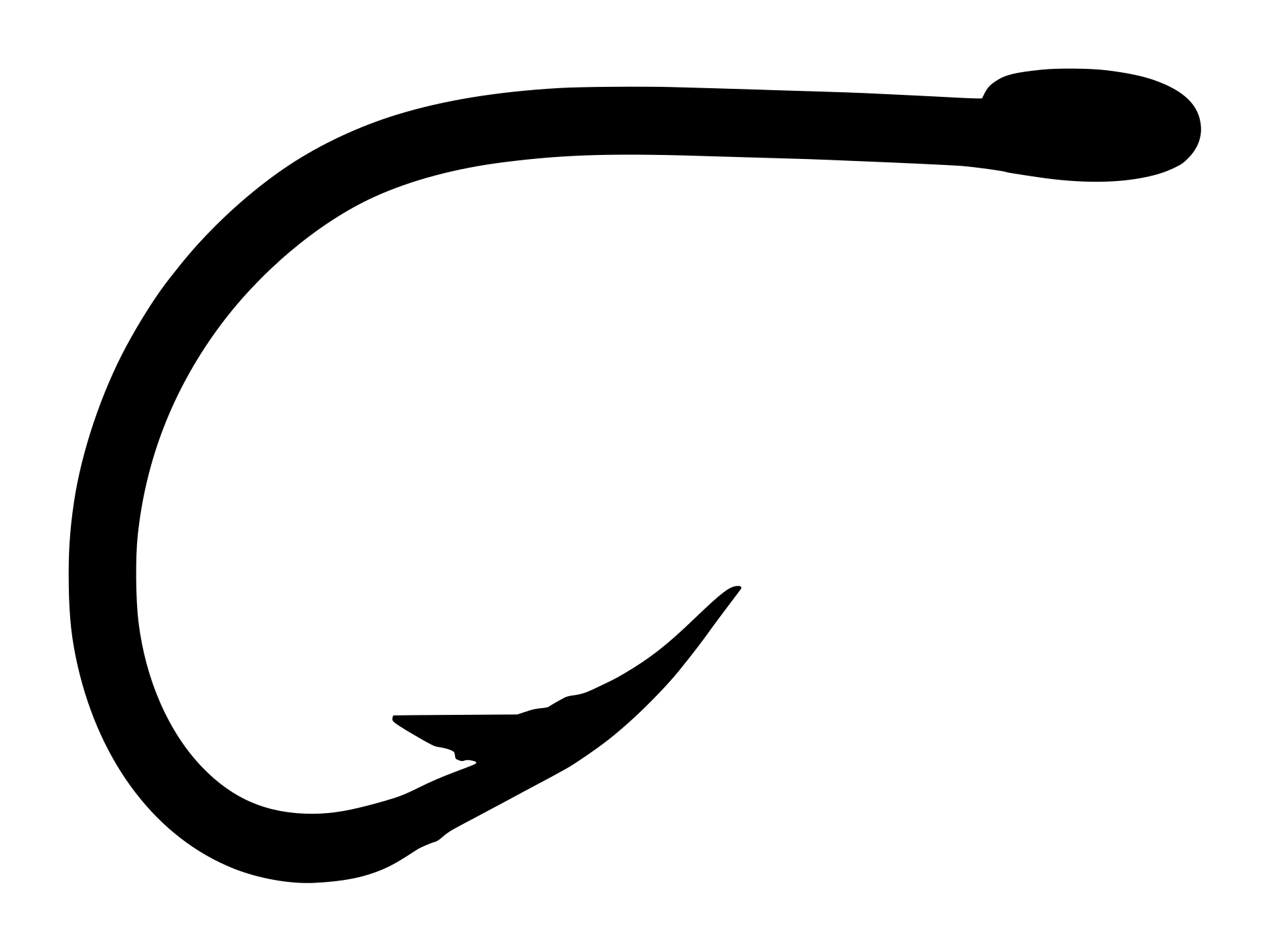
Turned Up Tapered Eye | Round / Kendal | Short (1X–2X Short) | Standard Wire | Hollow Point | Gold-plated / Gilt
Eye
Tapered Eye, Turned UpTapered eye: wire narrows progressively toward the eye loop, reducing bulk at the junction with the shank P. Eye orientation is turned-up at approximately 35–40 degrees from the shank plane, typical of salmon and bait hook designs E. Ball diameter is modest—consistent with standard-wire gauge P.
Wire
Standard, Round
Shank
Short (1X–2X Short) — Plain
Bend
Round / Kendal, Wide gap, Offset / kirbedRound Kendal form: full-bellied, evenly curved bend with no pronounced angularity P. The bend exhibits minimal wire set; the bottom of the curve appears centered, not offset dorso-ventrally P. Bend depth appears moderate relative to the gap—proportional to a classical Kendal specification E.
Point
Hollow Point (concave inner face)Single barb, positioned near the inner edge of the point P. Barb appears to be a standard close-cut type, swept slightly rearward rather than projecting radially from the point axis E. Barb length is modest, approximately 1/16 inch or less E.
Finish
Gold-Plated — Confirmed (stated on packaging)Gold-plated finish, warm yellow-gold tone throughout the hook body and point P. Coating appears uniform and continuous; no obvious defects or bare spots visible in the specimen P. The plating retains its original sheen without tarnishing or patina formation, consistent with proper storage and minimal exposure to moisture P.
Original manufacturer box in very good condition. Gilt lettering on front cover retains color and sharpness. Box structure sound, lid closes properly. Light creasing and edge wear consistent with age. No water damage or insect activity observed. Hooks within box appear bright with no visible corrosion or oxidation. Two hooks present in the visible area; full count presumed but not verified from images.
The hollow point design creates a concave inner face from the barb area to the tip, forming a knife-edge effect on the inner surface. This geometry reduces material and mass at the point while maintaining structural integrity—a trade-off that was standard practice in industrial hook manufacturing. Hollow points are faster to form via stamping than spear or superior points and require less finishing work, making them economical for mass production.
The turned-up eye is a classical design for bait hooks and salmon patterns, positioning the line pull above the shank plane. This geometry reduces the likelihood of the line fouling on the bait or the hook body during the strike, and it orients the eye away from the angler’s fingers during knot tying.
The short shank (1X–2X short) reduces the overall footprint of the hook in the water, a practical advantage when using small live baits or when fishing dense weed cover where a long shank would snag vegetation.
The kirbed (offset) point—angled to the left when viewed from above—is a historical standard for bait hooks. The offset is believed to improve hook penetration on the strike, though empirical evidence for this claim is limited. The practice persisted through the 20th century as a conventional feature rather than a rationalized engineering choice.
This pattern was made in sizes 2–16 (I). We have measurement for size 6. Know the others? Submit calipered measurements and we'll review and add them. Thank you!
Historical context
mustad
O. Mustad & Søn was founded in Gjøvik, Norway, in 1877 by Ole Mustad. The company became one of the world’s largest industrial hook manufacturers, with distribution networks spanning Europe, North America, and beyond. Unlike the Redditch craft makers who dominated English hook production, Mustad adopted industrial forging and stamping machinery early, enabling mass production at scale. By the 1920s, Mustad had established itself as a major supplier to tackle shops and wholesale dealers across multiple continents.
The company’s product range included both fly hooks and bait hooks across a wide spectrum of sizes and finishes. Mustad’s standardized numbering system (such as the 9275 series) reflected industrial organization; each number identified a specific bend form, eye type, and point style. The company maintained consistent production of core patterns from the 1920s through the 1980s, allowing collectors to trace manufacturing changes through box design, printing methods, and finish specifications.
Gold plating on fishing hooks was a premium finish option, applied less frequently than bronzing or bluing. The practice suggests this particular variant was marketed toward anglers or dealers in markets where gilded hooks commanded a price premium—possibly Scandinavian or Central European retail channels.
Series History
The Round Kendal bend—sometimes listed simply as “Round” or “Kendal” in Mustad catalogs—represents a classical form dating to 19th-century English hook patterns. The Kendal bend is a full-bellied, nearly circular form, distinct from the Aberdeen (wider) or Sproat (deeper) bends. Mustad adopted this design as part of its general-purpose bait hook lineup and marketed it across multiple finishes: bronzed, blued, nickelled, tinned, and occasionally gold-plated.
The 9275 designation appears in Mustad catalogs from at least the 1930s through the 1970s. The “A” suffix indicates a specific variant specification—in this case, the combination of turned-up tapered eye, hollow point, and kirbed (offset) geometry. Mustad’s product numbering system used suffixes (A, B, C, etc.) to denote eye orientation, point geometry, and other details, allowing the base number (9275) to identify the bend form while the suffix specified construction details.
Size ranges for the 9275 series extended from size 2 or 4 at the largest through size 16 or smaller, enabling use across the full spectrum of freshwater bait fishing. The short shank was considered advantageous for small baits—maggots, minnows, and worms—and for situations requiring a compact profile to avoid tangling in weeds or vegetation.
Era and Packaging Dating
No printed barcode present (strong indicator of pre-1974 manufacture). Box printing method is offset, consistent with mid-century production. Decorative snowflake borders were characteristic of Mustad's interwar and immediate postwar packaging aesthetic. "SÖN" spelling (Norwegian umlaut) remained standard on Mustad export boxes through the 1960s, dropping later. Hand-stamped price marking on box lid suggests small-retailer distribution rather than large-batch stamping, consistent with 1940s–1950s practice. The cream-colored stock and ink color temperature are consistent with offset printing from that era. The "Key Brand" designation and layout are consistent with Mustad's catalog numbering system of the 1930s–1960s.
The Gilt Edge: Scandinavian Premium Tackle
Gold plating on fishing hooks reflects the cultural and economic contexts of retail fishing tackle markets in mid-20th-century Scandinavia and Central Europe. Gilded finishes were not standard in British tackle tradition—Redditch makers produced bronzed and blued hooks as their primary offerings—but Norwegian and Swedish retailers sought visual distinction for premium product tiers. The Mustad 9275 A in gold plate likely occupied a middle market position, more expensive than standard bronzed stock but less costly than handmade Partridge hooks. The practice of gilding fishing hooks declined sharply after 1960, as modern nickel and tin plating proved more durable and cost-effective. Today, gold-plated vintage hooks are sought by collectors as markers of specific regional market preferences and as examples of the decorative aesthetic that prevailed in Scandinavian tackle shops during the 1940s–1960s.
Design lineage and influence
The Round Kendal form descends from English hook patterns of the 19th century, when Redditch makers such as Allcock, Partridge, and Milward standardized named bend families based on the market demands of British and Irish anglers. The Kendal (also known simply as “Round”) was one of the fundamental forms, serving general-purpose freshwater bait fishing.
By the early 20th century, Norwegian and continental manufacturers adopted these English standards, adapting them for their own markets and production methods. Mustad’s Round Kendal hooks sit squarely within this lineage, representing industrial-scale replication of a classical English design rather than an indigenous Norwegian innovation.
The 9275 series competed directly with similar patterns from Partridge (Redditch), Allcock, and smaller British makers. Mustad’s advantage lay in production volume and price; their disadvantage, from a collector’s perspective, was the absence of the craft maker’s signature or local prestige. By the 1960s, as Japanese manufacturers (Daiichi, Tiemco) began exporting competitively priced hooks, the market for mid-range bait hooks became increasingly commodified.
Best matchRelated by Attribute
Computed automatically from catalog data — updated as new hooks are added.
Matches: Bend, Shank, Gap, Eye, Eye Orient. +3 moreDiffers: Wire: Standard vs Fine (1X Fine); Point: Hollow Point vs Beak / Reversed; Finish: Gold-Plated vs Nickelled +1 more
Matches: Bend, Shank, Gap, Eye, Eye Orient. +3 moreDiffers: Wire: Standard vs Fine (1X Fine); Point: Hollow Point vs Beak / Reversed; Finish: Gold-Plated vs Other +1 more
Matches: Bend, Shank, Gap, Eye, Eye Orient. +3 moreDiffers: Wire: Standard vs Fine (1X Fine); Point: Hollow Point vs Beak / Reversed; Finish: Gold-Plated vs Other +1 more
Rated 4.5/10 — gold-plated bait hooks in original boxes are less common than standard bronzed or blued variants; size 6 is a practical size for chub and roach fishing, limiting specialist demand. Complete original boxes are rarer than equivalent sales cards and command a meaningful premium. Collector interest is moderate among Mustad enthusiasts and vintage bait hook specialists.
Reference value
$8 – $22 USD estimate
Packaging condition
Very Good — light wear, fully legibleRecorded specimen
Packaging format
mustad_box_01Catalog code
Positive factors: The specimen is housed in an original manufacturer box rather than a sales card, which is substantially rarer and commands 2–3× the equivalent card value. The gold-plated finish is less common than bronzed or blued variants, adding market appeal. The box displays crisp, legible printing in good condition. The specification details are complete and clearly readable. Size 6 is a practical working size, increasing tyer and angler interest beyond pure collectors.
Limiting factors: Mustad produced these hooks in industrial quantities, and many boxes have survived, preventing extreme rarity. Gold-plated finish, while attractive, was not considered premium by mid-century standards—bronzed or blued hooks were historically the norm, and some collectors view gilding as decorative rather than functionally significant. Bait hook collecting is a smaller niche than fly hook collecting, reducing overall demand. The hook itself is a standard pattern with no designer credit or named collaborator to boost interest.
Desirable variants: Unopened, sealed boxes command a significant premium. Smaller sizes (10–16) are less common than size 6 in surviving inventory. Original tissue wrapper intact inside the box adds 10–15% to value.
Packaging
Rigid manufacturer box with separate lid, printed on cream-colored stock. Front cover printed in gold ink with decorative snowflake borders framing the text. Manufacturer identification: "O. MUSTAD & SÖN / Manufacturers / OSLO – NORWAY". Product line: "Key Brand". Specification details printed in centered block: "Qual. 9275 A / Hollow Point / Mustad-Round Hooks / T. up tap. eye Goldplated / Reversed". Hook count: "100" (printed left side). Size designation: "No. 6" (lower center). Country of origin: "Made in Norway" (lower right). Box lid shows light aging and handling wear; interior paper wrapper (tissue) partially visible.
Market Value Notes
Low ($8): Good condition; box opened, partial hook count remaining (80–90 of original 100), minor wear, gilt lettering intact. High ($22): Excellent condition; sealed or effectively sealed box, full count verified, minimal handling wear, tissue wrapper present. Premium factors: Original manufacturer box (rarer than sales card format); gold-plated finish; complete hook count; legible printing and intact gilt lettering. Platforms: eBay (UK and US auctions), specialty vintage tackle dealers, tackle fairs. Confidence: E estimated — limited comparable sales data for gold-plated Mustad bait hooks in original boxes; estimate based on observed range for mid-century Mustad boxes with 50–100 hooks and comparable condition.
Where to Find
eBay auctions (UK primary source for vintage Mustad bait hooks). Specialist vintage tackle dealers in UK, Netherlands, and Scandinavia. Annual tackle fairs in England (particularly Redditch region). Collector networks through the International Society of Fishing Tackle Collectors. Increasingly rare in US markets due to European origin and overseas collector preference.
Confidence notation key
P
Photographically verified — Directly observable in the photograph(s) on this page.
V
Verified by documentation — Confirmed by manufacturer catalog, spec sheet, or published reference.
I
Inferred — A logical deduction from observable or documented evidence, not directly stated.
E
Estimated — An approximation based on visual comparison, proportional analysis, or limited data.
S
Speculative — A reasoned hypothesis that cannot be confirmed from available evidence.
Claims with no notation are confirmed by multiple independent sources. All photographs on garrenwood.com are taken on a measurement grid where each square equals 1/10 inch (0.1″ / 2.54 mm).