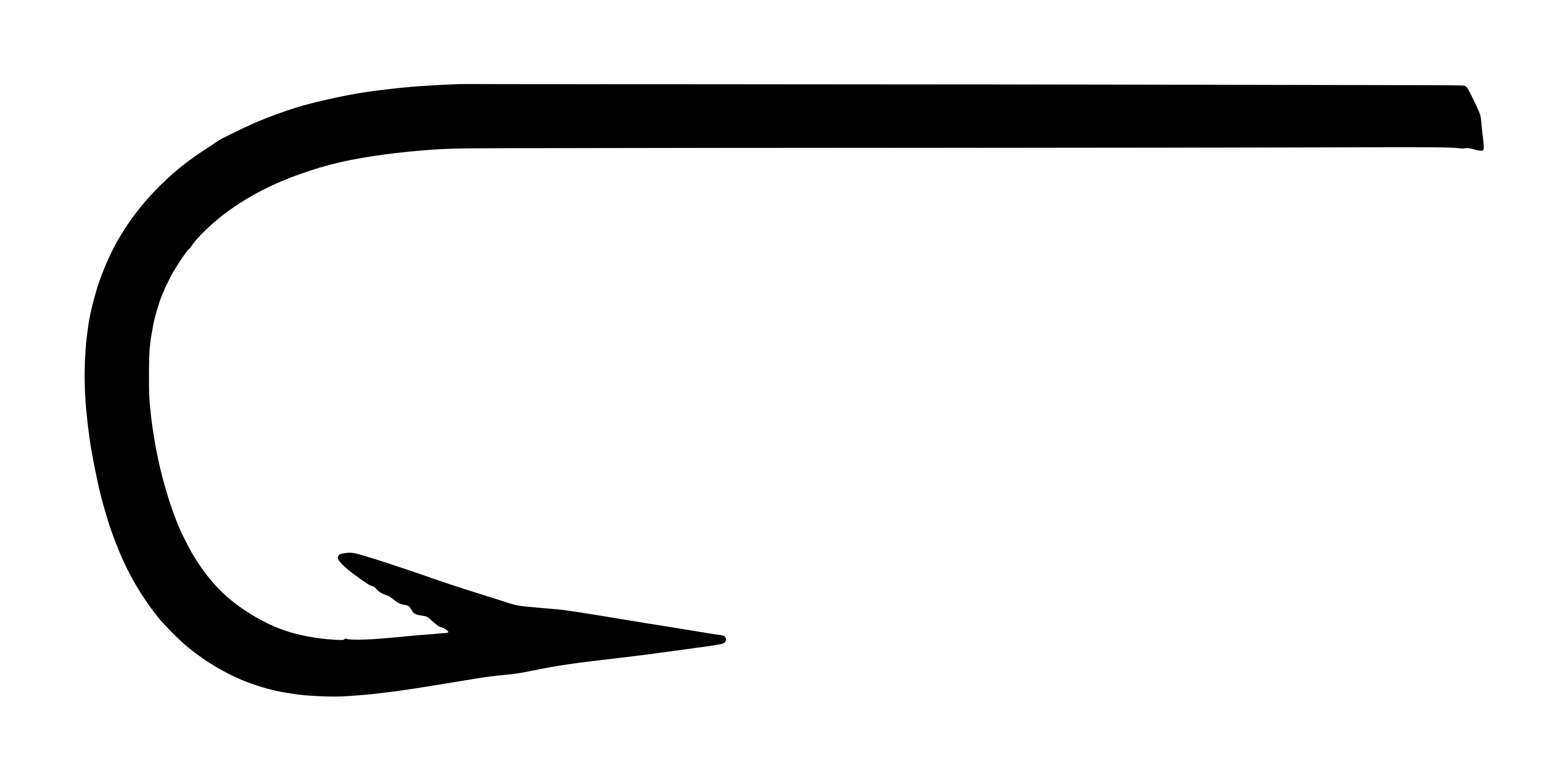
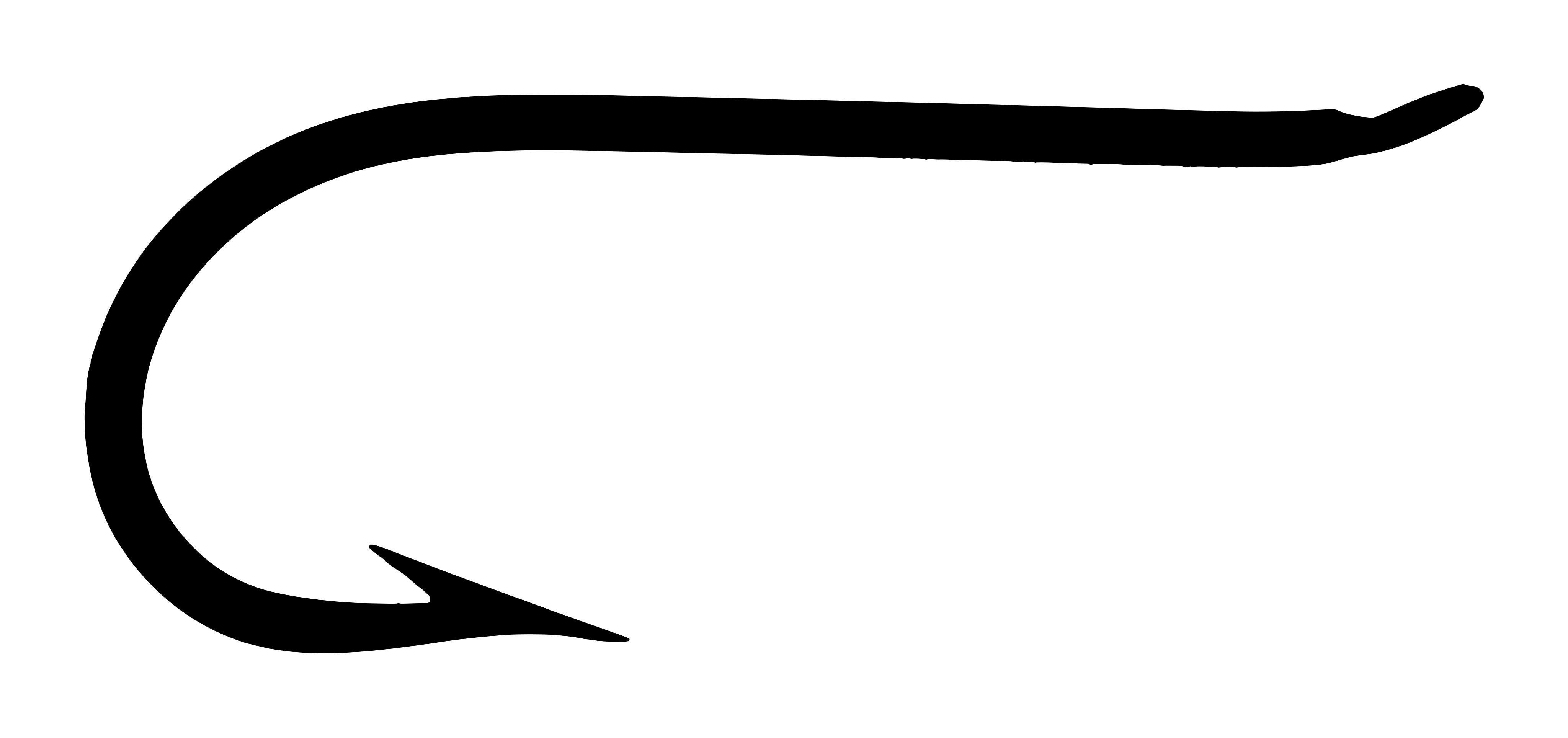
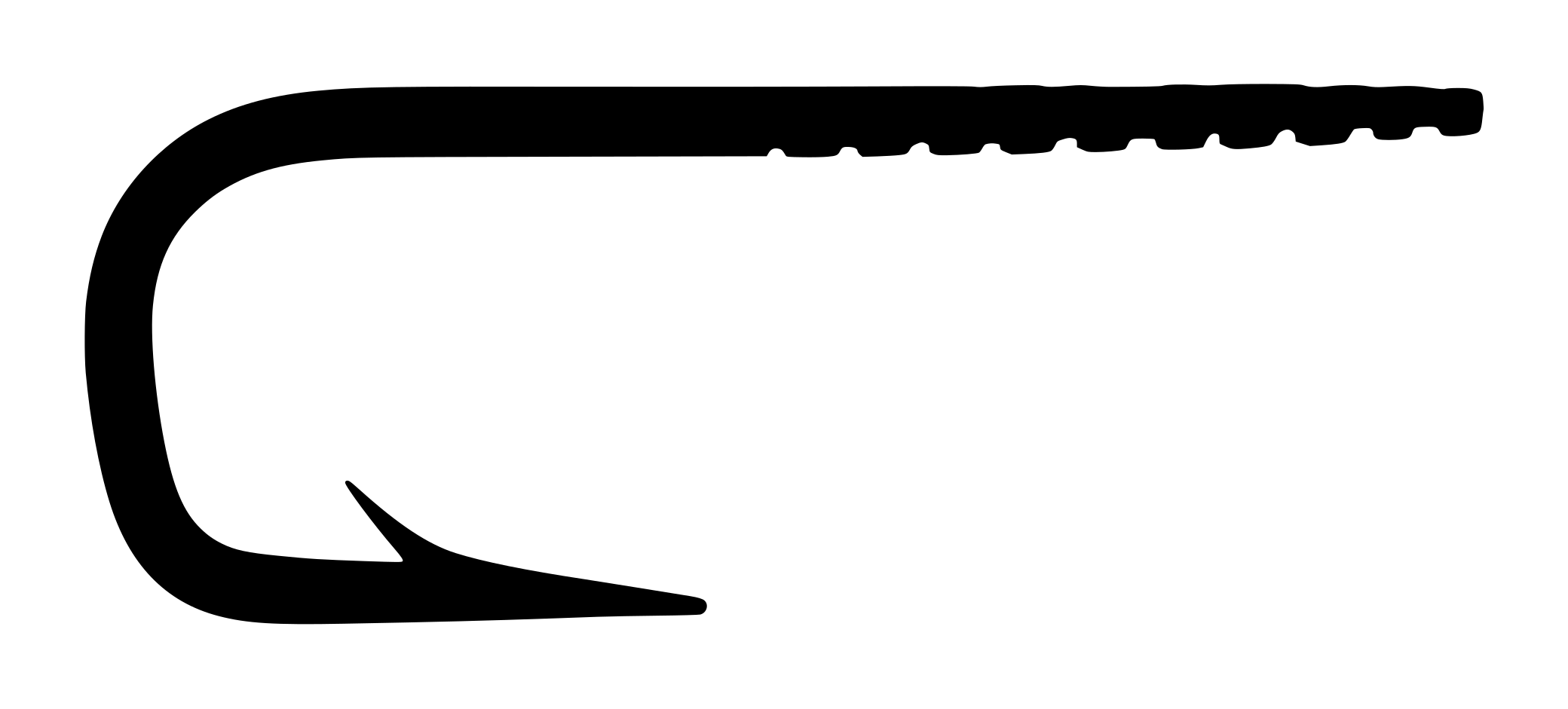
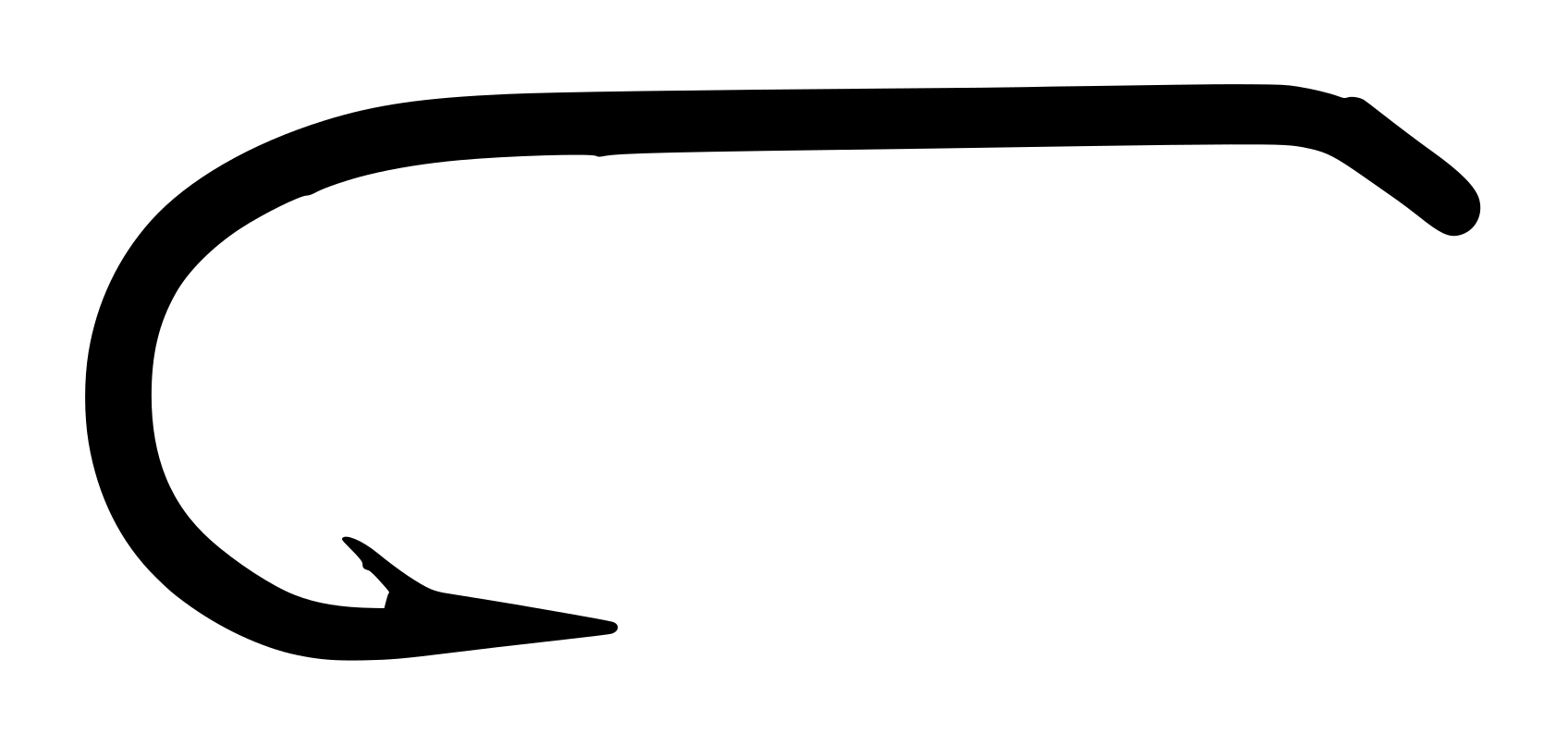
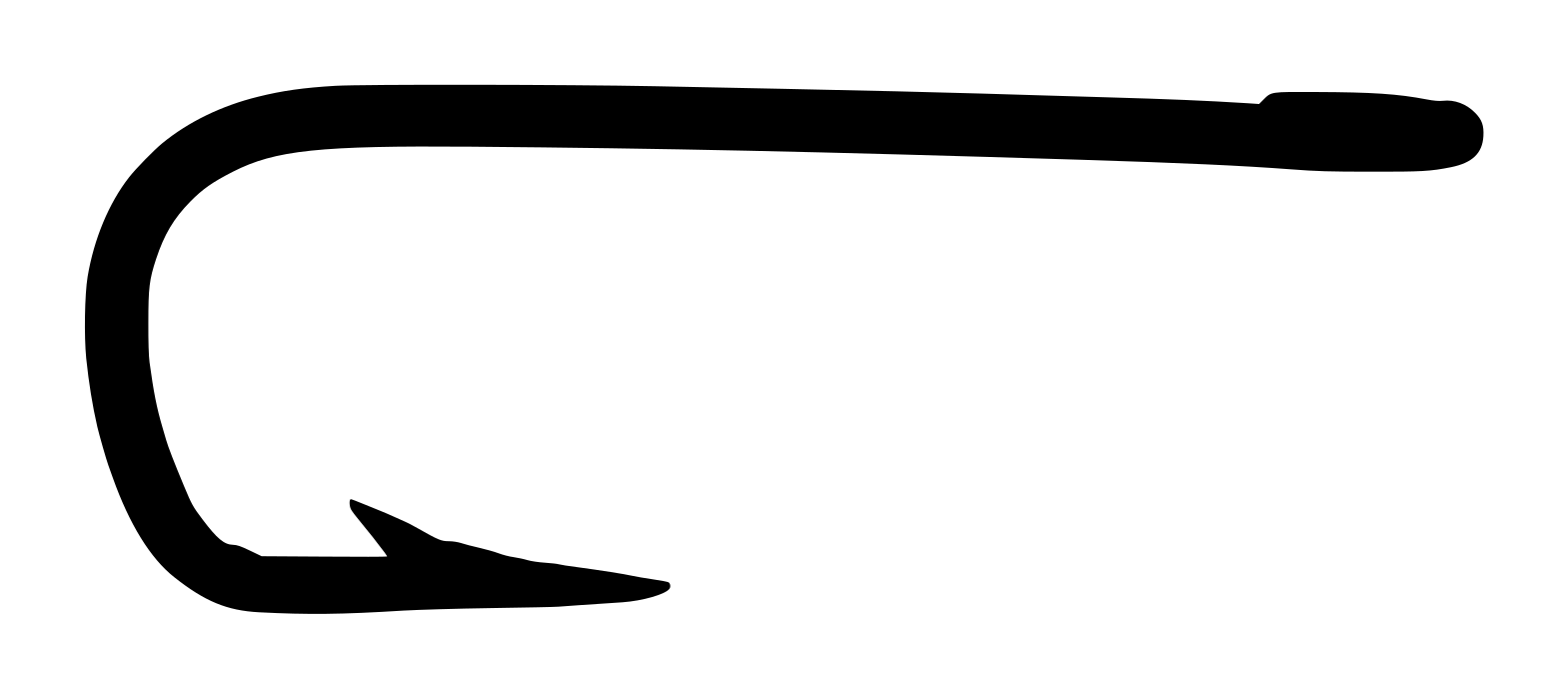
Blind-shank sneck-bent hook with a spear point, labeled Quality 2611.T under the Iron Arm trade mark of Henry Milward & Sons. No. 10, stout round wire, blue-black finish, made in England, c. 1910–1935.
Original pale green packaging label for Milward Quality 2611 T sneck-bent hook, size 10, showing letterpress typography and 'The Iron Arm' branding typical of inter-war Redditch production.
Photographic record
3 cataloged imagesSelect any record to load it above.
3 images shown
Milward Iron Arm 2611 T Original Box Label Size 10Original pale green packaging label for Milward Quality 2611 T sneck-bent hook, size 10, showing letterpress typography and 'The Iron Arm' branding typical of inter-war Redditch production.Open originalMilward Iron Arm 2611 T Hook Profile Size 10Profile view of a single Milward 2611 T sneck-bend hook showing the tapered eye, rounded sneck bend curve, and spear point, photographed on measurement grid.Open originalMilward Iron Arm 2611 T Hook Pair Size 10Paired view of two Milward 2611 T sneck hooks showing manufacturing consistency in bend symmetry, eye taper, and spear point geometry, with measurement grid for scale.Open original
Technical profile
Blind Eye | Sneck | Spear Point | Blued
Eye
Blind — Marked ShankNo eye. The shank ends in a plain cut end, left bare for whipping to gut. The T after the pattern number most likely designates a tapered blind shank, following Milward’s practice of recording the shank end with a letter suffix, but the profile photographs do not show the taper clearly.
Wire
Heavy (1X Heavy), Round, Est. ~0.015" (~0.4 mm) E
Shank
Standard — Plain
Bend
Sneck, Standard gapSneck bend is characterized by a gentle, symmetrical rounded curve with the hook point aligned along the shank axis I. Depth relative to standard sneck patterns is moderate. The bend exhibits no twist or lateral offset P.
Point
Standard / SpearBarb is short and close-cut, positioned approximately one-third distance from point to barb shoulder P. Angle is swept slightly forward relative to the point taper, typical of spear-point construction.
Finish
Blued — Inferred (photographically likely)Blued finish is uniformly applied with a warm, slightly greenish-blue tone characteristic of period English bluing P. Surface shows no corrosion or spalling on specimen.
Hooks are bright and pristine with no corrosion or pitting P. Original label is clean with minimal toning. One or two hooks may be missing from the original count; card structure remains intact.
The bend is the defining feature. From the shank, the wire turns down through a short, rounded curve into a nearly upright rear section, then turns again into a long, flat lower limb that runs parallel to the shank. This squared outline, softened at the corners on these hooks, is the sneck. It gives a wide gap for the size: about 4.5 mm on a hook roughly half an inch long. The hooks lie flat in the photographs, with no visible kirb.
The spear point is straight and tapers evenly from the barb to a fine tip. The barb is long and stands well off the wire, and its upper edge shows fine transverse tool marks from the barb cut. The wire measures about 0.58 mm (0.023 in.), stout for a No. 10.
The shank has no eye and ends in a plain cut end, left bare for whipping to gut. The T suffix points to a tapered blind shank, though the profile photographs do not show the taper clearly. The blue-black color is consistent with bluing; the label does not state the finish.
The label identifies this pattern as Quality 2611.T. Milward numbered its hook patterns with four-digit codes, and on many boxes a letter after the number records how the shank ends: 2639 R is a ringed sneck-bent hook, 5644 F a flatted salmon hook, and 2555 T a brazed treble labeled “Tapered.” The 2611.T box describes its contents only as spear pointed and sneck bent, and the hooks inside have no eye, so the T most likely designates a tapered blind shank.
No Milward catalog entry for 2611 has been located, and the years of production are not documented. The plain letterpress label on green paper is consistent with an early twentieth-century date, but the box carries no date code.
Era and Packaging Dating
No barcode present — strong indicator of pre-1974 manufacture. Packaging shows classic Redditch-era letterpress printing on pale green card stock with black ink. Typography and layout consistent with 1910s–1930s English tackle packaging. Label construction (card-on-card mounting) typical of inter-war period. 'The Iron Arm' is a known Milward sub-brand from this era. Box construction with edge-grain cardboard and hand-applied label also indicates early 20th century. No postal code zone numbers visible, consistent with pre-WWII British packaging standards.
The Iron Arm Legacy
The Iron Arm outlasted boxes like this one by decades. Milward was still putting an Iron Arm transfer on the butt of its Floatranger coarse-fishing rod in 1959.
Design lineage and influence
The sneck is one of the old British bend families. “Sneck” is a northern English and Scots word for a door latch, and the bend’s squared outline resembles one. Francis Francis’s A Book on Angling (1867) already treats the sneck as a recognized bend alongside the Limerick, Kirby, Kinsey, and Carlisle, and a 1903 article on hook manufacture still listed “Sneck bent” among more than two hundred sorts in trade.
The 2611 T also preserves the older blind-hook construction. Flies were tied on blind hooks whipped to gut until eyed hooks, promoted in the 1880s by anglers such as H. Cholmondeley-Pennell and H. S. Hall, took over most fly dressing. Blind hooks stayed in Redditch production well into the twentieth century for gut-mounted wet flies and snelled bait hooks, which is where this pattern fits.
Best matchRelated by Attribute
Computed automatically from catalog data — updated as new hooks are added.
Matches: Bend, Shank, Gap, Point, Offset +2 moreDiffers: Wire: Heavy (1X Heavy) vs Standard; Eye: Blind — Marked Shank vs Tapered Eye; Eye Orient.: N/A — Blind vs Turned Down +5 more
Matches: Bend, Gap, Forging, Shank Feat., BarbDiffers: Shank: Standard vs 1X Long; Wire: Heavy (1X Heavy) vs Standard; Eye: Blind — Marked Shank vs Tapered Eye +5 more
Matches: Bend, Gap, Eye, Eye Orient., Point +2 moreDiffers: Shank: Standard vs 1X Long; Wire: Heavy (1X Heavy) vs Extra-Heavy (2X+); Finish: Blued vs Nickelled +6 more
The 2611 T was made to be tied to gut. A blind hook has no eye to take a leader, so a short length of silkworm gut was whipped along the shank. That whipping either became the foundation of a wet fly or was finished off as a snelled bait hook. Sneck hooks were used both ways, and snelled sneck hooks on single and double gut survive in period trade packets.
At No. 10, the size suits small wet flies for trout and trout baits such as worm. The stout wire adds strength and a little sinking weight. The label names no fishing use, so a box like this could have served a fly dresser or a tackle dealer snelling bait hooks.
Secondary Applications
Display in vintage tackle collections, historical fly tying demonstrations
Classic Fly Patterns
Not typically associated with specific named fly patterns; used as a base hook for sea-trout and grilse nymphs and wets.
Modern Equivalents
Hook
Match Quality
Notes
Mustad 3182 (Sneck Bend)
Moderate
Norwegian sneck variant; larger wire gauge and more modern finish; functional equivalent but lacks historical character
Tiemco TMC 3761
Moderate
Current down-eye wet fly and nymph hook in 2X heavy wire with a 1X long shank and bronze finish. It matches the 2611 T’s stout wire and wet-fly role, but it has a sproat bend and a turned-down eye in place of the sneck bend and blind shank.
Collector notes
Rated 4.5/10 — Milward hooks from the inter-war period are moderately scarce but not rare. Complete original packaging significantly increases desirability among Redditch specialists. Size No. 10 in sneck bend is less common than larger patterns. Collector demand is steady but specialized, primarily from sea-trout fly historians and vintage tackle purists. The 'Iron Arm' branding adds a modest premium to standard Milward models.
Reference value
$12 – $28 USD estimate
Packaging condition
Very Good — light wear, fully legibleRecorded specimen
Packaging format
GW-M-01Catalog code
The 2611 T is a modest collectible whose value rests almost entirely on its box. Milward Iron Arm hook boxes appear regularly in British tackle sales at low prices; a box of Iron Arm ringed hooks catalogued as c. 1920 sold on eBay UK for £19.50. This example adds a clean, fully legible label and an older specification: blind hooks meant for tying to gut.
Loose hooks carry little premium, because nothing on a blind sneck hook identifies its maker. When judging condition, check the label for fading, staining, or lifting corners, the box for split edges, and the contents for hooks that match the size on the label.
Packaging
Original pale green card stock label mounted on cream cardboard box. Label is letterpress-printed in black ink with serif typeface. Text elements: 'Spear Pointed SNECK BENT' (centered header), hook illustration (centered), 'Made in The Iron Arm. England.' (lower text), 'No. 10' (size indicator), 'Quality 2611.T' (model code). Box structure is simple hinged lid with label glued to front cover. Paper stock is acid-prone hand-finished card typical of 1920s–1930s British packaging. Minor surface toning consistent with age; label remains readable and largely intact. No barcode, no printed price. Label dimensions approximately 3.5" × 2.5". Box appears to have contained approximately 10–12 hooks per original count.
Market Value Notes
Low ($12): Good condition — opened packaging with most hooks present, card shows moderate wear, hooks bright and functional.
High ($28): Excellent condition — sealed or nearly sealed card, complete hook count, minimal card wear, blued finish pristine.
Premium factors: Complete original 'Iron Arm' packaging adds 15–20% to equivalent loose-hook value. Redditch inter-war provenance. Milward branding among specialist collectors. Size No. 10 sneck bend less common than larger patterns. Sealed or intact card condition critical.
Platforms: eBay UK, European vintage tackle dealers, UK tackle fairs, specialist Redditch hook forums.
Confidence: E estimated — limited comparable sales data available; based on typical Milward inter-war hook pricing ($8–35 for comparable models with packaging) and adjusted for scarcity and condition factors.
Where to Find
eBay UK auctions, vintage tackle dealers specializing in Redditch hooks, UK tackle collector forums (Old Fly Tyers Club, Redditch History Society), specialist antique fishing tackle fairs in Midlands and South England.
Collector's Identification Tips
The label does not print the Milward name. Attribution rests on the Iron Arm device, a bent arm drawn between the words SNECK and BENT, and on the “Quality” plus four-digit pattern number wording used on other Milward boxes. Read the full code, including the letter: a Milward sneck marked R, such as 2639 R, is ringed, while 2611.T is blind.
On the hook, look for a squared sneck outline with a long, flat lower limb running parallel to the shank, a straight spear point with a prominent barb, no eye, and a blue-black finish. Several Redditch makers produced blind sneck hooks, so loose hooks cannot be tied to this pattern without the box.
Preservation
Storage and Preservation
Bluing is a thin oxide layer and gives the hooks little protection against rust. Keep the box in a closed container with silica gel, in a room with steady temperature and humidity, and check it once or twice a year for orange spotting on the hooks or brown staining on the label. Do not oil or polish the hooks; abrasives strip the finish, and oil migrates into the card.
The green paper label fades in daylight, so store the box in the dark and display it only under low light. One lower corner of this box is already split, so lift it by the long sides and keep the lid seated. Keep the hooks in their original box, since a loose blind sneck hook cannot be attributed to Milward on its own.
Primary Source
Label Text Analysis: The Iron Arm Mark and the 2611.T Code
Source: Original box label, Quality 2611.T, No. 10, photographed on this page
The label is a pale green paper slip printed in black, framed by a heavy black rule, and glued to the lid of a plain white card box. “Spear” and “Pointed” run in italic across the top. “SNECK” and “BENT” stand in heavy capitals on either side of the Iron Arm device. The third line splits “Made in” and “England.” across its two ends, with “The Iron Arm.” centered between them as the caption to the device. “No. 10” and “Quality 2611.T.” run along the bottom.
The label establishes the point style, bend, size, pattern number, trade mark, and country of manufacture. It does not name the maker, the finish, or the number of hooks. The Milward attribution rests on the Iron Arm mark and on the “Quality” plus pattern-number wording, which matches other Milward boxes such as Quality 2639 R. The letter T follows Milward’s use of a suffix for the shank end and most likely marks a tapered blind shank.
Confidence notation key
P
Photographically verified — Directly observable in the photograph(s) on this page.
V
Verified by documentation — Confirmed by manufacturer catalog, spec sheet, or published reference.
I
Inferred — A logical deduction from observable or documented evidence, not directly stated.
E
Estimated — An approximation based on visual comparison, proportional analysis, or limited data.
S
Speculative — A reasoned hypothesis that cannot be confirmed from available evidence.
Unnotated claims are the compiler’s synthesis; see Sources. All photographs on garrenwood.com are taken on a measurement grid where each square equals 1/10 inch (0.1″ / 2.54 mm).