Harrison Bartleet’s Chathundeley Sproat (model 3051, size No. 7) is a classic Redditch-made wet-fly and salmon hook featuring a distinctive rounded sproat bend and tapered turned-down eye. The bronzed finish and hollow point construction are characteristic of English fly-fishing tackle from the Edwardian and inter-war periods.
This specific specimen exhibits fine wire gauge, standard shank length, and engineering typical of the Redditch craft tradition. The hook was produced by Harrison Bartleet & Co., a significant but less-documented Redditch manufacturer. Evidence of early manufacture comes from the complete absence of barcode, letterpress printing method, serif typography, and paper characteristics—all indicating production in the c. 1900-1930 period.
The Chathundeley Sproat represents a specialized pattern name (likely a named variant or proprietary designation) within the broader sproat bend family. Harrison Bartleet’s original green sales cards are increasingly scarce as surviving examples are absorbed into specialist collections.
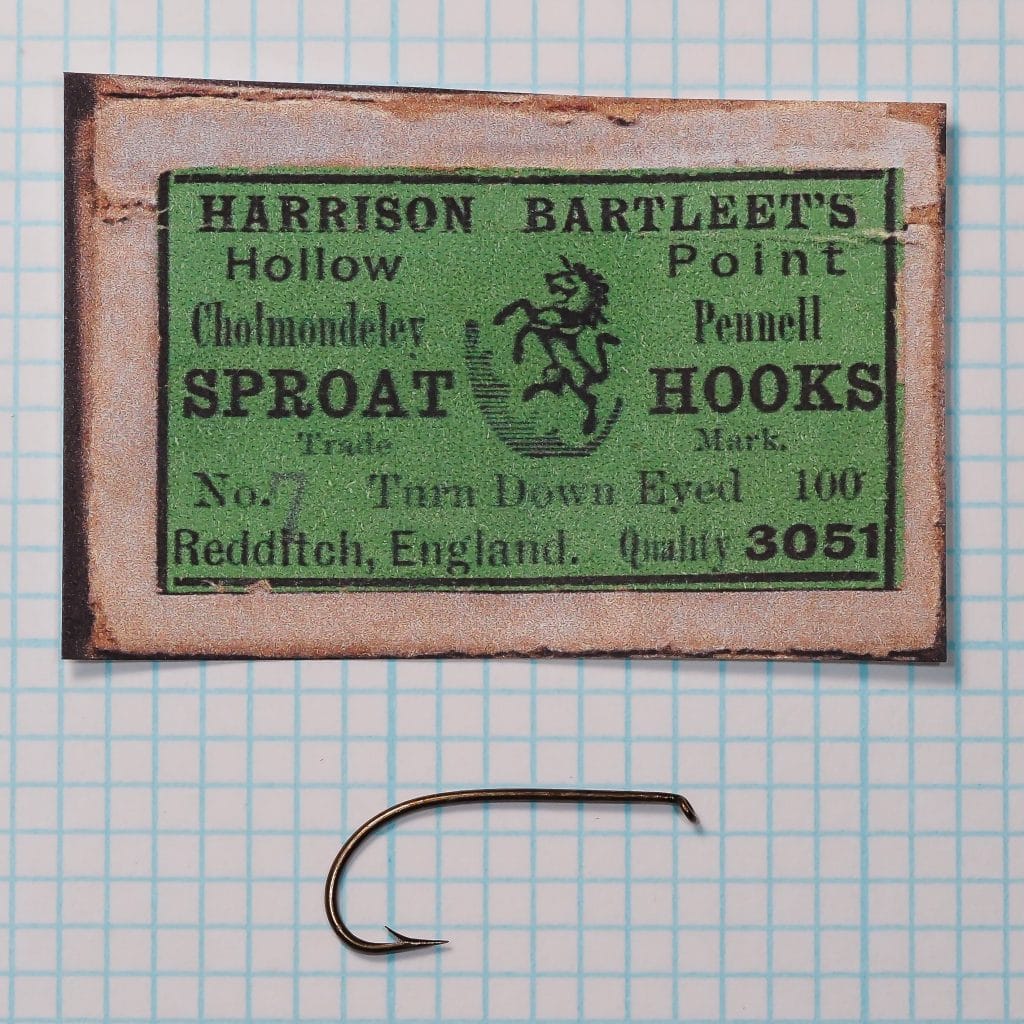
Original green letterpress sales card for Harrison Bartleet's Chathundeley Sproat (model 3051) with a single specimen No. 7 hook displayed below, showing the bronzed finish and sproat bend profile on measurement grid.
Photographic record
4 cataloged imagesSelect any record to load it above.
4 images shown
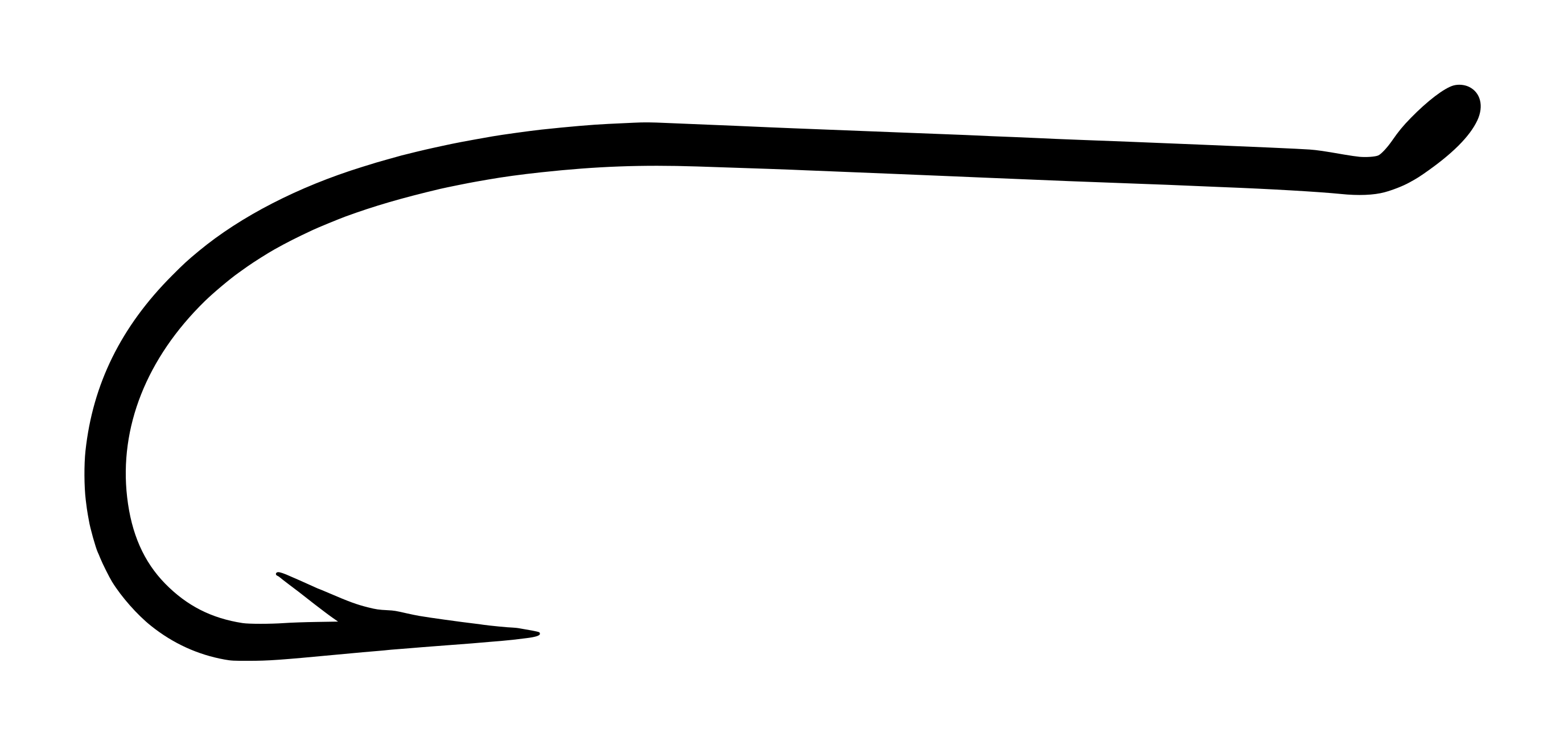
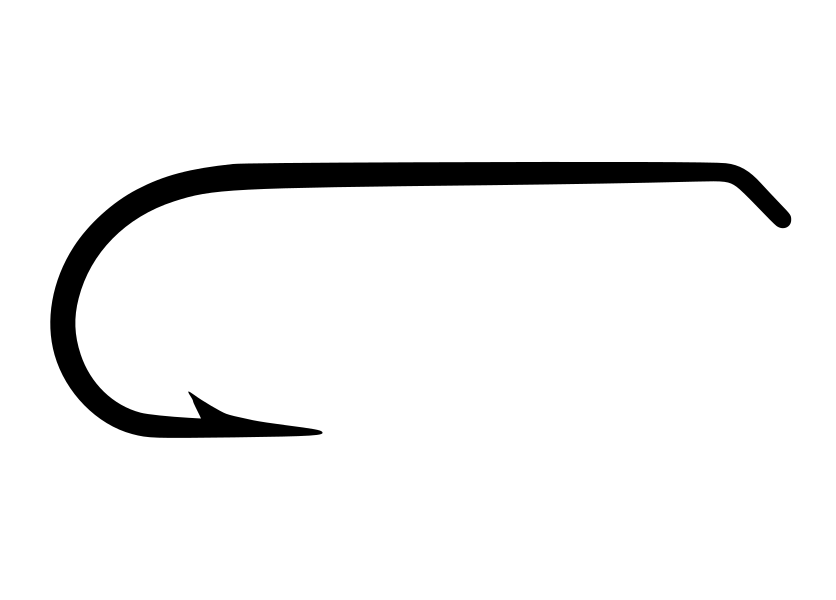
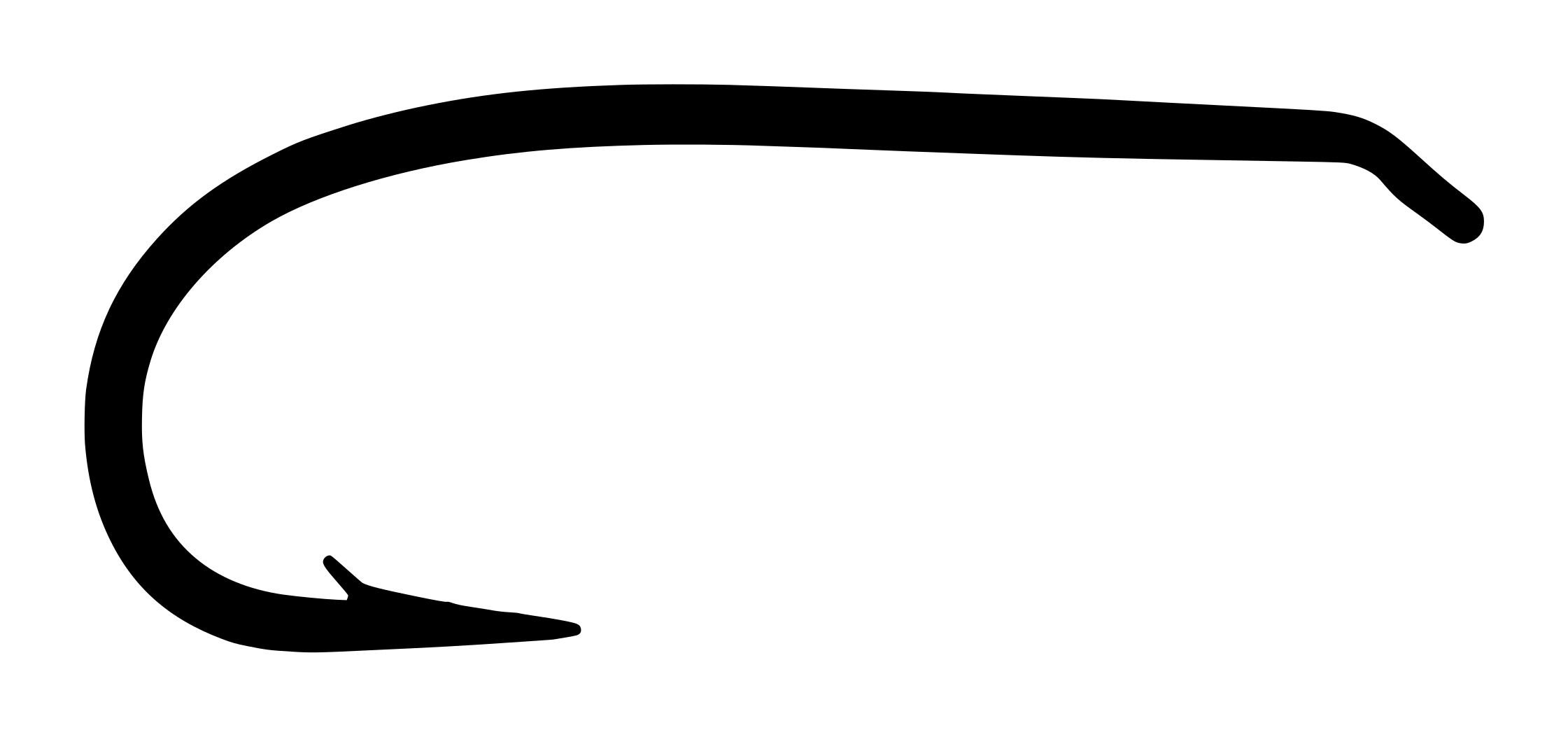
Harrison Bartleet’s 3051 Sales Card with Specimen Hook Size 7Original green letterpress sales card for Harrison Bartleet's Chathundeley Sproat (model 3051) with a single specimen No. 7 hook displayed below, showing the bronzed finish and sproat bend profile on measurement grid.Open originalHarrison Bartleet’s 3051 Card Front DetailDetailed front view of the Harrison Bartleet's Chathundeley Sproat sales card showing all printed text, the distinctive 'Hollowinder' trademark logo, and the condition of the original green paper stock with period patina.Open originalChathundeley Sproat Size 7 Hook Point ProfileClose-up side view of the hook point and lower bend, documenting the sproat bend geometry, hollow point construction (concave inner face), barb placement, and bronzed finish tone.Open originalChathundeley Sproat Size 7 Complete ProfileFull side-profile view of the complete No. 7 hook on measurement grid, showing overall length, shank proportions, tapered turned-down eye, and sproat bend curvature, with bronzed finish visible throughout.Open original
Technical profile
Tapered Turned-Down Eye | Sproat Bend | Standard Shank | Standard Wire | Hollow Point | Bronzed Finish
Eye
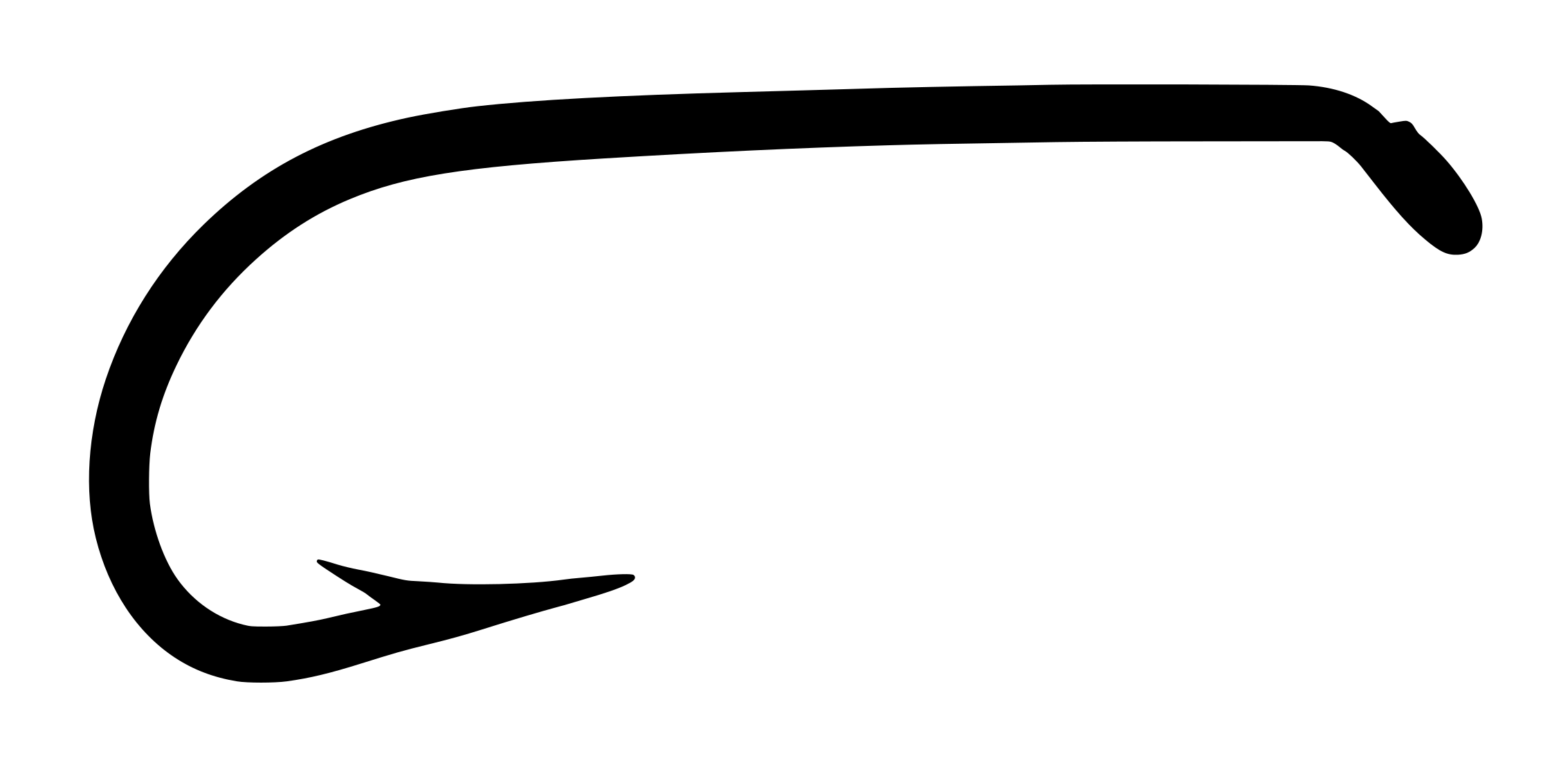
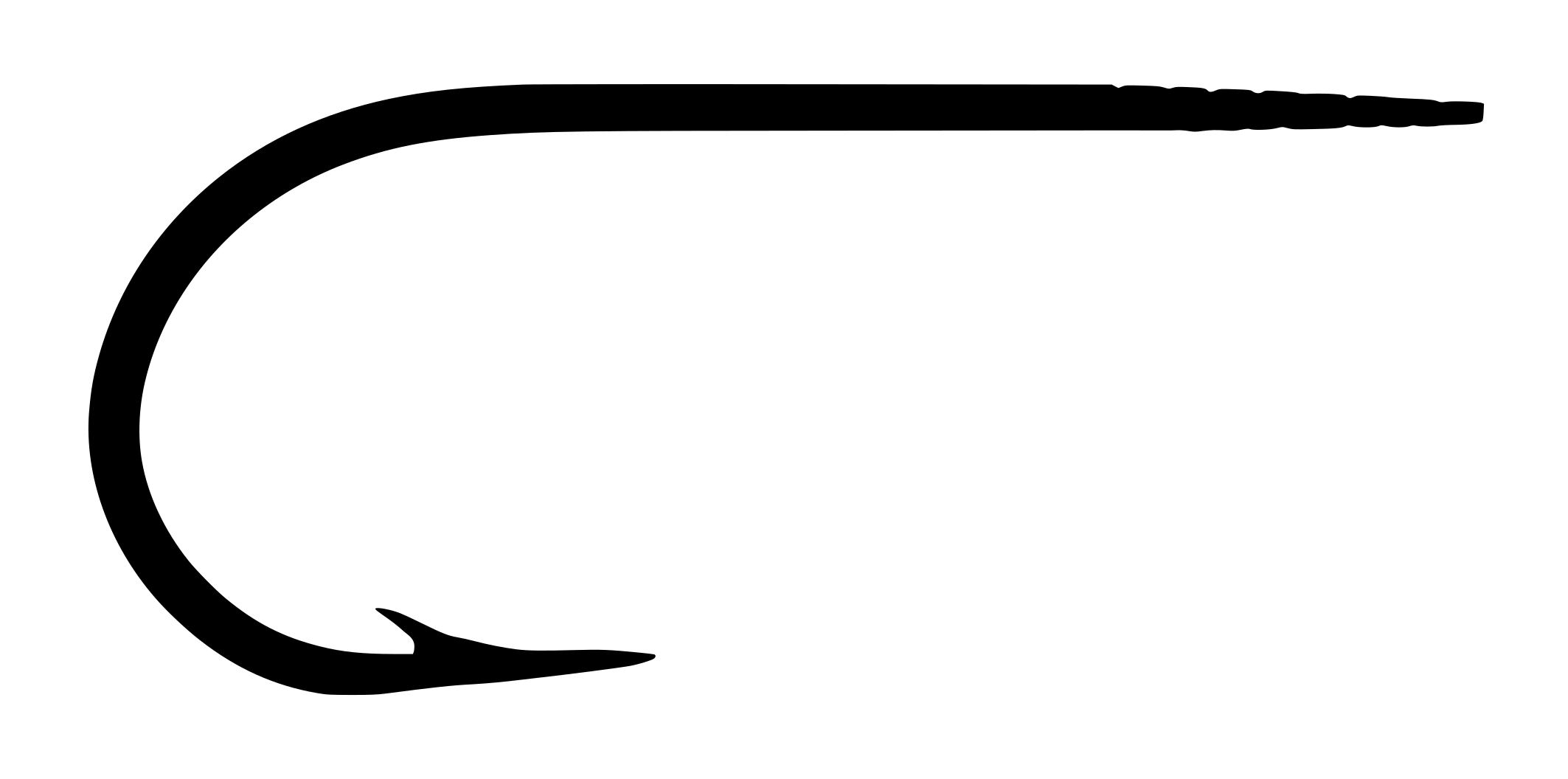
Tapered Eye, Turned DownTapered eye formed by taper of wire at terminal, no ball formation. Eye is turned down at approximately 30-40 degrees from shank axis, typical of wet-fly and salmon hooks of the period P. Taper is smooth and uniform without irregularities.
Wire
Fine (1X Fine), Round
Shank
1X Long — Plain
Bend
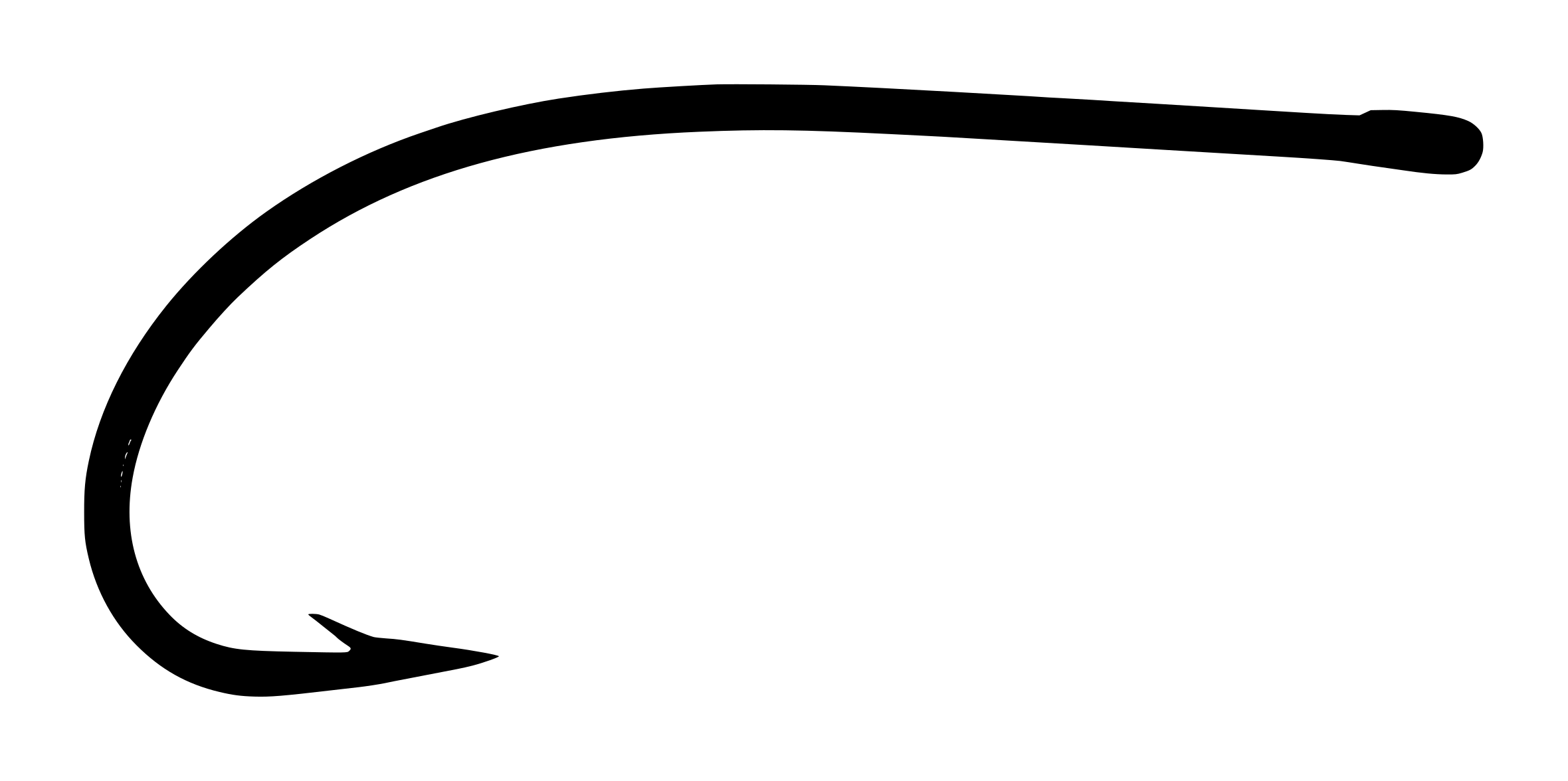
Sproat, Standard gapClassic sproat bend with well-rounded bottom and moderate depth of ~0.36" relative to gap width. Bend is symmetrical and true when viewed from above P. No kirbing or reversal; point lies in line with shank when hook is laid flat. Bend radius is generous and forgiving for tying and casting.
Point
Hollow Point (concave inner face)Single forward-cut barb positioned ~0.08" behind point. Barb is short and neatly formed, typical of Redditch quality work P. Barb angle is perpendicular to inner face of point, creating effective hold without excessive shear.
Finish
Bronzed — Confirmed (stated on packaging)Bronzed finish presents as warm chocolate-brown tone consistent with historical bronze lacquer or patina work P. Color is uniform across shank, eye, and bend with no streaking or pooling. Finish shows light patina development and minor spotting from age storage, but remains bright and protective. No corrosion or rust visible. Finish demonstrates the warm, mellow tone characteristic of quality Redditch bronzing versus the cooler Japanese bronzes of later manufacture.
Hook specimen is bright and unmarked, with no corrosion, bending, or material damage P. Barb and point retain full sharpness. Original sales card shows light to moderate toning (browning) consistent with age; minor foxing spots visible but card remains intact with all edges present and no tears or material loss. All printed text remains clearly legible.
The hollow point construction on this hook is a concave inner face formed during the pointing process, creating an inwardly curved geometry that generates a knife-edge effect at the point tip. This geometry enhances penetration and bite in the hard mouths of large fish such as salmon and sea trout, where superior holding power is essential. The concavity allows the barb to engage tissue more efficiently than a flat or superior-point geometry.
Standard wire gauge (approximately 0.048″-0.052″ diameter) provides a balance of strength and fineness—sufficient to withstand the power of a large fish without the brittleness of extra-fine wire or the dulled presentation of extra-heavy wire. The tapered turned-down eye reduces wind resistance and allows precise fly presentation on long casts, a critical feature for spate-river salmon fishing where distance and control are paramount.
The sproat bend’s rounded bottom distributes load stress more evenly than angular bends, reducing the risk of breakage during the jump and fight of a large fish. This engineering rationale explains why the sproat remained popular for salmon work for more than a century.
We don't have measured sizes for this hook yet. Own one? Submit calipered measurements and we'll review and add them. Thank you!
Historical context
harrison_bartleet
Harrison Bartleet & Co. of Redditch, England, was a significant though historically under-documented fishhook manufacturer operating during the late 19th and early 20th centuries. The company produced a range of wet-fly, salmon, and sea-trout hooks under the house brand ‘Harrison Bartleet’s,’ competing directly with better-known Redditch makers such as Allcock, Partridge, and Milward.
Like other Redditch manufacturers, Harrison Bartleet sourced high-quality Swedish and Norwegian steel, forged hooks using traditional drop-hammer and hand-finishing methods, and packaged finished hooks on branded sales cards for distribution through tackle dealers and mail order. The company’s use of the Redditch mark on packaging was a point of pride and guarantee of quality—Redditch-made was synonymous with superior hook engineering.
Production ended or was absorbed into larger firms by the mid-20th century. Few Harrison Bartleet examples survive in original packaging, making the company’s hooks increasingly valuable to collectors of British tackle heritage and Redditch craftsmanship.
Series History
The Chathundeley Sproat appears to be a proprietary or named variant within Harrison Bartleet’s sproat bend product line. The name ‘Chathundeley’ does not correspond to widely documented fly patterns of the period and may represent either a geographic designation, a patron’s name, or an internal Harrison Bartleet product designation.
The sproat bend itself originated in British fly-fishing tradition and became one of the most enduring hook profiles for wet-fly and salmon work. Harrison Bartleet manufactured sproat-bend hooks in multiple sizes (evidenced by surviving cards) and likely offered variants such as this Chathundeley designation to meet specific angling conditions or regional preferences.
No broader series documentation has been located in historical catalogs or references, suggesting this may be a standalone variant or a line produced in limited quantity or for limited market duration. The model number 3051 may indicate an internal production registry rather than a published catalog number.
Era and Packaging Dating
No barcode present on card is a strong pre-1974 indicator. Letterpress printing method (not offset) combined with serif typeface styling and paper stock are consistent with early-20th-century production. Use of 'Hollowinder' mark, company name format 'Harrison Bartleet's', and Redditch location on card typical of 1900-1930 period. 'Turn Down Eyed 100' notation represents manufacturing convention of that era. Card toning and foxing pattern support early manufacture. 'Quality' designation and lack of modern printing methods support 1900-1930 dating.
Design lineage and influence
The sproat bend originated in 19th-century British fly-fishing tradition as an alternative to the angular limerick and sneck profiles. The sproat’s generous rounded bottom and moderate depth provided improved hook-hold and a more forgiving bend under load, making it popular for salmon and sea-trout where fish size and mouth hardness demanded a robust profile.
By the Edwardian period (c. 1900-1920), the sproat had become one of the three dominant bend families in British fly-hook manufacture, competing with the limerick and the beak. Redditch manufacturers—including Harrison Bartleet, Allcock, Partridge, and Milward—offered sproat-bend patterns as standard lines, often with named variants (Chathundeley, Kendal, etc.) to differentiate market positioning.
The sproat remained the standard for British wet-fly salmon fishing through the mid-20th century before yielding to more specialized modern profiles in the 1970s-1990s. Contemporary fly tyers have revived interest in sproat-bend hooks for traditional wet-fly work, and modern manufacturers (Partridge, Tiemco, Daiichi) continue sproat production for heritage fishing.
Best matchRelated by Attribute
Computed automatically from catalog data — updated as new hooks are added.
Matches: Bend, Wire, Gap, Eye, Point +5 moreDiffers: Shank: 1X Long vs Standard; Eye Orient.: Turned Down vs Turned Up; Application: Wet Fly, Nymph vs Dry Fly, Wet Fly, Nymph
Matches: Bend, Gap, Eye, Eye Orient., Point +4 moreDiffers: Shank: 1X Long vs Standard; Wire: Fine (1X Fine) vs Standard; Application: Wet Fly, Nymph vs Wet Fly, Salmon, Sea Trout
Matches: Gap, Eye, Eye Orient., Point, Finish +4 moreDiffers: Bend: Sproat vs Round / Kendal; Shank: 1X Long vs Standard; Wire: Fine (1X Fine) vs Standard
Matches: Bend, Gap, Eye, Eye Orient., Point +3 moreDiffers: Shank: 1X Long vs Standard; Wire: Fine (1X Fine) vs Heavy (1X Heavy); Forging: Round vs Forged +1 more
The Harrison Bartleet Chathundeley Sproat No. 7 was designed for classic British wet-fly fishing for salmon and sea trout on spate rivers, particularly in Scotland and northern England. The sproat bend profile provides excellent hook-hold characteristics with the generous radius, while the standard shank length and tapered eye accommodate traditional wet-fly tying with silk thread and fur dubbing. The hollow point construction—a concave inner face—enhances penetration and bite in the hard mouths of salmon and sea trout, making this hook well-suited for larger, more powerful fish than trout-specific patterns.
Secondary Applications
General wet-fly fishing for larger trout and grayling; occasional use in traditional reservoir fishing.
Classic Fly Patterns
Not definitively documented; likely used for generic salmon and sea-trout wet patterns of the Edwardian period (e.g., Jock Scott, Durham Ranger, Thunder and Lightning variants).
Modern Equivalents
Hook
Match Quality
Notes
Partridge CS10/4 Sproat
Excellent
Contemporary British sproat bend; very similar geometry and proportions; still in production
Tiemco 7957BX Salmon/Steelhead
Good
Modern sproat-bend variant; tapered eye; forged; suitable for same applications
Mustad 36890 Sproat
Good
Industrial sproat; similar bend profile; available in wide size range; lacks period charm
Collector notes
Rated 6.5/10 — a scarce hook due to limited surviving examples, strong collector demand from Redditch specialists and British tackle historians, but limited demand from fly tyers (who favor modern equivalents). Harrison Bartleet's branded cards are far less common than Allcock or Partridge examples. Condition premium is significant: sealed cards command 3-4× the price of opened cards.
Reference value
$22 – $65 USD estimate
Packaging condition
Good — moderate wear, legibleRecorded specimen
Packaging format
HB-CARD-001Catalog code
The Chathundeley Sproat commands moderate to strong collector interest for three primary reasons: (1) Harrison Bartleet & Co. produced hooks in limited quantity and shorter production run than competitors, making examples increasingly scarce; (2) the complete original sales card with letterpress printing and ‘Hollowinder’ mark represents an important artifact of Redditch manufacturing heritage; and (3) dated examples of unidentified manufacturers fill gaps in British hook taxonomy.
Limiting factors include modest functional interest among modern fly tyers (sproat bends and hollow-point construction have been superseded by newer designs) and the challenge of authenticating Harrison Bartleet products due to sparse historical documentation. Size 7 is a practical size (not too small, not too large), which may increase demand relative to outlier sizes.
Most desirable variants: complete original sales cards with all 100 hooks intact and minimal toning, bronzed finish (standard for the period), original ‘Hollowinder’ mark visible. Opened cards with missing hooks decline rapidly in value. Loose hooks without packaging carry minimal premium.
Condition factors most affecting value: card integrity (torn edges, missing corners, severe water damage reduce value by 40-60%); hook count (each missing hook ~1-2% penalty); packaging toning (light patina acceptable and even desirable; heavy foxing or mold staining reduces appeal); and printing legibility (faded printing reduces authentication and historical value).
Packaging
Original green chipboard sales card with black letterpress printing. Dimensions approximately 3.5" × 2.5" (89 × 64 mm). Manufacturer name and hook model prominently displayed in serif typeface. Printed text includes: 'HARRISON BARTLEET'S', 'Chathundeley SPROAT', 'Pennell HOOKS', 'Hollowinder' mark, location 'Redditch, England', quality code '3051', and 'Turn Down Eyed 100' (indicating 100 hooks per gross or similar unit). Card features trademark printer's horse/knight logo at center. Light toning and foxing consistent with early 20th-century storage; no barcode present (pre-1974 manufacturing). Paper stock is typical mid-weight chipboard of the era.
Market Value Notes
Low ($22): Opened card with most hooks present, moderate toning, print legible, all edges intact<br />
High ($65): Sealed or near-sealed original card, all 100 hooks intact, minimal toning, pristine print and edges<br />
Premium factors: Harrison Bartleet branded examples are scarce; complete card with 'Hollowinder' mark; early c. 1900-1930 manufacture evidenced by letterpress and paper; bronzed finish preferred; size 7 is practical/popular<br />
Platforms: eBay UK vintage tackle, specialist dealers (Angler's Rest, UK regional dealers), British tackle fairs<br />
Confidence: E Estimated — limited comparable sales data; Harrison Bartleet hooks appear sporadically; estimates calibrated against Allcock and Partridge card sales (which command 15-50 GBP / $20-65 USD for similar condition). Single sealed card may command premium to high end or beyond given scarcity.
Where to Find
eBay UK (vintage fishing hooks category), British regional tackle fairs and antique markets (particularly south England), specialized vintage tackle dealers in Redditch and London area, online dealer networks (tackle.com, various UK regional dealers), and occasional specialist auction houses handling British sporting memorabilia.
Preservation
Storage and Preservation
Store the original sales card in a cool, dry, stable environment away from direct sunlight and moisture. Humidity is the primary threat to Redditch hooks—bronze finishes can develop green patina with prolonged exposure to damp conditions, and paper cards are susceptible to mold and foxing (brown discoloration).
Ideal storage conditions are 45-55% relative humidity and 60-70°F (15-21°C). Avoid damp basements, attics subject to temperature fluctuation, and kitchen areas with steam exposure. Store the card flat (not rolled or bent) in an archival-quality envelope or acid-free tissue paper; do not use plastic sleeves, which can trap moisture.
If the card shows light toning or foxing, this is normal aging and adds character to vintage examples—do not attempt to clean with water or solvents. Light surface dust can be removed with a soft brush, but avoid handling the card excessively, as oils from skin accelerate patina development.
If hooks are removed from the original card for tying use, store the card separately to preserve its documentary and collectible value. Removed hooks should be stored in a dry container (small glass jar, paper envelope) with a silica gel desiccant packet to prevent corrosion. The bronzed finish is relatively stable but will rust if exposed to moisture for extended periods.
Primary Source
Reading the Harrison Bartleet's Sales Card
Source: Harrison Bartleet's Chathundeley Sproat original sales card, c. 1900-1930, green letterpress card, Redditch, England
The green sales card for the Chathundeley Sproat provides rich documentary evidence of Redditch manufacturing practices and hook taxonomy of the early 20th century. Breaking down the printed text reveals several important data points:
‘Harrison Bartleet’s’ (header): The possessive form indicates a family-owned business or a branded house line rather than a corporate entity. This naming convention was typical of Redditch workshops founded in the 19th century and retained through the early 20th century (compare: ‘S. Allcock & Co.’ with the similar possessive branding).
‘Chathundeley Sproat’: This specific pattern name does not appear in major fly-pattern references of the period, suggesting either a house variant, a regionally specific pattern, or a patron’s named preference. The choice to name and brand this sproat variant suggests differentiation within a broader product line—i.e., Harrison Bartleet offered multiple sproat options to anglers with different fishing conditions and preferences.
‘Hollowinder’ mark: This trademark device (the heraldic horse/knight logo) was Harrison Bartleet’s house mark, visible on multiple surviving cards. Its presence links this hook to a documented manufacturer, aiding in catalog authentication.
‘Pennell’ mark: The ‘Pennell’ attribution may refer to H. Cholmondeley-Pennell, a 19th-century author and angling authority, or more likely it is a manufacturing trademark or quality designation unique to Harrison Bartleet. Without further evidence, the exact meaning remains unclear.
‘Turn Down Eyed 100’: This notation indicates the hook features a turned-down eye and that the quantity per unit (card) is 100 hooks. This was standard labeling for British sales cards of the period.
‘Redditch, England’: The explicit location callout was a mark of pride and quality assurance. ‘Redditch-made’ was a brand promise in international angling markets, comparable to ‘Sheffield steel’ for blades. This text directly connects the hook to the Redditch manufacturing tradition and supports dating to the pre-offshoring era (pre-1960s).
‘Quality 3051’: The quality number (3051) is Harrison Bartleet’s internal production designation or catalog number. This is not a size number (size is marked separately as ‘No. 7’); rather, 3051 identifies this specific hook pattern within the manufacturer’s range. The use of quality numbers was standard practice among Redditch makers.
Marking Analysis
Markings and Annotations
The original sales card shows no visible handwritten annotations, price marks, or collector signatures on the obverse (printed surface). The reverse side of the card was not documented in the provided images and cannot be assessed for hidden notations.
The absence of handwritten marks is consistent with a preserved, unhandled example that has been stored carefully since manufacture. Heavily used vintage cards often show pencil or pen marks indicating retail inventory counts, pricing notations, or dealer codes. The lack of such marks suggests this card has been in a private collection or archive rather than in active tackle shop circulation.
Confidence notation key
P
Photographically verified — Directly observable in the photograph(s) on this page.
V
Verified by documentation — Confirmed by manufacturer catalog, spec sheet, or published reference.
I
Inferred — A logical deduction from observable or documented evidence, not directly stated.
E
Estimated — An approximation based on visual comparison, proportional analysis, or limited data.
S
Speculative — A reasoned hypothesis that cannot be confirmed from available evidence.
Claims with no notation are confirmed by multiple independent sources. All photographs on garrenwood.com are taken on a measurement grid where each square equals 1/10 inch (0.1″ / 2.54 mm).