The Mustad 32756 is a classic mass-market bait hook in Mustad’s 32-series Aberdeen family, manufactured in the late 1960s to early 1970s by O. Mustad & Son’s U.S. subsidiary in Auburn, New York. Sold under the Key Brand label in bulk 100-hook packages, this size 1/0 exemplifies the workhorse hook that dominated American tackle boxes throughout the post-war decades.
The defining characteristic is the jig eye — a rolled, upturned loop rather than the traditional ball eye — which was Mustad’s cost-effective adaptation for anglers rigging light jigs and sinker-bait combinations. The wide, smooth Aberdeen bend provides excellent hook penetration and wire strength, making it reliable across diverse freshwater bait scenarios from panfish to small bass.
This example is notable as a functional production hook rather than a prize specimen. The bronzed finish is confirmed by the packaging label, though the specimen shows typical age darkening consistent with storage. The complete 100-hook original card represents excellent documentation of Mustad’s mid-century distribution strategy and Key Brand branding during the era when industrial hook manufacturing dominated casual American angling.
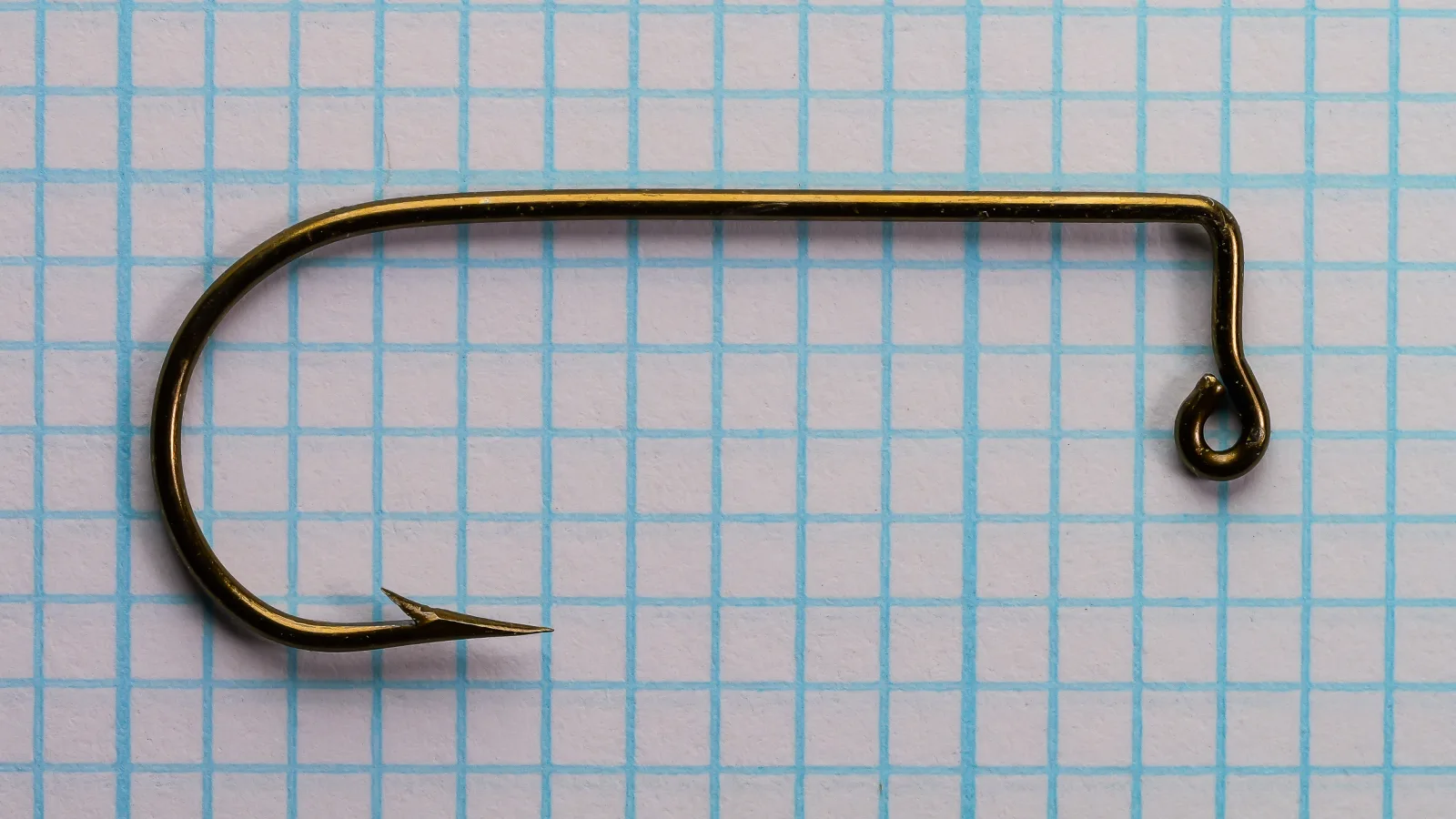
Front face profile of the Mustad 32756 Aberdeen size 1/0, showing the characteristic wide round bend, jig-eye construction, and warm bronzed finish on a 1/10-inch measurement grid.
Photographic record
2 cataloged imagesSelect any record to load it above.
2 images shown
Mustad 32756 Aberdeen Size 1/0 Jig Eye BronzedFront face profile of the Mustad 32756 Aberdeen size 1/0, showing the characteristic wide round bend, jig-eye construction, and warm bronzed finish on a 1/10-inch measurement grid.Open originalMustad 32756 Key Brand Label 1/0 100-Hook CardOriginal packaging label for the Mustad 32756 showing the Key Brand subsidiary branding, 'Made in Norway' statement, Auburn New York address, and handwritten size and quantity specifications in blue ballpoint.Open original
Technical profile
Mustad Quality 32756, Size 1/0, Jig Eye, Aberdeen Bend, Standard Shank, Standard Wire, Bronzed, 100-Hook Card
Eye
Cross Eye, Jig (60°/90°)Jig Eye
Wire
Extra-Fine, Round
Shank
Standard — Plain
Bend
Aberdeen, Standard gapClassic wide-round Aberdeen geometry with smooth symmetrical curves and no offset. Bend depth approximately 0.35"-0.38" for this size, providing reliable gap geometry without oversized proportions. Wire set and roundness suggest standard cold-forged production P.
Point
Standard / SpearStandard short barb, close-cut and neatly angled backward. Barb placement approximately 1/3 of the way down the point taper. Barb size and angle consistent with Mustad standard specifications for bait hooks in this era P.
Finish
Bronzed — Confirmed (stated on packaging)Bronzed finish confirmed on original packaging label. Specimen displays warm brown tone with slight darkening from age storage, consistent with bronzed specification rather than blued or japanned alternatives. Steel grain texture visible through finish coating, typical of bronzed Aberdeen-series hooks from this era V.
Specimen hooks are bright steel with no active corrosion. Light toning on card consistent with storage in moderate humidity environment. All 100 hooks appear present (not verified by count). Label adhesion is good; no separation.
The Aberdeen bend represents one of the oldest and most successful fishing hook geometries, with origins tracing to 19th-century Scottish river tradition. The wide, smoothly-rounded bend maximizes gap relative to shank length, providing excellent hook-setting penetration when struck by a living bait fish. The lack of offset or special shaping allows economical production through standard stamping and cold-forging processes.
The jig eye is a manufacturing economy measure that reduced hand labor compared to traditional ball-eye construction. The rolled, slightly upturned wire loop serves dual purpose: it functions as a line attachment point for bait rigs and also accepts light jig head sockets. This design choice reflects Mustad’s strategic positioning of the 32756 as a budget-tier, multi-purpose hook suitable for working-angler applications rather than specialty fly or saltwater work.
We don't have measured sizes for this hook yet. Own one? Submit calipered measurements and we'll review and add them. Thank you!
Historical context
Era and Packaging Dating
Packaging demonstrates mid-to-late 1960s production indicators: (1) Mustad U.S.A. address format shows Auburn, N.Y. 13021 — this ZIP code format dates to 1963 forward; (2) No barcode visible — strong pre-1974 indicator; (3) Blue-and-cream offset-printed card stock with Key Brand logo indicates late 1960s mass-market production; (4) Handwritten size notation and quantity (handwritten '1/0' and '100') typical of mid-period production before fully printed cards; (5) Made in Norway statement and Key Brand subsidiary branding consistent with Mustad's distribution strategy post-1960; (6) The simple, non-laminated card construction and paper stock aging suggest mid-1960s rather than early 1950s or 1980s. Likely window: 1965-1975, with greatest probability 1968-1972.
The Key Brand Strategy
The Key Brand label on this card reveals a clever Mustad marketing strategy of the 1960s. Rather than sell bulk hooks exclusively under the flagship Mustad name, they created the 'Key Brand' subsidiary to dominate the budget-conscious market segment — the working angler who bought 100-hook cards by the dozen at feed stores and general merchandise retailers. This kept the premium Mustad label positioned for specialty shops and mail-order catalogs, while Key Brand captured the mass market. By the 1980s, this two-tier branding had largely vanished as modern retail consolidated into fewer, larger chains, and Mustad consolidated its product lines.
Design lineage and influence
The Aberdeen bend family traces to Scottish river-fishing tradition and was codified as a standard in the late 19th century. Mustad’s 32-series represents the industrial mass-production evolution of the classic Aberdeen, competing directly with Allcock’s Pennell Aberdeen and other British Redditch variants. The 32756 sits in the mid-range of Mustad’s bait-hook offerings — less specialized than the 3906B O’Shaughnessy or the 33903 Limerick, but more versatile than simple spawning hooks.
Best matchRelated by Attribute
Computed automatically from catalog data — updated as new hooks are added.
Matches: Bend, Shank, Gap, Point, Finish +3 moreDiffers: Wire: Extra-Fine vs Fine (1X Fine); Eye: Cross Eye vs Ball Eye; Eye Orient.: Jig (60°/90°) vs Straight / Inline +1 more
Matches: Bend, Wire, Gap, Eye, Eye Orient. +3 moreDiffers: Shank: Standard vs 1X Long; Point: Standard / Spear vs Superior; Finish: Bronzed vs Gold-Plated +2 more
Matches: Bend, Wire, Gap, Point, Finish +3 moreDiffers: Shank: Standard vs 3X Long; Eye: Cross Eye vs Ball Eye; Eye Orient.: Jig (60°/90°) vs Turned Down +1 more
Matches: Bend, Wire, Gap, Point, Forging +2 moreDiffers: Shank: Standard vs 3X Long; Eye: Cross Eye vs Ball Eye; Eye Orient.: Jig (60°/90°) vs Straight / Inline +2 more
The Mustad 32756 Aberdeen is a general-purpose bait hook designed for live and dead bait fishing in freshwater environments. The wide, rounded bend and moderate gap provide reliable hook setting for panfish, catfish, and medium-sized bass when baited with worms, minnows, or prepared baits. The jig-eye construction suggests this was also marketed for simple jig applications and sinker-and-bait rigs. Aberdeen bends were historically the standard choice for anglers prioritizing wire strength and durability over presentation delicacy.
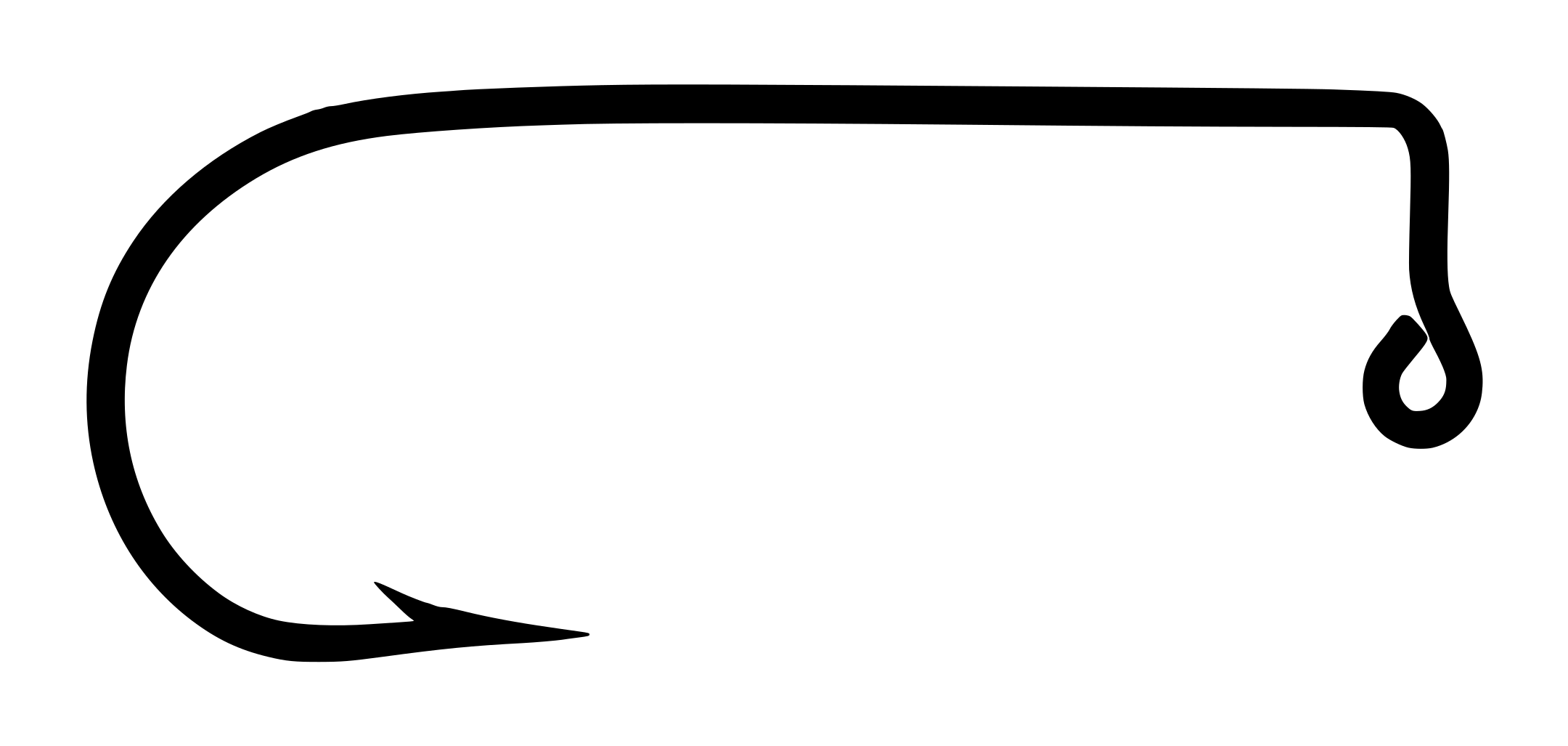
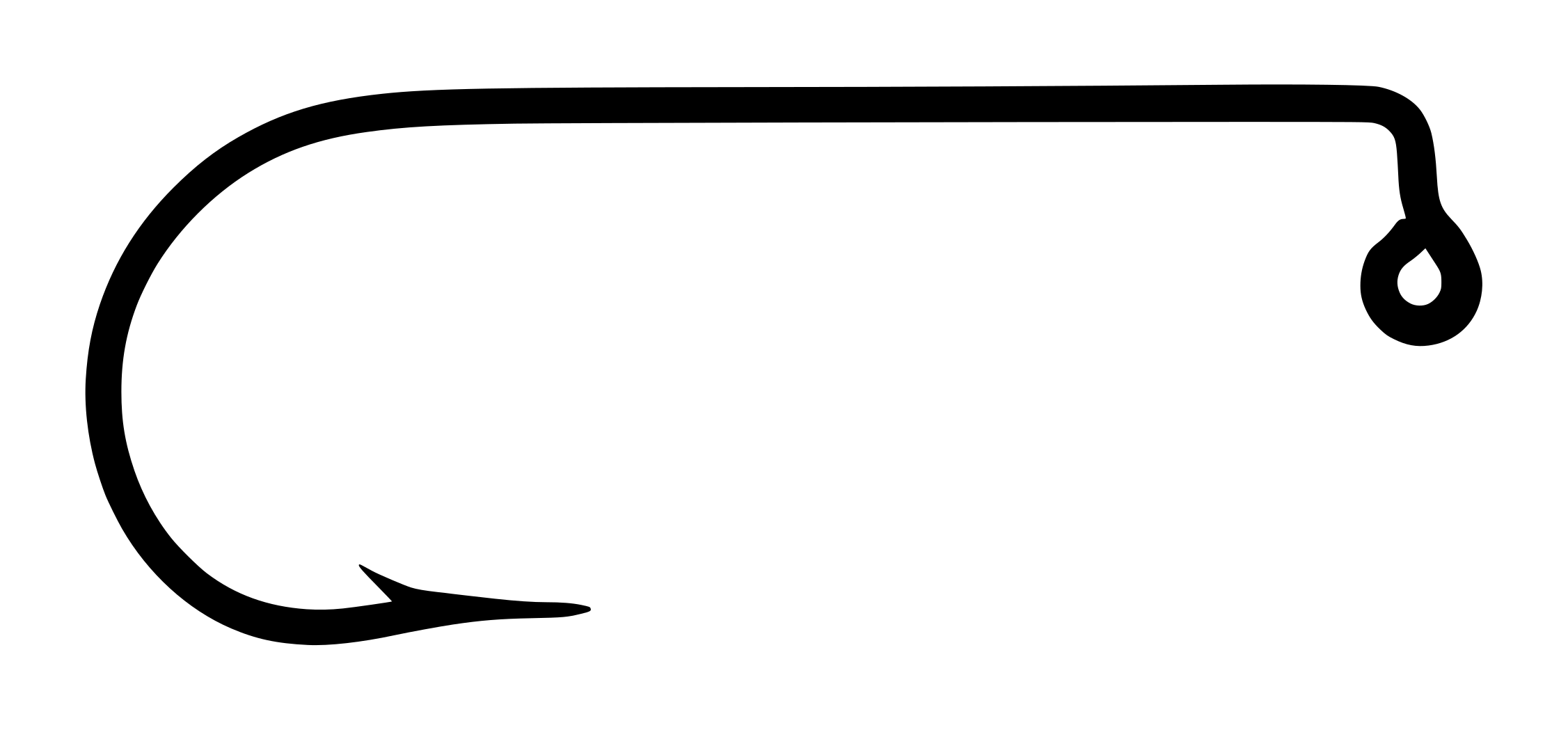
Modern Aberdeen-style bait hook with offset and baitholder barb, direct functional successor to 32756
Gamakatsu SC15
Good
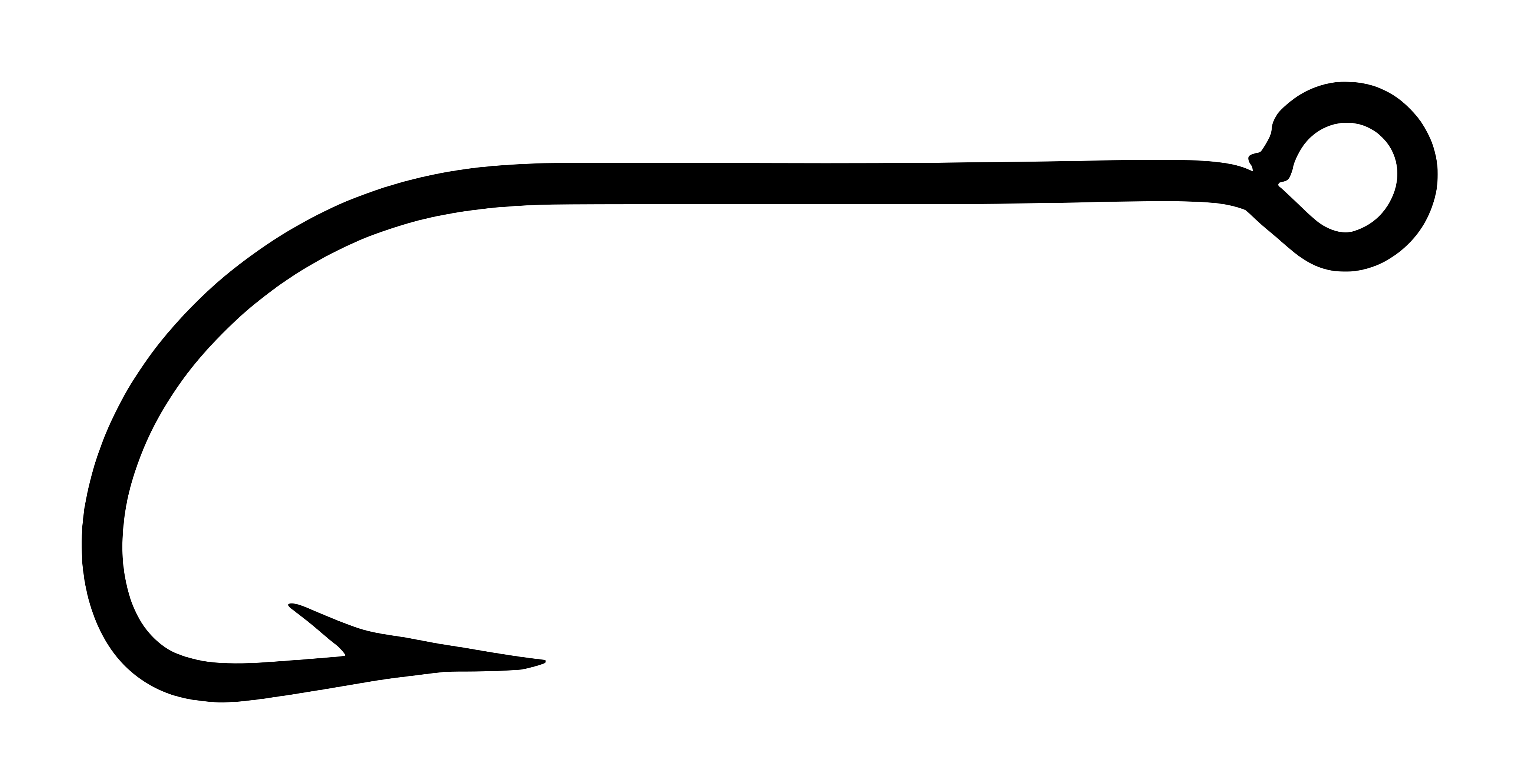
Contemporary Japanese Aberdeen-style bait hook with similar gap and shank proportions
Collector notes
Rated 2.0/10 — Common in bulk card quantities across all sizes. Strong post-war production volume ensures steady availability. Collector demand is negligible; value lies primarily in historical documentation rather than rarity. Complete 100-hook cards in original packaging rarely exceed $8-12 on the market.
Reference value
$5 – $12 USD estimate
Packaging condition
Very Good — light wear, fully legibleRecorded specimen
Packaging format
GW-MU-CARD-01Catalog code
What makes it collectible: This hook documents the Key Brand distribution strategy and Mustad’s mid-century market positioning. The complete 100-hook card with original label and legible handwritten size notation is a rare survivor — most cards were exhausted in active fishing rather than preserved. The jig-eye variant represents an interesting manufacturing compromise specific to this era.
What limits the rating: Mustad produced the 32-series in enormous quantities across multiple decades. The 1/0 size remains common because it was the bread-and-butter size for general bait fishing. No specialist demand exists for this hook among fly tyers or saltwater enthusiasts. Unopened cards command only modest premiums over open ones.
Most desirable variants: Smaller sizes (No. 4, No. 2) are slightly scarcer due to lower demand during the period. Original sealed or tape-sealed cards with pristine labels fetch the highest prices. Cards with printing variations or early Key Brand logos are marginally more valuable than standard examples.
Condition factors: Card condition is primary — torn, stained, or water-damaged cards lose 30-50% of value. Missing hooks reduce value proportionally (each missing hook ≈ 1% loss for a 100-hook card). Legible handwritten specifications and complete label text are essential; faded or obscured labels reduce collectibility significantly.
Packaging
Cardboard sales card with offset-printed label affixed to cream-colored stock. Label features blue background with cream-colored 'M' mountain logo and 'MUSTAD' brand name prominently displayed. Text reads: 'MADE IN NORWAY / FABRIQUE EN NORVEGE' (bilingual English/French), 'KEY BRAND FISH HOOKS' with key symbol in circle, 'O. MUSTAD & SON (U.S.A) INC., AUBURN, N.Y. 13021'. Handwritten specifications in blue ballpoint: 'QUAL. 32756', 'NO. 1/0', 'QTY. 100'. Print below reads 'ABERDEEN'. Card shows light surface toning and minor creasing consistent with age storage, but text remains fully legible. Original tissue wrapping likely present but not visible in photography. Dimensions approximately 3.5" × 2.25" (89 × 57 mm).
Market Value Notes
Low ($5): Good condition — opened card, all or most hooks present, moderate card wear and toning<br />
High ($12): Very Good condition — unopened or near-sealed, complete 100-hook count, minimal card wear and clear label text<br />
Premium factors: Complete original tissue wrapping intact, pristine label adhesion, sealed tape visible, fewer than 5 hooks missing<br />
Platforms: eBay (US and UK sales), occasional vintage tackle dealers, local antique malls<br />
Confidence: E estimated — limited recent comparable sales data; values derived from broader Mustad bulk-card market patterns and occasional complete-card auctions
Where to Find
eBay (search 'Mustad Key Brand 32756' or 'vintage Mustad Aberdeen 100-hook card'). Occasional appearances at tackle and vintage fishing equipment dealers in North America. Less common at UK venues due to U.S.-market distribution focus. Local antique malls and estate sales in regions with strong fishing heritage (upper Midwest, Pacific Northwest) occasionally yield examples.
Collector's Identification Tips
Verify by three elements: (1) Model code 32756 printed on label — never confuse with other Aberdeen variants such as 32655 or 32850; (2) ‘Key Brand’ subsidiary label with key-in-circle logo — indicates U.S. distribution subsidiary of Mustad, distinct from direct Mustad-branded cards; (3) Jig eye construction visible on specimen hooks — rolled upturned loop, not a traditional ball eye. The combination of these three markers positively identifies this as the 1960s-era mass-market Key Brand 32756.
Preservation
Storage and Preservation
Store the original card in a cool, dry environment away from direct sunlight and moisture. Humidity exposure will accelerate patina development on the bronzed finish, though light patina is often considered desirable by collectors. Keep the card flat — standing vertically can cause stress on the label adhesion and warp the cardboard stock over decades.
If the original tissue wrapping is present, leave it intact. Do not remove hooks from the card for storage or use unless necessary; keeping them on the card preserves the complete historical package and maintains value. Avoid contact with ferrous metals or copper — galvanic corrosion can occur if hooks touch other metal types for extended periods.
For cards with handwritten specifications (as with this example), protect the writing from erasure or smudging by avoiding handling the label area directly. Store away from PVC-containing materials, which off-gas acid and accelerate deterioration. Archival-quality cardboard sleeves or acid-free tissue wrapping provide long-term protection without altering the original appearance.
Marking Analysis
Label Annotations and Handwritten Specifications
This card displays blue ballpoint handwriting in three data fields: ‘QUAL. 32756’ (quality/model code), ‘NO. 1/0’ (size), and ‘QTY. 100’ (quantity). The handwriting is consistent in formation and pressure, suggesting a single person or standardized system applied this notation at or near the point of original distribution.
The ballpoint pen is a significant dating marker. Ballpoint pens became widespread in commercial use only in the 1950s-1960s in North America; the script style and ink color (medium blue) are consistent with standard commercial ballpoint writing of the late 1960s. The notation style — abbreviated to maximize card space — reflects the efficiency-focused labeling systems used by wholesale distributors and mail-order tackle suppliers in this era.
The presence of handwritten size notation (rather than pre-printed) suggests this card was either a special order, a warehouse overstocking correction, or part of a smaller supplier’s stock rather than a major retail chain batch. This level of detail adds modest documentary value for researchers studying Mustad’s distribution channels and wholesale practices in the late 1960s.
Primary Source
Label Text Analysis and Manufacturer Claims
The label text provides four distinct information layers, each with historical significance:
‘MADE IN NORWAY / FABRIQUE EN NORVEGE’: The bilingual statement confirms manufacture at O. Mustad & Son’s Gjøvik, Norway factory. Mustad’s primary production facility moved to Norway in the late 19th century, establishing Gjøvik as the global center of Mustad industrial hook manufacturing. This bilingual statement (English/French) reflects Mustad’s strategy of marketing to both North American and European distributors simultaneously.
‘O. MUSTAD & SON (U.S.A) INC., AUBURN, N.Y. 13021’: This address identifies the U.S. distribution subsidiary located in Auburn, New York. The ZIP code 13021 is a precise chronological marker — five-digit ZIP codes were introduced in 1963, so any card with this complete address format dates to 1963 or later. The ‘U.S.A. INC.’ nomenclature reflects incorporation under U.S. law while maintaining the original Norwegian company name. Mustad established this subsidiary to manage North American sales, warehousing, and regulatory compliance independently.
‘KEY BRAND FISH HOOKS’ with key-in-circle symbol: Key Brand was Mustad’s budget subsidiary brand, distinct from premium offerings sold directly under the Mustad name. The key symbol was trademark-registered to differentiate Key Brand products in wholesale channels. This branding strategy allowed Mustad to control the budget and premium market segments simultaneously, preventing price-cutting retailers from cannibalizing premium-line margins.
‘ABERDEEN’: The printed bend-family identification is both functional labeling and marketing claim. The Aberdeen name carries historical prestige in angling tradition, allowing Mustad to market even a budget 100-hook card as a ‘quality’ product rooted in established tradition rather than generic ‘fishing hooks.’
Additional
The Jig Eye: A Production Economy Innovation
The jig eye on this 32756 represents a specific cost-reduction decision by Mustad engineers in the 1960s. Traditional Aberdeen and other bait hooks typically featured a rolled ball eye — a full loop formed by bending wire around a mandrel and welding or cold-setting the closed loop. Ball-eye construction required precision tooling and multiple forming stages, making it labor and material-intensive.
The jig eye substitutes a simple rolled loop (similar to a fly-tying hook eye) with a slight upward angle. This eliminates one complete forming stage and allows faster automated production. The upturned angle serves double duty: it prevents the eye from lying flat against the shank (reducing tangling in multi-hook rigs) and it provides a socket for simple pressed-metal jig heads used in panfish and light saltwater jigging.
This design choice reveals Mustad’s strategic insight that the mass-market angler of the 1960s rarely demanded perfection — they wanted reliability, economy, and versatility. A hook that could work equally well on a simple sinker-and-bait rig or as a jig head base had broader appeal than a specialized ball-eye bait hook. By the 1970s, however, this economy design fell out of favor as injection-molded plastic jig heads replaced hand-pressed metal ones, and traditional ball-eye designs reasserted dominance in the budget sector.
Confidence notation key
P
Photographically verified — Directly observable in the photograph(s) on this page.
V
Verified by documentation — Confirmed by manufacturer catalog, spec sheet, or published reference.
I
Inferred — A logical deduction from observable or documented evidence, not directly stated.
E
Estimated — An approximation based on visual comparison, proportional analysis, or limited data.
S
Speculative — A reasoned hypothesis that cannot be confirmed from available evidence.
Claims with no notation are confirmed by multiple independent sources. All photographs on garrenwood.com are taken on a measurement grid where each square equals 1/10 inch (0.1″ / 2.54 mm).