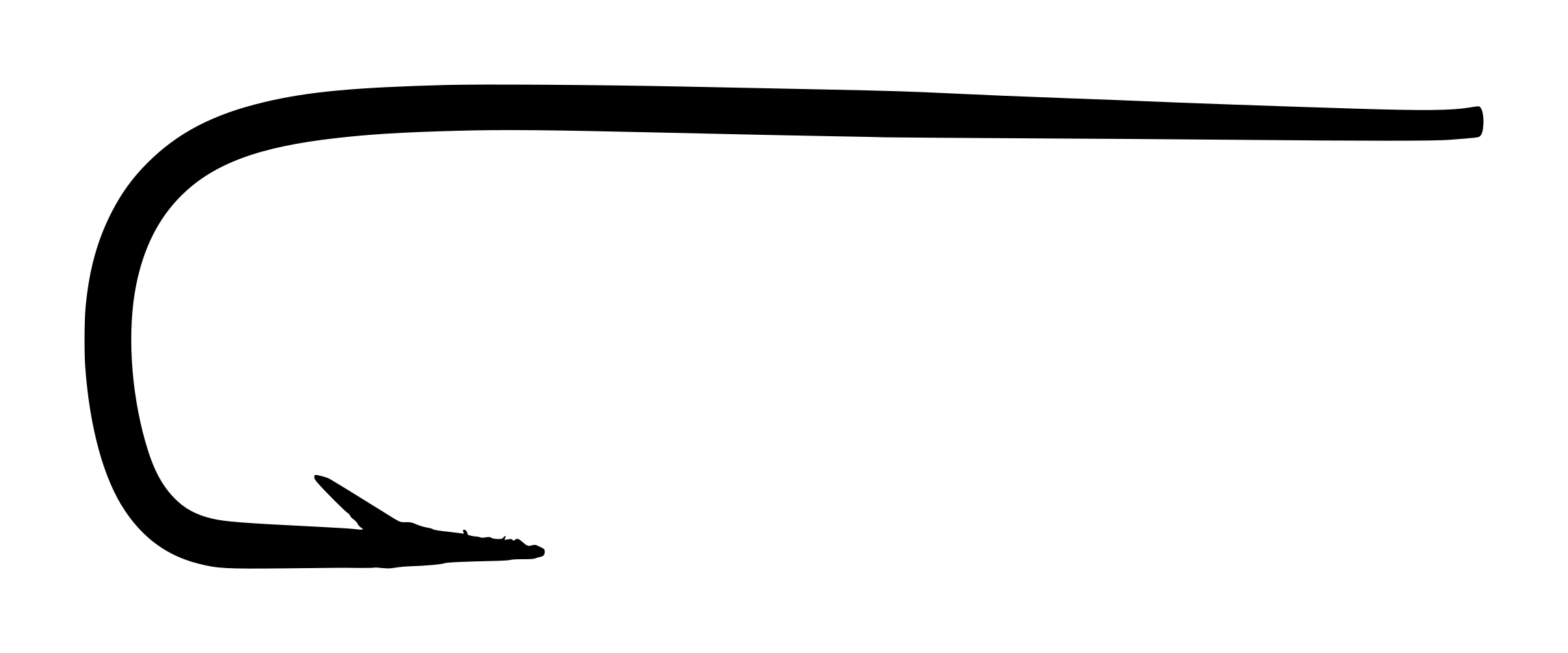
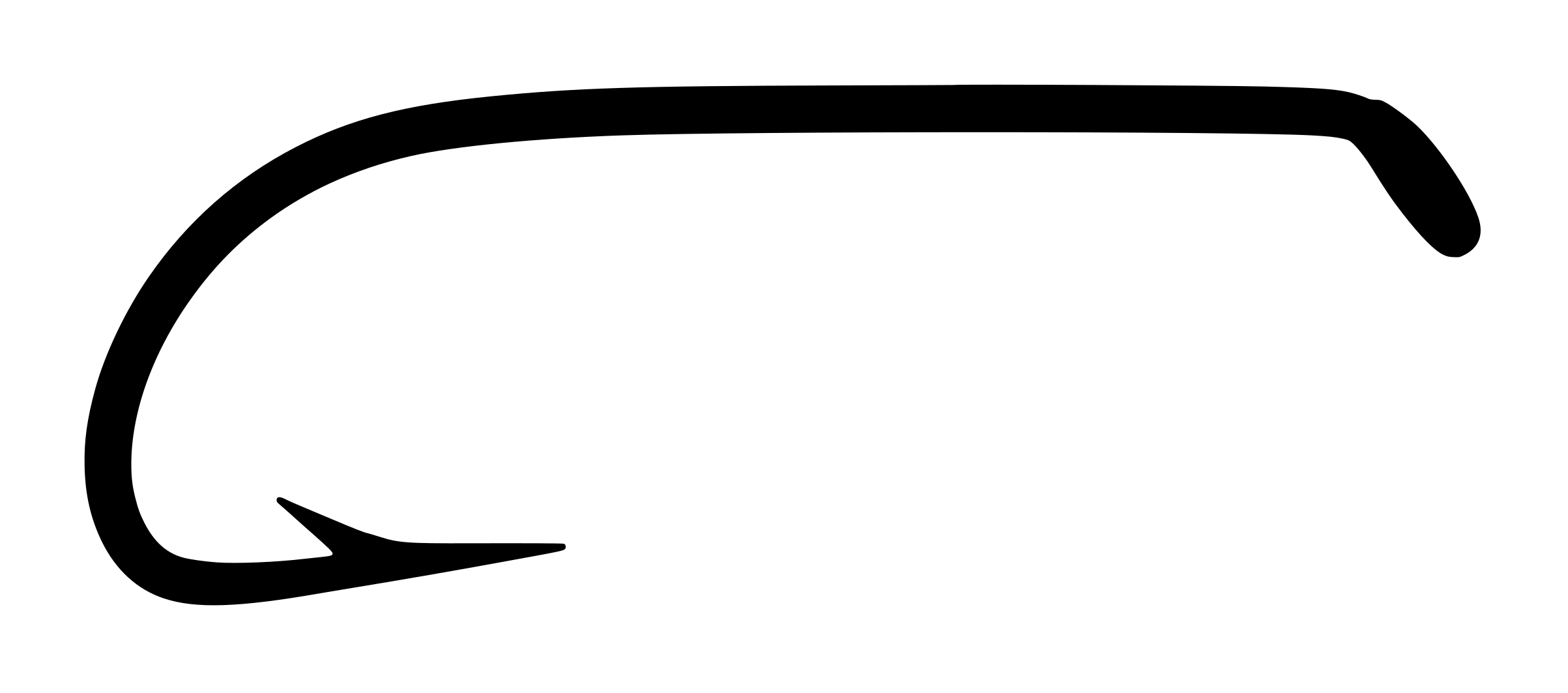
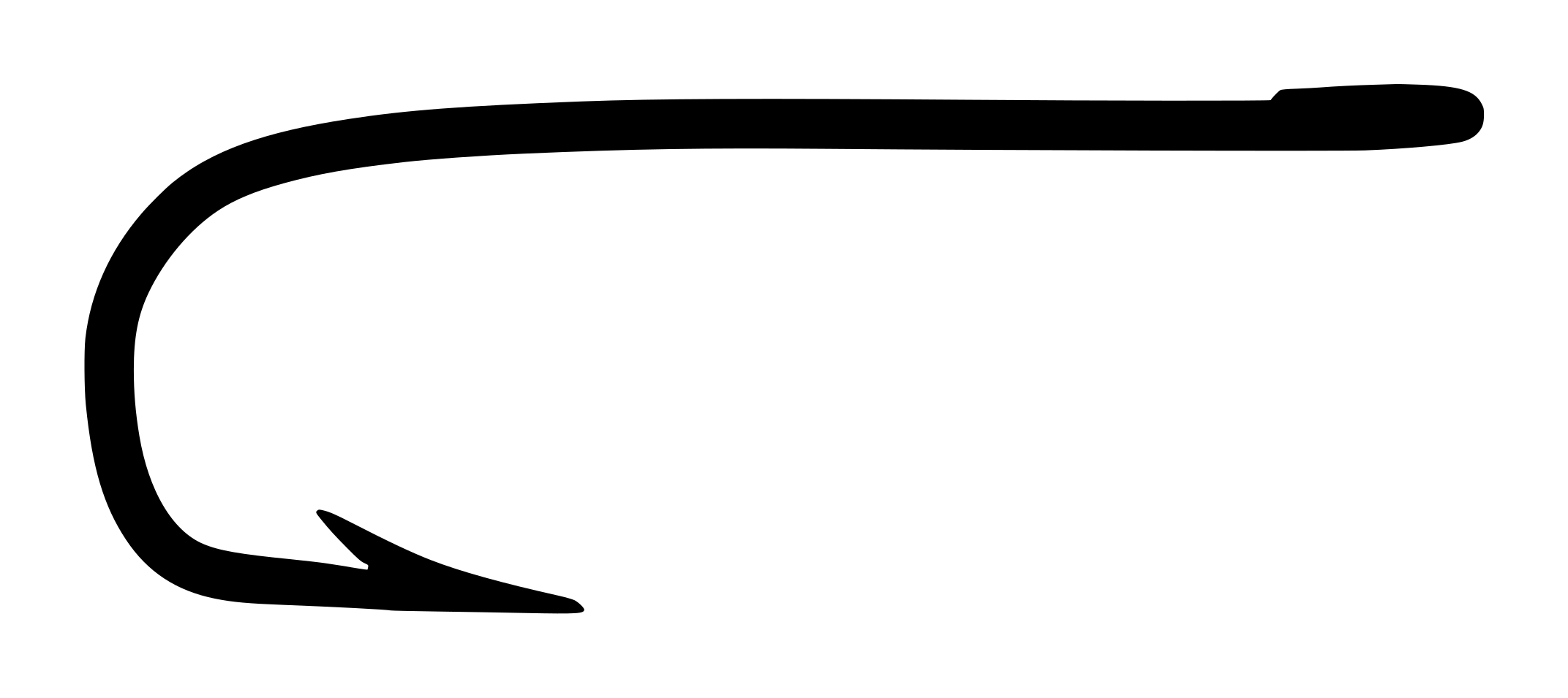
The Mustad 3349 is a classic Sneck-bend salmon and sea-trout hook manufactured by O. Mustad & Sön in Gjøvik, Norway, distributed circa 1940–1955. This particular specimen represents a transitional period in Mustad’s branding, housed in the manufacturer’s distinctive lime-green card packaging with black letterpress printing. The 100-hook card showcases sizes ranging from No. 2 (largest) to No. 14 (smallest), all mounted on red thread for display and retention.
The hook features a turned-down tapered eye—characteristic of Mustad’s early sneck designs—and a moderately heavy wire gauge suitable for large fly dressing. The sneck bend geometry, with its slight offset and rounded bottom, provides the superior hook-setting leverage that made this pattern favored for salmon fishing in Scottish and Scandinavian traditions. The 2x extra-long shank allows accommodation of bulky dressing materials and secures thread wraps in heavier water conditions.
Finish identification is confirmed: the warm, brown-toned bronzed coating visible on the specimen matches the ‘Rustproof’ designation printed on the card label, indicating Mustad’s proprietary rust-resistance treatment. The absence of a barcode and the period-correct styling of the packaging typography, border design, and letterpress execution place this card firmly in the 1940–1955 production window. Complete cards in original condition are uncommon and valued by both fly-tying historians and functional salmon fly users.
Collectability is moderate (4.5/10): the combination of pre-1950s manufacture, original lime-green branding, and intact hook count creates appeal, but Mustad’s industrial production volume ensures steady availability at modest price points. Condition of the card—particularly color vibrancy and completeness—is the primary value driver. This example represents a valuable reference specimen for collectors documenting Mustad’s historical product line and the evolution of Scandinavian salmon-fly hardware.
Front face of the Mustad 3349 Sneck Hook card displaying six sizes (2–14) on bright lime-green card stock with 1/10-inch measurement grid overlay. Hooks secured with red thread; bronzed finish clearly visible under direct light.
Photographic record
3 cataloged imagesSelect any record to load it above.
3 images shown
Mustad 3349 Sneck Six-Size Range on Sales CardFront face of the Mustad 3349 Sneck Hook card displaying six sizes (2–14) on bright lime-green card stock with 1/10-inch measurement grid overlay. Hooks secured with red thread; bronzed finish clearly visible under direct light.Open originalMustad 3349 Package Label DetailReverse label of the Mustad 3349 card showing complete manufacturing and product information in letterpress black ink on lime-green card stock. Decorative border frame visible; text includes manufacturer location (Oslo, Norway), model number, and key specifications.Open originalMustad 3349 Complete Sales Card Orange VariantFull-page view of Mustad 3349 sales card in orange card stock, showing manufacturer header, seven hook sizes (2–14) on 1/10-inch measurement grid, and embedded green label with product specifications in lower right corner.Open original
Technical profile
Mustad-Sneck 3349 — T.d. tapered eye, rustproof, 2 extra long shank, sizes 2–14
Eye
Tapered Eye, Turned DownTurned-down tapered eye construction, characteristic of early Mustad sneck designs. Eye alignment is clean and slightly downward-angled. P
Wire
Heavy (1X Heavy), Round, Est. ~0.065"-0.075" (~1.65-1.90 mm)
Shank
2X Long — Plain
Bend
Sneck, Standard gapClassic Sneck bend with rounded bottom and slight offset characteristic. Wire set is clean and symmetrical. P
Point
Superior (near-straight inner taper)
Finish
Bronzed — Confirmed (stated on packaging)Warm brown bronzed tone confirmed on original package labeling. Specimen exhibits consistent bronze coloring throughout. VP
The Mustad 3349 exemplifies industrial hook manufacturing principles developed in the 1930s–1940s. The superior-point geometry—near-straight inner taper with minimal concavity—prioritizes penetration over edge retention, a design choice suited to large salmon flies where powerful casts on heavy rods demand reliable hook-set performance. The moderately heavy round-wire construction distributes stress evenly along the shank, reducing the risk of deformation under the high loads encountered in salmon fishing.
The sneck bend’s offset geometry creates a slight inward hook alignment, enhancing the mechanical advantage during the hook-set moment. Unlike the more extreme offset of the Kirby or the rounded symmetry of the Sproat, the sneck presents a balanced compromise: sufficient offset for improved leverage without creating stress concentration that weakens the wire at the bend apex. The rounded bottom of the bend distributes load across a larger surface area, contributing to longevity during extended use.
The turned-down tapered eye serves a functional purpose beyond aesthetics: the taper gradually reduces the wire diameter from shank to loop, minimizing bulk at the tying platform while maintaining mechanical strength. This construction predates the modern ball eye and suits large dressing materials where thread wraps must accommodate substantial hair or fur bulk. The downward angle facilitates tippet attachment in traditional fishing methods where the line was often knotted directly to the hook eye without intermediate knots.
The ‘Rustproof’ designation reflects Mustad’s proprietary surface treatment, likely a phosphate or chromate conversion coating similar to early modern corrosion-resistance methods. This treatment extended hook life in freshwater and mildly saline environments, addressing a significant limitation of uncoated steel in estuarine salmon habitat.
Size & scale lab
Selected size
(unspecified)
Physical specimen
Overall Length
75.5 mm
Shank Length
50 mm
Gap Width
19 mm
Bend Depth
15.5 mm
Shank-to-Gap Ratio
~2.6-2.8 : 1
Confidence
P
Physical specimen
Grid-derived from photograph (1/10" grid)
Own this hook? Help us measure it.
We don't have measured sizes for this hook yet. Own one? Submit calipered measurements and we'll review and add them. Thank you!
The Mustad Sneck (model 3349 and related variants) represents the company’s interpretation of the classic Scottish sneck-bend design, adapted for both commercial salmon fishing and recreational fly tying. The sneck bend—characterized by a slight lateral offset and rounded bottom—originated in Scottish tradition and gained prominence through 19th-century Redditch manufacturers. Mustad’s adoption of the sneck design reflects the company’s strategy of offering regional variants to serve diverse fishing markets.
The model 3349 specifically is identified as ‘Mustad-Sneck Hooks’ with ‘T.d. tapered eye Rustproof 2 extra long shank,’ indicating a hook optimized for large salmon dressings. The ‘2 extra long shank’ designation places this among Mustad’s extended-shank offerings, primarily for streamer and large wet-fly applications. The tapered-eye construction—a deliberate choice in an era when ball eyes were becoming standard—suggests intentional retention of traditional mechanics, likely in response to demand from Atlantic salmon fly tyers in Scotland and Norway.
Companion variants included the model 3348 (1x long shank) and later-production models such as 3366 (tinned finish). The 3349 remained in Mustad’s catalog through at least the 1960s, though production volumes likely declined after the 1950s as ball-eye designs and modern braided tippets gained dominance. The lime-green card format shown here is specific to the 1940s–1955 era; subsequent cards employed different color schemes and typography. The hook itself underwent no significant geometric changes during this period, making the 3349 a stable design across its production lifespan.
Era and Packaging Dating
No barcode present — strong indicator of pre-1974 manufacture. Lime-green card stock with ornamental border is characteristic of Mustad's 1940s-1950s packaging aesthetic. Letterpress printing method (sharp, raised impression) typical of this era. Designation 'T.d. tapered eye Rustproof' and style of 'OSLO - NORWAY' placement consistent with post-1935, pre-1960 Mustad catalogs. Establ. date shown as 1832 on alternate card image, standard historical reference added to packaging c. 1940s. No price marking visible, suggesting institutional or bulk sales stock rather than retail card.
The Sneck's Scandinavian Legacy
The Mustad sneck became legendary in Scottish salmon angling through its use in patterns like the 'Cascapedia,' a Matapédia River (Quebec) variant that gained widespread adoption in the 1950s. Norwegian guides favored the sneck for its reliability in high-gradient river systems where precise hook placement and resistance to deformation determined success on sea-run brown trout. The model 3349's 2x long shank was particularly prized by spey casters who used wind-casting techniques to achieve longer reaches in wide rivers—a tradition that persists in modern spey-fly culture.
Design lineage and influence
The sneck bend traces its ancestry to 19th-century Scottish fly-tying tradition, where regional variations in bend geometry reflected local river conditions and fish behavior. British manufacturers—particularly Redditch makers like Partridge and Allcock—refined the sneck into a stable pattern by the 1890s. Mustad’s adoption of the sneck reflects the company’s deliberate strategy of manufacturing regional variants for specific markets, rather than imposing a single global standard.
The 3349 stands in a lineage with earlier Mustad sneck patterns and coexists with contemporary competitors from Partridge (e.g., the CS10/1 sneck), Allcock (similar regional variants), and American manufacturers (less common in sneck format). The tapered-eye construction links the 3349 to earlier Mustad designs and demonstrates resistance to modernization toward ball eyes—a choice that suggests strong demand from traditional salmon fly tyers.
Downstream influence is visible in modern sneck reproductions by Tiemco (TMC 7989) and continued Mustad production (model 3666 and variants). The sneck bend itself experienced a renaissance in the 21st century, driven by renewed interest in spey casting and Atlantic salmon fly restoration. Contemporary tyers often seek vintage Mustad 3349 cards specifically for their authentic bend geometry and historical aesthetic value.
Best matchRelated by Attribute
Computed automatically from catalog data — updated as new hooks are added.
Matches: Bend, Shank, Gap, Eye, Eye Orient. +4 moreDiffers: Wire: Heavy (1X Heavy) vs Fine (1X Fine); Point: Superior vs Hollow Point; Finish: Bronzed vs Bright / Uncoated Steel +2 more
Matches: Shank, Wire, Gap, Eye Orient., Finish +4 moreDiffers: Bend: Sneck vs Limerick; Eye: Tapered Eye vs Ball Eye; Point: Superior vs Hollow Point +3 more
Matches: Bend, Wire, Gap, Point, Finish +4 moreDiffers: Shank: 2X Long vs Standard; Eye: Tapered Eye vs Ball Eye; Eye Orient.: Turned Down vs Straight / Inline +3 more
Salmon and sea-trout fly fishing in Atlantic and European contexts. The sneck bend and extended shank are specifically adapted for large wet-fly dressing in traditional Scottish and Scandinavian patterns. The hook accommodates bulky hackle, hair wings, and body materials, making it the preferred platform for classic salmon fly designs of the mid-20th century.
Secondary Applications
Large wet flies, salmon spey patterns, sea-run brown trout
Classic Fly Patterns
Not typically associated with specific named patterns; used as a general platform for large salmon dressings
Modern Equivalents
Hook
Match Quality
Notes
Tiemco TMC 7989
Very Good
Modern sneck bend design with 2x long shank; similar proportions and rustproof coating
Mustad 3665 (modern)
Good
Contemporary Mustad sneck pattern; different finish and eye type
Collector notes
Rated 4.5/10 — moderately uncommon despite Mustad's industrial production. The bright lime-green packaging and pre-1950s manufacture drive collector interest. Larger sizes (2–6) and size 14 are scarcer than middle range. Complete cards in original packaging command a premium; loose hooks represent minimal collector value.
Reference value
$12 – $35 USD estimate
Packaging condition
Very Good — light wear, fully legibleRecorded specimen
Packaging format
MUSTAD-CARD-GREEN-EARLYCatalog code
Positive Factors: Early Mustad production (pre-1955) with distinctive lime-green card branding represents a transitional period in Mustad’s packaging aesthetics. Complete 100-hook card is substantial and rare — most surviving examples are partial or loose. Sneck bend has genuine utility interest among Atlantic salmon and spey fly tyers, creating secondary demand. Rustproof designation appeals to both collectors and functional users. Original packaging condition—particularly bright color retention—is highly desirable.
Limiting Factors: Mustad’s massive production volumes ensure steady supply of partial cards and individual hooks. Industrial manufacturing standards lack the craft appeal of Redditch or earlier British makers. Size 14 (smallest) and size 2 (largest) are scarce, but intermediate sizes 6–10 remain common. Bronzed finish is robust but less aesthetically distinctive than japanned or polished alternatives. Modern equivalents readily available diminish historical urgency for functional users.
Most Desirable Variants: Sealed or near-sealed complete 100-hook cards in excellent color condition. Size 14 individual hooks or partial cards. Cards with original tissue wrapping or envelope. Size runs 2–4 are more desirable than 8–10. Early printing variants with different address or logo styling.
Condition Impact: Missing hooks reduce value by 10–15% per hook lost. Fading or darkening of card color drops collectability rating by 0.5–1.0 points. Worn or dog-eared edges reduce premium by 15–25%. Excellent original condition can command 40–60% premium over typical worn cards.
Packaging
Bright lime-green card stock with decorative ornamental border frame. Black letterpress printing. Header reads 'O. MUSTAD & SÖN MANUFACTURERS OSLO - NORWAY Qual. 3349 Superior Mustad-Sneck Hooks T.d. tapered eye Rustproof 2 extra long shank'. Layout shows size indicators (2, 4, 6, 8, 10, 12, 14) with hooks mounted on red-thread shanks. Card exhibits light age toning and minor edge wear. No barcode present.
Market Value Notes
Low ($12): Good condition, opened card with 80–95% hook count intact, moderate card wear
High ($35): Excellent condition, sealed or near-sealed card, complete 100-hook count, bright color retention
Premium factors: Original tissue or envelope wrapping, vibrant lime-green color, all hooks present, absence of barcode (pre-1974 indicator), size 14 or size 2 cards
Platforms: eBay (UK/US auctions), vintage tackle dealers, fishing collectible specialists
Confidence: E estimated — based on comparable early Mustad cards and sneck bend collector demand; limited specific transaction data for this exact model
Where to Find
eBay auctions (search 'Mustad 3349' or 'vintage Mustad sneck card'). UK-based vintage tackle dealers in Redditch region occasionally stock examples. Fishing collectible fairs in Scotland and Scandinavia. Specialist Mustad collector networks and online forums. Less common in North American markets due to regional Atlantic salmon fishing prevalence in Europe.
Collector's Identification Tips
Identify by bright lime-green card stock with ornamental border, model number 3349 clearly printed, and ‘T.d. tapered eye Rustproof 2 extra long shank’ descriptor. Presence of six size runs (2 through 14) and 100-hook quantity marking. Size 14 is the smallest and rarest on this card; sizes 8-10 most commonly encountered. No modern Mustad marking or barcode.
Preservation
Storage and Preservation
Store this card in a cool, dry environment away from direct sunlight. The lime-green card stock is vulnerable to UV fading; prolonged exposure will dull the vibrant color that drives collector value. Ideal storage temperature is 55–70°F (13–21°C) with relative humidity 40–55%. Higher humidity may cause the card to warp or encourage patina development on the bronze finish.
Keep the card horizontal or vertical (not folded) in archival-quality card sleeves or acid-free tissue. Avoid contact with cardboard boxes, which accelerate deterioration through off-gassing. The red thread used to secure hooks may shed dye over time; inspect periodically and consider replacing with clean linen thread if discoloration appears. Do not attempt to clean the card with water or chemicals; light dry dusting is acceptable only if the card is protected in a sleeve.
Original packaging integrity is critical to value: if the card is still sealed or housed in original tissue, preserve that state. Do not remove hooks for use without accepting a substantial collectability penalty. The bronzed finish on individual hooks is durable; minor patina development is normal and historically appropriate. If hooks show active rust, isolate them immediately and consult a conservator before intervention. Store away from ferrous metals and electrical appliances that may generate magnetic fields.
Primary Source
Packaging Label Analysis
Source: Original label text on Mustad 3349 sales card, c. 1940–1955
The label text provides multiple layers of manufacturing and historical information. The primary identifier reads: ‘O. MUSTAD & SÖN MANUFACTURERS OSLO – NORWAY Qual. 3349 Superior Mustad-Sneck Hooks T.d. tapered eye Rustproof 2 extra long shank Made in Norway.’ This phrasing reveals several intentional design choices.
The abbreviation ‘T.d.’ stands for ‘turned-down,’ a technical descriptor for eye orientation—specific enough to appeal to knowledgeable salmon fly tyers while remaining accessible to retail customers. ‘Rustproof’ is a proprietary claim, not a generic descriptor; it signals Mustad’s investment in surface treatment technology and addresses the practical concern of hook corrosion in freshwater salmon habitat (where tannins and acidity accelerate rust). The phrase ‘Made in Norway’ fulfills market expectations and reinforces Mustad’s Scandinavian heritage as a differentiator from British and American competition.
The designation ‘2 extra long shank’ uses ordinal language (‘2’) rather than a proportional descriptor (‘2x’), suggesting translation from Norwegian or deliberate simplification for non-English-speaking markets. The green card stock itself—bright lime-green rather than neutral kraft or white—is an anomaly in hook packaging. This color choice likely reflects a distribution or retail category distinction, possibly indicating bulk sales or institutional channels (e.g., fishing clubs, guide services) rather than individual tackle-shop retail. The letterpress printing exhibits clean impressions with no inkjet patterns, confirming pre-offset mechanical printing technology typical of 1940s–early-1950s production.
Marking Analysis
Handwritten Markings
The size indicators (2, 4, 6, 8, 10, 12, 14) are printed in purple ink using a sans-serif typeface characteristic of mid-20th-century mechanical type. No handwritten annotations, pricing marks, or personal notations are visible on this specimen. The absence of handwritten price information is notable: many retail cards from this era bear pen-and-ink pricing (in shillings and pence for British cards, or dollars for American stock). The lack of pricing suggests this card was either institutional stock (untouched by retail markup procedures) or archived before price-marking conventions became standard.
Red thread securing the hooks is factory-original; no evidence of re-threading or repair is visible. The thread color and knot patterns are consistent across all size runs, indicating factory assembly rather than hand-preparation for sale.
Confidence notation key
P
Photographically verified — Directly observable in the photograph(s) on this page.
V
Verified by documentation — Confirmed by manufacturer catalog, spec sheet, or published reference.
I
Inferred — A logical deduction from observable or documented evidence, not directly stated.
E
Estimated — An approximation based on visual comparison, proportional analysis, or limited data.
S
Speculative — A reasoned hypothesis that cannot be confirmed from available evidence.
Unnotated claims are the compiler’s synthesis; see Sources. All photographs on garrenwood.com are taken on a measurement grid where each square equals 1/10 inch (0.1″ / 2.54 mm).