Mustad model 7876 O’Shaughnessy, manufactured in Oslo, Norway, circa 1950-1970. A medium-sized bait hook built on the classic O’Shaughnessy bend — a deep, angular design originating in nineteenth-century English tackle work. The hook features a straight ball eye, forged extra-heavy wire, and a tinned finish (with cadmium plating, per the original specification). The wide gap and robust construction made it a standard choice for saltwater bait fishing, pike fishing, and charter-boat work throughout northern Europe.
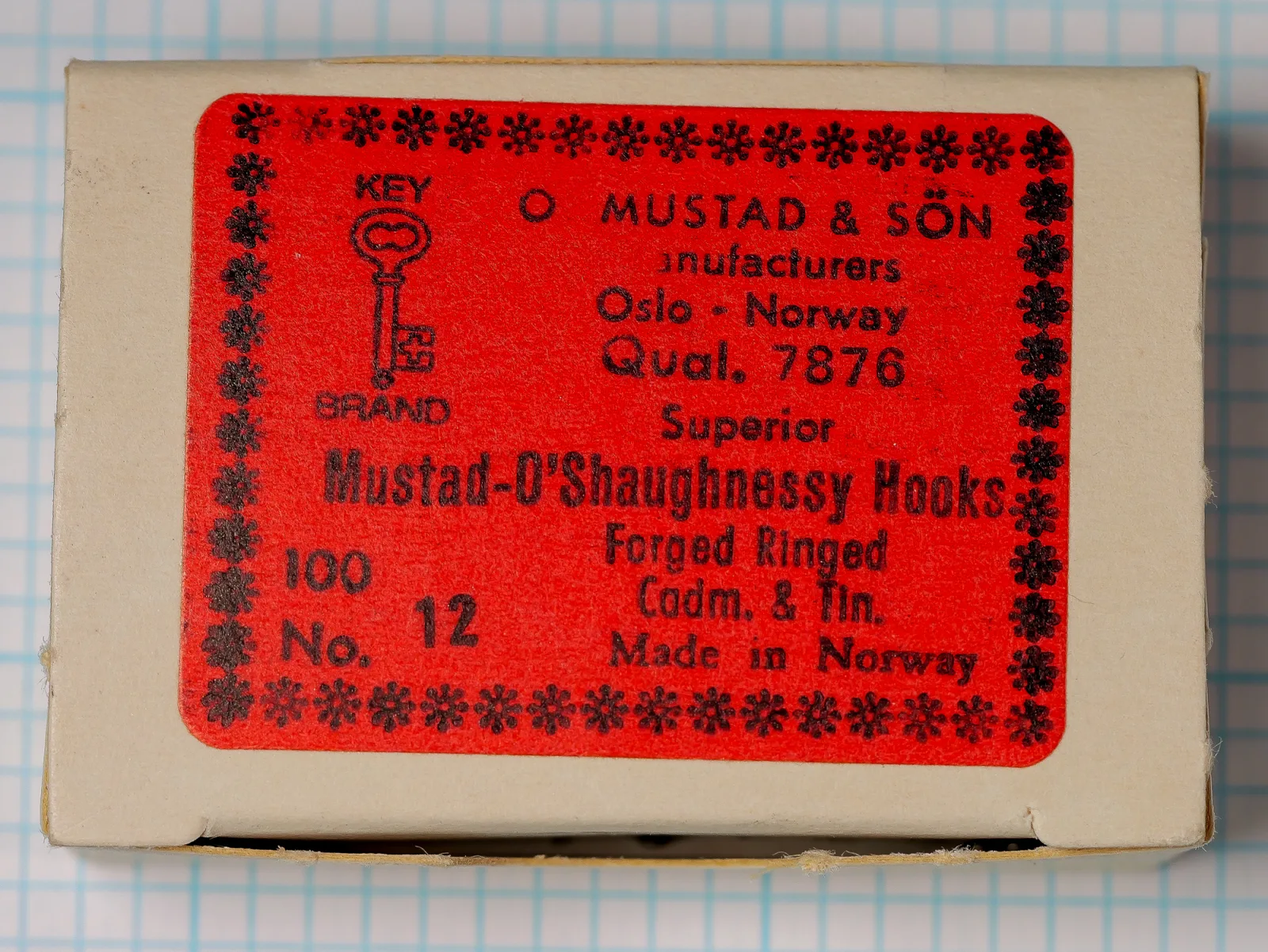
The specimen shown is housed in its original rigid manufacturer box with a bright red label. The box format is rarer than carded examples and represents Mustad’s higher-end packaging standard. The label explicitly identifies the hook as “Superior” — a product line designation, not a quality descriptor — and notes the “Forged Ringed” construction and cadmium-tin dual finish. No barcode or modern UPC marking is present, confirming pre-1974 production.
This hook holds modest appeal to collectors of mid-century Scandinavian fishing tackle and industrial metalwork. Its primary significance lies in its packaging integrity and its documentation of Mustad’s manufacturing standards during the post-war expansion period. The cadmium-plated specification is now historically noteworthy as a manufacturing practice discontinued due to environmental and health concerns.
Original Mustad manufacturer box with printed red label, showing model 7876, Superior O'Shaughnessy designation, forged construction, and cadmium-tin finish specification.
Photographic record
2 cataloged imagesSelect any record to load it above.
2 images shown
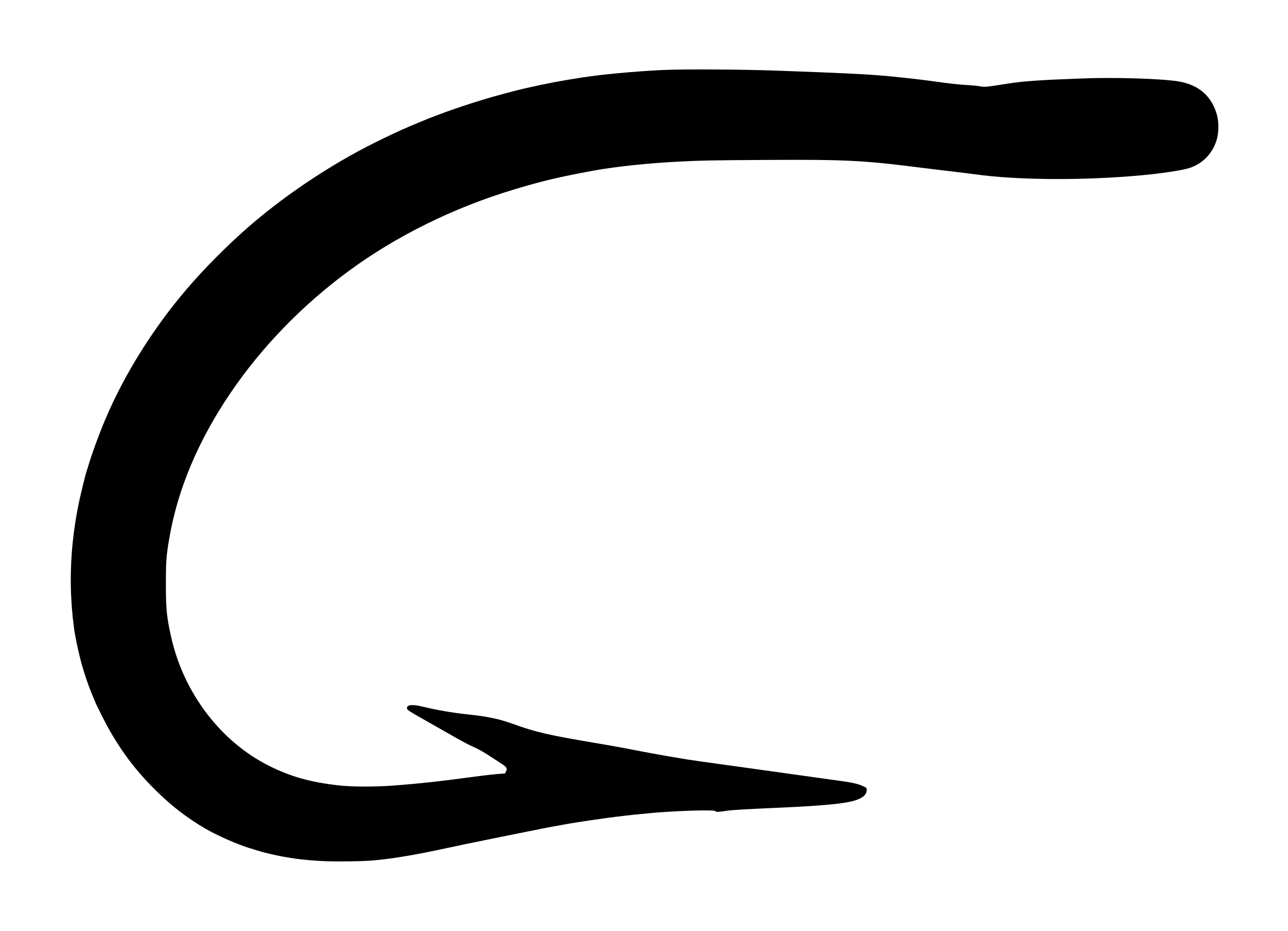
Mustad 7876 O’Shaughnessy Original Box LabelOriginal Mustad manufacturer box with printed red label, showing model 7876, Superior O'Shaughnessy designation, forged construction, and cadmium-tin finish specification.Open originalMustad 7876 Size 12 Side ProfileSide-profile view of a single Mustad 7876 O'Shaughnessy hook, size 12, showing the distinctive deep angular bend and straight ball eye on measurement grid for scale.Open original
Technical profile
Straight Ball Eye | O'Shaughnessy | Short (1X–2X Short) | Extra-Heavy (2X+) Wire | Superior Point | Tinned
Eye
Ball Eye, Straight / Inline
Wire
Extra-Heavy (2X+), Forged
Shank
Short (1X–2X Short) — Plain
Bend
O'Shaughnessy, Wide gap
Point
Superior (near-straight inner taper)
Finish
Tinned — Confirmed (stated on packaging)Specimen hooks appear bright tinned with no corrosion. Box exterior shows light overall toning and minor edge wear typical of age. Red label on lid retains strong color with minor surface checking. No significant damage to structural integrity.
The Superior Point geometry — a near-straight inner taper with a flat inside face — was engineered to produce a cutting edge without the blade-like acuity of a hollow point. This design balance reduced the risk of point deformation under the strike forces typical of large fish and heavy baits. The forged wire profile (flattened/oval cross-section) adds tensile strength without proportional weight gain, critical for a size 12 bait hook expected to land specimens weighing pounds to tens of pounds. The extra-heavy wire gauge (2X+) and wide gap provide ample holding power and gap clearance for chunked bait, cut herring, and live minnow presentations common to saltwater and pike fishing of the era.
The Superior O’Shaughnessy (model 7876) represents Mustad’s mid-century entry in the commercial and bait-fishing hook market. The O’Shaughnessy bend — a deep, wide, angular design — originated in nineteenth-century English tackle manufacture and was adopted by major industrial makers for its strength and wire efficiency. Mustad’s Superior line positioned this hook for salt-water fishing, pike, and large bait applications. The forged construction and extra-heavy wire gauge reflect the strength requirements of offshore and heavy-duty freshwater use. The straight ball eye and tinned finish made it suitable for rigging on leaders and wire snells. This model remained in production through the 1960s-1970s as competition from Japanese and Scandinavian makers intensified. The discontinuation of cadmium plating in the 1970s-1980s marked the end of the original specification.
Era and Packaging Dating
Packaging exhibits no barcode or EAN — strong indicator of pre-1974 production V. Print style consistent with mid-century offset lithography. Red label with black text represents mid-twentieth century Mustad house style. "Cadm. & Tin." notation refers to cadmium-plated tinned finish, a standard specification that suggests 1950s-1960s production before environmental regulations curtailed cadmium use. Box construction and kraft paper stock consistent with 1950-1970 era. No modern UPC coding or safety information required by later regulations. The "Superior" line designation and "Forged Ringed" specification match Mustad's mid-century product naming conventions documented in surviving catalogs.
The Cadmium Legacy
The term "cadmium-plated tinned" refers to a now-discontinued dual-finish process where cadmium was electroplated first, then a final bright tin layer was applied. Cadmium provided superior corrosion resistance in salt water — superior to tin alone — but was banned in the 1980s due to toxicity. Anglers of the 1950s-1970s prized these hooks specifically for their staying power on saltwater boats, unaware of the environmental cost. A hook marked "Cadm. & Tin." is now a frozen relic of industrial chemistry and manufacturing philosophy predating modern environmental regulation.
Design lineage and influence
Best matchRelated by Attribute
Computed automatically from catalog data — updated as new hooks are added.
Matches: Bend, Wire, Gap, Point, Forging +4 moreDiffers: Shank: Short (1X–2X Short) vs Standard; Eye: Ball Eye vs Tapered Eye; Eye Orient.: Straight / Inline vs Turned Down
Matches: Bend, Wire, Eye, Eye Orient., Offset +3 moreDiffers: Shank: Short (1X–2X Short) vs Standard; Gap: Wide vs Standard; Point: Superior vs Hollow Point +2 more
Matches: Bend, Wire, Gap, Eye Orient., Finish +5 moreDiffers: Shank: Short (1X–2X Short) vs Standard; Eye: Ball Eye vs Needle Eye; Point: Superior vs Other +1 more
Saltwater bait fishing and pike/sea trout fishing. The wide gap and heavy wire accommodated large cut-bait presentations (mackerel, herring chunks, squid), live baitfish, and eels typical of coastal and estuarine fishing traditions. The tinned finish resisted salt-water corrosion, and the straight eye allowed rigging on wire or monofilament leaders. Primarily used in European and North Atlantic contexts where charter boats and shore fishing required durable, heavily built hooks.
Secondary Applications
Trolling for pike in Scandinavian freshwater systems. Heavy-duty streamer fishing where large profiles and substantial hook mass were desired.
Collector notes
Rated 3.5/10 — a common industrial production hook from Mustad's high-volume era, with modest appeal to bait-fishing history specialists. Original box packaging adds a premium over loose hooks, but the model itself remains widely available in the vintage market. Primary value stems from packaging condition and complete hook count rather than rarity.
Reference value
$8 – $18 USD estimate
Packaging condition
Very Good — light wear, fully legibleRecorded specimen
Packaging format
GW-M-BOX-01Catalog code
Mustad 7876 O’Shaughnessy hooks appeal primarily to collectors of mid-century Scandinavian tackle and vintage bait-fishing equipment. The box format is more desirable than loose or carded examples and commands a modest premium. Completeness of the original 100-hook count significantly affects value — missing hooks deduct 20-30% from high-end estimates. The red label in strong condition is the key visual factor; fading or damage to the label reduces appeal. Size 12 is standard for the O’Shaughnessy across most manufacturers, making it neither scarce nor particularly sought. The tinned finish and cadmium plating notation may interest industrial history researchers but add minimal collector premium. Carded versions of this hook (if they exist in collections) would be worth less than a boxed example.
Packaging
Rigid manufacturer box with separate lid. Exterior faces cream-colored kraft board with minor age toning. Interior lid features a bright red printed label (offset lithography) with black text and decorative black floral corner borders. Text reads: KEY logo mark, "MUSTAD & SON / manufacturers / Oslo - Norway / Qual. 7876 / Superior / Mustad-O'Shaughnessy Hooks / Forged Ringed / Cadm. & Tin. / Made in Norway". Quantity marking "100 / No. 12". Label exhibits light creasing and surface wear consistent with storage. No barcode or modern UPC.
Market Value Notes
Low ($8): Good condition — box present, label readable, 80-95 hooks remaining, minor box wear.
High ($18): Excellent condition — box intact, label in strong color, complete 100-hook count, minimal wear.
Premium factors: Complete hook count, strong label color, structural box integrity, no missing or damaged hooks.
Platforms: eBay (primarily European listings), UK tackle dealers, Scandinavian vintage markets.
Confidence: E estimated — limited specific sold data for this model; range reflects general Mustad boxed bait-hook pricing patterns observed across eBay UK and dealer inventory.
Where to Find
Primarily eBay UK and continental European listings (eBay.de, eBay.fr). Vintage tackle dealers in Scandinavia and the UK. General fishing tackle fairs in England and Norway occasionally carry boxed Mustad stock. Rarely appears in US markets due to regional supply and export history.
Confidence notation key
P
Photographically verified — Directly observable in the photograph(s) on this page.
V
Verified by documentation — Confirmed by manufacturer catalog, spec sheet, or published reference.
I
Inferred — A logical deduction from observable or documented evidence, not directly stated.
E
Estimated — An approximation based on visual comparison, proportional analysis, or limited data.
S
Speculative — A reasoned hypothesis that cannot be confirmed from available evidence.
Unnotated claims are the compiler’s synthesis; see Sources. All photographs on garrenwood.com are taken on a measurement grid where each square equals 1/10 inch (0.1″ / 2.54 mm).