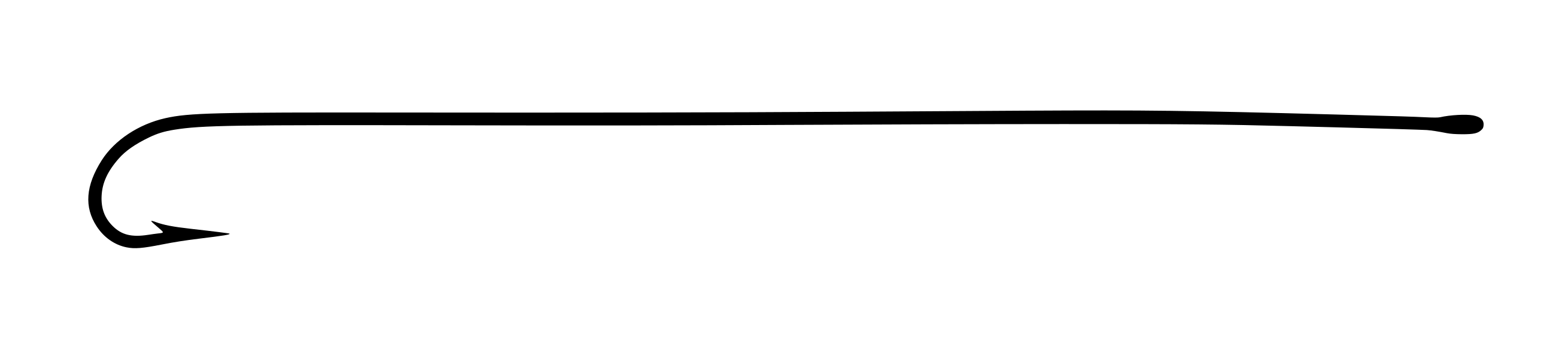
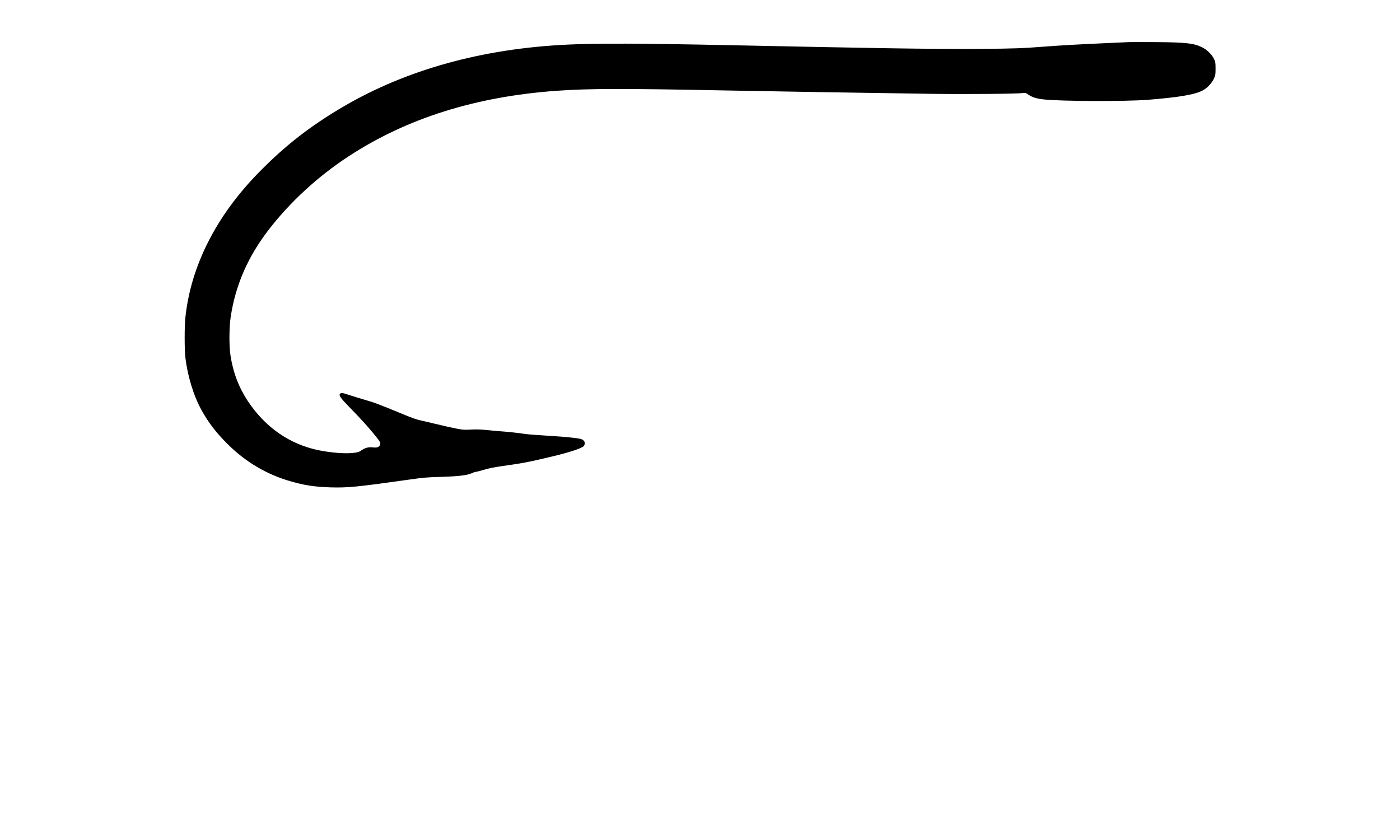
The 7825 T is a mid-century specialty hook manufactured by O. Mustad & Søn of Oslo, Norway, designed specifically as a replacement and modification hook for spoons, spinners, and other lure hardware. The defining feature is its double-hook configuration with an open (non-welded) ringed eye, allowing the angler to slip the hook directly onto a lure eyelet or wire without requiring a split ring. This innovative design became popular among post-war American and European anglers customizing vintage tackle.
This specimen, dated c. 1950-1965 based on Oslo address designation and cardstock typography, features a tinned (T) finish—the period standard for saltwater corrosion resistance and bright freshwater presentation. The card label exemplifies Mustad’s formalized eight-line labeling system, with ‘Superior’ designating the product line (not a point style descriptor), and ‘1/2 Gr.’ indicating a half-gross (50-hook) quantity. The 7825 remains in continuous production today, though modern versions now use nickel plating rather than tinning.
The hook represents a relatively common mid-century utility pattern with modest collector interest. While the vintage Oslo-era packaging adds nostalgic value, the hook itself is not scarce. The primary appeal to collectors lies in the packaging authenticity, the transition from tinning to nickel, and the hook’s connection to the golden age of lure modification DIY culture.
Front face of the Mustad 7825 T original sales card, featuring the iconic Key Brand skeleton key logo and the formalized eight-line label in letterpress typography. The 'OSLO - NORWAY' designation dates this card to post-1925 manufacture, with cardstock aging and purple inventory marking confirming mid-century circulation.
Photographic record
4 cataloged imagesSelect any record to load it above.
4 images shown
Mustad 7825 T Size 8 Original Sales Card LabelFront face of the Mustad 7825 T original sales card, featuring the iconic Key Brand skeleton key logo and the formalized eight-line label in letterpress typography. The 'OSLO - NORWAY' designation dates this card to post-1925 manufacture, with cardstock aging and purple inventory marking confirming mid-century circulation.Open originalMustad 7825 T Size 8 Hook Point Detail (Hollow Profile)Magnified view of the right-side hook point showing the distinctive hollow point geometry with its concave inner taper and sharp tip. The barb is short and close-cut, typical of mid-century Mustad production. Tinned finish is bright and uniform on the specimen.Open originalMustad 7825 T Size 8 Complete Hook ProfileSide profile of the complete Mustad 7825 T double loose hook, showing the distinctive double-point geometry with symmetrical round bend and open (non-welded) straight ringed eye. Both points are aligned parallel to the central shank axis.Open originalMustad 7825 T Size 8 Multiple Hook SpecimensArray of three Mustad 7825 T double loose hooks showing manufacturing consistency. All specimens display identical double-point geometry, parallel alignment, and tinned surface finish. The ringed eye is clean and uniform across all examples, and both points are sharp and undamaged.Open original
Technical profile
Straight Ringed Eye | Round Double Bend | Standard Shank | Standard Wire | Superior Point | Tinned Finish
Eye
Ball Eye, Straight / InlineStraight ringed eye formed by bending terminal wire back to the main shank. P Eye is clean and uniform, with proper clearance between loop and shank for easy line attachment. The ring is approximately 0.08"-0.10" (2-2.5 mm) in internal diameter, typical for No. 8 sizing.
Wire
Standard, Round, Est. Not available
Shank
Standard — Plain
Bend
Round / Kendal, Narrow gapPerfect round bend with symmetrical double-hook geometry. P Both points are aligned parallel and equidistant from the central shank axis. Bend is moderately deep for its size category, creating a narrow gap optimized for securing soft baits and lure positioning rather than penetration depth. No lateral offset or kink visible.
Point
Superior (near-straight inner taper)P Short, close-cut barbs on both points, typical of mid-century Mustad production. Barb placement is approximately 0.03" (0.76 mm) above the point tip. Barbs are angled slightly inward to improve holding power on soft.
Finish
Tinned — Confirmed (stated on packaging)P Tinned finish is confirmed by the silvery, slightly textured surface characteristic of electroplated tin coating. Specimen shows excellent tin integrity with minimal oxidation or patina. Finish is warm to cool neutral in tone, typical of period tinning processes. No flaking or peeling visible.
Specimen shows bright, well-preserved tin finish with no rust or corrosion. Both hook points are sharp and undamaged. Card is in good condition with moderate age toning, scattered light staining, and partial loss to bottom edge margin. Purple ink marking on 'No. 8' is crisp and legible. No missing hooks from the card.
The superior point geometry visible on this hook represents Mustad’s standard penetration design for soft-tissue presentations. The point features a straight line —a knife-edge profile that achieves rapid penetration with minimal applied force, essential for lures where bait material or soft plastic bodies might restrict the angler’s ability to drive the hook home with a firm hookset. The symmetrical double-hook configuration distributes the stress of a fighting fish across both points, reducing the likelihood of a single point bending or rolling under high load. The open shank (non-welded eye) requires no fasteners or split rings, reducing the mechanical complexity and allowing direct crimp or wrap attachment to lure wire or eyelets. The tinning process involves electroplating the steel hook in a molten tin bath, creating a bright silver coating approximately 0.001″-0.002″ (0.025-0.05 mm) thick. This coating is highly resistant to saltwater corrosion while maintaining excellent visibility and reflectivity in the water column.
Size & scale lab
Selected size
8
Physical specimen
Overall Length
16.3 mmP
Shank Length
11 mm
Gap Width
4.5 mm
Bend Depth
6.5 mm
Wire Diameter
1.25 mm
Weight
Not available
Shank-to-Gap Ratio
~2.7-2.9 : 1
Confidence
P
Physical specimen
Physical measurement with calipers
Cumulative Records
This hook represents the most common double-hook pattern encountered in mid-century Mustad sales cards within the garrenwood.com catalog. The tinned finish variant is more frequently preserved in original packaging than later nickel-plated versions, making it a useful baseline reference for dating Oslo-era Mustad specialty patterns.
Own this hook? Help us measure it.
We don't have measured sizes for this hook yet. Own one? Submit calipered measurements and we'll review and add them. Thank you!
The Mustad 7825 T is a ‘Double Loose Hook’—a specialty pattern designed for spoon and spinner replacement, as well as general lure modification. Unlike conventional hooks designed for single-point penetration, the 7825 features two symmetrical points sharing a single shank, creating a double-hook configuration ideal for soft-bodied lures and terminal tackle rigging. The ‘Loose’ designation refers to the open shank (non-welded eye), allowing anglers to slip the hook directly onto a spoon eyelet or lure wire without requiring a split ring. This design became particularly popular in the post-World War II era when American and European anglers began customizing vintage hardware like Eppinger Dardevles and Swedish spinners. The 7825 remains in continuous production today under Mustad’s ‘Classic’ line, though modern versions typically feature nickel or black nickel finishes rather than the traditional tinned (T) coating. The model code structure (Qual. 7825 T) reflects Mustad’s mid-century quality/product numbering system, which was superseded by the alphanumeric ‘Signature Series’ nomenclature around 2001-2009.
Era and Packaging Dating
Card bears 'OSLO - NORWAY' designation (line 3 of label), which indicates post-1925 manufacture (Christiania was renamed Oslo on January 1, 1925). The typography, letterpress method, paper stock (cream with age patina), 1/2 Gr. (half-gross = 50 hooks) notation, and absence of barcode all place this firmly in mid-century production. The specific cardstock style and layout are consistent with Mustad's 1950s-1960s export packaging. Oslo address continued through the 1960s before modernization.
The Golden Age of DIY Spoon Modification
In the 1950s-1960s, the Mustad 7825 T became an essential tool in a grassroots American fishing subculture: the custom spoon modifiers. Anglers would purchase vintage Eppinger Dardevles or Swedish spinners at estate sales or tackle swaps, remove the factory treble hooks, and install a pair of 7825 T doubles mounted 'weedless' (points facing upward) to reduce snagging in heavy cover. Local tackle shops in the Midwest and Northeast kept 1/2 Gr. cards of 7825s in stock year-round, and legendary anglers like Charley Fox and other smallmouth specialists swore by the configuration for working dense weed beds. The 'loose' open-shank design meant a single pair of pliers—or sometimes just finger strength on lighter wire—was all that was needed to swap hooks on the water. This DIY tackle ethic predated modern aftermarket fishing by decades and created a cottage industry of hook customization that persisted well into the 1970s before declining as modern split rings and commercial treble replacements became cheaper and more convenient.
Design lineage and influence
The double loose-hook design emerged in the 1920s-1930s as lure customization became a standard angling practice. Mustad’s 7825 represents the refinement of this concept during the post-WWII boom when American tackle modification culture reached its peak. The open (non-welded) eye is a direct innovation allowing quick rigging without split rings—a significant advantage before modern stainless steel split rings became ubiquitous and affordable. The tinned coating became the industry standard for marine saltwater hooks following the development of electroplating technology in the early twentieth century, before nickel plating displaced it as the dominant finish in the 1970s-1980s. The geometry influenced later specialty double-hook designs from competitors like Owner (Japan) and Eagle Claw (USA), though Mustad’s 7825 remains the most historically documented example.
Best matchRelated by Attribute
Computed automatically from catalog data — updated as new hooks are added.
Matches: Wire, Gap, Eye, Eye Orient., Point +4 moreDiffers: Bend: Round / Kendal vs Carlisle; Shank: Standard vs Extra-Extra Long; Offset: Straight vs Offset / Kirbed +3 more
Matches: Wire, Gap, Eye, Eye Orient., Point +4 moreDiffers: Bend: Round / Kendal vs Sproat; Shank: Standard vs 3X Long; Forging: Round vs Forged +1 more
Matches: Shank, Eye, Eye Orient., Point, Forging +3 moreDiffers: Bend: Round / Kendal vs Sproat; Wire: Standard vs Heavy (1X Heavy); Gap: Narrow vs Standard +2 more
Matches: Shank, Wire, Eye, Eye Orient., Point +4 moreDiffers: Bend: Round / Kendal vs Sproat; Gap: Narrow vs Standard; Finish: Tinned vs Bronzed +4 more
The 7825 T is engineered as a replacement and modification hook for spoons, spinners, and metal lures. The double-hook configuration distributes stress across two symmetrical points, improving hookup ratios on soft-bodied or topwater presentations where a single treble hook might tear out. The open shank design allows direct rigging onto a lure eyelet, eliminating the need for a split ring and enabling the angler to customize the hook geometry to suit specific presentation angles. Historically, the 7825 was the go-to choice for 1950s DIY anglers upgrading or ‘weedless-ing’ vintage Eppinger Dardevle spoons and Swedish spinners by turning the points upward. The tinned finish provides excellent corrosion resistance in saltwater and high visibility in clear freshwater conditions.
Direct modern production equivalent with identical geometry but contemporary nickel finish instead of tinning
Owner 5162 Double Hook
Good
Modern Japanese-manufactured double-hook with similar open-shank design, slight geometry variations
Collector notes
Rated 2.5/10 — this is a common, mass-produced mid-century utility hook with modest collector appeal. Scarcity is low; the 7825 remains in continuous production and surviving original cards are regularly encountered. The primary value derives from packaging authenticity and nostalgic connection to 1950s-1960s lure modification culture rather than rarity. Collector demand is casual; these cards are typically acquired opportunistically rather than actively hunted.
Reference value
$3 – $12 USD estimate
Packaging condition
Good — moderate wear, legibleRecorded specimen
Packaging format
Mustad-Cardstock-Sales-Card-01Catalog code
What makes this hook collectible: The 7825 T is valuable as a window into post-WWII American tackle culture and the DIY spoon modification movement. Original Oslo-era cardstock with letterpress typography and the iconic Key Brand logo appeals to packaging historians and nostalgia collectors. The tinned finish is now historically significant (nickel displaced it by the 1970s), giving the vintage variant modest premium over modern production. The period marking (purple ink on size numeral) confirms retail provenance and authenticity.
Limiting factors: The hook itself is not scarce—50-hook cards were mass-produced, and many survived. The model remains in continuous production today, diluting exclusivity. Size No. 8 is common in surviving inventory; larger sizes (like No. 2/0) are slightly scarcer. Collector demand is primarily nostalgic rather than specialist-driven; fly tyers and serious collectors rarely focus on double loose hooks.
Most desirable variants: Tinned (T) finish is more collectible than modern nickel plating. Sealed or complete original cards command premiums over opened cards or loose hooks. The Oslo address designation (post-1925) adds modest appeal. Larger sizes (2/0, 3/0) and early Christiania-era variants are rarer but not substantially more valued by the general market.
Condition factors affecting value: Intact original cardstock with clear typography is essential to any premium valuation. Missing hooks reduce value approximately 20-30% per missing hook. Water damage, staining, or loss to card edges reduces value significantly but does not eliminate collector interest (specimens serve as reference examples). The purple inventory marking actually enhances value by confirming authenticity and provenance. Loose hooks without packaging are worth 20-40% of carded values—functional utility only, no collector premium.
Packaging
Mustad standard sales card with printed label. Cream paper stock with decorative asterisk border. Bold letterpress typography. Label reads: Key Brand logo (skeleton key) | O. MUSTAD & SÖN MANUFACTURERS | OSLO - NORWAY | Qual. 7825 T | Superior | Mustad-Double Loose Hooks | 1/2 Gr. | Ringed Tinned | No. 8 | Made in Norway. Original purple ink marking visible on the 'No. 8'. Card is toned from age with scattered staining and partial loss to bottom edge. Printed in Norway.
Market Value Notes
Low ($3): Good condition opened card, all or most hooks present, moderate packaging wear. High ($12): Sealed or near-complete card, excellent packaging condition, bright tin finish with no corrosion. Premium factors: intact original packaging, Oslo-era cardstock, tinned vs. nickel finish (tinned commands slight premium from purist collectors), complete hook count. Platforms: eBay (US/UK), occasional tackle fairs, online vintage tackle dealers. Confidence: E estimated — based on limited recent sales data for this specific model. Double loose hooks trade less frequently than standard patterns; values are derived from observed sales of comparable Mustad mid-century specialty cards (1950s-1960s, tinned finish, 50-hook quantities).
Where to Find
eBay (both US and UK listings, search 'Mustad 7825' or 'Mustad double hook'). Vintage tackle dealers specializing in spoon and spinner modification tackle. Regional tackle shows and fishing memorabilia fairs in North America and Europe. Dedicated Mustad collector networks and online forums occasionally list specimens. Cards are encountered more frequently than loose hooks due to original packaging preservation.
Collector's Identification Tips
Dating: The ‘OSLO – NORWAY’ address on the label is definitive. Mustad relocated labeling from ‘Christiania’ to ‘Oslo’ on January 1, 1925; any Oslo designation indicates post-1925 manufacture. The letterpress typography, cream cardstock, asterisk border pattern, and absence of barcode place this between 1950-1965.
Finish Verification: Compare the color and texture to modern nickel-plated hooks (if available). Tinned hooks exhibit a cooler, slightly more reflective finish with a characteristic granular surface texture under magnification. Nickel is warmer and smoother by comparison.
Point Inspection: Examine the inner face (concave side) of the point. A superior point shows a distinct straight line; a superior point appears nearly flat and straight. The 7825 T exhibits a pronounced superior profile.
Eye Construction: Verify the eye is a simple ring (not looped, tapered, or blind). The ring should be formed from the terminal wire bent back onto the shank with a clean, open loop—characteristic of ringed-eye production.
Package Condition: Original cardstock with intact typography and minimal damage significantly enhances value. Look for the purple ink marking on the size number; this is period-authentic and frequently missing on later reprints or loose hooks.
Preservation
Storage and Preservation
The 7825 T is robust and long-lived if stored correctly. The tinned finish is inherently corrosion-resistant and will remain bright indefinitely in dry conditions. Storage environment: Keep the card in a cool, dry location away from direct sunlight. Humidity is the primary enemy—tinning is vulnerable to pinpoint rust if exposed to sustained moisture or salt air. Store in an acid-free envelope or archival box if long-term preservation is desired.
Handling: Avoid touching the tin surface directly; skin oils can create microscopic corrosion sites over decades. Handle the card by its edges only. Do not remove hooks from the card unless they are intended for use.
Display: The original cardstock packaging is integral to collector value. Display cards in a dry, UV-protected cabinet or shadow box rather than in open tackle boxes or drawers. The decorative asterisk border and typography are period-authentic marketing and become part of the historical artifact.
What to avoid: Do not store with modern nickel-plated hooks (galvanic corrosion risk). Do not clean with water or harsh abrasives. If light surface oxidation develops (rare), a soft brush may gently remove loose dust, but polishing is not recommended—the original patina is authentic and preferable to modern shine.
Marking Analysis
Purple Ink Marking on Size Label
A purple handwritten or stamped marking is visible on the ‘No. 8’ numeral on the card label. This marking is period-authentic and typical of mid-century retail inventory management practices. Tackle shop owners or wholesalers frequently marked card sizes in colored inks (purple, red, or blue) for quick visual sorting during restocking or inventory audits. The presence of this mark indicates the card was actively used in commercial circulation—i.e., it was held in a tackle shop’s inventory and handled by retailers and customers before finding its way into a collector’s hands.
This type of marking has significant authenticity value. It confirms the card is an original sales item, not a modern reproduction or specialty reprint. Collectors should preserve these marks rather than attempt removal, as they provide provenance documentation and connect the specimen to the mid-century retail tackle infrastructure.
Primary Source
Label Analysis: The Eight-Line Mustad System
Source: Mustad vintage label decryption analysis based on 'A Comprehensive Typology and Decryption of Vintage O. Mustad & Søn Hook Labels' (garrenwood.com reference documentation)
Line 1-2: ‘O. MUSTAD & SÖN | MANUFACTURERS’ — Establishes corporate origin and manufacturing status, differentiating Mustad from import agents and repackagers.
Line 3: ‘OSLO – NORWAY’ — Definitive dating indicator. Post-1925 manufacture (Christiania renamed to Oslo January 1, 1925).
Line 4: ‘Qual. 7825 T’ — Model code. ‘Qual.’ = Quality (mid-tier product tier, c. 3000-3999 range). ‘7825’ = specific hook geometry identifier. ‘T’ = Tinned finish suffix.
Line 5: ‘Superior’ — Historically misunderstood. This is a point style descriptor.
Line 6: ‘Mustad-Double Loose Hooks’ — Hook pattern name. Identifies the double-hook geometry and the key feature: ‘Loose’ (open/non-welded eye).
Line 7-8: ‘Ringed Tinned’ — Anatomical and finish modifiers. ‘Ringed’ = ringed (ball) eye. ‘Tinned’ = tin electroplating finish.
Quantity marking: ‘1/2 Gr.’ (half-gross) = 50 hooks per card. Standard wholesale quantity for mid-century Mustad retail cards.
This label exemplifies the formalized typographic hierarchy that Mustad used globally for over a century to communicate technical specifications to international wholesalers, retailers, and anglers across linguistic barriers. The system was eventually superseded by the alphanumeric ‘Signature Series’ nomenclature around 2001-2009.
Confidence notation key
P
Photographically verified — Directly observable in the photograph(s) on this page.
V
Verified by documentation — Confirmed by manufacturer catalog, spec sheet, or published reference.
I
Inferred — A logical deduction from observable or documented evidence, not directly stated.
E
Estimated — An approximation based on visual comparison, proportional analysis, or limited data.
S
Speculative — A reasoned hypothesis that cannot be confirmed from available evidence.
Unnotated claims are the compiler’s synthesis; see Sources. All photographs on garrenwood.com are taken on a measurement grid where each square equals 1/10 inch (0.1″ / 2.54 mm).