Partridge CS2/SH BL Size No. 8 — Redditch Steelhead and Salmon Wet-Fly Hook, c. 1950–1975
The CS2/SH BL is a classic English wet-fly hook designed for steelhead, Atlantic salmon, and sea-trout fishing in the traditional down-eye format. Made by Partridge of Redditch, this hook features a tapered down-eye (forward-facing), a forged sproat-derivative bend with characteristic Redditch symmetry, a superior point, and a uniform black (japanned/bronzed-black) finish. The SH prefix identifies it as part of Partridge’s historic wet-fly family, while the CS2 code places it within the specialist pattern catalog.
This specimen is original Redditch-era production from approximately 1950–1975, dated by multiple packaging indicators: ‘Made in England’ attribution, absence of barcode, Redditch B51 postcode, and circular card label design characteristic of Partridge factory output during this period. The 25-count original packaging is intact and in very good condition, with crisp printing and legible manufacturer attribution.
The CS2/SH BL represents the Redditch tradition of precision forged wet-fly hooks, now scarce in original packaging. Collectors of English vintage fly hooks and Partridge specialists actively seek Redditch-era SH-series patterns, particularly in complete original packaging. The down-eye configuration makes this hook valuable for traditional wet-fly and steelhead presentations using gut loops or modern tippet attachments.
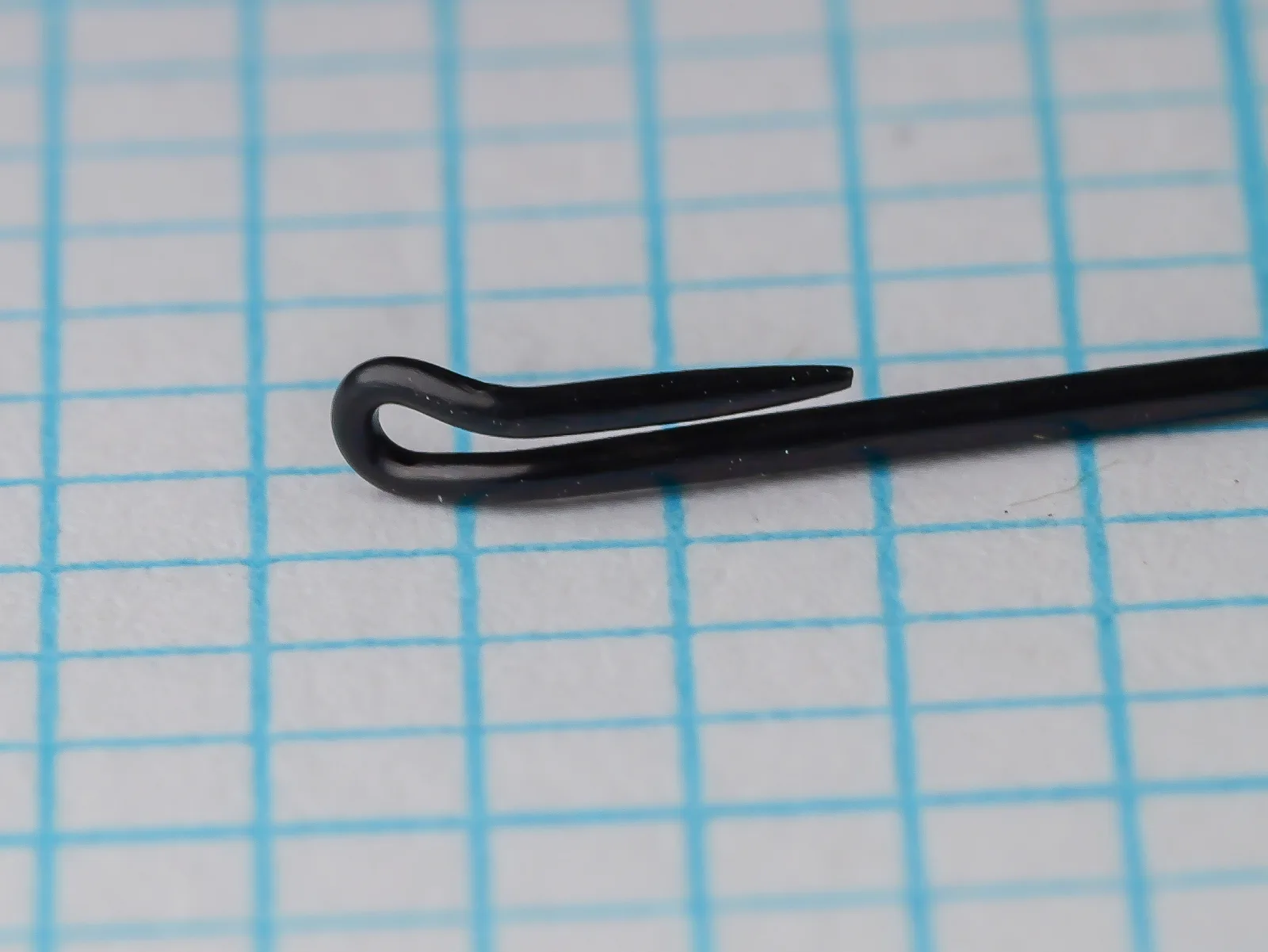
Close-up detail of the tapered down-eye (DTE) on the Partridge CS2/SH BL, showing the smooth looped eye with characteristic forward offset, typical of Redditch steelhead and salmon wet-fly hooks.
Photographic record
6 cataloged imagesSelect any record to load it above.
6 images shown
Partridge CS2/SH BL Size 8 Down-Eye DetailClose-up detail of the tapered down-eye (DTE) on the Partridge CS2/SH BL, showing the smooth looped eye with characteristic forward offset, typical of Redditch steelhead and salmon wet-fly hooks.Open originalPartridge CS2/SH BL Size 8 Bend ProfileProfile view of the Partridge CS2/SH BL showing the forged sproat-derivative bend and superior point geometry, characteristic of Redditch engineering, with uniform black japanned finish.Open originalPartridge CS2/SH BL Size 8 Full Profile MeasurementComplete profile view of the Partridge CS2/SH BL Size 8 hook on 1/10-inch measurement grid, documenting the overall length (~0.96–1.00 inches), shank length (~0.70–0.74 inches), and standard gap proportions.Open originalPartridge CS2/SH BL Size 8 Pair ComparisonTwo Partridge CS2/SH BL hooks, size 8, positioned side-by-side on measurement grid, demonstrating consistency of bend geometry, eye angle, and black finish across Redditch factory output.Open originalPartridge CS2/SH BL Size 8 Original Card LabelOriginal circular card label from the Partridge CS2/SH BL 25-count package, showing the hand-stamped size and quantity, printed model code, and Redditch manufacturer attribution with postcode.Open originalPartridge CS2/SH BL Size 8 Complete Original PackageComplete original Redditch-era packaging of the Partridge CS2/SH BL steelhead and salmon wet-fly hook, size 8, 25-count, showing the circular card label, white card backing, and clear plastic window sleeve with intact hook count.Open original
Technical profile
Eye
Looped Eye, Turned DownTapered down-eye (tue_tapered) with slight forward offset characteristic of Redditch steelhead and salmon wet-fly construction (P photographically verified in image 1). Eye loop is smooth and uniformly tapered, slightly elevated above shank axis, typical of forged Redditch engineering. Taper is gradual and even, not abrupt or kinked.
Wire
Heavy (1X Heavy), Forged
Shank
2X Long — Plain
Bend
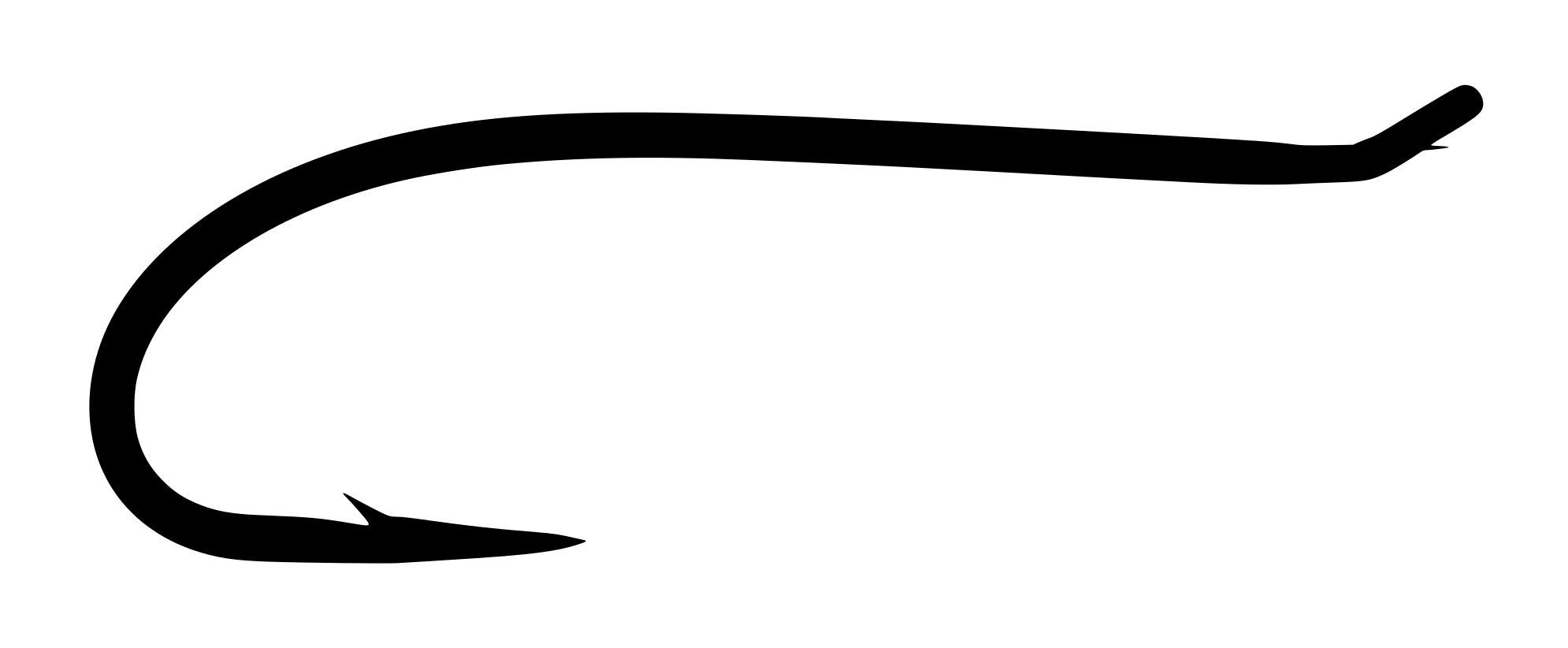
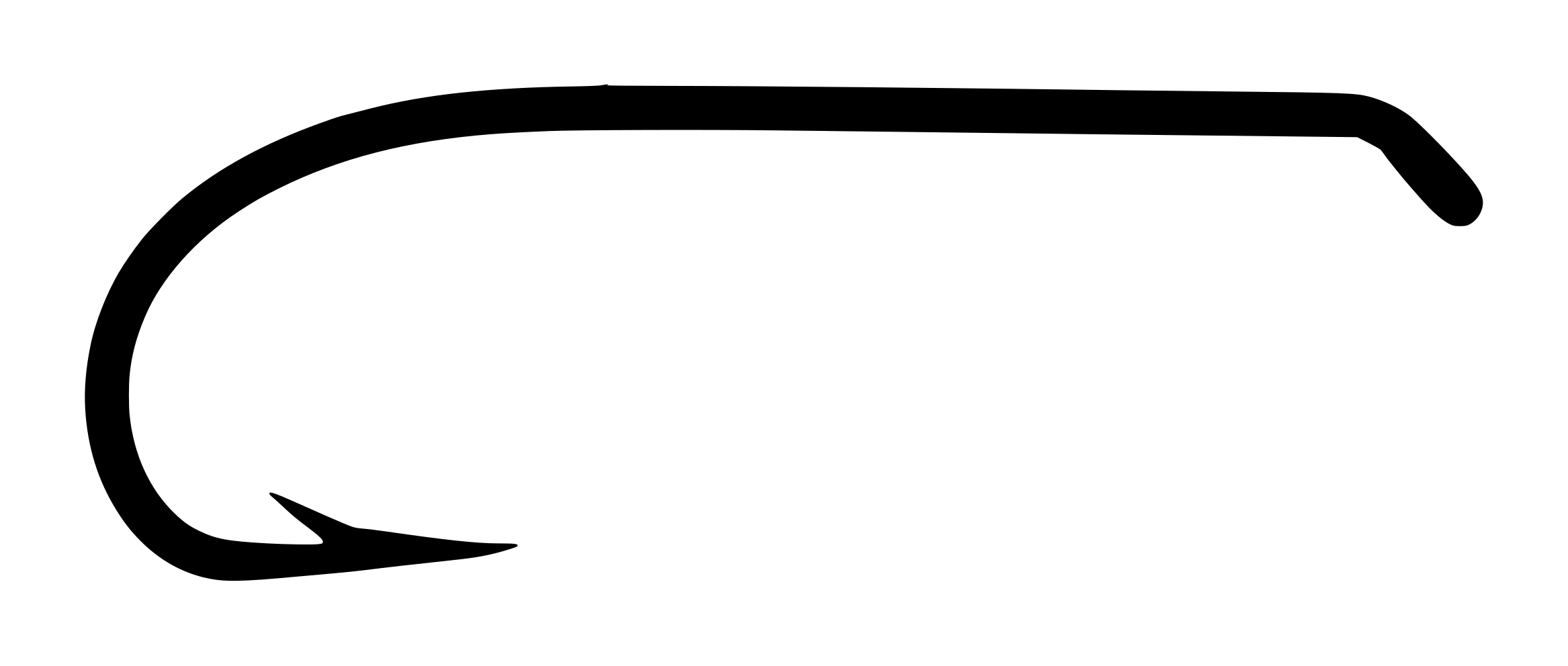
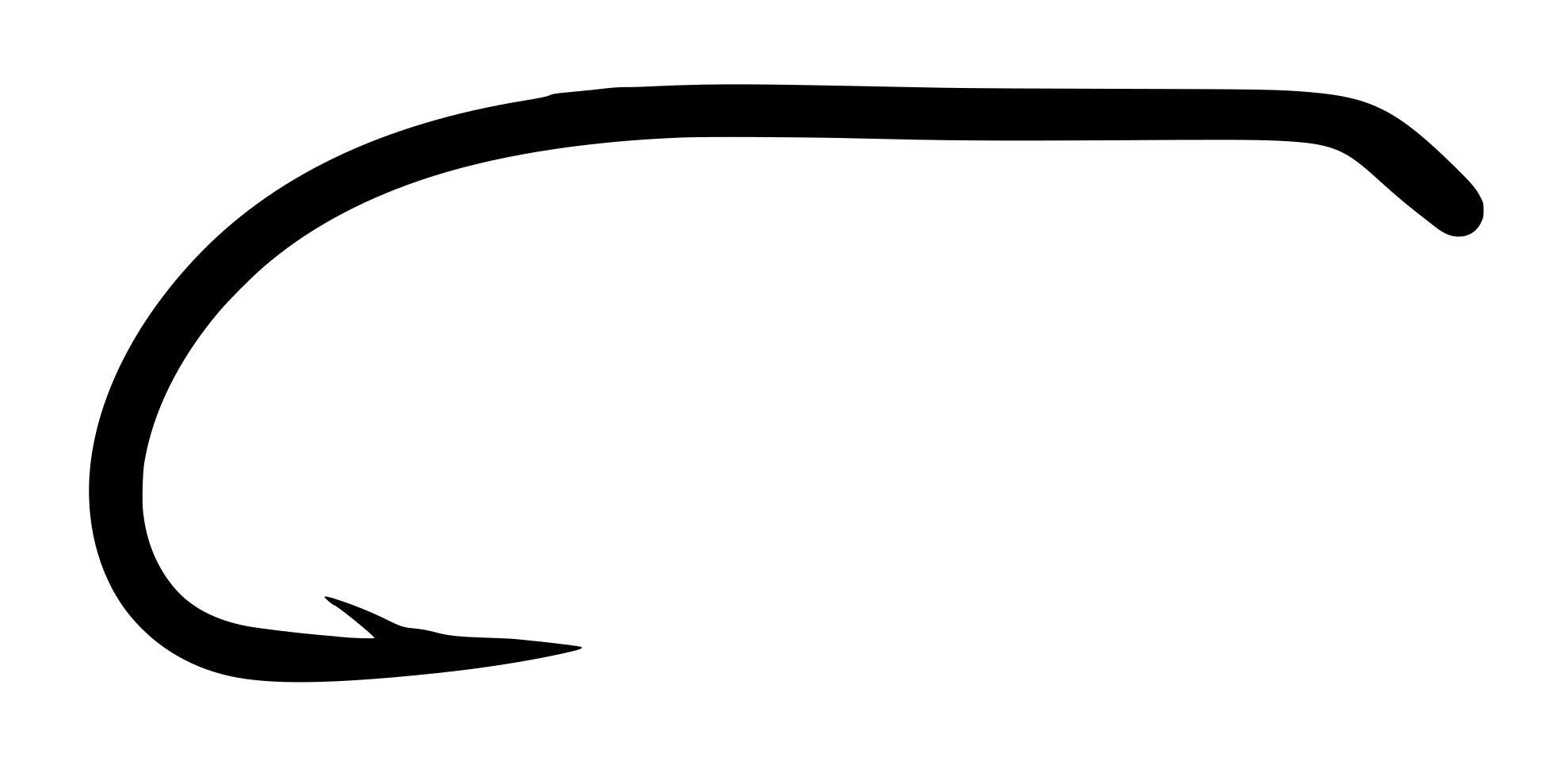
Beak / Reversed Point, Standard gapForged sproat-derivative bend (P photographically verified) with gentle, continuous curve through the deepest point. Bend exhibits characteristic Redditch symmetry with slight outward set at the widest point. Lower limb returns to the vertical axis with natural taper into the point. No unusual offset or kirbing visible. Bend depth relative to standard is moderate — proportional to size No. 8 standard-shank format.
Point
Standard / SpearStandard barb placement and angle consistent with forged Redditch wet-fly hooks (P visually evident in profile images). Barb is short and close-cut, characteristic of period English salmon/steelhead patterns, not swept or exaggerated.
Finish
Black Japanned — Confirmed (stated on packaging)Black japanned finish, uniform deep black tone with faint warm undertone visible in side-lighting (P photographically verified in images 2–4). Finish shows light surface patina consistent with age and storage, but no active corrosion or flaking. Color is darker and warmer than modern Black Nickel, consistent with traditional bronzed-black finish of Redditch-era production. No significant wear or discoloration on hooks examined.
Hooks examined are in bright, uncorroded condition. Original packaging (card label and plastic sleeve) shows moderate age toning and light soiling on card surface, consistent with 50+ year storage. Printing remains crisp and fully legible. All 25 hooks appear to be present in the sleeve; no visual count deficit. Packaging is structurally sound with no tears or significant damage to card or plastic. This is a very good to excellent original package.
The CS2/SH BL exemplifies Redditch engineering principles refined over a century of fly-hook manufacture. Forging: The sproat-derivative bend is fully forged (not drawn or pressed), concentrating material at the curve for tensile strength without compromising the shank. Forging also imparts the characteristic gentle spiral/set visible in profile, which aids in hook-up geometry by promoting a slight twisting motion as the point penetrates.
Superior Point: The point features a near-straight inner (concave-facing) taper from barb to tip, minimizing the hollow-point geometry that can create catch-and-release scenarios in soft-mouth fish. This design prioritizes solid penetration into cartilaginous structures (gill arches, lower jaw) of large fish where sustained pressure is necessary.
Down-Eye Configuration: The tapered down-eye angles forward and downward relative to the shank axis, facilitating gut-loop or silk-loop attachment and creating a direct line of pull that minimizes lateral rotation during the fight. The slight forward offset of the eye also reduces the effective barb-to-eye distance, improving penetration consistency across the gap.
Wire Gauge and Shank: Standard wire (~0.032–0.035 inch) provides sufficient mass for large fish (8–20 lbs.) without the weight penalty of a heavy-wire pattern. Standard shank length (~0.70 inch on size 8) balances dressing bulk with eye geometry — long enough for three-part fly construction, short enough to maintain hook balance on the tippet.
Japanned-Black Finish: The traditional bronzed-black finish reduces light reflection in clear water and provides anti-corrosion protection via an oxide-based lacquer layer. This finish is distinct from modern electroplated Black Nickel and is valued by traditional wet-fly tyers for its aesthetic consistency with period fly designs.
The SH series is part of Partridge’s historic wet-fly family, cataloged within the company’s classic trout and salmon fly-hook lineup. The SH designation specifically identifies wet-fly patterns in the original Redditch nomenclature system. The CS2 code, under the modern CS (specialist code) prefix, represents a specific variant engineered for steelhead and Atlantic salmon with down-eye configuration.
The down-eye format (DTE) was the dominant configuration for English and Scottish salmon and steelhead wet flies from the late 1800s through the 1960s–1970s. The CS2/SH represents Partridge’s continuation of this tradition, offering a standard-shank, medium-wire hook suitable for traditional wet-fly presentations using gut loops, silk, or modern tippets.
Production history of the SH series spans the entire Redditch-era period (1933–1996), with intermittent availability through the Mustad era (1996–2009) and selectively reintroduced under Fishing Matters (2009–present). The SH series was not among the high-profile ‘on hold’ SKUs during the Singapore-to-Wuxi transition c. 2008, suggesting reasonable continuity in production. However, Redditch-made specimens (pre-1996) and China-made current production differ in shank geometry and bend curvature, per collector comparisons.
The CS2/SH BL specifically—the Black finish variant—is well-suited to salmon and steelhead presentations where a dark, low-visibility hook is preferred. It remains in the current Partridge catalog as a heritage/classic pattern, though production volumes are modest compared to modern Klinkhamer, Patriot, and Predator series hooks.
Era and Packaging Dating
Country-of-origin marking 'MADE IN ENGLAND' printed on circular card label. No barcode present on packaging — strong indicator of pre-1974/1980 manufacture. Redditch address with postcode 'B51 1380' — Redditch B51 postcode was introduced around early 1970s, consistent with mid-to-late 1960s–early 1970s production window. Circular card label design with yellow/gold and blue printing is characteristic of Redditch-era Partridge packaging from 1950s–1970s. Hand-stamped size and quantity on otherwise printed card is consistent with Redditch factory practice during this period. Logo style (shield graphic, period-specific typeface) aligns with Partridge corporate identity c. 1960-1975. No Mustad co-branding visible, indicating pre-1996 acquisition. SH series nomenclature and CS2 model code are part of the classic Redditch Partridge catalog. Overall packaging style, paper stock, and printing method (offset on cream card) are consistent with British fly-hook manufacturer standards of the 1950s–1970s. Conservative dating: c. 1950-1975, with highest probability window c. 1960-1972 based on postcode and logo conventions.
The Lost Art of the Down-Eye Hook
The down-eye (DTE) hook configuration originated in England and Scotland as the dominant standard for Atlantic salmon and steelhead fishing through much of the 20th century. Tyers would tie a loop of gut or silk around the down-eye and knot it, creating a direct line of pull for the fly. This method, called 'loop-to-loop' attachment, is still practiced by purist salmon anglers today. When modern monofilament arrived in the 1960s–1970s, tyers began switching to up-eye hooks for direct-knot tippet attachment, and the down-eye pattern fell from fashion. Today, vintage Partridge and other English down-eye hooks are valued by classic salmon fly tyers and steelhead traditionalists who swear the slight downward pull of the DTE hook creates a more natural fly swing in the current.
Design lineage and influence
The SH series traces its ancestry to the historic Redditch wet-fly families that emerged from the 19th-century fishing tradition in Worcestershire. The down-eye configuration (DTE) was the standard for English salmon and steelhead wet flies prior to the 1960s–1970s transition toward up-eye patterns. The sproat-derivative bend used on the CS2/SH reflects the Redditch engineering tradition exemplified by firms like Wm. Bartleet & Sons and H. Milward & Sons, who dominated European fly-hook manufacturing in the 1800s.
The CS2 code places this hook within Partridge’s specialist pattern catalog — the ‘CS’ prefix originally stood for ‘Code S’ or specialist/coded patterns outside the simple single-letter nomenclature (A, D, E, G, H, L, etc.) inherited from the Redditch trade convention. The addition of the SH designation indicates a wet-fly pattern specifically engineered for steelhead and salmon in the English/Scottish tradition.
Post-1996, under Mustad ownership and subsequent Fishing Matters acquisition (2009), the SH series has been intermittently cataloged. Modern production continues, but sourced from China rather than Redditch; English-made Redditch-era SH hooks are now considered collectible vintage items.
Best matchRelated by Attribute
Computed automatically from catalog data — updated as new hooks are added.
Matches: Shank, Wire, Gap, Eye Orient., Point +5 moreDiffers: Bend: Beak / Reversed Point vs Sproat; Eye: Looped Eye vs Tapered Eye; Finish: Black Japanned vs Bronzed +3 more
Matches: Bend, Shank, Wire, Gap, Eye Orient. +3 moreDiffers: Eye: Looped Eye vs Ball Eye; Point: Standard / Spear vs Hollow Point; Finish: Black Japanned vs Bronzed +2 more
The CS2/SH BL is designed as a wet-fly hook for steelhead, Atlantic salmon, and sea-trout fishing in the traditional English and Scottish down-eye format. The standard shank length (~0.70 inches) and standard wire gauge accommodate classic wet-fly dressings ranging from simple hackled patterns to fully dressed feather-wing flies. The down-eye orientation (DTE) facilitates gut-loop or silk-loop attachment traditional to Atlantic salmon fishing, though modern tippet-knot presentations (improved clinch knot, Palomar) are equally effective.
The black japanned finish provides a low-visibility hook body in clear or colored water, preferred for cautious steelhead and salmon in shallow runs and tailouts. The forged sproat-derivative bend offers a strong, reliable hook-up geometry without the sharp penetration angle of a Dublin or Limerick bend, making it well-suited to large fish that may create high side-pressure during the fight.
Primary fishing contexts: (1) Floating presentation on English/Scottish rivers for Atlantic salmon, sea trout, and some landlocked salmon populations; (2) Steelhead in North American Pacific Northwest rivers (Rogue, Umpqua, Russian, Dean) using traditional wet-fly swing technique; (3) Classic salmon dry-fly backup or secondary pattern in mixed presentations.
Secondary Applications
The CS2/SH BL can be repurposed for larger nymph patterns and small streamers in sizes above No. 8, though its standard shank length and sproat bend are optimized for wet-fly dressing rather than nymph or streamer work. Bait presentation (small fry, shrimp, worm) is not typical for this hook class.
Classic Fly Patterns
Partridge and Orange, Teal and Silver, Butcher, Peter Ross, Grouse and Claret, Greenwells Glory, March Brown, Silver Doctor, Peal (sea-trout specific), Undertaker
Modern Equivalents
Hook
Match Quality
Notes
Partridge CS2/SH BL (current China production)
Excellent
Same model code and design; however, shank length and bend geometry differ slightly between Redditch-made and Chinese-made production per collector documentation on Spey Pages. Modern production acceptable functional equivalent but considered inferior by traditionalists.
Partridge L2A Wet
Very Good
Same manufacturer, similar era and application; different bend family (Captain Hamilton vs. Sproat) and wire gauge. Viable modern alternative.
Mustad 80500BL
Good
Low-water salmon single, down-eye, black finish; widely available modern substitute for Partridge N and similar low-water patterns. Gap and shank proportions differ slightly.
Allcock Round Bend Wet-Fly
Good
English manufacturer, similar wet-fly application and era; different bend and eye geometry.
Daiichi 2051 Alec Jackson Spey
Moderate
Down-eye configuration, steelhead/salmon application; modern spey variant with different bend geometry. Not a true Sproat equivalent but functional substitute.
Collector notes
Rated 4.5/10 — Redditch-era Partridge hooks are uncommon and modestly collectible, particularly in complete original packaging. The CS2/SH BL is not a high-profile designer pattern or discontinued specialty hook, which limits collector demand compared to scarce codes like CS10/3 Blind Eye or CS6 Adlington. However, the intact original packaging, 1960s–1970s dating, Redditch attribution, and the broader appeal of Redditch wet-fly hooks among English fly-fishing traditionalists and hook historians support a moderate collectability rating. Size No. 8 is standard and reasonably available; smaller or larger sizes command modest premiums.
Reference value
$8 – $22 USD estimate
Packaging format
PARTRIDGE-CARD-CIRCULAR-REDDITCHCatalog code
Positive Factors: Original Redditch-era production (pre-1996) is increasingly scarce as vintage hook stock is consumed by tyers. The complete original packaging with circular card label is a significant premium driver — Redditch-era Partridge cards in very good to excellent condition are uncommon in the secondhand market. The CS2/SH BL is part of Partridge’s classic wet-fly lineage, which appeals to traditionalists, Redditch specialists, and collectors interested in English fly-fishing heritage. The down-eye configuration, while less fashionable than modern up-eye patterns, is valued by salmon and steelhead tyers practicing traditional methods. The 25-count package provides collector utility (tyers can use them) and specimen value.
Limiting Factors: The CS2/SH is not a named-collaborator pattern or designer signature hook (unlike K14ST Oliver Edwards or 15BN Klinkhamer), which limits appeal to specialists. No published catalog date or rarity designation places it in the ‘hard to find’ tier. Production runs of the SH series appear to have been moderate — not scarce like the CS6 Blind Eye, but not as abundant as standard sizes of common patterns like Aberdeen or standard Sneck. Collector demand is primarily regional (UK, Europe, Pacific Northwest USA) rather than globally distributed. Chinese-production CS2/SH hooks are modern and have minimal collectability premium.
Most Desirable Variants: Redditch-made hooks in original packaging command the strongest premiums. Size No. 8 (standard) is more available than No. 6 or No. 10; smaller and larger sizes attract modest collector interest. The black japanned finish (BL) is standard and expected — if a bronze or silver variant exists, it would be unusual and more valuable. Complete 25-count cards in sealed or near-sealed original plastic are most desirable; opened cards missing hooks sell at a significant discount.
Condition Impact: Packaging condition is the primary value driver for unopened cards. Mint (sealed or effectively sealed) cards command 30–50% premium over excellent (opened, complete, minimal wear). Cards with missing hooks (even 1–2 missing) drop 15–25% in value. Creasing, water staining, or severe toning on the card label reduces appeal to packaging-focused collectors but affects value less dramatically than hook loss. Hooks themselves, if bright and uncorroded, do not significantly impact value — tyers expect to use these hooks. Corrosion or damage to hooks reduces value by 10–20%.
Packaging
Original circular card label (diameter ~3 inches) mounted on white/cream card backing with clear plastic window sleeve containing 25 hooks. Printed in blue and yellow/gold inks on card stock. Manufacturer attribution 'PARTRIDGE of REDDITCH' in blue block capitals. Product description in yellow: 'S.E.B. STEELHEAD AND SALMON—DOWN EYE WET FLY HOOKS (BLACK FINISH)'. Lower portion shows 'MADE BY PARTRIDGE OF REDDITCH, WORCESTERSHIRE, ENGLAND B51 1380'. Three boxed fields: Size '8' (hand-stamped in black ink), Quantity '25' (hand-stamped), and Model 'CS2 SH BL' (printed). Card shows moderate age toning, some soiling on surface, but printing remains crisp and legible. Mounting on white backing card with tab attachment at top. No barcode present. Packaging indicates Redditch-era Partridge production, pre-1996 manufacture.
Market Value Notes
Low ($8): Good condition — opened original card package, most or all 25 hooks present, packaging shows moderate wear/toning but legible, hooks bright and uncorroded.
High ($22): Excellent/Very Good condition — sealed or near-sealed original packaging, complete 25-count, minimal card wear, packaging crisp and vibrant.
Premium factors: Redditch-made (pre-1996) manufacturing, intact original circular card label, complete 25-count, sealed/near-sealed condition, Black finish (standard but expected), size No. 8 (standard availability).
Platforms: eBay UK/EU (primary market for Redditch Partridge wet-fly hooks), specialist UK tackle dealers, occasional fly-fishing auctions.
Confidence: I inferred — no specific eBay sold listings for CS2/SH BL located; estimate based on comparable Redditch Partridge wet-fly packages (SH1, L2A, G3AY in original Redditch packaging: £6–18 GBP ≈ $8–24 USD). Redditch-era Partridge cards consistently trade in the $8–25 range depending on completeness and packaging condition. CS2/SH is a standard catalog pattern without scarcity premium, anchoring estimate toward lower end of specialist-hook range.
Where to Find
eBay UK and eBay EU (search 'Partridge CS2 SH' or 'Partridge wet fly Redditch'); specialist UK fly-fishing retailers (Sprite Fishing, classicflyshop.com, accredited vintage dealers); periodic UK tackle auctions and country fairs. Redditch-era Partridge hooks are most reliably found on UK platforms rather than US eBay. US collectors may find examples through international eBay sellers or Pacific Northwest regional dealers specializing in steelhead/salmon tackle.
Collector's Identification Tips
Identify the CS2/SH BL by the circular card label marked ‘CS2 SH BL’ in the model box (lower right of label). Verify the product description reads ‘STEELHEAD AND SALMON—DOWN EYE WET FLY HOOKS’ and ‘(BLACK FINISH)’. Confirm Redditch attribution: ‘MADE BY PARTRIDGE OF REDDITCH, WORCESTERSHIRE, ENGLAND’. The SH prefix denotes the historic Redditch wet-fly family; CS2 specifically identifies this as a down-eye steelhead and salmon pattern. Black finish (BL) should be a uniform, deep black with slight warm undertone characteristic of japanned or bronzed-black finishes of the era (not modern bright Black Nickel). Tapered down-eye (not ball-eye, not looped up-eye) is the defining feature. Gap width of ~0.26 inches and standard shank length (~0.70-0.74 inches) confirm size No. 8. On the hook itself, look for: looped down-eye (slightly offset forward), forged sproat-derivative bend with gentle curve and characteristic Redditch symmetry, superior point with near-straight inner face, and high-carbon steel construction (marked ‘HIGH CARBON SHEFFIELD STEEL’ on packaging). Compare against images at flyhooks.org (Partridge section) or accum.se/~widmark Partridge reference for bend geometry confirmation.
Preservation
Storage and Preservation
Store the CS2/SH BL in a cool, dry environment away from moisture and humidity. The japanned-black finish is susceptible to oxidation and patina development with high humidity; this is generally considered cosmetically acceptable or desirable by collectors, but active corrosion should be prevented. Original packaging (circular card label and plastic sleeve) should be retained as a value-preserving measure — unopened or sealed packages command significant premiums.
If hooks are removed from the original package, store them in a dry tackle box or hook holder with silica gel desiccant packs to manage humidity. Avoid contact with other metals (copper, aluminum, brass) to prevent galvanic corrosion. The black finish is less susceptible to rust than bright steel, but prolonged contact with salt water or high-humidity marine environments should be avoided when the hooks are in storage (in-use corrosion is expected and acceptable).
For the original card label and packaging: store flat or suspended (not creased) in an archival cardboard box away from direct sunlight, which can fade the blue and yellow printing. Moderate yellowing and toning of the card is natural and does not significantly impact value; severe discoloration, water damage, or mold growth should be prevented through proper climate control.
If the package is to be displayed, use UV-filtering glass or acrylic in front of the card to prevent fading. Hooks in original packaging should not be touched with bare hands — the oils can promote long-term corrosion on the japanned finish.
Marking Analysis
Handwritten Markings on Original Packaging
The original circular card label features two handwritten entries in black ink, both clearly legible and consistent with Redditch factory practice c. 1960–1975:
Top left (external label): ‘4.00’ — likely a pricing notation in British currency (shillings and pence or early decimal £). Pricing notation on original packaging is an era indicator and pricing-history document.
Lower center (on card label): Size ‘8’ and Quantity ’25’ — hand-stamped in a box with printed outline. This is the standard factory practice for applying size and count to otherwise printed generic card labels, allowing a single label design to be used across multiple size/quantity combinations. The hand-stamping is neat and legible, consistent with professional Redditch factory output.
The handwriting and stamp quality indicate this label was applied during the final packaging phase at the Redditch facility, not hand-written by a retailer or aftermarket re-packager. The price marking (‘4.00’) is consistent with UK tackle pricing c. 1960–1972 for a 25-count hook card and serves as an additional dating confirmation.
Primary Source
Printed Manufacturer Text and Claims
Source: Partridge of Redditch CS2/SH BL original circular card label, c. 1960–1975
Source: Original circular card label, ‘Partridge of Redditch’ product line, c. 1960–1975.
The label text provides several important pieces of documentation:
‘PARTRIDGE of REDDITCH’ (blue block capitals, top center) — Manufacturer identification and location. The stylized shield graphic above the name is the Partridge corporate logo from this era. This format is characteristic of Partridge packaging 1950s–1970s and differs from the post-1996 Mustad-era and post-2009 Fishing Matters branding.
‘S.E.B. STEELHEAD AND SALMON—DOWN EYE WET FLY HOOKS’ (yellow/gold text, center) — Product description. The ‘S.E.B.’ designation is a Partridge house code (initials unknown in public sources; likely ‘Special English Bent’ or similar internal designation). The explicit description of ‘DOWN EYE’ configuration is significant — modern packaging abbreviates this as ‘DTE’ or simply lists ‘Down-Eye’; the full English description indicates this is original manufacturer copy, not aftermarket relabeling.
‘(BLACK FINISH)’ (yellow, in parentheses) — Finish specification. Parenthetical notation of finish is consistent with Redditch-era packaging conventions. ‘Black’ here denotes the japanned-black finish, distinct from modern ‘Black Nickel (BN)’ labeling.
‘MADE BY PARTRIDGE OF REDDITCH, WORCESTERSHIRE, ENGLAND. B51 1380’ (blue text, lower border) — Country of origin, manufacturer attribution, and postcode. This is the fullest attribution statement found on the package and confirms English manufacture and Redditch location. The B51 1380 postcode is consistent with Redditch assignments c. 1970s onward.
‘HIGH CARBON SHEFFIELD STEEL’ (gray text, bottom of card backing) — Wire material specification. This is printed on the white backing card rather than the circular label itself. ‘Sheffield Steel’ indicates high-carbon steel wire sourced from or finished by Sheffield suppliers — Sheffield was a major wire-production center in England. The emphasis on ‘Sheffield’ steel is a quality claim common in British fly-hook marketing of this era.
Overall, the printed text confirms Redditch-era production (pre-1996), English manufacture, and adherence to traditional wet-fly hook standards. No modern disclaimers, barcode information, or modern safety text are present, all consistent with 1960s–1970s packaging conventions.
Additional
The Sproat Bend in English Wet-Fly Tradition
The sproat-derivative bend used in the CS2/SH BL represents one of the most enduring bend families in English fly-hook engineering, with roots extending back to the 19th-century Redditch tradition. The sproat is characterized by a rounded, deeply curved lower limb that provides excellent hook-up geometry for soft-mouthed fish (trout, sea trout) and large fish requiring sustained barb penetration without excessive point extension.
The forged sproat bend on the CS2/SH differs slightly from the pure sproat of lightweight trout patterns — it is a ‘sproat-derivative’ in that it incorporates a slightly stronger wire set and a gentler return angle into the point, making it suitable for the heavy pressure generated by fighting large steelhead and salmon (8–20 lbs.).
In the 1960s–1970s, when the CS2/SH BL was in peak production at the Redditch factory, the sproat bend was considered the ‘classic’ choice for English wet-fly and steelhead presentations. Scottish and English tyers would dress these hooks with soft-hackle patterns (Partridge and Orange, Teal and Silver, Grouse and Claret) and present them on a swing through productive runs, allowing the fly to search the entire water column as it drifted across the current.
The sproat bend’s gentleness — compared to the angular Limerick bend or the wide Aberdeen — also gave it a reputation for kind mouth contact, reducing break-offs and torn lips. This quality, combined with the precision forging of Redditch manufacture, established the sproat as the preferred bend for premium Atlantic salmon and steelhead hooks through much of the 20th century. The CS2/SH BL represents the apex of this tradition — a standard-shank, medium-wire, sproat-bent hook optimized for the demands of big-water, classic wet-fly fishing.
Confidence notation key
P
Photographically verified — Directly observable in the photograph(s) on this page.
V
Verified by documentation — Confirmed by manufacturer catalog, spec sheet, or published reference.
I
Inferred — A logical deduction from observable or documented evidence, not directly stated.
E
Estimated — An approximation based on visual comparison, proportional analysis, or limited data.
S
Speculative — A reasoned hypothesis that cannot be confirmed from available evidence.
Unnotated claims are the compiler’s synthesis; see Sources. All photographs on garrenwood.com are taken on a measurement grid where each square equals 1/10 inch (0.1″ / 2.54 mm).