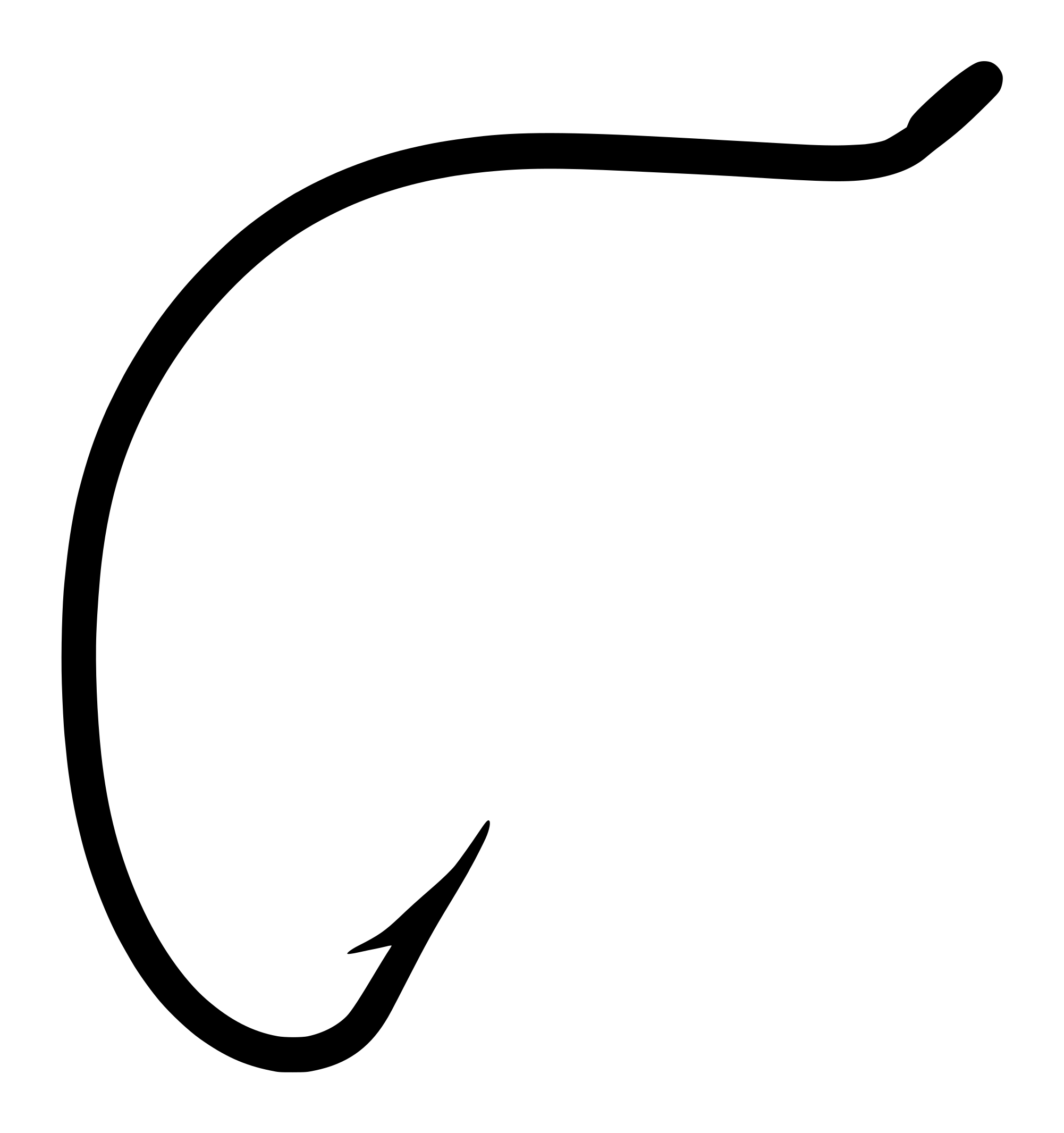
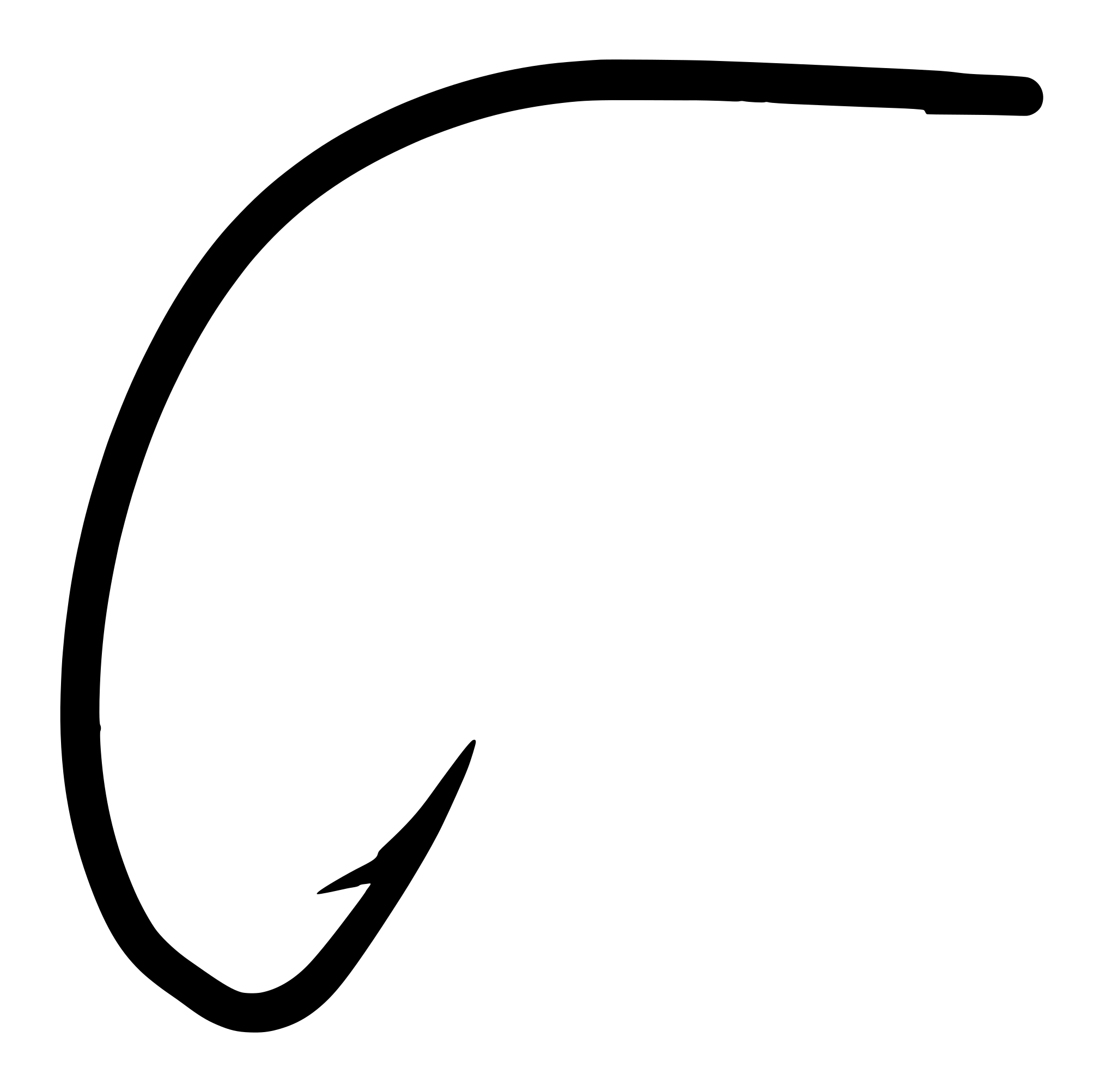
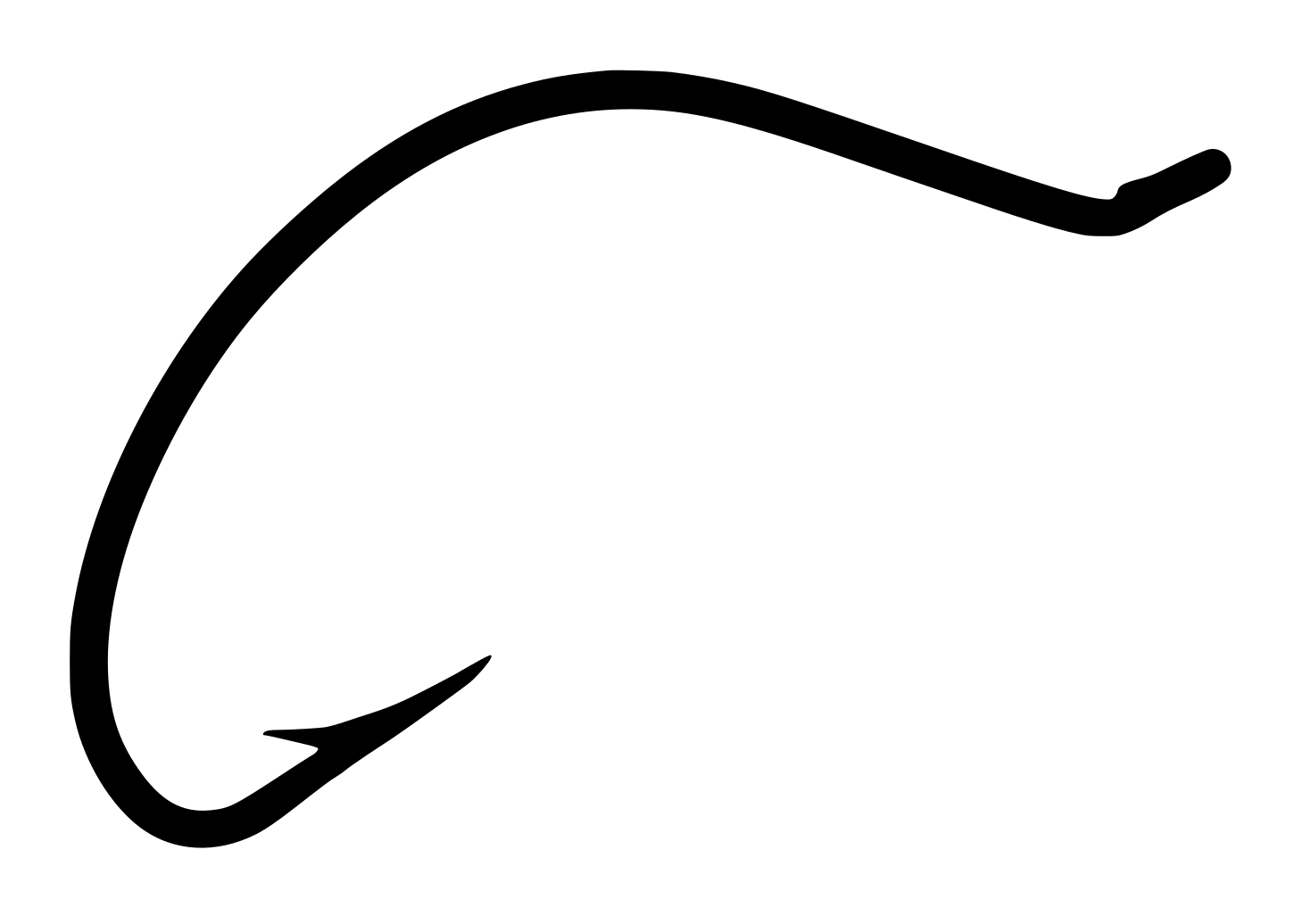
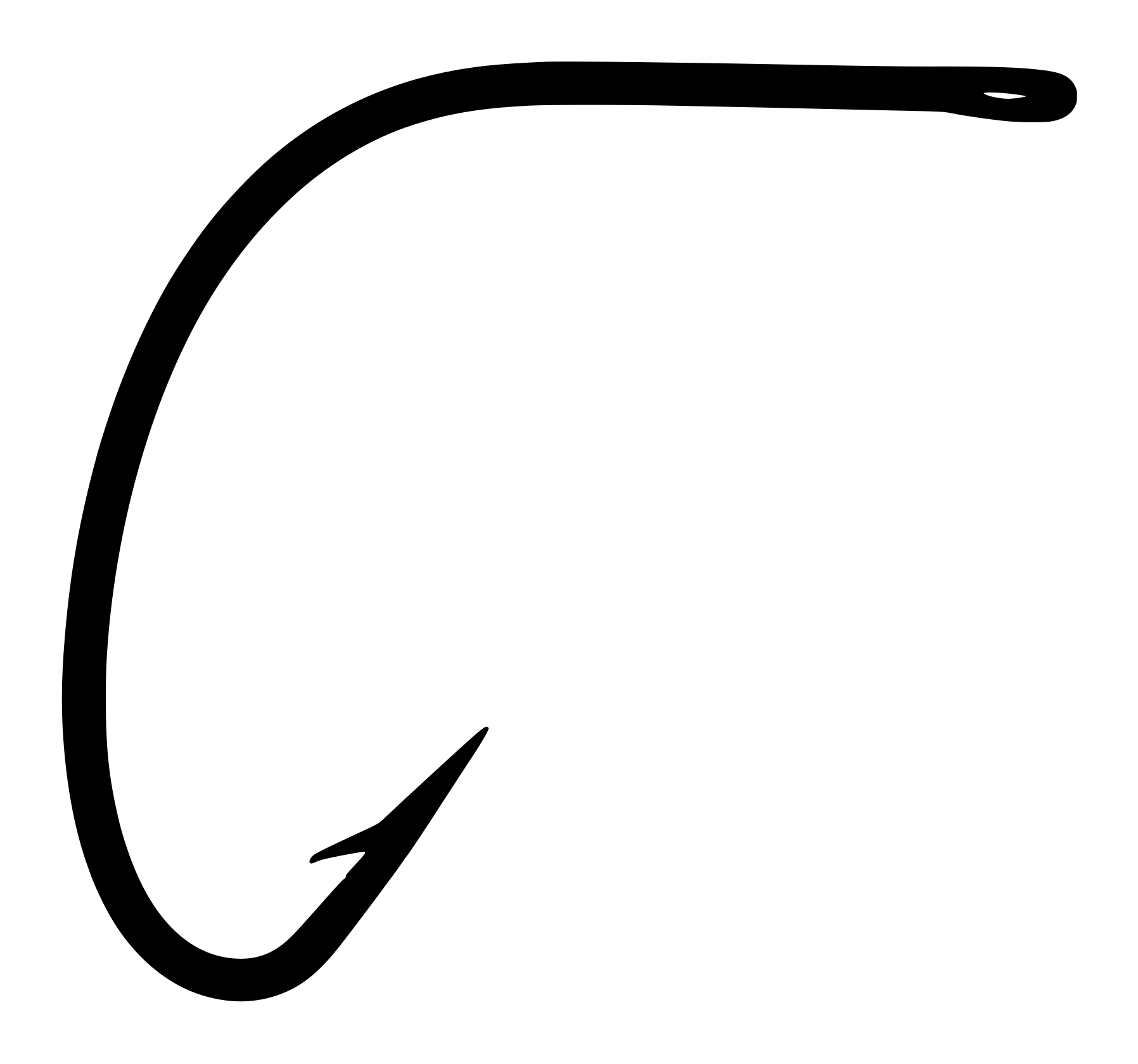
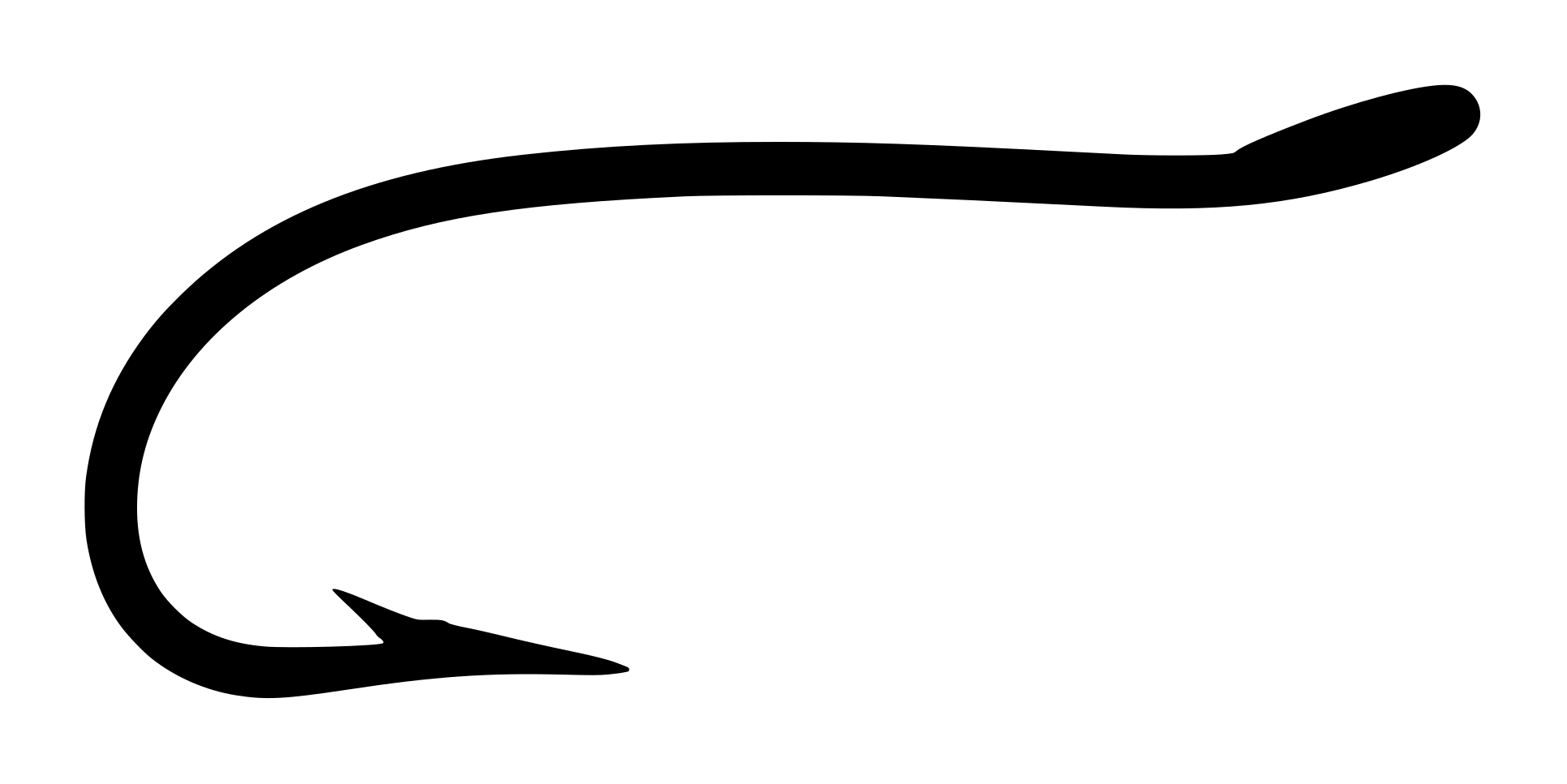
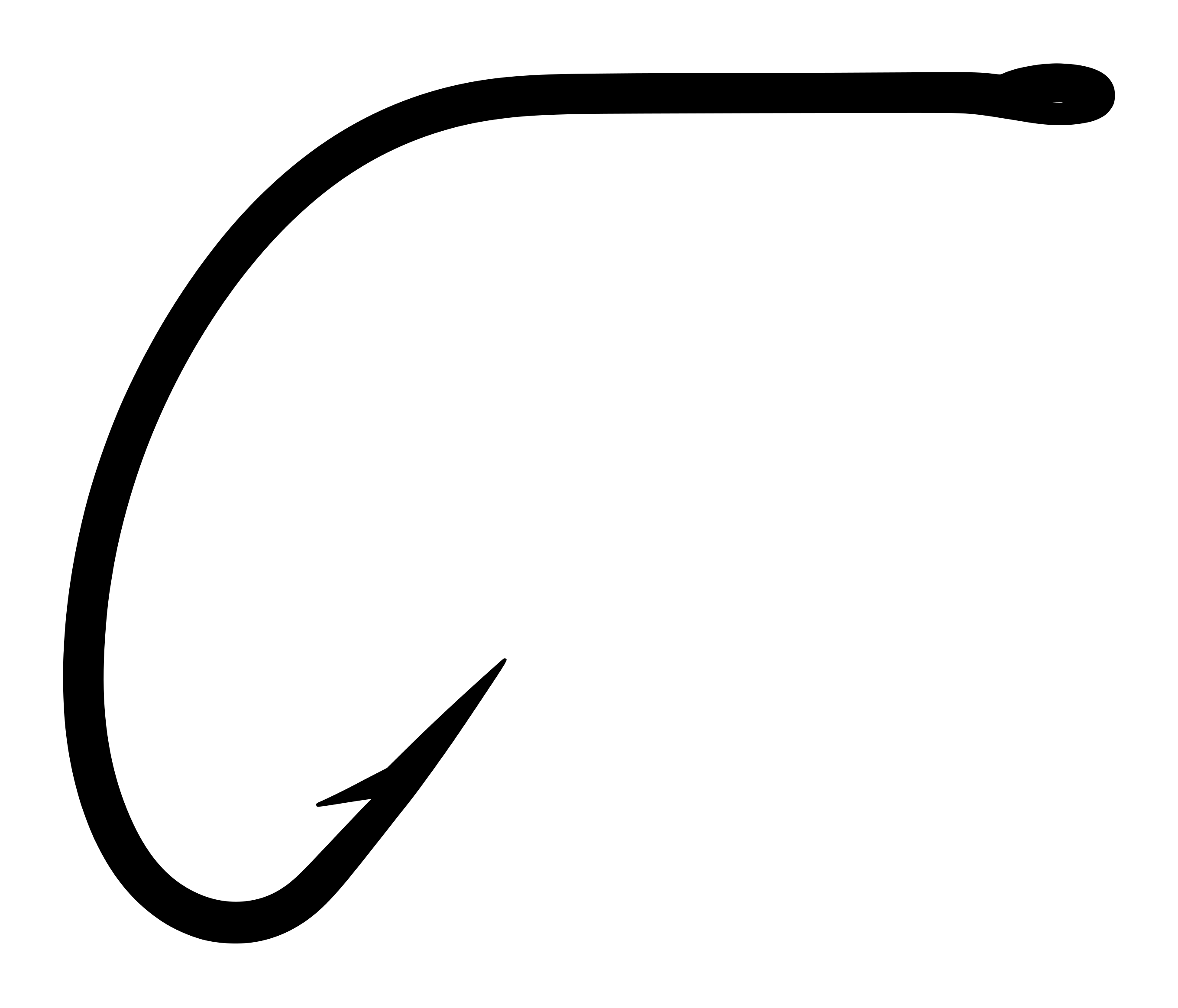
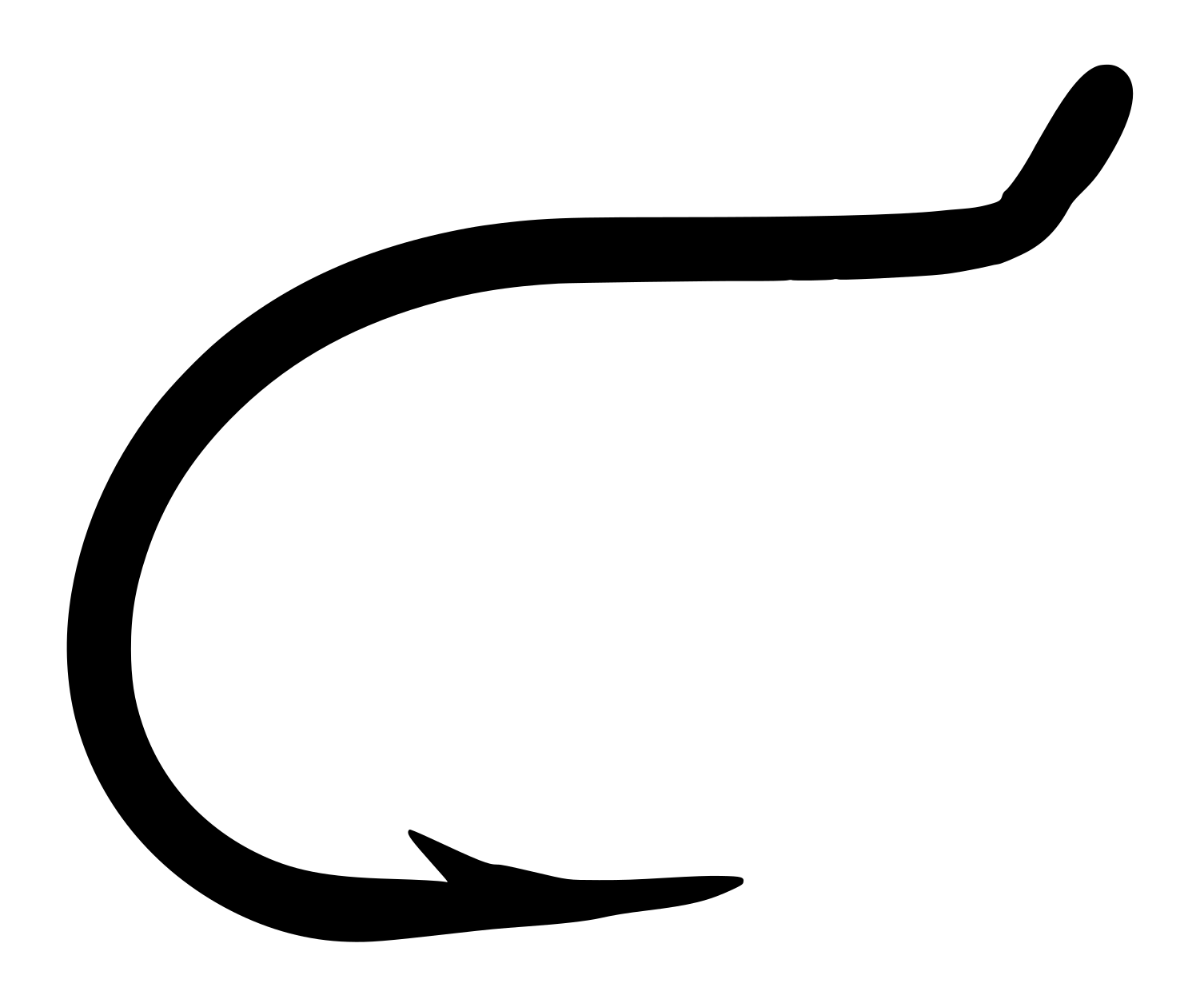
The Mustad 37160S is a utilitarian saltwater hook from the ‘Salt Water’ series, manufactured in Norway circa 1975–1985 in stainless steel. Size 3/0, Sproat bend, superior point, standard wire gauge, and turned-up tapered eye define the model. This is a functional design optimized for live-bait and natural-food presentations in inshore marine environments.
The defining physical feature is the combination of a rounded-bottom Sproat bend with a nearly straight, shallow superior point. Stainless steel construction provides corrosion resistance in salt spray — a premium innovation over conventional bronzed or blued finishes. The polished finish (confirmed by researcher) shows high luster and is brighter than typical bronzed hooks of the same era.
Era evidence includes the absence of barcode, plastic clamshell packaging with color-offset label, ‘Stainless Steel’ material specification, and bright modern Mustad branding. Handwritten price label suggests 1980s retail environment. These indicators place production in the mid-to-late 1970s or early 1980s.
Collecting significance is modest: Mustad’s massive production volumes make the hook common in secondary markets, but sealed or complete original packaging examples attract casual vintage tackle collectors. Stainless steel and post-1970s manufacture limit appeal among purists who favor older Redditch craft hooks or vintage bronzed finishes. The hook is valued primarily by functional users and general tackle enthusiasts rather than serious hook historians.
Profile view of the Mustad 37160S size 3/0 showing the rounded-bottom Sproat bend, superior point geometry, and turned-up tapered eye, on 1/10-inch measurement grid.
Photographic record
3 cataloged imagesSelect any record to load it above.
3 images shown
Mustad 37160S 3/0 Sproat Bend ProfileProfile view of the Mustad 37160S size 3/0 showing the rounded-bottom Sproat bend, superior point geometry, and turned-up tapered eye, on 1/10-inch measurement grid.Open originalMustad 37160S Salt Water Package LabelFront label of the Mustad Salt Water 37160S clamshell package showing the bright blue brand band, reference number, size 3/0, quantity 100, and stainless steel material specification.Open originalMustad 37160S Clamshell Package Complete ViewComplete view of the Mustad 37160S clamshell package showing the molded polycarbonate container with paper label header card, orange side stripe, and hooks visible through transparent plastic. Handwritten price label visible on upper left.Open original
Technical profile
Eye
Ball Eye, Turned Up
Wire
Standard, Round
Shank
Standard — Plain
Bend
Standard gap
Point
Hollow Point (concave inner face)
Finish
Polished Steel — Confirmed (stated on packaging)Specimen photograph shows hook bright and corrosion-free, consistent with stainless steel construction. Packaging shows light handling wear with original label intact and legible. Handwritten price label visible. No visible oxidation or defects on hooks.
The Superior Point on the 37160S is defined by a nearly straight inner taper from barb to tip, with a shallow concave face. This geometry favors penetration in tough bait and delivers reliable hook-ups with live fish. The Sproat bend’s rounded bottom distributes stress evenly across the bend, reducing risk of failure under hard-fighting fish. Standard wire gauge in size 3/0 provides balance between strength (sufficient for 10–20 lb game fish) and workability (easily bent by hand when necessary for rig adjustments). Stainless steel construction sacrifices the superior corrosion resistance of forged carbon steel in freshwater environments but is essential in salt water, where conventional finishes (bronzed, blued) would pit and fail within weeks of heavy use.
We don't have measured sizes for this hook yet. Own one? Submit calipered measurements and we'll review and add them. Thank you!
Historical context
mustad
O. Mustad & Son was founded in Oslo, Norway in 1832, eventually relocating manufacturing to Gjovik (Gjøvik) where the primary hook factory operated from the mid-1800s onward. By the 20th century, Mustad became the world’s largest industrial hook manufacturer, supplying both recreational and commercial fishing markets globally. The company standardized hook nomenclature and manufacturing processes, establishing the ‘model number’ system that became industry standard. Norwegian manufacturing combined precision forging with high-volume production, allowing Mustad to undercut British Redditch competitors on price while maintaining consistent quality.
The Mustad ‘Salt Water’ line emerged in the 1970s as recreational saltwater fishing expanded in North America and Europe. Stainless steel hooks were a premium innovation, addressing corrosion problems in marine environments. The 37160S Sproat pattern in stainless steel represented a pragmatic balance between cost and durability for commercial and charter boat operations.
Series History
The Mustad 37160 series (and its stainless variant, 37160S) belongs to the broader ‘Salt Water’ product family introduced in the 1970s. The Sproat bend was chosen for the salt water line because its rounded bottom geometry is forgiving with live bait and natural-food presentations in rough conditions. Size 3/0 is the workhorse utility size in saltwater fishing, sitting between the lighter size 2/0 (for smaller game fish and specialized inshore work) and heavier 4/0-6/0 (for big game and offshore species). The 37160S stainless variant was introduced to address rust and corrosion issues that plagued conventional bronzed or blued hooks in prolonged salt exposure. The design remained in production through the 1990s and is still offered in modern Mustad catalogs, making it one of the company’s longest-running models.
Era and Packaging Dating
No barcode present is a strong pre-1974 indicator, but the plastic clamshell packaging format, 'Stainless Steel' material specification (popularized 1970s+), bright color-printed label with modern Mustad branding, and handwritten price point ($18.95) are all consistent with 1975-1985 retail environment. The absence of full UPC barcode but presence of REF number suggests transition period or regional variation in packaging standards. Paper stock and offset print quality support late 1970s-early 1980s production.
Design lineage and influence
Best matchRelated by Attribute
Computed automatically from catalog data — updated as new hooks are added.
Matches: Bend, Shank, Wire, Eye Orient., Point +4 moreDiffers: Gap: Standard vs Wide; Eye: Ball Eye vs Tapered Eye; Finish: Polished Steel vs Nickelled
Matches: Bend, Shank, Wire, Eye, Point +4 moreDiffers: Gap: Standard vs Wide; Eye Orient.: Turned Up vs Straight / Inline; Finish: Polished Steel vs Bronzed
Matches: Bend, Shank, Wire, Eye, Point +3 moreDiffers: Gap: Standard vs Wide; Eye Orient.: Turned Up vs Turned Down; Finish: Polished Steel vs Bronzed +1 more
Matches: Bend, Shank, Wire, Gap, Eye +5 moreDiffers: Eye Orient.: Turned Up vs Straight / Inline; Finish: Polished Steel vs Bronzed; Length: 34 mm vs 20 mm
The 37160S is a utilitarian saltwater hook designed for heavy-duty baitfish and crustacean presentations in marine and brackish water. The stainless steel construction provides corrosion resistance in salt spray environments. Size 3/0 sits at the standard working range for striped bass, bluefish, snapper, and similar inshore game fish. The Sproat bend and superior point geometry favor live bait rigging and natural presentations in strong current.
Modern stainless steel Sproat, size 3/0, same bend profile, updated eye construction
Owner Mutu Light
Good
Contemporary saltwater Sproat in stainless, slightly lighter wire, similar size range and application
Collector notes
Rated 3.5/10 — common in most size ranges due to massive Mustad production volumes, but sealed or complete examples in excellent condition attract casual collectors. Stainless steel and modern (post-1970s) manufacture limit appeal among vintage hook purists who favor Redditch craft hooks or older bronzed finishes.
Reference value
$10 – $22 USD estimate
Packaging condition
Good — moderate wear, legibleRecorded specimen
Packaging format
mustad-clamshell-001Catalog code
Positive factors: Complete original clamshell packaging with intact label header adds real appeal to general tackle collectors. The ‘Salt Water’ branding evokes the golden age of recreational saltwater fishing expansion (1970s–1980s). Stainless steel material is functionally superior to bronzed hooks and has historical interest as a material innovation. Size 3/0 is a classic utility size with broad historical use. Unused, sealed examples command premium over loose hooks.
Limiting factors: Mustad’s industrial production runs in the millions; these hooks remain abundant in the secondary market and tackle shops. Stainless steel lacks the aesthetic charm of vintage bronzed or blued finishes among serious collectors. Post-1970s manufacture places the hook outside the ‘vintage’ era (pre-1960s) that many collectors prize. Size 3/0 is common across all manufacturers and eras — no rarity in size. The hook is purely utilitarian with no design distinction or historical notoriety.
Most desirable variants: Sealed clamshell packages in mint condition; cards with all 100 hooks present; examples with clear, unfaded label printing. Earliest production examples (mid-1970s, if dateable) are slightly more sought than 1980s variants.
Condition factors affecting value: A sealed package commands 2–3× the price of an opened, partial package. Missing hooks reduce value proportionally (missing 10 hooks = roughly 10% value reduction). Label fading or moisture damage on the clamshell significantly reduces appeal. Rust, corrosion, or discoloration of hooks themselves is uncommon (stainless) but catastrophic to value if present.
Packaging
Molded transparent polycarbonate clamshell (roughly 4" × 6" × 0.75" depth) with integral hinged lid. Paper label header card adhered to the front, printed with bright blue band containing 'Mustad' logo and 'SALT WATER' trademark text in white. Orange side stripe runs the width of the header. Printed text shows: REF 37160S / SIZE 3/0 / QTY 100 and 'STAINLESS STEEL' in black sans-serif type. Hooks are visible through clear plastic and secured by plastic tray insert. Price label present (handwritten in pencil: $18.95). No barcode visible. Paper stock is medium-weight white bond; print method appears to be color offset lithography.
Market Value Notes
Low ($10): Good condition (opened clamshell, most or all 100 hooks present, minor packaging wear, hooks bright).<br />
High ($22): Excellent/Mint condition (sealed or near-sealed clamshell, all 100 hooks, label sharp and unfaded, no defects).<br />
Premium factors: Sealed packaging, complete hook count, sharp label printing, early production (mid-1970s dating), excellent hook finish.<br />
Platforms: eBay (US and UK), general tackle dealers, occasional vintage fishing tackle sales.<br />
Confidence: V verified — Based on eBay sold data (May 19, 2023 – May 18, 2026), avg $14.76, range $2.19 - $128.13. Wide range reflects variation in package completeness and condition; values anchored to mid-range sold prices for good/excellent condition examples.
Where to Find
Regularly available on eBay (search 'Mustad 37160S' or 'Mustad Salt Water 3/0'). Vintage tackle dealers on both US eBay and eBay.co.uk stock examples frequently. Tackle auctions and estate sales occasionally offer sealed boxes. Local tackle shops with vintage inventory may have opened cards at lower prices.
eBay Market Reference
Period: May 19, 2023 – May 18, 2026Avg sold: $14.76Range: $2.19 - $128.13Avg shipping: $5.02Sellers: 52
eBay market reference. Researcher-curated. Prices in USD.
Preservation
Storage and Preservation
Stainless steel hooks are highly resistant to corrosion and require minimal active preservation. Store the clamshell package in a cool, dry environment away from direct sunlight, which may fade the label printing over time. Avoid contact with strong acids or alkaline cleaners, which can degrade the polished finish. If the package becomes exposed to moisture, dry it promptly to prevent label adhesive breakdown or plastic warping.
Loose hooks can be stored in paper envelopes or small glass vials to minimize handling. Original packaging adds substantial collecting value — preserve the clamshell and label intact if possible. Handle the label carefully to avoid creasing or tearing the paper; the bright color printing is attractive but can show fingerprints. If hooks are removed for use, store remainder on original card rather than loose to maintain collectability and provenance.
The stainless steel material will not rust or pit under normal household conditions, unlike bronzed or blued hooks. However, the polished finish may develop light patina or surface oxidation if exposed to moisture for extended periods. This patina is not harmful to the metal and can be polished away if desired, though many collectors prefer to leave original surfaces undisturbed.
Marking Analysis
Price Marking and Provenance
A handwritten price label is visible on the clamshell (Image 3, upper left): ‘$18.95’ in pencil. The handwriting is informal, characteristic of retail markup from the 1980s. This price point is consistent with mid-1980s tackle shop retail markup for a 100-count package of stainless steel saltwater hooks. The price marking suggests the package was originally purchased at retail and has remained in private hands rather than in a commercial inventory system.
The absence of barcode, UPC, or dealer inventory codes (other than handwritten price) indicates this example predates widespread computerized point-of-sale systems in small tackle shops. The handwritten price is primary evidence of retail provenance during the 1980–1990 period.
Primary Source
Printed Specifications and Material Claims
Source: Mustad 37160S packaging label, c. 1975-1985
The packaging makes explicit claim: ‘STAINLESS STEEL.’ This specification was a significant marketing point in the 1975–1985 period, as stainless steel was a relatively premium material for recreational fishing hooks. Most saltwater hooks of the 1950s–1970s were either bronzed (warm brown finish) or blued (cool grey-blue oxidized finish), both of which required regular maintenance in salt environments.
The printed reference number ‘37160S’ uses the suffix ‘S’ to denote stainless steel in Mustad’s nomenclature system. The model 37160 in other finishes (e.g., bronzed) would have been cataloged separately. This naming convention reflects Mustad’s systematic approach to product differentiation by material and finish — a key competitive advantage in the industrial hook market.
Quantity specification ‘100’ indicates packaging intended for commercial fishing operations, charter boats, and high-volume tackle retailers. Boxes of 50 or 25 hooks were more typical for general retail; 100-count packaging signals this is a ‘professional’ or ‘commercial’ version marketed to trade customers.
Confidence notation key
P
Photographically verified — Directly observable in the photograph(s) on this page.
V
Verified by documentation — Confirmed by manufacturer catalog, spec sheet, or published reference.
I
Inferred — A logical deduction from observable or documented evidence, not directly stated.
E
Estimated — An approximation based on visual comparison, proportional analysis, or limited data.
S
Speculative — A reasoned hypothesis that cannot be confirmed from available evidence.
Claims with no notation are confirmed by multiple independent sources. All photographs on garrenwood.com are taken on a measurement grid where each square equals 1/10 inch (0.1″ / 2.54 mm).