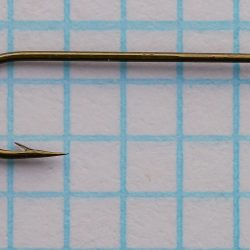
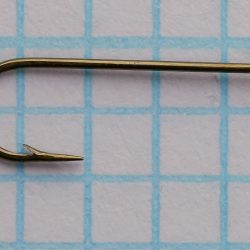
Orvis
- Founded
- 1856England
- Documented entries
- 2Catalog records
- Categories
- 2By application
- Era range
- 1950–19552 dated entries
Orvis Fly Tying Hook History
Founded in 1856 by Charles F. Orvis in Manchester, Vermont, Orvis is one of the oldest and most influential names in American fly fishing. While the company is best known for rods, reels, and mail-order innovation, it has also played an important role in the history of fly tying and fly-tying hooks.
The Early Years (1856–1900)
Orvis did not initially manufacture its own hooks. Instead, the company focused on selling flies and tackle while helping standardize American fly patterns. During the late 1800s, Orvis became one of the largest suppliers of professionally tied flies in the United States. Under the leadership of Mary Orvis Marbury, who managed the fly department beginning in the 1870s, Orvis cataloged hundreds of fly patterns and published the landmark book Favorite Flies and Their Histories in 1892.
The hooks used in these early Orvis flies were sourced from established hook makers, primarily from England, where the world’s premier fly hooks were produced during the Victorian era.
The “Orvis Hook” Era
Throughout much of the 20th century, Orvis followed a common industry practice: selling hooks under the Orvis name that were actually manufactured by specialist hook companies. Rather than operating its own hook factory, Orvis partnered with leading manufacturers and marketed proprietary hook series designed for fly tying.
Among collectors and vintage fly tyers, several notable Orvis-branded hook lines are known:
- Orvis Supreme Hooks – widely believed to have been manufactured by Partridge of Redditch during the period when Partridge was regarded as one of the finest fly-hook makers in the world. Many collectors consider these among the best Orvis-branded hooks ever sold.
- Other Orvis-branded hooks were sourced from different manufacturers over the years, depending on the style, era, and intended market.
Modern Orvis Hooks
By the late 20th and early 21st centuries, Orvis expanded its hook offerings to include specialized dry fly, nymph, streamer, saltwater, competition, and jig-style hooks. These were designed around modern fly-tying requirements such as chemically sharpened points, barbless designs, wider gaps, and stronger alloys.
Like many tackle brands today, Orvis does not publicly operate a dedicated hook-manufacturing facility. Industry discussions and packaging evidence suggest that various Orvis hook series have been contract-manufactured by established hook producers, including Dai-Riki and other Asian manufacturers.
Current Status (2026)
Today, The Orvis Company remains one of the most recognizable names in fly fishing. The company continues to sell a broad range of fly-tying hooks under the Orvis brand, including tactical nymph hooks, jig hooks, wide-gap hooks, dry-fly hooks, and saltwater patterns. Modern Orvis hooks are positioned as premium fly-tying hooks aimed at trout, steelhead, salmon, and saltwater anglers.
Collector’s Perspective
For hook collectors, the most sought-after Orvis hooks are generally:
- Vintage Orvis Supreme hooks made by Partridge (England).
- Early Orvis-branded hook packets from the 1960s–1980s.
- Hooks tied to specific historical Orvis catalogs and fly-pattern programs.
These are valued less for rarity alone and more for their connection to the golden age of American fly tying and the prestige of the Orvis and Partridge names.
In summary: Orvis began in 1856 under Charles F. Orvis, became a major force in American fly tying under Mary Orvis Marbury, and built its hook program through partnerships with premier manufacturers rather than making hooks itself. Today, Orvis continues to market a full line of modern fly-tying hooks while its vintage Partridge-made “Supreme” hooks remain especially respected among collectors and traditional fly tyers.