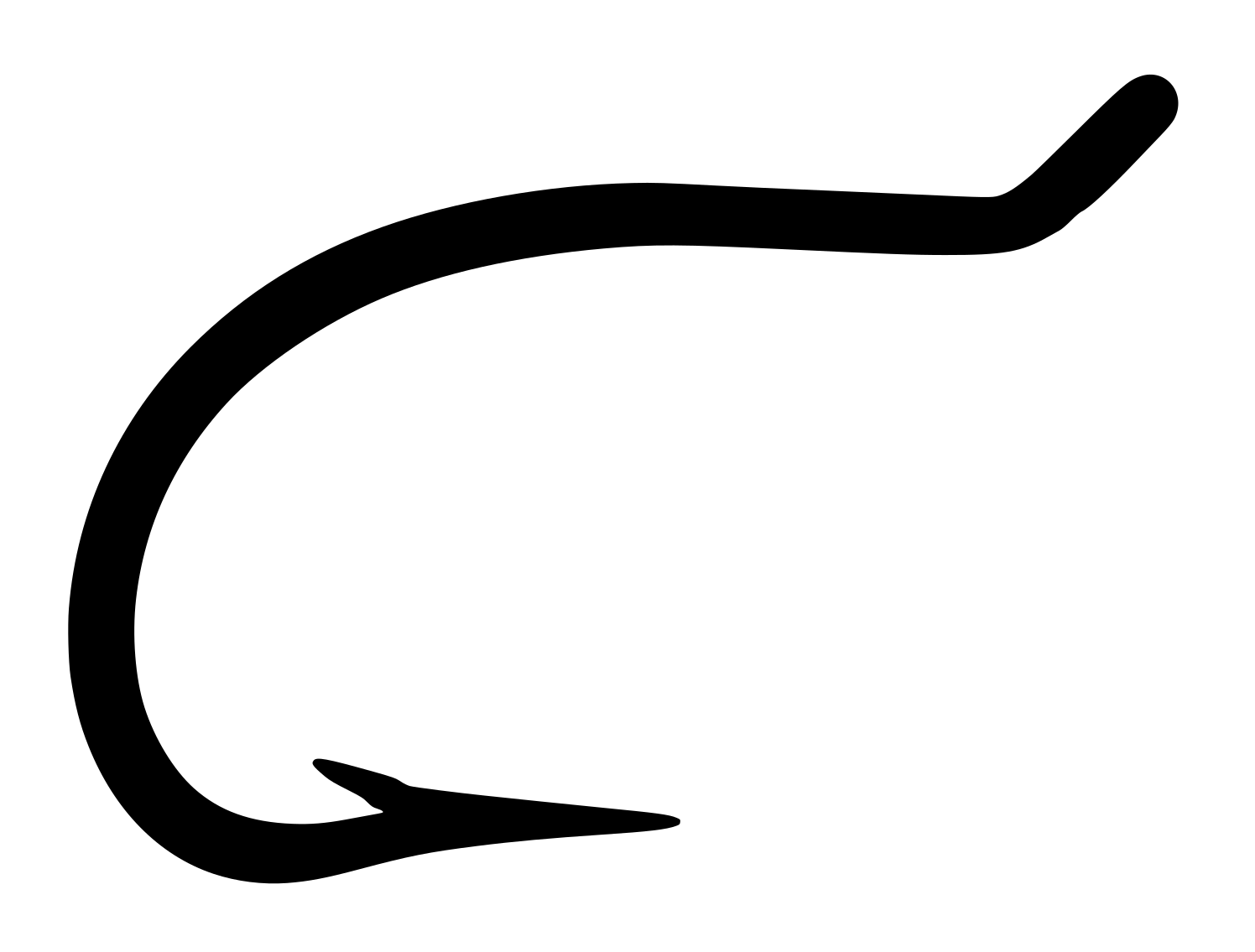
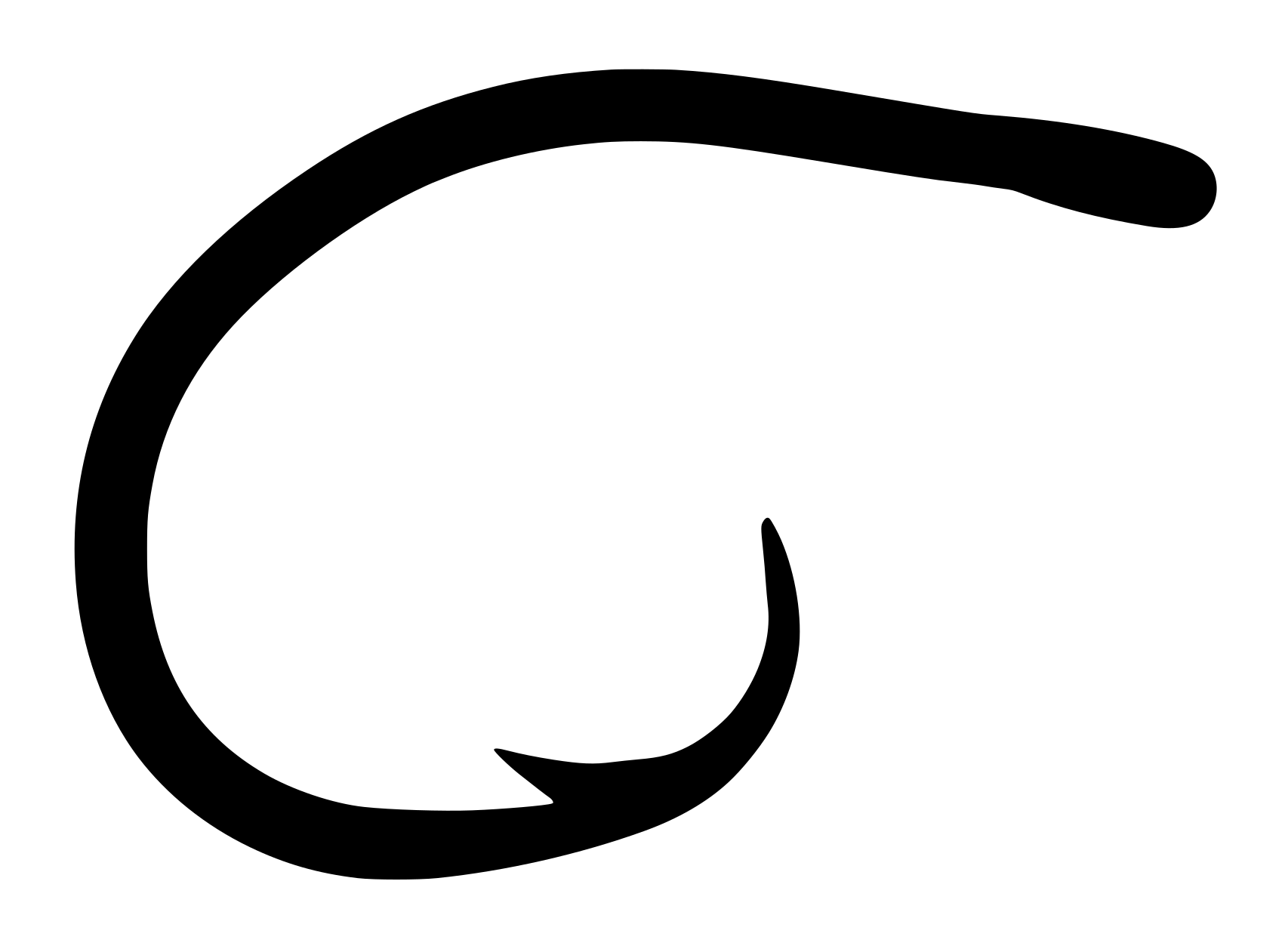
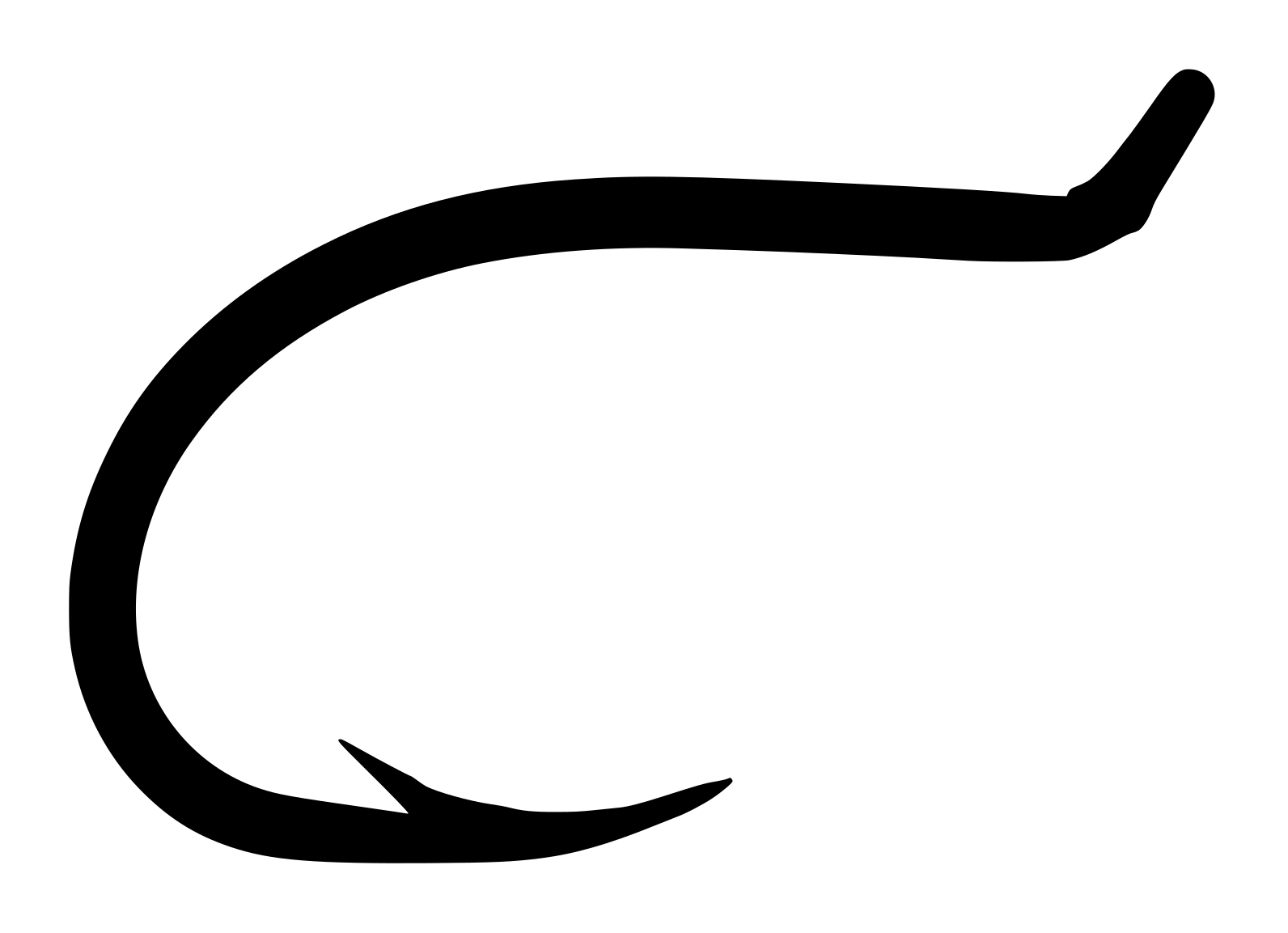
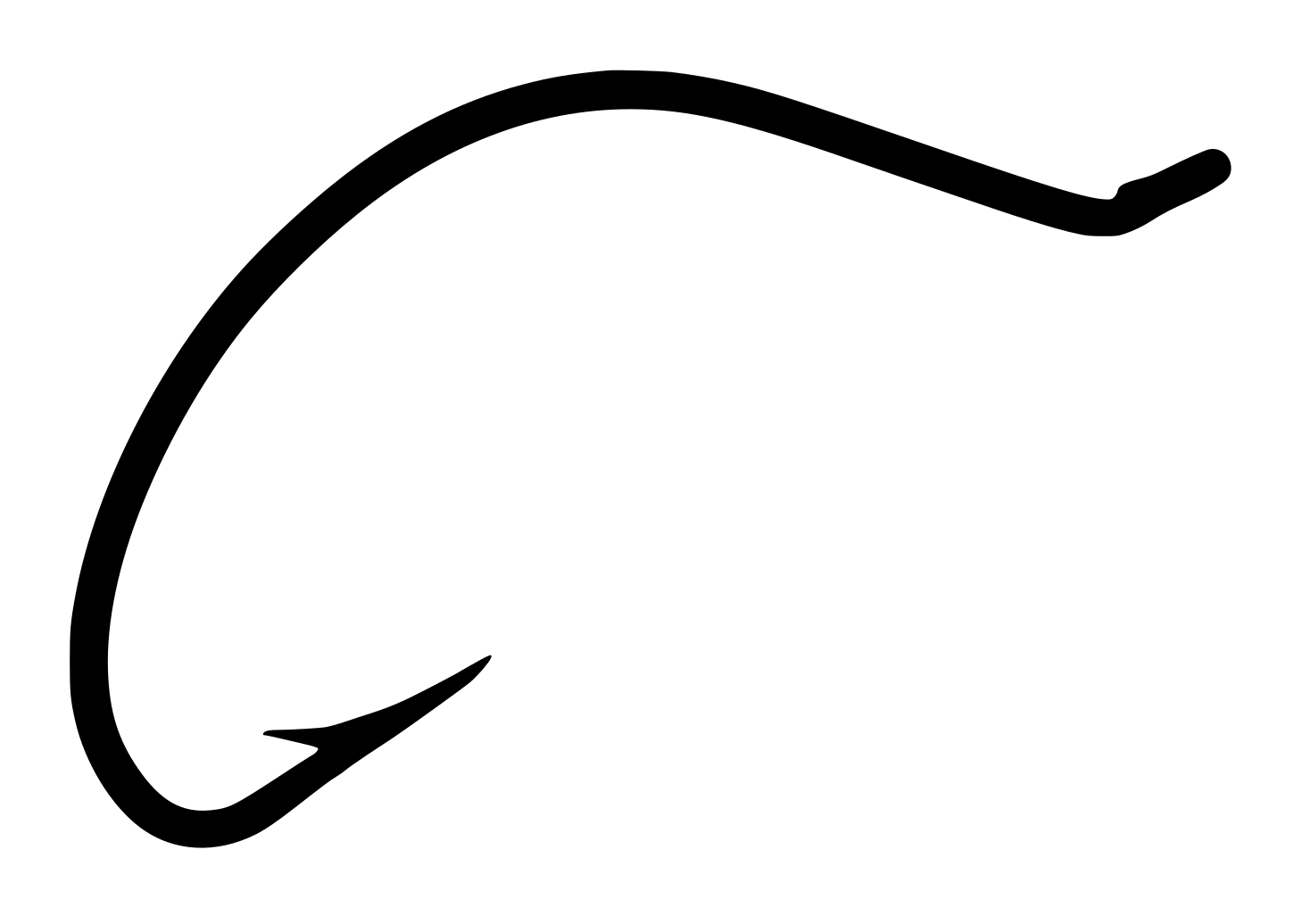
Edgar Sealey & Sons S 4304 — a forged Round Kendal bend hook in size 6, representing the Redditch tradition of precision wire-work in the mid-20th century. Heavy wire gauge, short shank, and wide gap make this a dedicated nymph and bait hook; the kirbed point and turned-up ball eye define the historical wet-fly geometry. Nickelled finish and box packaging indicate premium-segment positioning in the European market, c. 1950–1970.
The “Qualité Extra Supérieure” descriptor and multilingual label reflect Edgar Sealey’s export focus and rivalry with industrial manufacturers like Mustad. Forged construction — as explicitly stated on the box — imparts superior toughness through aligned steel crystalline structure, differentiating it from bent-wire competitors. The Round Kendal bend, a variant of traditional Kendal patterns, was a workhorse in British nymph and wet-fly fishing, particularly for reservoir and river grayling work.
Complete original manufacturer box with 100 hooks represents a specimen of high archival value to collectors of Redditch craftwork and mid-century English fly-tying tackle. The S 4304 does not appear in major catalog collections held by public institutions, making this box an undocumented reference specimen. Condition of packaging and labeling provide clear evidence for era-dating and industrial practice in post-war Redditch production.
Front lid of the Edgar Sealey S 4304 box showing the distinctive bright grass-green letterpress label with Octopus maker logo, French-language quality descriptor 'Qualité Extra Supérieure,' and specifications.
Photographic record
2 cataloged imagesSelect any record to load it above.
2 images shown
Edgar Sealey S 4304 Box Lid LabelFront lid of the Edgar Sealey S 4304 box showing the distinctive bright grass-green letterpress label with Octopus maker logo, French-language quality descriptor 'Qualité Extra Supérieure,' and specifications.Open originalEdgar Sealey S 4304 Size 6 Hook ProfileProfile view of a single Edgar Sealey S 4304 hook, size 6, nickelled finish, photographed on 1/10-inch measurement grid. Shows the forged Round Kendal bend, heavy wire gauge, turned-up ball eye, short shank, and kirbed point offset to the left of center.Open original
Technical profile
Turned Up Ball Eye | Round / Kendal | Short (1X–2X Short) | Heavy (1X Heavy) Wire | Standard / Spear Point | Nickelled / Nickel-plated
Eye
Ball Eye, Turned UpBall eye displays clear, smooth formation with regular curvature P. Eye opening is appropriately sized for a size 6 hook — neither cramped nor excessively large. The turned-up orientation presents the eye loop above and forward of the shank, typical of wet-fly and nymph hook design P.
Wire
Heavy (1X Heavy), Forged
Shank
Short (1X–2X Short) — Plain
Bend
Round / Kendal, Wide gap, Offset / kirbedRound Kendal bend exhibits smooth, continuous curvature characteristic of the family P. Bend depth relative to gap width falls within normal proportions for the pattern — the curve is deep and even without appearing exaggerated E. Point exits the bend smoothly, without sharp angle changes or asymmetry P. Kirbed offset is subtle but distinctly present — point leans left of center when viewed shank-down P.
Point
Standard / SpearBarb is small, close-cut, and positioned immediately behind the point shoulder P. This configuration is typical of English forged hooks and contrasts with the longer, more swept barbs found on American patterns. Barb angle is approximately 45 degrees, providing positive hook-hold without excessive material projection E.
Finish
Nickelled / Nickel-Plated — Inferred (photographically likely)Nickelled finish displaying cool silver-grey tone consistent with metallic nickel-plate coating P. Finish appears uniform and unmarred on the specimen hook, indicating careful plating and post-manufacturing handling. Nickel plating on mid-century English hooks typically applied to 0.0008"–0.002" thickness, providing corrosion resistance without significantly altering wire profile or taper geometry I. No signs of oxidation or base-metal exposure visible P.
Box shows moderate age patina and corner wear consistent with storage use. Label print is clear and legible with color well-preserved on the green field. One corner shows puncture hole. Hook specimen photographs show bright nickelled finish with no corrosion or defects visible P.
The forged construction is the defining engineering feature. Forging — the process of heating and shaping wire under hammer or press — aligns the steel crystalline structure along the bend axis, resulting in superior toughness compared to hooks bent from pre-made round wire. This alignment is particularly valuable in heavy-wire hooks where the point must absorb significant strain. The Standard Spear point (near-straight inner taper, nearly flat inside face) provides a relatively direct penetration geometry, suitable for both soft nymph materials and firmer bait presentations. The wide gap relative to shank length (approximately 1.7 : 1) creates generous space for rib wraps and tying materials in weighted nymphs, while the short shank keeps the overall footprint compact. The kirbed (reversed) offset places the point to the left of the shank centerline, producing a subtle lateral bias in the hook’s set. This geometry was valued by traditional wet-fly tyers who believed the offset aided hooking during the swing and rise. The turned-up ball eye orients the leader loop above the shank, allowing nymph patterns to be fished point-down in current — a presentation still used in traditional Redditch-school nymphing. Heavy wire resists crushing and abrasion in coarse-fish bait rigs and weighted stone-fly nymphs.
This pattern was made in sizes 2–16 (I). We have measurement for size 6. Know the others? Submit calipered measurements and we'll review and add them. Thank you!
Historical context
edgar
Edgar Sealey & Sons operated from Brockhill Works in Redditch, England, as a specialist hook manufacturer during the height of the town’s fishing tackle industry. The Brockhill Works was known for forged hooks of high specification, particularly patterns designed for both commercial and sport fishing. Sealey established a reputation for precision forging and fine wire work in the competitive Redditch market of the mid-20th century. The company exported extensively to continental Europe and the Commonwealth, evidenced by multilingual packaging and French descriptors on their boxes. Sealey hooks were typically positioned in the premium segment, marketed under the “Qualité Extra Supérieure” (Extra ) brand line, distinguishing them from mass-market competitors like Mustad. The Octopus logo became the house mark. Production appears to have continued through the 1960s, after which Redditch’s traditional hook industry contracted due to overseas competition and industrial consolidation. Specific dates of company founding and closure are not documented in accessible records.
Series History
The S 4304 represents Edgar Sealey’s interpretation of the Round Kendal bend, a traditional pattern with deep historical roots in Redditch craft fishing. The Round Kendal is a variant of the Kendal bend family, characterized by a smooth, continuous round curve from eye to barb, seated low in the bend — distinguishing it from the sharper, more angular Limerick or Sproat patterns. The designation “Renversé” (French for “reversed” or “offset”) indicates the point is kirbed (offset to the left when viewed from eye downward), a feature particularly valued in nymph and bait-fishing contexts where lateral movement and angle of entry matter. “Up Eyed” specifies the ball eye orientation — turned upward, standard for wet-fly and nymph applications. The “Forgé” (forged) specification indicates the entire hook is formed from a single piece of forged wire, not bent from round wire, giving superior strength and wire profile consistency. The model code S 4304 appears in Edgar Sealey’s mid-period catalog range, suggesting it was in production for a significant span. The Qualité Extra Supérieure line positioned these hooks as premium offerings, marketed to European fly and nymph fishers. Availability across sizes 2–16 indicates this was a core pattern, not a specialty line. The heavy wire gauge places this hook firmly in the nymph and bait category rather than dry-fly work. No evidence of major design revisions or successor patterns is apparent in surviving documentation.
Era and Packaging Dating
No barcode present — suggests pre-1974 manufacture V. Box construction and kraft cardboard stock consistent with mid-20th-century packaging I. Letterpress printing on label is characteristic of pre-1960s production P. French-language descriptor "Qualité Extra Supérieure" and "Forgé Renversé" point to export market positioning typical of 1950s–1960s Redditch manufacturers I. Label design, Octopus logo treatment, and serif typeface are consistent with Edgar Sealey catalog imagery from 1950–1970 period I. No postal code format visible; address is street name only, consistent with pre-1960s British practice I.
The Octopus Mark and Redditch Brand Competition
Edgar Sealey & Sons adopted the Octopus as their house logo, appearing on all their boxes and promotional material. The Octopus was a deliberate branding choice — the eight arms symbolized versatility and strength, and the mark was distinctive enough to stand out on tackle-shop shelves. In mid-20th-century Redditch, maker logos proliferated: Mustad used anchors and the "Superior" banner, Partridge used their name in elegant serif, and Allcock used geometric designs. Sealey's Octopus was unusual in its figurative style, making their boxes instantly recognizable to regulars at fly-fishing shops from London to Paris. The Octopus logo has become a collector's talisman for Redditch authenticity — finding one on a box guarantees the contents are pre-1970s English make, not a later continental knockoff or repackaged loose stock.
Design lineage and influence
The Round Kendal is a descendant of the Kendal bend family, which has roots in northern English fly-fishing tradition dating to at least the 19th century. The Kendal bend — named for the market town in Westmorland — was developed as a compromise between the sharp angular Limerick and the fuller-curved Sproat, offering moderate roundness without aggressive depth. Regional variants emerged across English manufacturing towns. The Round Kendal, favored in Redditch, emphasizes smooth continuity over the entire curve and was adopted as a standard for nymph and reservoir patterns from the 1940s onward.
Contemporary competitors to the Round Kendal included Mustad’s Limerick and Sproat variants, and Partridge’s own Kendal interpretations. The kirbed offset was not unique to Edgar Sealey — Redditch makers had long offered reversed/kirbed variants for specific pattern requirements. What distinguishes the S 4304 is the explicit forging specification and the marketing emphasis on French-language quality designation, positioning it as a premium alternative to mass-bent competitors.
The Round Kendal did not persist as a primary pattern into the modern era — the rise of tungsten-bead nymphs and competition from Asian manufacturers displaced traditional heavy-wire patterns. However, the S 4304 retains historical significance as a documented specimen of mid-20th-century English forged-hook practice.
Best matchRelated by Attribute
Computed automatically from catalog data — updated as new hooks are added.
Matches: Bend, Shank, Gap, Eye, Eye Orient. +5 moreDiffers: Wire: Heavy (1X Heavy) vs Fine (1X Fine); Point: Standard / Spear vs Superior; Application: Nymph, Bait vs Bait, Sea Trout
Matches: Bend, Wire, Gap, Eye Orient., Point +3 moreDiffers: Shank: Short (1X–2X Short) vs Standard; Eye: Ball Eye vs Tapered Eye; Finish: Nickelled vs Bronzed +2 more
Matches: Shank, Wire, Gap, Eye, Point +3 moreDiffers: Bend: Round / Kendal vs Sproat; Eye Orient.: Turned Up vs Turned Down; Finish: Nickelled vs Bronzed +2 more
Matches: Bend, Shank, Wire, Offset, Shank Feat. +1 moreDiffers: Gap: Wide vs Standard; Eye: Ball Eye vs Tapered Eye; Eye Orient.: Turned Up vs Turned Down +4 more
The S 4304 was designed for weighted nymph patterns and traditional bait work in stillwater and rivers. Heavy wire gauge and short shank allowed tyers to add lead-wire wraps or beads beneath the body without creating a hook too large for the intended fly footprint. The wide gap accommodated full-bodied nymph dubbing — stone-fly nymphs, mayfly nymphs, and caddis larvae patterns — while maintaining strength under the added weight. The kirbed point and turned-up eye are consistent with the Redditch school of wet-fly geometry, where subtle point offset was believed to improve hooking during the classic downstream swing and rise. This hook would have been the default choice for tyers working in the British chalk-stream and reservoir tradition during the 1950s–1960s, particularly for grayling, trout, and occasional larger coarse-fish applications using nymph imitations.
Classic Fly Patterns
Not typically associated with named fly patterns; primarily used as a platform hook for weighted nymph body construction — stone-fly nymphs, mayfly nymphs, caddis larvae imitations, and traditional wet-fly dressings.
Modern Equivalents
Hook
Match Quality
Notes
Tiemco 2312
Good
Contemporary round-bend nymph hook; similar wire gauge and turned-up eye orientation
Partridge SH
Good
Traditional Redditch-style round-bend nymph; direct successor pattern from competing Redditch maker
Mustad C53S
Moderate
Mass-produced round-bend alternative; lacks forging specification and premium positioning
Collector notes
Rated 4.5/10 — Edgar Sealey boxes are encountered infrequently, and the intact original box with all 100 hooks present adds significant premium. Collector demand is moderate among Redditch specialists and mid-century English tackle historians. Limiting factors include: relatively common hook pattern (Round Kendal was widely made), size 6 is not rare, and the overall market for vintage hooks remains narrow compared to other collectible fishing tackle.
Reference value
$12 – $35 USD estimate
Packaging condition
Good — moderate wear, legibleRecorded specimen
Packaging format
GW-ESO-01Catalog code
Positive factors: Complete original manufacturer box is rarer than loose hooks or cards — boxes command 2–4x premium over equivalent card packaging. Intact 100-hook count is significant; partial or opened boxes are common, full boxes less so. Label and printing are clear and well-preserved, aiding authentication and dating. Edgar Sealey is a recognized Redditch maker with collector following among English tackle historians. Forged construction is explicitly stated on the box, adding technical interest. No barcode and mid-century packaging provide clean provenance for era-dating. The multilingual French-language text reflects export positioning and European market focus, differentiating it from domestic-only English brands.
Limiting factors: Round Kendal bend, while traditional, lacks the distinctive character of patterns like the OShaughnessy or Sproat — making it less visually striking to new collectors. Size 6 is a standard working size; smaller or larger sizes command higher value among specialists. Heavy-wire nymph hooks have narrower appeal than dry-fly or streamer hooks, which attract broader collector interest. The pattern remained in production across multiple makers (Mustad, Partridge, Allcock), reducing uniqueness. Condition of the individual hooks cannot be verified without opening the box, and once opened, the package loses its “intact” premium.
Most desirable variants: Complete box with all 100 hooks and clear label. Size 6 is reasonably accessible; sizes 2, 14, and 16 (if present in the series) would command higher value due to relative scarcity. Nickelled finish is the standard for this model; any alternative finishes would be noteworthy. Original tissue or kraft wrapper inside the box, if present, adds additional premium.
Condition factors affecting value: Box lid integrity and label clarity are the primary drivers — a box with a crushed lid or faded label drops significantly in value. Hook count must be verified; missing hooks reduce value proportionally. Exterior cardboard patina is acceptable and expected; major creasing, stains, or water damage deducts value. The puncture hole visible in one corner is a minor cosmetic issue that does not significantly impact value for a collector-grade specimen.
Packaging
Manufacturer box with separate lid. Exterior: kraft cardboard, cream-colored stock. Dimensions approximately 4.5" × 2.75" × 0.75". Label affixed to top lid: bright grass-green printed label (letterpress) with decorative checkerboard border in black and dark green. Octopus logo and "EDGAR SEALEY" text in heavy serif font. Text reads: Sole Makers: EDGAR SEALEY & SONS, REDDITCH, Eng. | S 4304 | Qualité Extra Supérieure | Forgé Renversé Up Eyed | 100 | No. 6. Box corners show wear and age patina; single hole in one corner suggests previous storage method. Interior: original tissue or kraft wrapper not visible in photographs. Box lid integrity intact; moderate toning to cardboard consistent with mid-20th-century storage.
Market Value Notes
Low ($12): Good condition — opened box, all or most hooks present, label legible but toned, minor wear to cardboard acceptable.<br />
High ($35): Excellent condition — box sealed or near-sealed appearance, complete 100-hook count verified, label clear and bright, minimal cardboard wear.<br />
Premium factors: Complete original manufacturer box (vs. loose or carded), intact hook count, label clarity and color preservation, Edgar Sealey maker attribution, forged construction documentation, mid-20th-century dating confidence.<br />
Platforms: eBay UK, British tackle dealers, specialist Redditch maker collections, occasional tackle auction sites.<br />
Confidence: E estimated — limited comparable sales data for Edgar Sealey boxes; values extrapolated from general Redditch maker market and box-format premium relative to card packaging.
Where to Find
eBay UK (search "Edgar Sealey hook box" or "Sealey S 4304"); British vintage tackle dealers specializing in Redditch makers; specialist fishing-tackle auctions in England and Scotland; Redditch heritage/antiques fairs (periodic regional events). Complete boxes are slower-moving than loose hooks or cards; expect irregular availability.
Collector's Identification Tips
Look for the bright grass-green label on the box lid; “Qualité Extra Supérieure” text and Octopus logo are diagnostic for Edgar Sealey P. The model code S 4304 is printed clearly on the label. French-language descriptors and multilingual packaging are typical of Redditch export goods, distinguishing Sealey from domestic-focused manufacturers I. The box construction — kraft cardboard with separate lid and letterpress label — is characteristic of mid-20th-century English packaging, pre-dating modern offset printing and cardboard box automation I. No barcode or modern UPC codes should be present V. Forged hooks can be distinguished from bent-wire hooks by the slightly heavier wire profile and the smooth, continuous bend without visible splice or weld point P. Size marking shows “No. 6” on the label; verify hook count of 100 by opening the box carefully.
Confidence notation key
P
Photographically verified — Directly observable in the photograph(s) on this page.
V
Verified by documentation — Confirmed by manufacturer catalog, spec sheet, or published reference.
I
Inferred — A logical deduction from observable or documented evidence, not directly stated.
E
Estimated — An approximation based on visual comparison, proportional analysis, or limited data.
S
Speculative — A reasoned hypothesis that cannot be confirmed from available evidence.
Claims with no notation are confirmed by multiple independent sources. All photographs on garrenwood.com are taken on a measurement grid where each square equals 1/10 inch (0.1″ / 2.54 mm).