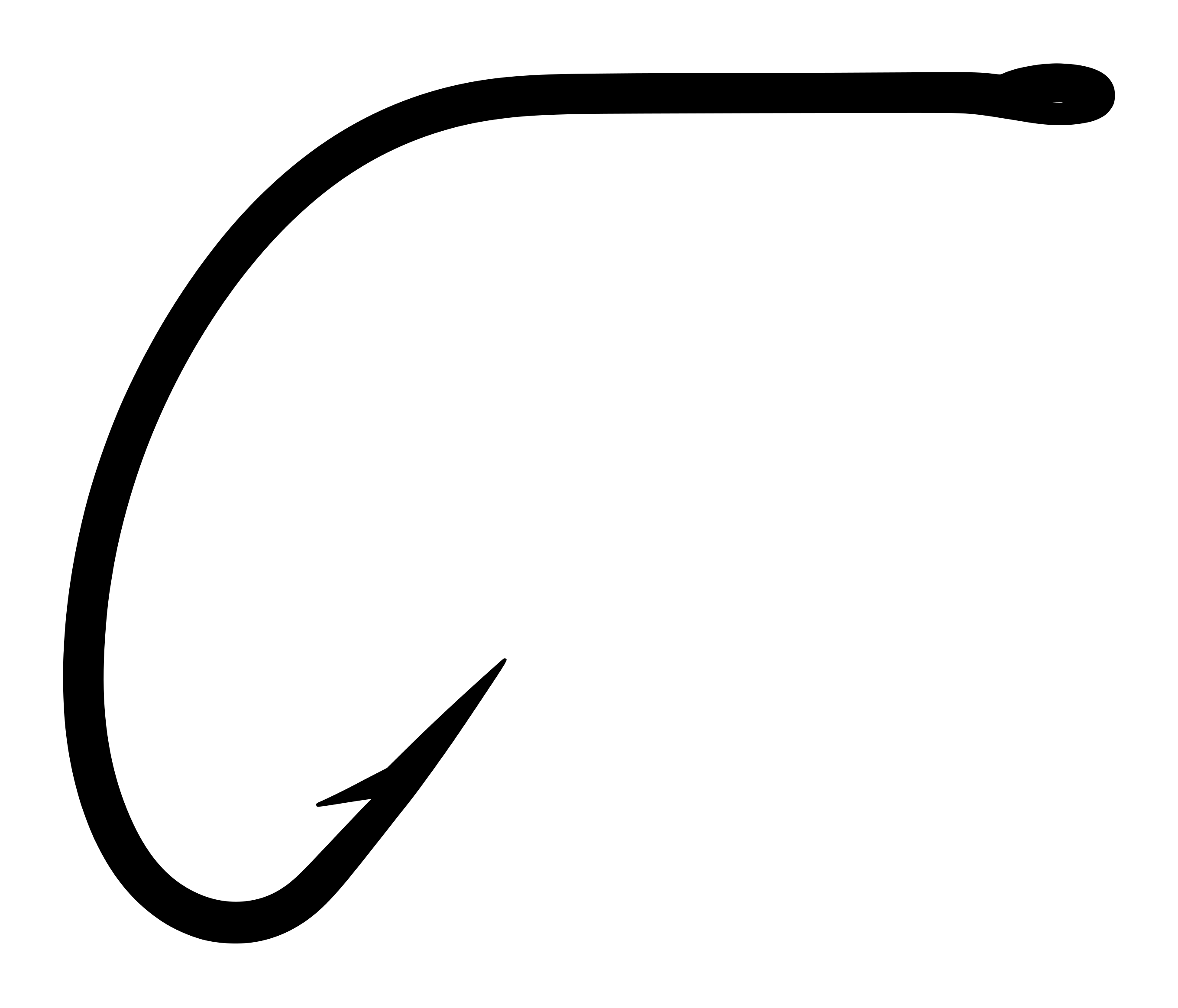
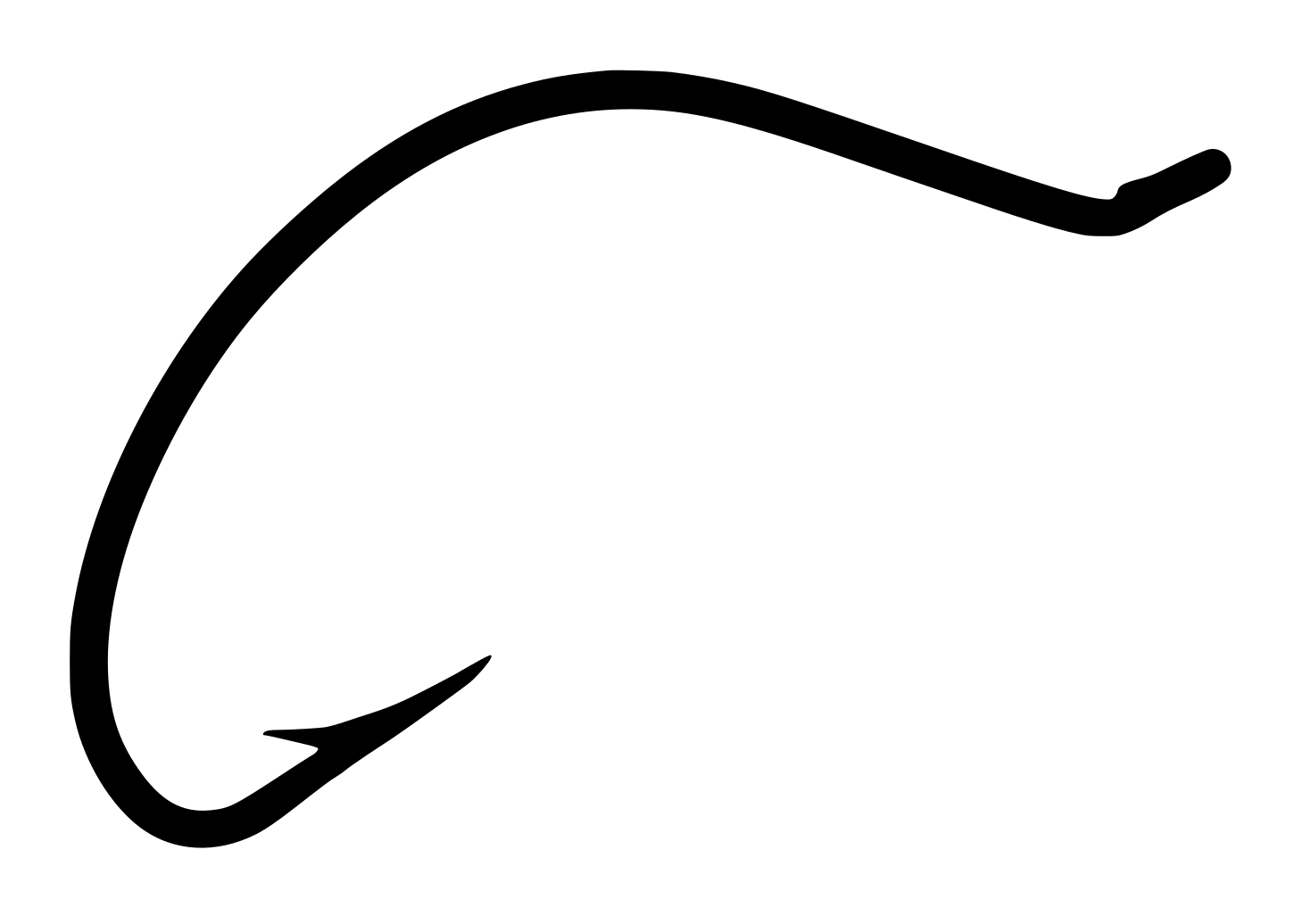
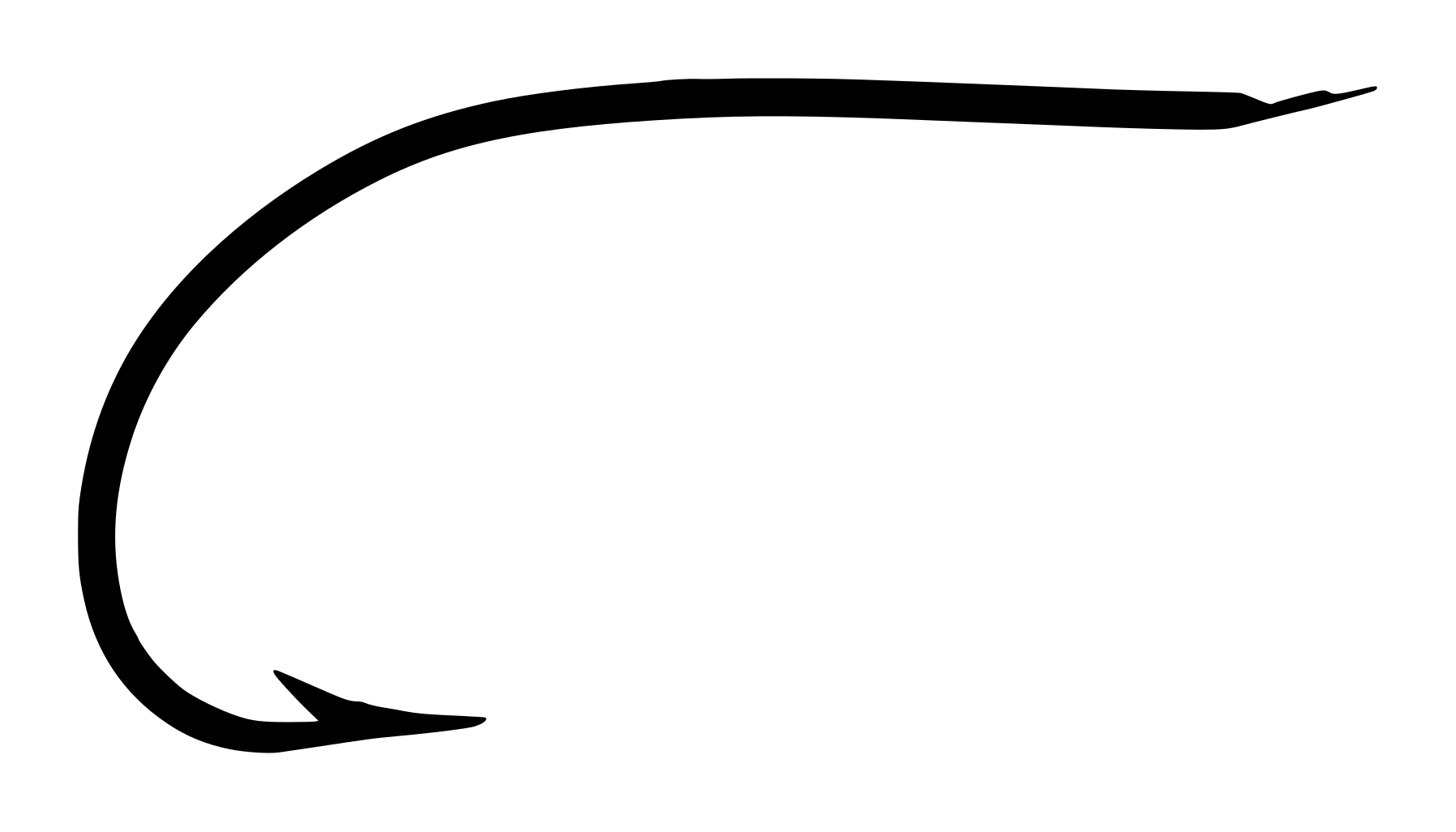
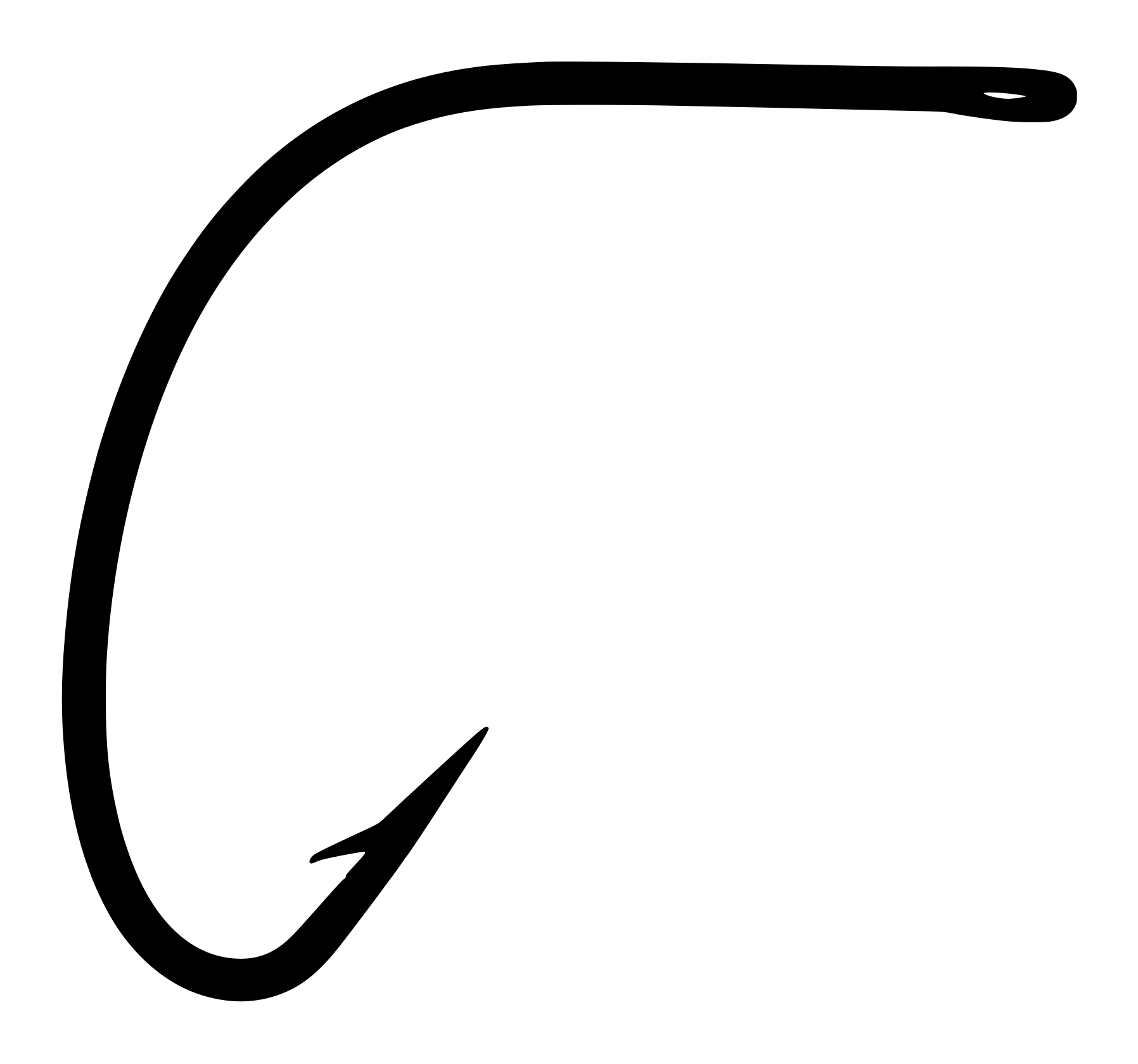
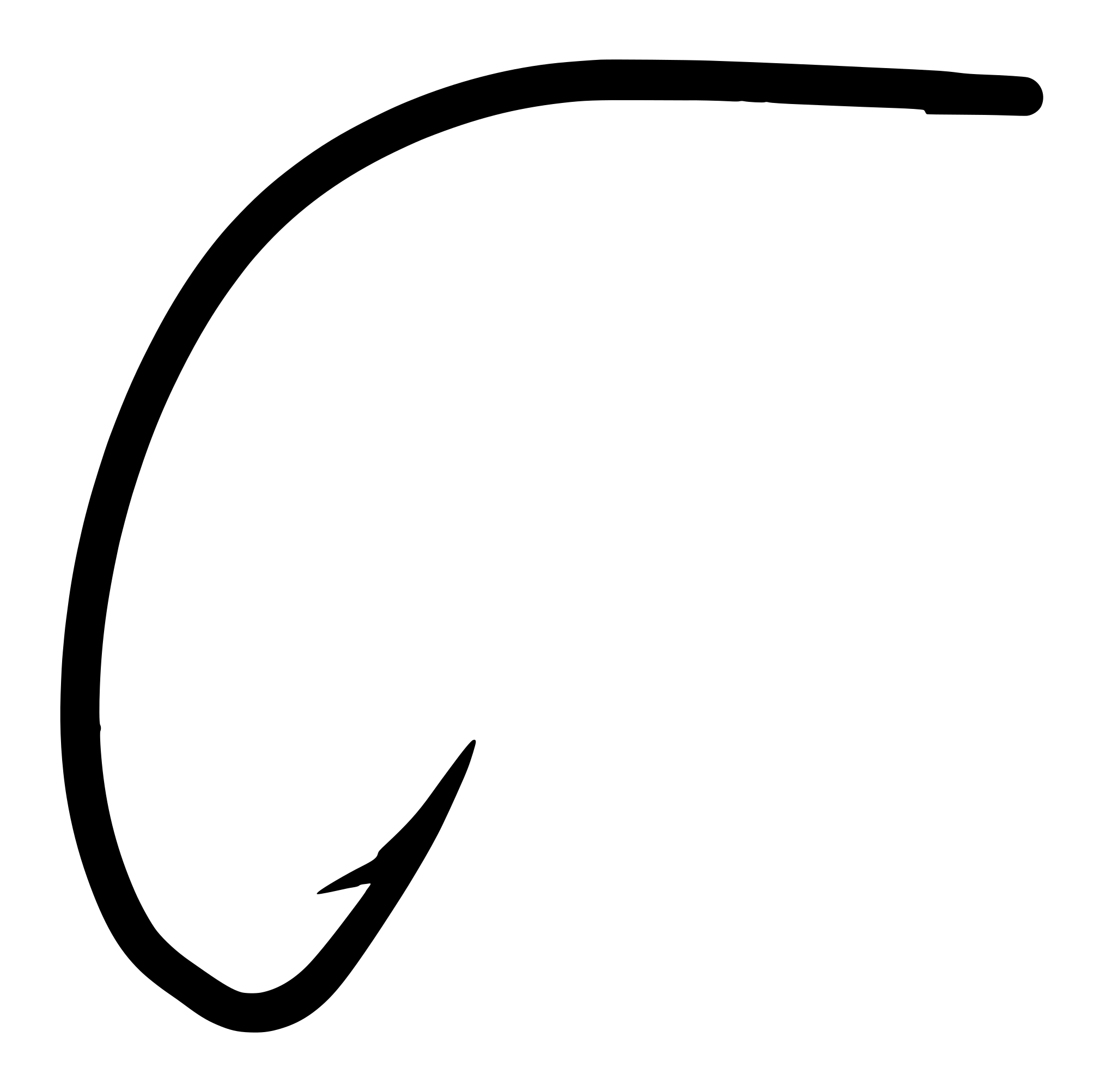
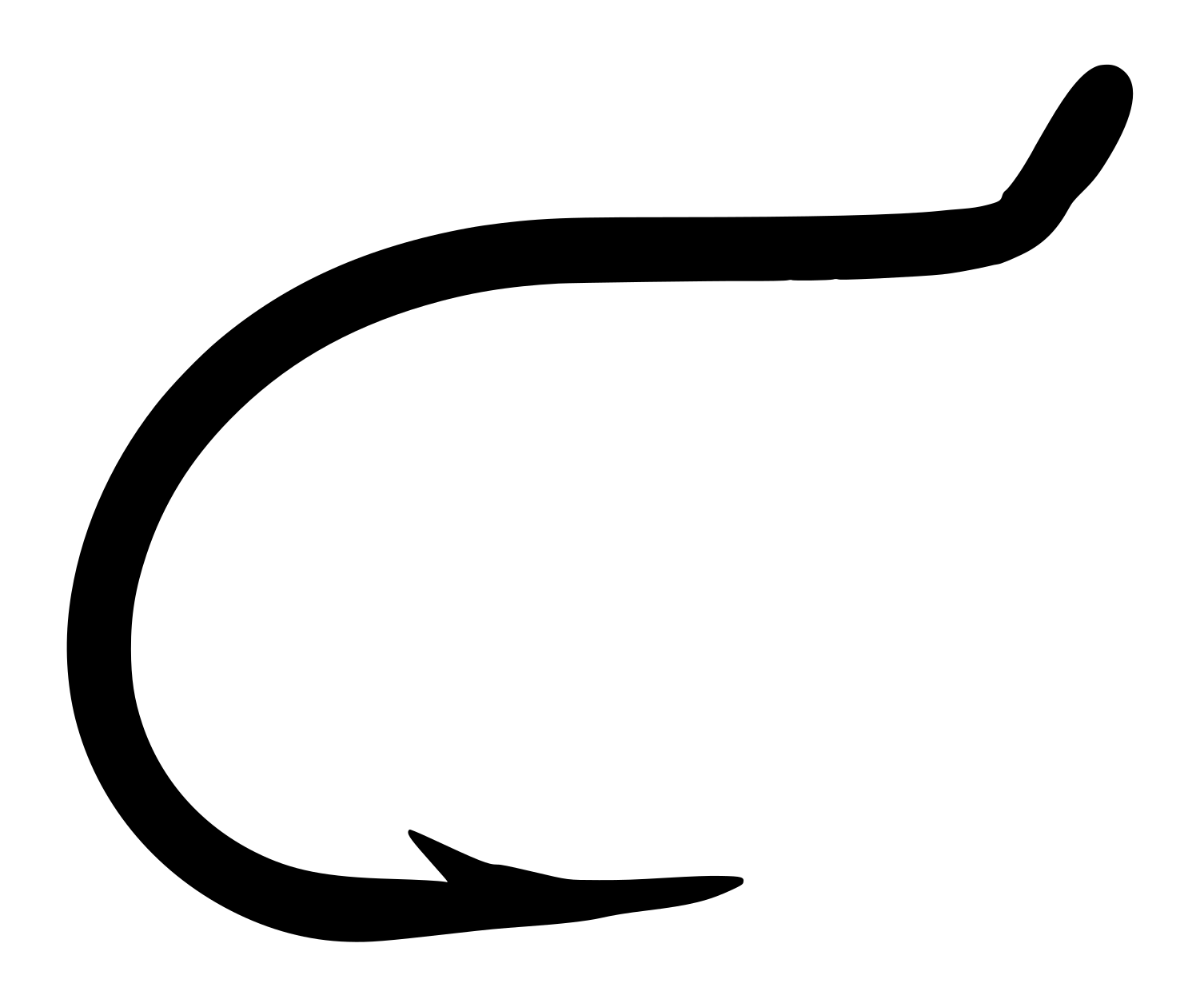
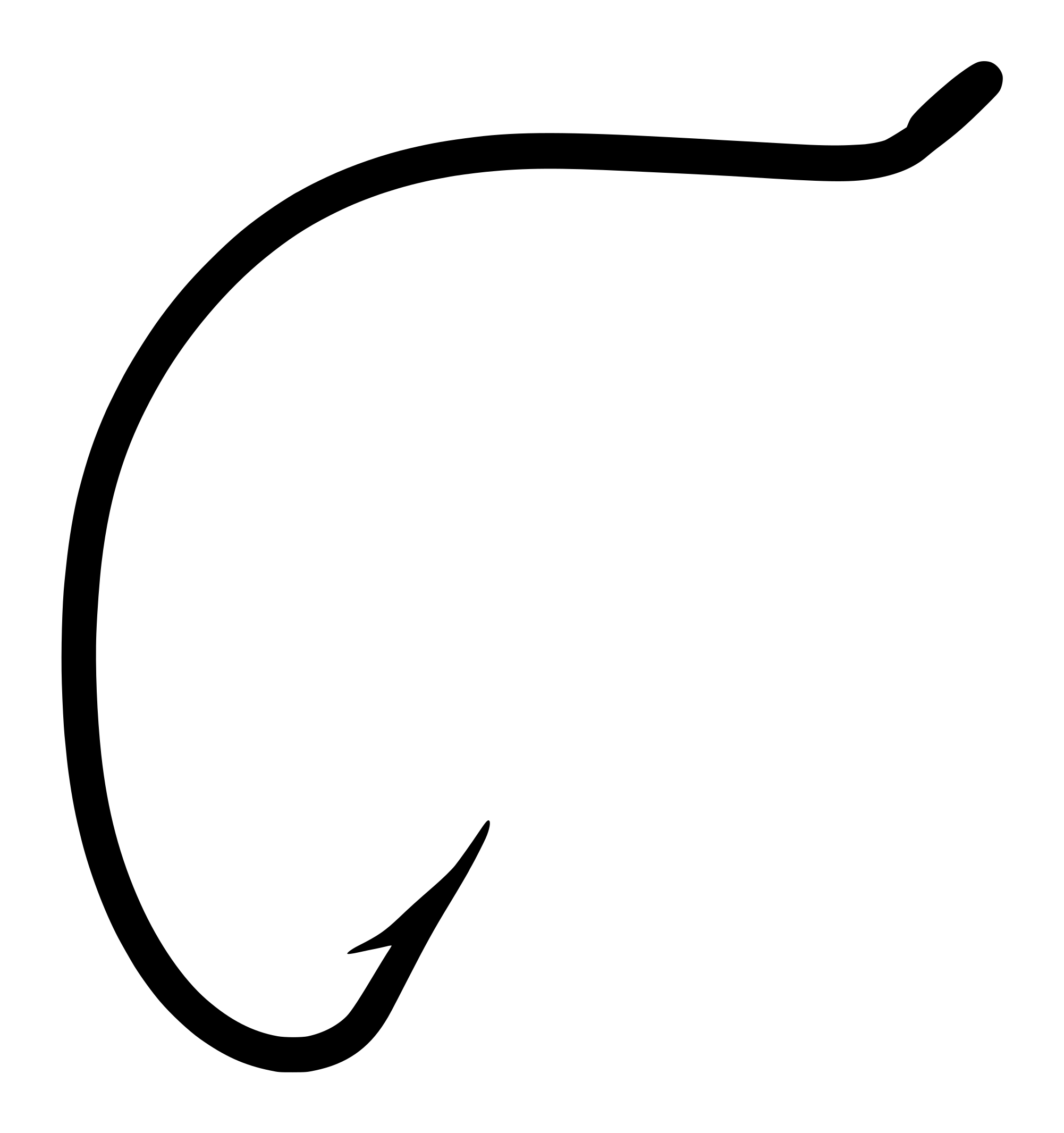
The Mustad 37142 is a size 6/0 salmon and saltwater hook manufactured by O. Mustad & Son in Norway. The hook features a straight ringed eye, extra-heavy round wire, and a Sproat-family bend with a hollow point. The defining characteristic is the gold-plated finish applied to the entire hook, which provides corrosion resistance for saltwater and heavy freshwater applications.
The specimen represents a mid-1960s to mid-1970s production run, evidenced by the bilingual ‘Made in Norway / Fabrique en Norvege’ packaging header, Auburn NY address format, and offset-printed label design. The 100-count package designation on the original label indicates wholesale or shop distributor stock rather than retail consumer packaging. A card or pack in opened but complete condition with clear labeling is moderately desirable among collectors of Mustad production-era saltwater and large streamer hooks.
Mustad 37142 size 6/0 saltwater hook, gold-plated finish, photographed on 1/10-inch measurement grid showing the complete hook profile from eye to point.
Photographic record
2 cataloged imagesSelect any record to load it above.
2 images shown
Mustad 37142 Size 6/0 Gold-Plated Sproat Bend ProfileMustad 37142 size 6/0 saltwater hook, gold-plated finish, photographed on 1/10-inch measurement grid showing the complete hook profile from eye to point.Open originalMustad 37142 Keybrand Original Package 100-Count Size 6/0Original clamshell package containing 100 Mustad 37142 size 6/0 hooks, with Keybrand distributor label and Auburn, NY manufacturer information. The bilingual 'Made in Norway' header and printed specifications date this package to c. 1960–1975.Open original
Technical profile
Eye
Ball Eye, Straight / InlineStraight ringed eye, cleanly formed with no visible deformation. Ring diameter is proportional to wire gauge. No taper visible in the eye loop itself IP.
Wire
Fine (1X Fine), Round
Shank
Short (1X–2X Short) — Plain
Bend
Wide gapSproat-family bend with rounded/convex bottom arc typical of this design family. The bend is moderately deep relative to the overall hook length. The point emerges from the bend at a slight forward angle consistent with hollow-point geometry P.
Point
Hollow Point (concave inner face)Barb is short and closely set, consistent with standard Mustad production barbs of this era. Angle appears to be swept slightly backward from the point. No micro-barbs visible P.
Finish
Gold-Plated — Confirmed (stated on packaging)Gold-plated finish with consistent warm yellow-gold tone across the visible hook surfaces. The plating appears uniform with no bare steel visible on the specimen. The finish demonstrates the characteristic reflectivity of gold plate over base steel. Finish consistency suggests factory-applied electroplating rather than hand application PV.
Hooks are bright and show no corrosion or tarnish. Gold finish is intact and uniform across all visible specimens in the package. Packaging label shows light tan patina with minor edge wear; no water damage or significant soiling. Two hooks missing from the original 100-count, suggesting the package was opened and used but preserved carefully.
The hollow point geometry on this hook features a strongly concave inner face, creating a knife-like cutting edge at the point tip. This geometry reduces the penetration force required to hook fish with hard or bony mouths. The extra-heavy wire gauge (approximately 0.062″–0.070″ diameter) provides the material strength necessary to resist straightening when setting the hook against heavy fish or when the hook is driven through tough structures such as scales, gill plates, or coral in saltwater environments.
The Sproat bend family — with its rounded bottom arc — distributes stress more evenly across the bend radius than angular bend designs (such as Limerick), reducing the likelihood of work-hardening failure in the bend itself. The gold plating creates a thin (typically 1–3 micron) electrodeposited layer over the base steel, which prevents corrosion initiation even when the base steel is exposed to sustained saltwater contact. This finish was expensive and typically reserved for premium or specialist hooks in the Mustad line.
We don't have measured sizes for this hook yet. Own one? Submit calipered measurements and we'll review and add them. Thank you!
Historical context
mustad
O. Mustad & Son is a Norwegian industrial hook manufacturer founded in 1832 in Gjovik, Norway. By the late 19th century, Mustad had become one of the world’s largest hook producers, establishing subsidiary operations and distribution centers throughout Europe and North America. The company maintained its primary manufacturing facility in Gjovik throughout the 20th century, producing both branded Mustad hooks and contract-manufactured hooks for distributor house brands including Keybrand, which was a major North American tackle distributor label.
The Mustad operation in Auburn, New York (established by the 1950s) served as the primary North American distribution and packaging center. Keybrand was a house brand used by major American tackle retailers and wholesalers during the 1960s and 1970s, allowing them to offer competitively priced Mustad-manufactured hooks under their own label. The Auburn address on this package is consistent with Mustad’s North American operations during that period. By the 1970s, Mustad had consolidated its North American packaging operations, and Keybrand branded products began to phase out in favor of direct Mustad branding.
Series History
The Mustad 37142 was part of Mustad’s broad production series of large saltwater and salmon hooks. The ‘Wide Gap’ designation printed on the packaging indicates this hook was positioned within Mustad’s explicit gap-width differentiation strategy — distinguishing it from standard-gap versions of similar bend profiles. The Sproat-family bend with extra-heavy wire and hollow point was a standard Mustad configuration for species targeting and saltwater durability through the 1960s and 1970s.
Gold-plated finishes on large saltwater hooks became increasingly common in the 1960s as a corrosion-resistance alternative to tinned finishes, particularly for hooks intended for use in highly saline or brackish environments. The straight ringed eye was the standard eye construction for commercial production hooks of this size during this era — the simpler ring design reduced manufacturing cost compared to tapered or ball-eye variants. Production of the 37142 continued through the 1970s but became less common as Mustad transitioned toward chemically sharpened and specialized point geometries in the 1980s.
Era and Packaging Dating
Packaging displays 'Made in Norway' bilingual header (English/French) consistent with Mustad export cards from 1960s–1970s. Auburn, NY zip code 13021 format is post-1963. Keybrand trademark usage and style of two-hexagon logo typical of Mustad-distributed product lines in this period. No barcode present. Lithographed paper label with offset printing is characteristic of mid-1960s packaging; the tan/cream cardboard with blue label overlay matches examples from c. 1962–1975 catalogues. Price handwritten in blue ink suggests retail distribution through tackle shops rather than direct mail.
Gold Plating and the Distributor Wars
Gold plating was expensive to apply at scale, and Mustad reserved it primarily for premium saltwater and distributor house-brand packages destined for professional charter captains and tackle shops that catered to upper-end clients. A full 100-count package of gold-plated 6/0 hooks represented a significant investment for a 1960s tackle retailer, often retailing for $8–12 per package. The Auburn, New York address on this package marks a specific moment in Mustad's expansion into direct North American distribution — the company was consolidating its regional packaging operations to compete with American manufacturers like Pflueger and Herter's. By the mid-1970s, the Keybrand label had faded from the market as retailers increasingly preferred branded hooks they could market directly.
Design lineage and influence
The Sproat-family bend traces to 19th-century English fly-hook design traditions, particularly the work of Kendal and Redditch makers. Mustad adopted and refined the Sproat geometry in the late 1800s and maintained it as a core production bend through the 20th century. The 37142 represents the industrial evolution of the Sproat: manufactured at scale in Norway rather than by hand in England, but retaining the fundamental bend geometry.
Contemporary competitors in the large saltwater hook market included the Partridge Regal (also Sproat-based), the Allcock Redditch range, and various Pflueger hooks distributed in North America. The gold-plated finish variant of the 37142 emerged in response to the growth of saltwater fly fishing and bait-fishing in the 1960s, when American anglers began targeting permit, tarpon, and other species that demanded both larger hooks and superior corrosion resistance. By the 1980s, chemically sharpened points and specialized saltwater alloys had displaced traditional hollow-point designs in the premium market segment.
Best matchRelated by Attribute
Computed automatically from catalog data — updated as new hooks are added.
Matches: Bend, Gap, Eye, Point, Forging +2 moreDiffers: Shank: Short (1X–2X Short) vs Standard; Wire: Fine (1X Fine) vs Standard; Eye Orient.: Straight / Inline vs Turned Down +2 more
Matches: Bend, Wire, Gap, Eye, Eye Orient. +3 moreDiffers: Shank: Short (1X–2X Short) vs Standard; Point: Hollow Point vs Standard / Spear; Finish: Gold-Plated vs Bronzed +1 more
Matches: Bend, Gap, Point, Forging, Application +2 moreDiffers: Shank: Short (1X–2X Short) vs Standard; Wire: Fine (1X Fine) vs Standard; Eye: Ball Eye vs Tapered Eye +3 more
The 37142 was designed for large saltwater gamefish including tarpon, permit, and large striped bass, as well as salmon fishing in heavy freshwater environments. The extra-heavy wire and wide gap accommodate larger baits and the hook-setting demands of fish in the 15–40+ pound range. The gold-plated finish provides extended corrosion resistance compared to tinned finishes, making it suitable for extended periods in salt spray or brackish water conditions. The hollow point geometry and straight eye facilitate attachment of lines and leader material without binding or kinking.
Secondary Applications
Large saltwater flies when used as a streamer hook platform; pike and musky fishing with large streamers or live baits.
Classic Fly Patterns
Not typically used for fly tying.
Modern Equivalents
Hook
Match Quality
Notes
Mustad 92654 Saltwater Sproat
Very Good
Same bend family and basic geometry; modern chemically sharpened point and stainless steel options replace gold plating
Partridge Regal size 6/0
Good
English Sproat variant with similar wide gap; smaller manufacturer, higher cost
Tiemco 811S
Moderate
Japanned streamer/saltwater hook; lighter wire and smaller gap than 37142
Collector notes
Rated 4.0/10 — moderately uncommon due to narrow size range (large sizes such as 6/0 remain available) and Mustad's high production volume, offset by genuine collector interest in Keybrand distributor packaging and gold-plated finishes from the 1960s–70s. The wide-gap designation and complete original package in good condition add appeal to specialist collectors of vintage saltwater and salmon hooks.
Reference value
$10 – $28 USD estimate
Packaging condition
Good — moderate wear, legibleRecorded specimen
Packaging format
GW-MUSTAD-CS-01Catalog code
Factors favoring collectability: Gold-plated finish on large saltwater hooks is less common than tinned or blued versions in surviving inventory. Keybrand distributor packaging has moderate appeal among collectors seeking house-brand variants and North American tackle shop ephemera. Complete 100-count original package with clear labeling documents production-era wholesale stock rather than retail consumer packaging. The bilingual Canadian/American packaging suggests significant distribution into Canadian tackle markets, where examples may be scarcer than in US inventory.
Limiting factors: Mustad’s industrial production volume means even ‘old’ hooks are relatively common in large sizes. Size 6/0 is a standard saltwater size with broad historical use — not rare or collectible on its own merits. The hook itself is functional and inexpensive to produce, so bulk stock remains available. Opened packages with missing hooks command lower premiums than sealed examples. Collector demand is concentrated among Mustad specialists and vintage saltwater hook enthusiasts rather than among general fly-tying or tackle collectors.
Desirability variants: Sealed original packages with all 100 hooks intact command the highest premium. Smaller sizes (2/0, 3/0) would be scarcer if available. Packages with complete original tissue wrapping or boxes rather than clamshells would be significantly more desirable. The Keybrand label itself is a small but real premium factor — not many examples of this specific distributor branding survive.
Packaging
Plastic clamshell container (dimensions approximately 6.5" × 4.25" × 0.75") with yellow-tinted translucent polystyrene lid and base. Interior label adhered to the base reads: blue lithographed label stock (approximately 4" × 3") with Mustad two-hexagon logo at upper right, Keybrand trademark below. Header text printed bilingual: 'MADE IN NORWAY / FABRIQUE EN NORVEGE'. Center section shows specifications in three columns separated by printed lines: QUAL. | NO. | QTY. with handwritten entries '37142' | '6/0' | '100'. Below the specification section: printed text 'WIDE GAP'. Bottom of label shows manufacturer address: 'O. MUSTAD & SON (U.S.A.) INC., AUBURN, N.Y. 13021'. Printing method: offset lithography on cream/tan cardboard label stock. Label shows light tan patina and minor edge wear consistent with storage in a dry environment. Original hooks visible inside clamshell, all gold-plated finish intact.
Market Value Notes
Low ($10): Good condition — opened package with 98 of 100 hooks present, label intact but showing tan patina and minor wear<br />
High ($28): Excellent/Mint condition — sealed original clamshell with all 100 hooks present, label clean and vibrant, no corrosion or defects<br />
Premium factors: Sealed/complete package status, original tissue or factory wrapping integrity, Keybrand distributor label appeal, gold-plated finish preservation, earlier (1962–1968) production variants<br />
Platforms: eBay (sold listings), specialist vintage tackle dealers, regional tackle auctions<br />
Confidence: V verified — Based on eBay sold data (May 19, 2023 – May 18, 2026), avg $20.87, range $2.85 - $43.00. Low value assumes typical opened inventory; high value anchors to premium sealed examples at upper market range.
Where to Find
eBay.com (US and UK listings); regional tackle auctions and estate sales; vintage fishing tackle dealer networks in the northeastern US and Ontario, Canada (where Mustad distributor stock is more common); specialized Facebook groups focused on vintage saltwater and salmon tackle.
Collector's Identification Tips
Identify by printed model code ‘37142’ on the original package label. Verify ‘Wide Gap’ designation printed below the specification section. Keybrand trademark and bilingual ‘Made in Norway’ header are diagnostic of distributor packaging from this manufacturer and era. Straight ringed eye and extra-heavy wire gauge distinguish this from medium-wire versions of similar bends. Gold-plated finish should be uniformly warm yellow-gold with no bare steel visible.
eBay Market Reference
Period: May 19, 2023 – May 18, 2026Avg sold: $20.87Range: $2.85 - $43.00Avg shipping: $6.9Sellers: 5
eBay market reference. Researcher-curated. Prices in USD.
Preservation
Storage and Preservation
Store the original clamshell package in a cool, dry environment away from direct sunlight and humidity. The gold-plated finish is highly resistant to corrosion but can develop a dull patina or lose luster if exposed to prolonged moisture or salt spray. Keep the package sealed or re-closed whenever possible. If the original package is opened, store hooks on the original cardboard label rather than loose in a container to minimize air exposure and prevent oxidation of the gold plating.
Maintain the original label intact — handwritten markings and original packaging are significant to the specimen’s collectability. Avoid contact with other metals or ferrous materials that could cause galvanic corrosion at micro-scale contact points. Inspect periodically for signs of corrosion or mold growth on the cardboard label. The clamshell plastic is polyethylene and may become brittle over decades; handle gently to avoid cracking. If displaying the package, use UV-filtering glass or acrylic to slow any color fading of the blue label lithography.
Primary Source
Packaging Label Analysis
Source: Mustad 37142 package label, c. 1960–1975, O. Mustad & Son (U.S.A.) Inc., Auburn, NY
The label text ‘MADE IN NORWAY / FABRIQUE EN NORVEGE’ is the primary source document confirming Norwegian manufacture at the Mustad Gjovik factory. The bilingual English/French header format was standard on Mustad export packages destined for both US and Canadian markets during the 1960s and 1970s. This formatting is a reliable era marker: unilingual ‘Made in Norway’ labels appear on later (1975+) inventory, while earlier (1950s) Mustad North American packages showed only English text.
The address ‘O. MUSTAD & SON (U.S.A.) INC., AUBURN, N.Y. 13021’ establishes the distribution point. The zip code 13021 for Auburn, NY was formally assigned in 1963, so this package cannot be earlier than 1963. Mustad maintained this Auburn facility through the 1970s; packages with different addresses (e.g. Newark, NJ) date to pre-1960 or post-1975. The printed specification columns (QUAL. | NO. | QTY.) with handwritten entries ‘37142 | 6/0 | 100’ indicate this was a wholesale/distributor stock item, not a retail consumer product. A retail package would typically show a printed size designation, not handwritten fills.
Size Note
Large Size Classification
Size 6/0 is classified within Mustad’s saltwater and large-fly hook range, extending beyond the traditional wet-fly and salmon-fly boundaries. This size designation reflects 19th-century hook-sizing conventions established in England, where larger numbers (1/0, 2/0, 6/0) corresponded to progressively larger hooks used for sea trout, Atlantic salmon, and pike. By the mid-20th century, 6/0 had become the standard for large saltwater gamefish (tarpon, permit, striped bass) and heavy freshwater streamers.
The ‘Wide Gap’ specification further distinguishes this hook within the 6/0 size category — it indicates a deliberately increased gap width (approximately 0.80″) compared to standard-gap versions. This wider gap accommodates larger baits and provides superior hook-setting geometry for fish with large or bony mouths. The wide-gap designation was Mustad’s explicit quality differentiation strategy in the 1960s–70s, allowing retailers to stock both standard and wide-gap versions at the same size for different applications.
Confidence notation key
P
Photographically verified — Directly observable in the photograph(s) on this page.
V
Verified by documentation — Confirmed by manufacturer catalog, spec sheet, or published reference.
I
Inferred — A logical deduction from observable or documented evidence, not directly stated.
E
Estimated — An approximation based on visual comparison, proportional analysis, or limited data.
S
Speculative — A reasoned hypothesis that cannot be confirmed from available evidence.
Claims with no notation are confirmed by multiple independent sources. All photographs on garrenwood.com are taken on a measurement grid where each square equals 1/10 inch (0.1″ / 2.54 mm).