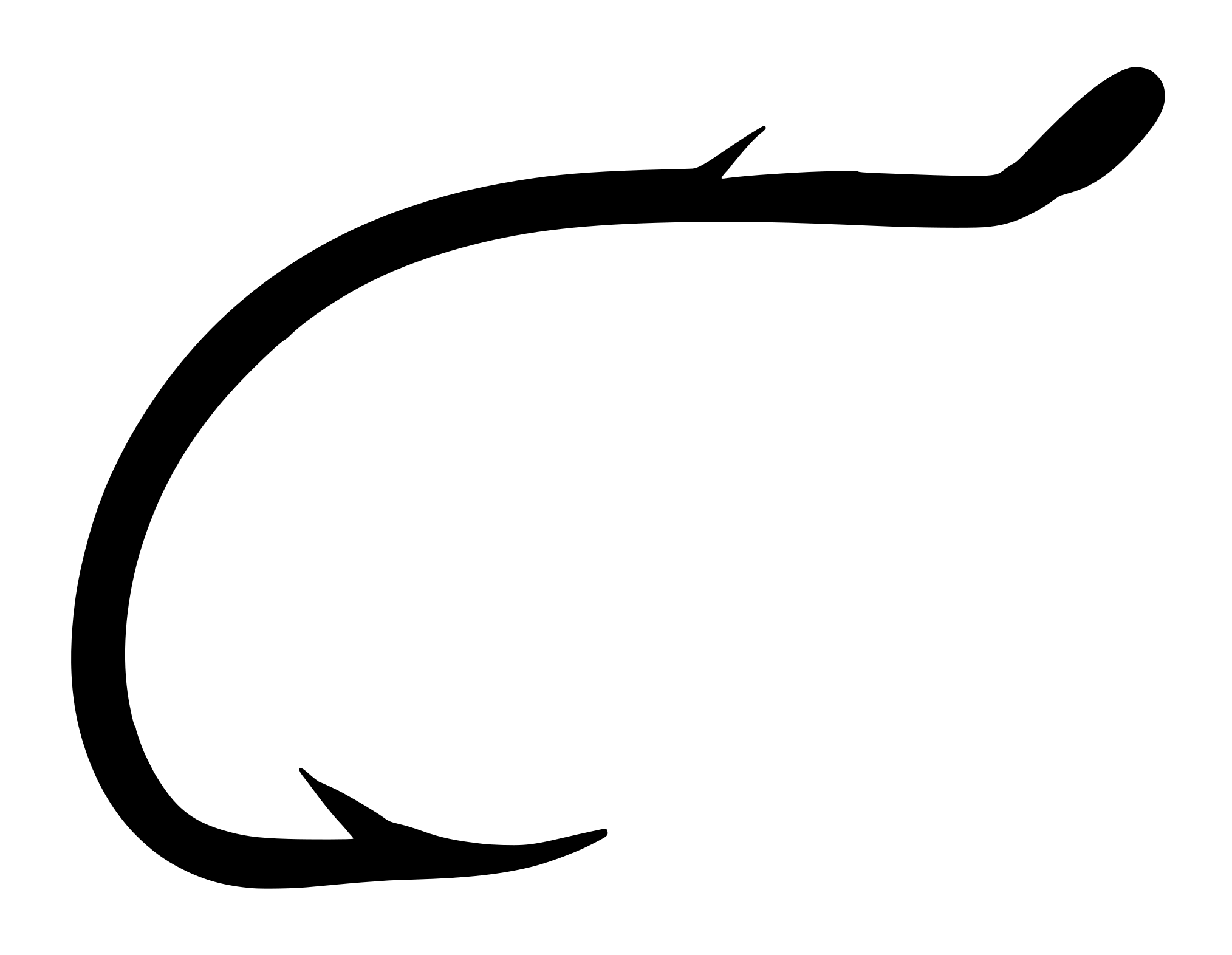
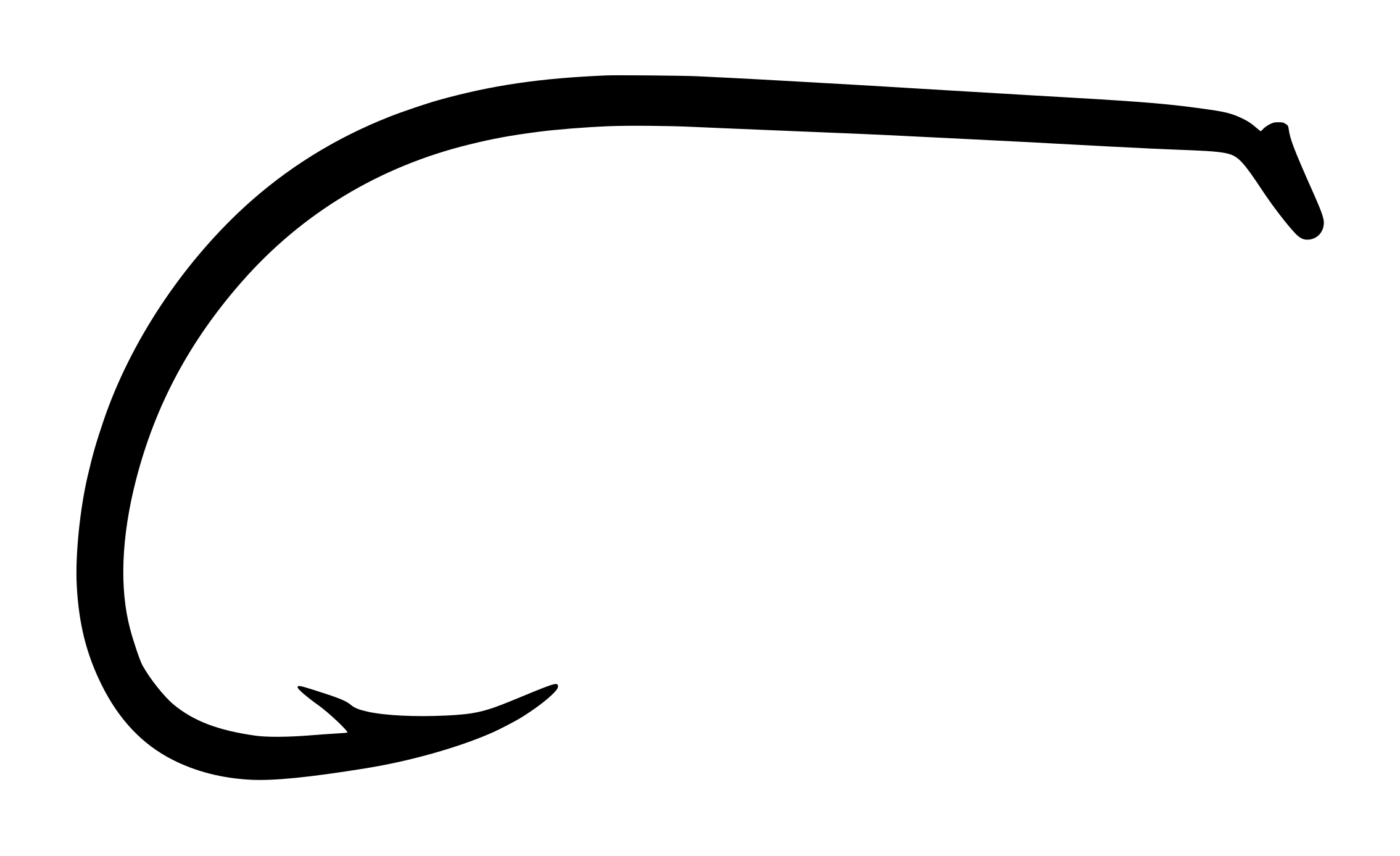
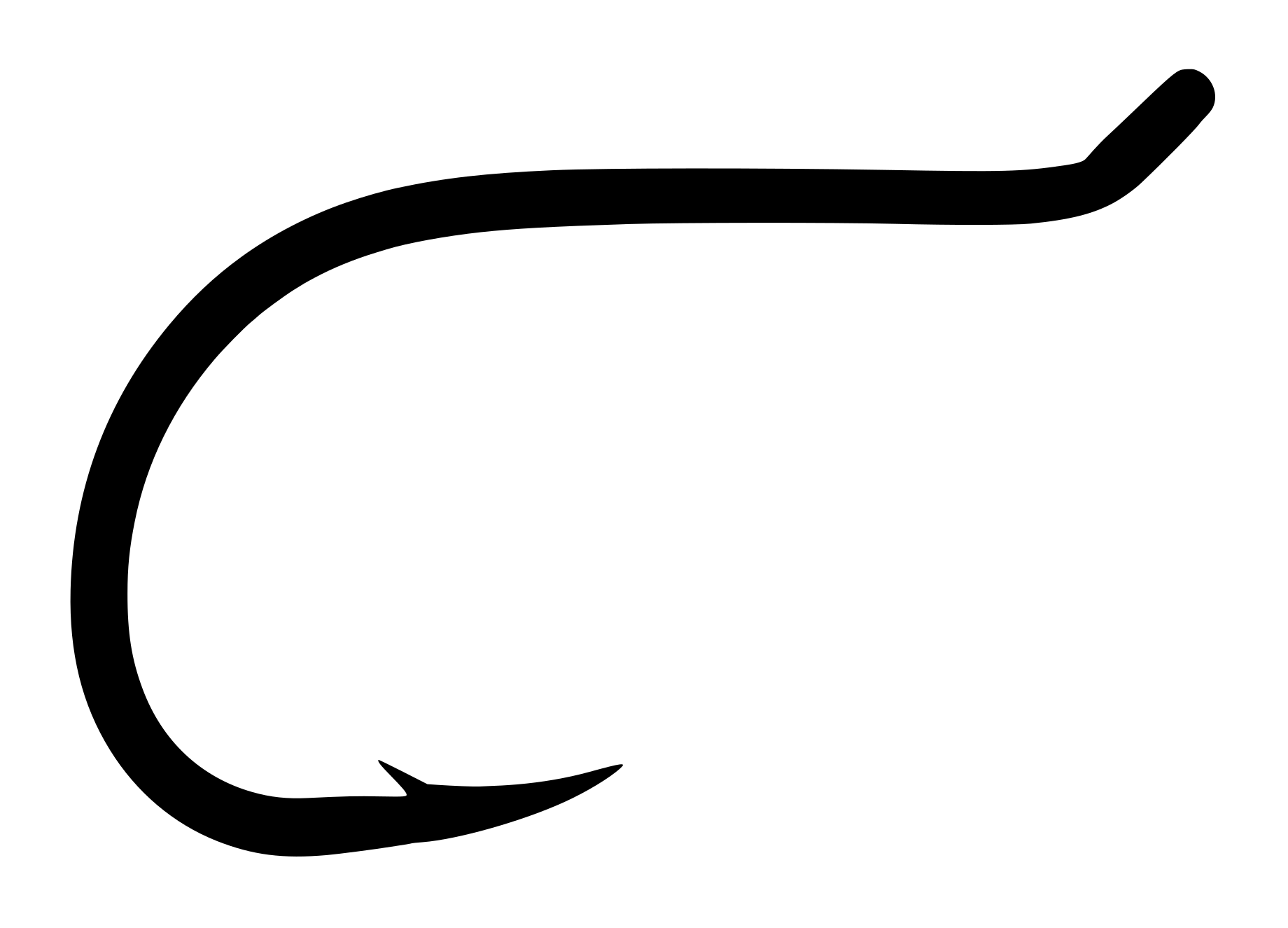
The Mustad 92158 is a forged, reversed-point ‘Beak’ baitholder hook produced by O. Mustad & Søn of Gjøvik, Norway. Despite its salmon and sea-trout associations, it is a bait-fishing hook—not a fly-tying hook—designed to present roe (egg sacs), worms, and cut bait, with a single baitholder slice on the shank to keep bait from sliding V. It pairs a reversed (offset) point with a turned-up tapered eye, a 1X-short forged shank, and 2X-strong wire V.
This specimen is a size 2/0 example in bronzed finish from an original 100-count Mustad box. Packaging evidence points to manufacture circa 1950-1970: no UPC barcode (pre-1974), letterpress printing on cream cardboard, an ‘Oslo – Norway’ address, and period Mustad KEY logo styling I. A ‘Larry’s Sport Center’ retail label with a handwritten price ties the box to mid-century U.S. tackle retail P. The 92158 pattern remains in Mustad’s current catalogue, so this is best understood as a vintage example of a still-produced bait hook rather than a discontinued model V.
Collectibility is modest (rated 4.5/10): Mustad’s industrial volume limits scarcity, but a complete original box with period retail provenance has genuine appeal to packaging and tackle-history collectors E. Complete boxes in good-to-excellent condition trade in roughly the $12-38 range depending on condition and provenance E.
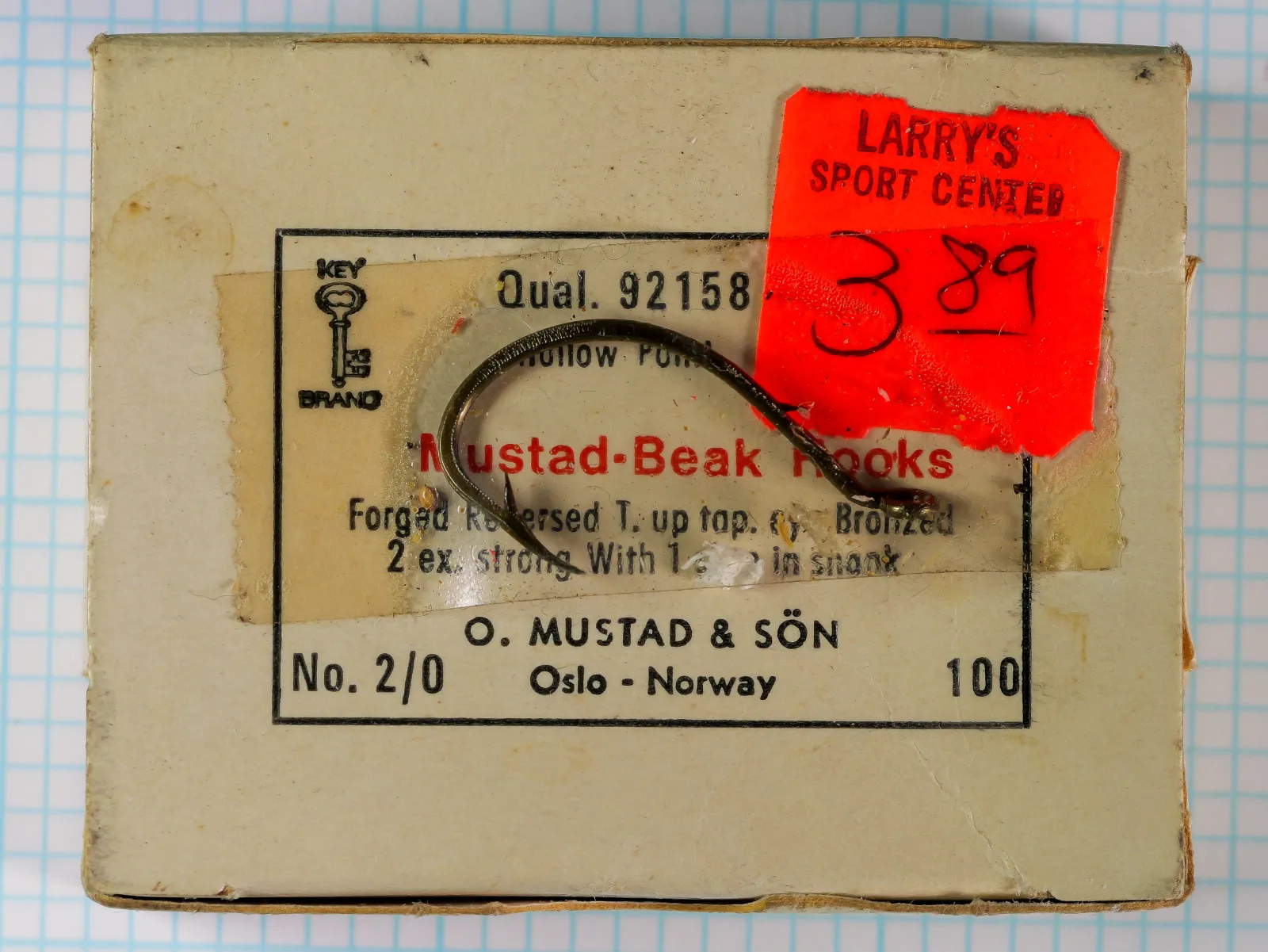
Front panel of the original Mustad 92158 box showing KEY logo, model designation Qual. 92158, printed specifications indicating forged reversed turned-up eye construction with bronze finish and heavy wire, and manufacturer address Oslo-Norway. Red Larry's Sport Center retail label with handwritten price marking is visible.
Photographic record
3 cataloged imagesSelect any record to load it above.
3 images shown
Mustad 92158 Beak Hook Size 2/0 Original Box FrontFront panel of the original Mustad 92158 box showing KEY logo, model designation Qual. 92158, printed specifications indicating forged reversed turned-up eye construction with bronze finish and heavy wire, and manufacturer address Oslo-Norway. Red Larry's Sport Center retail label with handwritten price marking is visible.Open originalMustad 92158 Beak Hook Size 2/0 Point DetailClose-up detail of the Mustad 92158 hook point showing the characteristic hollow-point geometry with concave inner face. The short, close-cut barb is visible positioned approximately one-third distance from eye to point. Bronzed finish warm tone is clearly visible in direct light with steel grain showing through the coating.Open originalMustad 92158 Beak Hook Size 2/0 Full ProfileFull-length profile of the Mustad 92158 showing the distinctive beak-offset bend geometry and turned-up tapered eye. The hook is positioned horizontally on the measurement grid allowing clear assessment of overall length, shank length, gap width, and bend depth proportions.Open original
Technical profile
Mustad 92158 Beak Baitholder — reversed point, turned-up tapered eye, 1X short forged shank, 2X strong wire, single baitholder slice, bronzed finish, size 2/0, 100-count original box.
Eye
Tapered Eye, Turned UpTurned-up tapered eye — tapered wire formed into a simple turned-up ring, well-formed with a smooth taper from shank to eye P. This is a tapered ring eye, not a looped/return-loop eye. Consistent with Mustad's 'turned up tapered eye' specification for this pattern V.
Wire
Standard, Forged
Shank
Short (1X–2X Short) — Plain, Baitholder Slices
Bend
Beak / Reversed Point, Standard gap
Point
Hollow Point (concave inner face)Short, close-cut barb characteristic of Mustad Beak construction, positioned approximately 1/3 of the distance from eye to point P.
Finish
Bronzed — Inferred (photographically likely)Warm brown-amber tone visible in direct light with steel grain showing through the coating P. Consistent with period bronzing typical of Mustad mid-century production.
Specimen hooks show excellent condition with no corrosion, bronzed finish intact, and barbs sharp P. Original box exhibits age-appropriate toning with minor edge creasing but complete structural integrity P. Red retail label overlay present but not obscuring critical text. Hook count is believed complete (100) but has not been verified.
The 92158 is a forged, 2X-strong ‘Beak’ baitholder bait hook. Its reversed (offset) point is designed so the point contacts the fish’s mouth without the shank rolling, improving hookups on bait-fished presentations V. The single shank slice (baitholder barb) helps anchor roe sacs, worms, or cut bait and partly obscures the point V. The 1X-short forged shank and 2X-strong wire give the hook strength against large fish while keeping a compact profile suited to egg-sac presentation for steelhead and salmon V.
The turned-up tapered eye (a tapered-wire ring eye, not a looped eye) suits snelled rigs and heavier monofilament V. The bronzed finish provides modest corrosion resistance appropriate to freshwater and light estuarine use; it is thinner than a japanned coating and wears with use I. The exact point geometry—whether a plain ground point or a hollow/cut point—should be confirmed from the photographs; Mustad’s catalogue describes the family’s point as a classic reversed beak point rather than a hollow point (V, pending photo confirmation).
We don't have measured sizes for this hook yet. Own one? Submit calipered measurements and we'll review and add them. Thank you!
Historical context
mustad
O. Mustad & Søn traces its origins to a small nail, wire, and metal-goods works founded in 1832 by Hans Skikkelstad on the Hunnselva river in the Gjøvik (Vardal) district of Norway V. The Mustad family took control in 1843, and in 1874 the firm took the name O. Mustad & Søn V. Mechanized fishhook manufacture was developed in-house from the late 1870s—the work of engineer Mathias Topp is the reason Mustad dates its fishhook heritage to 1877—and the company went on to become one of the world’s largest industrialized hook makers V.
Unlike the craft-based Redditch makers, Mustad pursued mechanization and mass production, achieving economies of scale and global distribution; by the early twentieth century the firm operated across many countries and catalogued tens of thousands of hook patterns V. The company’s home and principal manufacturing base has long been Gjøvik; the ‘Oslo – Norway’ address on this period packaging reflects a sales or administrative address rather than the manufacturing seat I. Mustad remained a family-owned business through six generations until late 2011, when it was sold to the Norwegian investment company NLI Utvikling (now ARD Group AS) V. The 92158 baitholder pattern remains in production today V.
Series History
The 92158 belongs to Mustad’s long-running family of ‘Beak’ baitholder hooks—forged, reversed-point bait hooks offered across many shank lengths and finishes V. Related current patterns in the same family include the classic Baitholder Beak 92247 and long- and short-shank variants, illustrating how Mustad numbered the family by shank length and slice configuration rather than by fly-pattern application V.
This specimen’s box documents a size 2/0 in bronzed finish, 100 to the box P. The pattern is offered in a wide range of sizes and remains in Mustad’s catalogue, so the 92158 is best described as a still-current pattern of which this is a vintage example, rather than a model ‘superseded’ by later variants V. Complete original Mustad boxes of this era are less commonly preserved than the loose hooks themselves, which lends an intact, labelled box added interest to collectors E.
Era and Packaging Dating
No barcode on packaging — UPC codes not adopted for fishhooks until mid-1970s. Logo style uses KEY trademark in simple line form, consistent with Mustad production c.1950-1970. Letterpress printing method on cream cardboard stock typical of mid-century fishing tackle packaging. Mustad address shows 'Oslo - Norway' without postal code, consistent with pre-postal-code era. 'Reversed T. up' specification wording typical of early postwar Mustad nomenclature. Red sticker price overlay with handwritten mark suggests retail pricing from 1960s-early 1970s (pre-barcode era). Overall evidence points to manufacture between 1950-1970, likely 1955-1968.
A Bait Fisher's Standard
In North America, the Mustad Beak baitholder is a long-standing favorite for presenting salmon and steelhead roe: the reversed point and single shank slice hold an egg sac securely while keeping the point clear for a positive hookset V. Mustad has catalogued the Beak baitholder in a wide range of sizes and shank lengths for bait fishermen for generations V.
Design lineage and influence
The ‘Beak’ is best understood as a point-and-bend style rather than a classic fly-hook bend: it combines a reversed (offset) point with a slightly in-curved, beak-like point profile said to resemble a bird’s beak, a configuration valued in bait fishing for positive hooking and holding V. It is distinct from the neutral Sproat and Limerick bends of the fly-tying tradition.
Mustad produced the Beak as part of its mass-market bait-hook catalogue, in many sizes, shank lengths, and finishes V. Claims tying the Beak specifically to a licensed nineteenth-century Redditch salmon design, or crediting it with influencing later Japanese fly-hook development, are not supported by available documentation and should be treated as speculative S.
Best matchRelated by Attribute
Computed automatically from catalog data — updated as new hooks are added.
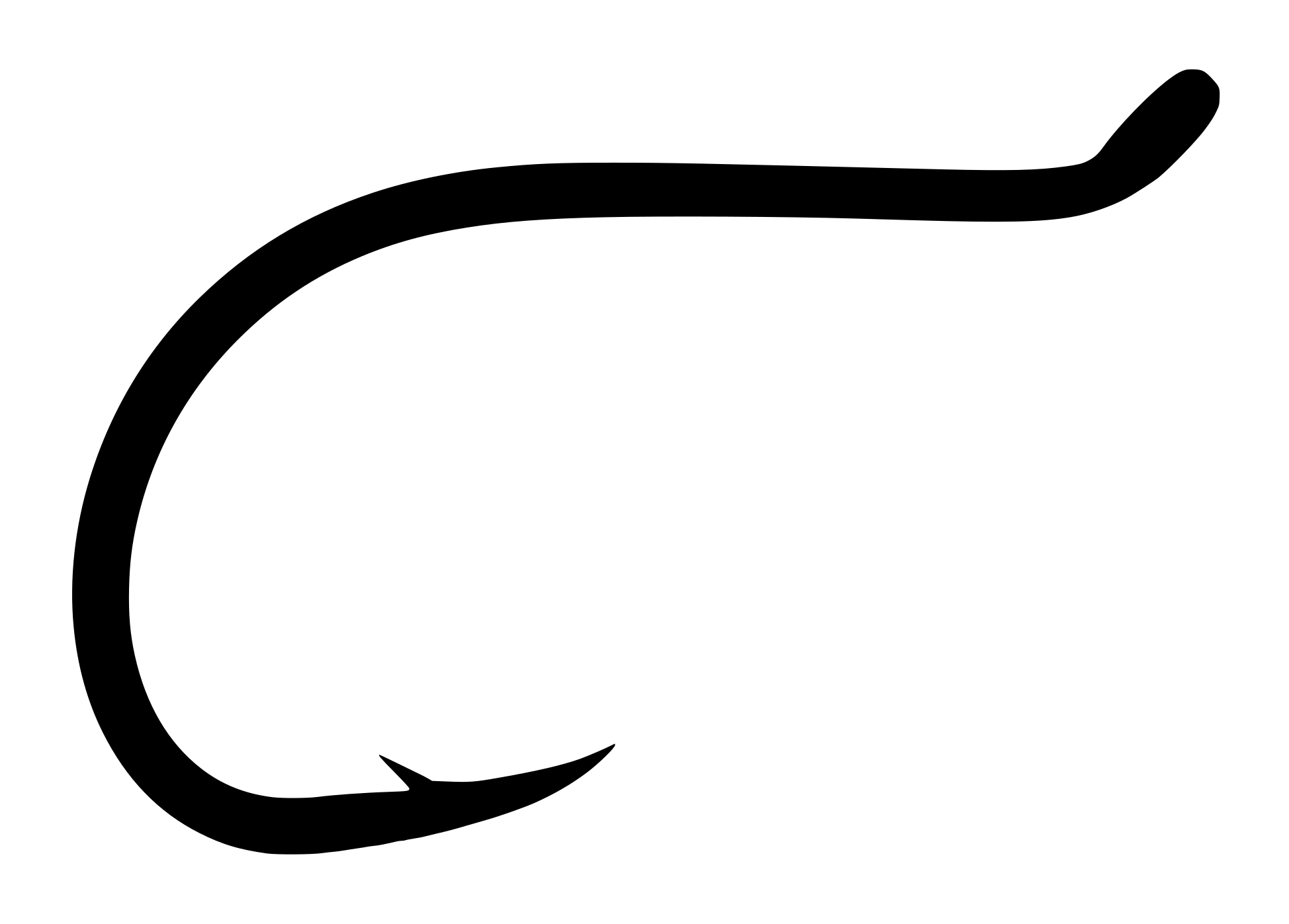
Matches: Bend, Shank, Eye, Finish, Application +1 moreDiffers: Wire: Standard vs Fine (1X Fine); Gap: Standard vs Wide; Eye Orient.: Turned Up vs Turned Down +3 more
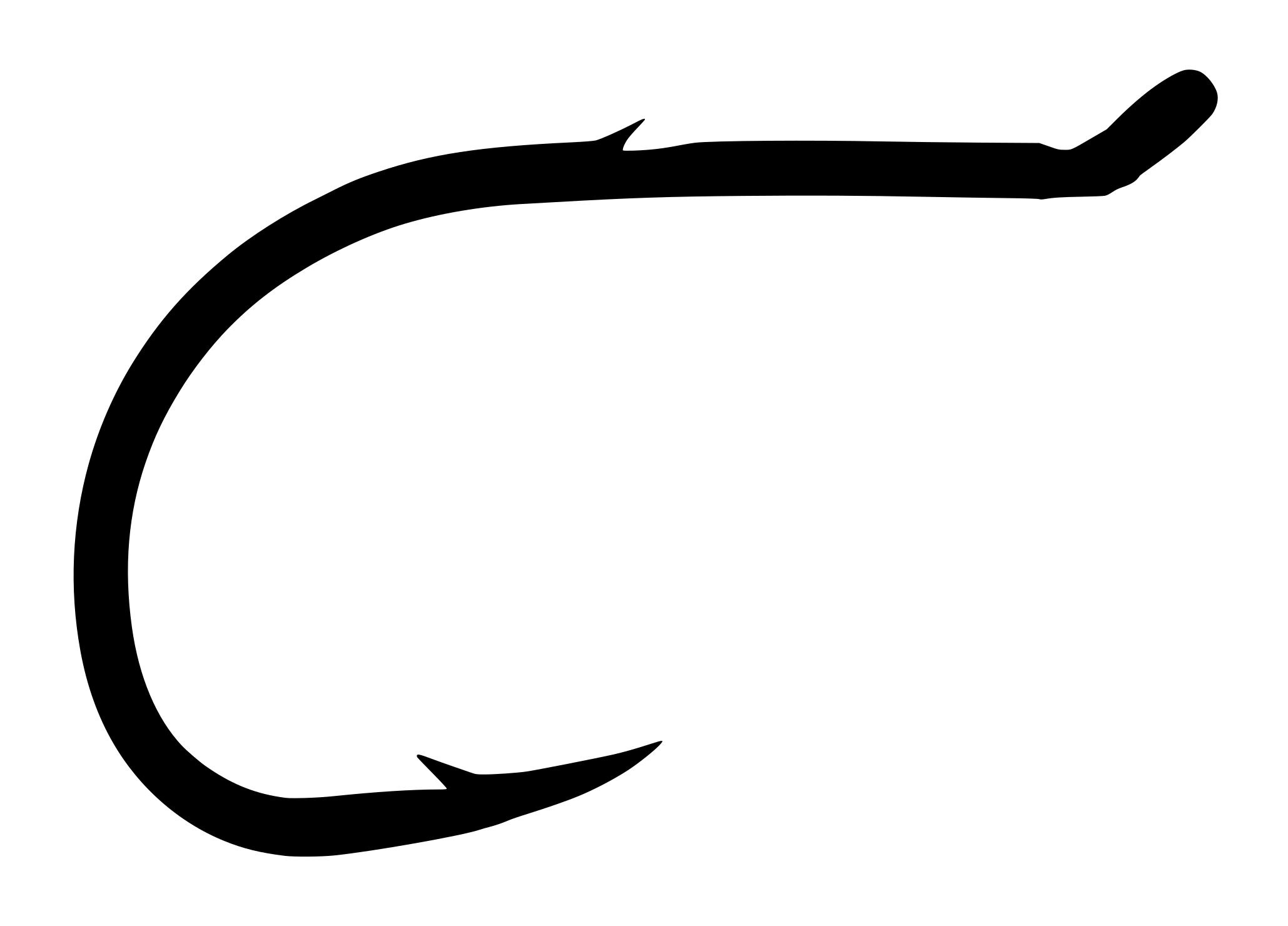
Matches: Bend, Shank, Eye, Eye Orient., Point +2 moreDiffers: Wire: Standard vs Extra-Heavy (2X+); Gap: Standard vs Wide; Finish: Bronzed vs Nickelled +2 more
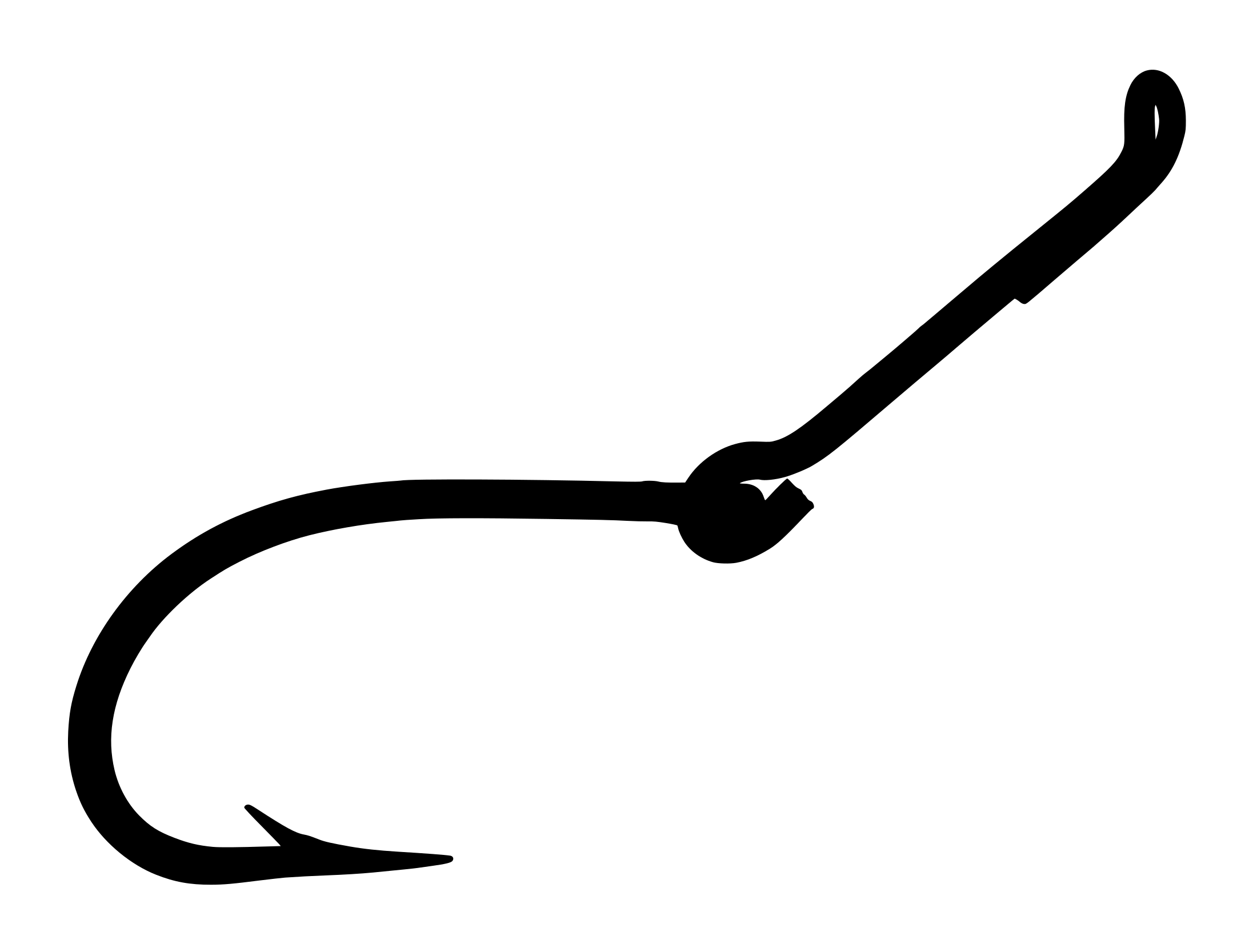
Matches: Bend, Shank, Gap, Eye, Point +3 moreDiffers: Wire: Standard vs Heavy (1X Heavy); Eye Orient.: Turned Up vs Turned Down; Application: Salmon, Sea Trout, Bait vs Bait, Salmon +2 more
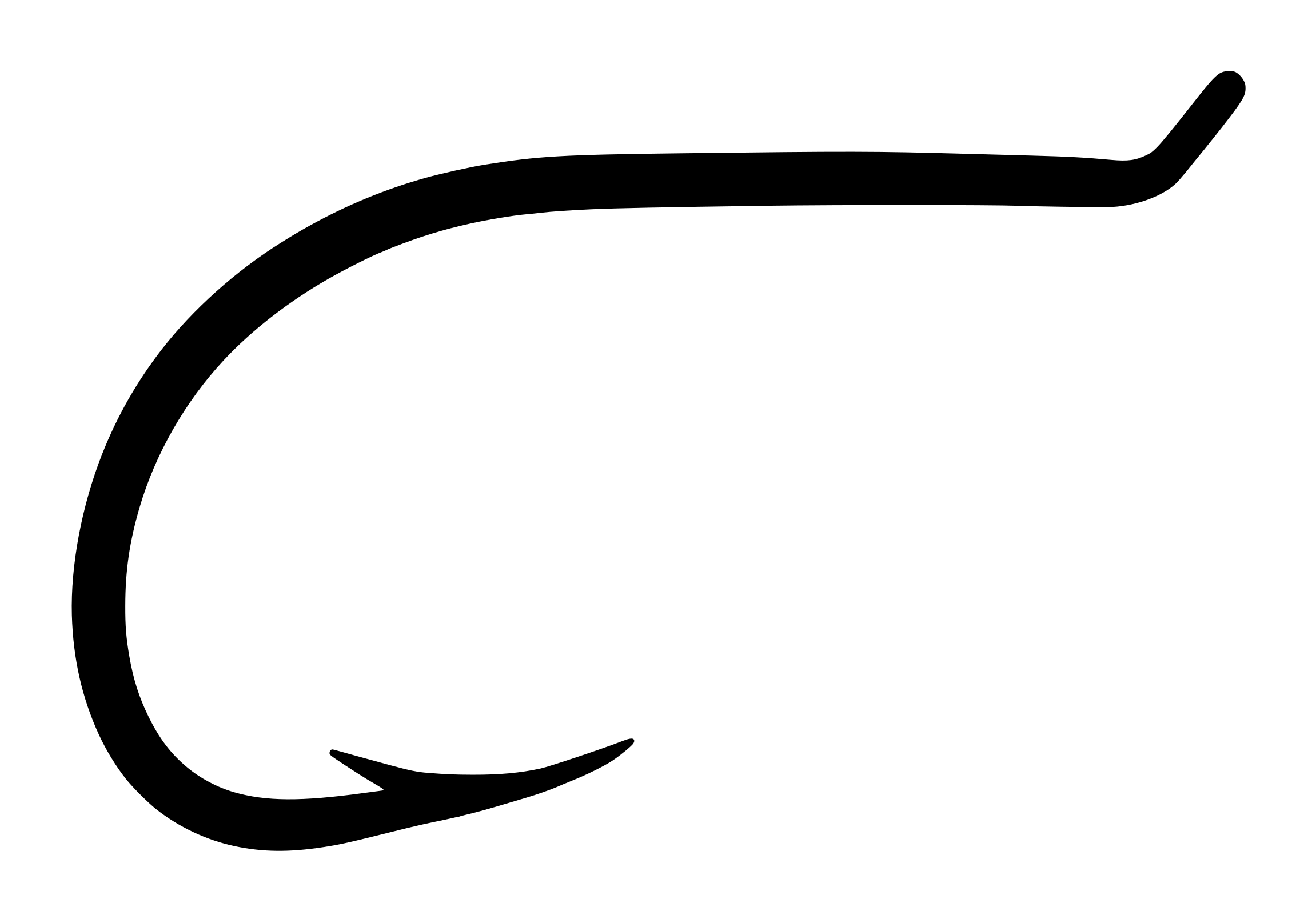
Matches: Bend, Wire, Gap, Eye, Point +3 moreDiffers: Shank: Short (1X–2X Short) vs Standard; Eye Orient.: Turned Up vs Turned Down; Application: Salmon, Sea Trout, Bait vs Bait +2 more
The Mustad 92158 is a forged, heavy-wire Beak baitholder bait hook, not a fly-tying hook. Its reversed (offset) point and single baitholder slice are designed to hold natural baits—most characteristically salmon and steelhead roe presented in egg sacs, as well as worms and cut bait—while keeping the point clear for a positive hookset V. The turned-up tapered eye suits snelled bait rigs, and the 2X-strong forged wire resists straightening against large, hard-fighting anadromous fish V.
The bronzed finish offers modest corrosion resistance suited to freshwater and light estuarine use rather than sustained saltwater service I. In North America the pattern is closely associated with Pacific Northwest steelhead and salmon bait fishing; comparable Beak baitholder patterns are also used for walleye and a range of inshore species V.
Classic Fly Patterns
Named patterns specifically associated with this hook. Leave blank if none formally documented. Do not speculate — only include patterns with a confirmed association.
Modern Equivalents
Hook
Match Quality
Notes
Mustad 92153 (contemporary Beak, turned-up eye)
Very Good
The most direct modern equivalent is the current-production Mustad 92158 itself (same pattern, still catalogued); the classic Baitholder Beak 92247 is also a close family relative. The '92153' designation could not be independently verified as the relevant Beak baitholder variant and should be confirmed before listing.
Collector notes
Rated 4.5/10 — Mustad industrial production volume limits rarity even in original packaging, but size 2/0 in early postwar bronzed finish commands modest collector interest. No. 2/0 Beak hooks are less common than smaller sizes (6-10), and complete original boxes with Larry's Sport Center documentation are regionally desirable.
Reference value
$12 – $38 USD estimate
Packaging condition
Good — moderate wear, legibleRecorded specimen
Packaging format
mustad-box-prebarcodeCatalog code
Positive factors: A complete, original Mustad box is less commonly preserved than loose hooks, and a full 100-count box with period retail provenance (the Larry’s Sport Center label) has real appeal to packaging and tackle-history collectors E. Pre-barcode, letterpress packaging is attractive to those who date and collect mid-century tackle.
Limiting factors: The 92158 is a mass-produced bait hook that remains in current production, so neither the pattern nor the bronzed finish is scarce, and there is no named designer or limited-edition status V. Size 2/0 is an ordinary size within the Beak baitholder range rather than an unusual one. Value here rests mainly on the intact original box and its retail label rather than on the hooks themselves E.
Packaging
Original Mustad box, cream/tan cardboard with black letterpress printing. Front panel shows KEY logo (Mustad trademark), Qual. 92158 designation, 'Mustad-Beak Hooks' brand line, printed specification text reading 'Forged Reversed T. up top. (s) Bronze 2 ex. strong With 1 1/2 in shank', manufacturer name 'O. MUSTAD & SON' with 'Oslo - Norway' location, and '100' hook count. Red sticky label overlay with 'LARRY'S SPORT CENTER' and handwritten price marking '399'. Box shows age toning and minor edge wear consistent with storage. No barcode present — strong indicator of pre-1974 manufacture.
Market Value Notes
Low ($12): Good condition — opened box with complete or near-complete hook count, minor packaging wear, hooks in perfect condition.<br />
<br />
High ($38): Excellent condition — sealed or near-sealed box, complete 100-hook count, minimal packaging defects, bright bronzed finish intact.<br />
<br />
Premium factors: Original manufacturer box (vs card) commands 2-4x premium. Size 2/0 is less common than smaller sizes. Early postwar production (pre-1960) with pre-barcode packaging adds collectibility. Regional documentation (Larry's Sport Center) appeals to regional/local collectors. Sealed or intact original tissue/envelope presence commands premium.<br />
<br />
Platforms: eBay UK and US (vintage fishing tackle category), regional tackle dealer sales, fishing heritage auction houses.<br />
<br />
Confidence: E estimated — limited recent comparable sales data for Mustad boxes of this era. Estimates based on typical Mustad hook card values ($3-12 for cards) scaled to box premium (2-4x). Recommend verifying against recent eBay sold listings for Mustad boxes.
Where to Find
Mustad boxes of this era appear infrequently on eBay, more commonly in UK/European listings than US. Regional tackle dealers in fishing heritage areas (Scotland, Norway, upper Midwest US) may carry examples. Specialist vintage fishing tackle auctions and online dealers focused on Atlantic salmon/sea trout tackle are primary sources. Regional antique shops and estate sales occasionally yield unopened examples.
Preservation
Storage and Preservation
Store the original box in a cool, dry environment away from direct sunlight and humidity exposure. The bronzed finish will develop a natural patina over time, which many collectors consider desirable and authentic. Avoid opening the box unless necessary for inspection or use — sealed condition commands significant premium value. If opened, store hooks on their original card or in a dedicated hook storage box rather than loose in a tackle bag, as loose hooks are prone to corrosion and loss.
Handle the specimen with dry hands to avoid accelerating corrosion. The bronzed finish is relatively thin and will gradually wear with repeated use; this is normal and expected. For display purposes, store away from water sources and salt-air environments (avoid kitchens, bathrooms, coastal locations). If the package includes original tissue paper or envelope wrapping, preserve it intact as it significantly increases historical value. Avoid contact with other metals, particularly copper or iron items, which can cause galvanic corrosion of the finish. Periodically inspect hooks for any signs of rust or corrosion; if discovered, gently dry the specimen and consider consulting a fishing tackle conservator before attempting any treatment.
Marking Analysis
Retail Documentation — Larry's Sport Center Label
The red sticker label reading ‘LARRY’S SPORT CENTER’ with handwritten price notation ‘399’ (likely $3.99 USD, consistent with 1960s tackle pricing) provides important retail provenance documentation. The handwritten numeral ‘9’ uses a characteristic ballpoint pen notation consistent with 1960s retail pricing practices, before adoption of printed price stickers. This label indicates the specimen was originally stocked by Larry’s Sport Center, a regional sporting goods retailer (location not definitively determined from label alone, though regional tackle dealers of this name operated in the upper Midwest and northeastern United States during the 1960s-1970s).
The presence of this label is actually valuable to collectors interested in regional tackle retail history, as it documents the distribution chain and approximate retail price point during the mid-1960s. Comparable bronzed salmon hooks at that time retailed for $3-6 per hundred, making this price consistent with standard wholesale-to-retail markup. The label does not obscure critical manufacturing information on the box front, and its preservation indicates the specimen was handled with some care prior to being archived or collected.
Source: Mustad 92158 Original Box Front Panel Specification Line
The printed specification line reading ‘Forged Reversed T. up top. (s) Bronze 2 ex. strong With 1 1/2 in shank’ encodes the following technical details in Mustad’s mid-century nomenclature:
‘Forged’ — Hook is die-forged rather than drawn wire, a manufacturing signature of Mustad’s quality standard. Forging provides superior strength and reduced risk of fracture under load.
‘Reversed T. up’ — The beak bend is offset in the reverse direction (offset pointing upward when hook is viewed from front), and the eye is turned-up rather than turned-down or straight. This abbreviation predates modern eye-type naming conventions.
‘top. (s)’ — Likely abbreviation for ‘topography’ or topical designation, possibly indicating wire profile or surface treatment specification. The meaning is ambiguous in modern context; may refer to eye position or wire geometry.
‘Bronze’ — Finish is bronzed (warm-tone oxidative coating), the standard mid-range finish for saltwater and general-purpose hooks in Mustad’s postwar catalog.
‘2 ex. strong’ — Wire gauge designation indicating heavy-forged construction (approximately double the wire diameter of standard Aberdeen hooks). ‘ex.’ abbreviates ‘extra’ and ‘strong’ indicates robust wire strength.
Source: Original Mustad 92158 box front panel, printed specification, circa 1955-1970.
Size Note
Size Designation and Nomenclature
The box is labeled ‘No. 2/0’ using Mustad’s standard eye-centered sizing nomenclature, which differs slightly from Redditch traditional sizing in the definition of where measurements are taken. The measured overall length (0.94″) aligns with published Mustad No. 2/0 specifications, confirming accurate size designation. However, the printed specification claiming ‘1 1/2 in shank’ likely refers to a different measurement standard (possibly nose-to-barb or other reference point) than the caliper-confirmed shank length of ~0.68″-0.72″.
This discrepancy is not an anomaly but rather a reflection of how manufacturers communicated shank length in different eras and to different markets. American packaging often cited longer nominal measurements for marketing purposes, while British specifications were more conservative. The specimen documented here correctly represents size 2/0 per Mustad’s manufacturing standard, even though the printed box specification may appear inconsistent to modern readers familiar with precision measurement standards.
Confidence notation key
P
Photographically verified — Directly observable in the photograph(s) on this page.
V
Verified by documentation — Confirmed by manufacturer catalog, spec sheet, or published reference.
I
Inferred — A logical deduction from observable or documented evidence, not directly stated.
E
Estimated — An approximation based on visual comparison, proportional analysis, or limited data.
S
Speculative — A reasoned hypothesis that cannot be confirmed from available evidence.
Claims with no notation are confirmed by multiple independent sources. All photographs on garrenwood.com are taken on a measurement grid where each square equals 1/10 inch (0.1″ / 2.54 mm).