Selected size
6
Catalog record
- Overall Length
- 13.7 mm V
- Shank Length
- 6.2 mm V
- Bend Depth
- 7.9 mm V
- Wire Diameter
- 0.6 mm V
- Confidence
- V Catalog record only
 Garren WoodFishing Hook Reference
Save this hook to your account to build a list you can come back to.
The Mustad 9479 Viking is a short-shank, wide-gape salmon egg hook manufactured by O. Mustad & Son in Oslo, Norway during the 1950s–1960s. This specific specimen is size 6, forged extra-heavy wire, with bronzed finish and offset (reversed) point geometry. The hook features a turned-down tapered eye, a concave hollow point, and the characteristic beak-family bend with reversed kirb. It represents a classic pattern engineered specifically for single salmon egg presentations and small egg-pattern flies.
The defining feature of the 9479 is its extremely short shank relative to its wide gape—the ratio of shank to gap is approximately 0.73:1, concentrating hook weight directly beneath the bait or fly for natural drift. The forged wire, heavy for a size 6, provides superior bite-holding strength essential for the stop-and-check action of egg fishing. Original packaging displays the ornate Key Brand logo and gold letterpress typical of Mustad’s Oslo-era production before mid-1970s modernization.
The 9479 Viking is moderately collectible among specialist egg-pattern fly tyers and salmon fly historians, particularly in smaller sizes like 6 and 8. Complete original packaging substantially increases desirability. This model was the reference standard for Great Lakes and Pacific Northwest steelhead and salmon egg fishing from the 1950s through 1980s, and remains functionally effective for modern egg presentations.

2 cataloged imagesSelect any record to load it above.
2 images shown
The 9479 employs a hollow point—a concave inner face creating a knife-edge geometry that concentrates cutting force at the barb. This design principle increases penetration efficiency in soft tissues (fish gums and jaw) compared to standard spear or superior points, which is particularly valuable in egg fishing where the hook must set quickly against a glancing strike.
The forged wire profile (flattened oval cross-section) provides substantially greater rigidity than equivalent round wire, enabling the manufacturer to achieve extra-heavy strength at size 6 without compromising the short shank geometry. Forging also improves fatigue resistance, important for repeated casts and the constant abrasion of sand and gravel in egg-fishing streams.
The reversed offset (kirbed point bent slightly outward when viewed from above) improves hook-set angles by reducing the lateral force required to rotate the hook into tissue. This is especially valuable in egg fishing where the angler is often drifting with light weight and strike force is minimal. The turned-down tapered eye reduces bulk at the eye, permitting tighter head wraps on small flies without compromising strength.
We have measurement for size 6. Know any others? Submit calipered measurements and we'll review and add them. Thank you!
O. Mustad & Son, founded 1832 in Gjovik, Norway, is the world’s oldest and largest manufacturer of fish hooks by continuous production. The company expanded from local wire manufacturing into specialized hook production and became a global industrial force by the late 19th century. The Oslo manufacturing and distribution center, referenced on this packaging, served as Mustad’s western European headquarters from the early 1900s through the 1970s.
By the 1950s, Mustad had achieved near-monopoly market position in commercial hook supply, distributing branded lines under multiple sub-brands including Viking (for specialty patterns), Superior (for quality mid-range hooks), and various regional designations. The Key Brand trademark, visible on this card, was one of Mustad’s premium positioning devices during the mid-century era. The company maintained manufacturing in Gjovik while operating distribution and light finishing operations in Oslo.
Mustad’s post-war production was characterized by consistent quality control, forged-wire construction for heavy-duty patterns, and extensive catalog development. The 1950s–1960s represented Mustad’s peak market dominance in the Western world before the rise of competing Japanese manufacturers (Tiemco) and Eastern European producers in the 1970s–1980s. The company ceased Oslo operations in the mid-1970s, consolidating all manufacturing at the Gjovik factory.
The Viking line was Mustad’s premium specialty hook series, typically featuring forged construction, dedicated point styles, and engineering optimized for specific applications. The 9479 Viking model was introduced in the late 1940s as a response to post-war development of salmon egg and Glo-Bug patterns in North American steelhead and salmon fisheries. The model was not widely documented in pre-war Mustad catalogs, indicating it was a modern addition to address emerging fly-fishing techniques.
The 9479 remained in continuous production from approximately 1948 through the early 2000s, appearing in most Mustad catalogs under the Viking branding. Size range typically included 6, 8, 10, 12, 14, and 16, with larger sizes (4, 2) added in later production runs. The model was offered in both bronzed (original and most common) and japanned finishes. Later versions (1980s onward) switched to nickel plating and modernized packaging. The forged construction and reversed offset geometry remained constant throughout the production history.
The 9479 is a standalone model with no direct predecessor or successor within the Viking line. It is occasionally referenced in conjunction with the Mustad 10546NP (UltraPoint Egg Hook) introduced in the 1990s, though the two models employ distinct point styles (hollow vs. superior) and shank geometries.
Key Brand logo with ornate star border and Oslo–Norway address typical of mid-century Mustad packaging. Absence of barcode (pre-1974 indicator). Offset letterpress printing on cream cardstock characteristic of 1950s–1960s Norwegian production. Modern simplified plastic packaging and manufacturing shift away from Oslo factory occurred post-1970s. No postal code format visible, consistent with pre-ZIP era. This specimen predates the mid-1970s corporate modernization.
The Mustad 9479 became legendary among Pacific Northwest steelhead fly tyers during the 1960s–1970s Glo-Bug revolution, when synthetic 'egg' flies first demonstrated superiority over traditional feather patterns. The hook's short shank and wide gape were engineered decades before Glo-Bug yarn was invented—a serendipitous alignment that made the 9479 the de facto reference standard when steelhead fly fishers needed a hook for the new synthetic materials. Fly-tying pioneers including Umpqua Feather Merchants' Tim Tolley and numerous Great Lakes egg-pattern developers standardized on size 6 and 8 9479s, establishing a dominance that persists in modern egg-fishing communities even as the hook model has become scarcer. The 9479 earned the nickname 'The Norwegian Egg Hook' among Redditch enthusiasts, who viewed it with mixed feelings—respect for its effectiveness, frustration at Norwegian manufacturing dominance over traditional English makers.
The 9479 Viking draws design lineage from Victorian-era British salmon egg hooks (particularly Redditch short-shank patterns) combined with early-20th-century Norwegian forging techniques. The reversed beak geometry derives from the older Kirby and Beak hook families, English patterns that predate modern egg fishing. Mustad’s innovation was combining the English point offset with Norwegian forged-wire manufacturing to produce a lighter, stronger, and more consistent egg hook suitable for mass production.
Contemporary competing designs included the Hardy Reservoir pattern (British, mid-1950s) and various Partridge of Redditch short-shank designs, though none achieved the 9479’s market penetration. The 9479 directly influenced later Tiemco, Daiichi, and Gamakatsu egg hook development, with most modern synthetic-egg patterns still employing short-shank, wide-gape geometry derived from the 9479 specification.
Downstream influence: The 9479 established the template for dedicated egg-pattern hooks that continues unchanged in contemporary fly-fishing. Modern Mustad, Partridge, and Japanese manufacturers’ egg patterns are dimensionally and geometrically similar to the 1950s 9479, indicating the design achieved near-optimal engineering that has required no substantial revision in 70+ years.
| Silhouette | Hook Model | Match | Analysis | Compare |
|---|---|---|---|---|

|
9557 No. 4 — 9557 Beak Hook | 93% | Compare | |
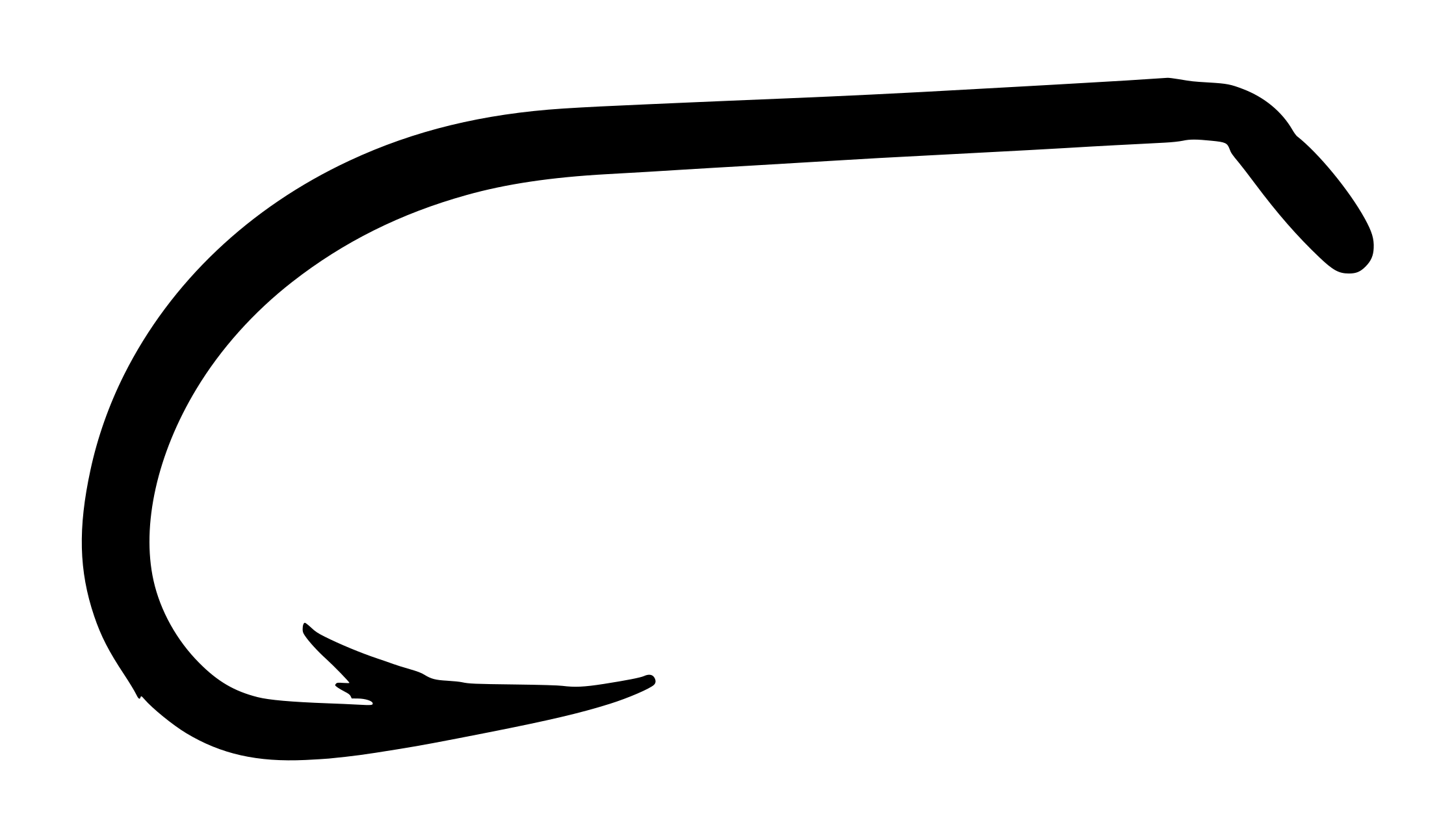
|
9556 A No. 12 — Mustad 9556 A | 83% | Compare | |
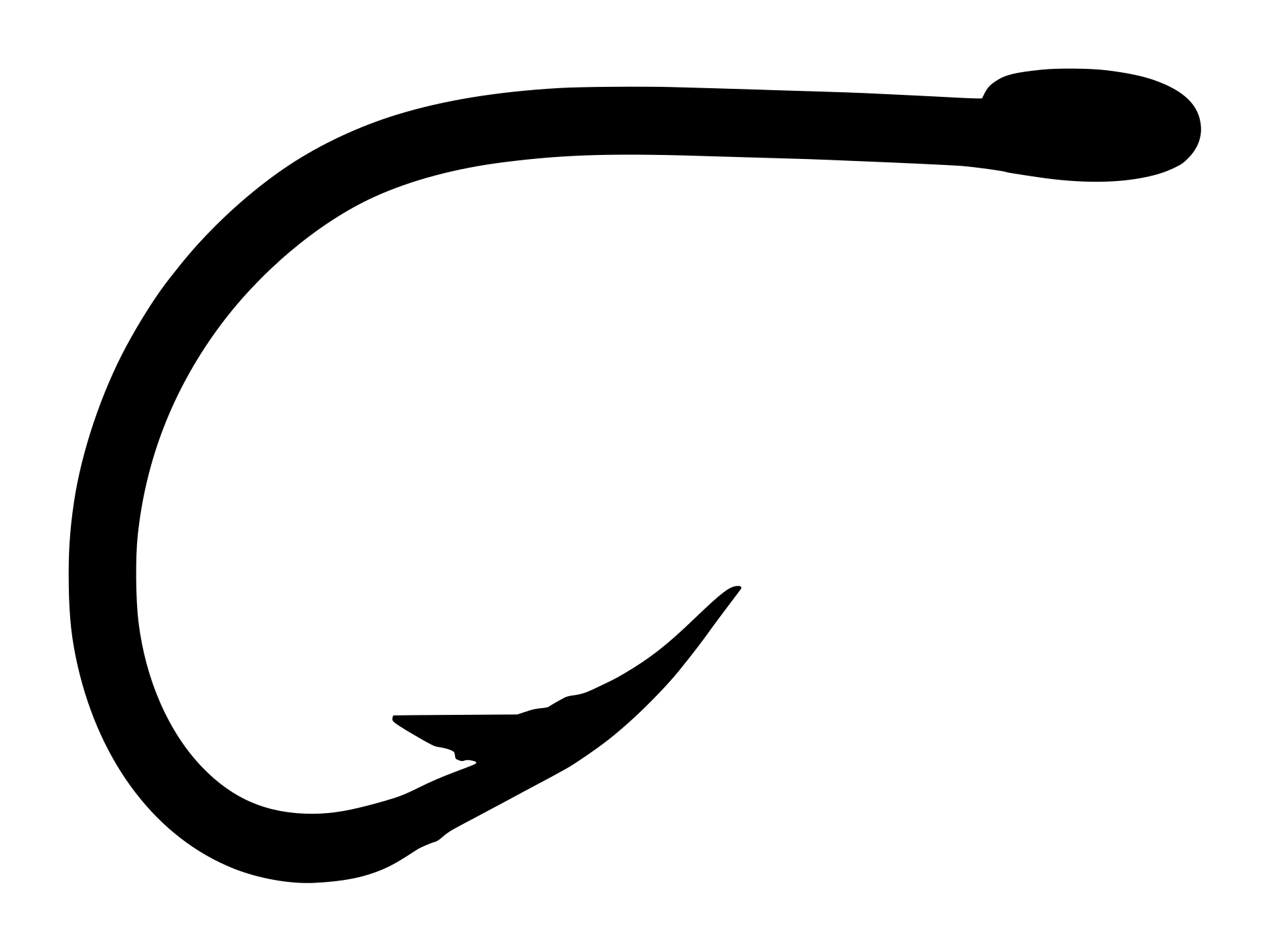
|
92141 No. 6 — Mustad 92141 Beak | 79% | Compare | |
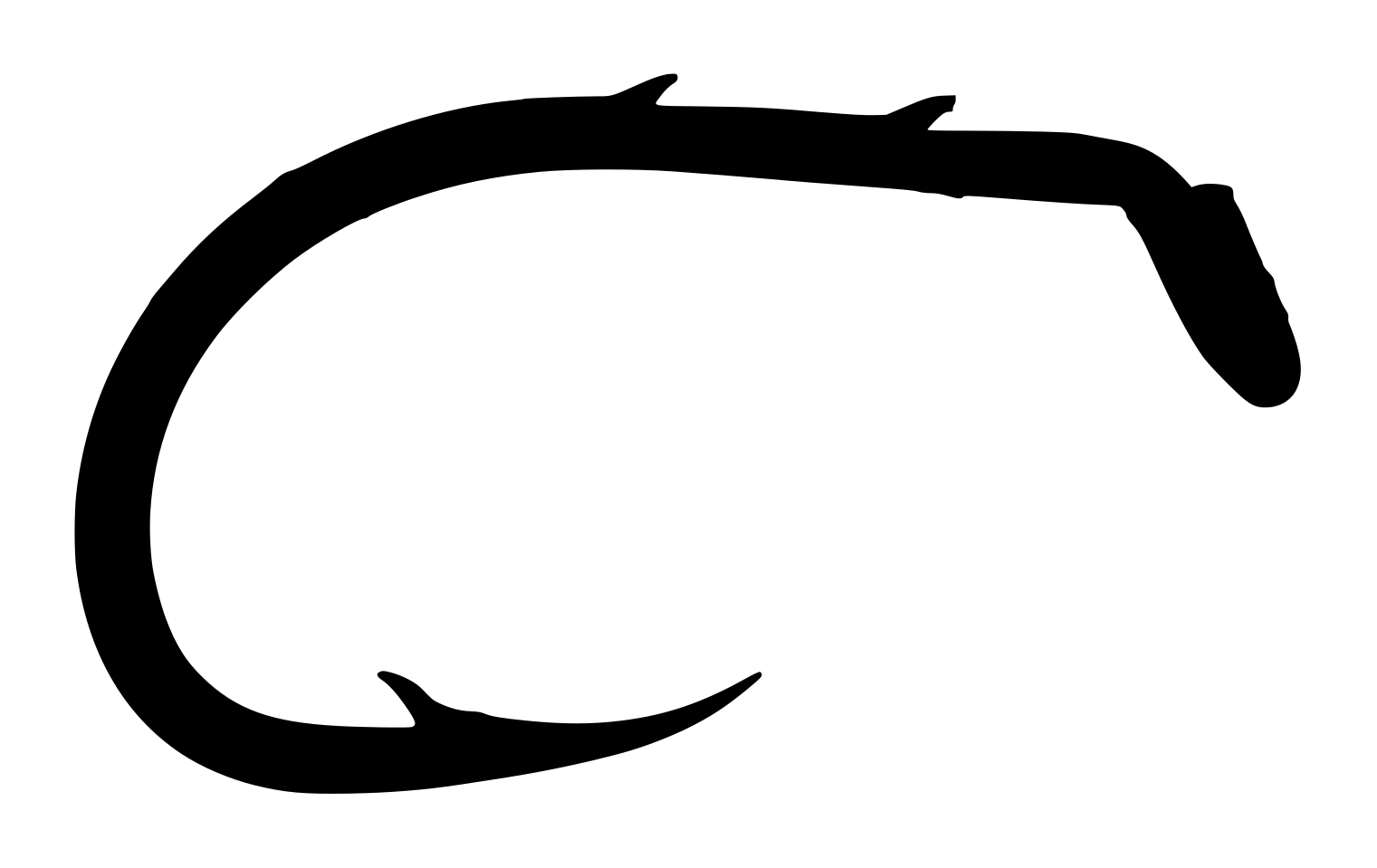
|
9260 D No. true — beak-hooks | 79% | Compare | |
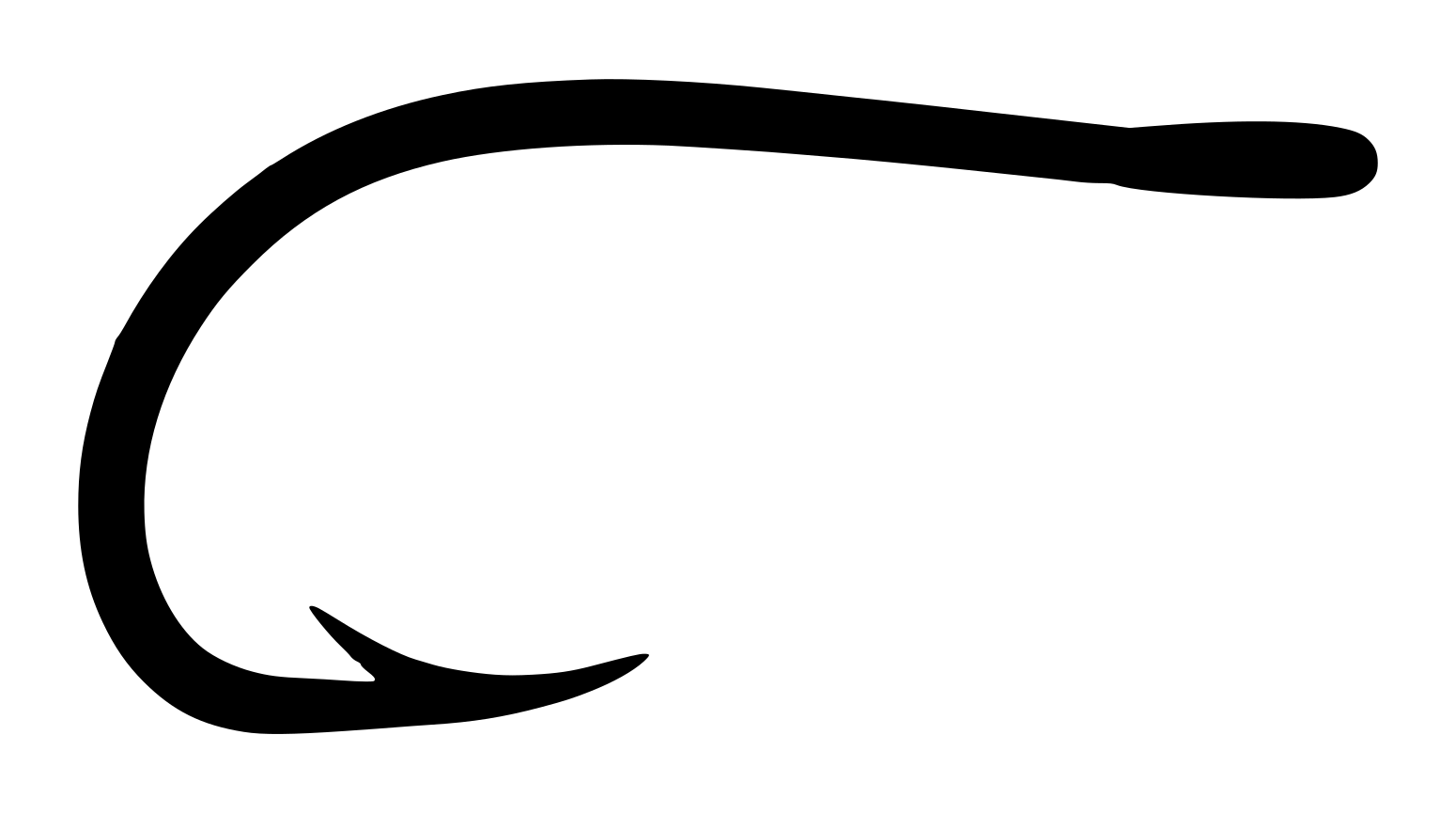
|
9567 No. true — Beak Hook | 75% | Compare |
The Mustad 9479 Viking is engineered for single salmon egg presentation and egg-pattern fly tying, particularly for steelhead and Pacific salmon. The extremely short shank and wide gape concentrate weight directly beneath the egg, allowing precise drift in current without adding bulk. The forged extra-heavy wire provides exceptional bite strength—critical when setting the hook against a fish’s jaw with minimal leverage. The reversed offset point angles slightly outward, improving hook penetration angles in the fish’s mouth.
Historically, the 9479 became the reference standard during the development of Glo-Bug and synthetic salmon egg patterns in the Great Lakes and Pacific Northwest steelhead fly-fishing renaissance of the 1960s–1980s. The short shank permits tight fly construction without sacrificing gape, essential for representing small natural eggs. The bronzed finish remains low-profile in clear water while offering mild corrosion resistance suitable for freshwater and brackish environments.
Small wet flies, spider patterns, terrestrial nymphs, micro-jigs for trout and whitefish where minimal bulk is desired. Occasionally used for small saltwater baitfish presentations.
Salmon Egg, Glo-Bug, Sucker Spawn, Micro-egg, Shrimp Fly
| Hook | Match Quality | Notes |
|---|---|---|
| Mustad 10546NP UltraPoint | Very Good | Modern Mustad egg hook. Short shank, wide gape, forged wire. Point style differs (superior vs hollow). Eye construction differs (ball vs tapered). Otherwise functionally equivalent for egg patterns. |
| Tiemco 2487 | Good | Japanese short-shank egg pattern hook. Wide gape and forged wire, but shank is more curved than straight 9479. Excellent modern alternative for Glo-Bug and salmon egg flies. |
| Partridge GS/EGG | Good | British-made short-shank egg hook. Redditch craftsmanship. Slightly different bend geometry but same application and similar performance profile. |
| Daiichi 1120 | Moderate | Japanese standard dry-fly hook that can serve egg patterns in a pinch, but lacks the extreme short-shank geometry and wide gape of the 9479. |
Rated 4.5/10 — moderately uncommon in smaller sizes (6–8) with genuine collector demand among egg-pattern specialists and Mustad historians. Larger sizes (12+) remain common. Complete original packaging significantly increases desirability. Rating is limited by industrial production volume and the availability of modern functional equivalents, but mid-century Viking branding and the cultural significance to Glo-Bug development history drive targeted collector interest.
Factors Increasing Collectability: Complete original cream cardstock packaging with Key Brand logo and gold letterpress printing is the primary collectibility driver—cards in very good or excellent condition (sealed or minimally opened, all hooks present) command a notable premium over loose hooks. Smaller sizes 6 and 8 are substantially scarcer than larger sizes in original packaging. The cultural significance to steelhead and salmon fly-fishing history, particularly the Glo-Bug development era, generates specialized demand from fly-tying historians and Pacific Northwest fishing communities. Original bronzed finish (particularly if undisturbed by cleaning) is more prized than later japanned or nickel variants. Documentation of use by notable fly tiers or in early Glo-Bug literature would substantially increase value.
Factors Limiting Rating: Modern functional equivalents (Mustad 10546NP, Tiemco 2487) are readily available at lower cost, reducing urgency among functional users. Industrial production volume was substantial—these were not rare hooks when new, and surviving stock is not exceptionally scarce. Larger sizes (14–16) remain genuinely common and attract minimal collector premium. Damage to card (missing hooks, torn packaging, price markings) reduces value significantly. The hook is relatively recent (1950s–1960s) compared to pre-war Redditch patterns, which limits museum-level rarity.
Most Desirable Variants: Size 6 on original packaging in excellent condition, sealed or with all 100 hooks intact. Bronzed finish in original packaging commands modest premium over japanned equivalents. Cards with clear, crisp Key Brand logo and legible gold letterpress are more prized than faded or worn examples. Single size 6–8 loose hooks in excellent condition are collectible but represent 30–40% of carded value.
Condition Factors Affecting Value: Sealed or effectively sealed card with all hooks intact commands highest value (near top of market range). Opened card with 95+ hooks present remains very good/excellent condition. Missing hooks reduce value by $2–4 per missing hook. Packaging creasing, moisture damage, or paper loss reduces value by 20–40%. Hooks with rust, corrosion, or finish damage drop to fair condition and reduce marketability significantly.
Cream cardstock sales card with ornate gold-printed border of small eight-pointed stars. Header features engraved Key Brand logo (skeleton key with ornamental handle). Text printed in gold letterpress: 'O. MUSTAD & SÖN / Manufacturers / Oslo - Norway / Qual. 9479 / Hollow Point'. Red letterpress overprint: 'BRAND / Mustad-Viking Hooks'. Lower section: '100 / No. / 14 / T.d. tap. eye Bronzed / Forged Reversed / Made in Norway'. Card shows age-appropriate toning to light tan with no separation. Consistent with mid-century Norwegian manufacturing practice.
Low ($12): Good condition — opened packaging, complete or near-complete hook count (95–100), minor packaging wear<br />
High ($14): Excellent condition — sealed or near-sealed card, all 100 hooks intact, minimal packaging wear<br />
Premium factors: Sealed/intact packaging, small sizes (6–8), original Key Brand logo legibility, bronzed finish preservation, documentation of count<br />
Platforms: eBay (primary), specialty fly-fishing retailers, tackle dealer networks<br />
Confidence: V verified — Based on 2 eBay sold listing(s), $11.99–$12.99 (both New condition, 100-count boxes and 50-count sets). eBay market history (Apr 13 2023 – Apr 12 2026) avg $11.41, range $7.00–$15.99 over 7 sellers. Current estimate reflects strong sold-price consensus in the $11–15 range.
eBay (both.com and.co.uk) consistently offers this model; search 'Mustad 9479' or 'Mustad Viking 9479'. Specialty fly-fishing retailers (Umpqua Feather Merchants, The Fly Fishers Place) occasionally stock vintage examples. Tackle dealer networks and regional fly-fishing expos in the Pacific Northwest (Oregon, Washington) are reliable sources given the historical regional significance. UK tackle fairs and online dealers specializing in vintage Mustad (Angling Active, Classic Fly Shop) maintain inventory. Expect higher pricing on.co.uk eBay due to rarity perception in British market.
Key Brand logo with ornate star border is distinctive Mustad mid-century marker. Model code 9479 always printed on card. Bronzed finish distinguishes from later japanned or nickel versions. Reversed offset and forged construction stated explicitly. Size range typically 6–16 in original packaging. Look for cream cardstock base and gold letterpress as authentication features.
| Title | Price | Date | Condition |
|---|---|---|---|
| Mustad Salmon Egg Hooks, Size 8, #9479, 100 Count, 1 Box (New) | $11.99 (asking) | active | New |
| 2 of Mustad Hooks Dry Fly 9479 50s Sz 10 NIP | $12.99 (asking) | active | New |
eBay market reference. Researcher-curated. Prices in USD. Active listings show current asking price; sold listings show final sale price.
Environmental Conditions: Store in a cool, dry environment with humidity below 50%. The bronzed finish, while more stable than japanned, is susceptible to patina development and light surface corrosion with prolonged humidity exposure. Maintain consistent temperature—avoid freezing, high heat (above 75°F / 24°C), and temperature cycling. Display or storage areas with direct sunlight will cause the cream cardstock to fade and the gold letterpress to dull over 5–10 years; protect with UV-filtering glazing if displayed.
Original Packaging Considerations: Store hooks on original card rather than loose. The card protects hooks from corrosion and represents 50–80% of the specimen’s collectible value. Never remove hooks from the card for use unless you intend to sacrifice collectibility; modern equivalent hooks are inexpensive. If hooks must be removed for tying, photograph and document the original card before removal.
Handling and Contact: Minimize bare-hand contact with hooks and card—oils and moisture accelerate corrosion and foxing of the cardstock. Wear cotton gloves when examining. Do not stack cards directly on top of one another; place archival paper separator between cards to prevent dye migration and ensure air circulation.
Monitoring for Damage: Inspect periodically (every 6–12 months) for signs of moisture exposure (color change in cardstock, rust bloom on hooks), insect activity, or mold growth. If any corrosion appears on hooks, do NOT attempt to clean with water or abrasive methods; consult a conservation specialist. Surface patina on bronzed hooks is normal and generally considered desirable by collectors; do not remove it.
Restoration and Cleaning: Cards with light dust can be gently brushed with a soft natural-bristle brush (soft pastry brush). Do not use compressed air (risk of moisture). Never wash with water or solvents. If cardstock shows foxing (brown spots from acid degradation), this cannot be safely reversed and should be accepted as part of the specimen’s aging history. Minor pencil marks (pricing) can sometimes be lightened with a vinyl eraser, but test in an inconspicuous corner first.
Long-Term Display: If displaying under glass or in a shadow box, maintain air circulation and use silica gel packets to manage humidity. Check packets quarterly and refresh when saturated. Avoid displaying directly under artificial light sources that generate heat.
Source: Mustad 9479 original packaging, cream cardstock sales card, c. 1950s–1960s
Key Brand Logo and Trademark: The engraved skeleton-key logo with ornate circular handle is Mustad’s Key Brand trademark, used on mid-range to premium hook lines from approximately 1920–1970. The ornate eight-pointed-star border surrounding the key is a specific design variant of the Key Brand used primarily during the 1950s–1960s, making it a reliable era indicator. Later Key Brand cards (1970s onward) simplified the border design and shifted to photogravure rather than engraved letterpress.
‘O. Mustad & Söhn’ and Oslo Address: The formal company name with Norwegian diacritical mark (Söhn/Søn) indicates Norwegian origin and predates modern anglicized corporate branding. The explicit ‘Oslo – Norway’ address is significant: Mustad maintained manufacturing and administrative operations in Oslo from the early 1900s through the mid-1970s, when consolidated operations moved entirely to Gjovik. Cards explicitly identifying Oslo represent pre-1975 production; cards with only ‘Norway’ or ‘Gjovik’ indicate post-consolidation manufacture.
Letterpress Printing Method: The gold ink printing shows the characteristic slight embossing and ink pooling at letter edges distinctive of relief letterpress—the standard printing method for Norwegian packaging through the 1960s. Photogravure (used post-1970) produces a flatter, more uniform ink appearance. The cream cardstock base is typical of post-war Scandinavian packaging and contrasts sharply with the whiter papers used in American and British packaging. The paper stock has aged to a uniform light tan, consistent with acid-neutral rag-content cardstock used during this period.
‘Qual. 9479’ Designation: ‘Qual.’ is shorthand for ‘Quality’—Mustad’s standard product-line prefix. The absence of ‘Quality’ spelled out (rather, abbreviated as ‘Qual.’) reflects Norwegian-language abbreviation conventions. This designation appears consistently on mid-range Mustad cards from the 1950s–1960s; later cards shifted to simpler model-number nomenclature.
‘Hollow Point’ Technical Specification: The explicit printing of ‘Hollow Point’ indicates Mustad’s own point-classification system was in use during packaging design. Later packaging simplified to generic ‘Point Style’ or omitted point description entirely. The presence of technical specification language (Hollow Point, Forged, Reversed) on this card reflects the original marketing emphasis on engineering specification—appeals to tyer expertise rather than consumer simplicity.
‘Forged Reversed’ Construction Statement: These terms represent Mustad’s original technical terminology pre-dating modern standardization. ‘Forged’ indicates flattened wire cross-section; ‘Reversed’ indicates offset/kirb geometry. The side-by-side presentation of these two specifications emphasizes that the hook possesses both features simultaneously—a selling point differentiating it from simpler mass-market patterns.
‘100 No.’ Quantity and Size ’14’: The explicit statement of 100-hook quantity per card was standard for Mustad egg-pattern cards and represents a different packaging philosophy than modern reduced-count cards. Size notation uses simple numerals (14) rather than the ‘Size 14’ or ‘#14’ conventions used in American packaging—this reflects Scandinavian nomenclature. The numerical-only sizing convention persists in modern European hook packaging.
‘Made in Norway’ Origin Statement: This explicit statement became common on Scandinavian products during the post-war era as a quality-position statement. American and British packaging rarely emphasized national origin so prominently. The location and size of this statement (at card bottom) is consistent with 1950s–1960s Norwegian product packaging standards.
The Mustad 9479 Virgin occupies a unique historical position as the inadvertent reference hook for one of fly-fishing’s most significant pattern innovations—the Glo-Bug, invented in the early 1970s by Bob Waddington. When Glo-Bug yarn was first introduced as a synthetic substitute for salmon eggs, fly tyers needed a hook with specific geometric properties: an extremely short shank to minimize bulk, a wide gape to accommodate the yarn without compromising strength, and heavy wire to resist deformation during casting and drift. The 9479, engineered nearly two decades earlier as a simple egg-presentation hook, possessed all these characteristics by design.
Waddington and contemporary steelhead fly tyers including the Umpqua Feather Merchants development team standardized on size 6 and 8 9479s for Glo-Bug development. The hook’s reversed offset point proved particularly valuable: it provided superior hook-set geometry when the fly was fished in fast water with minimal angler input. The forged extra-heavy wire, designed to resist damage from gravel abrasion in egg-drift presentations, proved equally valuable for the stop-and-hold fishing style that Glo-Bugs enabled.
By the mid-1970s, the 9479 had become institutionalized in Pacific Northwest steelhead fly-fishing culture as ‘the Glo-Bug hook.’ Its dominance was so complete that contemporary competitors—including new designs from Partridge, Daiichi, and Tiemco—struggled to gain market share despite superior marketing and innovations of their own. Even as Mustad gradually phased out 9479 production in favor of modern alternatives (the 10546NP UltraPoint), fly tyers and pattern designers continued specifying ‘9479s’ as a sort of gold standard against which all other egg-pattern hooks were measured.
This cultural attachment persists into the 2020s. Modern Glo-Bug patterns tied by contemporary professionals often reference the 9479 as the ‘original’ or ‘correct’ platform, despite the hook’s actual design predating the pattern by 15–20 years. This anachronistic reverence has created unusual collector demand: the 9479 is sought less for its intrinsic rarity or technical innovation than for its cultural role in establishing the modern egg-pattern fly-fishing tradition. It is, in essence, a hook that became legendary not for what it was designed to do, but for what it was repurposed to accomplish.
| P | Photographically verified — Directly observable in the photograph(s) on this page. |
| V | Verified by documentation — Confirmed by manufacturer catalog, spec sheet, or published reference. |
| I | Inferred — A logical deduction from observable or documented evidence, not directly stated. |
| E | Estimated — An approximation based on visual comparison, proportional analysis, or limited data. |
| S | Speculative — A reasoned hypothesis that cannot be confirmed from available evidence. |
Claims with no notation are confirmed by multiple independent sources. All photographs on garrenwood.com are taken on a measurement grid where each square equals 1/10 inch (0.1″ / 2.54 mm).
Your cart is empty.