The Mustad 204 N represents a classic mid-20th century spade-end bait hook designed for European coarse fishing. Featuring the traditional Limerick bend and superior point geometry, this fine-wire hook was specifically marketed to French-speaking anglers as evidenced by the distinctive blue box with French text.
The ‘Hameçons Irlandais’ designation refers to the Limerick bend profile, historically favored for its secure bait-holding properties and straight tracking in water. The spade end construction eliminates eye bulk for more natural bait presentation, a feature particularly valued in clear water conditions.
Dating from approximately 1950-1970 based on the iconic blue packaging and pre-barcode era construction, this hook represents Mustad’s global marketing approach during their industrial expansion period. The ‘Marque à la Clef’ (Key Brand) logo reinforced authenticity in an era of widespread counterfeiting.
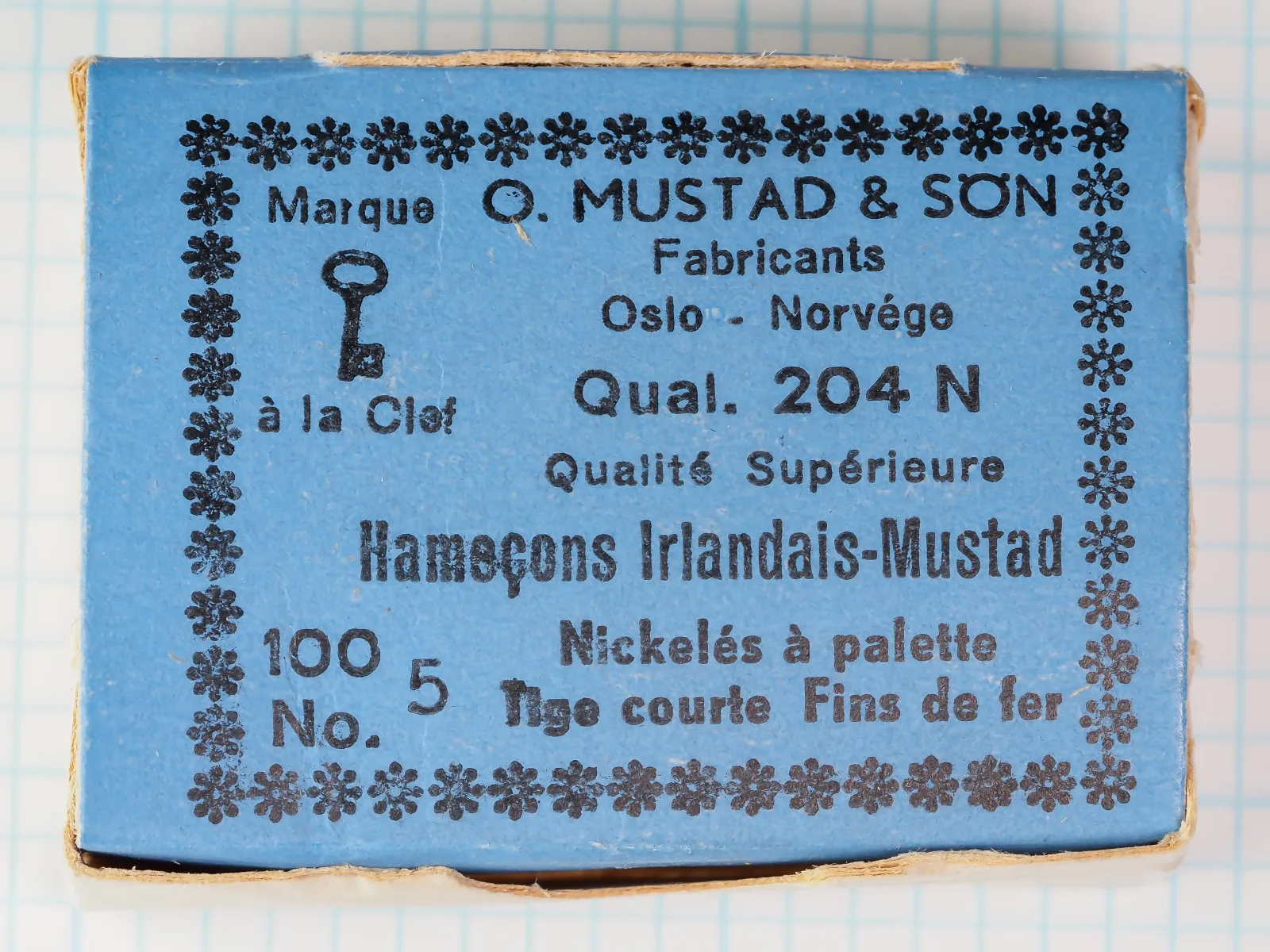
Original blue paper box showing French text and the iconic 'Marque à la Clef' key logo, demonstrating Mustad's targeted European marketing approach.
Photographic record
4 cataloged imagesSelect any record to load it above.
4 images shown
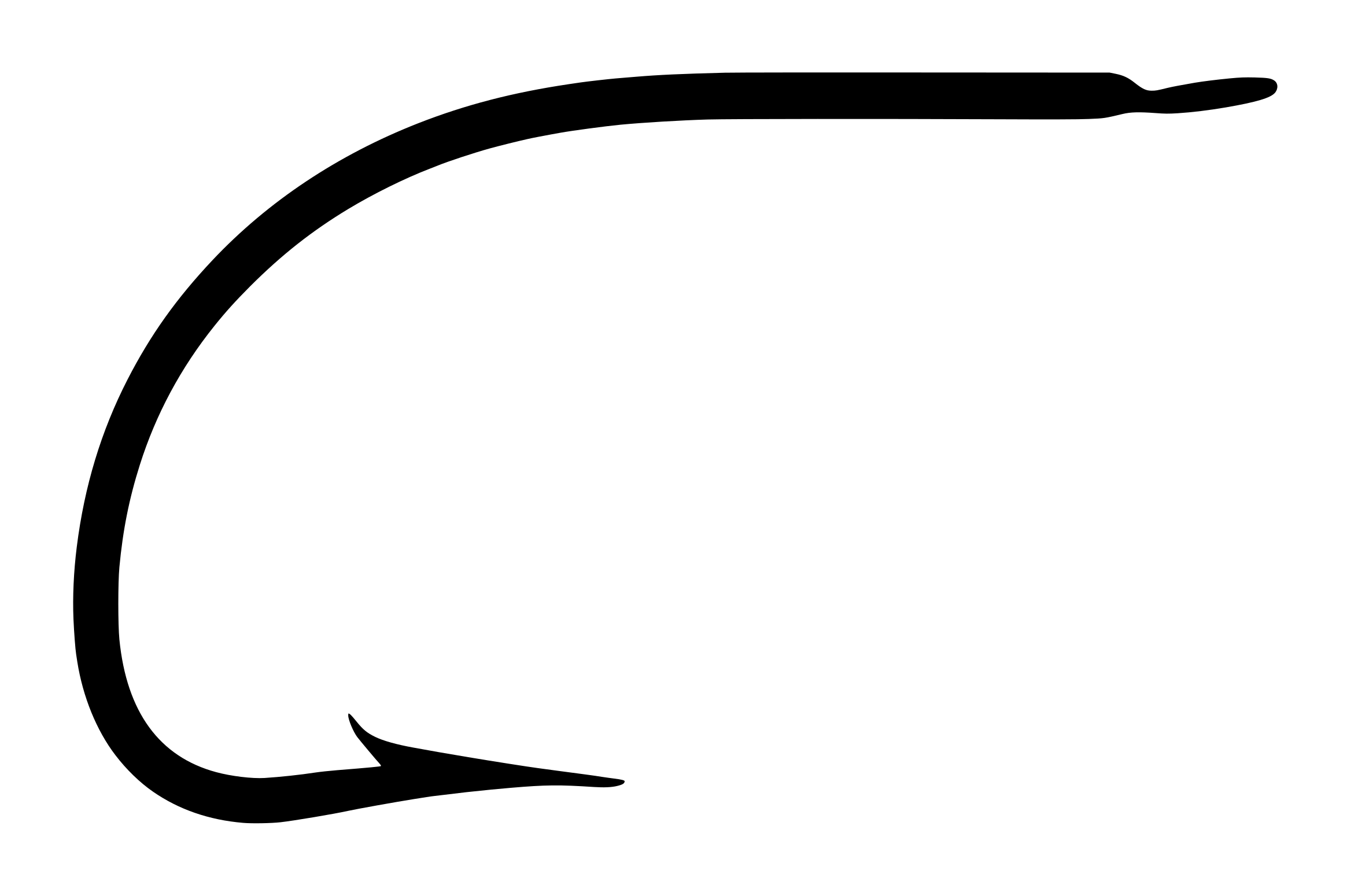
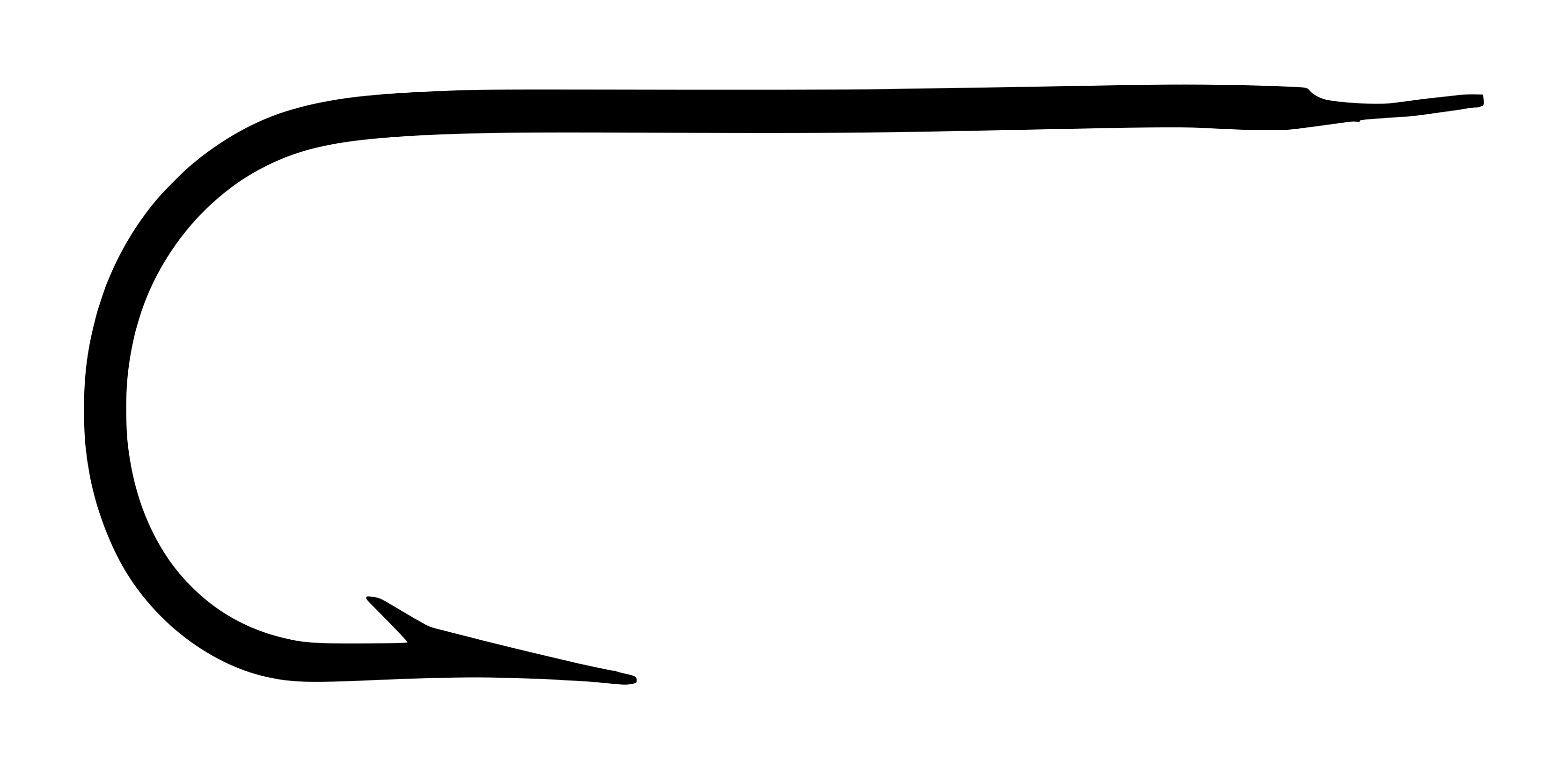
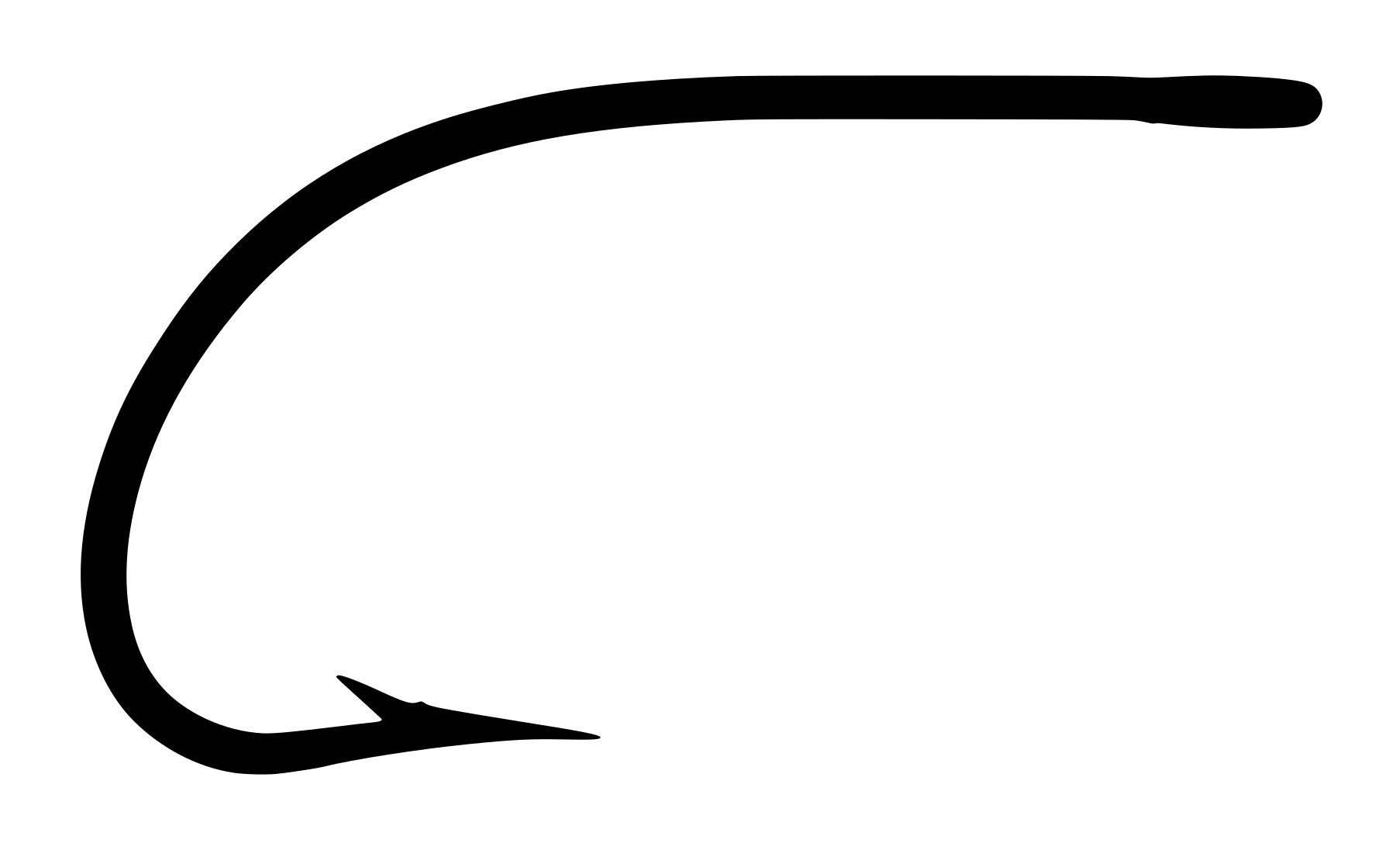
Mustad 204 N French Market Box Size 5Original blue paper box showing French text and the iconic 'Marque à la Clef' key logo, demonstrating Mustad's targeted European marketing approach.Open originalMustad 204 N Superior Point Detail Size 5Detail view of the superior point geometry showing the near-straight inner taper and close-cut barb typical of quality bait hooks.Open originalMustad 204 N Full Profile Size 5Complete hook profile displaying the classic Limerick bend, short shank proportions, and spade end construction on measurement grid.Open originalMustad 204 N Size Consistency Size 5Two hooks from the same package demonstrating the manufacturing consistency achieved by Mustad's industrial production methods.Open original
Technical profile
Eye
Blind — FlattedSpade end shows clean, consistent flattening with centered hole for snelling P
Wire
Extra-Fine, Round, Est. ~0.015" (~0.4 mm)
Shank
Short (1X–2X Short) — Plain
Bend
crystal, Standard gapClassic Limerick profile with angular transition and symmetrical geometry P
Point
Standard / SpearShort, close-cut barb with minimal projection for easy bait threading P
Finish
Nickelled / Nickel-Plated — Confirmed (stated on packaging)Bright nickeled finish with cool silver tone, uniform across hook surface P
Box shows light edge wear and minor toning but remains structurally sound. Hooks display bright nickeled finish with no corrosion or damage visible.
The superior point geometry features a near-straight inner taper from barb to tip, creating a flat inner face that provides efficient penetration without the aggressive cutting action of hollow points. Fine wire construction reduces bait trauma and creates minimal disturbance in clear water, while the nickeled finish provides corrosion resistance and subtle flash attraction.
The short shank relative to gap width (approximately 1.7:1 ratio) optimizes hooking leverage for small baits while maintaining adequate holding power. The Limerick bend’s angular profile distributes stress effectively across the wire, reducing failure rates under load.
The 204 series was part of Mustad’s comprehensive bait hook lineup targeting European coarse fishing markets. Introduced in the early 1950s, the 204 N specifically catered to French and Belgian anglers who preferred spade-end construction for species like roach, bream, and tench.
The ‘N’ designation indicated the nickeled finish variant within the broader 204 series, which also included bronzed versions for different water conditions. This series represented Mustad’s adaptation to regional preferences while maintaining their standardized manufacturing processes across international markets.
Era and Packaging Dating
Blue paper box with asterisk/snowflake border pattern typical of Mustad mid-century export packaging. French text and 'Marque à la Clef' logo indicate pre-1970s production. No barcode present confirms pre-1974 manufacture. Oslo address format and box construction methods consistent with 1950s-1960s era.
The Universal Key Symbol
The 'Marque à la Clef' (Key Brand) trademark became one of fishing's most recognized symbols, serving as a literacy-independent guarantee of quality in an era when many anglers worldwide could not read product labels. Mustad's key logo was so trusted that counterfeiters often attempted to forge it, leading to numerous international trademark disputes throughout the 1950s and 1960s.
Design lineage and influence
Best matchRelated by Attribute
Computed automatically from catalog data — updated as new hooks are added.
Matches: Gap, Eye, Eye Orient., Point, Forging +3 moreDiffers: Bend: Crystal vs Perfect; Shank: Short (1X–2X Short) vs Standard; Wire: Extra-Fine vs Fine (1X Fine) +1 more
Matches: Shank, Gap, Eye, Eye Orient., Offset +2 moreDiffers: Bend: Crystal vs O'Shaughnessy; Wire: Extra-Fine vs Heavy (1X Heavy); Point: Standard / Spear vs Hollow Point +5 more
Designed primarily for European coarse fishing with natural baits such as maggots, worms, and bread paste. The fine wire construction minimizes bait damage while the spade end allows for traditional snelling techniques preferred by match anglers. The Limerick bend profile provides reliable hooksets with soft-mouthed species like roach and bream in stillwater and slow-moving river conditions.
Secondary Applications
Suitable for small wet fly construction when snelled to leader material, particularly for traditional European wet fly patterns
Classic Fly Patterns
Not typically used for fly tying
Modern Equivalents
Hook
Match Quality
Notes
VMC 9011
Good
Modern spade-end match hook with similar proportions, bronze finish
Moderate collectability driven by distinctive French-market packaging and historical significance, limited by relatively common production numbers.
Reference value
$15 – $35 USD estimate
Packaging condition
Very Good — light wear, fully legibleRecorded specimen
Packaging format
MUS-BLU-01Catalog code
Positive factors include the iconic blue box with French text representing Mustad’s international marketing strategy, the pre-1970s ‘Marque à la Clef’ branding, and the spade-end construction that has become less common in modern fishing. The packaging quality and multilingual approach demonstrate Mustad’s sophisticated export operations during their industrial peak.
Limiting factors include the substantial production quantities typical of Mustad’s mass-market approach and the survival of numerous similar examples. While historically significant, the 204 N was a workhorse hook rather than a premium or specialty model, reducing scarcity-driven demand among collectors.
Packaging
Classic blue paper box with black asterisk/snowflake decorative border. French text throughout: 'O. MUSTAD & SON Fabricants Oslo - Norvège', 'Qual. 204 N', 'Qualité Supérieure', 'Hameçons Irlandais-Mustad', '100 No. 5', 'Nickelés à palette Tige courte Fins de fer'. Features the iconic key logo with 'Marque à la Clef' text. Cardboard construction typical of mid-20th century export packaging.
Market Value Notes
Pricing driven primarily by packaging condition and completeness. Sealed boxes command premium, while loose hooks or damaged packaging reduces value significantly. French-market examples slightly more sought after than standard versions.
Where to Find
European tackle fairs, vintage fishing auctions, estate sales in France and Belgium, specialized hook collectors
Preservation
Storage and Preservation
Store in original packaging when possible, as the distinctive blue box contributes significantly to collector value. Keep in a cool, dry environment to prevent corrosion of the nickeled finish, which can develop patina spots with humidity exposure. The paper box is susceptible to moisture damage and insect activity – consider archival storage sleeves for long-term preservation.
Avoid handling hooks directly; oils from skin can accelerate tarnishing of the nickeled surface. If hooks must be removed from packaging, use tweezers and store individually in acid-free compartments. The spade ends are particularly vulnerable to ding damage that can affect snelling performance.
Primary Source
French Market Packaging Analysis
Source: Original packaging text, O. Mustad & Son box label, c. 1950-1970
The box text provides detailed insight into Mustad’s export marketing strategy. ‘Qualité Supérieure’ emphasizes premium positioning, while ‘Hameçons Irlandais-Mustad’ directly associates the product with the respected Irish/Limerick bend tradition. The technical specifications ‘Nickelés à palette Tige courte Fins de fer’ translate to ‘Nickeled with spade, short shank, fine wire’ – a complete product description for informed anglers.
The trilingual approach (French primary, Norwegian address, English ‘Fabricants’) reflects the international nature of mid-century fishing tackle trade and Mustad’s sophisticated understanding of regional market preferences.
Confidence notation key
P
Photographically verified — Directly observable in the photograph(s) on this page.
V
Verified by documentation — Confirmed by manufacturer catalog, spec sheet, or published reference.
I
Inferred — A logical deduction from observable or documented evidence, not directly stated.
E
Estimated — An approximation based on visual comparison, proportional analysis, or limited data.
S
Speculative — A reasoned hypothesis that cannot be confirmed from available evidence.
Unnotated claims are the compiler’s synthesis; see Sources. All photographs on garrenwood.com are taken on a measurement grid where each square equals 1/10 inch (0.1″ / 2.54 mm).