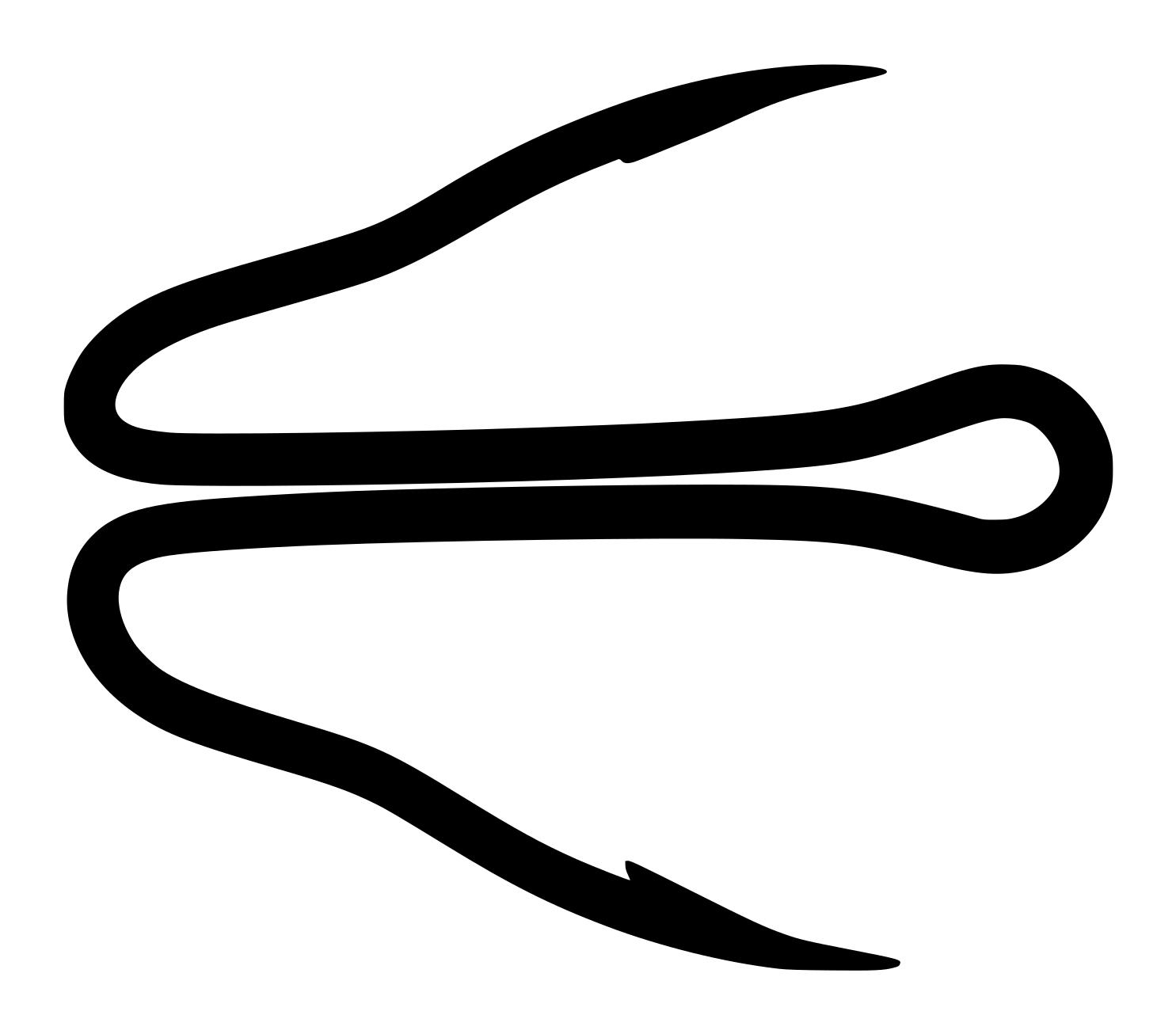
The Mustad 3582 represents the pinnacle of mid-20th century double hook manufacturing, designed specifically for traditional European wet fly fishing targeting sea trout and salmon. This hollow point double hook features the classic turned-down ball-eye construction with heavy wire gauge and bronzed finish that made Mustad the dominant force in global hook production.
The Oslo designation and Key Brand packaging places this specimen in the c. 1925-1965 production era, representing Mustad’s golden age of quality manufacturing before the transition to modern chemically-sharpened points. The double hook configuration, while specialized, was essential for traditional loch-style fishing where the additional weight and keel effect were crucial for proper fly presentation.
For collectors, this hook represents both the technical excellence of Norwegian industrial manufacturing and the rich tradition of British and Irish wet fly fishing that drove its development.
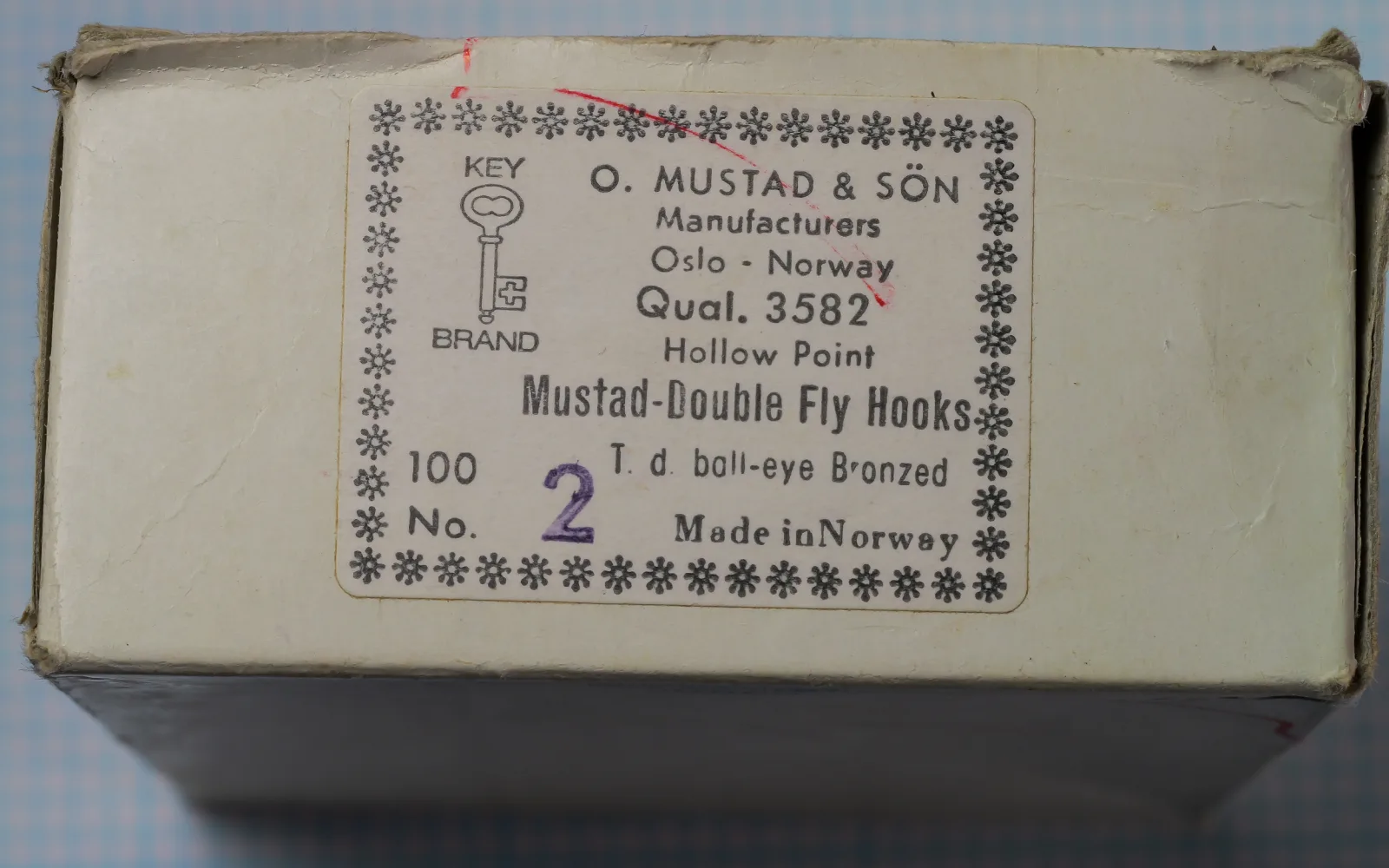
Original Mustad Key Brand packaging for the 3582 double fly hooks, size 2, showing classic mid-century eight-line label format.
Photographic record
11 cataloged imagesSelect any record to load it above.
8 images shown
Mustad 3582 Vintage Box Size 2Original Mustad Key Brand packaging for the 3582 double fly hooks, size 2, showing classic mid-century eight-line label format.Open originalMustad 3582 Hook Profile Size 2Side view of the Mustad 3582 double hook showing the brazed shank construction and Sproat bend geometry on measurement grid.Open originalMustad 3582 Hollow Point DetailClose-up view of the hollow point construction showing the concave inner face that creates the characteristic knife-edge effect.Open originalMustad 3582 Side View Ball EyeLateral view demonstrating the turned-down ball eye construction and overall hook proportions against measurement grid.Open originalMustad 3582 Size ComparisonMultiple Mustad 3582 hooks demonstrating the size range and consistent proportional scaling across different sizes.Open originalMustad 3582 Box Size 4Original packaging for size 4 hooks showing hand-stamped size designation in purple ink.Open originalMustad 3582 Box Size 6Size 6 packaging representing the smaller end of the documented size range for this double hook series.Open originalMustad 3582 Construction DetailDetailed view of individual hook construction showing the brazed shank junction and wire gauge typical of heavy double hooks.Open originalMustad-3582-Hook-Side-Size-6Mustad-3582-Hook-Side-Size-6Open originalMustad-3582-Hook-Top-Size-4Mustad-3582-Hook-Top-Size-4Open originalMustad-3582-Hook-Top-Size-6Mustad-3582-Hook-Top-Size-6Open original
Technical profile
Eye
Ball Eye, Turned DownBall eye construction shows clean brazing with smooth finish transition. Eye angle provides optimal gap presentation for wet fly tying P.
Wire
Standard, Round
Shank
Standard — Plain
Bend
Sproat, Standard gapClassic Sproat geometry with parabolic curve distributing stress evenly. Bend depth appropriate for heavy wire gauge P.
Point
Hollow Point (concave inner face)Short, close-cut barbs angled for secure retention without excessive tissue damage. Barb size proportional to wire gauge P.
Finish
Bronzed — Confirmed (stated on packaging)Bronzed finish shows characteristic warm brown tone with golden highlights. Even coverage with no visible wear on specimen P.
Hooks exhibit excellent condition with bright finish and sharp points. Packaging shows age-appropriate toning with clear text.
The hollow point features a concave inner face that creates an incredibly sharp tip with rapid flare toward the barb, enabling penetration with minimal pressure – essential for soft-mouthed species like sea trout. The double hook construction distributes stress across two points while the brazed junction ensures the shanks remain parallel under load. The turned-down eye angle optimizes the hook gap for traditional wet fly patterns.
Size & scale lab
Physical specimen Catalog record
Selected size
2
Physical specimen
Overall Length
24.6 mmP
Shank Length
14.5 mm
Gap Width
9.7 mmP
Bend Depth
9.5 mm
Shank-to-Gap Ratio
~1.5-1.6 : 1
Confidence
P
Physical specimen
Physical measurement with calipers
Selected size
4
Physical specimen
Overall Length
28.7 mm
Shank Length
18.4 mm
Gap Width
9.3 mm
Wire Diameter
0.97 mm
Weight
.453g
Confidence
P
Physical specimen
Physical measurement with calipers
Selected size
6
Physical specimen
Overall Length
23.5
Shank Length
13.5 mm
Gap Width
7.8 mm
Wire Diameter
0.94 mm
Weight
.330g
Confidence
P
Physical specimen
Physical measurement with calipers
Cumulative Records
Notable as one of the few double hook patterns documented in the garrenwood.com catalog with complete original packaging across multiple sizes.
Own this hook? Help us measure it.
We have measurements for sizes 6, 4. Know any others? Submit calipered measurements and we'll review and add them. Thank you!
The 3582 was part of Mustad’s comprehensive double hook series, introduced in the early 20th century to serve the European market’s demand for traditional wet fly hooks. This series represented Mustad’s strategy of reverse-engineering successful regional patterns and producing them with Norwegian industrial efficiency. The hollow point designation indicated premium manufacturing within their quality tier system.
Era and Packaging Dating
Oslo designation indicates post-1925 production (after Christiania renamed to Oslo). Classic Key Brand logo with asterisk border and eight-line label format represents mid-20th century packaging before plastic slide boxes. Lack of barcode indicates pre-1974.
Highland Tradition
The double hook was so essential to traditional Scottish loch fishing that many ghillies would refuse to guide anglers using single hooks, believing the doubles were necessary not just for hooking fish but for the proper swimming action of classic wet flies in the heavy waves of highland lochs.
Design lineage and influence
Double hooks evolved from traditional Scottish and Irish salmon fly requirements, where single hooks often proved inadequate for large migratory fish. Mustad’s 3582 represented the industrialization of this hand-forged tradition, competing directly with established Redditch manufacturers like Allcock and Bartleet who had dominated the salmon hook market.
Best matchRelated by Attribute
Computed automatically from catalog data — updated as new hooks are added.
Matches: Bend, Shank, Wire, Gap, Forging +3 moreDiffers: Eye: Ball Eye vs Blind — Tapered Shank; Eye Orient.: Turned Down vs N/A — Blind; Point: Hollow Point vs Superior +4 more
Matches: Bend, Shank, Gap, Forging, Offset +1 moreDiffers: Wire: Standard vs Heavy (1X Heavy); Eye: Ball Eye vs Blind — Tapered Shank; Eye Orient.: Turned Down vs N/A — Blind +4 more
Designed specifically for traditional European wet fly fishing, particularly for sea trout and salmon. The double hook configuration provides additional weight to get flies down in the water column while acting as a keel to maintain straight swimming action. Most commonly used for classic loch-style fishing and traditional patterns like Teal Blue and Silver, Peter Ross, and Dunkeld.
Secondary Applications
Low-water salmon flies, heavy streamers for large trout
Classic Fly Patterns
Teal Blue and Silver, Peter Ross, Dunkeld, Black Pennell, Mallard and Claret
Modern Equivalents
Hook
Match Quality
Notes
Mustad 3399A
Good
Modern single hook equivalent with similar proportions but chemically sharpened point
Partridge P Double
Very Good
High-quality modern double hook maintaining traditional proportions
Collector notes
Uncommon double hook format with good historical significance but limited collecting demand outside specialty salmon/sea trout enthusiasts.
Reference value
$15 – $35 USD estimate
Packaging condition
Good — moderate wear, legibleRecorded specimen
Packaging format
MU-KB-08Catalog code
Positive factors include the classic double hook construction representing traditional European wet fly techniques, and the hollow point designation indicating premium manufacturing. The bronzed finish and Key Brand packaging add period authenticity. Limiting factors include the specialized application reducing broad collector appeal, and the relatively common production numbers during the mid-20th century peak.
Packaging
Classic Mustad eight-line label format on cream cardboard box. Key Brand logo with skeleton key graphic and asterisk border. Oslo - Norway designation. Quality code Qual. 3582. Hollow Point designation. T.d. ball-eye Bronzed specification. Made in Norway marking. Hand-stamped size numbers in purple ink.
Market Value Notes
Full boxes command premium over loose hooks. Condition of packaging significantly affects value. Smaller sizes (6-10) typically more valuable than larger sizes.
Where to Find
Specialty tackle dealers, vintage fishing auctions, UK fishing tackle fairs. Complete boxes more commonly found in European collections.
Preservation
Storage and Preservation
Store hooks on original card in a cool, dry environment to prevent corrosion of the bronzed finish. The bronze coating provides good protection but can develop patina with humidity exposure. Keep boxes closed to protect the period typography and prevent hook loss. Original packaging adds significant value to collectors – avoid removing hooks unnecessarily. The cardboard is susceptible to insect damage, so check periodically and consider archival storage boxes for long-term preservation.
Marking Analysis
Hand-Stamped Size Markings
The size numbers ‘2’, ‘4’, and ‘6’ visible on the packaging are hand-stamped in purple ink, typical of Mustad’s mid-century size designation system. This hand-stamping indicates individual quality control and inventory management at the distributor or retail level. The consistent purple ink and clear impressions suggest professional stamping tools rather than handwritten notations.
Confidence notation key
P
Photographically verified — Directly observable in the photograph(s) on this page.
V
Verified by documentation — Confirmed by manufacturer catalog, spec sheet, or published reference.
I
Inferred — A logical deduction from observable or documented evidence, not directly stated.
E
Estimated — An approximation based on visual comparison, proportional analysis, or limited data.
S
Speculative — A reasoned hypothesis that cannot be confirmed from available evidence.
Unnotated claims are the compiler’s synthesis; see Sources. All photographs on garrenwood.com are taken on a measurement grid where each square equals 1/10 inch (0.1″ / 2.54 mm).