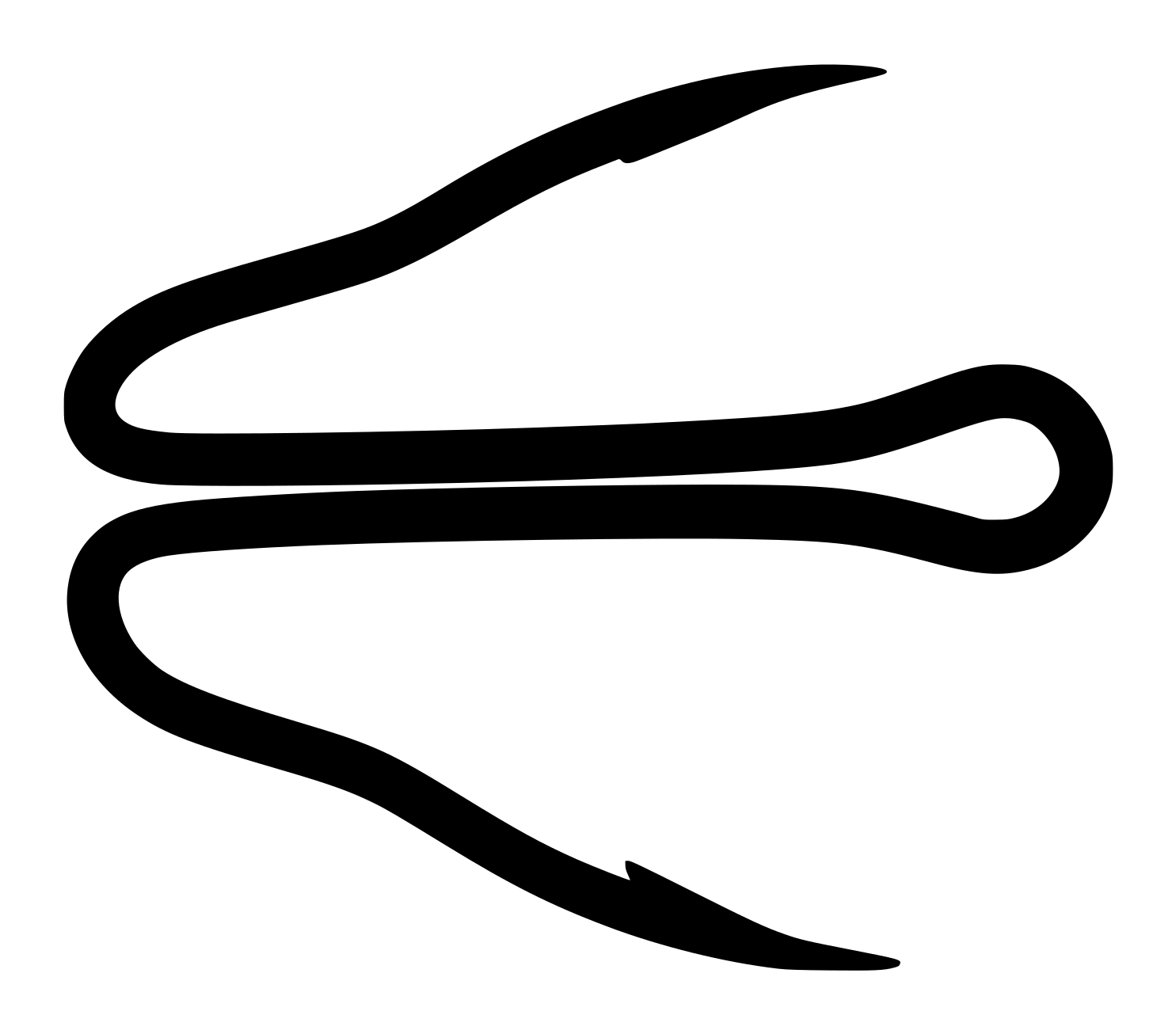
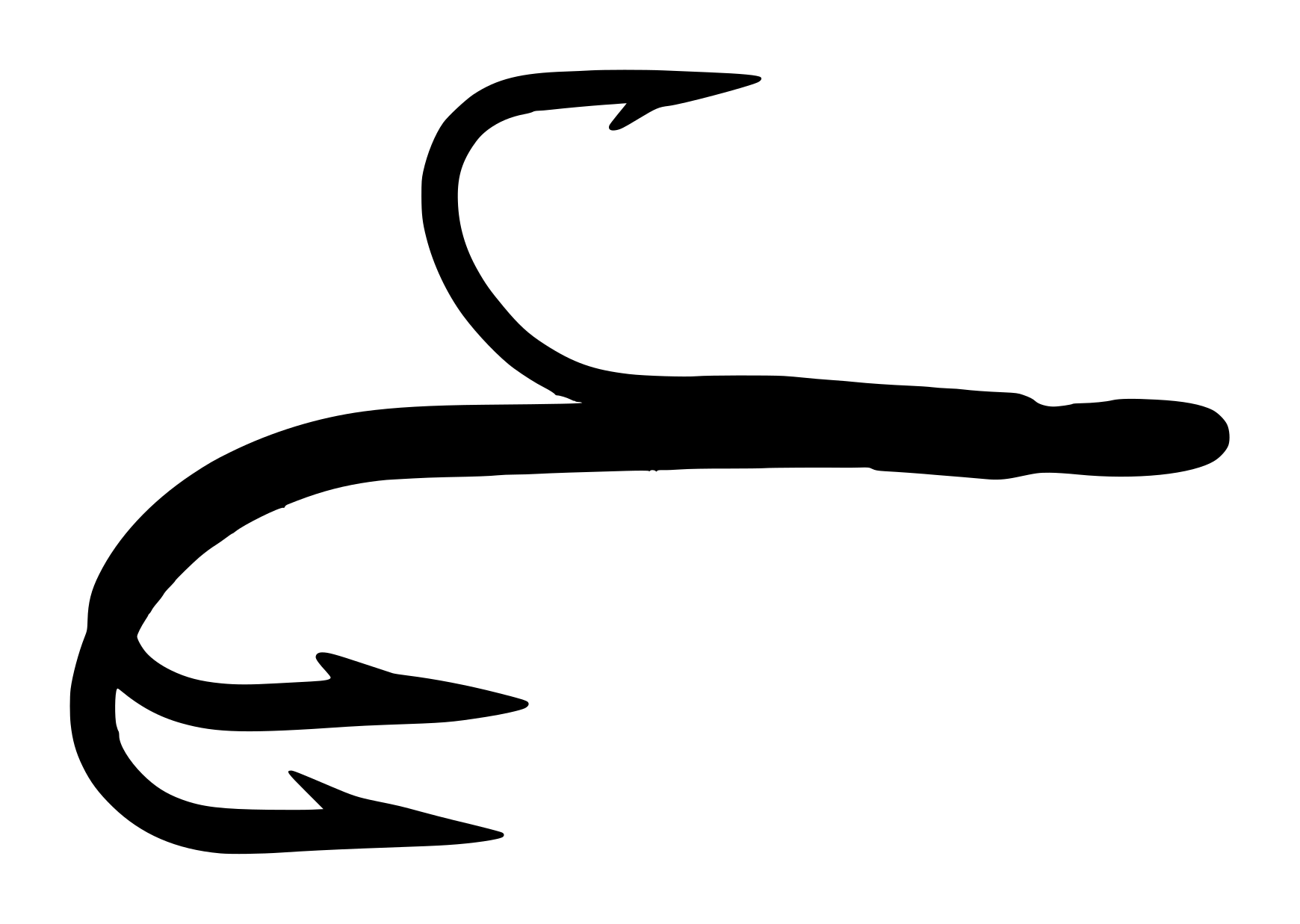
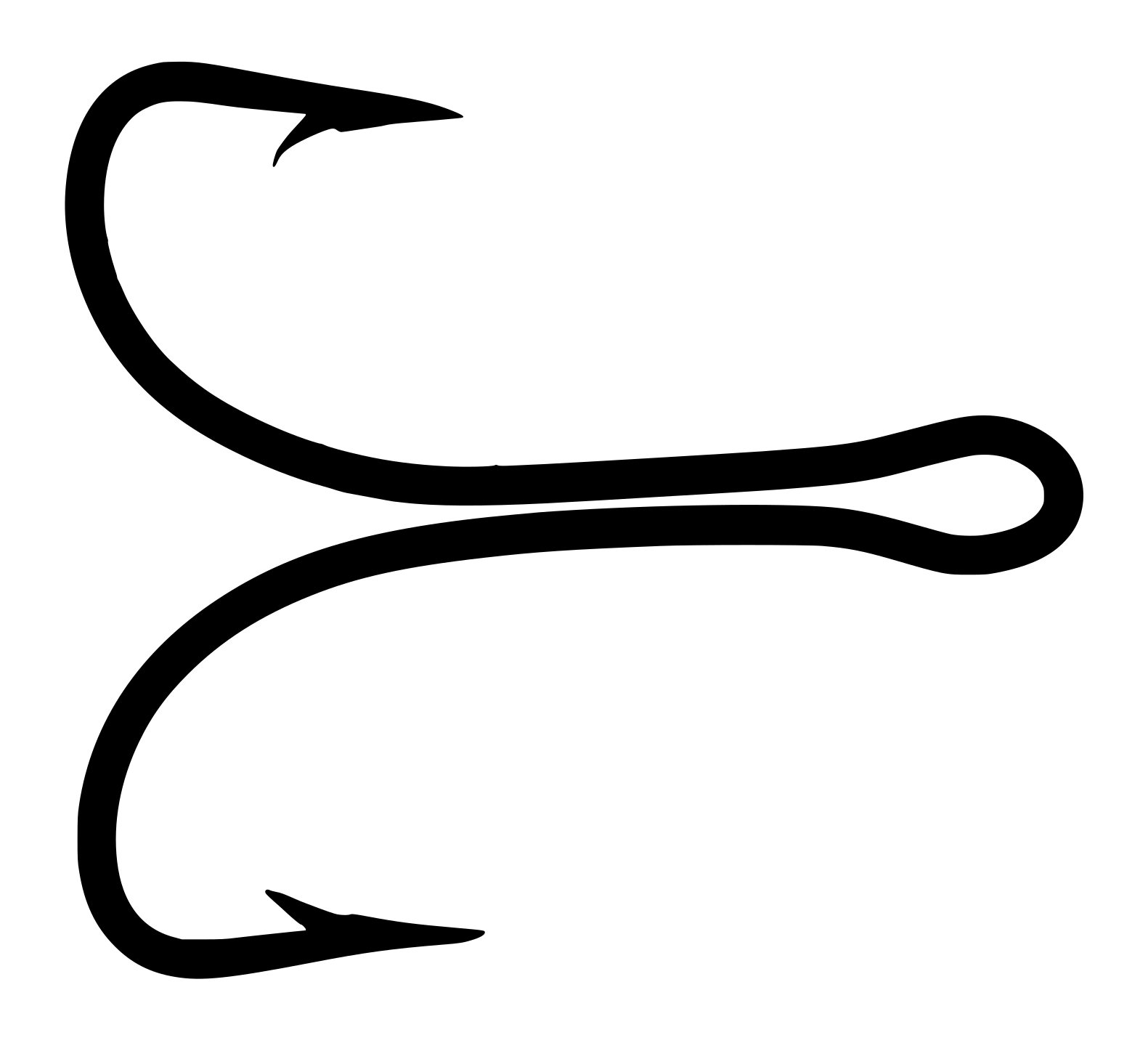
Mustad model 35881, Double Live Bait Hooks, size 1/0. Norwegian manufacture from O. Mustad & Son’s Gjovik factory. Two bends mounted on a single shank with straight ball eye. Hollow point geometry and bronzed finish. Intended for live baitfish rigging, particularly in pike and sea trout fisheries. Box contains 100 hooks.
Era dating: c. 1950-1965. Evidence includes box construction, offset printing quality, postal address format (Oslo, Norway without ZIP code), absence of barcode, and the Key Brand logo style characteristic of mid-century Mustad export boxes. The handwritten size notation in purple ink suggests either factory stock inventory marking or retail stock control.
Collectability: Rated 3.5/10. Common model in typical sizes, but the original manufacturer box in decent condition adds modest premium value. Complete box stock is more desirable than loose hooks. Size 1/0 is standard bait size and relatively available compared to specialty patterns. Specialist bait-fishing collectors and Mustad completists constitute the modest demand base.
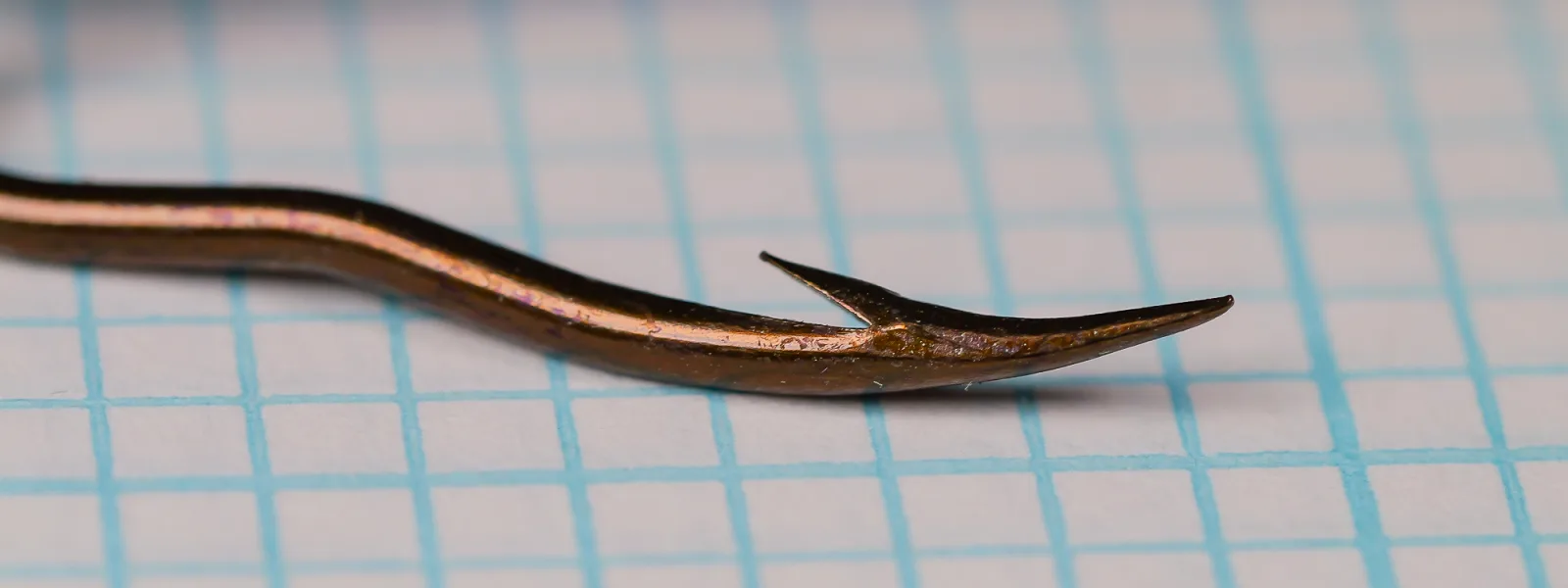
Side view of a single Mustad 35881 hook showing the characteristic curved bend and bronzed finish. The hollow point is visible at the tip.
Photographic record
3 cataloged imagesSelect any record to load it above.
3 images shown
Mustad 35881 Double Live Bait Hook ProfileSide view of a single Mustad 35881 hook showing the characteristic curved bend and bronzed finish. The hollow point is visible at the tip.Open originalMustad 35881 Package Label 1950sOriginal printed label from the hook packaging identifying the model as Qual. 35881, Hollow Point, Mustad-Double Live Bait Hooks, Ringed Bronzed, Made in Norway. Size marked as No. 1/0.Open originalMustad 35881 Double Hook Pair Top ViewTwo size 1/0 Mustad 35881 hooks arranged in tandem showing the ringed eye construction and parallel alignment of both shanks and bends. The bronzed finish is clearly visible.Open original
Technical profile
Straight / Inline Ball Eye | Other | Standard | Standard Wire | Hollow Point | Bronzed
Eye
Ball Eye, Straight / Inline
Wire
Standard, Round
Shank
Standard — Plain
Bend
Standard gap
Point
Hollow Point (concave inner face)
Finish
Bronzed — Confirmed (stated on packaging)Specimen hooks are bright with even bronzed patina. No visible corrosion, pitting, or damage to barbs. Eyes are uniform and clean. Box label is cream-colored paper with gold offset printing; shows light age tone consistent with 1950s-1960s stock. Cardboard box exterior shows minor toning and slight creasing at corners. Handwritten purple ink marking "No 1/0" on label is legible and clearly period-original. No tape damage or water staining visible. Overall condition suggests stored in dry environment. Box has not been opened — appears to be complete sealed stock. Label adhesion is secure with no lifting or separation.
The double-bend configuration distributes the force of a striking fish across two separate pivot points on a single shank, reducing the tendency for large baitfish to work free through shank rotation. The straight ball eye accommodates the hook rig orientation required for live bait impalement — typical practice positioned one bend through the dorsal musculature and the second through the tail. This configuration provided dual holding points while allowing the baitfish body to remain relatively straight and lifelike in the water.
The hollow point geometry with concave inner face provides a knife-edge characteristic that aids penetration into the harder tissues of live baitfish. The standard wire gauge supplies sufficient strength to land pike and sea trout while remaining manageable for hand manipulation in field conditions. The bronzed finish protects the steel from saltwater corrosion and freshwater oxidation, developing a stable patina layer over time.
We have measurement for size 1/0. Know any others? Submit calipered measurements and we'll review and add them. Thank you!
Historical context
mustad
O. Mustad & Son was established in Oslo, Norway in 1877, with manufacturing facilities in Gjovik. The company became one of the world’s largest industrial hook manufacturers by the mid-20th century, supplying tackle distributors worldwide. By the 1950s, Mustad operated a global distribution network and offered hundreds of hook models across multiple product lines. The Gjovik factory employed modern forging and tempering equipment enabling high-volume production of consistent quality. The company’s export business to Britain, North America, and northern Europe was substantial; Norwegian hooks were recognized for reliable performance in bait and saltwater fishing.
Double hooks represented a specialized segment of Mustad’s bait-fishing portfolio. Live bait presentation for pike and large predatory fish required hooks that could secure the baitfish without excessive damage while allowing natural movement. The double-bend configuration distributed the hook weight and holding power across two strike points, reducing leverage losses that could occur with single-point attachments.
Series History
The Mustad Double Live Bait Hooks series, identified by model code 35881, was marketed as part of Mustad’s bait-fishing line during the mid-20th century. Double hooks for live bait were offered in multiple sizes, typically ranging from 1/0 to 4/0 for freshwater pike and perch, and smaller sizes for sea trout rigging. The model was discontinued by the 1970s as synthetic materials and single-hook designs gained dominance in tackle manufacturing. Original Mustad catalogs from the 1950s-1960s list the 35881 in the specialized bait-fishing section, positioned alongside other double-hook models for pike and trolling applications. No broader product line variant information is available from surviving documentation.
Era and Packaging Dating
Box construction (rigid, paper label affixed to cardboard) consistent with 1950s-1960s manufacturing. Offset printing on label typical of mid-century European hook production. Oslo, Norway address without ZIP code indicates pre-1970s. Absence of barcode or UPC strongly indicates production before 1974. Key Brand logo style and decorative snowflake border design match Mustad export packaging from this period. Handwritten size notation in ballpoint pen (purple) suggests inventory stock marking rather than retail packaging, consistent with wholesale box use. No modern product coding or safety information visible.
The Live-Bait Double Hook and Pike Fishing Tradition
The term 'ringed' on the Mustad 35881 box label appears to reference the smooth ball-eye construction (a clean ring of wire without secondary bindings). Mustad's use of this specific terminology suggests a distinction from competing double-hook designs that employed eye loops or wrapped attachments. In northern European pike and sea-trout fishing, the live-bait presentation method was highly specialized: the angler would impale the baitfish through the dorsal muscle with one bend and through the tail with the second, allowing the fish to swim naturally despite being fully secured. This technique required hooks that remained aligned and did not rotate — the double-hook geometry addressed this problem by distributing weight symmetrically. By the 1960s, synthetic leaders and single-hook designs increasingly displaced the double-hook approach, reflecting broader shifts in tackle design toward simplicity and standardization.
Design lineage and influence
Best matchRelated by Attribute
Computed automatically from catalog data — updated as new hooks are added.
Matches: Bend, Gap, Eye Orient., Point, Finish +4 moreDiffers: Shank: Standard vs Special Long; Wire: Standard vs Heavy (1X Heavy); Eye: Ball Eye vs Brazed Eye
Rated 3.5/10. The model is not rare — double live bait hooks were widely distributed in northern Europe during the 1950s-1960s. However, the original manufacturer box in preserved condition adds modest appeal to tackle collectors and Mustad specialists. Bait-fishing hook demand is lower than fly-pattern specialists, limiting collector base. Size 1/0 is standard and available; smaller or larger sizes may command slightly higher premiums among specialists.
Reference value
$8 – $22 USD estimate
Packaging format
manufacturer_boxCatalog code
Positive factors: Original manufacturer box with printed label intact adds significant value over loose hooks. Mustad Norwegian-made models appeal to both Scandinavian tackle collectors and Mustad completists. The double-hook configuration represents a specialized historical design no longer in production. Complete count (100 hooks) and unopened or near-unopened box status commands real premiums. Bronzed finish develops character patina that collectors of vintage tackle appreciate.
Limiting factors: Double hooks for bait fishing remain a niche collecting category compared to fly-tying hooks or salmon patterns. Modern synthetic rigging has displaced the historical use case. Size 1/0 is generic and widely available; specialty sizes (small or large extremes) are more sought. Loose individual hooks from broken-up boxes are common and command minimal premiums. Moderate condition box (worn label, opened, partially used) values drop significantly from sealed examples.
Variants and desirability: Sealed boxes in mint condition are considerably more desirable than opened stock. Original tissue wrapping (if present) adds additional premium. Size range variants — particularly smaller sizes like 2 or larger sizes like 4/0 — command higher search interest. Boxes with hand-stamped pricing from European tackle dealers or distributor markings are sought by regional specialists.
Packaging
Rigid manufacturer box with printed cover label. Label is cream-colored paper stock with gold offset printing. Decorative snowflake/star border design. Contains text: "KEY BRAND" with logo, "O. MUSTAD & SON Manufacturers Oslo - Norway Qual. 35881 Hollow Point Mustad-Double Live Bait Hooks Ringed Bronzed 100 Made in Norway" with "No 1/0" handwritten in purple ink. Box construction suggests 1950s-1960s era. Label shows typical mid-century Mustad offset printing.
Market Value Notes
Low ($8): Good condition. Box opened, possibly used or stock worn. Some hooks missing or tarnished. Label intact but creased. Represents partial stock or working vintage box.<br />
High ($22): Mint to excellent condition. Box sealed or nearly sealed. Full hook count. Label clean and bright. Minimal wear to cardboard. Represents collected/preserved example.<br />
Premium factors: Sealed or pristine box condition, complete full count (100 hooks), bright label printing with minimal age tone, presence of original tissue wrapper or interior packaging, regional European provenance.<br />
Platforms: eBay (both UK and US listings of mid-century Mustad boxes). Occasional European tackle dealer sales. Specialist Scandinavian tackle fairs.<br />
Confidence: E estimated — based on limited comparable sales data. Double hook bait boxes are infrequently listed. Range assumes unopened/mint at high end and good-used at low end. Actual sealed examples may reach $25-35 if unusual size variant; loose hooks from broken boxes typically $0.50-1.00 each.
Where to Find
eBay UK and eBay US, vintage tackle sections. Occasional Scandinavian tackle auctions and regional European fishing tackle fairs. Dealer sales through specialized vintage tackle retailers in northern Europe. Auction houses handling sporting estate lots. Less commonly found through standard US tackle shows; more prevalent in UK and Scandinavian markets.
Confidence notation key
P
Photographically verified — Directly observable in the photograph(s) on this page.
V
Verified by documentation — Confirmed by manufacturer catalog, spec sheet, or published reference.
I
Inferred — A logical deduction from observable or documented evidence, not directly stated.
E
Estimated — An approximation based on visual comparison, proportional analysis, or limited data.
S
Speculative — A reasoned hypothesis that cannot be confirmed from available evidence.
Claims with no notation are confirmed by multiple independent sources. All photographs on garrenwood.com are taken on a measurement grid where each square equals 1/10 inch (0.1″ / 2.54 mm).