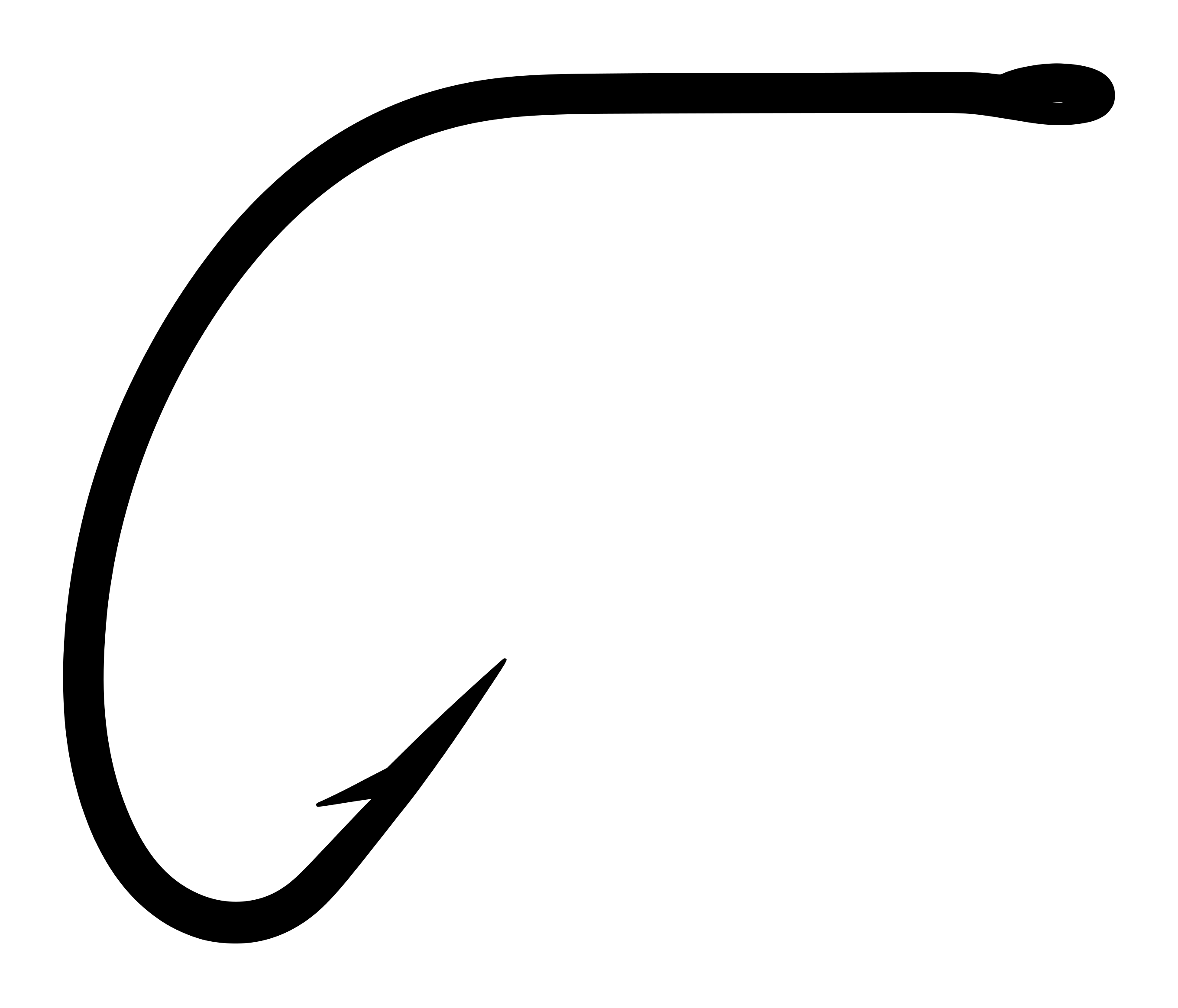
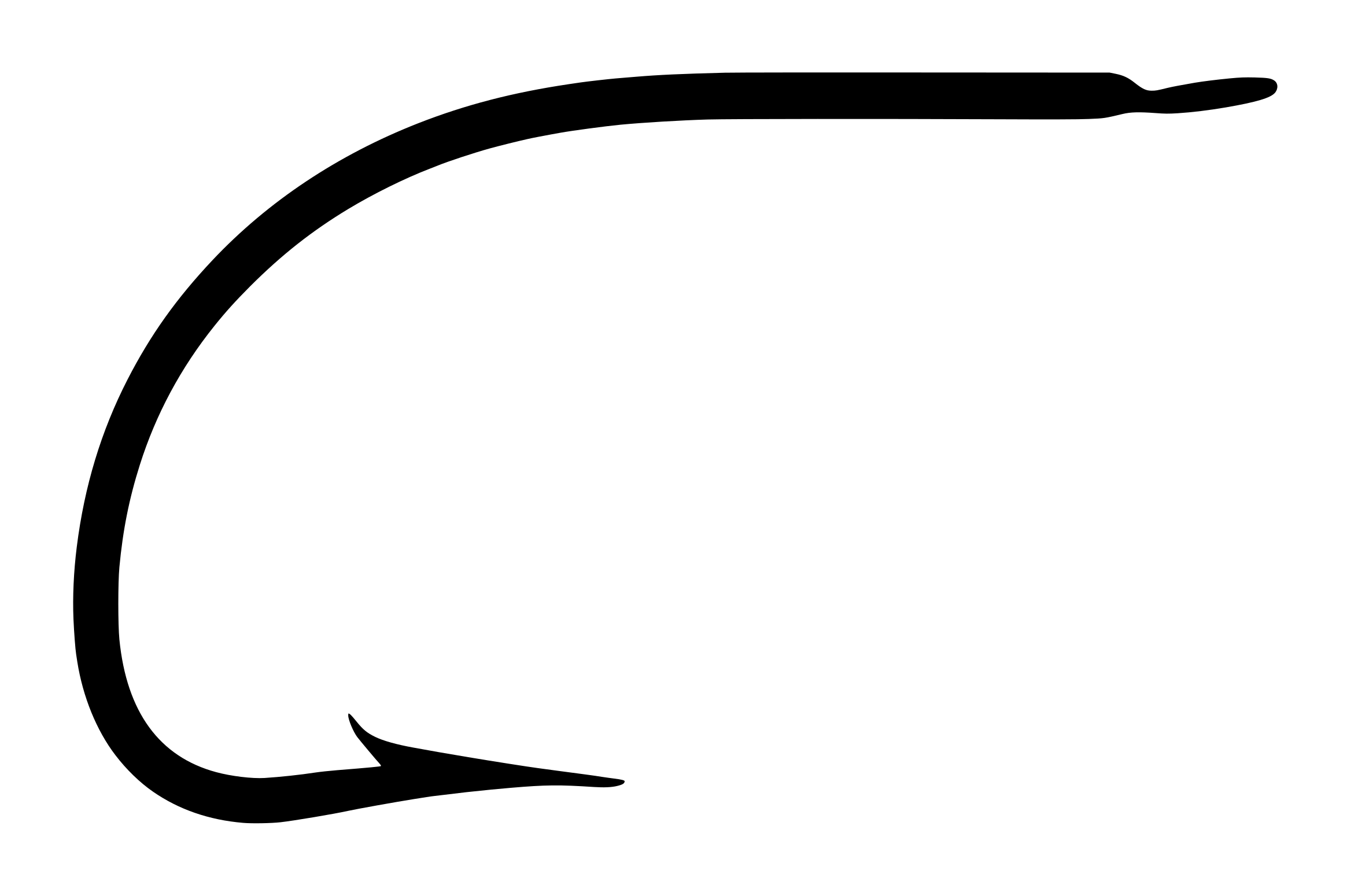
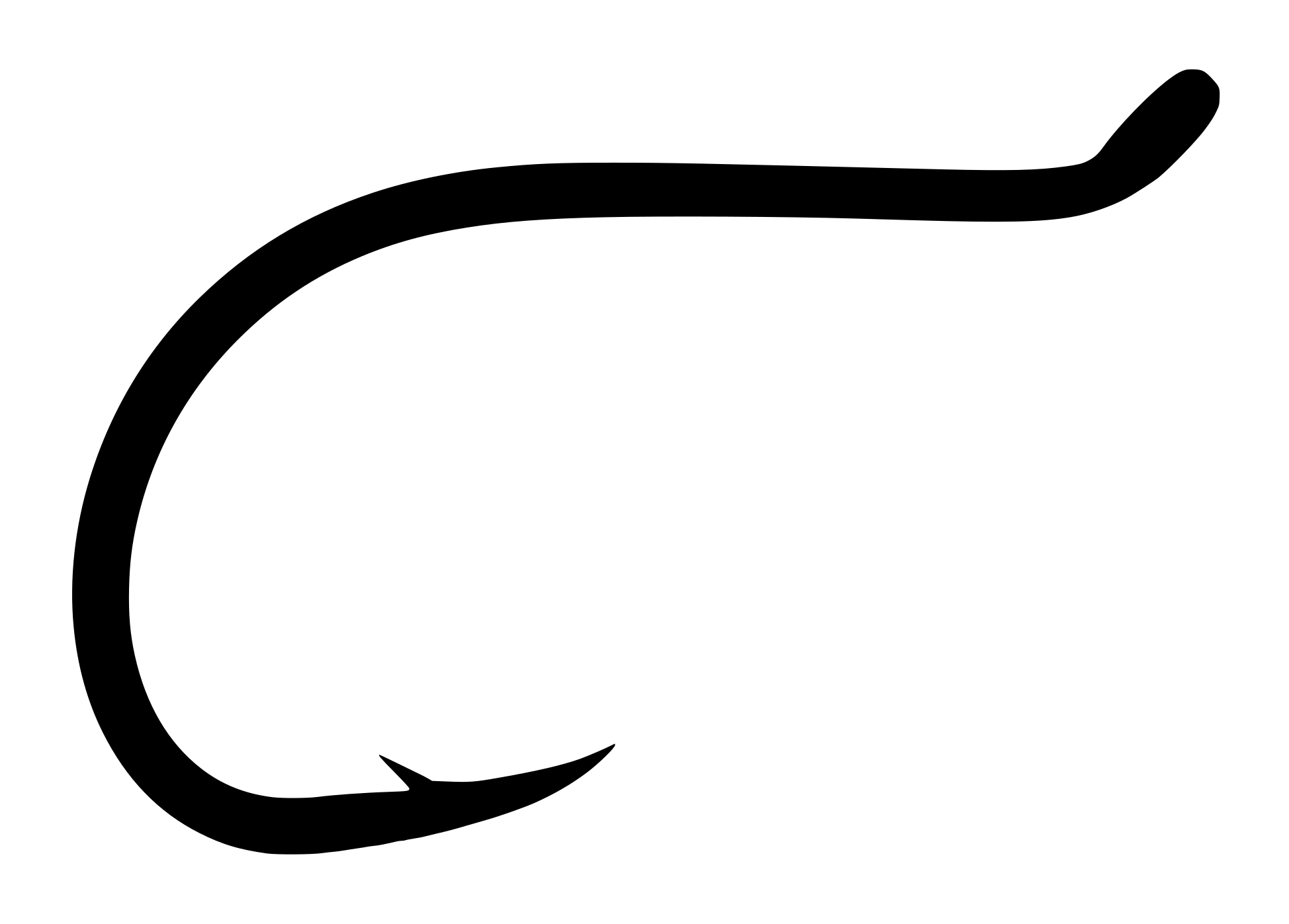
The Mustad 38110 is a Norwegian-made saltwater hook from circa 1940–1955, built on an O’Shaughnessy bend with extra-heavy forged wire, a dramatically shortened 3X shank, and a turned-up looped-eye extension designed specifically for articulated lure construction. Its hollow-point geometry and forged wire construction deliver penetration and durability in rough saltwater conditions while the abbreviated shank allows the hook to position far back in large trolling spoons, cedar plugs, and heavy lures as a trailing stinger. This configuration represents mid-century engineering at its finest—solving the practical problem of how to attach heavy-duty saltwater hooks to articulated lures without adding excessive weight and bulk to the forward body. The 38110 exemplifies the specialized hook designs that enabled modern saltwater trolling and lure fishing to evolve beyond simple single-hook rigs.
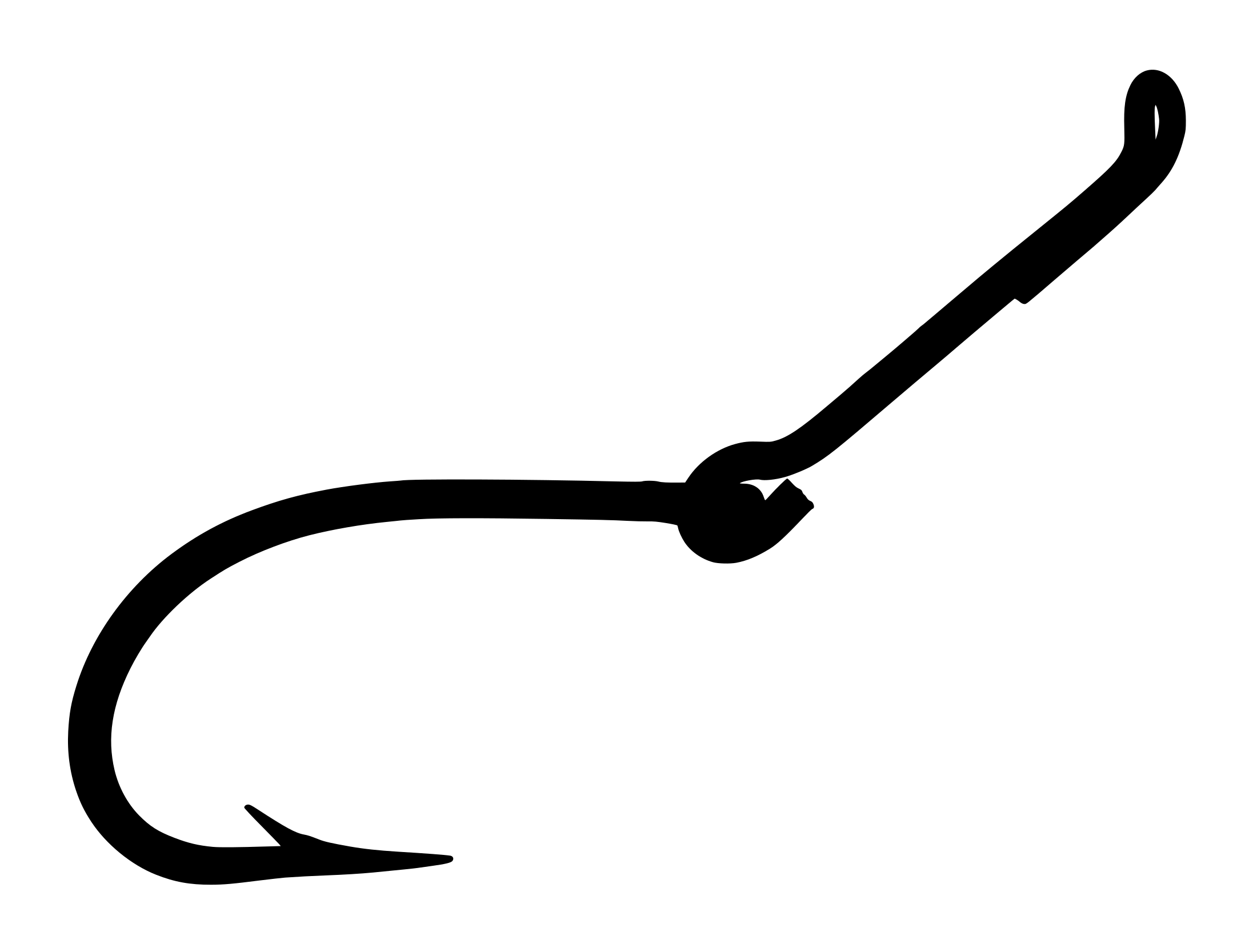
Close-up of the looped eye (tue_loop) construction showing the elegant oval eye and return wire running parallel to the shank, characteristic of Atlantic salmon and big-game designs. This robust eye distribution prevented failure under extreme fighting pressure.
Photographic record
5 cataloged imagesSelect any record to load it above.
5 images shown
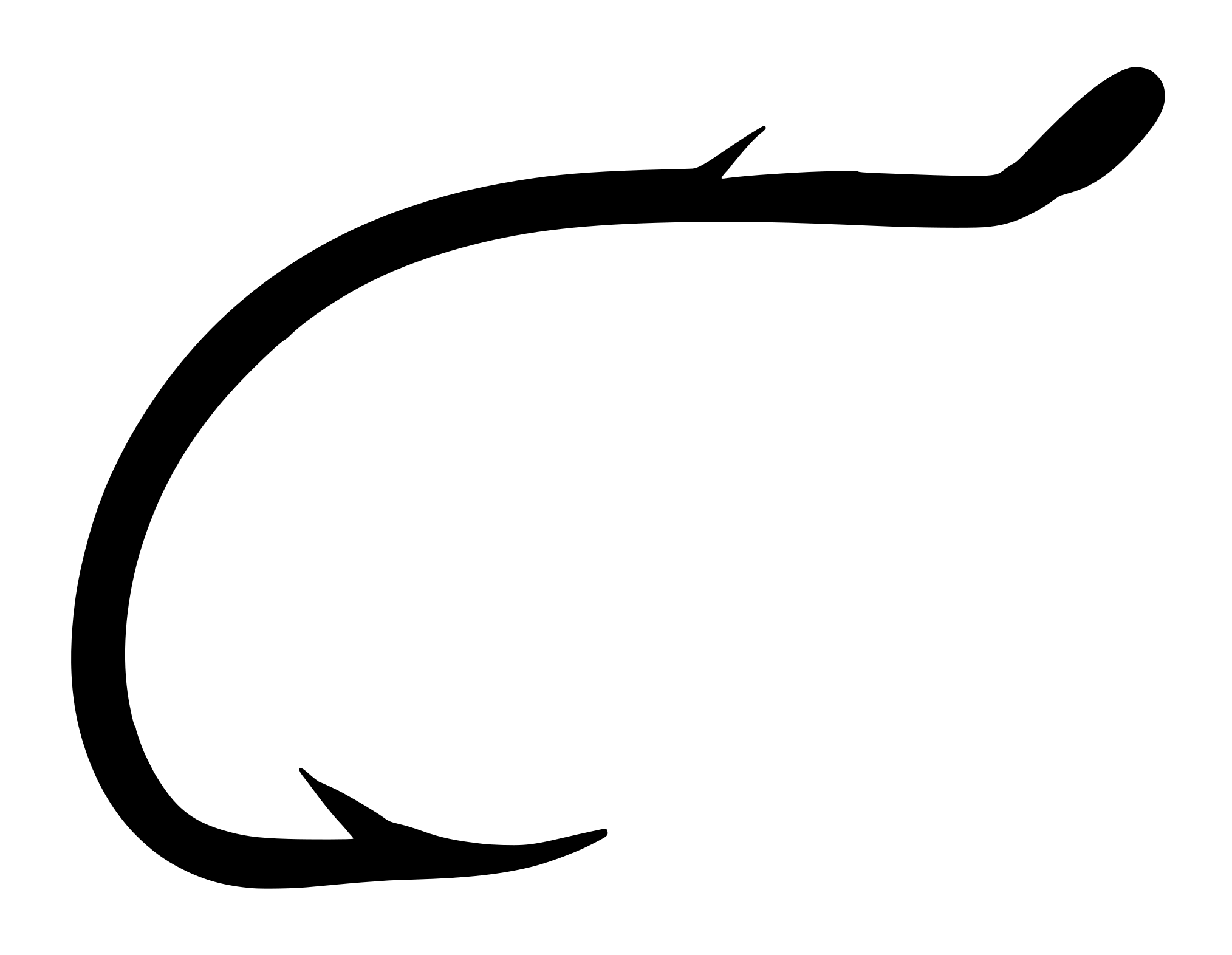
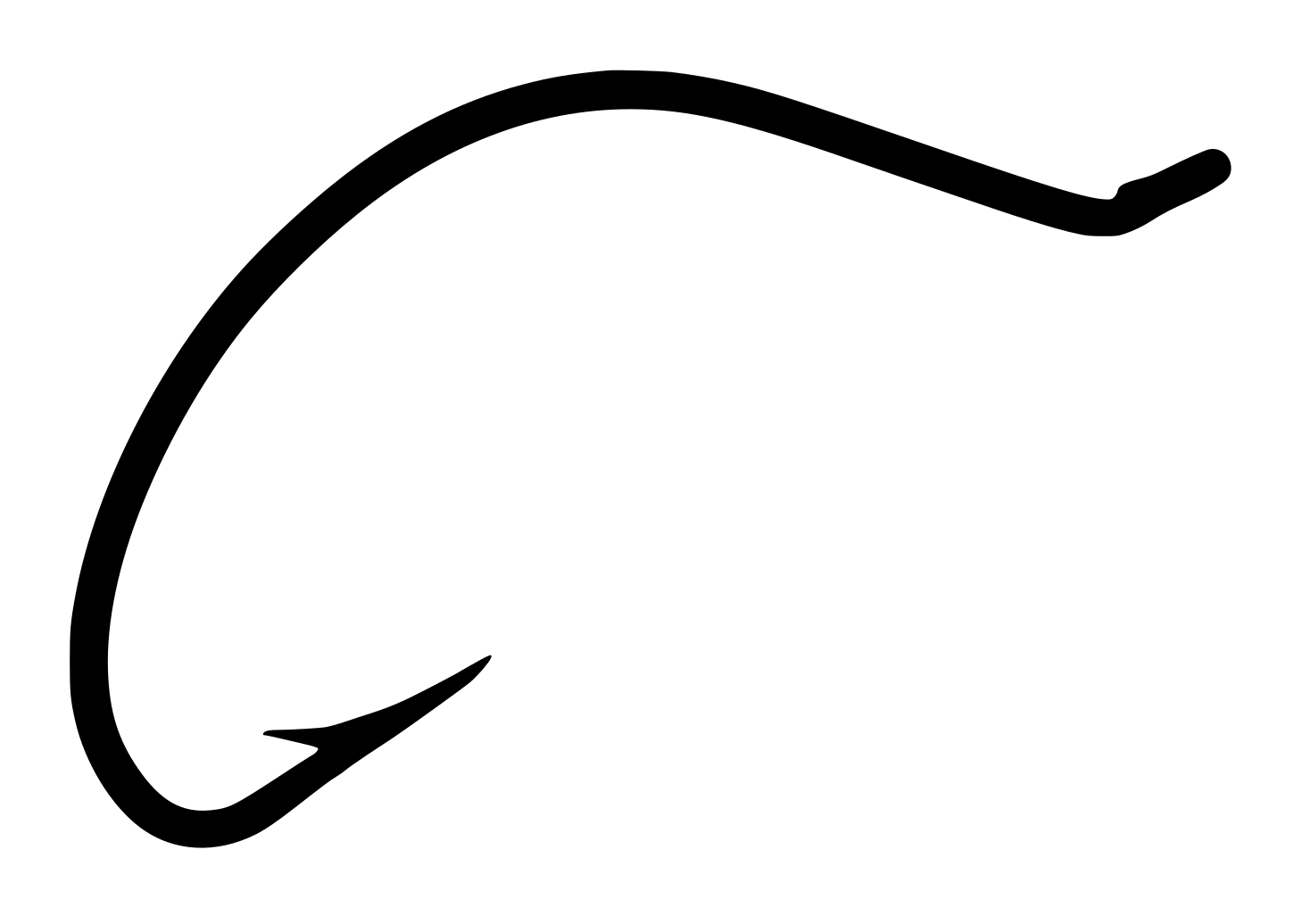
Mustad 38110 Size 2 Looped Eye DetailClose-up of the looped eye (tue_loop) construction showing the elegant oval eye and return wire running parallel to the shank, characteristic of Atlantic salmon and big-game designs. This robust eye distribution prevented failure under extreme fighting pressure.Open originalMustad 38110 Size 2 Articulated JointSide view of the critical articulated joint where the looped rod attaches to the main hook, showing the transition from the rod to the bend. The robust forged wire and angular O'Shaughnessy geometry are evident in this profile.Open originalMustad 38110 Size 2 Hollow Point GeometryClose-up of the hollow-point geometry showing the concave, dished taper from tip to barb base. This design provided rapid penetration despite the heavy wire gauge, ideal for tough-mouthed saltwater species.Open originalMustad 38110 Size 2 Overall ProfileFull-length profile of the Mustad 38110 showing the complete articulated assembly: the looped eye, short O'Shaughnessy bend, and rigid looped-rod extension. This unique configuration was designed for positioning in large trolling spoons and composite lures.Open originalMustad 38110 Original Package LabelVintage Mustad label on original cream-colored paper card with ornamental snowflake border. The eight-line format clearly identifies this as Qual. 38110 Hollow Point O'Shaughnessy Hook with looped rod attached, size No. 2, japanned finish. 'Oslo - Norway' location confirms mid-20th century production (post-1925).Open original
Technical profile
Eye
Looped Eye, Turned UpLooped eye (tue_loop) formed by bending the wire into an elegant oval and running the return wire parallel down the main shank for a short distance before terminating smoothly P. This design distributes the extreme pressure of a fighting fish evenly across both sides of the wire loop, eliminating risk of eye opening under stress. Classic construction for heavy Atlantic salmon flies and saltwater big-game hooks.
Wire
Heavy (1X Heavy), Forged, Est. ~0.045"-0.055" (~1.1-1.4 mm)
Shank
Standard — Plain
Bend
O'Shaughnessy, Standard gapO'Shaughnessy bend with characteristic slightly squared-off bottom geometry, deeper and more angular than a standard Sproat P. Heavy forging is evident in the robust, almost rectangular shoulder at the bend transition. The shank is proportionally very short (3X extra short), creating an unusual 3:1 shank-to-gap ratio. This configuration was designed deliberately for articulated lure construction where the hook sits far back in a lure body or trailing skirt, with the looped rod providing the forward linkage.
Point
Hollow Point (concave inner face)Small, close-cut barb positioned immediately behind the point taper P. Barb is proportionally modest relative to the heavy wire gauge, consistent with Hollow Point geometry where the concave point design and sharp tip do most of the penetration work. Barb angle is swept slightly backward, typical of the era.
Finish
Black Japanned — Confirmed (stated on packaging)Japanned black finish P—a heavy, opaque, baked-on lacquer applied to raw high-carbon steel. Finish exhibits uniform jet-black color with slight gloss variation consistent with age and storage. The thick lacquer coating was engineered to seal the steel from marine saltwater corrosion during the era before stainless steel became standard. Specimen shows minimal flaking or wear; finish integrity is excellent for age.
The two hooks visible on card are bright and exhibit no corrosion or pitting—remarkable condition for 70+ years. The looped rod attachment on each hook is intact and functional, with no bending, cracking, or separation from the main eye. Card shows light cream-to-tan toning, minor edge wear, and light foxing typical of period paper stock. Original label remains legible and unfaded. No missing or broken hooks. Packaging integrity is excellent.
The 38110 represents a specialized engineering solution: the O’Shaughnessy bend, normally used for heavy saltwater bait fishing, was adapted for articulated lure construction by shortening the shank dramatically (3X extra short) and permanently attaching a rigid looped-rod extension to the eye. This configuration allowed manufacturers of large trolling spoons, cedar plugs, and heavy saltwater lures to position the hook far back in the lure body (as a ‘stinger’ hook) without the weight and bulk of a full-length heavy steel shank.
The hollow point geometry provides rapid penetration despite the heavy wire gauge—the concave, dished taper from tip to barb base creates a razor-sharp edge that bites effectively into hard fish tissue. Combined with the forged extra-heavy wire (which increases structural rigidity and tensile strength), this point style represents the engineering apex of mid-century Mustad point design for rough, heavy-duty applications.
Forging the wire (flattening it laterally in a drop-press before bending) increases the steel’s internal crystal structure, effectively preventing the hook from bending open or straightening out under the extreme strain of fighting large pelagic species or heavy trolling loads.
We have measurement for size (unspecified). Know any others? Submit calipered measurements and we'll review and add them. Thank you!
Historical context
Era and Packaging Dating
Packaging bears 'OSLO - NORWAY' designation. Oslo was the official name for the city from 1925 onward, ruling out pre-1925 production. The Key Brand logo style, typography, paper stock (cream/off-white with ornamental snowflake borders), and offset printing method are consistent with mid-20th century Mustad packaging. No barcode present (barcodes became standard c. 1974). The phrase 'With looped rod attached' and the specific construction are consistent with Mustad's mid-century product line for articulated lures and tandem rigs. Post-WWII manufacturing context (Oslo) combined with pre-modernization packaging design suggests 1940-1955 production window.
A Forgotten Collaboration: Mustad and the Trolling-Spoon Era
The Mustad 38110 represents a forgotten chapter in American lure-fishing history. During the 1940s-1950s, before plastic injection-molding became cost-effective, major spoon manufacturers like Eppinger worked directly with Mustad to engineer custom hook variants that could be permanently brazed or soldered into lure bodies. The 38110's bizarre architecture—a 3X extra-short shank combined with a rigid looped-rod extension—was designed to position the hook's barb precisely at the trailing edge of a large trolling spoon. A fisherman in a Boston Harbor charter boat in 1952 might have cast a Daredevle spoon fitted with a 38110 without ever realizing the hook was a custom Mustad collaboration. Today, finding an original unopened box with intact specimens is considered a significant discovery by collectors of mid-century saltwater tackle and early American lure-fishing history.
Design lineage and influence
The O’Shaughnessy bend traces its origins to 19th-century Irish hook-making traditions and was named after the original designer. The pattern represents a deliberate geometric departure from the perfectly rounded Sproat bend: instead of a continuous sweeping curve, the O’Shaughnessy features a slightly squared-off, angular bottom. This flat-bottomed geometry was believed to provide superior ‘bite’ into hard bony structures, particularly the massive jaws of large saltwater fish like halibut and striped bass.
The 38110 variant—with its articulated looped-rod extension—represents Mustad’s mid-century innovation for the emerging lure-fishing industry. Before molded plastic jig heads and wire-form shank extensions became standard (1960s onward), manufacturers relied on hooks with pre-attached extensions to achieve proper hook placement in composite lures. The 38110 was designed to be the terminal hook in a tandem rig or articulated spoon, where the looped rod connected to a larger leading hook or lure body.
No direct predecessor or successor to this specific configuration is documented. Modern equivalents would combine a standard Mustad 3407 O’Shaughnessy with a separate wire shank extension, but the unified design of the 38110 is effectively obsolete.
Best matchRelated by Attribute
Computed automatically from catalog data — updated as new hooks are added.
Matches: Bend, Shank, Wire, Gap, Point +3 moreDiffers: Eye: Looped Eye vs Ball Eye; Eye Orient.: Turned Up vs Straight / Inline; Finish: Black Japanned vs Bronzed +1 more
Matches: Bend, Shank, Wire, Gap, Point +3 moreDiffers: Eye: Looped Eye vs Tapered Eye; Eye Orient.: Turned Up vs Turned Down; Finish: Black Japanned vs Bronzed +1 more
Matches: Bend, Shank, Gap, Point, Shank Feat. +1 moreDiffers: Wire: Heavy (1X Heavy) vs Extra-Heavy (2X+); Eye: Looped Eye vs Ball Eye; Eye Orient.: Turned Up vs Straight / Inline +3 more
Matches: Bend, Shank, Wire, Gap, Forging +2 moreDiffers: Eye: Looped Eye vs Ball Eye; Eye Orient.: Turned Up vs Straight / Inline; Point: Hollow Point vs Superior +2 more
Matches: Bend, Gap, Eye Orient., Point, Forging +2 moreDiffers: Shank: Standard vs Short (1X–2X Short); Wire: Heavy (1X Heavy) vs Fine (1X Fine); Eye: Looped Eye vs Cross Eye +2 more
The Mustad 38110 was engineered for heavy saltwater trolling and articulated lure construction, specifically as a ‘stinger’ or terminal hook component in multi-hook rigs. The extremely short shank (3X extra short) combined with the permanently attached looped rod allowed manufacturers of large spoons (Eppinger Dardevles, Daredevle variants, similar patterns) and saltwater plugs to mount the hook far back in the lure body without excessive weight or bulk.
In operation, the angler would tie or solder the looped rod to a leading hook or lure body, positioning the 38110 as a trailing hook that engaged the fish only after the primary lure had hooked and moved the fish. The hollow point provided rapid, pressure-free penetration into the mouth tissues of large game fish, while the heavy forged wire prevented straightening during protracted fights with powerful pelagic species such as striped bass, large catfish, and offshore saltwater game fish.
This configuration saw primary use in 1940s-1950s commercial and sport fishing operations along the U.S. Atlantic and Gulf coasts, particularly among trolling enthusiasts using large, heavy spoons in deep channels and offshore reefs.
Secondary Applications
Restoration of vintage trolling spoons (Eppinger, Daredevle, similar large-spoon designs); construction of custom articulated saltwater lures; historical re-rigging of period-correct tandem rigs for display or museum collections.
Classic Fly Patterns
Not typically used for fly tying.
Modern Equivalents
Hook
Match Quality
Notes
Mustad 3407 O'Shaughnessy (standard)
Good
Retains the O'Shaughnessy bend and heavy-forged construction but lacks the articulated rod extension. Requires separate wire extension for true 38110 replication.
VMC 9294 Heavy Forged
Moderate
Heavy forged wire, similar strength characteristics, but different bend profile and eye construction. Would require custom rod attachment.
Tiemco TMC9300 (series)
Moderate
Modern saltwater heavy hooks; superior metallurgy but different aesthetic and construction method. No direct articulated equivalent exists.
Collector notes
The 38110 is a specialized, purposefully engineered variant combining the heavy O'Shaughnessy bend with a permanently attached articulated looped-rod extension—a unique configuration that saw limited production. Scarce in original packaging; highly sought by collectors of mid-century saltwater tackle, articulated lure components, and Mustad variants.
Reference value
$18 – $45 USD estimate
Packaging condition
Good — moderate wear, legibleRecorded specimen
Packaging format
GW-MUS-MID-01Catalog code
Positive factors: Extremely specialized construction with pre-attached articulated rod—a feature rarely documented on surviving examples. Hollow point design combined with forged extra-heavy wire represents premium engineering. Original packaging with intact label and period-correct typography adds significant value. Authentic mid-20th century Oslo-production artifact with clear manufacturing documentation. Functional appeal to modern restorers of vintage spoons and big-game trolling tackle.
Limiting factors: No direct modern equivalent exists, limiting appeal to general fly-tyers. Niche application (tandem rigs, articulated lures) means limited collector base compared to standard patterns like Sproat or Limerick. Condition of the looped rod attachment affects value materially—any damage or loss reduces appeal. Size No. 2 is relatively large, limiting applications in modern small-stream fishing. Packaging toning and age typical for the era, not pristine.
Packaging
Cream-colored paper card (approximately 3.75" × 2.5") with ornamental snowflake border design printed in olive-gold ink. Eight-line label format with Key Brand logo (downward-pointing skeleton key) in upper left. Typography is offset-printed in serif font. Label reads: O. MUSTAD & SÖN / Manufacturers / OSLO - NORWAY / Qual. 38110 / Hollow Point / Mustad-O'Shaughnessy Hooks / Forged Ringed Black / 3 ex. short shank Ex. strong / With looped rod attached. Quantity notation 'No. 2' marked in purple pencil in lower left corner. Bottom margin reads 'Made in Norway'. No barcode. Light toning and foxing consistent with 1940s-1950s paper stock. Original hooks intact on card.
Market Value Notes
Original cards in good condition with intact 38110 specimens fetch $18-$25 on eBay. Unopened original boxes or exceptional condition examples bring $30-$45. Price driven primarily by rarity and the unusual looped-rod feature. Specialist dealers and vintage saltwater tackle collectors represent the primary market. Condition of the articulated rod attachment and presence of all original hooks significantly affects value.
Where to Find
Primarily eBay vintage fishing tackle auctions, specialist saltwater hook dealers, tackle antique dealers, and occasional estate sales of old commercial fishing equipment. Rarely seen at general antique markets. Original boxes from professional fishing operations or large-game tackle shops are occasional finds at maritime auctions.
Preservation
Storage and Preservation
The japanned black finish on the Mustad 38110 is extremely durable but benefits from careful storage. Keep the original card in a cool, dry environment away from moisture and humidity. The thick lacquer coating is resistant to rust but can develop patina or minor surface oxidation if exposed to fluctuating humidity. Do not store in sealed plastic—allow the card to breathe in stable ambient conditions.
Handle the looped-rod extension carefully, as it is permanently brazed or welded to the eye and any mechanical stress could compromise the joint. Inspect the attachment periodically for signs of separation or stress cracks. The rigid rod itself is harder than the hook wire and less prone to damage, but avoid bending or flexing it unnecessarily.
If displaying the package in a museum or collection setting, keep it away from direct sunlight, which can fade the olive-gold ink on the label. Store flat rather than standing upright to prevent stress on the attachment. The original packaging adds significant collector value—keep the hooks on the card rather than removing them unless planning active use. If restoration is necessary, have the looped rod inspected and re-brazed by an experienced tackle restorer rather than attempting repair at home.
Primary Source
Eight-Line Label Decryption
Source: Mustad 38110 original packaging label, c. 1940-1955
Line 1: ‘O. MUSTAD & SÖN’ — Establishes ultimate manufacturer. Full corporate name rather than abbreviation signals 1925+ production (post-Christiania renaming).
Line 2: ‘Manufacturers’ — Confirms Mustad’s role as primary fabricator, not merely a distributor or repackager.
Line 3: ‘OSLO – NORWAY’ — Critical dating evidence. Oslo was the official city name from 1925 onward. Rules out any pre-1925 production. Oslo location is Mustad’s historic Gjøvik factory.
Line 4: ‘Qual. 38110’ — Quality code within Mustad’s premium tier (4000+). The ‘38110’ appears to be a custom or specialized designation not found in standard Mustad catalogs of the era, suggesting this hook was engineered for a specific client (likely a major lure manufacturer like Eppinger).
Line 5: ‘Hollow Point’ — Explicitly denotes the concave, dished geometry for rapid, pressure-free penetration. This is the exclusive line for point geometry on Mustad labels.
Line 6: ‘Mustad-O’Shaughnessy Hooks’ — Identifies the specific bend pattern. The ‘Mustad-‘ prefix indicates Mustad’s mass-produced version of the Irish O’Shaughnessy design.
Lines 7-8: ‘Forged Ringed Black / 3 ex. short shank Ex. strong / With looped rod attached’ — Specifies wire treatment (forged for strength), eye type (ringed/looped), finish (black japanning), shank length (3X extra short), wire weight (extra strong/extra heavy), and the defining special feature (permanently attached looped rod for articulated lure construction).
Additional
Articulated Lure Rigging: A Forgotten Technique
The Mustad 38110 represents a now-obsolete method of hook attachment developed during the commercial and sport fishing boom of the 1940s-1950s. Before injection-molded plastic lures became the industry standard (circa 1960s), large spoon and plug manufacturers faced a problem: traditional single-eye hooks could be soldered into a lure body, but if the solder joint failed during a fight with a large fish, the entire hook assembly would detach.
Innovative tackle companies like Eppinger (famous for their Dardevles spoons) collaborated directly with Mustad to design custom hooks with pre-attached looped-rod extensions. The hook itself would be mounted at the trailing edge of the spoon with the rod extending upward or backward, where it could be brazed or welded to a secondary attachment point or leading hook.
In a typical tandem rig, a large leading hook or eye would be soldered into the spoon’s head position, and the Mustad 38110—via its looped rod—would be braced to hang below or behind the lure body, creating a two-hook system. When a large striped bass or tarpon struck the spoon, both the leading hook and the 38110 would engage, dramatically improving hookup success and hold during the violent fight.
The 3X extra-short shank was critical: it kept the hook’s barb close to the lure body, preventing fouling on weeds or the angler’s line, while the heavy forged wire ensured the hook wouldn’t bend or straighten under stress. The hollow point provided penetration force without requiring a heavy hook-set—important when fighting heavy fish on trolling tackle where line tension could be maintained continuously.
By the late 1960s, mass-produced plastic-jig construction and molded eyelet attachment techniques made the articulated-rod system unnecessary. The 38110 and similar variants were discontinued, and knowledge of this rigging technique gradually faded from fishing culture. Today, restorers of vintage Eppinger spoons occasionally rediscover the 38110 when examining original factory combinations.
Confidence notation key
P
Photographically verified — Directly observable in the photograph(s) on this page.
V
Verified by documentation — Confirmed by manufacturer catalog, spec sheet, or published reference.
I
Inferred — A logical deduction from observable or documented evidence, not directly stated.
E
Estimated — An approximation based on visual comparison, proportional analysis, or limited data.
S
Speculative — A reasoned hypothesis that cannot be confirmed from available evidence.
Claims with no notation are confirmed by multiple independent sources. All photographs on garrenwood.com are taken on a measurement grid where each square equals 1/10 inch (0.1″ / 2.54 mm).