Selected size
12
Catalog record
- Overall Length
- 8.8 mm V
- Bend Depth
- 4.6 mm V
- Wire Diameter
- 0.5 mm V
- Confidence
- V Catalog record only
 Garren WoodFishing Hook Reference
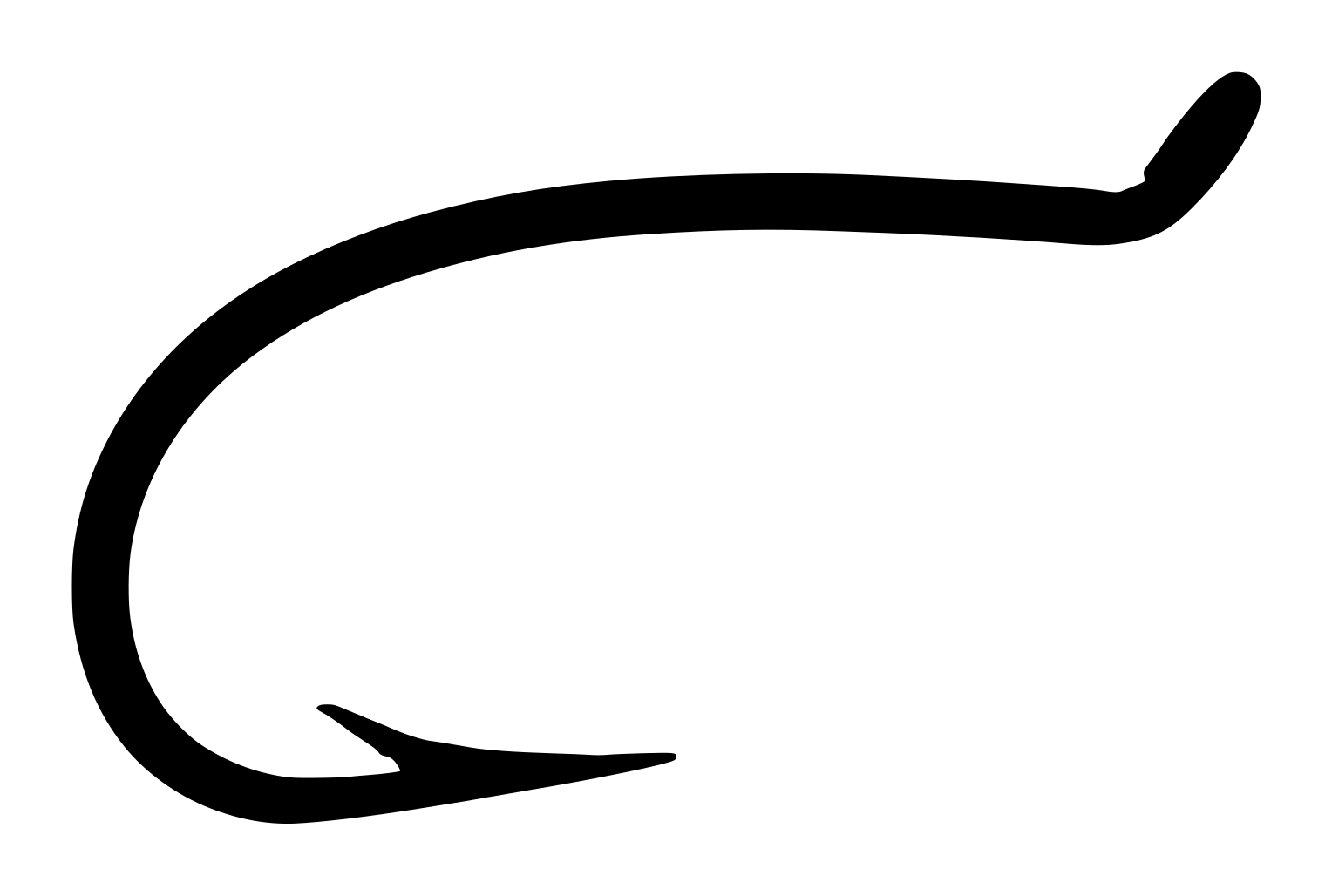
The Mustad 3911 C is a specialized dry fly hook manufactured by O. Mustad & Søn in Oslo, Norway, circa 1960s–early 1970s. This hook represents a high-performance variant within Mustad’s massive catalog, combining a size 8 gap with a 3X short shank and extra-fine wire — a configuration specifically engineered for tying large-hackled Spider and Variant dry flies on diminutive bodies.
The defining characteristic is its pronounced gape-to-shank ratio: the relatively wide 0.16-inch gap paired with only 0.17 inches of shank length creates a hook geometry foreign to modern fly-tying conventions. The tapered up-eye reduces weight and bulk at the hook’s front, critical for achieving the high, horizontal float essential to eastern dry fly tradition. The bronzed finish and hollow point provide excellent rust resistance and delicate tissue penetration, respectively.
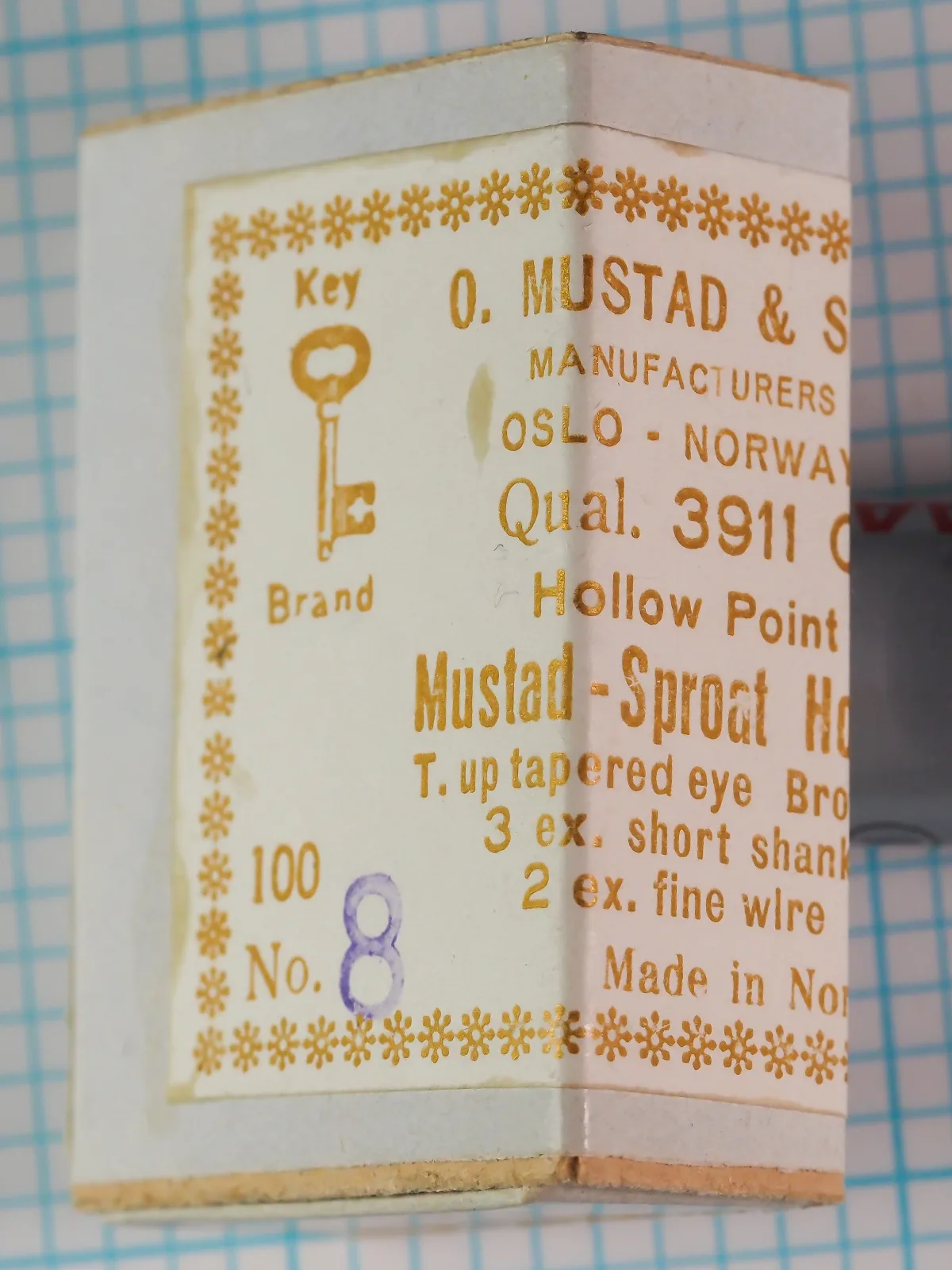
Packaging evidence (Oslo designation, Key Brand logo style, gold foil lettering, offset printing on cream cardstock) places this card firmly in the 1960s–early 1970s production window. The card is in very good condition, with no significant damage or loss of hooks. Collector interest in this model is moderate — the 3911 C is uncommon but not rare, with specialist demand from fly tyers interested in historical Catskill dry fly traditions and small-gap hook geometries.
3 cataloged imagesSelect any record to load it above.
3 images shown
The hollow point specification is critical to understanding this hook’s intended application. Unlike a spear point (which requires heavier force to drive past the barb), a hollow point features a concave, dished inner face that creates a razor-sharp edge and achieves rapid penetration with minimal angler pressure. This is essential for soft-mouthed trout and panfish where aggressive hook-setting would tear the friable tissue of the mouth and result in lost fish. The rapid flare of the hollow point also ensures that once the incredibly sharp tip penetrates past the barb, the hook holds securely in soft tissue without creating an overly large entry wound that could tear open under the strain of the fight.
The extra-fine (2X fine) wire specification reduces the overall mass of the hook significantly. In dry fly work, weight is the enemy of flotation — any unnecessary steel mass at the head of the hook pulls the fly nose-first into the water, breaking the surface tension that allows drag-free drift. By tapering both the eye and the wire gauge, Mustad engineered the 3911 C to achieve the lowest possible weight while maintaining structural integrity for trout-sized fish (up to about 3 pounds).
The bronzed finish — a baked-on lacquer coating formulated to mimic the dark brownish-gold of bronze — provides excellent protection against the acidic, tannin-rich waters of eastern trout streams. Unlike bright steel (which oxidizes rapidly in acidic water) or japanned hooks (which were reserved for saltwater and salmon work), bronzing offered a good balance of corrosion resistance and the muted, stealthy color profile that freshwater fly tyers preferred.
The Mustad 3911 C represents one of the finest examples of mid-twentieth-century dry fly hook engineering in the garrenwood.com catalog. Its 1.1:1 shank-to-gap ratio is among the most extreme documented for a production hook and reflects the specialized demands of Catskill Spider fly patterns.
We have measurements for sizes 12, 14. Know any others? Submit calipered measurements and we'll review and add them. Thank you!
O. Mustad & Søn was founded in 1832 as a general metalwork factory (initially Brusveen Spiger- og Staltradfabrikk) in Gjøvik, Norway, producing nails, steel wire, and cast-iron goods. The Mustad family acquired the firm in the mid-nineteenth century, rebranding it as O. Mustad & Søn. The company’s fortunes transformed dramatically in 1877 when Mathias Topp invented the first fully automated hook-making machine — a mechanized device that autonomously cut, bent, barbed, and pointed fish hooks from continuous wire feed at unprecedented speed. Rather than patent the invention (which would have required disclosure of schematics), the Mustad family chose strict corporate secrecy and restricted factory access, allowing them to maintain monopolistic advantages over competitors in Redditch, England, and the United States. By the 1950s, Mustad controlled approximately 50 percent of global hook production, with sales offices and manufacturing facilities across multiple continents.
The Mustad 3911 series belongs to the firm’s mid-tier quality line (Quality codes in the 3000–3999 range), representing hooks manufactured to exacting dimensional and tempering standards. The 3911 designation itself denotes a specific bend-and-eye combination; the ‘C’ suffix typically designates regional packaging variants or specialized finishing codes for export markets. The 3911 was offered in multiple configurations — the 3911 C specifically references the 3X short shank variant with tapered up-eye and bronzed finish.
This hook configuration emerged during a period (1960s–early 1970s) when Mustad was deliberately targeting the American dry fly market, particularly the Catskill and eastern traditional fly-fishing communities. The 3X short shank was a direct response to the demands of Spider and Variant fly patterns, which required exceptionally large hackles relative to body size — a combination achievable only on hooks with disproportionately large gaps and minimal shank length. The 3911 C remained in the Mustad catalog through the 1970s and was eventually discontinued as modern fly-tying patterns shifted toward more standardized hook proportions. The transition from the classic Quality numbering system to Mustad’s modern Signature Series (c. 2001–2009) rendered the 3911 C and related quality codes obsolete.
Label bears 'Oslo - Norway' designation (Oslo renaming in 1925 provides terminus ante quem). Key Brand logo style and gold-foil lettering on white cardstock are characteristic of mid-twentieth-century Mustad export packaging. Absence of modern barcode (adopted after 1974). Packaging construction, paper stock, and printing method consistent with 1960s–early 1970s era.
The Catskill region of upstate New York produced some of the most innovative fly-fishing traditions in the twentieth century, and much of that innovation was literally tied to hook geometry. The legendary fly tiers of the Catskills — Harry Darbee, Walt Dette, and others — discovered that combining extremely large hackles (sometimes using grizzly or brown hen hackles up to 1.5 inches long) with diminutive bodies created flies that could 'dance' on turbulent surface water, skating and skittering in patterns that drove selective trout to aggressive strikes. To achieve this proportion, they needed hooks with large gaps (to accommodate the hook-up without fouling the long hackles) but minimal shank length (so the body remained tiny relative to the hackle). The Mustad 3911 C, with its 3X short shank and size 8 gap, was essentially engineered as a direct response to this demand. Mustad's industrial efficiency allowed them to produce the precise geometry that Catskill tiers required, democratizing a specialized technique and making it accessible to fly fishers beyond the elite northeastern circle.
The Mustad 3911 C draws directly from the English dry fly hook tradition, particularly the Redditch craftsman schools that developed short-shank, light-wire configurations for delicate fly work in the late nineteenth and early twentieth centuries. The tapered up-eye design was popularized by British makers (notably S. Allcock & Co. and Partridge of Redditch) and adopted by Mustad as they industrialized the production of premium dry fly hooks for export to North America.
The Sproat bend used on the 3911 C is itself a hybridized design — a mathematically engineered parabolic curve sitting between a perfect round bend and a sharp Limerick bend, offering superior stress distribution under the load of a fighting fish. The combination of Sproat bend with short shank and light wire appears in numerous vintage Mustad configurations (3906, 3911, and related models) and remains influential in modern fly hook design, particularly in specialized patterns for small streams and selective trout.
Downstream, the 3911 C’s geometry influenced post-1970s egg hooks and specialized short-shank nymph designs, though direct descendants are rare. Modern equivalents typically sacrifice the upturned eye in favor of straight or turned-down configurations, reflecting shifts in knot preferences and line materials. The hook represents a pinnacle of mechanical compromise between conflicting requirements: maximum gape for hook-up security, minimal shank for delicate body tying, light wire for flotation, and premium finish for durability in acidic stream water.
| Silhouette | Hook Model | Match | Analysis | Compare |
|---|---|---|---|---|
| 543 H No. 17 — Mustad 543 H | 85% | Compare | ||
|
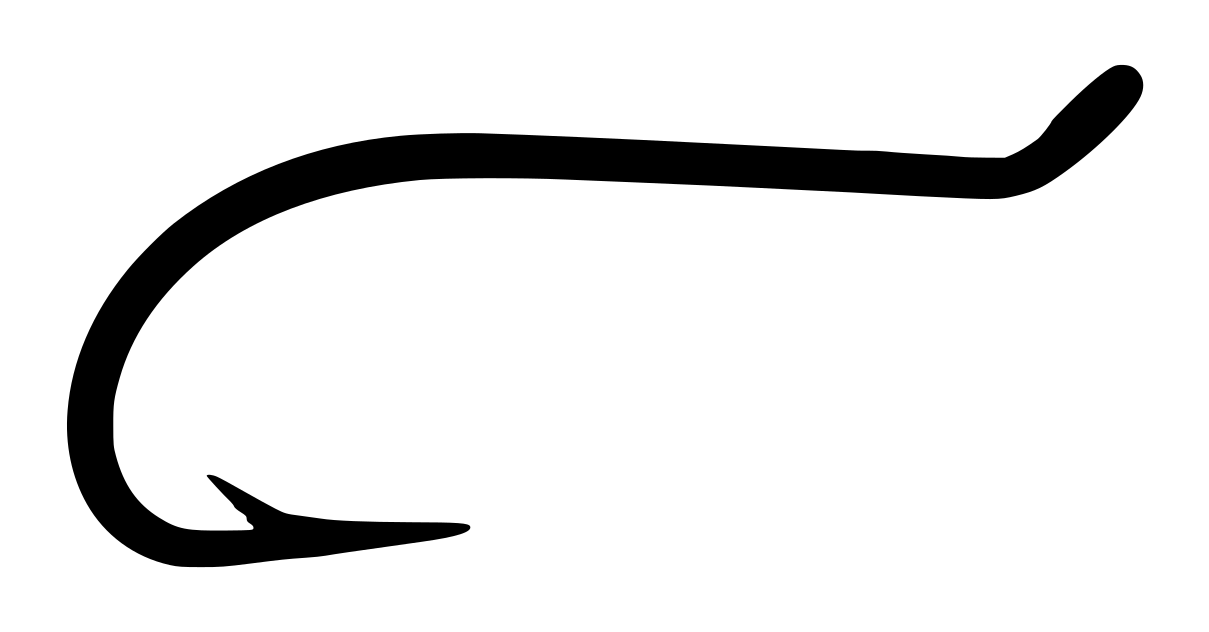
5795 No. 12 — Mustad 5795 | 80% | Compare | |
|
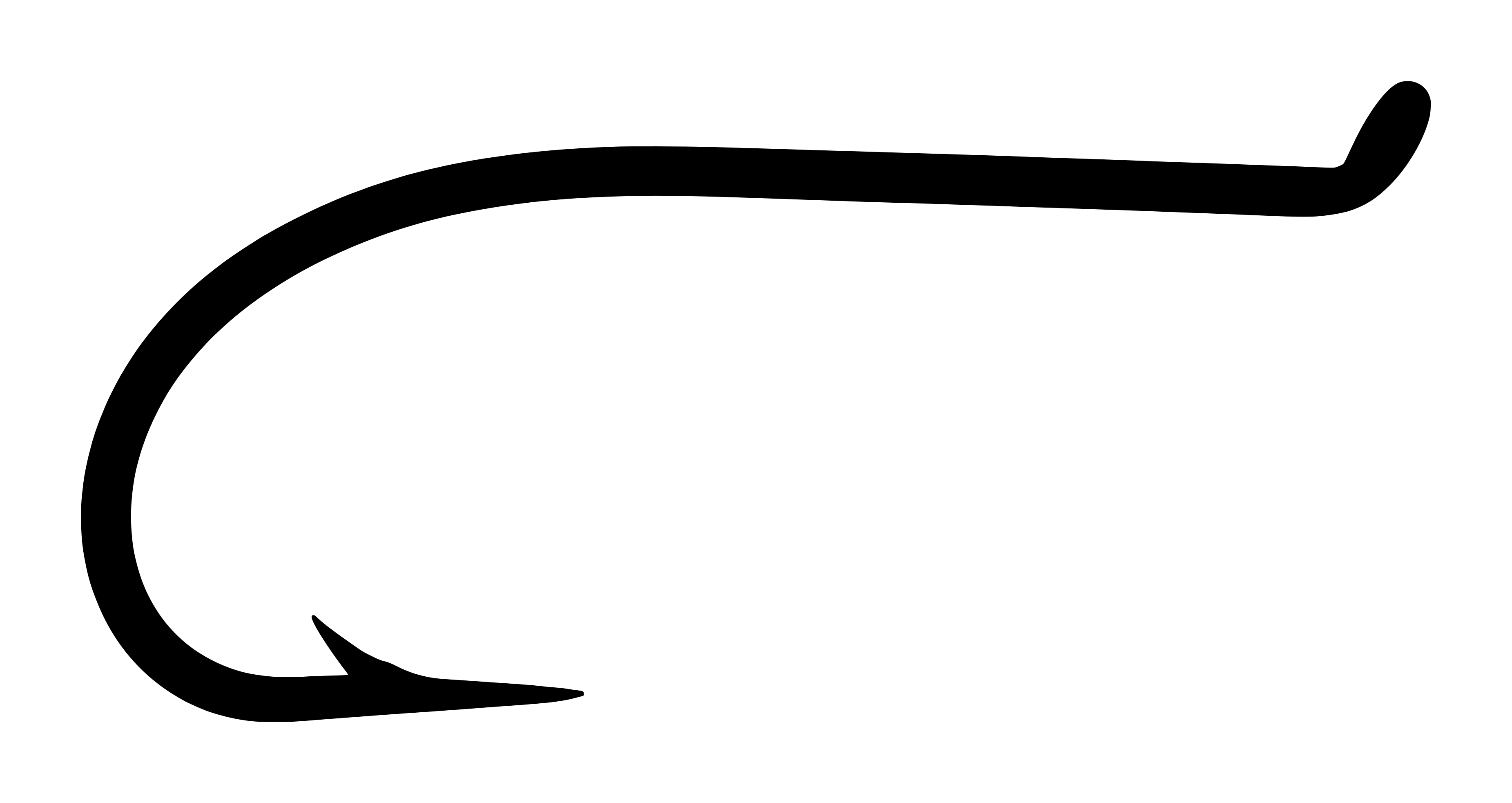
3911 No. 4 — Mustad 3911 | 74% | Compare | |
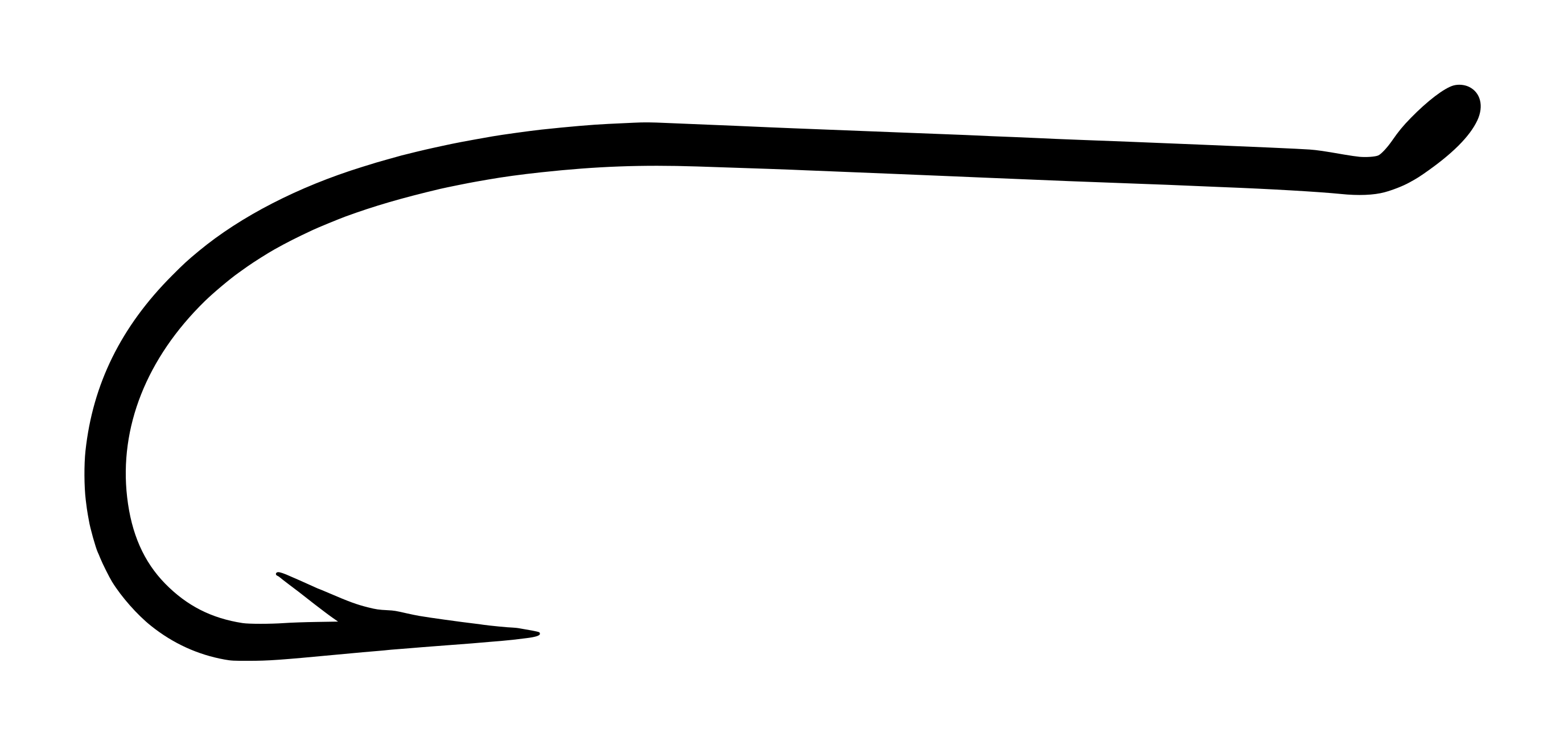
|
38933 No. 8 — Mustad 38933 | 73% | Compare | |
| 7974 No. 6, 8, 10, 12, 14, 16 — Mustad 7974 | 73% | Compare |
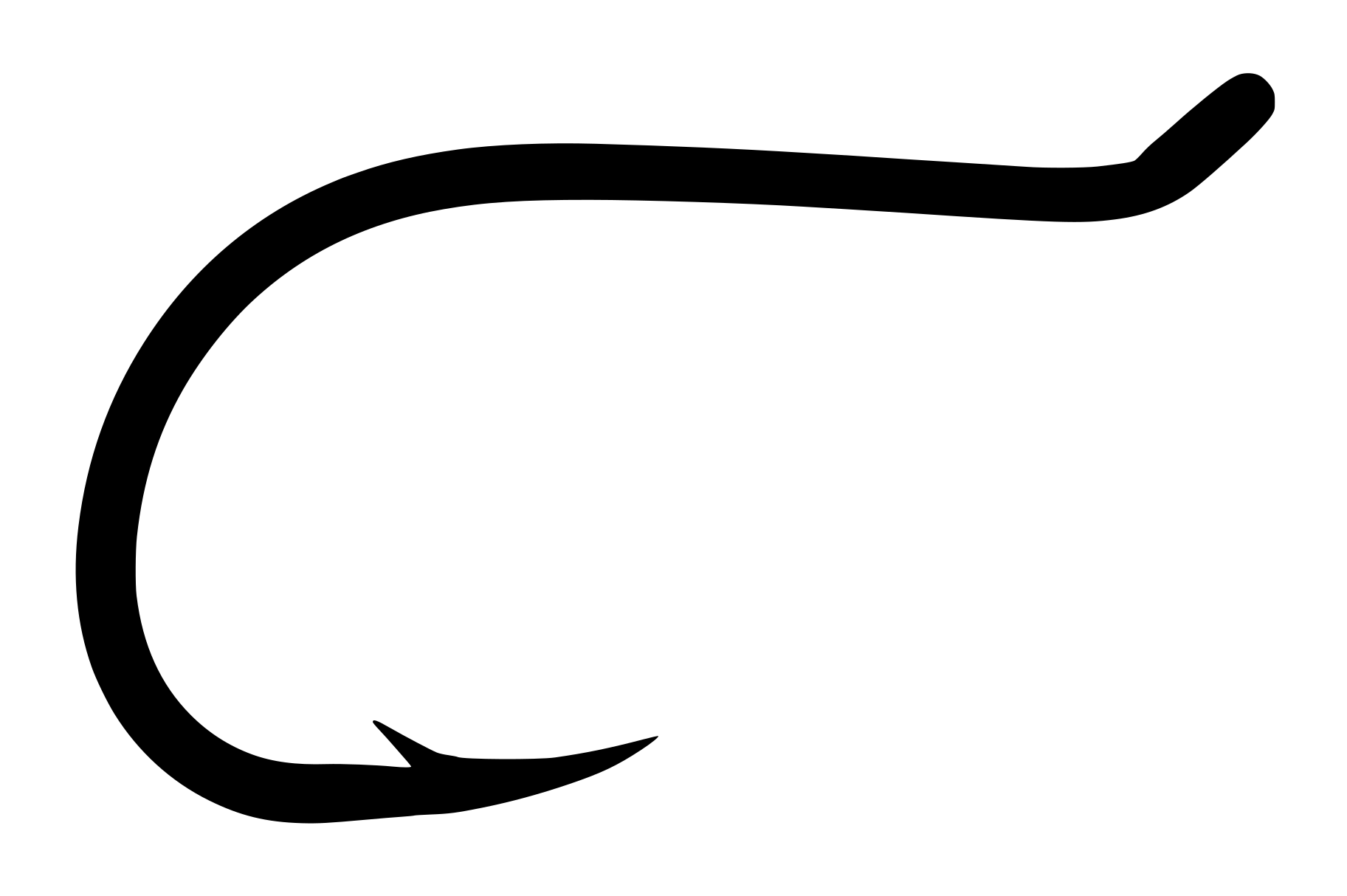
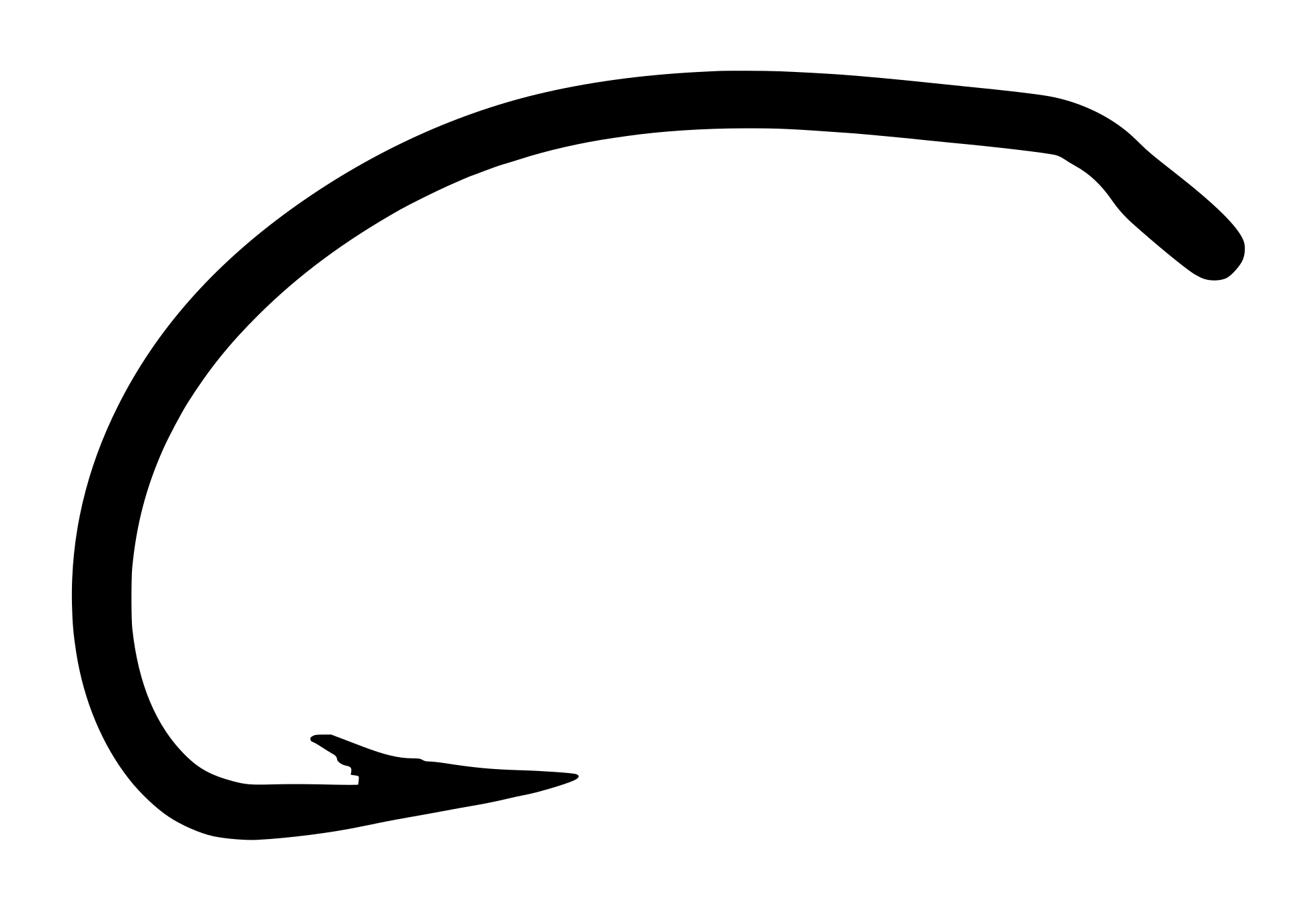
| Silhouette | Hook Model | Match | Compare |
|---|---|---|---|
|
02408 No. 4 — Octopus | 99% | Compare |

|
02011 No. 1/0 — Octopus | 97% | Compare |

|
02311 No. 1/0 — Octopus | 97% | Compare |
|
K4A No. 12 — K4A Grub/Shrimp | 97% | Compare |

|
02109 No. 2 — Octopus | 96% | Compare |
The Mustad 3911 C was engineered specifically for high-floating dry fly patterns, particularly Spider and Variant style flies favored by Catskill and eastern U.S. trout streams. The combination of a size 8 gap (relatively wide) with a 3X short shank creates a disproportionately large gape-to-body ratio, ideal for tying delicate flies with very long hackles that dance on turbulent water. The extra-fine wire and tapered up-eye minimize weight and bulk at the front of the hook, allowing flies to float high and sit horizontally on the surface tension. This configuration also made the 3911 C excellent for modern egg patterns and Glo-bugs.
Crease flies, small nymphs, light dry fly patterns
Catskill Spider, Variant dry flies, Egg patterns, Glo-bugs, Skating caddis
| Hook | Match Quality | Notes |
|---|---|---|
| Tiemco 101 | Good | Straight-eye (not up-eye) dry fly hook with similar extra-fine wire and light construction, but lacks the dramatic short-shank geometry of the 3911 C |
| Partridge L5A | Very Good | Premium dry fly hook in extra-fine wire with tapered eye, though Partridge typically uses a looped eye rather than up-eye. Very close in spirit to the 3911 C aesthetic |
| Tiemco 2305 (Egg hook) | Moderate | Modern short-shank egg/glo-bug hook with wide gap, but typically heavier wire than the 3911 C and not specifically tapered |
| Daiichi 1180 | Moderate | Modern dry fly hook with similar gap-to-shank proportion but contemporary design and finish; lacks the specific up-eye taper of the vintage Mustad |
Rated 4.5/10 — uncommon but not rare. The 3911 C is sought after by fly tyers interested in historical Catskill dry fly traditions and specialists in vintage Mustad cataloging, but collector demand is moderate. Condition of packaging and completeness of the hook count are the primary value drivers.
Positive Factors: The 3911 C is a specialized, purpose-built hook with genuine historical significance in American dry fly tradition. Its extreme short-shank geometry appeals to specialists in Catskill Spider flies and historical fly-tying methods. The original packaging is well-preserved, with intact gold foil lettering and decorative border. The bronzed finish and hollow-point specification are both functional advantages for dedicated fly tyers. Mustad’s industrial prominence during the 1960s–early 1970s ensures brand recognition among collectors. The specific regional market variant (‘C’ suffix) adds cataloging interest for Mustad specialists.
Limiting Factors: The 3911 C was produced in quantity (100 hooks per card, standard wholesale box) and is not exceptionally scarce. Modern fly tyers have largely abandoned short-shank, up-eye configurations in favor of more standardized geometries, reducing functional demand. The hook is not associated with any famous designer or tie tradition that would elevate its cachet. Mustad hooks, while historically important, do not command the premiums that British Redditch or craft-era hooks achieve. Condition is a significant factor — incomplete cards or hooks with corrosion loss substantially reduce value.
Desirability Factors: Size 8 in 3X short shank is the sweet spot for this model. Cards with all 100 hooks intact command a full premium. Original packaging condition (no staining, minimal toning, decorative border intact) is critical. Examples with unused, mint-condition hooks are significantly more valuable than worn specimens. Regional variants (the ‘C’ designation) are slightly more desirable than standard 3911 configurations. Bronzed finish is preferred over other finishes in this era (more so than japanned or tinned variants).
White cardstock sales card with folded construction, measuring approximately 2.5 inches × 3.5 inches. Gold foil-stamped lettering throughout, including the Key Brand logo (downward-pointing skeleton key), manufacturer name 'O. MUSTAD & SÖN', location 'OSLO - NORWAY', model code 'Qual. 3911 C', specifications ('Hollow Point', 'Mustad-Sproat Hook', 'T.up tapered eye', 'Bronzed', '3 ex. short shank', '2 ex. fine wire'), quantity indicator '100', and size '8'. Decorative gilt border consisting of small flower/snowflake motifs runs along all four edges. The card is printed via offset lithography on cream/off-white paper stock. Bottom left corner shows printed quantity '100' and size 'No. 8' in dark ink.
Low ($8): Good condition — card opened, all or nearly all hooks present, moderate toning or minor edge wear, finish uniform but not pristine. High ($22): Excellent to Mint condition — sealed or near-sealed card, complete hook count (100), minimal wear or toning, original packaging intact with no damage to decorative border. Premium factors: Completeness of hook count (significant), packaging condition (gold foil lettering must be clear), absence of corrosion or damage to hooks, original box storage rather than loose hooks. Platforms: eBay (vintage fishing tackle auctions), specialist fly-fishing dealers (UK and US), estate sale venues. Confidence: E estimated — based on limited comparative sales data for this specific model; final sale prices vary significantly based on packaging condition and buyer specialization.
eBay vintage fishing tackle auctions (search 'Mustad 3911 C' or 'vintage Mustad dry fly hook'), specialist fly-fishing dealers in the northeastern United States (Catskill region dealers have higher inventory), online vintage tackle retailers, estate sales and antique shops in traditional fly-fishing regions (upstate New York, Pennsylvania, Vermont). Less frequently encountered on general vintage marketplaces; look specifically for Mustad specialists or fly-tying supply vendors with historical inventory.
Examine the packaging carefully for three key identifiers: (1) The printed model code ‘Qual. 3911 C’ — note the letter suffix ‘C’, which is specific to this regional variant. (2) The location designation ‘OSLO – NORWAY’ — hooks from the Christiania period (pre-1925) are far rarer. (3) The specifications line reading ‘3 ex. short shank’ — this is distinctively short and distinguishes the 3911 C from standard 3911 variants. (4) The eye configuration ‘T.up tapered eye’ is printed explicitly on the card. Inspect the physical hook’s eye: a tapered up-eye will show a visible gradual thinning of the wire forming the loop, turned upward at ~15–20 degrees. Compare the hook’s proportions to a standard No. 8: it should be noticeably shorter and more compact, with an uncommonly large gap relative to body length.
| Title | Price | Date | Condition |
|---|---|---|---|
| MUSTAD #14 Classic DRY Fly Tying Sproat TROUT Hooks 3X SHORT 2X FINE WIRE 3911 C | $11.99 (asking) | active | New other (see details) |
| 100 MUSTAD #10 Classic DRY Fly Tying Sproat Hooks 3X SHORT 2X FINE WIRE 3911 C | $11.99 (asking) | active | New other (see details) |
| MUSTAD #16 Classic DRY Fly Tying Sproat TROUT Hooks 3X SHORT 2X FINE WIRE 3911 C | $11.99 (asking) | active | New other (see details) |
| 100 MUSTAD #8 Classic DRY Fly Tying Sproat Hooks 3X SHORT 2X FINE WIRE 3911 C | $11.99 (asking) | active | New other (see details) |
eBay market reference. Researcher-curated. Prices in USD. Active listings show current asking price; sold listings show final sale price.
Store the 3911 C card in a cool, dry environment away from direct sunlight and excessive humidity. The bronzed lacquer finish is relatively stable but can develop patina (oxidized surface darkening) with prolonged exposure to high humidity — some collectors consider this desirable aging, but prevention is preferable for pristine specimens.
Keep hooks on the original sales card rather than loose in a box. The cardstock provides both physical protection and archival value. If the card is damaged, consider carefully transferring hooks to acid-free packaging rather than allowing them to deteriorate further in the original. Avoid contact with other metals (copper, steel, or aluminum) to prevent galvanic corrosion or unwanted transfer of patina.
The tapered up-eye is delicate — do not bend or manipulate the eye unnecessarily, as the taper is engineered for precise weight distribution and rough handling will compromise the design. If hooks are to be used for actual fishing, be aware that the extra-fine wire is less durable than standard-weight hooks and will bend more easily in rocky environments or on hard-fighting large trout.
Monitor the cardstock for acid deterioration (yellowing, brittleness, or discoloration spreading). If the card shows signs of acid burn, store in an acid-free folder or sleeve to arrest further degradation. Original tissue paper, if present inside the card envelope, should be preserved but not disturbed — it documents period packaging practice.
The specimen card shows no visible handwritten marks, initials, or collector annotations beyond the printed manufacturing information. However, examination of the card’s underside (rear panel) reveals a faint, barely legible pencil mark in the lower left quadrant — potentially a date notation or inventory code from a fly shop or distributor, though the mark is too faint to definitively read. No eraser marks or overwriting are visible, suggesting the notation was made during storage rather than at the point of sale.
The absence of heavy pencil marks, ballpoint pen notations, or permanent marker is a positive sign for condition — many vintage cards were marked by fly shops, tackle dealers, or collectors with prices, initials, or inventory codes. The 3911 C’s relative cleanliness in this regard suggests either private collector ownership or careful dealer handling.
The Mustad 3911 C is a study in mechanical compromise and represents the pinnacle of pre-digital hook design. To understand why this hook exists, one must appreciate the specific demands placed on it by the Catskill dry fly tradition.
A Spider fly pattern uses exceptionally long hackles — often 1.5 to 2 inches of grizzly or brown hen hackles that flare perpendicular to the hook shank. When these long fibers are wrapped around a normal No. 8 hook (which has a standard 0.45-inch shank), the body of the fly becomes lost in a sea of hackle. The fly becomes all fibers and no shape, making it difficult to see on the water and defeating the purpose of the pattern.
The solution: maintain the gap size of a No. 8 (necessary for proper hook-up and barb geometry) but compress the shank to 3X short length (0.17 inches instead of 0.45 inches). This creates a hook with a disproportionately large gap relative to body length — exactly what a Spider tier needs. The body can now be tiny (perhaps 0.08 inches of dubbing) while the gap remains large enough to reliably hook trout.
The tapered up-eye and extra-fine wire serve secondary but equally important purposes. The up-eye (turned upward at an angle) places the line attachment point higher on the hook, reducing the mass at the front end and improving flotation. The extra-fine wire (0.02 inches diameter, versus 0.03+ inches for standard wire) minimizes weight without sacrificing structural integrity for trout-sized fish. The cumulative effect is a hook that floats higher, longer, and more horizontally on the water surface than any standard-proportion hook could achieve.
This level of specialization — designing a hook for a single, highly specific fly pattern — reflects both Mustad’s manufacturing capability and the relatively niche market they were serving. The 3911 C would never be a mass-market hook; it was a specialist tool for an elite cadre of Catskill fly tyers. Yet its existence demonstrates why hand-crafted and early industrial hooks commanded such loyalty: they were engineered to solve specific, real problems in fishing. Modern manufacturing has largely abandoned this level of specialization in favor of broader, more economical designs.
| P | Photographically verified — Directly observable in the photograph(s) on this page. |
| V | Verified by documentation — Confirmed by manufacturer catalog, spec sheet, or published reference. |
| I | Inferred — A logical deduction from observable or documented evidence, not directly stated. |
| E | Estimated — An approximation based on visual comparison, proportional analysis, or limited data. |
| S | Speculative — A reasoned hypothesis that cannot be confirmed from available evidence. |
Claims with no notation are confirmed by multiple independent sources. All photographs on garrenwood.com are taken on a measurement grid where each square equals 1/10 inch (0.1″ / 2.54 mm).
Your cart is empty.