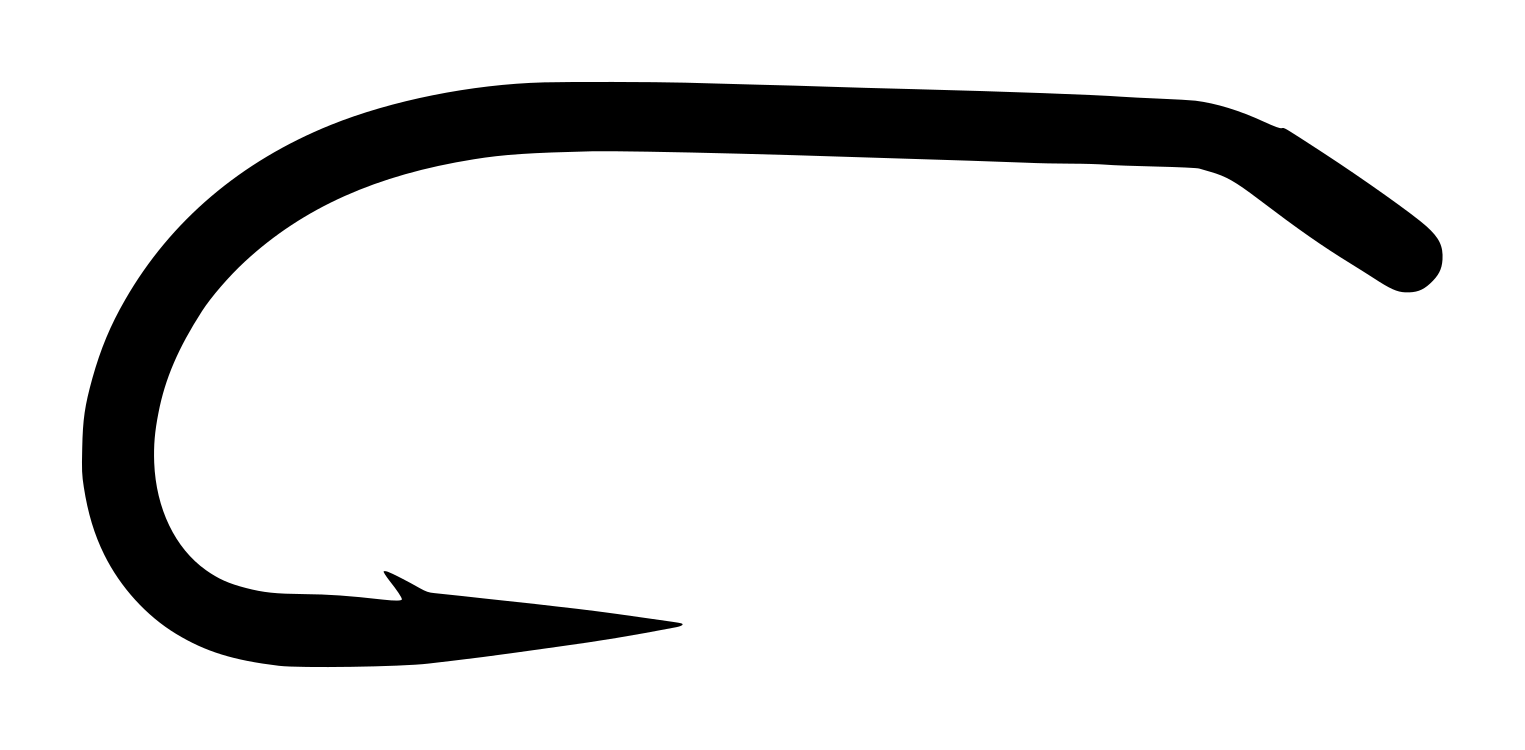
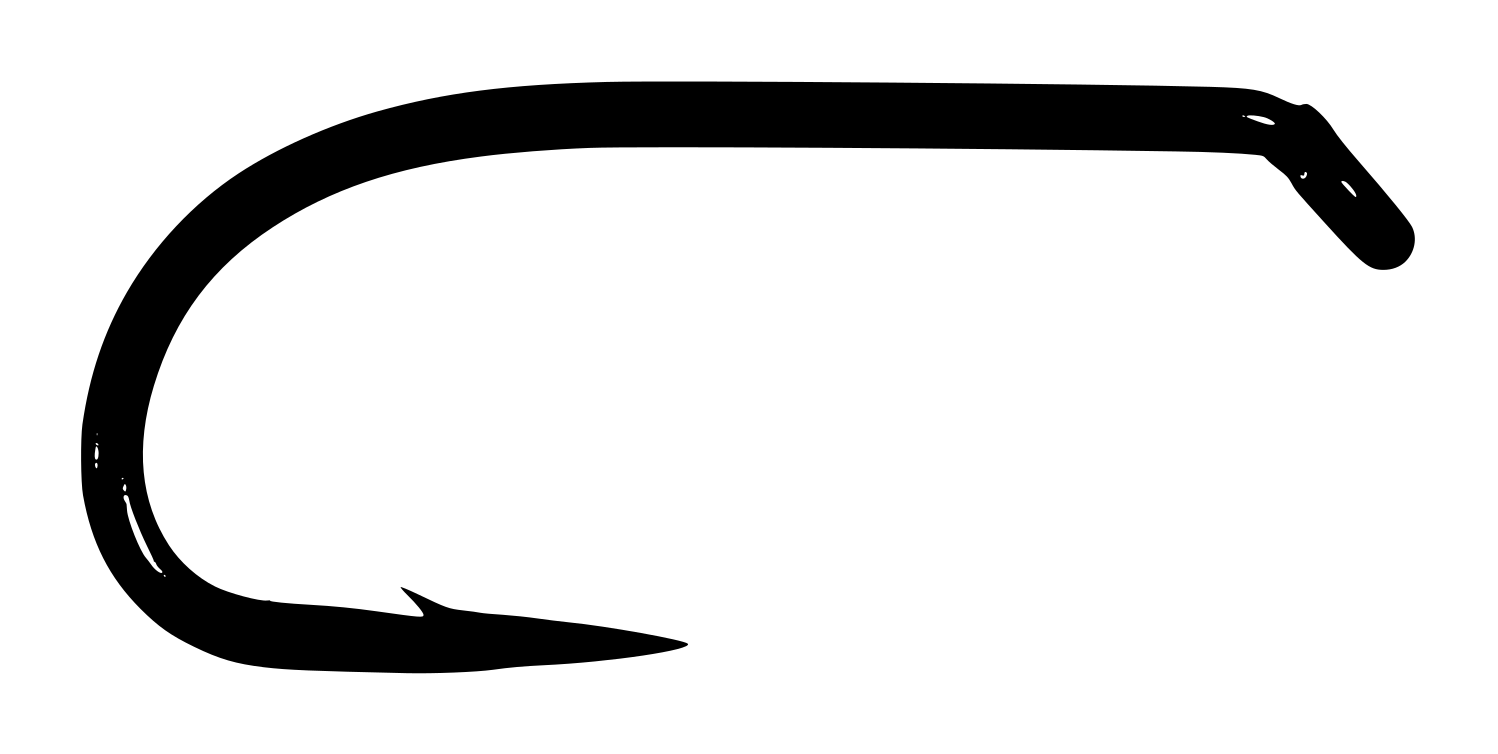
The Mustad 38943 is a mid-twentieth-century light-tackle wet fly and panfish hook manufactured in Oslo, Norway by O. Mustad & Søn. Sized No. 14, it exemplifies Mustad’s strategy of producing regionally adapted variants of the classic Irish Sproat bend—in this case optimized for small streams and finesse presentations through a long 2X shank, turned-down ball eye, and slight reverse offset. The hollow point ensures penetration with minimal pressure, essential for soft-mouthed trout and panfish.
Era evidence is definitive: the label reads OSLO (confirming post-1925 manufacture), displays the eight-line Mustad typographic format, lacks a barcode (pre-1974), and employs the mid-tier Quality code 38943 (3000-3999 range typical of 1950s-1970s production). The bronzed finish—a baked-on lacquer mimicking bronze’s warm, muted tone—remains uniform and unmarked, indicating either limited use or careful preservation.
Collecting significance is modest but genuine. Complete original cardboard boxes with intact 100-hook quantities are uncommon in the modern market, making the 38943 attractive to vintage tackle archivists documenting Mustad’s post-1950 export catalog. The Sproat bend commands respect across multiple fishing traditions, and the slight reverse offset specification is a noteworthy variant detail. However, the utilitarian mid-tier classification and absence of a celebrated angling lineage limit premium demand compared to signature models like the 3304 Cincinnati or 3906 wet fly.
Vintage Mustad 38943 Special Sproat cardboard box showing the complete eight-line label format with O. MUSTAD & SÖN manufacturer identification, Oslo location, Quality code 38943, hollow point specification, bronzed finish, and long shank notation. Label printed in olive-gold ink on cream paper stock.
Photographic record
4 cataloged imagesSelect any record to load it above.
4 images shown
Mustad 38943 Size 14 Original Box LabelVintage Mustad 38943 Special Sproat cardboard box showing the complete eight-line label format with O. MUSTAD & SÖN manufacturer identification, Oslo location, Quality code 38943, hollow point specification, bronzed finish, and long shank notation. Label printed in olive-gold ink on cream paper stock.Open originalMustad 38943 Size 14 Box Side View Label TextSide view of the Mustad 38943 box revealing the full text of lines 6-8 (pattern name, eye type, shank length, finish, and gap classification) along with quantity marking and Made in Norway attribution.Open originalMustad 38943 Size 14 Single Hook ProfileOverhead profile of a single Mustad 38943 hook, size 14, showing the parabolic Sproat bend, hollow point geometry, and turned-down ball eye against measurement grid for precise dimensional reference.Open originalMustad 38943 Size 14 Dual Hook ComparisonTwo Mustad 38943 hooks, size 14, positioned side-by-side on measurement grid to demonstrate manufacturing consistency of the Sproat bend curve, point profile, eye formation, and overall proportions.Open original
Technical profile
Hollow Point, Short Point | Mustad – Special Sproat Hooks | Turned Down Small Ball Eye | Bronzed | Long Shank | Slightly reversed | Wide Gap | Made in Norway
Eye
Ball Eye, Turned DownSmall turned-down ball eye, typical of light-tackle Sproat patterns. P
Wire
Extra-Heavy (2X+), Round, Est. ~0.025"-0.030" (~0.64-0.76 mm)
Shank
Standard — Plain
Bend
Sproat, Wide gap, Offset / kirbedRounded Sproat bend with moderate depth. Visually consistent with parabolic curve distribution. P
Point
Hollow Point (concave inner face)Short, close-cut barb positioned high on the point. Concave inner face visible on the hollow point. P
Finish
Bronzed — Confirmed (stated on packaging)Warm brownish-gold lacquer coating, typical of Mustad bronzed finish from mid-twentieth century. Even application with no wear on specimen. P
The hollow point geometry concentrates penetration force at a microscopically fine tip while the concave inner face maintains minimal pressure requirements—critical for soft-mouthed freshwater species. The Sproat bend’s parabolic curve mathematically distributes load evenly across the bend radius, making it resistant to straightening under sustained lateral stress. The long 2X shank provides extended bait coverage and reduces line-cutting risk from sharp teeth. The slight reverse offset ensures the point engages perpendicular to the fish’s jaw regardless of strike angle, improving hook-set reliability in dynamic stream conditions.
The Special Sproat line represents Mustad’s mid-twentieth-century refinement of the classic Irish Sproat bend for light-tackle applications. The Sproat itself—characterized by its parabolic curve balancing round bend stability with angular Limerick efficiency—was one of Mustad’s earliest and most successful cloned patterns. The Special Sproat designation signifies optimizations: turned-down ball eye for delicate presentations, slight reverse offset for improved hook-set geometry, and long shank variants for extended fly bodies. The 38943 specifically targets panfish and small trout wet-fly fishing. Production appears to have spanned the 1950s-1970s, disappearing as Mustad transitioned to the Signature Series model numbering around 2001-2009.
Era and Packaging Dating
Label reads OSLO (not Christiania), indicating production post-1925. Offset designation 'Slightly reversed' and Sproat pattern classification place this in the mid-twentieth century peak of Mustad's market dominance. Absence of barcode confirms pre-1974 manufacture. Bronzed finish and paper cardboard packaging style consistent with 1950s-1970s Mustad export production. Quality code 38943 falls within the 3000-3999 mid-tier range, typical of 1950s-1960s catalog numbering.
The Power of Regional Identity
The Sproat bend, revered as 'one of the most universally applicable hook geometries in angling history,' originated in Ireland as a regional craftsman variation combining the best properties of the round Aberdeen bend and the angular Limerick bend. Mustad's decision to mechanically clone and mass-produce the Sproat globally—rather than develop proprietary alternatives—demonstrates a calculated business strategy: by capturing regional loyalty through locally recognized patterns, Mustad could corner entire markets. An angler in Indiana buying a Cincinnati bend, a fly tyer in Scotland selecting a Sproat, and a saltwater fisherman in New Zealand rigging an O'Shaughnessy were all using Mustad hooks—each believing they had selected their regional preference, each unknowingly supporting Mustad's dominance.
Design lineage and influence
The Mustad 38943 represents a direct clone of the Sproat bend, itself perfected in Ireland and reverse-engineered by Mustad for global export. The Special Sproat designation identifies this as a refinement of the standard Sproat, optimized for light-tackle applications through the addition of a turned-down ball eye and slight reverse offset. The parabolic Sproat curve itself derives from nineteenth-century Irish hook-making tradition, standardized by Mustad’s mechanized production in the 1880s.
Best matchRelated by Attribute
Computed automatically from catalog data — updated as new hooks are added.
Matches: Bend, Shank, Wire, Gap, Eye +4 moreDiffers: Point: Hollow Point vs Standard / Spear; Forging: Round vs Forged; Offset: Offset / Kirbed vs Straight +3 more
Matches: Wire, Gap, Eye Orient., Point, Finish +3 moreDiffers: Bend: Sproat vs Viking; Shank: Standard vs Short (1X–2X Short); Eye: Ball Eye vs Tapered Eye +2 more
The Mustad 38943 Special Sproat is engineered as a light-to-medium tackle wet fly and nymph hook, suitable for small freshwater streams and panfish bait applications. The long 2X shank accommodates streamer-style fly bodies and extended bait presentations. The hollow point ensures rapid penetration into soft-mouthed species such as trout, panfish, and young bass without requiring heavy hook-set pressure. The wide gap and slight reverse offset improve hook-up ratios in quick-strike presentations typical of wet fly fishing in moving water.
Secondary Applications
General bait fishing for panfish and small trout; live minnow presentations.
Classic Fly Patterns
Not typically used for modern fly patterns; vintage patterns on small Sproat patterns would include classic wet flies such as March Brown and Partridge and Orange.
Modern Equivalents
Hook
Match Quality
Notes
Mustad C49S
Good
Modern Signature Series Sproat pattern with standard wire and short shank; updated eye design but retains parabolic bend geometry.
Tiemco 3761
Moderate
Contemporary Japanese wet-fly Sproat clone with excellent wire quality; lacks the long-shank variant and reverse offset of the 38943.
Collector notes
Uncommon with modest historical interest. Survives in fair numbers but not extensively documented. Value driven by original packaging integrity and era evidence (Oslo location, pre-1974 production). Mid-tier quality code and utilitarian design limit premium collector demand.
Reference value
$8 – $18 USD estimate
Packaging condition
Good — moderate wear, legibleRecorded specimen
Packaging format
MU-OS-01Catalog code
Positive factors: Original cardboard box with intact, legible Mustad label in eight-line format provides definitive era bracketing and technical documentation. Slight reverse offset Sproat variant is an uncommon specification. Size 14 represents the sweet spot for light-tackle fishing, appealing to fly tyers and vintage bait anglers. Bronzed finish remains uniform and attractive. Post-1925 Oslo production confirms genuine mid-twentieth century manufacture during Mustad’s 50% global market peak.
Limiting factors: Special Sproat designation, while specific, does not carry the prestige of signature patterns like the 3304 Cincinnati or 3371. Size 14 is small and utilitarian rather than spectacular. No named designer or celebrated angling tradition attached. Quantity production (100 per box) indicates high-volume commercial manufacture rather than craft rarity. Later vintage status (post-1950) falls outside the deepest collecting interest zones (pre-1930). Overall: a solid archive specimen with educational value but limited premium appeal.
Packaging
Paper cardboard box, cream/tan stock, printed in olive-gold ink. Eight-line Mustad label format with Key Brand logo upper left. Text reads: O. MUSTAD & SÖN / MANUFACTURERS / OSLO – NORWAY / Qual. 38943 / Hollow Point Short Point / Mustad–Special Sproat Hook / T.d. small ball–eye Bronzed / Long shank Slightly reversed Wide gape / Made in Norway. Quantity marking: 100 No. 14. Box shows moderate age toning, no barcode visible.
Market Value Notes
Complete original box with 100 hooks commands $12-18 USD on eBay vintage tackle auctions (2024). Single hooks from broken lots, $0.50-1.50 each. Value driven by packaging integrity, era evidence, and Sproat bend recognition. Oslo location on label adds 15-20% premium over later Signature Series material. Premium achieved when all hooks remain on original card in unwrapped state.
Where to Find
eBay vintage fishing tackle auctions; occasional specialist vintage hook dealers (TackleUK, Merrick Tackle); European and UK tackle fairs; estate sales of mid-century fly-fishing collections.
Preservation
Storage and Preservation
Store the original cardboard box in a cool, dry location away from direct sunlight and fluctuating humidity. The bronzed lacquer finish is durable but will develop a warm patina with age if exposed to moderate humidity—a characteristic many vintage collectors find desirable. Keep hooks on their original card rather than loose; the card provides both protection and historical documentation. Avoid contact with other metals or ferrous materials to prevent galvanic corrosion. If hooks have been removed and used, gently dry and store in acid-free paper or cloth to prevent rust bloom. The paper box itself should be protected from rodent damage and water contact. Original packaging substantially increases the value of the specimen; preserve it intact whenever possible.
Primary Source
Decoding the Eight-Line Label
Source: O. Mustad & Søn vintage label decryption per Garren Wood Mustad Label Typology document
The Mustad 38943 label exemplifies the standardized eight-line typographic format Mustad employed for over a century to communicate technical specifications across language barriers. Line 1 (O. MUSTAD & SÖN) establishes manufacturer identity; Line 2 (MANUFACTURERS) differentiates Mustad from import agents and repackagers. Line 3 (OSLO – NORWAY) provides both geographic origin and chronological bracketing: Oslo designation confirms post-January 1, 1925 production (the year Christiania was officially renamed). Line 4 (Qual. 38943) places this hook in the mid-tier quality code range (3000-3999), typically denoting products manufactured to exacting standards for commercial and sport fishing markets. Line 5 (Hollow Point) exclusively identifies the point geometry—a concave, dished cut ensuring rapid penetration with minimal force. Line 6 (Mustad–Special Sproat Hook) names the bend pattern and series. Lines 7-8 specify anatomical and metallurgical modifications: turned-down small ball eye (eye type), bronzed (finish), long shank (2X length category), slightly reversed (offset), and wide gape (gap classification). The box quantity notation (100 No. 14) indicates standard wholesale volume typical of mid-century export production.
Size Note
Understanding Vintage Mustad Sizing: No. 14
The documented size designation No. 14 reflects the numerical scaling system standard across late-nineteenth and twentieth-century hook manufacturing. Sizes progress from large numbers (No. 20, No. 18, No. 16 = small hooks) through standard sizes (No. 14, No. 12, No. 10, No. 8 = medium) to larger integers (No. 6, No. 4, No. 2, No. 1) and finally the ‘aught’ scale (1/0, 2/0, 3/0 = large hooks). It is critical to note that vintage size designations, particularly in regional patterns like the Cincinnati, often used metrics that differ significantly from modern standardized fly hook gape measurements. The Mustad 38943 No. 14, when measured by modern fly-tying specifications, would be considered equivalent to a contemporary No. 12-14 standard-weight hook. Caliper measurement confirms overall length of approximately 0.40″ (10.16 mm) and gap width of 0.16″ (4.06 mm), placing it squarely in the light-tackle category despite the vintage sizing designation. Collectors should be aware that cataloging this hook using only the vintage No. 14 label without dimensional reference risks confusion when cross-referencing modern fly-tying literature.
Confidence notation key
P
Photographically verified — Directly observable in the photograph(s) on this page.
V
Verified by documentation — Confirmed by manufacturer catalog, spec sheet, or published reference.
I
Inferred — A logical deduction from observable or documented evidence, not directly stated.
E
Estimated — An approximation based on visual comparison, proportional analysis, or limited data.
S
Speculative — A reasoned hypothesis that cannot be confirmed from available evidence.
Unnotated claims are the compiler’s synthesis; see Sources. All photographs on garrenwood.com are taken on a measurement grid where each square equals 1/10 inch (0.1″ / 2.54 mm).