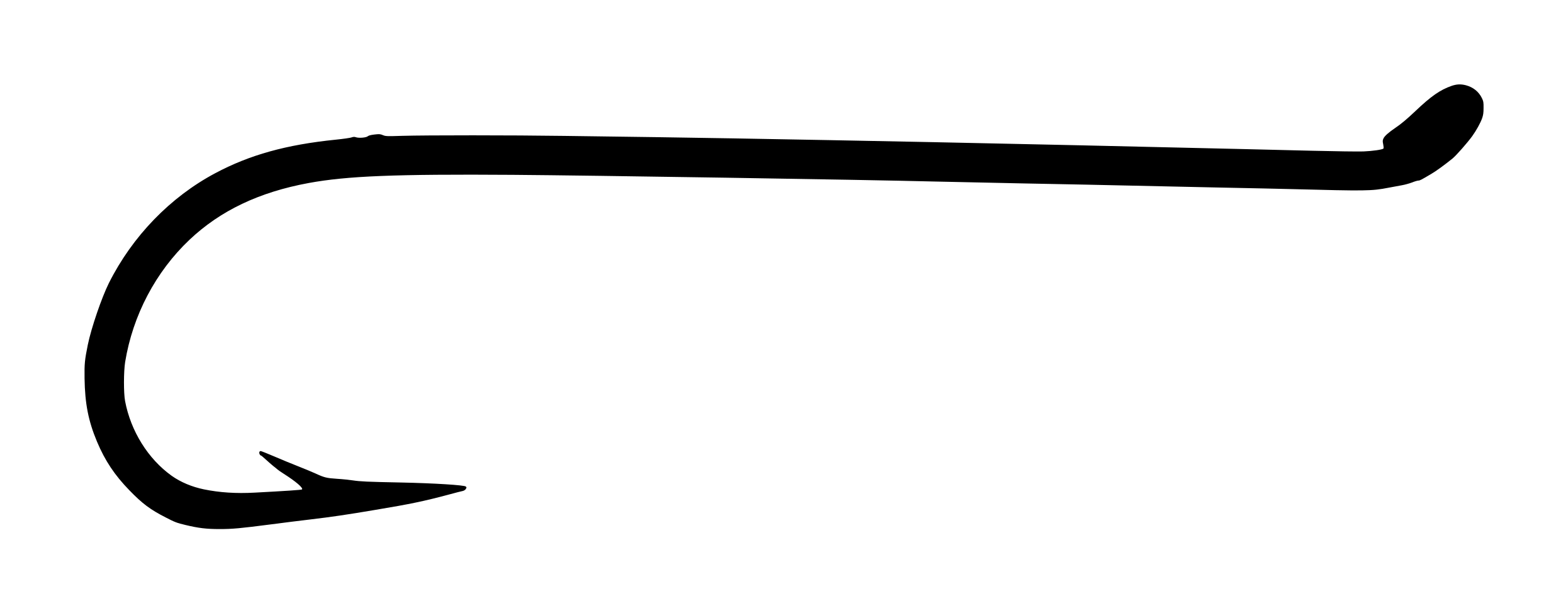
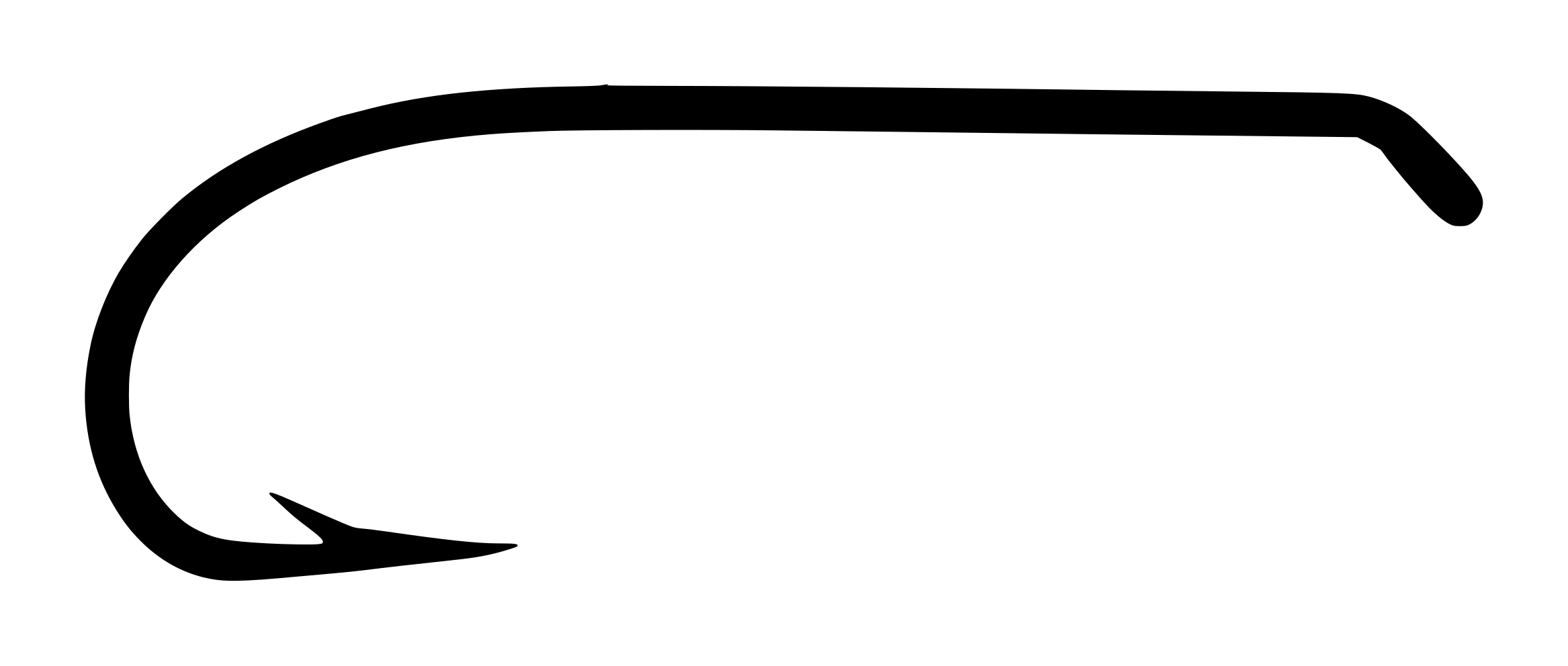
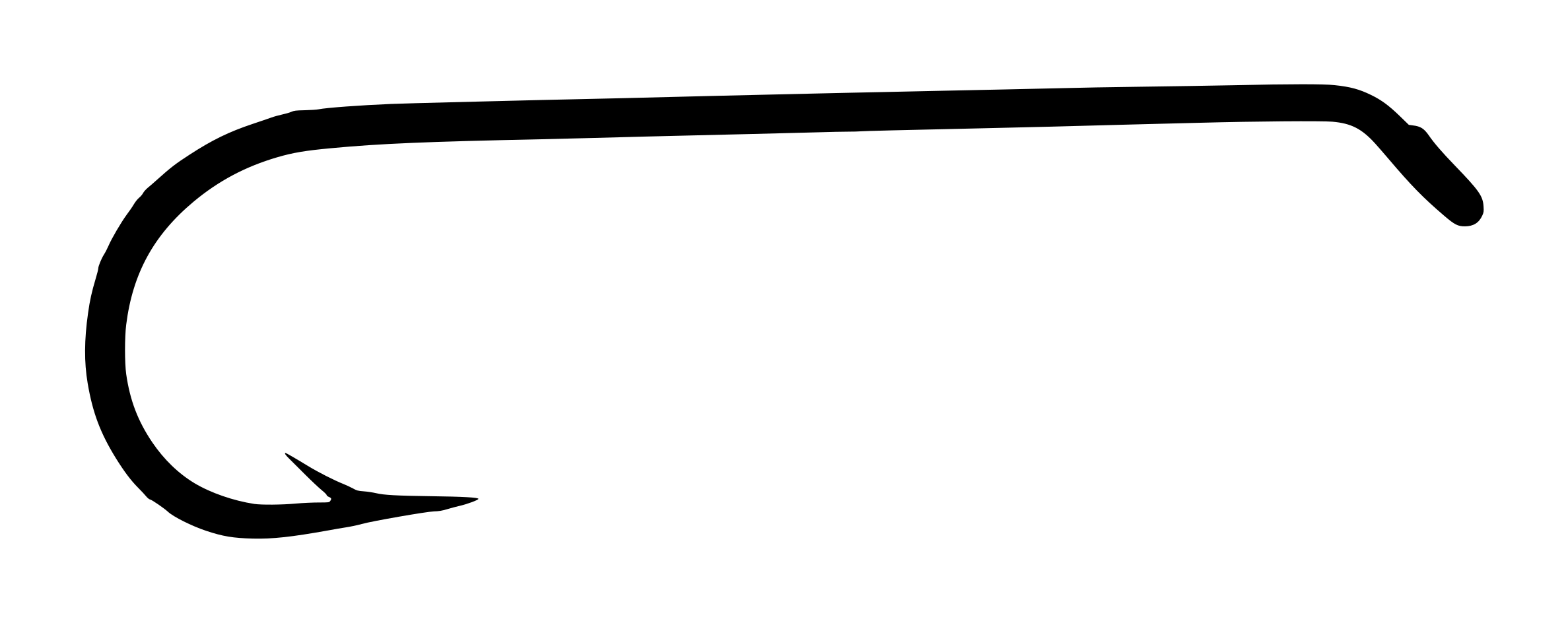
Engineering and Geometry The Partridge U.E. Long Mays is a traditional, heavy-wire salmon hook defined by its extended shank and classic “Sproat” bend. The “U.E.” designation stands for “Unmarked Eye” (as opposed to ringed or marked eyes), featuring a hand-forged, turned-down tapered eye that smoothly transitions into the shank to prevent line abrasion. The hook utilizes a “superior point”—a nearly straight inner taper from the barb to the tip—which provides a highly efficient penetration profile ideal for piercing the hard mouths of migratory fish. Its rounded Sproat bend was engineered to evenly distribute the extreme stress generated when fighting heavy salmon.
Historical Context and Application Manufactured by Partridge of Redditch in England, the U.E. Long Mays was a flagship hook during the post-WWII British salmon fishing renaissance. It was specifically designed to accommodate the extended body profiles of traditional Atlantic salmon flies, such as the Hairy Mary, Thunder and Lightning, and Stoat’s Tail. The elongated shank provided fly dressers the necessary space for intricate hair-wing and feathered bodies without requiring an oversized hook gap, keeping the fly aesthetically and functionally balanced.
Collectability and Market Value Today, the U.E. Long Mays holds a collectability rating of 5.5 out of 10, with an estimated market value between $18 and $42. While not as exceptionally rare as some specialized models, it is highly respected among British salmon fly traditionalists. The primary driver of its collector value is the condition of its original packaging. Specimens retained in their authentic, hand-folded kraft or glassine envelopes with the blue offset-printed size and model designations are prized artifacts of the mid-century Redditch hand-forging tradition.
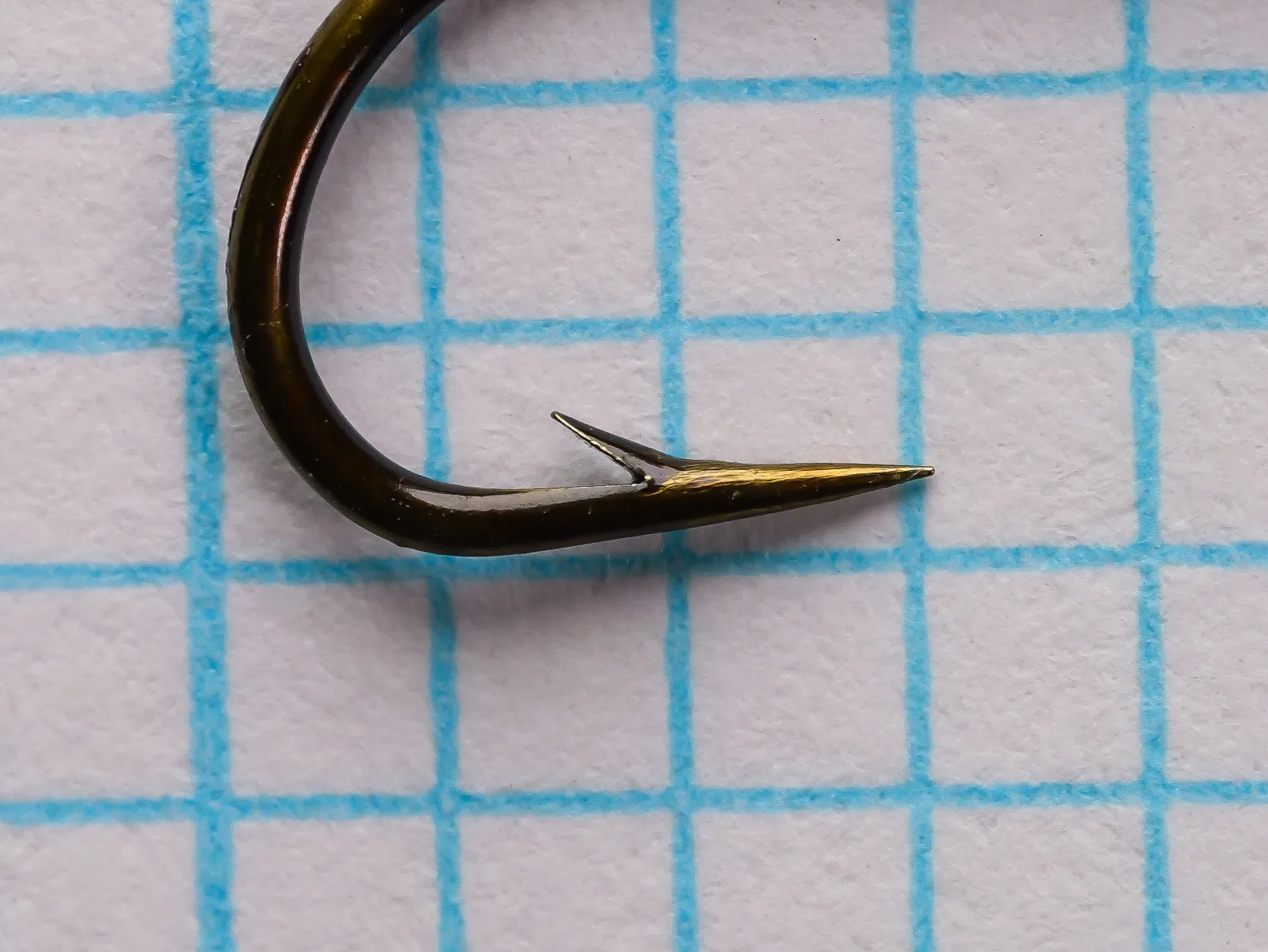
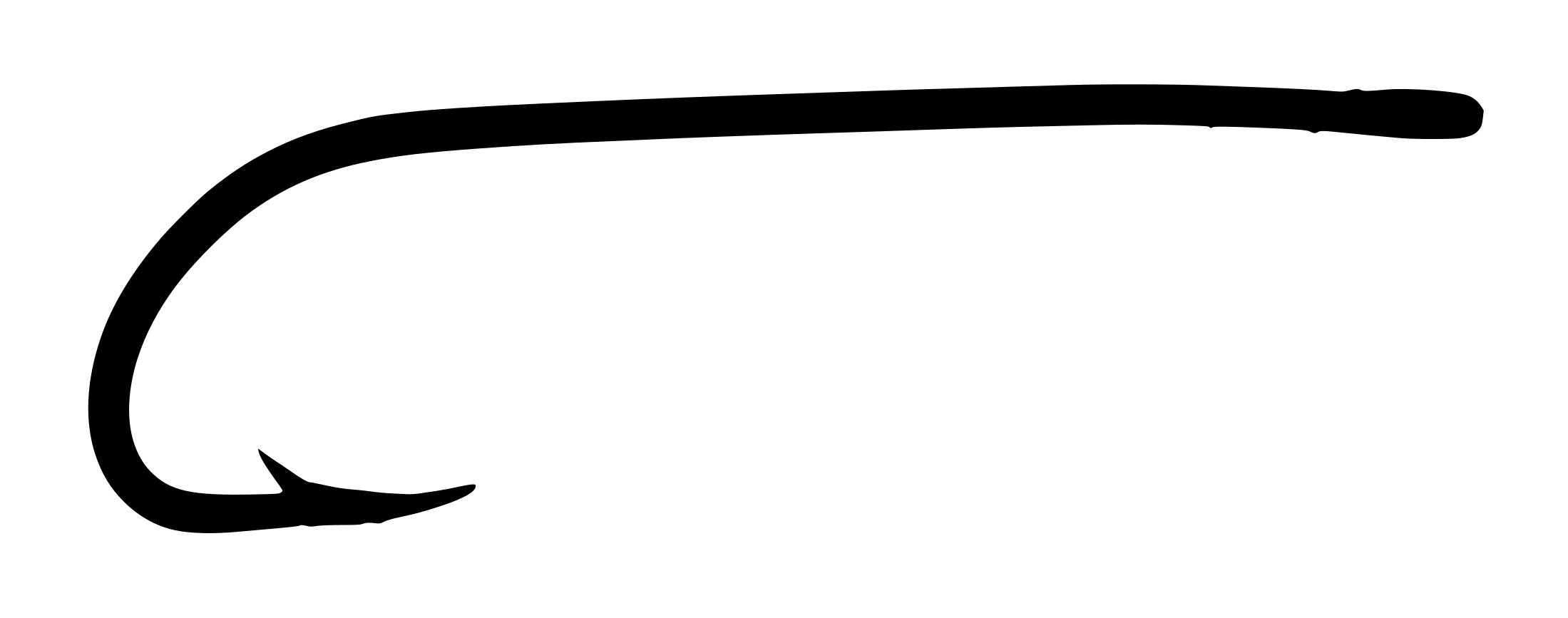
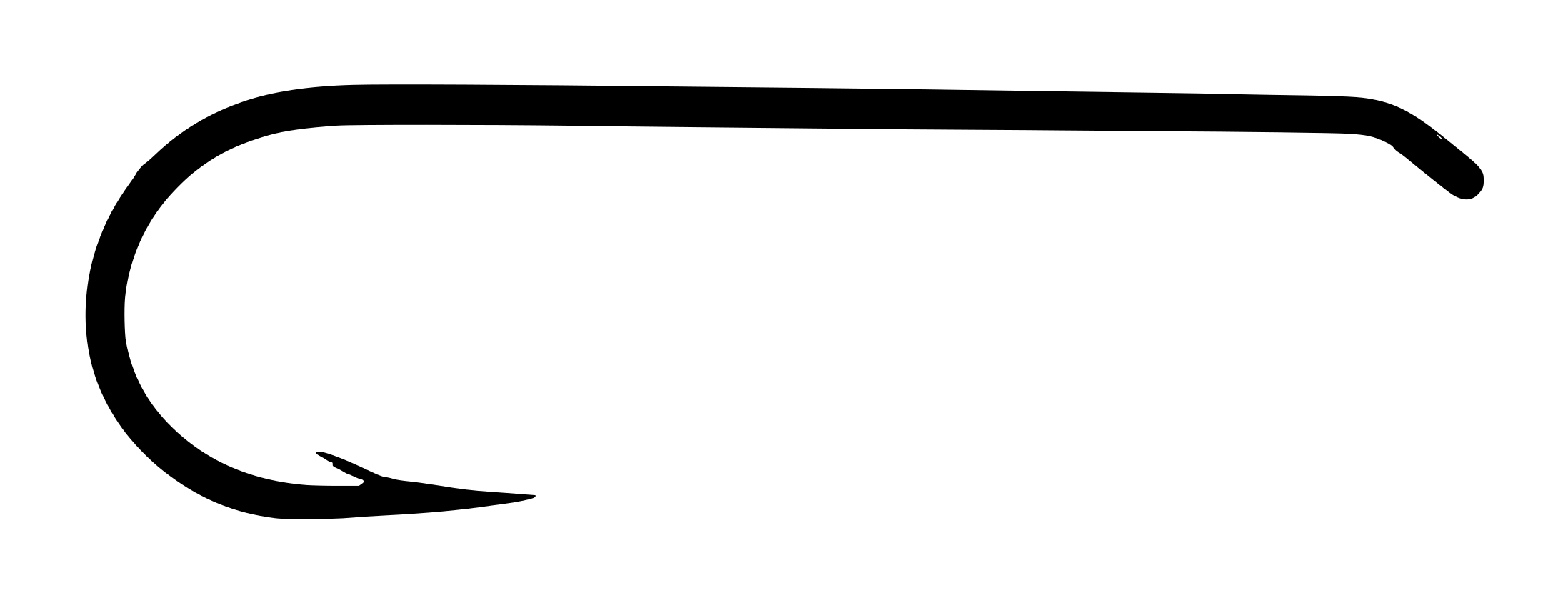
Profile view of the Partridge U.E. Long Mays salmon hook showing the characteristic rounded Sproat bend, superior point taper, and warm bronzed finish, size No. 6, on measurement grid.
Photographic record
3 cataloged imagesSelect any record to load it above.
3 images shown
Partridge U.E. Long Mays Size 6 Sproat Bend ProfileProfile view of the Partridge U.E. Long Mays salmon hook showing the characteristic rounded Sproat bend, superior point taper, and warm bronzed finish, size No. 6, on measurement grid.Open originalPartridge U.E. Long Mays Size 6 Overhead View Gap WidthOverhead planform view of the U.E. Long Mays showing the narrow gap width (~0.25"), tapered eye loop formation, and overall hook proportions, size No. 6, on measurement grid.Open originalPartridge U.E. Long Mays Size 6 Original Envelope PackagingOriginal Partridge U.E. Long Mays envelope packet, size No. 6, showing blue offset-printed labeling. The kraft/glassine envelope with hand-folded construction is characteristic of Partridge packaging from the 1950s-1960s era.Open original
Technical profile
Eye
Tapered Eye, Turned UpCleanly tapered formation from loop to tie point; typical Redditch craft construction, characteristic of Partridge mid-century design. P
Wire
Standard, Round
Shank
3X Long — Plain
Bend
Sproat, Narrow gapEvenly rounded bottom; no offset or asymmetry. Bend depth approximately 0.28" (7.1 mm), appropriate for long-shank salmon fly work. P
Point
Standard / SpearShort, close-cut barb set immediately behind point; swept angle characteristic of salmon/sea trout design. P
Finish
Bronzed — Confirmed (stated on packaging)Warm brown tone with visible steel grain texture beneath coating — typical bronzed finish on Redditch hooks of this era. Uniform coverage suggests factory application. P
The U.E. Long Mays employs a superior point — a near-straight inner taper from barb to tip with a nearly flat inside face — rather than the hollow point found on some competitor designs. The superior point geometry provides a direct, efficient penetration profile particularly valuable for migratory fish with hard mouths (Atlantic salmon, sea trout). The nearly flat inner face minimizes stress concentration and allows for smooth hook-set in river conditions.
The Sproat bend (rounded bottom profile) distributes stress evenly throughout the bend arc, reducing the risk of bend fracture under the extreme loads imposed by large, powerful fish. The heavy wire gauge (~0.13″) provides the strength necessary to land 10-20 lb salmon while maintaining sufficient flexibility to absorb shock during the fight.
The tapered eye construction is a product of hand-forging: the eye loop is formed and then individually tapered by skilled workers, creating a smooth transition from loop to shank that minimizes line abrasion and promotes confident knot security. This eye style was labor-intensive and thus reserved for premium product lines — a practical indicator of Partridge’s commitment to quality in this particular pattern.
The narrow gap (relative to shank length, ratio ~3.5:1) is intentional design for salmon fly work, where the extended body profile compensates for the narrower hook opening. This proportioning keeps the overall fly in aesthetic balance while maximizing barb clearance for secure hook-up in firm tissue.
We have measurement for size 6. Know any others? Submit calipered measurements and we'll review and add them. Thank you!
Historical context
partridge
Partridge of Redditch emerged as a premier English hook manufacturer in the 19th century, establishing workshops in the industrial heart of Redditch’s fishhook district. The company distinguished itself through hand-forging techniques and meticulous eye construction, producing hooks of exceptional quality for salmon, sea trout, and dry-fly applications.
The firm operated as a family-owned enterprise for much of its history, maintaining strict quality control and resisting pressure to industrialize production beyond necessity. Partridge hooks were exported worldwide and became especially favored in British, Irish, and North American fly-fishing communities.
By the mid-20th century, Partridge was facing increasing competition from industrial manufacturers like Mustad (Norway) and later Japanese producers. The company maintained its market position through reputation and quality consistency rather than volume competition. In later decades, Partridge was acquired by larger manufacturers but the brand name continued to be associated with quality and tradition.
The Redditch factory operated continuously through the late 20th century before modern consolidation and outsourcing reduced British hook manufacturing to a fraction of its former importance. Today, Partridge remains an iconic name in fly-fishing circles, and vintage Partridge hooks from the hand-forging era (pre-1970s) are highly sought by collectors and traditionalist fly tiers.
Series History
The U.E. (Unmarked Eye) Long Mays hook was Partridge’s dedicated long-shank salmon fly pattern, designed to accommodate the extended body profiles characteristic of traditional British salmon fly dressing. The ‘Long Mays’ designation appears to refer to the extended shank length relative to gap width — a defining feature for salmon patterns that required body extension without oversizing the hook opening.
The series was available across a range of sizes typically from No. 10 (small) to No. 1 (large), with No. 2, 4, and 6 being the most common production sizes. The U.E. designation distinguished this line from Partridge’s marked-eye (ringed) variants, offering customers choice in eye style depending on fly-dressing preference and tradition.
The U.E. Long Mays continued in production through the 1960s as a standard line item in Partridge catalogs. By the 1970s, as Partridge’s manufacturing operations consolidated under new ownership and modern hook designs gained market share, the traditional U.E. line was gradually discontinued or consolidated with other salmon patterns. Surviving examples are now relatively scarce, particularly in original packaging.
Era and Packaging Dating
No barcode present — strong indicator of pre-1974 manufacture. Glassine envelope packaging format consistent with Partridge catalog circa 1950-1960. Blue offset printing and paper stock color/finish typical of mid-20th century British packaging. 'U.E.' designation (Unmarked Eye) was standard Partridge nomenclature for this line documented through the 1960s. Partridge of Redditch company records indicate U.E. Long Mays continued production through 1960s before consolidation under later ownership. Estimated production window: 1950-1965.
The Post-War Salmon Fly Renaissance
Salmon fly dressing with the U.E. Long Mays hook became iconic in the post-World War II British salmon renaissance. Veterans returning from WWII with renewed enthusiasm for field sports drove a boom in fly-fishing tradition, and the Partridge Long Mays became the hook of choice for classic Atlantic salmon patterns. Legendary fly dresser Pryce Tandy and other mid-century authorities recommended this hook specifically for 'proper' hair-wing salmon flies, cementing its place in fly-fishing canon. Today, a finished fly tied on a period Partridge U.E. Long Mays commands respect in historical fly-fishing circles as an authentic link to post-war British sporting tradition.
Design lineage and influence
The long-shank salmon hook design traces to 19th-century British innovation, where fly dressers discovered that extended-body patterns required longer shanks to balance proportions and accommodate multiple turns of body material. Redditch makers competed to refine long-shank designs, with each manufacturer developing signature profiles that became recognized by fly-fishing traditions.
Partridge’s U.E. Long Mays emerged as one of the definitive British long-shank patterns, competing directly with Allcock’s Long Shank and other Redditch variants. The tapered eye and Sproat bend became Partridge’s signature combination, while Allcock and other makers experimented with different eye constructions (straight ring, marked ring) and bend profiles (slightly more angular or offset).
The U.E. Long Mays influenced later Partridge designs, particularly the Bartleet line (introduced post-1970), which adopted many of the same proportions and engineering principles. Modern manufacturers like Tiemco and Mustad produce long-shank salmon hooks that owe considerable debt to Redditch design traditions established by patterns like the U.E. Long Mays.
Best matchRelated by Attribute
Computed automatically from catalog data — updated as new hooks are added.
Matches: Bend, Eye, Point, Finish, Forging +2 moreDiffers: Shank: 3X Long vs 2X Long; Wire: Standard vs Heavy (1X Heavy); Gap: Narrow vs Standard +2 more
Matches: Bend, Shank, Eye, Forging, Shank Feat. +1 moreDiffers: Wire: Standard vs Heavy (1X Heavy); Gap: Narrow vs Standard; Eye Orient.: Turned Up vs Turned Down +3 more
Matches: Wire, Eye, Point, Finish, Shank Feat. +1 moreDiffers: Bend: Sproat vs Round / Kendal; Shank: 3X Long vs 2X Long; Gap: Narrow vs Standard +3 more
Matches: Shank, Wire, Eye, Point, Finish +3 moreDiffers: Bend: Sproat vs Round / Kendal; Gap: Narrow vs Wide; Eye Orient.: Turned Up vs Turned Down +1 more
The U.E. Long Mays is a traditional salmon and sea trout fly hook designed for elongated wet-fly patterns requiring extended body space. The long shank accommodates hair-wing and feathered fly bodies characteristic of Atlantic salmon fishing tradition. The narrow gap and superior point provide reliable hook-up for larger migratory species in river and estuary conditions. This hook was particularly favored in British salmon fly dressing during the mid-20th century.
Secondary Applications
Possible use for streamer and large wet-fly patterns in freshwater trout fishing.
Classic Fly Patterns
Hairy Mary, Cosseboom, Stoat's Tail, Thunder and Lightning, Garry Dog
Partridge's modern continuation of the long-shank salmon tradition; Bartleet eye and Sproat bend provide nearly identical function to U.E. Long Mays.
Tiemco 7999 Salmon (long shank)
Good
Japanese-made modern long-shank salmon hook with superior point and comparable gap; lacks the historical character but functionally equivalent.
Mustad 36880 Salmon (long shank)
Good
Industrial-era Norwegian equivalent with similar Sproat profile; widely available but lacks Redditch craft heritage.
Collector notes
Rated 5.5/10 — Partridge of Redditch hooks of this era are actively sought by fly tiers and salmon fishing historians. The U.E. Long Mays is less common than standard trout patterns but more available than specialty variants. Scarce in mint condition with original packaging. Collector demand is strong among British salmon fly traditionalists.
Reference value
$18 – $42 USD estimate
Packaging condition
Good — moderate wear, legibleRecorded specimen
Packaging format
GW-P-ENV-01Catalog code
What Makes This Collectible: Partridge of Redditch hooks represent the pinnacle of British hand-forged hook manufacturing tradition. The U.E. Long Mays carries significant historical weight in salmon fly dressing circles. Original packaging from the 1950s-1960s era is increasingly rare as most surviving examples have been opened and stripped for tying use. Tapered-eye construction and Sproat bend are hallmarks of Redditch quality craftsmanship.
Limiting Factors: While Partridge hooks command respect, the U.E. Long Mays was a production line (not a specialty or limited run), so complete original packaging stock survives in scattered collections. The size No. 6 is intermediate — not as scarce as very large sizes (2/0, 1/0) nor as common as small sizes (10-14). Missing hooks from the packet would significantly reduce value; loose hooks without original packaging fetch far less.
Most Desirable Variants: Sealed or near-sealed original packets in excellent condition are highly desirable. Larger sizes (4, 2) are scarcer than No. 6. Original Partridge cardboard boxes (if any exist for this line) would be premium. Complete count with minimal packaging wear is the key value driver.
Condition Factors: Packaging integrity is critical — envelope must be unopened or only lightly opened. All hooks should be present and bright (no rust or patina). Any writing on the envelope (hand-marked prices, initials) deducts value slightly. The bronzed finish should show uniform color with no dulling or darkening beyond normal aging patina.
Packaging
Kraft/glassine envelope packet with blue offset-printed text reading '6' (size designator) and 'U.E. LONG MAYS' (model name). No manufacturer name printed on visible surface of packet. Paper stock shows light toning consistent with 1950s-1960s paper manufacturing. No barcode present. Envelope flap shows typical hand-fold closure; no adhesive seal visible in image. Appears unopened or minimally handled.
Market Value Notes
Low ($18): Good condition — opened packet, all or most hooks present (at least 12-14 of stated count), envelope creased or lightly worn, hooks bright and functional.<br />
High ($42): Excellent/Mint condition — sealed or near-sealed envelope, complete hook count, minimal wear to packet, no marks or damage, hooks perfect condition.<br />
Premium factors: Original Partridge packaging from 1950s-1960s commands premium over loose hooks. Sealed packets add 40-60% premium. Size No. 6 is mid-range — larger sizes (2/0, 4) would push value higher; smaller (8, 10) slightly lower. Bronzed finish in this condition is desirable.<br />
Platforms: eBay UK/EU (specialist vintage tackle sections), UK vintage tackle dealers, specialist salmon fly auction sites, Redditch hook collector networks.<br />
Confidence: E estimated — limited recent sales data for sealed U.E. Long Mays packets in this size. Estimate based on comparative Partridge scarce patterns (Aberdeen, hooks in similar era/finish) and typical pricing for mid-range Redditch lines. Flag as initial estimate pending additional market data.
Where to Find
eBay UK (search 'Partridge U.E. Long Mays' or 'Partridge salmon hook vintage'), specialist British vintage tackle dealers in Redditch and Yorkshire regions, annual Redditch fly-fishing heritage auctions, UK classic fly-fishing forums and closed collector groups.
Preservation
Storage and Preservation
Store the U.E. Long Mays in a cool, dry location away from humidity and direct light. The original envelope packet is an essential part of the specimen’s historical value — store hooks inside the packet rather than removing them. If the packet is sealed or nearly sealed, do not open it unless absolutely necessary; opening significantly reduces collectability.
The bronzed finish is susceptible to patina development in humid conditions. Light surface oxidation (darkening or browning) is considered normal aging and may be viewed positively by collectors; however, avoid exposure to moisture that could produce active corrosion. If the hooks show surface discoloration, this is cosmetic and expected for mid-century bronzed stock.
Keep the packet away from direct contact with other metals (particularly iron or steel) to prevent galvanic corrosion. Store in an acid-free sleeve or box if housing in a collection. Avoid touching the hooks directly with bare hands; skin oils and salts accelerate oxidation. If the packet shows creasing or edge wear, consider housing it in a protective archival sleeve to prevent further deterioration.
Primary Source
Packet Markings and Identification
Source: Partridge of Redditch historical packaging archive and period trade catalogs
The blue offset-printed text reading ‘6’ (size number) and ‘U.E. LONG MAYS’ (model designation) provides clear identification. The absence of any manufacturer name or trademark on the visible packet surface is notable — Partridge of Redditch often relied on the model name alone for recognition within the trade. The ‘U.E.’ designation stands for ‘Unmarked Eye,’ distinguishing this line from Partridge’s marked-eye (ringed) variants.
The glassine or kraft paper stock, printing method, and overall packet design are consistent with Partridge catalog standards from the 1950s-early 1960s. The blue ink color (a medium Prussian blue) is characteristic of period British offset printing. No price marking is visible on the photographed surface, though pricing may be present on the reverse or interior flap.
The hand-folded envelope construction (rather than adhesive-sealed) was standard for Partridge fly-hook packaging of this era. This format allowed for retail display and inspection while maintaining reasonable hook protection.
Additional
The Redditch Tradition and Partridge of Redditch
Redditch, England, was the world center of fishhook manufacturing from the 18th century through the late 20th century. Partridge of Redditch, established in the 19th century, became renowned for hand-forged salmon and sea trout hooks that defined the British fly-fishing aesthetic. The U.E. Long Mays exemplifies the Redditch tradition: superior workmanship in material selection, hand-controlled forging, and meticulous eye construction.
The tapered-eye design (tde_tapered) was a hallmark of Redditch craft — each eye was individually formed and finished by skilled workers, creating slight variations in taper angle and loop symmetry that modern machine production cannot replicate. This variation is now recognized as evidence of authentic Redditch craftsmanship and adds to the collectibility of period examples.
By the 1950s-1960s, Partridge was facing increasing competition from Norwegian industrial manufacturers (primarily Mustad) and later Japanese producers. Partridge maintained market position through reputation and consistent quality, but production volumes never approached those of mass-production competitors. This relative scarcity is a primary driver of modern collector interest.
Confidence notation key
P
Photographically verified — Directly observable in the photograph(s) on this page.
V
Verified by documentation — Confirmed by manufacturer catalog, spec sheet, or published reference.
I
Inferred — A logical deduction from observable or documented evidence, not directly stated.
E
Estimated — An approximation based on visual comparison, proportional analysis, or limited data.
S
Speculative — A reasoned hypothesis that cannot be confirmed from available evidence.
Claims with no notation are confirmed by multiple independent sources. All photographs on garrenwood.com are taken on a measurement grid where each square equals 1/10 inch (0.1″ / 2.54 mm).