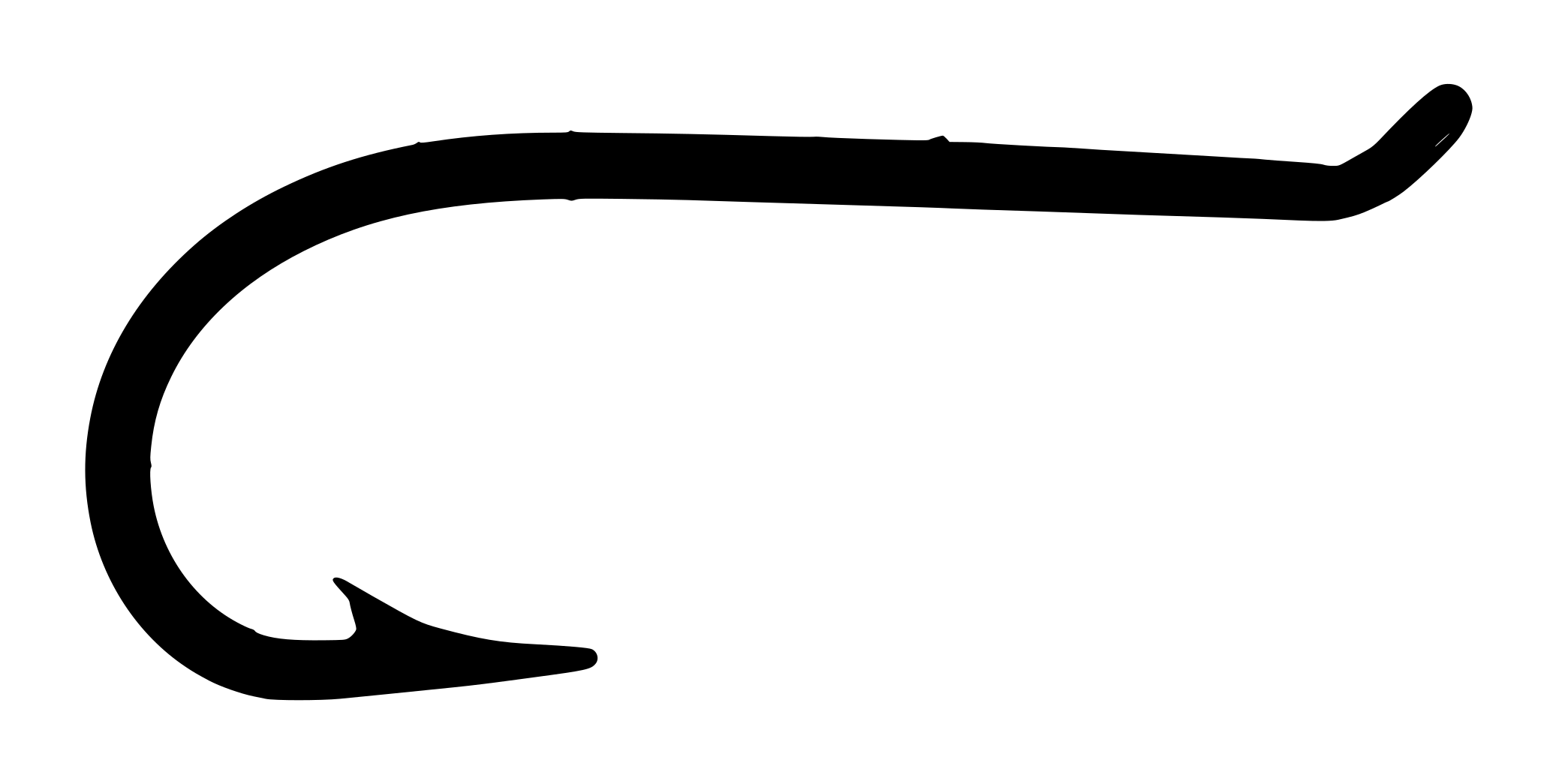
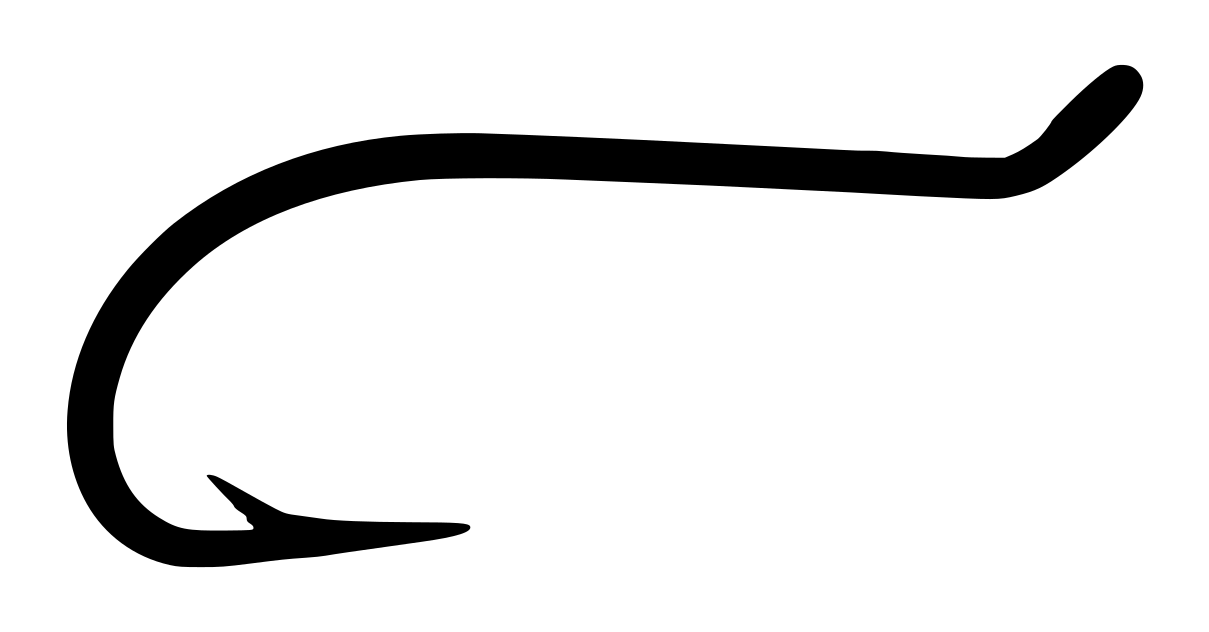
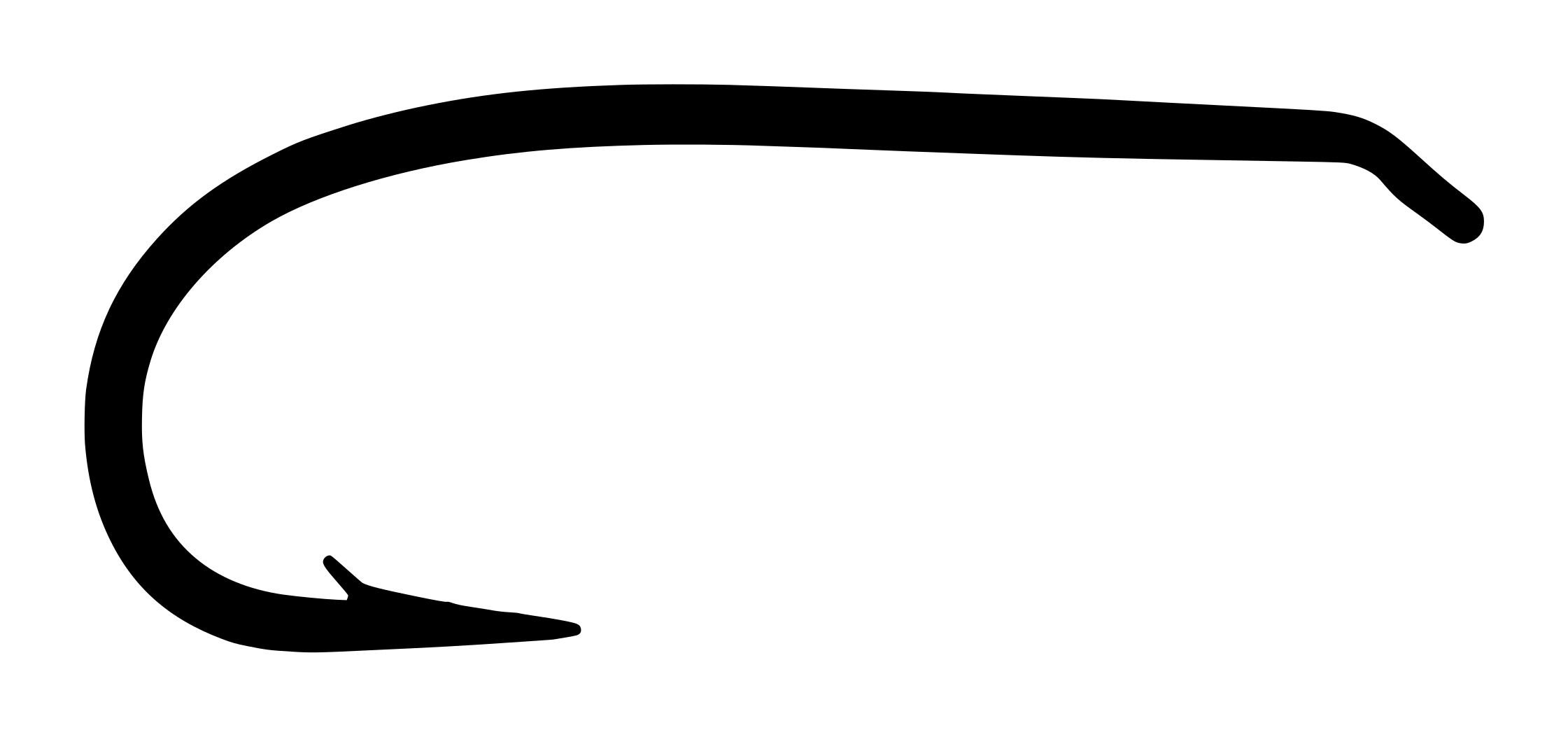
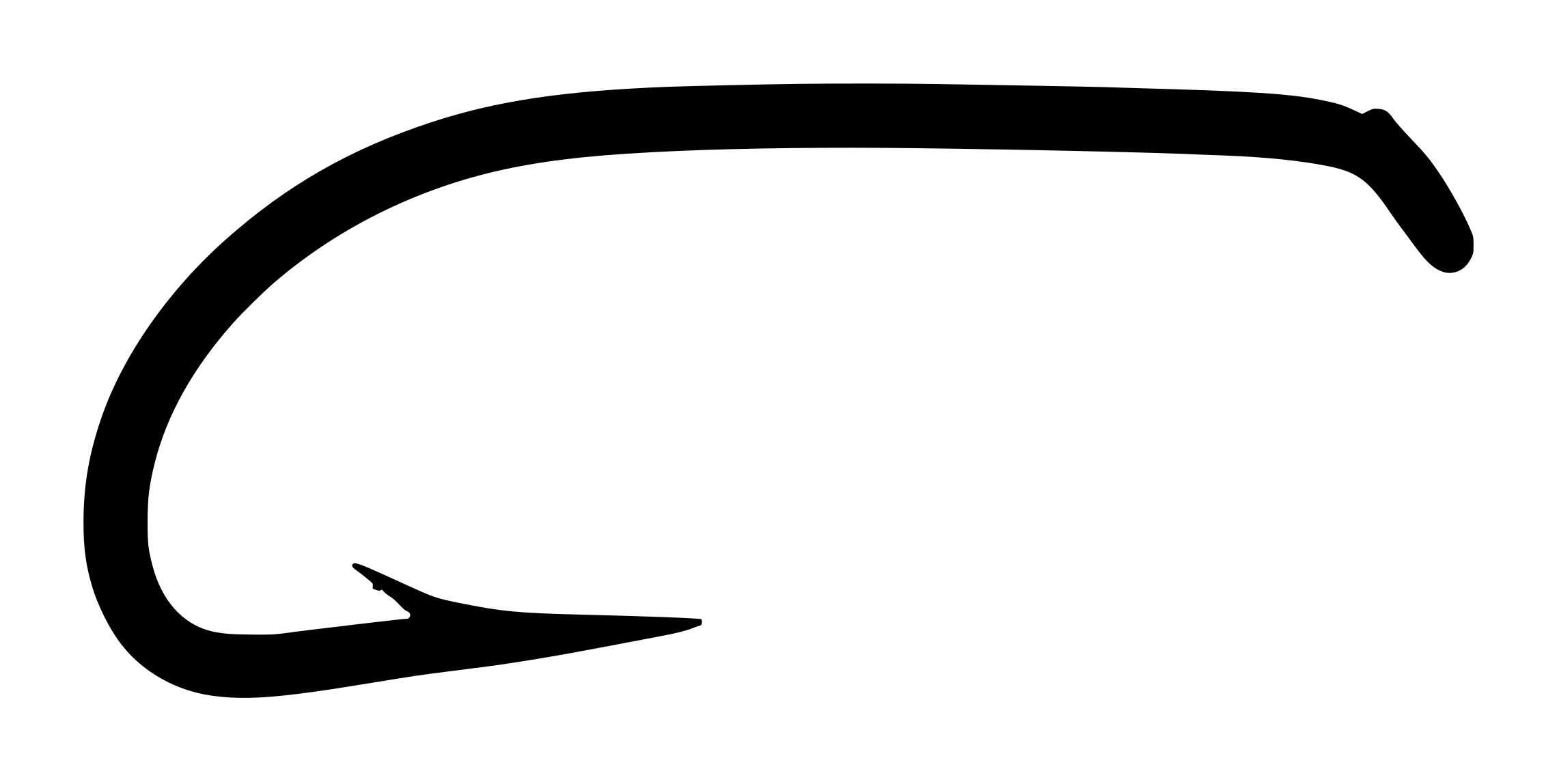
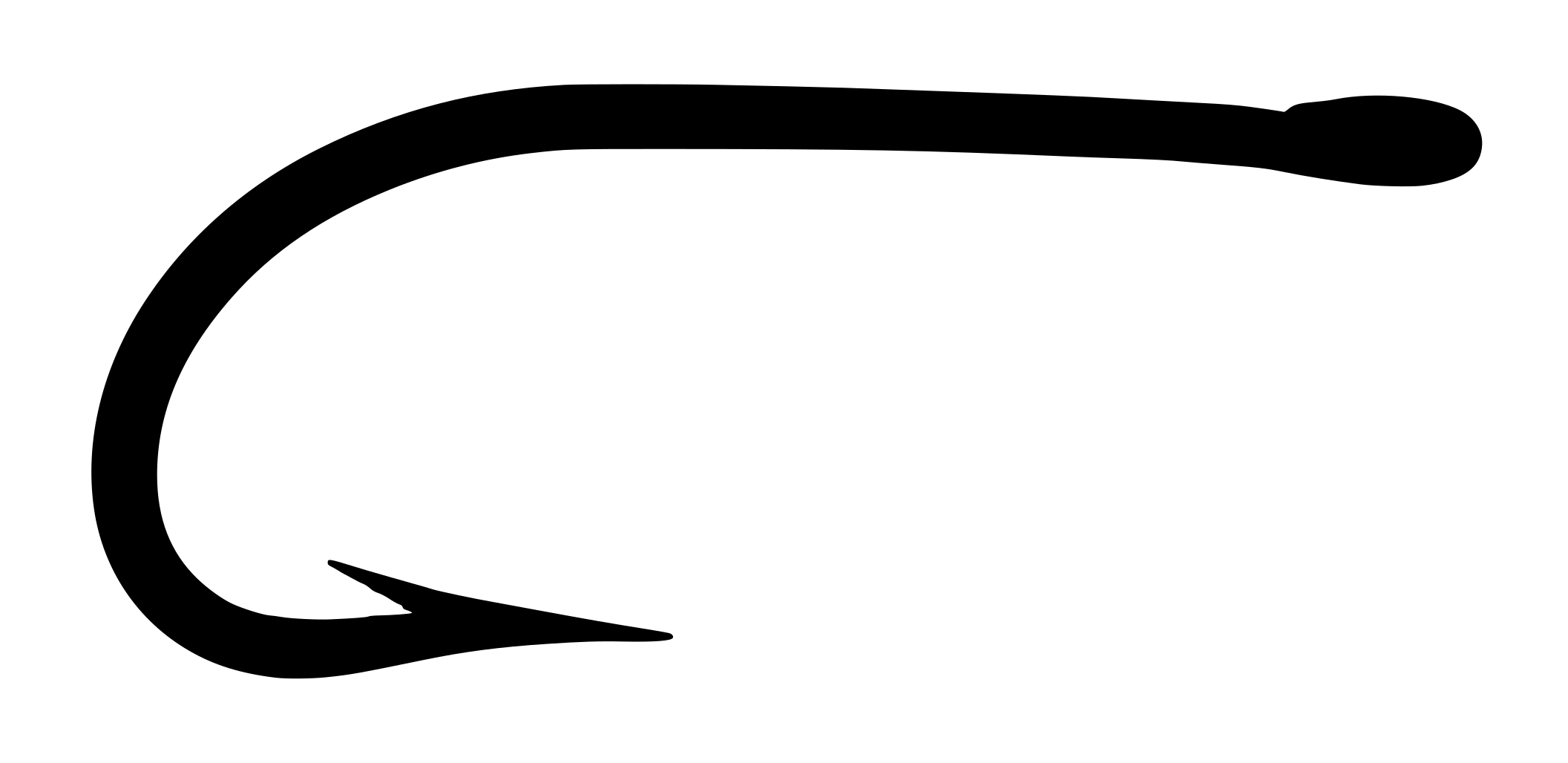
S. Allcock & Co. Ltd. Model 1810 TUE — Best Hollow Point Sproat — is a trout hook spanning the period c. 1920–1950, fitted with a turned-up tapered eye, rounded Sproat bend, and hollow-ground point over standard-gauge round wire in bronzed finish. The concave grinding on the point’s inner face concentrates cutting force during penetration, allowing the hook to set decisively in delicate mouth tissues without requiring additional driving force from the angler. Hollow-point geometry was a distinguishing feature of Allcock’s better-quality offerings and material evidence of the additional manufacturing work that separated their premium lines from utility hooks of the era.
Allcock — New entry — image 1
Photographic record
2 cataloged imagesSelect any record to load it above.
2 images shown
Allcock — New entry — image 1Allcock — New entry — image 1Open originalAllcock — New entry — image 2Allcock — New entry — image 2Open original
Technical profile
TUE | Sproat | Hollow Point | Bronzed
Eye
Tapered Eye, Turned Up
Wire
Standard, Round
Shank
Standard
Bend
Sproat, Standard gapSproat bend exhibits the characteristic rounded bottom typical of this family, with symmetrical taper from the shank axis to the bend apex. No visible offset or kirb. Bend depth appears proportional to standard Sproat geometry of the era P.
Point
Hollow Point (concave inner face)
Finish
Bronzed — Confirmed (stated on packaging)Bronzed finish displays warm brown tone consistent with Allcock's bronzing practice. Surface shows light patina consistent with age and storage, with no active corrosion or flaking visible on specimen P. Finish tone remains uniform across the hook body, indicating even application.
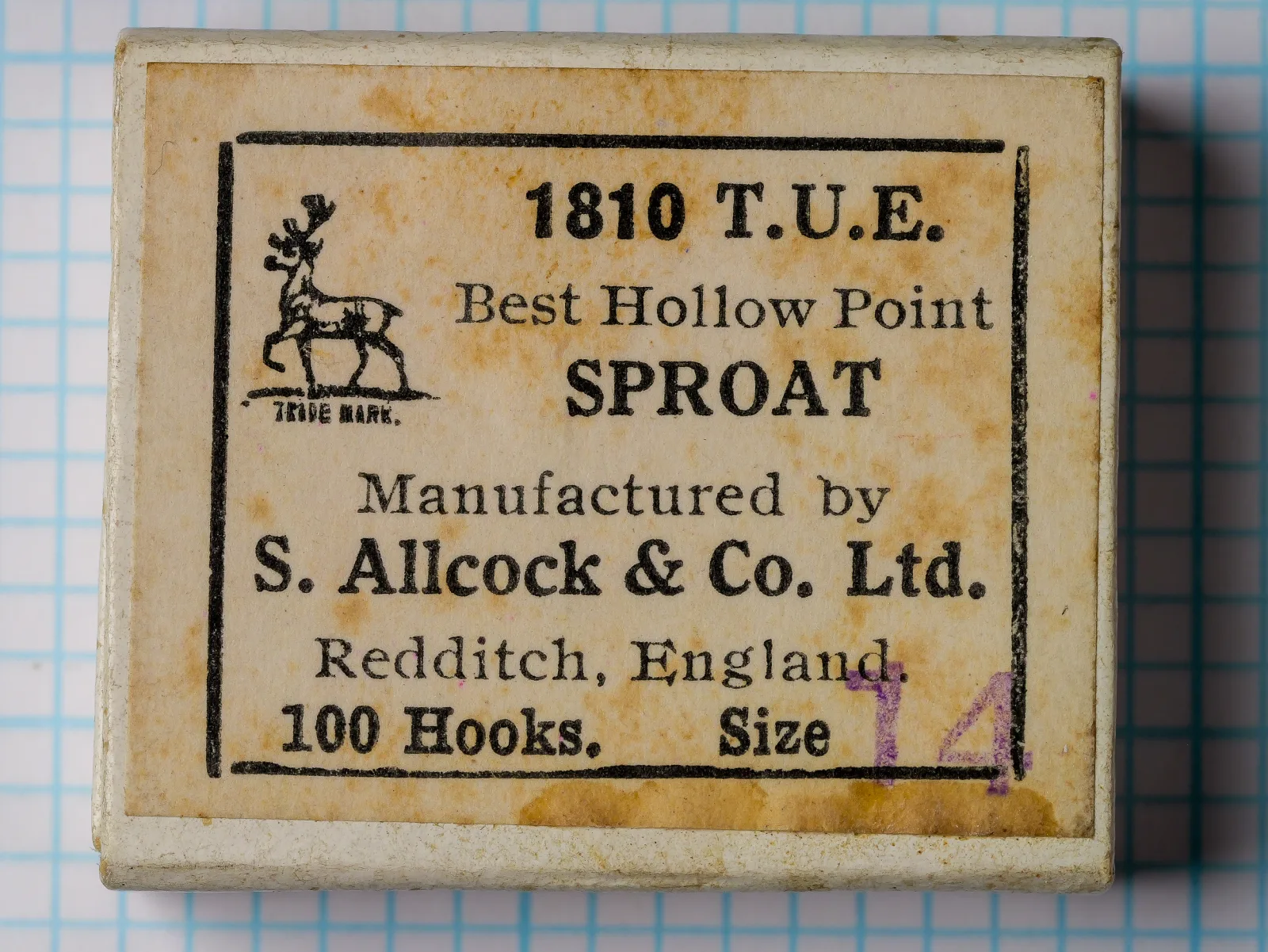
Specimen hook shows clean wire without significant corrosion or pitting. Point remains sharp and unblunted. Barb intact and cleanly formed. Packaging card shows moderate age toning and minor edge wear; text remains fully legible. Red/purple handwritten annotation suggests working card rather than archived stock.
The hollow point is formed by concave grinding on the inner face from the barb shoulder to the tip, creating a knife-edge effect on the leading surface. This geometry concentrates the cutting force during hook penetration, allowing smaller hooks to penetrate finesse tippets and delicate mouth tissues without additional driving force. The Sproat bend — characterized by a rounded, symmetrical curve from eye to bend apex — distributes load evenly across the shank and provides moderate gap (approximately 2.2:1 shank-to-gap ratio on size 14) suitable for securing small nymph bodies and traditional soft-hackle flies.
Standard-gauge round wire was the Allcock house standard for trout hooks in this era; it balances strength, mass, and castability. Bronzed finish provides mild oxidation resistance and subtle matte coloration valued in traditional fly fishing. The turned-up tapered eye accommodates both gut loop and modern leader attachment methods, facilitating the transition from gut-snelled patterns to direct tying.
This pattern was made in sizes 2-16 (I). We have measurement for size 14. Know the others? Submit calipered measurements and we'll review and add them. Thank you!
Historical context
allcock
S. Allcock & Co. Ltd. was founded in Redditch, England, during the 19th century and became one of the major British hook and tackle manufacturers by the early 1900s. Allcock operated a large factory in Redditch’s industrial center, employing dozens of skilled hook forgers and finishers during its peak production years.
The company maintained a comprehensive catalog of fly and bait hooks across multiple quality tiers — from utility hooks to premium “Best” grades incorporating features like hollow-point geometry, tapered eyes, and special finishes. Allcock competed directly with Partridge of Redditch, Henry Milward & Sons, and later faced competition from industrial manufacturers like O. Mustad & Son.
Allcock was acquired by the Mustad group in the mid-20th century, which gradually rationalized production and eventually discontinued many of Allcock’s proprietary models. The company’s legacy rests on its quality control standards and craft-era manufacturing practices, which set benchmarks for British hook finishing well into the 1950s.
Series History
The “Best Hollow Point” series represents Allcock’s premium trout hook line. Model 1810 appears in Allcock catalogs throughout the 1920s–1950s as a signature size 14 pattern. The TUE suffix likely denotes a catalog edition or production batch variant. Allcock offered this pattern in sizes ranging from approximately 2 to 16, with consistent design language and quality standards across the range. No evidence of major design revision during the production window; the pattern remained stable through Mustad’s acquisition period, though production gradually declined. The series was discontinued when Mustad consolidated its British holdings in the 1960s.
Era and Packaging Dating
No barcode visible on packaging — indicates pre-1974 manufacture P. Letterpress print method and paper stock consistent with 1920s-1950s production. Typography and border design align with S. Allcock & Co. Ltd. house style of that period. The red/purple handwritten annotation suggests field use or dealer mark typical of mid-20th-century tackle commerce. TUE suffix notation (possibly indicating a catalog edition or lot variant) not independently datable but consistent with Allcock practice of mid-century.
The Art of Grinding: Redditch Finisher Skill and Production
The Redditch tradition of hollow-point grinding was jealously guarded by master craftsmen who performed the work by hand or early mechanical grinder. A single skilled finisher could hollow-grind approximately 500–700 hooks per day, depending on size and wire gauge. The Allcock factory employed a hierarchy of finishers — apprentices learned on larger hook sizes before graduating to the delicate, eyes-straining work of finishing size 18–22 patterns. The hollow point required a secondary operation after the basic forging was complete, which is why "hollow point" always commanded a quality premium and higher retail price than comparable straight-taper ("superior") designs.
Design lineage and influence
The Sproat bend originated in 19th-century British fly-tying tradition and was standardized by multiple Redditch makers by the 1890s. Allcock adopted the Sproat as a core profile across multiple quality tiers, distinguishing the “Best” line by adding hollow-point geometry. The tapered eye turned-up became the British standard for dry-fly and wet-fly work during the same period, facilitating both gut-loop and direct-tie attachment.
Contemporary competing designs included the Limerick (angular bottom, smaller gap) and the Aberdeen (very wide gap, primarily a bait hook). The Sproat represented a middle ground — moderate gap, rounded load distribution, and balanced aesthetics. Post-World War II, Mustad’s standardization of hook designs gradually displaced proprietary Allcock specifications, though the Sproat bend itself survived as a core offering across multiple manufacturers through the 1980s and remains in limited production today.
Best matchRelated by Attribute
Computed automatically from catalog data — updated as new hooks are added.
Matches: Bend, Shank, Gap, Eye, Point +3 moreDiffers: Wire: Standard vs Heavy (1X Heavy); Eye Orient.: Turned Up vs Turned Down; Application: Dry Fly, Wet Fly, Nymph vs Wet Fly, Nymph
General dry fly and wet fly hook suitable for standard trout patterns in sizes 12–16. The hollow-point geometry and moderate gap were designed for quick hook set on delicate tippets. Widely used for traditional British soft-hackle wet flies, March Brown patterns, and general-purpose dry flies of the interwar and mid-century period.
Secondary Applications
Light nymph fishing; occasional use in small bait or dapping rigs.
Classic Fly Patterns
March Brown, Greenwells Glory, Partridge and Orange, Olive Dun, Iron Blue, general terrestrial imitations
Modern Equivalents
Hook
Match Quality
Notes
Tiemco TMC 101
Very Good
Contemporary dry-fly hook; similar tapered eye turned-up and standard sproat bend, though wire gauge is finer and point geometry is modern-profile
Mustad 94840
Good
Modern Sproat-bend hook descended from Allcock/Mustad consolidation; hollow point and standard wire similar to 1810 intent, though eye construction differs
Collector notes
Rated 4.5/10 — moderately uncommon, particularly in complete original packaging. Size 14 is a standard trout size with modest specialist demand. Redditch origin and hollow-point geometry provide collector interest among traditionalists, but mass production volumes limit rarity. Complete card in good condition typically commands $12–22; individual hooks fetch $1–3 depending on size and finish condition.
Reference value
$12 – $22 USD estimate
Packaging condition
Good — moderate wear, legibleRecorded specimen
Positive factors: Allcock brand commands respect among British tackle historians. Hollow-point specification requires additional manufacturing effort and appeals to fly-tying traditionalists. Redditch provenance and letterpress packaging are period-authentic. Pre-1950 dating places the specimen in the craft-era tail end of British hook production. Complete 100-hook cards demonstrate original commercial packaging format.
Limiting factors: S. Allcock & Co. maintained high production volumes throughout its operating period, limiting scarcity. Size 14 is a standard trout size with little size-based rarity; smaller sizes (18–20) command higher interest. The TUE variant designation is not independently significant to collectors; most view this as a standard catalog entry. No celebrated fly pattern bears the “1810” designation. Mustad’s subsequent ownership and eventual discontinuation, while historically notable, does not elevate collector demand above the Redditch baseline.
Most desirable variants: Sealed or factory-fresh cards command a 40–60% premium over opened cards. Sizes 16, 18, and 20 are more scarce in Allcock stock than size 14. Cards with legible original price markings (pre-1950) add authentication value. Unusual finishes (if any exist beyond standard bronzed) would be distinctive.
Condition factors: Complete hook count on the card is essential; missing hooks reduce value by $2–5 per hook. Card printing quality and legibility matter — heavily creased, faded, or marked cards command 20–30% discounts. Specimen hooks showing corrosion or blunt points reduce perceived condition despite card integrity. Original tissue or envelope wrapping (if present) adds 10–15% premium.
Packaging
Cardboard sales card, approximately 3.5" × 2.75", with black letterpress printing on cream-colored stock. Card shows age toning (light tan/ochre discoloration) consistent with 80+ years of storage. Bold border frame encloses all text. Header reads "1810 T.U.E." in capitals. Centered text: "Best Hollow Point / SPROAT" (serif typeface). Manufacturer attribution: "Manufactured by / S. Allcock & Co. Ltd / Redditch, England." Quantity statement: "100 Hooks. Size" with handwritten or printed size notation (illegible in current image). Allcock trademark — a prancing deer — appears upper left. Red or purple handwritten annotation visible in lower right margin (dealer mark or inventory notation, not fully legible). Paper stock shows fiber-fill visible at card edges, indicating traditional rag content typical of quality 1920s-1950s printing stock.
Market Value Notes
Low ($12): Good condition; opened card, 90+ hooks present, moderate card wear, hooks clean.<br />
High ($22): Excellent condition; sealed or factory-fresh card, complete 100-hook count, minimal wear, specimen hooks pristine.<br />
Premium factors: Sealed original packaging, complete hook count, strong letterpress printing clarity, Redditch attribution, hollow-point specification.<br />
Platforms: Specialist eBay UK sellers, vintage tackle dealers, British fly-fishing forums.<br />
Confidence: E estimated — based on typical pricing for Allcock mid-period trout hooks in comparable condition. Limited specific transaction data for this model code.
Where to Find
British specialist tackle dealers; eBay UK (search: "Allcock 1810" or "Allcock Sproat size 14"); vintage tackle auctions in UK and northern Europe; fly-tying community forums and trading groups. Redditch local dealers and museums occasionally hold examples.
Preservation
Storage and Preservation
Store the card in a cool, dry environment away from direct sunlight and high humidity. The bronzed finish will develop a natural patina over time; this is characteristic and acceptable for vintage examples. To prevent active oxidation, avoid exposure to damp or salt-laden air. Keep the original packaging intact — do not remove individual hooks from the card unless required for tying. If the card becomes damp, allow it to air-dry slowly in a well-ventilated space; rapid heating can cause warping.
Original cardboard packaging is archival-quality when stored properly; rag-content stock from the 1920s–1950s shows excellent longevity. Do not laminate or seal the card in plastic sleeves unless absolutely necessary for conservation. Keep the hooks separated from ferrous metal objects (iron, steel) to prevent galvanic corrosion. Acid-free storage containers or archival tissue are recommended for long-term preservation. Avoid contact with rubber bands or non-stainless fasteners, which can cause staining.
Marking Analysis
Packaging Annotation and Dealer Marks
A red or purple handwritten notation is visible in the lower right margin of the card, partially obscured. This marking is consistent with a dealer inventory code, price mark, or stock rotation symbol typical of British tackle shop practice from the 1930s–1960s. The handwriting style suggests period inking by shop staff rather than factory application. Such marks are common on working stock cards and indicate the card was not archived immediately but saw commercial handling and resale through retail distribution. The presence of this mark actually supports the authenticity of the card as genuine period stock rather than a protected specimen.
Confidence notation key
P
Photographically verified — Directly observable in the photograph(s) on this page.
V
Verified by documentation — Confirmed by manufacturer catalog, spec sheet, or published reference.
I
Inferred — A logical deduction from observable or documented evidence, not directly stated.
E
Estimated — An approximation based on visual comparison, proportional analysis, or limited data.
S
Speculative — A reasoned hypothesis that cannot be confirmed from available evidence.
Claims with no notation are confirmed by multiple independent sources. All photographs on garrenwood.com are taken on a measurement grid where each square equals 1/10 inch (0.1″ / 2.54 mm).