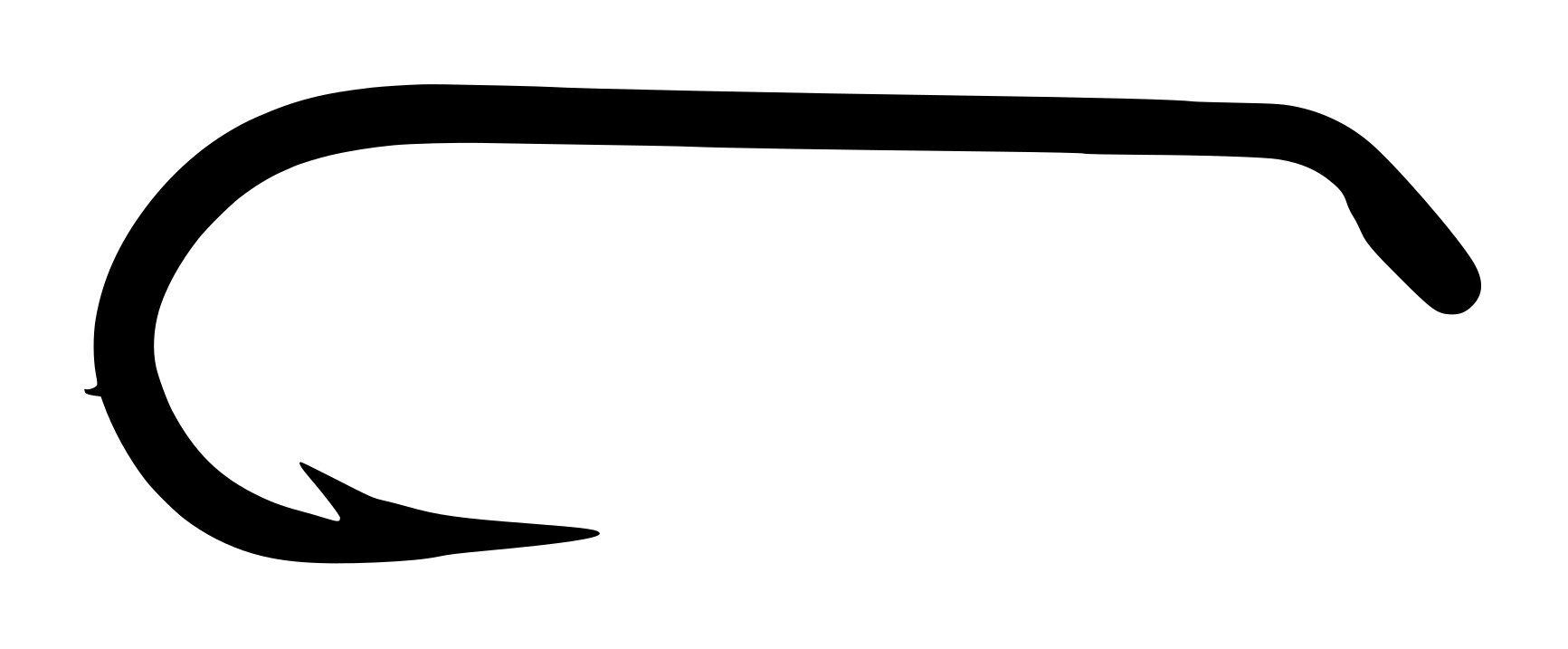
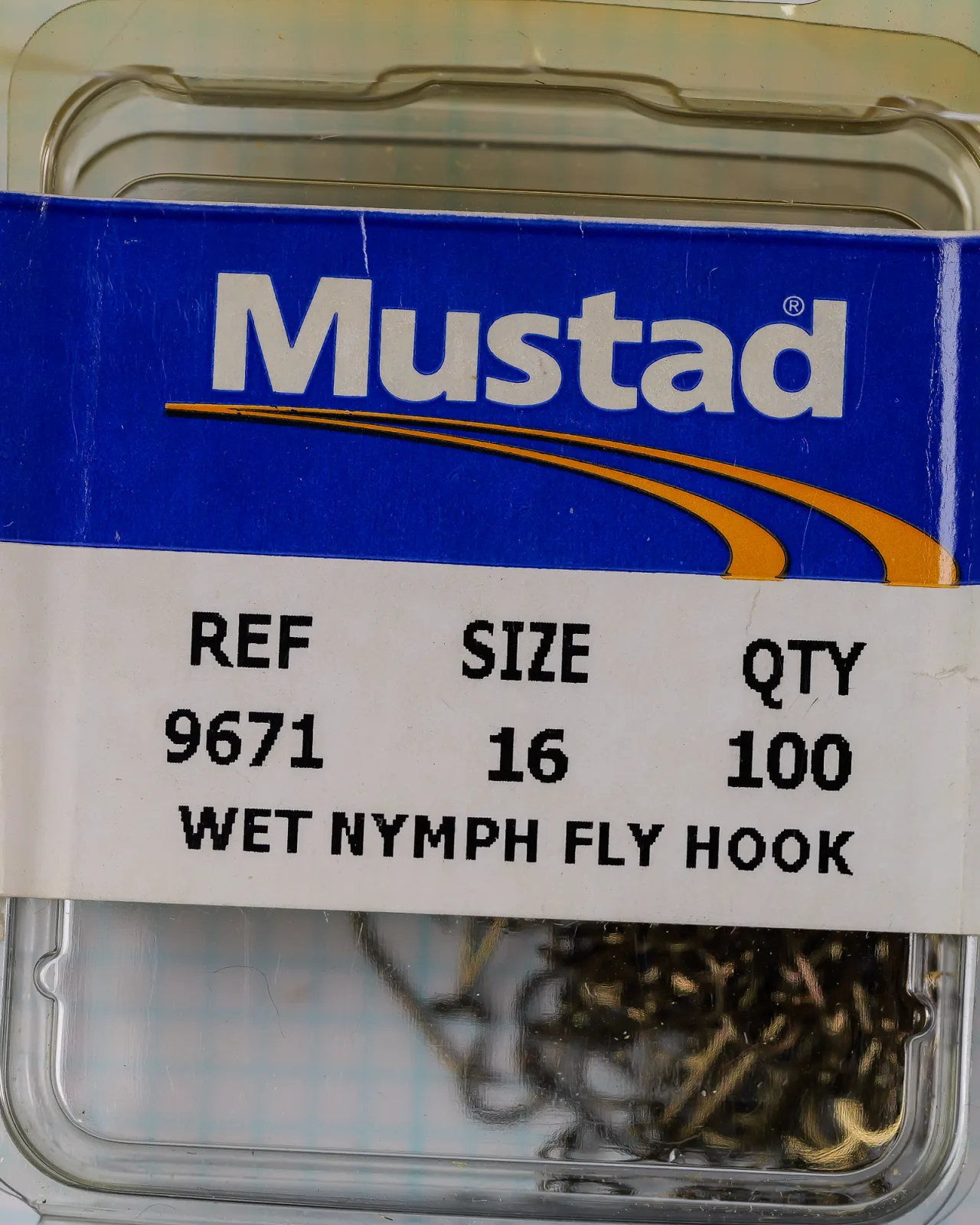
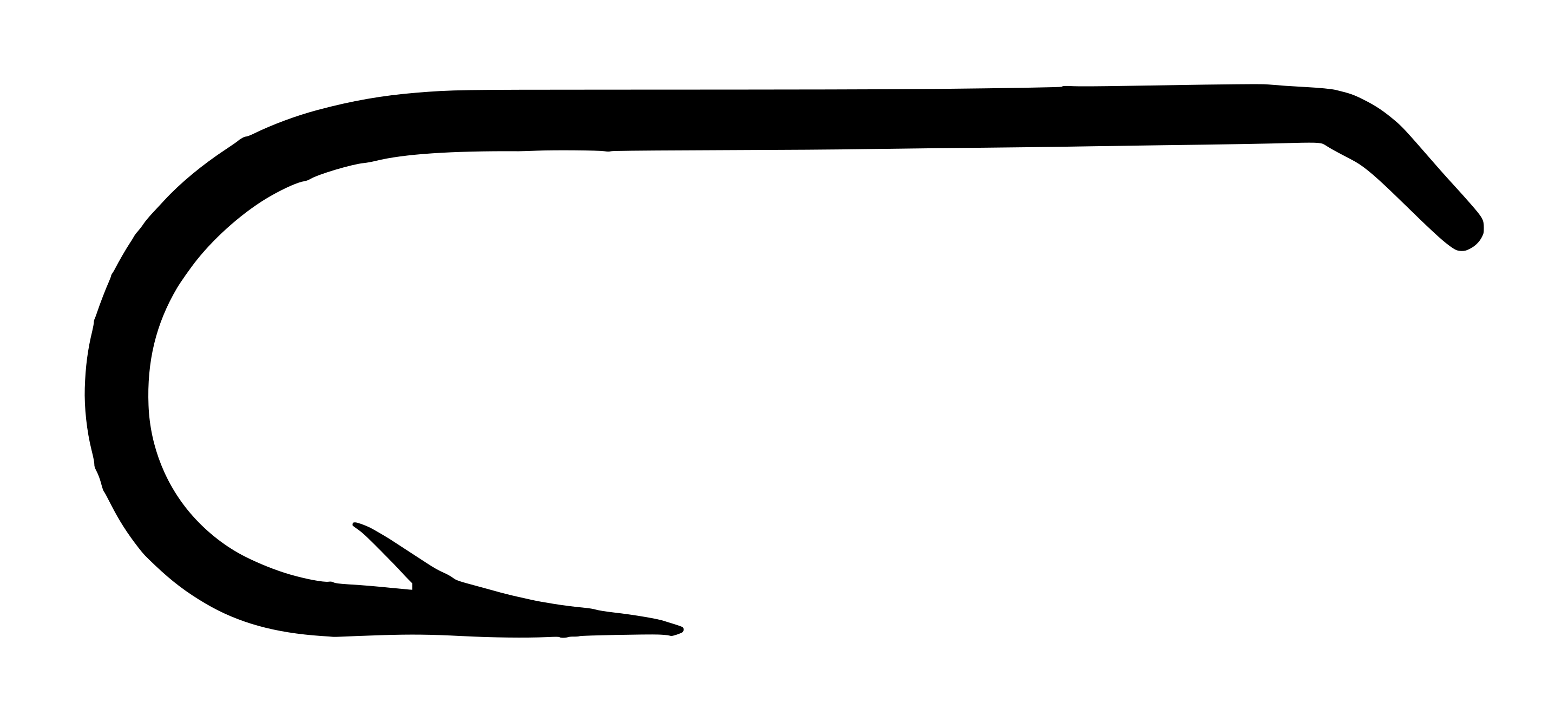
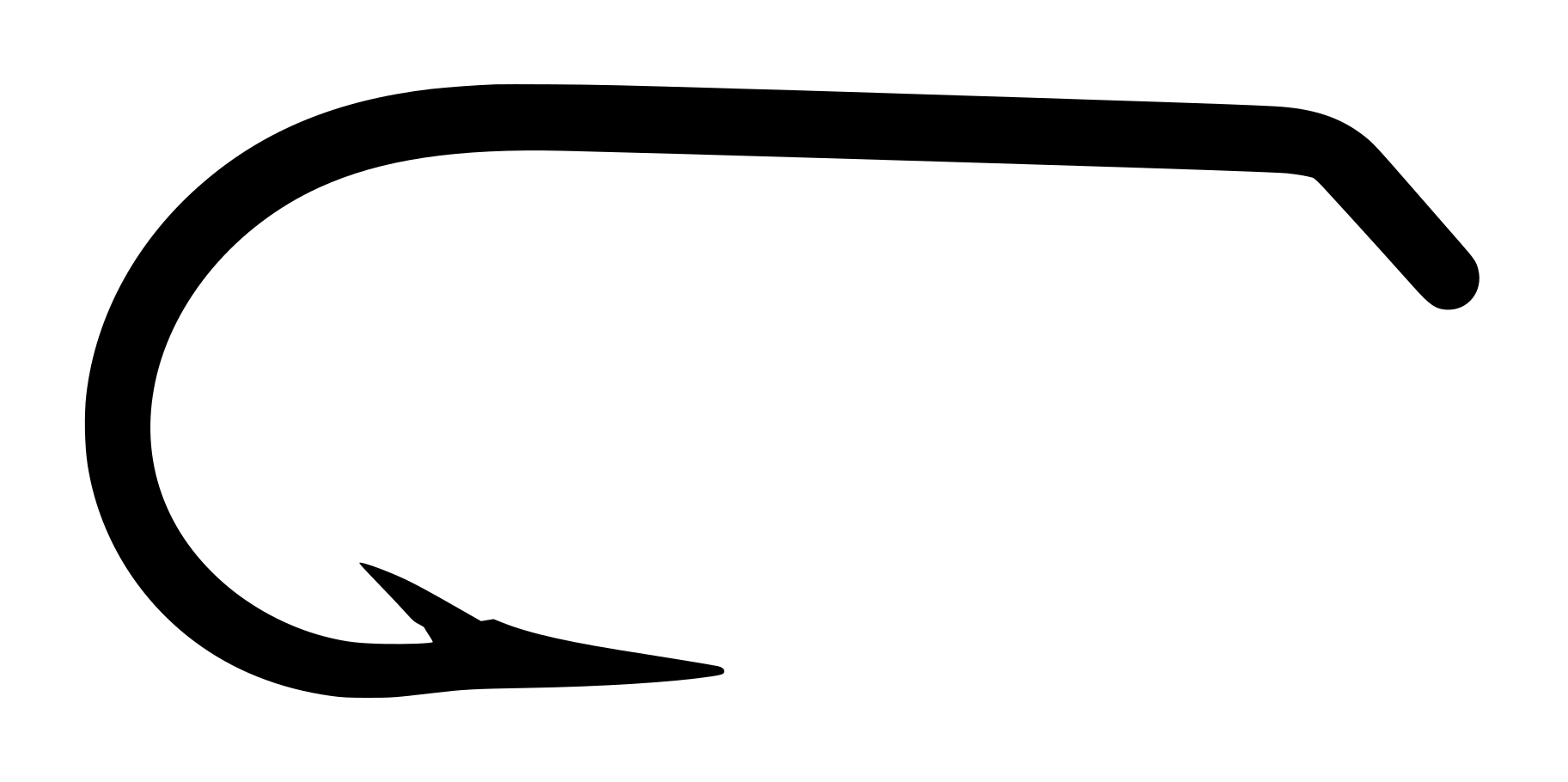
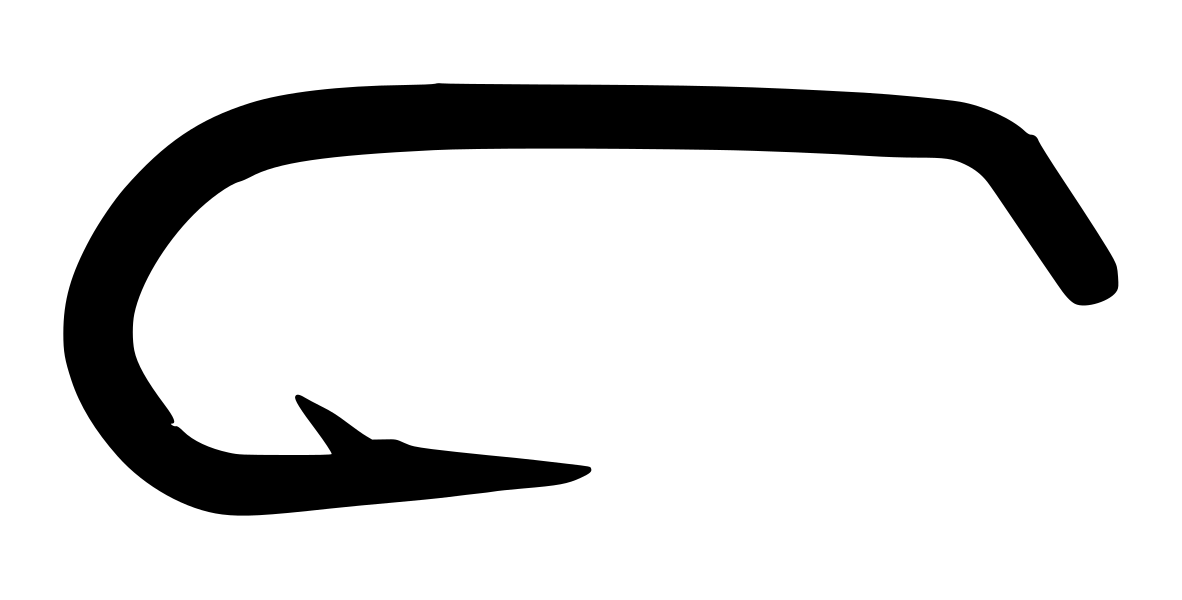
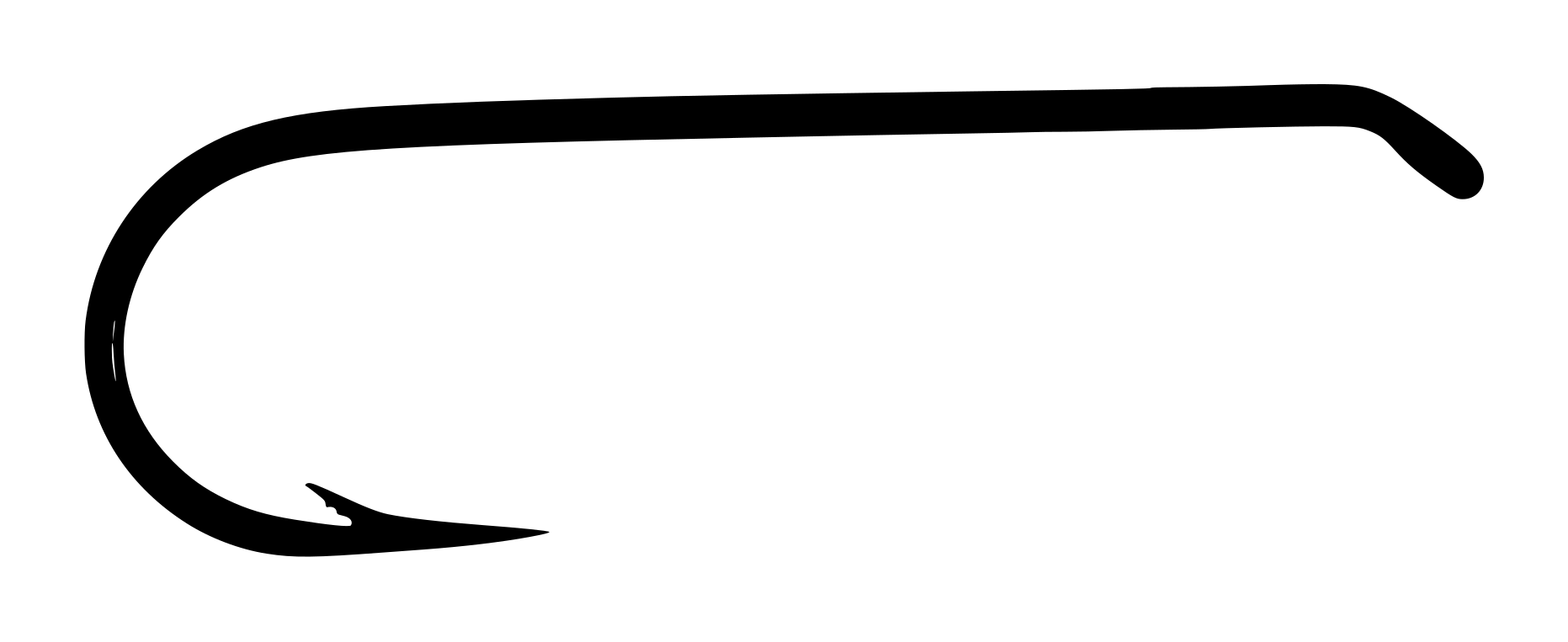
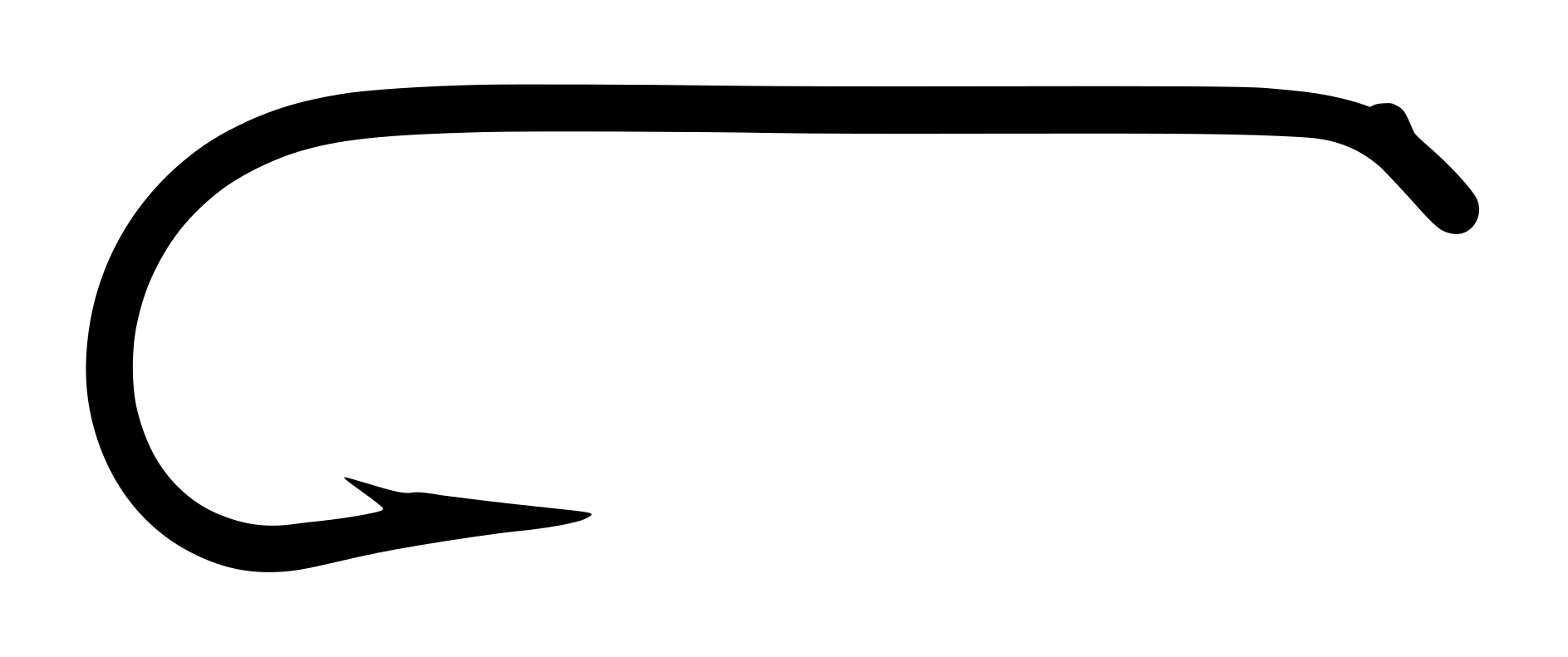
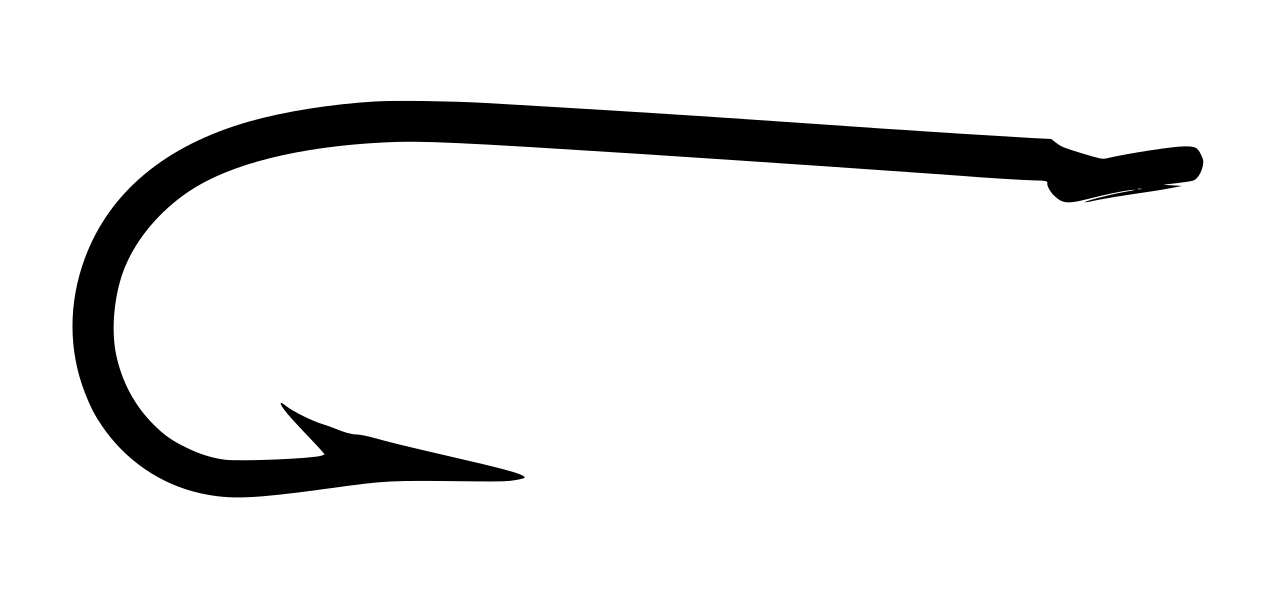
The Mustad 9671 is an extra-heavy wire wet nymph hook in a perfect bend, distinguished by its extra-long (3X) shank and hollow point. Manufactured by O. Mustad & Son in Norway, this model was produced for traditional nymph and soft-hackle dry patterns requiring a robust, versatile hook platform. The specimen shown is size 16 in the original manufacturer box, packaged for 100 hooks.
The forged, bronzed wire and deep-set hollow point are characteristic of Mustad’s mid-century construction, targeting experienced tyers who bound bodies and hackles on extended shanks. The turned-down ball eye and standard gap offer reliable thread anchorage without complicating tie-in geometry. The extra-heavy wire gauge was intentional — designed to support heavier materials and resist deformation during the hand-tying process.
Era evidence points to the mid-1960s: the absence of a barcode (post-1974 standard), offset-printed blue box with Mustad international branding, and white label stock with typewriter-style typography are all consistent with c. 1960–1970 production. The polystyrene compartment packaging became standard in this period.
2 cataloged imagesSelect any record to load it above.
2 images shown
Mustad 9671 Size 16 Wet Nymph Fly Hook BoxOriginal Mustad manufacturer box, size 16, containing 100 bronzed Wet Nymph Fly Hooks. Label shows REF 9671 / SIZE 16 / QTY 100 with Mustad registered trademark branding. Polystyrene compartment tray holds hooks in factory arrangement.Open originalMustad 9671 Size 16 Profile on Measurement GridProfile view of a Mustad 9671 size 16 hook on 0.1-inch measurement grid, showing the perfect bend, turned-down ball eye, 3X long shank, and hollow-point profile. Warm bronzed finish and forged wire profile are clearly visible.Open original
Technical profile
Turned Down Ball Eye | Perfect | 3X Long | Extra-Heavy (2X+) Wire | Hollow Point | Bronzed
Eye
Ball Eye, Turned Down
Wire
Extra-Heavy (2X+), Forged
Shank
3X Long — Plain
Bend
perfect, Standard gap
Point
Hollow Point (concave inner face)
Finish
Bronzed — Confirmed (stated on packaging)Box exterior shows light corner wear and surface scuffing consistent with storage. Label remains firmly adhered with all text legible. Hooks within compartment show warm bronzed finish with no corrosion or damage visible. Typical patina for mid-20th-century bronze-finished stock.
The hollow point geometry — a concave inner face forming an inwardly curved edge — was Mustad’s response to the need for penetrating bite without over-stressing fine nylon tippets. Unlike the flatter Superior point (used on smaller general-purpose hooks), the hollow point narrows to a knife-edge via an inward curve. This design allowed the point to open up quickly after barb engagement, reducing the risk of tippet break-offs during the take.
The forged wire profile (flattened oval cross-section) added structural integrity relative to round wire of the same gauge, allowing Mustad to maintain the extra-heavy rating without excessive thickness. Forging also created residual stress in the wire that improved fatigue resistance — important for hooks that would see repeated casting and releasing in commercial tying scenarios.
The bronzed finish was achieved by chemical oxidation of the steel surface, creating a warm brown protective layer. This finish was standard on wet flies and nymphs marketed to British and European tyers, who associated brown finish with traditional hook aesthetics. Bronzed finishes were slower to oxidize further in storage than bright steel, and less prone to corrosion than japanned finishes in damp tackle boxes.
This entry documents size 16 in original manufacturer box — one of the scarcer documented examples in the 9671 lineup. The preserved factory box with original label and complete hook count is significant for dating evidence (c. 1960–1970 Mustad offset-printed packaging with polystyrene compartment tray).
Own this hook? Help us measure it.
This pattern was made in sizes 2–16 (V). We have measurement for size 16. Know the others? Submit calipered measurements and we'll review and add them. Thank you!
Historical context
mustad
O. Mustad & Son was founded in Oslo, Norway in 1832 as a general hardware manufacturer. By the 1870s, the firm had pivoted to fishing tackle, establishing a major hook factory in Gjøvik, inland Norway. Mustad’s industrial capacity and willingness to export made it the dominant global hook supplier by the 1920s. The company manufactured hooks under its own brand and for numerous British and American retailers, often with retailer-specific markings.
By the 1950s, Mustad held roughly 70% of the global hook market. The firm modernized its casting and finishing processes in the 1960s, introducing polystyrene packaging and offset printing to replace hand-assembled cards. The Gjøvik factory remained the primary production center through the late 20th century, though Mustad also licensed production to Japanese manufacturers (Tiemco, Daiichi) in the 1970s–1980s to serve regional markets.
Series History
The Mustad 9671 was part of the firm’s standard fly-hook lineup, introduced in the 1950s as the market shifted from traditional bait fishing to fly tying. The 3X long shank and hollow point made it suitable for wet flies, soft-hackle patterns, and nymphs requiring extended body room. The model remained in continuous production through the 1970s and beyond, consistent with Mustad’s strategy of maintaining a broad size and specification matrix rather than discontinuing successful designs.
The 9671 was not a named or signature pattern — it was a foundational hook specification in the Mustad catalog, available in sizes 2 through 16 and sold both under the Mustad brand and through retailers (e.g., Sears, tackle houses) as a house-brand hook. The model code system itself (four-digit numbers) was adopted by Mustad c. 1950 to standardize international inventory. Earlier Mustad hooks used descriptive names (e.g., “Sproat,” “Perfect”) or abbreviations; the numeric code modernized catalog management.
Era and Packaging Dating
No barcode present — indicates pre-1974. Box printing uses offset lithography with sharp registration and modern sans-serif typeface consistent with 1950s–1970s Mustad packaging. White label stock and typewriter-style print typical of mid-1960s industrial production. Blue box color and wave logo design match Mustad international distributor branding c. 1955–1970. Absence of barcode and style of box construction (separate lid with full interior tray) consistent with late 1960s–early 1970s. Polystyrene compartment packaging was adopted by Mustad c. 1960. Conservative estimate: c. 1955–1975.
The Unsung Hook of the Nymph Revolution
The Mustad 9671 emerged during a subtle but critical shift in fly-fishing culture. In the 1950s–1960s, British soft-hackle and nymph tying traditions were being formalized into a recognizable "school" of design, championed by tyers like Frank Sawyer and Oliver Kite. These tyers required robust, uncomplicated hooks that would support extended bodies and delicate hackle without dominating the fly's profile. Mustad's industrial scale meant the 9671 became the hook of choice for pattern developers across Britain and Scandinavia — not because it was unique, but because it was reliable, affordable, and globally distributed. The lack of a designer name is itself historically telling: the hook belonged to no one and everyone.
Design lineage and influence
The perfect bend with 3X long shank drew from earlier Limerick variants popular in Ireland and Scotland. Mustad’s hollow point was influenced by Partridge’s Redditch tradition, which emphasized incurved points for delicate tippet work. The 9671 represented a synthesis: Norwegian industrial capacity applied to British bend geometry and English finishing standards.
The 9671 shared shank length and gap with the contemporary Tiemco TMC 5262 (introduced c. 1970s as a direct equivalent) and predated the Daiichi 1720 (1980s). None of these hooks dominated the market; instead, they formed a stable tier of reliable “foundation” hooks that pattern developers could depend on. The 9671 was not displaced by newer designs but superseded by them — the way reliable tools eventually make way for refined versions without ever being wrong.
Best matchRelated by Attribute
Computed automatically from catalog data — updated as new hooks are added.
The 9671 was intended for soft-hackle wet flies, traditional nymphs, and stonefly patterns in sizes 12–16. The extra-heavy wire and hollow point were engineered to hold heavier thread and dubbing without crushing underfoot, making the hook suitable for extended-body nymphs with wraps of fur or floss. The 3X long shank provided platform for body extension in traditional Scottish and English soft-hackle patterns, which were common in trout rivers of the 1950s–1970s.
Classic Fly Patterns
March Brown, Greenwells Glory, Partridge and Orange, Hares Ear, Pheasant Tail Nymph, Gold-Ribbed Hares Ear, Diawl Bach
Modern Equivalents
Hook
Match Quality
Notes
Tiemco TMC 5262
Excellent
Direct equivalent: same bend family, shank length, wire gauge, and point style. Introduced c. 1970s as Tiemco's primary 3X long nymph hook.
Daiichi 1720
Very Good
Very similar: 3X long shank, perfect bend, hollow point; slightly finer wire. Contemporary alternative from 1980s onward.
Daiichi 1710
Very Good
2X long variant of the 1720 design; same bend and point, shorter shank for medium nymphs.
Dai-Riki 730
Very Good
Japanese-designed 3X long nymph hook with curved-in point (similar to hollow); lighter wire than 9671.
Kamasan B830
Good
British-made alternative: perfect bend, 3X long, hollow point; slightly coarser finish than modern Tiemco.
Fulling Mill FM1710
Good
Contemporary Czech-made equivalent to the Daiichi 1710; designed for European nymph patterns.
Collector notes
Rated 4.5/10 — size 16 in original manufacturer box is genuinely scarce; larger sizes (2–10) remain common. Complete original box with full hook count significantly elevates value above loose hooks or opened cards. Collector demand is steady among Redditch-tradition fly tyers and mid-century tackle historians.
Reference value
$12 – $28 USD estimate
Packaging condition
Very Good — light wear, fully legibleRecorded specimen
Packaging format
manufacturer_boxCatalog code
Positive Factors: Manufacturer box (rigid, lidded format) is rarer than cards and commands 2–4× card equivalent value. Size 16 is genuinely scarce in vintage stock; most surviving examples are in larger sizes (6–12). Complete hook count (100 original) is a significant premium driver. Bronzed finish and hollow point are consistent with Mustad’s better-quality specifications. Original paper label is legible and factory-fresh. Mid-century dating (c. 1960–1970) appeals to vintage tackle collectors. The 3X long shank is collectible among pattern-specific enthusiasts (soft-hackle and traditional nymph tyers).
Limiting Factors: Mustad’s industrial production volumes mean even “scarce” models never reach true rarity. No named designer or signature pattern attached. Size 16 is less popular than sizes 10–14 among contemporary tyers, limiting demand beyond collectors. The generic “Wet Nymph Fly Hook” designation lacks the cachet of specialty hooks (e.g., Mustad 94720 Streamer, 94840 Salmon). Box wear and label toning are acceptable but not mint condition.
Variant Desirability: Original closed box > opened box with full count > loose hooks > damaged/incomplete box. Size 16 > size 14 > sizes 2–8. Bronzed finish > japanned (if variant exists).
Packaging
Rigid cardboard box with separate lid. Bright blue printing on white stock with Mustad registered trademark logo and gold/orange wave accent. Front label reads REF 9671 / SIZE 16 / QTY 100 / WET NYMPH FLY HOOK in black typewriter-style print on white label stock. Clear polystyrene compartment tray with hooks packed. Box shows minimal wear; printing remains sharp. Interior tray has light amber toning consistent with age.
Market Value Notes
Low ($12): Good condition — opened box, complete hook count, label worn but readable, minor box corner creasing.<br />
High ($28): Excellent/Mint condition — sealed or near-sealed box, complete count, sharp label, minimal exterior wear.<br />
Premium factors: Manufacturer box (vs card) worth 2–4× multiplier. Size 16 premium (scarcer than larger sizes). Complete count critical. Original label legibility. Bronzed finish preferred by collectors.<br />
Platforms: eBay.co.uk (UK vintage tackle), eBay.com (US), vintage tackle dealers specializing in Mustad, fly-tying forums.<br />
Confidence: E estimated — limited recent sales data for size 16 in original box. Estimate based on comparable Mustad boxed hooks and dealer asking prices. Flag: size 16 in box rarely appears; high-end value may be conservative.
Where to Find
eBay.co.uk and eBay.com (occasional listings, search "Mustad 9671"). Vintage fly-fishing tackle dealers in UK and Scandinavia. Fly-tying forums (Classic Winging Knots, The Classic Angler Facebook group). Tackle auctions rarely feature single-size vintage Mustad boxes. Local antique markets and junk shops in fishing regions (Scotland, northern England, Norway) occasionally yield unopened stock.
Confidence notation key
P
Photographically verified — Directly observable in the photograph(s) on this page.
V
Verified by documentation — Confirmed by manufacturer catalog, spec sheet, or published reference.
I
Inferred — A logical deduction from observable or documented evidence, not directly stated.
E
Estimated — An approximation based on visual comparison, proportional analysis, or limited data.
S
Speculative — A reasoned hypothesis that cannot be confirmed from available evidence.
Claims with no notation are confirmed by multiple independent sources. All photographs on garrenwood.com are taken on a measurement grid where each square equals 1/10 inch (0.1″ / 2.54 mm).