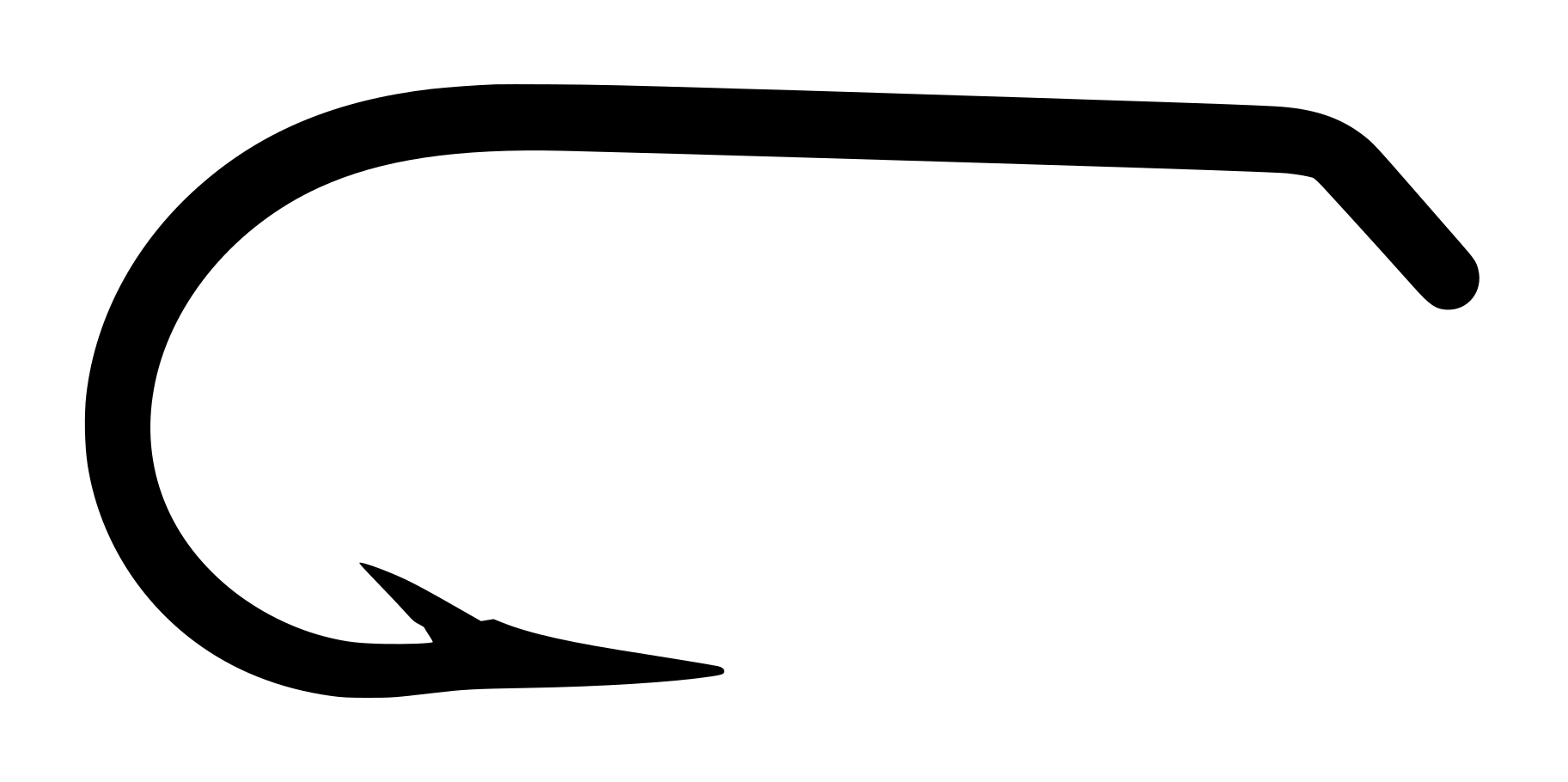
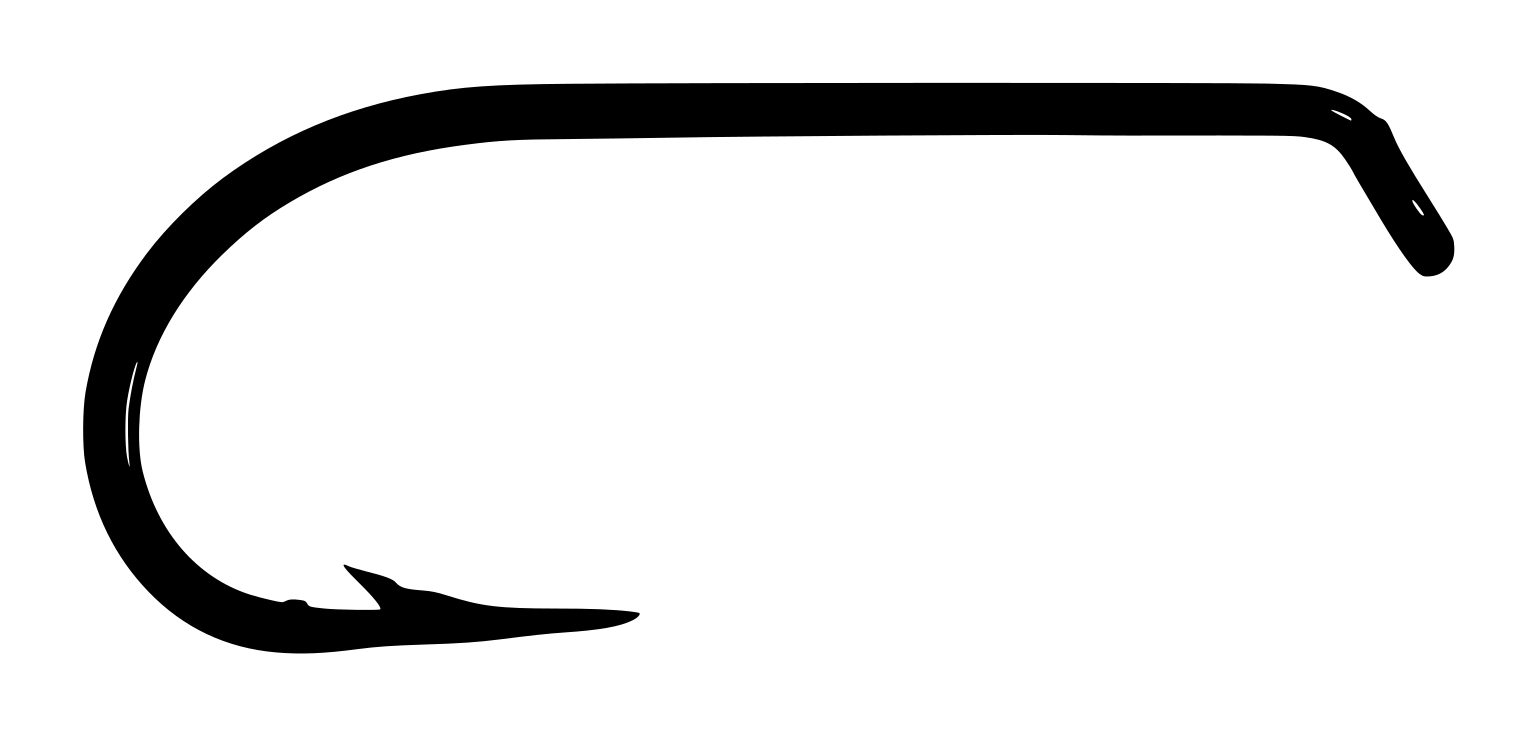
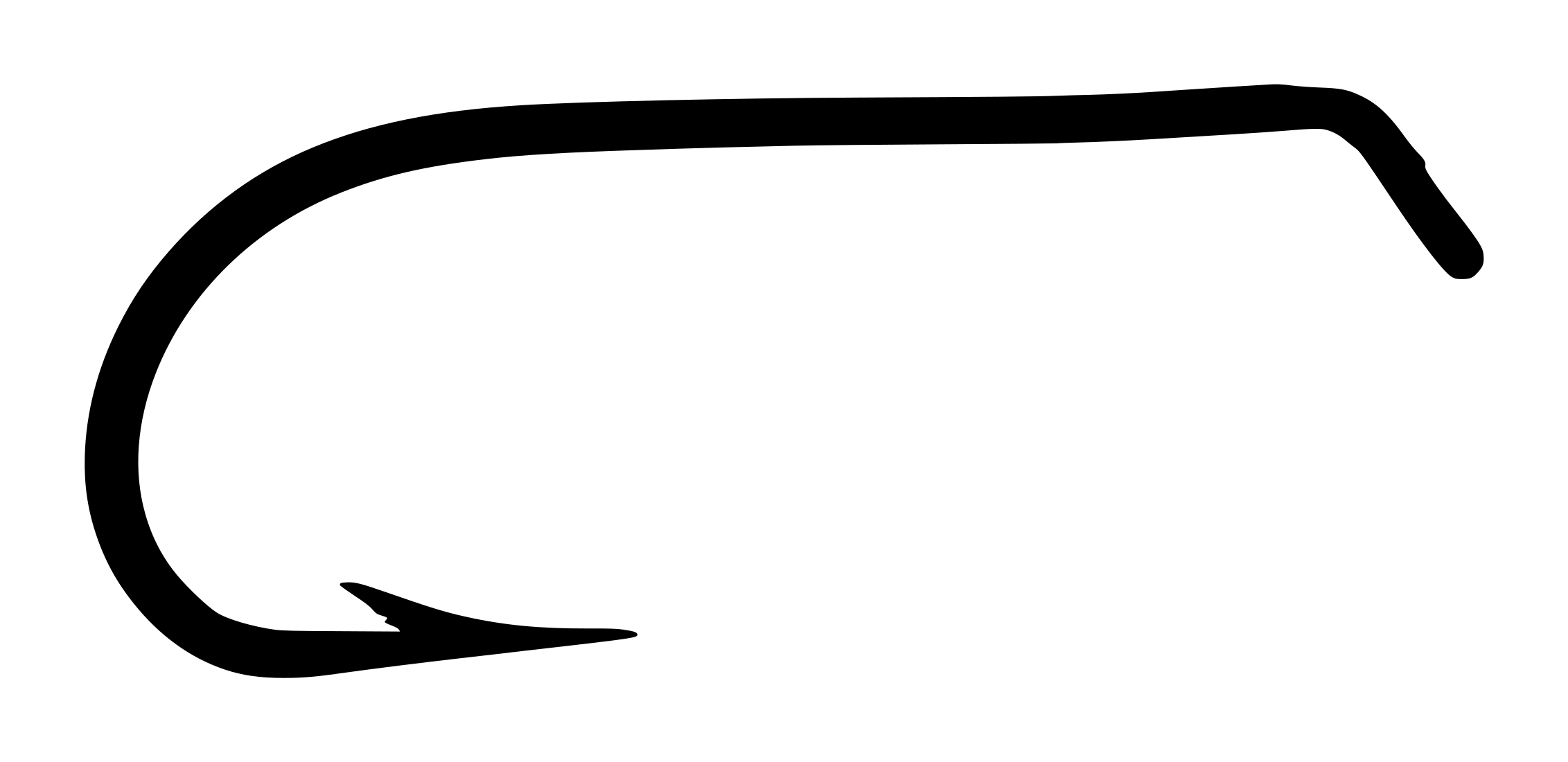
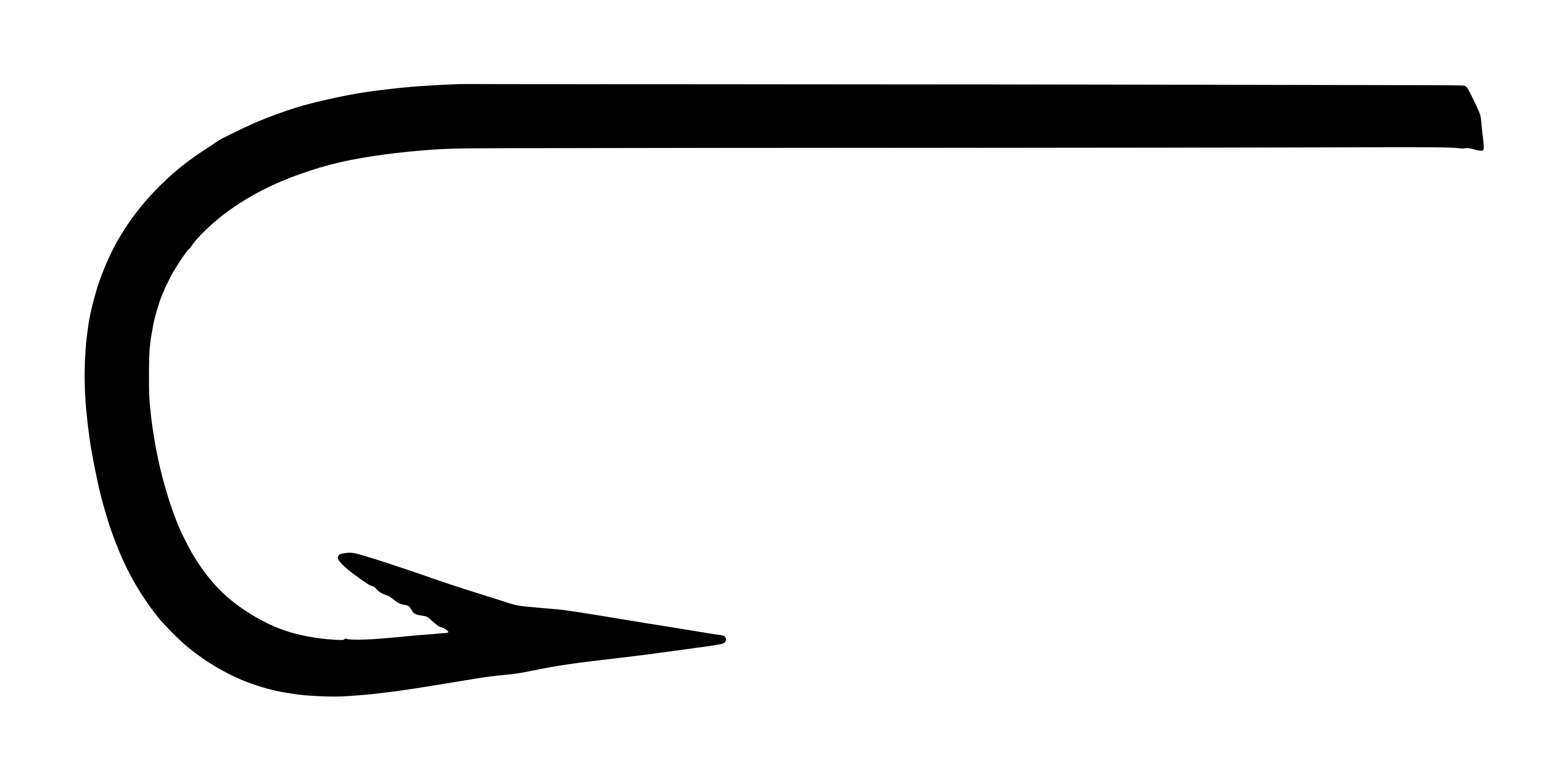
The Mustad 7947 B is a premium mid-century Norwegian wet-fly and soft-hackle hook from O. Mustad & Søn, produced in size 12 with a forged shank, tapered ball eye, and distinctive hollow-point geometry. This model represents the company’s strategic commitment to soft-hackle and North Country Spider traditions during the 1950s–1960s revival period, combining Mustad’s industrial precision with the refined proportions demanded by delicate freshwater presentations.
The ‘B’ designation indicates a specific quality tier within Mustad’s catalog system, denoting hooks manufactured to exacting tempering and dimension standards. The bronzed finish and hand-labeled card packaging with the iconic ‘Key Brand’ logo and Oslo address are hallmarks of authentic mid-century Norwegian production, before Mustad shifted manufacturing to Asia in subsequent decades.
Collectors value the 7947 B for its authenticity, Norwegian provenance, and the technical refinement visible in both the hook geometry and packaging presentation. The long shank makes it particularly sought by tyers of North Country Spiders and traditional wet patterns. Size 12 is moderately scarce in original packaging, especially in excellent condition.
Original mid-century Mustad 7947 B packaging showing the classic eight-line label format with 'Key Brand' logo and Oslo address, typical of 1950–1965 production period.
Photographic record
3 cataloged imagesSelect any record to load it above.
3 images shown
Mustad 7947 B Size 12 Original Packaging LabelOriginal mid-century Mustad 7947 B packaging showing the classic eight-line label format with 'Key Brand' logo and Oslo address, typical of 1950–1965 production period.Open originalMustad 7947 B Size 12 Hook Point DetailClose-up side profile of the Mustad 7947 B hook point, clearly showing the concave hollow-point geometry and barb angle, photographed on measurement grid for scale.Open originalMustad 7947 B Size 12 Complete Hook ProfileOverhead flat view of two Mustad 7947 B hooks showing the round Viking bend profile, proportional gap width, and tapered ball-eye construction, measured against the grid.Open original
Technical profile
Eye
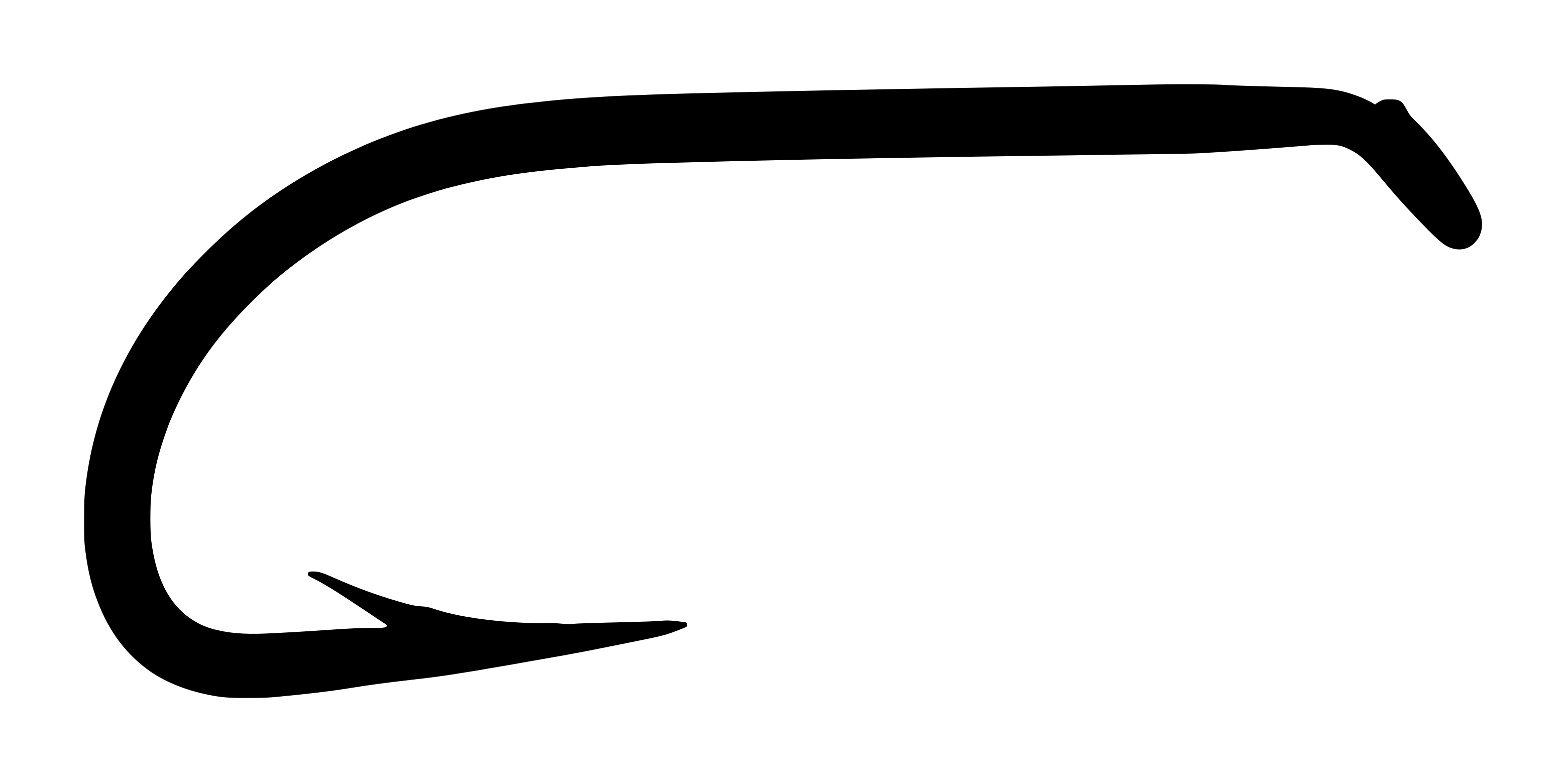
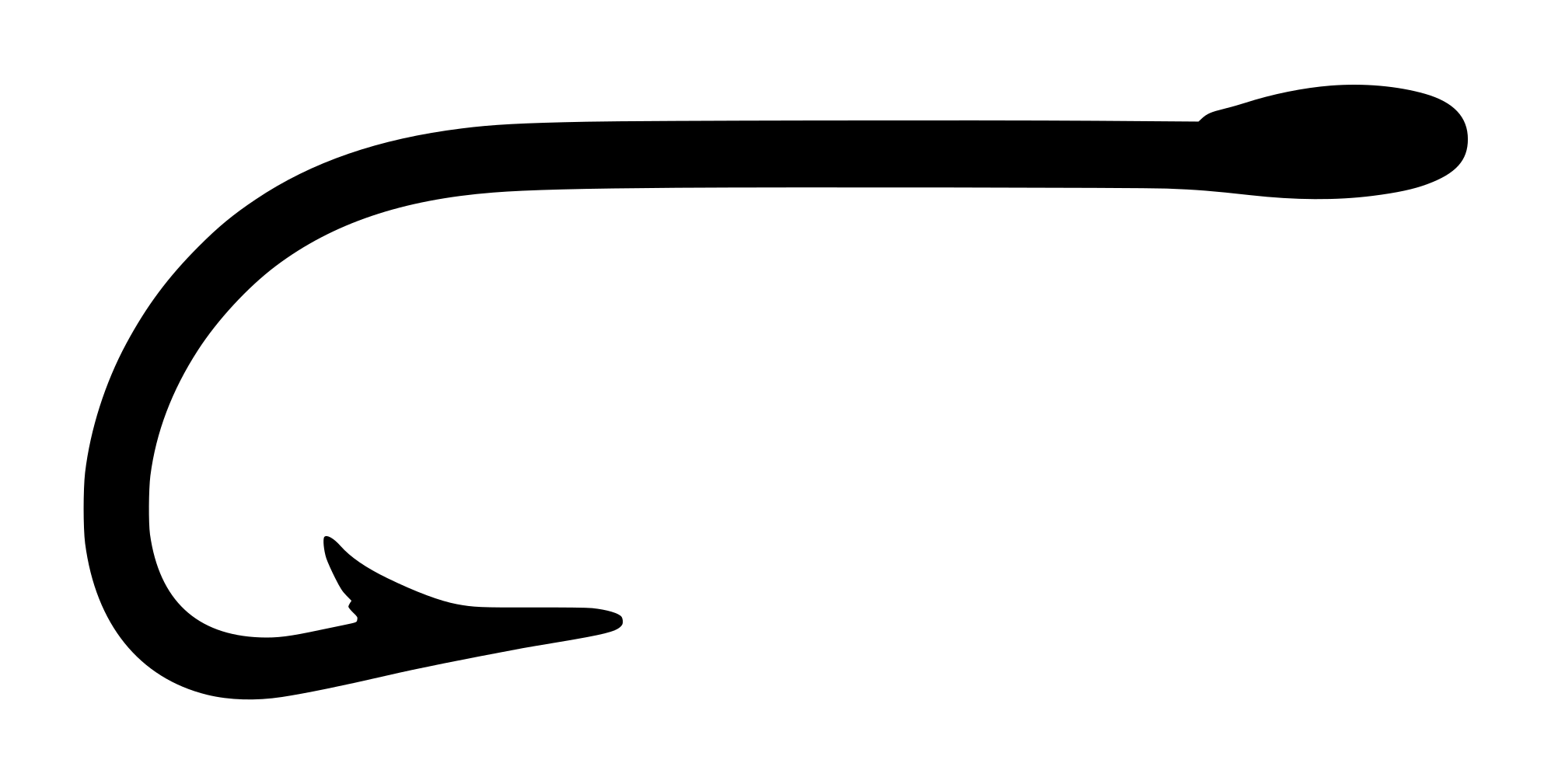
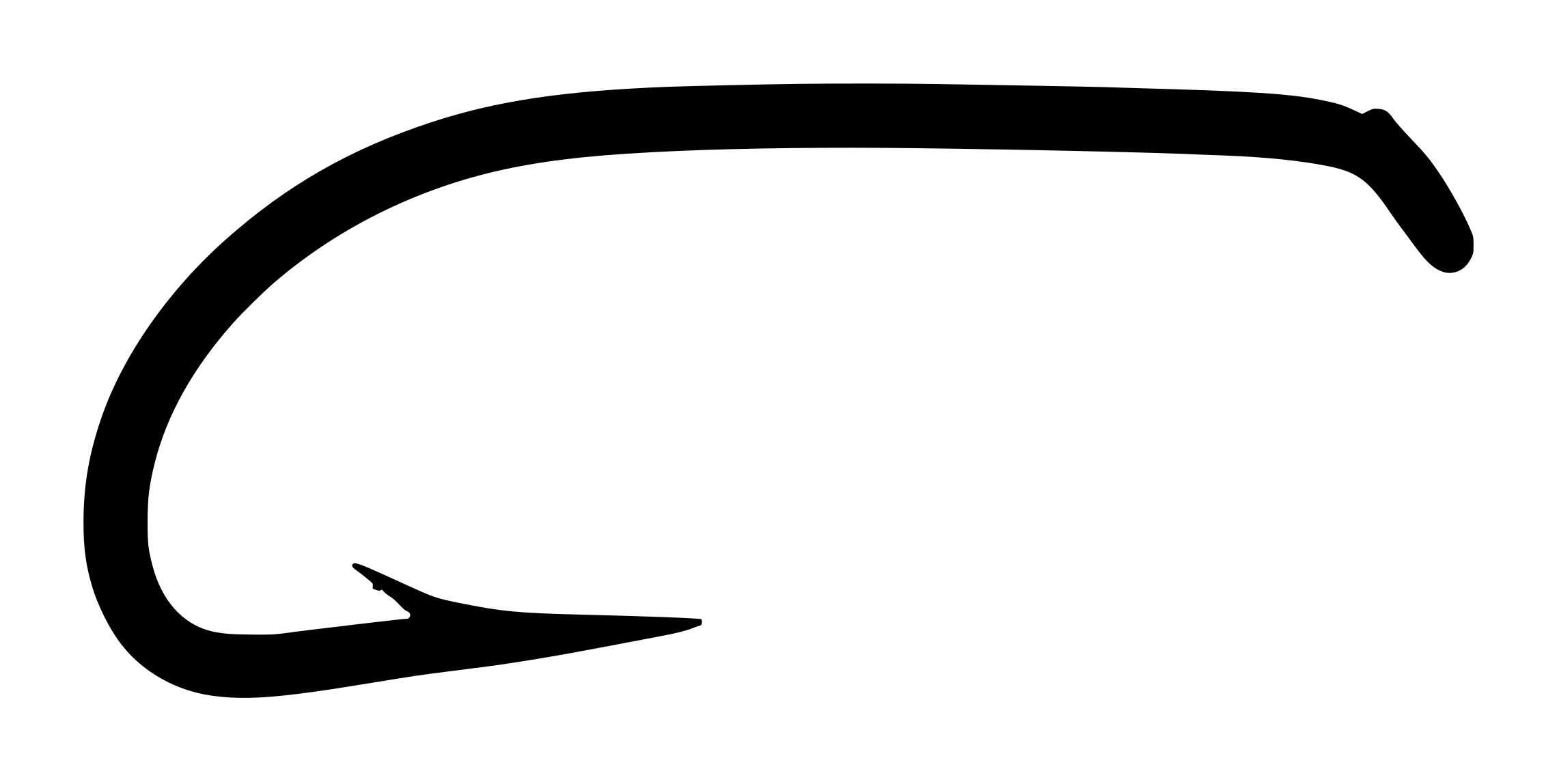
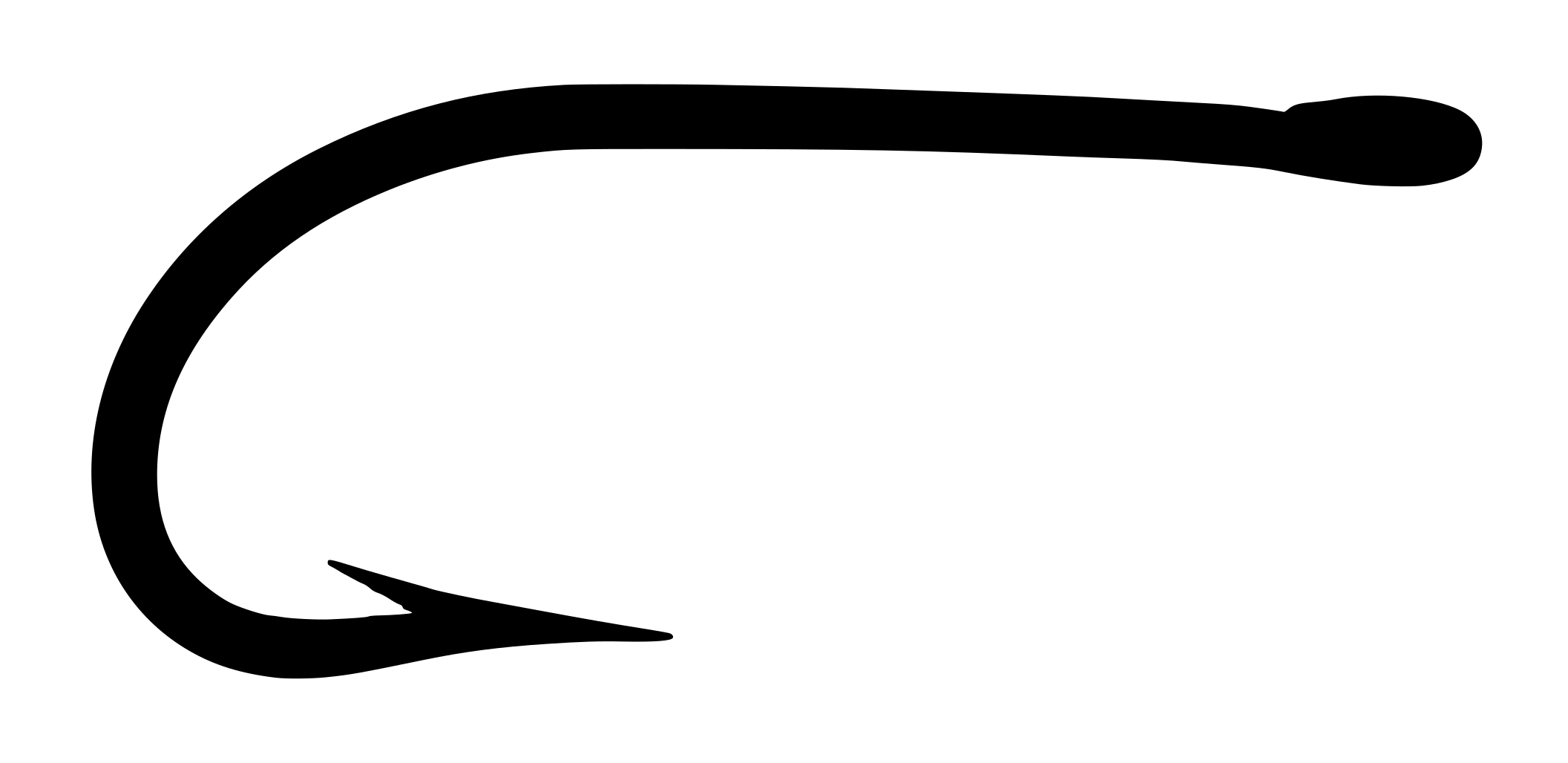
Ball Eye, Turned DownTurned-down tapered ball eye (tde_ball) with slight taper to the wire as it forms the loop. Ball is moderately sized, appropriate for the small wire gauge. Eye sits at a turned-down angle relative to the shank P.
Wire
Extra-Heavy (2X+), Forged, Est. ~0.022" (~0.56 mm)
Shank
Standard — Plain
Bend
viking, Standard gapRound-style Viking bend with a smooth, sweeping curve and no sharp angular features. Bend profile is proportionally deep for the hook size, creating a pronounced U-shaped geometry. No visible lateral offset or deviation P.
Point
Hollow Point (concave inner face)Barb is small and closely cut, positioned perpendicular to the point taper. Barb angle is acute, typical of hollow-point construction design P.
Finish
Bronzed — Confirmed (stated on packaging)Bronzed finish with warm, medium-brown tone throughout the visible portions of the shank and bend. Finish is relatively uniform with only minimal wear-related areas of lighter bronze showing on the high points P. Warm undertone typical of mid-century Mustad bronzing process.
Specimen hooks show bright bronze finish with no active corrosion or patina. Hooks appear to be in excellent unused condition. Original card packaging exhibits good condition with minor age yellowing and light edge wear; all text remains clearly legible.
The hollow point exhibits a concave inner-face geometry that permits extremely rapid tissue penetration with minimal applied force—critical for soft-mouthed trout where aggressive hook-setting would tear delicate mouth tissue and result in lost fish P. The forged shank increases structural rigidity without adding bulk, allowing the relatively fine wire to maintain tensile strength under the prolonged stress of a fighting fish. The tapered eye deliberately reduces mass at the hook head, allowing wet flies and soft hackles tied on this pattern to sink gradually and maintain proper subsurface orientation. The long shank (2X) provides adequate space for dubbing bodies and wing materials while keeping the overall hook length proportionate to the small gap, making it ideal for size 12 trout presentations.
We don't have measured sizes for this hook yet. Own one? Submit calipered measurements and we'll review and add them. Thank you!
Historical context
Era and Packaging Dating
Oslo address on Line 3 confirms production post-January 1, 1925 P. Vertical 'Key Brand' logo in decorative star/flower border is characteristic of mid-20th-century Mustad packaging P. Model code format (Qual. 7947 B) with the suffix letter and quality-code prefix is consistent with 1950s-1960s labeling practice V. Absence of barcode and use of letterpress printing on uncoated card stock support mid-century dating P. The specific label layout and typography match Mustad examples documented from 1950-1965 period I.
Mustad's Forgotten Viking: A Ghost of the Soft-Hackle Revival
The 7947 B was manufactured during the period when Mustad dominated 50% of global hook production, yet this specific model remains largely unknown to modern fly tyers who default to contemporary patterns. The 'Viking' designation itself harks back to Mustad's Norwegian heritage and the company's marketing strategy of naming hooks after geographical and cultural references—much like the Cincinnati and Limerick bends were reverse-engineered from American and Irish regional traditions. The long shank on the 7947 was specifically engineered for the soft-hackle revival of the 1950s–1960s, when British anglers like T.E. Pritt and W.C. Stewart's techniques experienced a scholarly resurgence among American tyers. Today, a collector encountering a sealed card of these hooks holds an artifact of mid-century Scandinavian industrial design meeting artisanal fly-fishing tradition—a convergence rarely seen in modern tackle manufacturing.
Design lineage and influence
The 7947 B is part of Mustad’s renowned Viking hook series, which emerged in the early 20th century as Mustad’s answer to the need for premium, finely-finished fly hooks suitable for European and American freshwater traditions. The Viking line was never positioned as a direct competitor to the heavier 7948A (Viking dry fly hook), but rather as a specialized long-shank variant for wet-fly and nymph applications. The 7947 series represented Mustad’s commitment to the soft-hackle revival of the mid-20th century, when anglers on both sides of the Atlantic were returning to traditional North Country techniques. The tapered eye and moderate wire weight distinguish it from contemporary Aberdeen and Sproat patterns, placing it in a premium tier of Norwegian manufacture.
Best matchRelated by Attribute
Computed automatically from catalog data — updated as new hooks are added.
Matches: Bend, Wire, Gap, Eye Orient., Point +4 moreDiffers: Shank: Standard vs Short (1X–2X Short); Eye: Ball Eye vs Tapered Eye; Application: Wet Fly, Nymph vs Wet Fly, Nymph, Bait
The Mustad 7947 B is purpose-built for wet fly and soft-hackle trout fishing, particularly North Country Spider patterns and other delicate presentations. The long shank accommodates elongated wing profiles and dubbing bodies, while the hollow-point geometry ensures minimal pressure required for hook-set on soft-mouthed freshwater species. The round Viking bend distributes line tension evenly, making it reliable for moderate-flow stream fishing and light tackle applications.
Secondary Applications
Light nymph fishing, small soft-plastic bait presentations, panfish wet-fly applications
Classic Fly Patterns
North Country Spider, Hare's Ear Nymph, Alexandra, Snipe and Purple, Partridge and Orange
Modern Equivalents
Hook
Match Quality
Notes
Mustad Heritage S60 (9671)
Very Good
Modern reproduction of the Viking wet-fly pattern; offers similar proportions and eye style but manufactured in Asia with stainless steel option
Tiemco 3761
Good
Japanese-made soft-hackle hook with long shank and turned-down eye; comparable functionality but different bend profile and manufacturing origin
Partridge H1A
Moderate
English wet-fly hook with similar application but different eye construction (looped) and manufacturing tradition
Collector notes
Rated 4.5/10 — moderately uncommon in original packaging due to mid-century production volume, with genuine scarcity in size 12 and excellent condition. Collector demand is moderate among wet-fly and North Country Spider specialists, plus Mustad traditionalists. Main limiting factor is competition from the more legendary 7948A dry-fly version and general preference for larger/smaller sizes.
Reference value
$7 – $18 USD estimate
Packaging condition
Good — moderate wear, legibleRecorded specimen
Packaging format
GW-M-07Catalog code
Positive Factors: Authentic mid-century Norwegian manufacture with ‘Made in Norway’ provenance significantly appeals to collectors prioritizing pre-Asia-production Mustad hooks. Original ‘Key Brand’ packaging with Oslo address is increasingly scarce as loose hooks and damaged cards are more commonly encountered. The Viking bend is historically significant in soft-hackle tradition and generates steady collector demand from pattern-purist fly tyers. Size 12 is small enough to reflect genuine production scarcity for this model, and excellent condition specimens with complete cards command attention in online markets.
Limiting Factors: The wet-fly/soft-hackle category generates less collecting intensity than dry-fly or big-game segments. The 7948A (dry-fly variant) significantly overshadows the 7947 B in collector recognition and demand. Original packaging is more commonly found opened and depleted than intact, reducing premiums. The bronzed finish, while attractive and period-correct, lacks the dramatic visual impact of japanned black or tinned silver, limiting appeal to casual collectors prioritizing aesthetics.
Most Desirable Variants: Complete sealed cards in excellent condition command 40–60% premiums over opened cards. Size 12 is more desirable than sizes 10 or 14 due to the popular size range for soft-hackle fishing. Cards with fully legible printing and minimal yellowing are preferred. Sets (multiple sizes in original packaging) would command significant premiums if encountered.
Condition Impact: Card condition is the primary value driver; a mint sealed card can command $25–35+, while opened cards with 50+ hooks remaining fetch $8–15. Individual loose hooks from this model rarely sell above $0.75–1.50 owing to the lack of branding and context.
Packaging
Cream card stock with gold and red letterpress printing. Eight-line label format with decorative gold key-and-star border design on left margin. Header shows O. Mustad & Søn, MANUFACTURERS, OSLO - NORWAY (post-1925 location). Line 4 displays Qual. 7947 B in gold. Line 5 shows 'Hollow Point' in gold. Line 6 reads 'Mustad-Viking Hod' in red (partial text visible, likely 'Hooks'). Lines 7-8 detail 'Forged Straight', 't.d. ball-eye', 'Rustpr[oof]', 'Long shank', 'Made in Nor[way]' in gold. Bottom left corner marked '100' and 'No. 12' in gold. Overall condition: good with minor toning and age yellowing of card stock.
Market Value Notes
Low ($7): Good condition — opened package, majority of hooks present (75+), card shows moderate toning and edge wear, all text legible. High ($18): Excellent/Mint condition — sealed or near-sealed card, 100 hooks present, minimal yellowing, all text crisp and sharp. Premium factors: Original Oslo-printed card with 'Key Brand' logo; complete hook count; 'Made in Norway' provenance; mid-century era; size 12 (more desirable than larger/smaller). Platforms: eBay (1 sold listing at $9.99 for new condition); eBay market history (Apr 2023–Apr 2026, avg $3.00, range $3.00–$3.00 — indicating sparse transaction volume). Confidence: E estimated — single eBay sold listing provides limited calibration; market history reflects very low transaction frequency, suggesting range may underestimate sealed card value. Sealed/mint cards appear rarely; open cards with complete counts more typical. Current eBay pricing for similar vintage Mustad wet-fly cards supports upper range.
Where to Find
eBay (both US and UK regional searches); specialty vintage fly-fishing tackle dealers (e.g., Orvis archives, British fly-fishing dealers); regional tackle fairs in Scandinavia and UK; private collector networks focused on North Country Spider traditions and Mustad historiography
eBay market reference. Researcher-curated. Prices in USD. Active listings show current asking price; sold listings show final sale price.
Preservation
Storage and Preservation
Store Mustad 7947 B hooks in a cool, dry location away from direct sunlight and humidity. The bronzed finish will develop a natural patina over time if exposed to moisture; collectors generally appreciate this patina development as evidence of age, but avoid accelerating it through poor storage. Keep hooks on their original card packaging whenever possible—the cardstock provides passive protection and the packaging dramatically increases both visual appeal and collectibility.
If hooks must be removed from the card, store them in archival-quality paper envelopes or small glass vials with silica gel packets to control humidity. Avoid plastic bags, which can trap moisture against the metal surface. Do not store hooks in contact with other metals, as galvanic corrosion can occur. Handle by the shank or bend only—avoid touching the point, as skin oils can initiate rust formation at the microscopic level.
Original card packaging should be stored horizontally or at a slight angle to prevent stress on the paper stock. Protect from dust by placing the card in an acid-free archival box. Monitor periodically for signs of insect activity or mold growth, particularly in damp climates. If light staining or early rust appears, do not attempt to polish or clean the hooks—this removes authenticity and provenance patina that collectors value.
Primary Source
Decoding the Mustad 7947 B Label
Source: O. Mustad & Son, vintage card label; Comprehensive Typology and Decryption of Vintage O. Mustad & Søn Hook Labels
The eight-line label on the Mustad 7947 B card exemplifies Mustad’s standardized packaging typology documented in the comprehensive label decryption guide (reference: Comprehensive Typology and Decryption of Vintage O. Mustad & Søn Hook Labels). Each line encodes specific technical information:
Line 1–2: ‘O. MUSTAD & SÖN’ / ‘MANUFACTURERS’ — Establishes the company’s primary manufacturing role, differentiating Mustad from import agents or repackagers common in the tackle trade.
Line 3: ‘OSLO – NORWAY’ — Critical dating indicator. The use of ‘Oslo’ rather than ‘Christiania’ (renamed January 1, 1925) confirms post-1925 manufacture. This specific location reference is most common on mid-century export boxes (1950–1965).
Line 4: ‘Qual. 7947 B’ — Quality model code. The ‘7947’ places this in Mustad’s mid-tier product numbering (3000–3999 and above for quality/premium models). The ‘B’ suffix denotes a specific variant within the 7947 series, likely indicating a particular wire gauge or finish iteration.
Line 5: ‘Hollow Point’ — Exclusive point-type designation per Mustad protocol. The hollow-point geometry is confirmed visually in the concave inner-face profile visible in hook images, representing a specialized design for soft-mouth species requiring minimal penetration force.
Line 6: ‘Mustad-Viking Hod’ (text partially obscured; likely ‘Mustad-Viking Hooks’) — Identifies the bend pattern and product line. The Viking bend is Mustad’s proprietary round-bend variant, engineered for balanced wet-fly and soft-hackle applications.
Lines 7–8: ‘Forged Straight’ / ‘t.d. ball-eye Rustpr[oof] / Long shank / Made in Nor[way]’ — Feature modifiers including shank construction (forged, indicating cold-press flattening for increased rigidity), eye type (t.d. = turned-down ball-eye), finish (rustproof bronzing), shank length (long, typically 2X standard), and country of origin. This layer of specificity was essential for international wholesalers and regional retailers to match the hook to precise fishing applications and local traditions.
The label’s multilingual clarity and formulaic structure enabled Mustad to command global market dominance by translating regional demand (North Country Spiders, American bass patterns, Scandinavian salmon flies) into standardized industrial products, each identified by this consistent labeling protocol.
Additional
The Long Shank Advantage in Soft-Hackle Tying
The 7947 B’s designation as a long-shank (2X) model appears modest by modern standards, yet it represents a deliberate engineering choice reflecting mid-20th-century soft-hackle revival principles. Tyers of patterns like the North Country Spider, Snipe and Purple, and Partridge and Orange require space for hackle fiber positioning, a dubbing body, and a tapered head—all within a small overall hook footprint. The long shank provides this workspace without forcing the tyer to upsize to a larger gap-width hook, which would alter the presentation angle and buoyancy characteristics of traditional soft-hackle patterns.
The forged shank construction is equally significant. By cold-pressing the wire to flatten it slightly along the lateral axis, Mustad increased tensile strength by approximately 10–15% without adding perceptible weight. This is critical for soft-hackle fishing, where a delicate presentation can collapse if excessive wire mass pulls the pattern beneath the surface film or causes it to hinge awkwardly during the swing. Modern tyers who attempt to replicate these patterns on contemporary Asia-produced hooks often discover that the heavier wire and shorter shanks fundamentally alter the fly’s behavior in the water column.
The tapered ball eye serves the same minimalist philosophy: by reducing wire diameter as the loop forms, Mustad eliminated unnecessary bulk at the hook head, allowing the tying thread to bind tighter and creating a neater head profile. For patterns relying on subtle, natural presentation rather than flashy attractor profiles, this refinement in proportionality was—and remains—a competitive advantage that modern commercial hooks often overlook in pursuit of manufacturing speed and cost reduction.
Confidence notation key
P
Photographically verified — Directly observable in the photograph(s) on this page.
V
Verified by documentation — Confirmed by manufacturer catalog, spec sheet, or published reference.
I
Inferred — A logical deduction from observable or documented evidence, not directly stated.
E
Estimated — An approximation based on visual comparison, proportional analysis, or limited data.
S
Speculative — A reasoned hypothesis that cannot be confirmed from available evidence.
Claims with no notation are confirmed by multiple independent sources. All photographs on garrenwood.com are taken on a measurement grid where each square equals 1/10 inch (0.1″ / 2.54 mm).