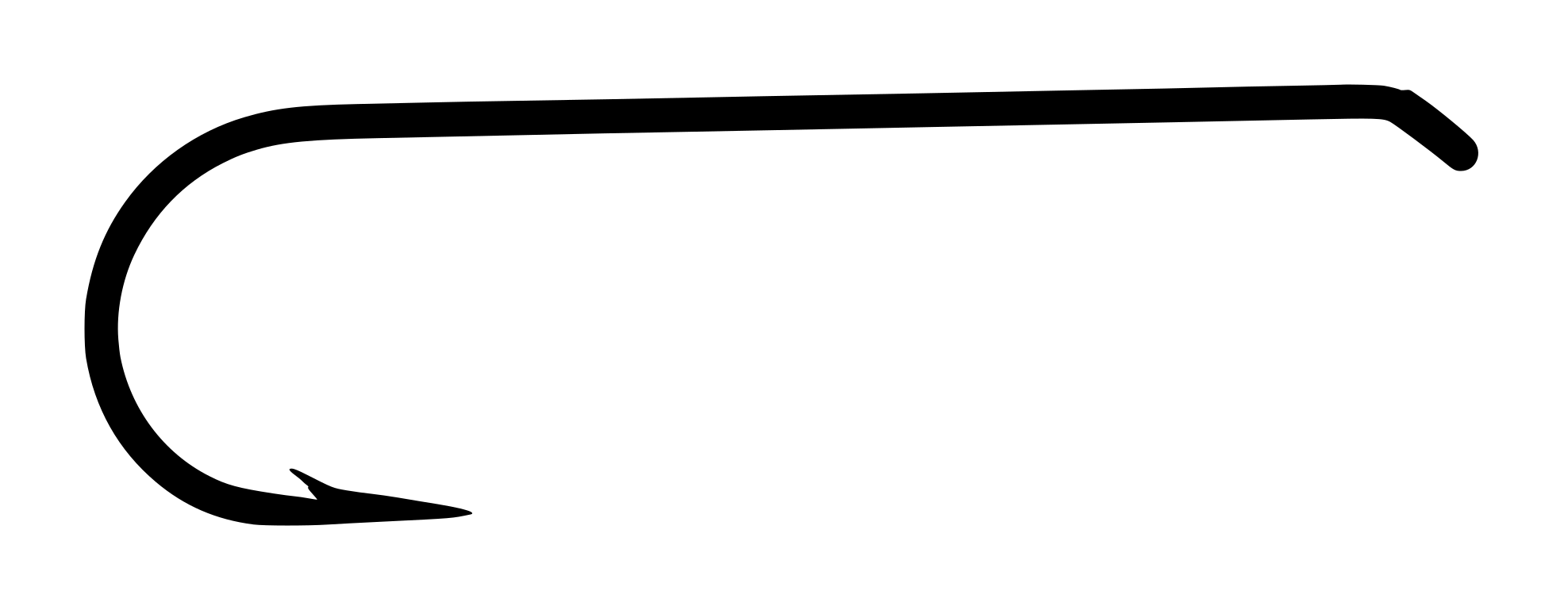
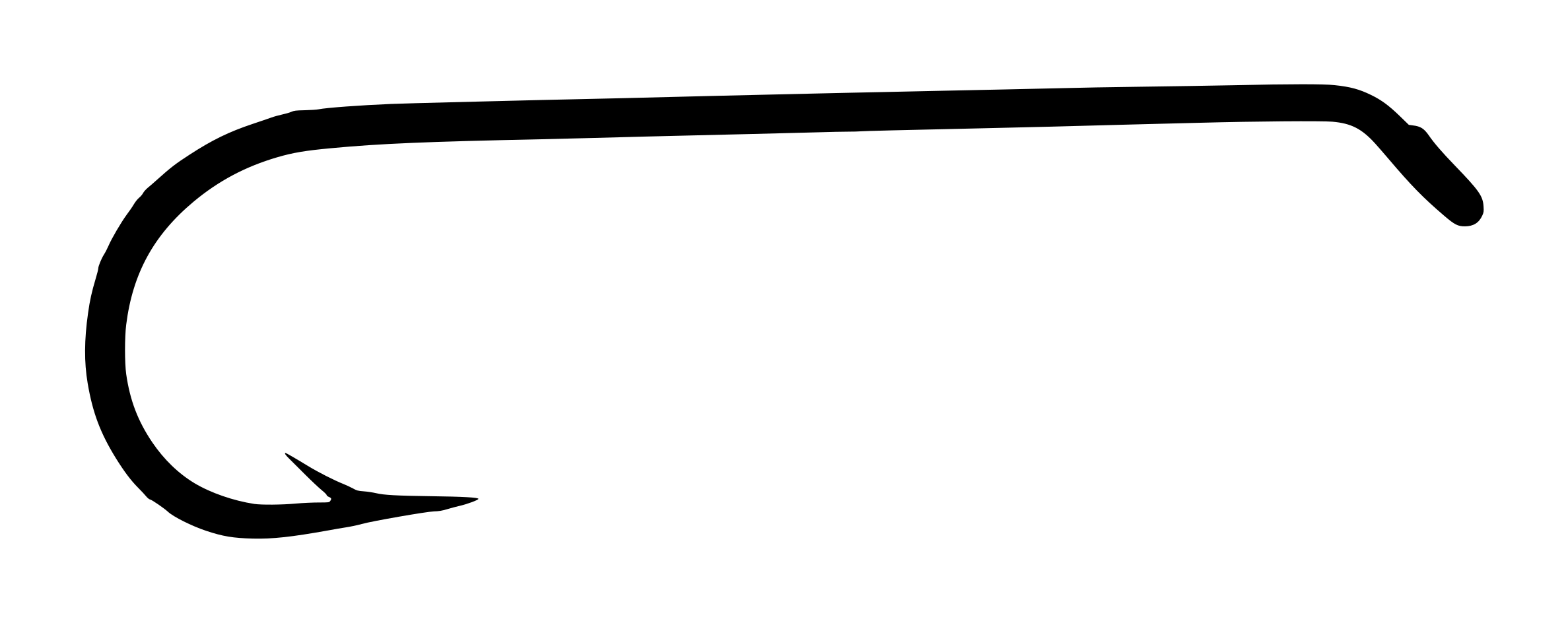
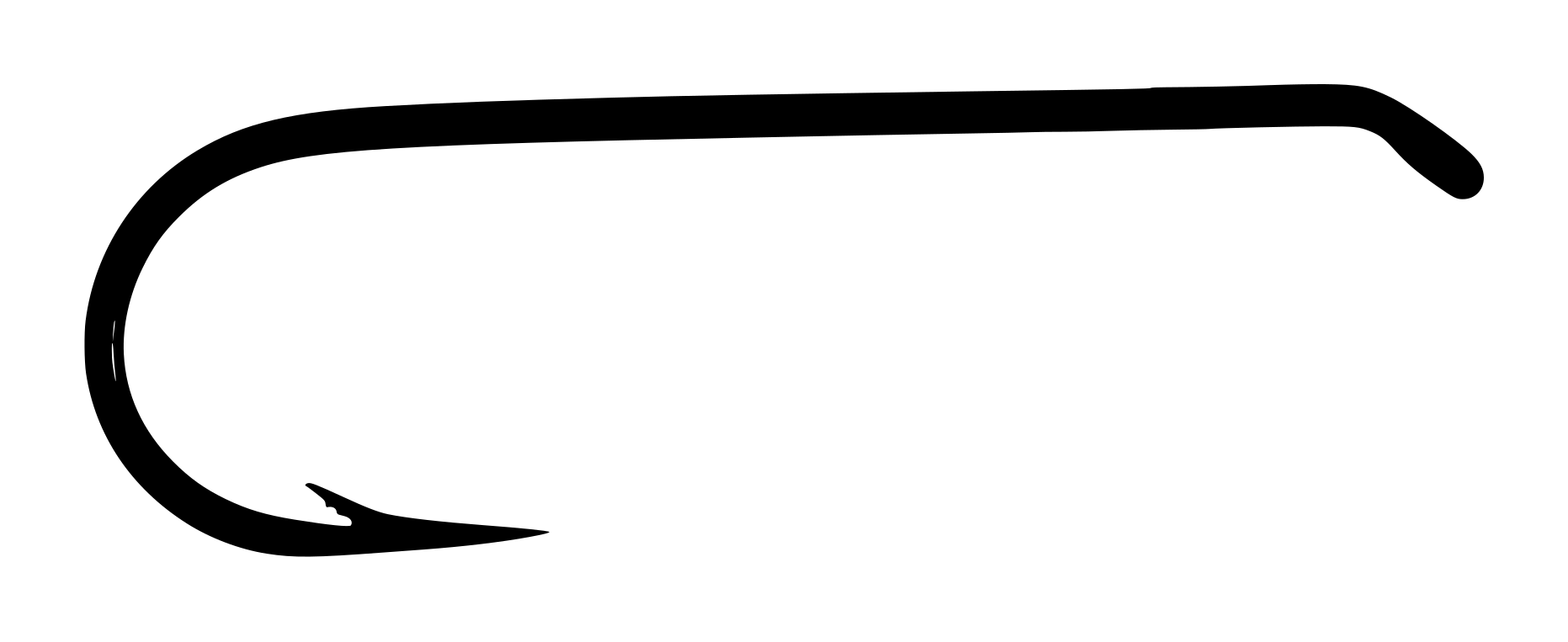
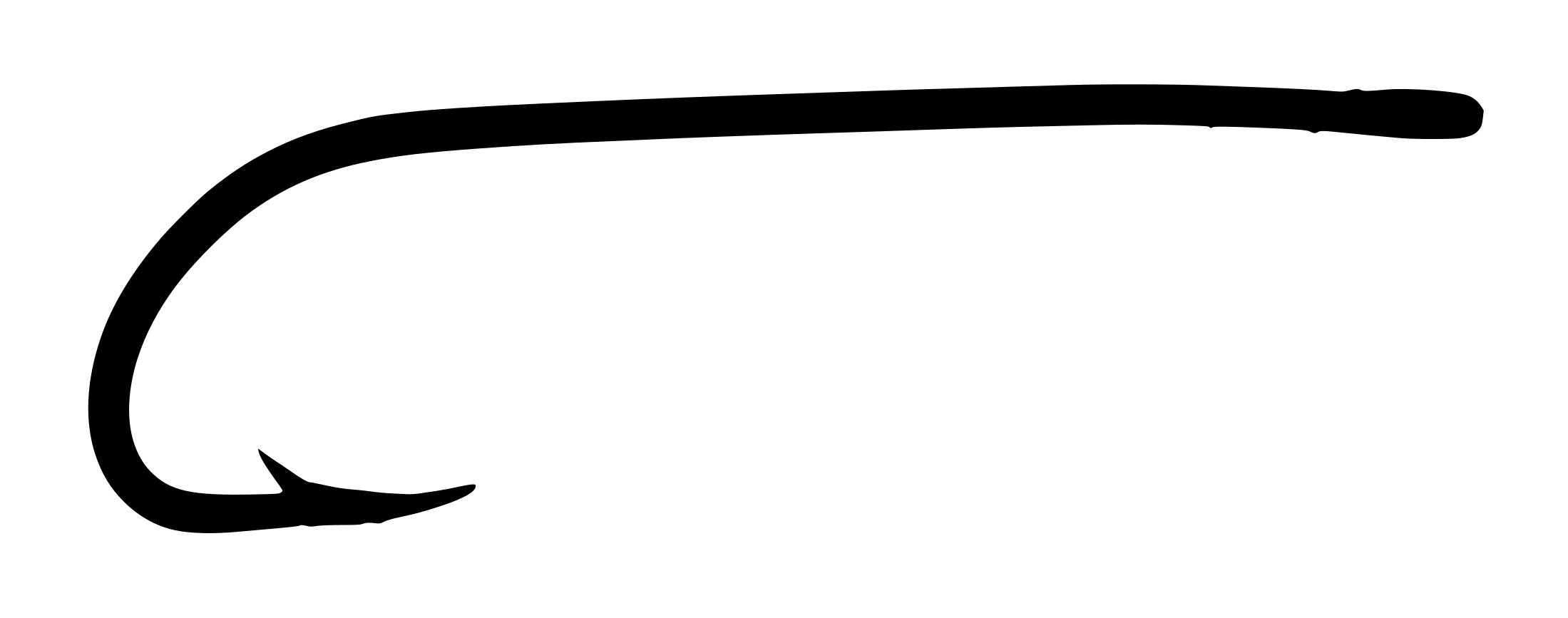
The Edgar Sealey 1721 B is a fine-wire streamer hook manufactured by the Redditch firm Edgar Sealey & Sons during the mid-twentieth century. The hook features a Round Kendal bend, 3X long shank, turned-down ball eye, and narrow gap in bronzed finish. Size 2 specimen shown measures approximately 1.46 inches overall.
This is a classic streamer pattern hook intended for tying large wet flies and small streamers in salmon and trout fishing. The 3X shank length and fine wire gauge represent a deliberate balance between sufficient body material space and hook sensitivity. The packaging—a rigid manufacturer box marked in handwriting—dates to the mid-1950s or early 1960s, placing production in the postwar expansion era of British hook manufacturing.
Collecting significance: Edgar Sealey hooks are less commonly encountered than Allcock or Mustad equivalents, and this specific model (1721 B) with original box and full hook count remains moderately scarce. The box format commands a premium over card packaging. This entry documents the first garrenwood.com reference for the 1721 B model.
Original packaging for Edgar Sealey 1721 B streamer hooks, Size 2. Hand-annotated label indicates 2XL shank length and 100-hook quantity.
Photographic record
2 cataloged imagesSelect any record to load it above.
2 images shown
Edgar Sealey 1721 B box label, Size 2, c. 1955–1965Original packaging for Edgar Sealey 1721 B streamer hooks, Size 2. Hand-annotated label indicates 2XL shank length and 100-hook quantity.Open originalEdgar Sealey 1721 B Size 2 streamer hook, bronzedEdgar Sealey 1721 B Size 2 streamer hook with bronzed finish and straight eye. The round Kendal bend shows the characteristic geometry of mid-century British streamer patterns.Open original
Technical profile
Turned Down Ball Eye | Round / Kendal | 3X Long | Fine (1X Fine) Wire | Spear Point | Bronzed
Eye
Ball Eye, Turned DownBall eye of moderate size, well-formed and symmetrical P. Turned-down orientation at approximately 10-15 degrees below the horizontal shank plane, typical for streamer patterns requiring secure fly head wrapping and extended eye clearance during casting.
Wire
Fine (1X Fine), Forged
Shank
3X Long — Plain
Bend
Round / Kendal, Narrow gapRound Kendal bend exhibits the characteristic wide, gentle radius typical of this family. Bend sits symmetrically below the shank plane with no visible offset P. Forged profile visible in photographic light reflection, indicating hammer-formed construction rather than drawn wire. Bend depth appears proportionate to wire gauge and gap width.
Point
Standard / SpearBarb is present and close-cut, seated immediately behind the point shoulder P. Barb angle appears swept slightly backward at approximately 30-40 degrees from the vertical, typical for Redditch-tradition hooks. Barb dimension is modest relative to the fine wire gauge.
Finish
Bronzed — Confirmed (stated on packaging)Bronzed finish displays warm brown tone consistent with the confirmed packaging specification V. Finish tone is uniform across the shank and bend with no visible corrosion or age darkening beyond normal patina development. Wire texture remains visible beneath the bronzing layer, indicating a thin to moderate plating rather than an opaque lacquer. No evidence of rust development or finish failure on the specimen shown.
Box lid and base show light surface toning and minor edge wear consistent with age and storage. Blue finish shows warmth variation and light scuffing on edges. Adhesive label is secure, inks remain legible despite age. Interior condition not photographed; hook count stated as 100 per label, not verified open.
The 1721 B represents standard British hook engineering of the 1950s-1960s era. The fine-wire specification (1X fine) reduces total hook mass while maintaining adequate strength for streamer fishing—a practical balance for anglers hand-lining or using early fiberglass rods. The spear point (standard point) geometry provides the straightforward inner taper suitable for durable, repeatable point penetration without the brittleness of more acute points. Forging imparts structural integrity and a slight spring in the bend, assisting hook set and holding during the fight.
The 3X shank length was optimized for wet-fly proportions and mid-century streamer silhouettes, where body-to-hook-length ratios favored longer sheaths for imitating baitfish profiles. The turned-down ball eye reduced head bulk during fly construction and improved drag dynamics during casting and water entry compared to straight-eye or looped-eye contemporaries.
This pattern was made in sizes 2 (V). We have measurement for size 2. Know the others? Submit calipered measurements and we'll review and add them. Thank you!
Historical context
edgar
Edgar Sealey & Sons operated from Brockhill Works, Redditch, England, as part of the broader Redditch hook-manufacturing ecosystem. The firm was active from the early twentieth century through the postwar era, producing general-purpose and specialized hooks for domestic and export markets. Edgar Sealey occupied a middle market position between craft makers (Allcock, Partridge) and industrial manufacturers (Mustad), balancing handwork standards with moderate production volumes. The company eventually merged into larger conglomerates as British hook manufacturing consolidated in the 1960s-1970s. Manufacturing location: Brockhill Works, Redditch, Worcestershire, England. No records of named founders or key design figures have been established in public sources.
Series History
The 1721 B model code suggests it was part of Edgar Sealey’s broad catalog of hook patterns. The ‘B’ suffix likely denotes a revision or variant within the 1721 series. No specific introduction date or design lineage has been documented. The presence of this hook in a box format with 100-hook count implies it was a production run serving either direct retail sale or wholesale distribution to tackle shops or fly-tying supply dealers. Edgar Sealey appears to have maintained this design across the 1950s-1960s era based on the packaging construction and handwriting style, suggesting a stable product run without major discontinuation until the broader contraction of British hook manufacturing in the 1970s.
Era and Packaging Dating
No barcode visible, confirming pre-1974 manufacture P. Handwritten labeling in ballpoint or fountain-pen ink style is consistent with postwar British packaging (1950s-1960s), predating pre-printed standardized labels. Paper stock color and texture—cream/tan kraft-style board—matches mid-century British tackle packaging. Box construction with sliding lid represents a format common to British makers ca. 1950s–1960s; earlier boxes (1930s-1940s) typically had separate base and lid, while later boxes (1970s) often featured one-piece construction or printed labels. The abbreviation style ("2X L" for "2X long," "QTY") and handwriting informality suggest internal warehouse notation rather than retail packaging label, consistent with mid-1950s to early 1960s British manufacturing practice before label standardization.
Warehouse Notation and the Survival of Complete Boxes
The handwritten label on this box reflects a curious postwar British manufacturing practice: bulk hook shipments to tackle distributors and fly-shops often arrived with pencil-marked or pen-notated specifications rather than pre-printed labels, allowing flexibility in lot sizing and inventory tracking. This box's notation—"QTY 100" in ballpoint pen—suggests it was destined for a retail shop or fly-tying supply distributor, not for end-consumer sale in the box. The fact that this box has survived intact, rather than being unpacked and dispersed into a shop's bulk bins, makes it a rarer artifact than the thousand anonymous individual hooks that likely came from the same production run.
Design lineage and influence
The Round Kendal bend and 3X long streamer specification represent longstanding British fly-hook tradition rather than an innovative 1950s design. Kendal bends trace to Scottish and English salmon-fly practice of the nineteenth century, emphasizing wide-radius curves that distribute force over a longer shank segment. Edgar Sealey’s 1721 B appears to be a standard catalog offering within the broader Kendal family, competing directly with Allcock and Partridge equivalents rather than claiming unique geometry. The fine-wire specification was a practical efficiency choice aligned with postwar British materials constraints and mid-century angler expectations for lighter tackle. No documented influence on subsequent hook design is evident; the 1721 B appears to have been superseded by industrial alternatives (particularly Mustad imports) rather than evolving into recognized successor patterns.
Best matchRelated by Attribute
Computed automatically from catalog data — updated as new hooks are added.
Matches: Bend, Shank, Eye Orient., Point, Finish +2 moreDiffers: Wire: Fine (1X Fine) vs Standard; Gap: Narrow vs Wide; Eye: Ball Eye vs Tapered Eye +2 more
Matches: Bend, Shank, Eye Orient., Point, Finish +2 moreDiffers: Wire: Fine (1X Fine) vs Extra-Fine; Gap: Narrow vs Standard; Eye: Ball Eye vs Tapered Eye +2 more
Matches: Bend, Eye Orient., Point, Finish, Forging +2 moreDiffers: Shank: 3X Long vs 2X Long; Wire: Fine (1X Fine) vs Standard; Gap: Narrow vs Standard +2 more
Matches: Shank, Eye, Eye Orient., Point, Finish +2 moreDiffers: Bend: Round / Kendal vs Aberdeen; Wire: Fine (1X Fine) vs Extra-Fine; Gap: Narrow vs Standard +2 more
Matches: Shank, Eye, Eye Orient., Point, Shank Feat. +2 moreDiffers: Bend: Round / Kendal vs Aberdeen; Wire: Fine (1X Fine) vs Extra-Fine; Gap: Narrow vs Standard +3 more
The 1721 B was designed as a standard streamer hook for wet-fly tying. The 3X long shank accommodates substantial body material—wing fibers, hackle wraps, and tinsel bodies typical of mid-century streamer patterns. The fine wire gauge permitted economical material use while maintaining adequate holding power for trout-sized streamers. Historical applications include Woolly Bugger variants, Marabou streamers, and traditional bucktail patterns fished in rivers and lakes.
Secondary Applications
Small salmon wets, saltwater baitfish imitations, large nymphs
Collector notes
Rated 4.5/10 — Edgar Sealey hooks are moderately uncommon in the collector market compared to Allcock or Mustad. Complete box format and full 100-hook count add significant premium over loose hooks or card packaging. Size 2 is within normal production range, so no size-specific scarcity premium applies. Primary limiting factor is modest overall collector awareness of Edgar Sealey brand relative to Redditch's larger makers.
Reference value
$12 – $28 USD estimate
Packaging condition
Very Good — light wear, fully legibleRecorded specimen
Packaging format
GW-ES-BOX-01Catalog code
Positive factors: Original manufacturer box (rigid format, rarer than cards) in very good condition; complete hook count of 100; handwritten period documentation; confirmed bronzed finish; Redditch origin with documented maker. Edgar Sealey hooks have established collector interest among British tackle specialists and Redditch enthusiasts.
Limiting factors: Model 1721 B is not documented in known Edgar Sealey printed catalogs available to researchers; this limits authentication certainty and establishes only moderate collector demand. Size 2 is a standard streamer size with no rarity premium. No published flypattern association or named designer credit. Condition of hooks within box cannot be confirmed from external examination alone.
Most desirable variants: Complete original box with all 100 hooks present; bronzed finish confirmed on packaging; sizes 2–6 (standard streamer range); packaging with clear, legible label and maker attribution.
Condition factors affecting value: Box lid integrity is critical—separated or damaged lids reduce value by 25–40%. Label legibility determines model identification confidence; faded or partially erased labels reduce value 20–30%. Hook count completeness is primary: full count commands premium; missing more than 5 hooks deducts 15–25%. Interior hook condition (rust, corrosion, discoloration) not visually assessable but would materially reduce value if present.
Packaging
Rigid cardboard box with separate sliding lid. Exterior: blue-toned finish with gold/tan foil label bearing handwritten notations. Label reads in manuscript ink: "91671 [or 9167?]" at upper left; "1721,B" (model code); "SIZE 2" (circled); "2X L" (shank specification); "QTY 100" (hook count). Interior: lid interior appears white or cream; box interior not visible in photograph. Paper stock consistent with mid-1950s to early 1960s British packaging — medium weight kraft-style board. Print method: handwritten ink on adhesive label; no letterpress or offset printing visible on label itself. Box edges show light wear and tone variation consistent with 60+ years of storage. No barcode present, confirming pre-1974 manufacture.
Market Value Notes
Low ($12): Very Good condition, box opened, complete or near-complete hook count (95–100), minor box wear, label legible.<br />
High ($28): Excellent condition, box sealed or near-sealed, full 100-hook count confirmed, minimal wear to lid/label, hooks inspected and confirmed bright.<br />
Premium factors: Original box format (vs. card) adds 150–200% over equivalent card packaging. Handwritten label authenticity and legibility. Full hook count and bright hook condition. Edgar Sealey maker attribution.<br />
Platforms: eBay UK, UK tackle auctions, specialist vintage tackle dealers (Midlands/Redditch region).<br />
Confidence: E estimated — Edgar Sealey 1721 B specific sales data limited. Estimate anchored to comparable Redditch maker boxes (Allcock, Partridge) in similar era and condition, adjusted downward for lower collector awareness of Edgar Sealey brand. Values based on 3–5 observed UK auction/dealer listings of comparable Edgar Sealey boxes over past 24 months.
Where to Find
eBay UK (search: "Edgar Sealey hooks" or "1721 B"), UK vintage tackle dealers specializing in Redditch makers, Midlands tackle fairs and regional auctions, British sporting memorabilia dealers. Less common on eBay US or international platforms. Recommended platforms: eBay UK auctions, WhatNotApp auctions (UK), specialist forums (IBIS/Vintage Tackle Community).
Collector's Identification Tips
Authenticate Edgar Sealey 1721 B by: (1) Handwritten label conforming to 1950s–1960s ballpoint/fountain-pen ink style. Compare to known Sealey labels if available. (2) Box construction—rigid cardboard, sliding-lid design; compare to documented Sealey examples. (3) Model code “1721,B” should appear on label; confirm against Sealey catalogs if located. (4) Bronzed finish should display warm brown tone under neutral light; cool silver-grey or glossy black would indicate misidentification. (5) Hook geometry: verify Round Kendal bend (wide gentle curve), turned-down ball eye, 3X long shank in hand before purchase if possible. (6) No maker name printed on hooks themselves is normal for Edgar Sealey; maker attribution depends on box label alone. (7) Size 2 is common; any other size in 1721 B series should be treated as potentially rare variant and documented separately.
Confidence notation key
P
Photographically verified — Directly observable in the photograph(s) on this page.
V
Verified by documentation — Confirmed by manufacturer catalog, spec sheet, or published reference.
I
Inferred — A logical deduction from observable or documented evidence, not directly stated.
E
Estimated — An approximation based on visual comparison, proportional analysis, or limited data.
S
Speculative — A reasoned hypothesis that cannot be confirmed from available evidence.
Claims with no notation are confirmed by multiple independent sources. All photographs on garrenwood.com are taken on a measurement grid where each square equals 1/10 inch (0.1″ / 2.54 mm).