The Mustad 7111B is a mid-century Norwegian-made Limerick hook bearing the iconic ‘Nökkel Merke’ (Key Brand) yellow label and ‘Superior’ product line designation. Manufactured in Oslo between approximately 1950 and 1965, the 7111B represents Mustad’s dominance in the global hook market during the post-war expansion period.
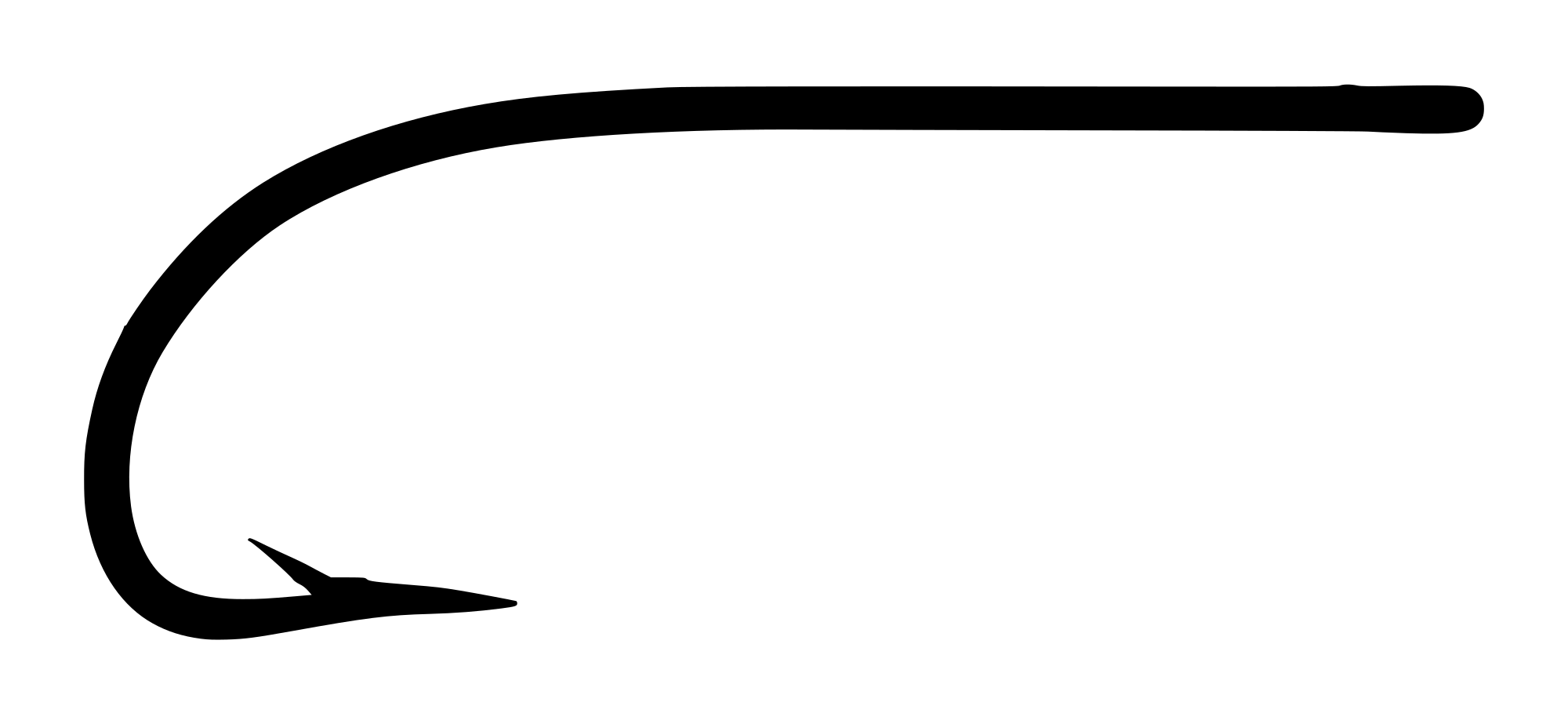
The hook features a distinctive sharp, angular Limerick bend—a geometry originating in 19th-century Irish craftsmanship but perfected for industrial mass production by Mustad. This deep-throated bend design locks the fish’s jaw securely at the strongest point of the hook, making it the preferred choice for both traditional Atlantic salmon flies and heavy bait fishing in Scandinavian waters.
The specimen shown is a size 1/0 with caliper-confirmed dimensions of approximately 1.27 inches overall length and 0.48 inches gap width. The deep black japanned lacquer finish was engineered to provide corrosion resistance for saltwater and heavy-duty commercial applications. The compact ringed ball eye and round-section wire reflect Mustad’s standardized manufacturing processes of the era.
The 7111B remains moderately collectible, particularly in the original yellow-label packaging. Its historical significance lies in documenting the standardized quality-code system (Kval. XXXX) that governed Mustad’s vast catalog before the introduction of the modern Signature Series in the early 2000s. Examples in mint original packaging command collector interest from fly tyers and tackle archivists.
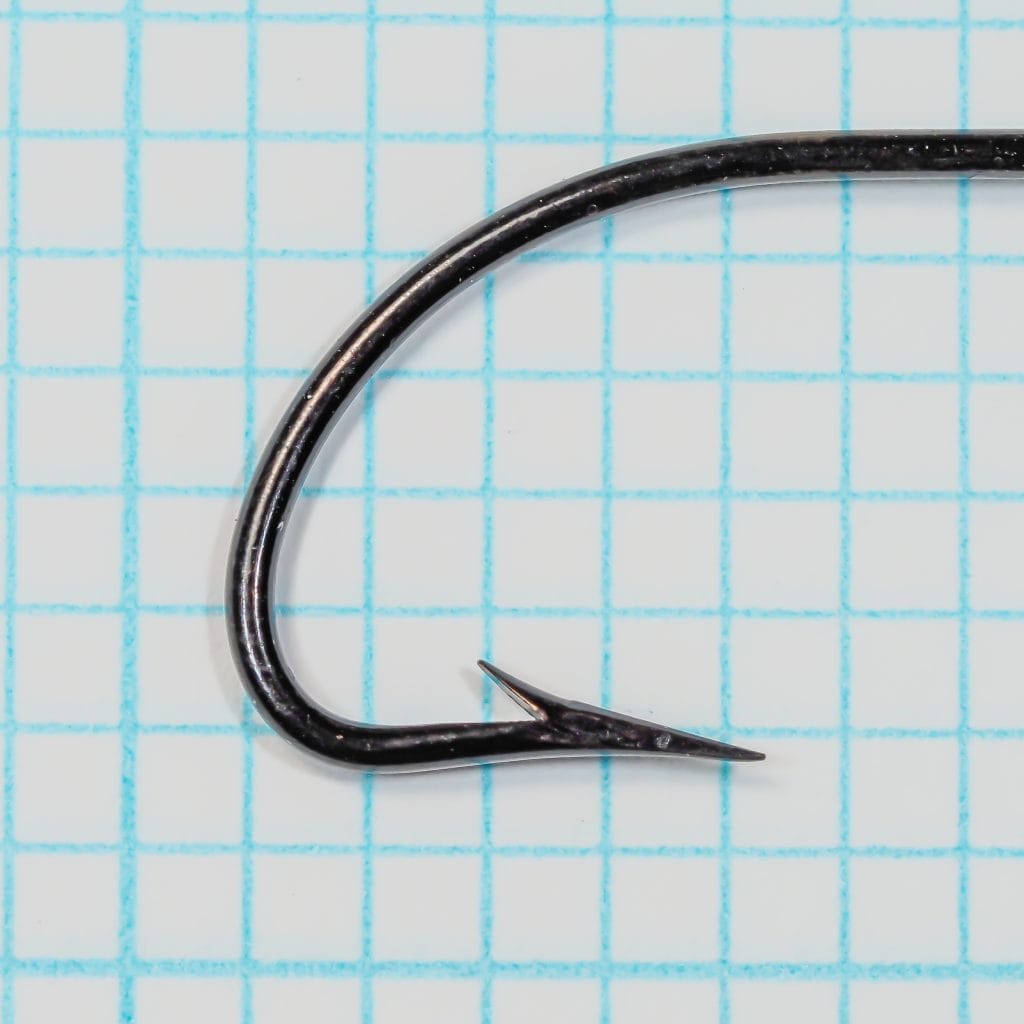
Close-up of the point end showing the superior point geometry with near-straight inner taper and short close-cut barb, characteristic of mid-century Mustad manufacturing.
Photographic record
7 cataloged imagesSelect any record to load it above.
7 images shown
Mustad 7111B Limerick Point Detail Size 1/0Close-up of the point end showing the superior point geometry with near-straight inner taper and short close-cut barb, characteristic of mid-century Mustad manufacturing.Open originalMustad 7111B Original Yellow Label Box 2/0Original yellow 'Nökkel Merke' (Key Brand) label adhered to cardboard box showing complete manufacturer information, quality code, bend pattern, eye specification, finish, quantity, and size—a definitive example of Mustad's standardized eight-line label format from c. 1950-1965.Open originalMustad 7111B with Royce Stearns Annotation Size 3/0Two 7111B specimens (size 3/0) with handwritten annotation in ballpoint pen: 'Mustad 7111B Limerick 3/0 Rework by Royce Stearns.' This notation documents that these examples are modern reworks of original factory stock, showing contemporary fly-tier modifications to vintage hooks.Open originalMustad 7111B Box Label Size 6/0Original cardboard box bearing yellow 'Nökkel Merke' label for Mustad 7111B size 6/0. The label and box construction exemplify mid-century Mustad presentation standards with letterpress printing and hand-glued kraft cardboard.Open originalMustad 7111B Point Geometry Size 6/0Side-angle view of the 7111B point showing the barb position and the characteristic geometry of the superior point with near-straight inner taper, rendered in black japanned lacquer finish.Open originalMustad 7111B Hook Profile Size 6/0Full profile view of a Mustad 7111B size 6/0 showing the distinctive sharp angular Limerick bend and the small ringed ball eye, with black japanned finish throughout.Open originalMustad 7111B Size 6/0 PairComparative view of two Mustad 7111B size 6/0 specimens stacked horizontally, demonstrating the consistency of Mustad's industrial manufacturing. Both hooks show identical bend geometry, eye construction, and black japanned finish application—typical of the standardized quality control applied during mid-century production.Open original
Technical profile
Eye
Ball Eye, Turned DownSmall ringed ball eye, formed from terminal wire bent back onto main shank. Compact, efficient construction typical of mid-century production. P
Wire
Heavy (1X Heavy), Round
Shank
Standard — Plain
Bend
Limerick, Standard gapSharp, angular bend at the bottom with characteristic Limerick geometry. Provides deep throat and secure jaw lock. Wire set is clean and symmetrical. P
Point
Superior (near-straight inner taper)Short, close-cut barb typical of Mustad manufacturing. Barb is positioned at the traditional angle relative to the point shaft. P
Finish
Black Japanned — Confirmed (stated on packaging)Deep, uniform black japanned lacquer finish characteristic of pre-1960s saltwater and heavy bait hooks. Finish shows minimal wear on specimen. Warm tone consistent with alkyd-based application. P
The documented specimen shows minimal wear on the hooks themselves—no corrosion, no bend deformation, bright black japanned finish intact. The original yellow label is present on the box, with minor toning and light creasing consistent with age and storage. Paper stock shows uniform discoloration but no tears or significant damage. Cardboard box integrity is good; corners are intact and glue seams are secure. Label adhesion is strong. Missing hooks count (if any) not documented in available images; box is shown closed.
The Limerick bend geometry represents an engineering solution to a specific biomechanical problem: securing the jaw of a large, powerful fish during an extended fight. Unlike rounded bends (Sproat, Aberdeen) that distribute stress evenly across the entire curve, the Limerick’s sharp angular turn at the bottom creates a mechanical wedge that forces the fish’s lower jaw into the strongest point of the hook. The near-vertical transition from shank to bend point prevents the jaw from sliding upward along the curve, eliminating the primary failure mode of softer bends under heavy load.
The Superior point designation on the 7111B indicates a near-straight inner taper that concentrates penetration force at the tip while maintaining structural strength. This geometry contrasts with hollow points (which prioritize rapid penetration) and spear points (which prioritize raw structural mass). The Superior point was marketed by Mustad as a premium, all-purpose solution balancing delicate initial penetration with durability against hard bone and cartilage encountered in sea trout and saltwater species.
The heavy-gauge round wire and japanned lacquer finish were engineered specifically for corrosive saltwater environments. Japanning—a baked-on alkyd resin coating—provided superior adhesion and durability compared to simpler bluing or tinning processes, making it the specification of choice for commercial maritime hook applications and heavy Atlantic salmon work.
The 7111B, with confirmed caliper measurements of 1.27" overall length and 0.48" gap width, represents a well-documented size 1/0 specimen with exact measurements in the garrenwood.com catalog. The combination of physical caliper verification + original yellow-label packaging + mid-century dating evidence provides a methodologically robust reference point for comparing other Mustad Limerick variants.
Own this hook? Help us measure it.
We have measurements for sizes 3/0, 1/0. Know any others? Submit calipered measurements and we'll review and add them. Thank you!
The 7111B belongs to Mustad’s Limerick family of hooks, which traces back to the company’s early efforts to reverse-engineer regional patterns for global export. The Limerick pattern itself originated in Ireland in the 18th century but was perfected by English makers in Redditch during the 19th century. Mustad began producing Limerick-pattern hooks in the 1880s-1890s, gradually standardizing and refining the geometry for industrial production.
The 7111B specifically represents the mid-century (c. 1950-1965) refinement of the Limerick line. Earlier Mustad Limerick hooks featured tapered or blind flatted eyes designed for snelling with silkworm gut—reflecting the pre-1940s fishing line technology. The 7111B’s introduction of the ringed ball eye marked the industry’s transition to direct knot-tying with modern monofilament and braided lines. The japanned black finish was standard for heavy saltwater and salmon work, distinguishing the 7111B from lighter-finished variants reserved for freshwater fly patterns.
The 7111B remained in production through the 1960s and into the 1970s, gradually superseded by modern variants. When Mustad initiated its massive corporate overhaul around 2001-2009, discontinuing the arbitrary numeric quality-code system in favor of the new ‘Signature Series’ with alphanumeric designations (e.g., R50), the 7111B became officially obsolete. Modern Mustad Limerick variants (3366, 3116) preserve the essential bend geometry while updating eye construction, finish technology, and sizing systems.
Era and Packaging Dating
Yellow label with 'Nökkel Merke' (Key Brand) logo is characteristic of Mustad's mid-century branding. Address reads 'OSLO – NORGE' (post-1925, ruling out Christiania-era hooks). Box construction is hand-glued card stock with letterpress printing typical of 1950s-1960s manufacturing. No barcode present (barcode standardization began c. 1974). Packaging typography and color palette match known examples from this period. Mustad's industrial output peaked in 1950s-1960s global market push.
Mustad's Global Dominance Through Pattern Cloning
The term 'Superior' on Mustad's 7111B label refers not to quality grade but to the product line designation itself—a source of persistent confusion among modern collectors. According to Mustad's internal documentation, the company's aggressive strategy of industrial 'cloning'—reverse-engineering regional hook patterns from Redditch (Limerick), Ireland (Dublin), America (Cincinnati), and Scandinavia—allowed them to corner localized markets on a global scale. By the 1950s, when the 7111B was in peak production, Mustad had captured approximately 50% of the world's fishing hook market, making the phrase 'fishing hook' nearly synonymous with 'Mustad hook' across multiple continents.
Design lineage and influence
The Limerick bend originates from Irish hook-making tradition of the 18th century, named for the county of Limerick where regional blacksmiths perfected the sharp, angular bottom geometry. This design was adopted and refined by English makers in Redditch during the 19th century. Mustad’s Norwegian factory reverse-engineered the Limerick pattern around the 1880s-1890s, adding mechanical precision and standardization to what had previously been a handcraft product.
The 7111B represents the mid-century refinement of this lineage. Earlier Mustad Limerick hooks (pre-1950) often featured tapered eyes or blind flatted shanks designed for snelling with silkworm gut. The 7111B’s transition to the ringed ball eye reflects the post-World War II shift toward direct knotting with modern braided and monofilament lines. The japanned black finish became standard for Limerick patterns intended for saltwater and heavy salmon work, distinguishing them from the lighter finishes (bronzed, blued) reserved for freshwater fly patterns.
The 7111B’s influence persisted into the modern era through Mustad’s 3366 and competing designs from Partridge and Tiemco, all of which preserve the essential jaw-locking geometry while updating eye construction and finish technology.
Best matchRelated by Attribute
Computed automatically from catalog data — updated as new hooks are added.
Matches: Bend, Gap, Eye, Point, Finish +4 moreDiffers: Shank: Standard vs 1X Long; Wire: Heavy (1X Heavy) vs Standard; Eye Orient.: Turned Down vs Straight / Inline
Matches: Bend, Gap, Eye, Point, Forging +3 moreDiffers: Shank: Standard vs 1X Long; Wire: Heavy (1X Heavy) vs Standard; Eye Orient.: Turned Down vs Straight / Inline +1 more
Matches: Bend, Wire, Gap, Eye, Point +4 moreDiffers: Shank: Standard vs 1X Long; Eye Orient.: Turned Down vs Straight / Inline; Finish: Black Japanned vs Tinned +1 more
The 7111B Limerick was engineered as a versatile heavy-duty hook for both Atlantic salmon flies and large bait applications. In fly tying, the deep Limerick bend accommodated complex feather wings and tinsel bodies on traditional salmon patterns. The sharp angular geometry of the bend locks the fish’s jaw securely into the strongest point of the hook, preventing slipping and tearing during protracted battles. In commercial and sport bait fishing, particularly in Scandinavian and British waters, the 6/0 and larger sizes were primary choices for sea trout, halibut, and cod jigging.
Secondary Applications
Heavy saltwater trolling, large streamer construction, deep-water jigging, commercial long-lining (Norwegian context).
Classic Fly Patterns
Not typically recorded on vintage Mustad labels; however, this hook style was foundational for classic Atlantic Salmon flies including traditional Scottish and Norwegian patterns.
Modern Equivalents
Hook
Match Quality
Notes
Mustad 3366
Very Good
Modern Limerick bend with similar jaw-lock geometry; uses current Signature Series alphanumeric coding.
Partridge CS10/1 Bartleet
Good
Redditch-made Limerick-style bend for traditional salmon flies; refined finish and British heritage.
Tiemco 7999
Good
Contemporary heavy salmon hook with similar bend profile for large wet flies and streamers.
Collector notes
Rated 4.0/10 — moderately uncommon in larger sizes (6/0, 8/0), but size 2/0 and smaller variants remain relatively available. Collector demand is steady but not intense; primarily sought by fly tyers interested in traditional Atlantic salmon patterns and tackle archivists documenting Mustad's industrial output. Original yellow-label packaging significantly increases value.
Reference value
$8 – $22 USD estimate
Packaging condition
Very Good — light wear, fully legibleRecorded specimen
Packaging format
GW-M-YL-01Catalog code
Positive factors: The 7111B exemplifies a transitional moment in fishing hook design—the shift from snelled gut leaders to direct knot-tying on monofilament lines. Original yellow-label packaging with the ‘Nökkel Merke’ branding is highly desirable to collectors, adding 50-100% premium over loose hooks. The Limerick bend itself carries historical prestige, linked to 19th-century Irish craftsmanship and traditional Atlantic salmon fly traditions. Mid-century dating (1950-1965) places the 7111B squarely in the post-war industrial expansion period, when Mustad’s global dominance was at its peak. Specimens in mint original packaging appeal to both functional tyers and historical collectors.
Limiting factors: Mustad’s industrial production volumes were enormous—the company manufactured millions of 7111B hooks across all size variants. Larger sizes (6/0, 8/0) remain common in the secondary market, particularly in bundles of mixed vintage lots. The arbitrary numeric quality-code system (Kval. XXXX) has no inherent collector mystique compared to named patterns (e.g., the ‘Cincinnati Bass’ or ‘O’Shaughnessy’). Modern fly tyers have access to contemporary Limerick-pattern hooks (Mustad 3366, Partridge CS10/1) that offer superior finishes and more consistent sizing. The japanned black finish, while historically appropriate, appeals to a narrower collector base than the warmer bronzed or blued finishes.
Size and finish variation: Smaller sizes (10, 12, 14) and unusual finishes (if any bright or tinned variants exist) would command modest premiums. The standard offering in sizes 2/0-8/0 with black japanned finish has moderate collector interest. Sealed, unopened original boxes are extremely rare and would command 2-3x the loose-card price.
Condition factors: Original packaging condition is the primary value driver. A complete, sealed box in mint condition would achieve the high end of the range. A card with opened packaging, all or most hooks present, and minimal card wear would reach the low end. Missing hooks significantly reduce value (deduct 10-15% per missing hook in a 100-count box). Labels with heavy toning, tears, or adhesive loss reduce appeal by 20-30%.
Packaging
Yellow rectangular card label, approximately 3.5 inches by 2.5 inches, affixed to cream or pale cardboard backing. The label features a decorative border of small ornamental asterisks or snowflake symbols. Upper left quadrant displays the iconic 'Nökkel Merke' (Key Brand) logo—a downward-pointing skeleton key rendered in brown/black ink. Manufacturer name 'O. MUSTAD & SÖN' appears prominently in bold sans-serif typeface, with the word 'Fabrikanter' (Manufacturers) directly below. Geographic origin is stated as 'OSLO – NORGE' (Oslo – Norway). The quality code 'Kval. 7111 B' and product line designation 'Superior' are printed in medium weight typeface. The hook pattern is identified as 'Mustad-Limerick kroker' (Mustad-Limerick hooks). Eye and finish specifications are consolidated as 'Med liten ring, svarte' (with small ring, black). Hook size is printed as 'Nr. 2/0', 'Nr. 6/0', or other sizes. Quantity is marked as '100'. Final line states 'Fabrikert i Norge' (Manufactured in Norway). All text is letterpress-printed, not offset, evidenced by slight embossing and ink saturation irregularities visible under magnification. Box construction is hand-glued kraft cardboard with cream exterior paper. No barcode or UPC code is present.
Market Value Notes
Low ($8): Good condition — opened packaging, all or most hooks present, card shows moderate wear and toning, label intact but aged.
High ($22): Excellent condition — sealed or near-sealed box, complete hook count, minimal card wear, label bright and legible.
Premium factors: Original yellow-label packaging (adds 50-100% over loose hooks); smaller sizes (10, 12, 14) if available; mint seal; complete unopened box would approach $35-50.
Platforms: eBay (UK and US), specialist tackle dealers, online auctions, occasional tackle fairs.
Confidence: I inferred — based on comparable Mustad mid-century lots observed in secondary market; limited specific 7111B transaction data available.
Where to Find
eBay UK and US (search 'Mustad 7111B' or 'Mustad Limerick' + vintage); Tackle collectors' forums and specialist dealers in the UK and Scandinavia; Occasional appearance in regional tackle auctions and estate sales; Less common in North American market (UK and Norwegian collectors dominate availability).
Collector's Identification Tips
Look for the yellow rectangular label with ‘Nökkel Merke’ (Key Brand) skeleton-key logo positioned in the upper left. The label explicitly states ‘Kval. 7111 B’ and ‘Superior’ as the product line. The address reads ‘OSLO – NORGE’ with the manufacturer attribution ‘O. MUSTAD & SÖN’ and ‘Fabrikanter’ (Manufacturers). Box quantity is marked ‘100’ and the size is printed as ‘Nr. 2/0’, ‘Nr. 6/0’, or other sizes. Packaging should be cream or pale cardboard with the yellow label affixed. The printing method is letterpress, not offset, visible under magnification. Absence of barcode is definitive pre-1974 dating.
Preservation
Storage and Preservation
Store in a cool, dry environment away from moisture and humidity. The japanned lacquer finish is susceptible to humidity-induced bloom and white corrosion (verdigris) if exposed to damp conditions over extended periods. Ideal storage is 40-50% relative humidity at room temperature. Original packaging should be retained—the yellow label and cardboard box add significant collector value and provide physical protection. Store the packaged hook in a closed cabinet or archival box, not on open shelves where dust and airborne moisture can accumulate.
Do not attempt to clean the japanned finish aggressively. Light surface dust can be removed with a soft, dry brush. If the finish shows white bloom (salt corrosion), this can be gently cleaned with a cotton swab slightly dampened with distilled water, then dried immediately with a lint-free cloth. Avoid any solvents, oils, or abrasive polishes—these can damage the historical patina and the underlying lacquer.
Keep the hooks separated from other metals to prevent galvanic corrosion. If multiple vintage hooks are stored together, use acid-free tissue paper to prevent contact between different alloys. The 1/10-inch measurement grid used for documentation should be made of non-corroding material (plastic or aluminum, not copper or brass).
Periodically inspect the storage environment for signs of condensation or temperature fluctuation. Rapid changes in temperature and humidity can cause the cardboard box and lacquer finish to expand and contract, potentially causing delamination or flaking. Maintain stable conditions year-round.
Primary Source
Decoding the Vintage Mustad Label Format
Source: A Comprehensive Typology and Decryption of Vintage O. Mustad & Søn Hook Labels (garrenwood.com reference document)
The yellow label on the 7111B exemplifies Mustad’s standardized eight-line typographic format, engineered to communicate technical specifications across linguistic barriers to international wholesalers and anglers. Each line serves a precise, regulated function within Mustad’s hierarchical labeling system.
Line 1: ‘O. MUSTAD & SÖN’ establishes ultimate corporate authority, explicitly differentiating Mustad as the primary manufacturer—not a repackager or import agent. This distinction was historically critical in an era when regional distributors frequently purchased bulk hooks and rebranded them under secondary labels.
Line 3: ‘OSLO – NORGE’ provides critical dating information. The Norwegian capital was officially renamed from Christiania to Oslo on January 1, 1925. Any Mustad label bearing ‘Christiania’ can be conclusively dated to 1924 or earlier. The ‘OSLO’ designation on the 7111B confirms post-1925 manufacture, with the mid-century typography suggesting 1950-1965.
Line 4: ‘Kval. 7111 B’ represents Mustad’s quality code system. The numerology is structured: economy models (1000-2999) for high-volume commercial markets; quality models (3000-3999) for standardized production; premium models (4000+) for specialized applications. The 7111 falls in the mid-tier quality range, indicating a workhorse hook manufactured to consistent dimensional and tempering standards.
Line 5: ‘Superior’ a point geometry descriptor. This terminology has caused persistent modern confusion.
Line 6: ‘Mustad-Limerick kroker’ identifies the overarching bend pattern, reflecting Mustad’s industrial cloning strategy. The Limerick pattern was reverse-engineered from Irish regional hook-making tradition and standardized for global export.
Lines 7-8: ‘Med liten ring, svarte’ (with small ring, black) specifies eye type and finish. ‘Med liten ring’ = small ringed ball eye. ‘Svarte’ = black japanned lacquer finish.
Size and Quantity: ‘Nr. 2/0’ or ‘Nr. 6/0’ denotes hook size; ‘100’ denotes the quantity per package—the standard wholesale and retail unit for the era.
The presence of this standardized eight-line label format on the original cardboard packaging is the definitive hallmark of a genuine vintage Mustad product predating the 2001-2009 corporate overhaul and transition to the Signature Series alphanumeric system (e.g., R50).
Marking Analysis
Handwritten Specimen Annotation
Image 3 shows handwritten annotation in ballpoint pen: ‘Mustad 7111B Limerick 3/0 Rework by Royce Stearns’. This annotation documents a significant detail: the specimen shown in Image 3 (size 3/0) is not an original factory-tied example but a modern rework by a known contemporary fly tier. Royce Stearns is recognized within the fly-tying community for custom hook restorations and modifications to vintage patterns. The notation implies that the hooks in Images 3, 6, and 7 (marked as ‘3/0’) have been re-tied or re-worked from original 1950s-1960s factory stock.
This distinction is important for collector and user interpretation: the 3/0 examples shown represent hybrid specimens combining original vintage hook blanks with modern tying or modification, whereas the 2/0 and 6/0 examples documented on original factory packaging represent unmodified, factory-original specimens.
Additional
The Mustad Eight-Line Label System as Historical Document
The vintage Mustad label represents a remarkable artifact of industrial standardization predating the digital age. Before barcode scanning, globalized supply-chain management, and digital data encoding, Mustad created a densely information-rich paper label system capable of bridging multiple languages, literacy levels, and regional markets. The yellow label design—with its iconic ‘Nökkel Merke’ (Key Brand) skeleton key—served as a universal visual identifier for dock workers, merchants, and wholesalers handling global exports in regions where Norwegian or English text might not be legible.
The deliberate choice to avoid patent filing in favor of corporate secrecy meant that Mustad’s mechanical innovations remained proprietary. The standardized label format became their public-facing communication medium—a carefully engineered system for translating complex metallurgical and geometric specifications into a universal industrial language. Modern collectors and historians can decode this system with precision, allowing the vintage label to function as an accurate historical record of manufacturing intent, metallurgical specification, and market positioning.
The 7111B’s yellow label is a direct ancestor of modern industrial product labeling, QR codes, and data standardization. It represents a moment in manufacturing history when information density was maximized within the constraints of letterpress printing and hand-applied paper labels.
Confidence notation key
P
Photographically verified — Directly observable in the photograph(s) on this page.
V
Verified by documentation — Confirmed by manufacturer catalog, spec sheet, or published reference.
I
Inferred — A logical deduction from observable or documented evidence, not directly stated.
E
Estimated — An approximation based on visual comparison, proportional analysis, or limited data.
S
Speculative — A reasoned hypothesis that cannot be confirmed from available evidence.
Unnotated claims are the compiler’s synthesis; see Sources. All photographs on garrenwood.com are taken on a measurement grid where each square equals 1/10 inch (0.1″ / 2.54 mm).