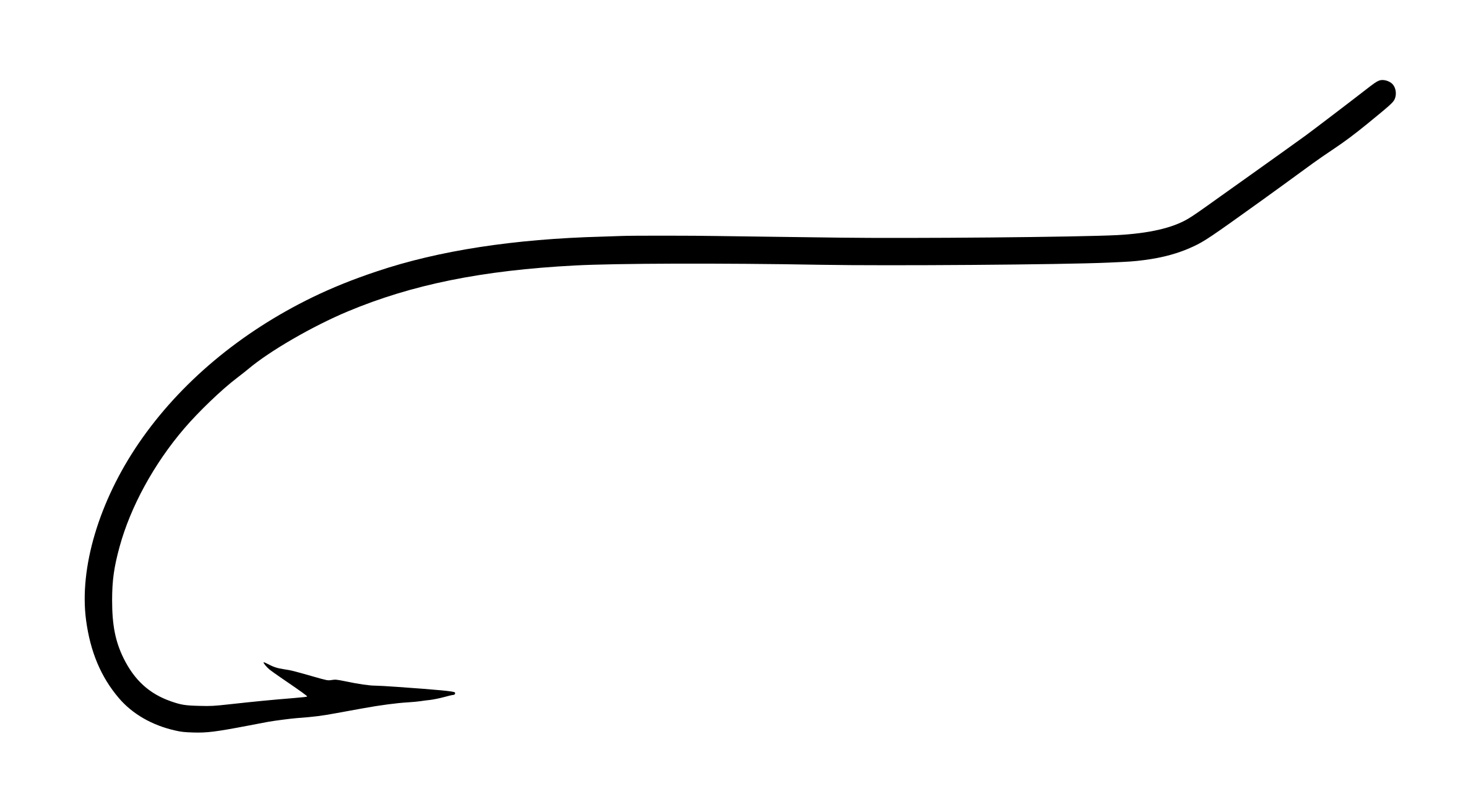
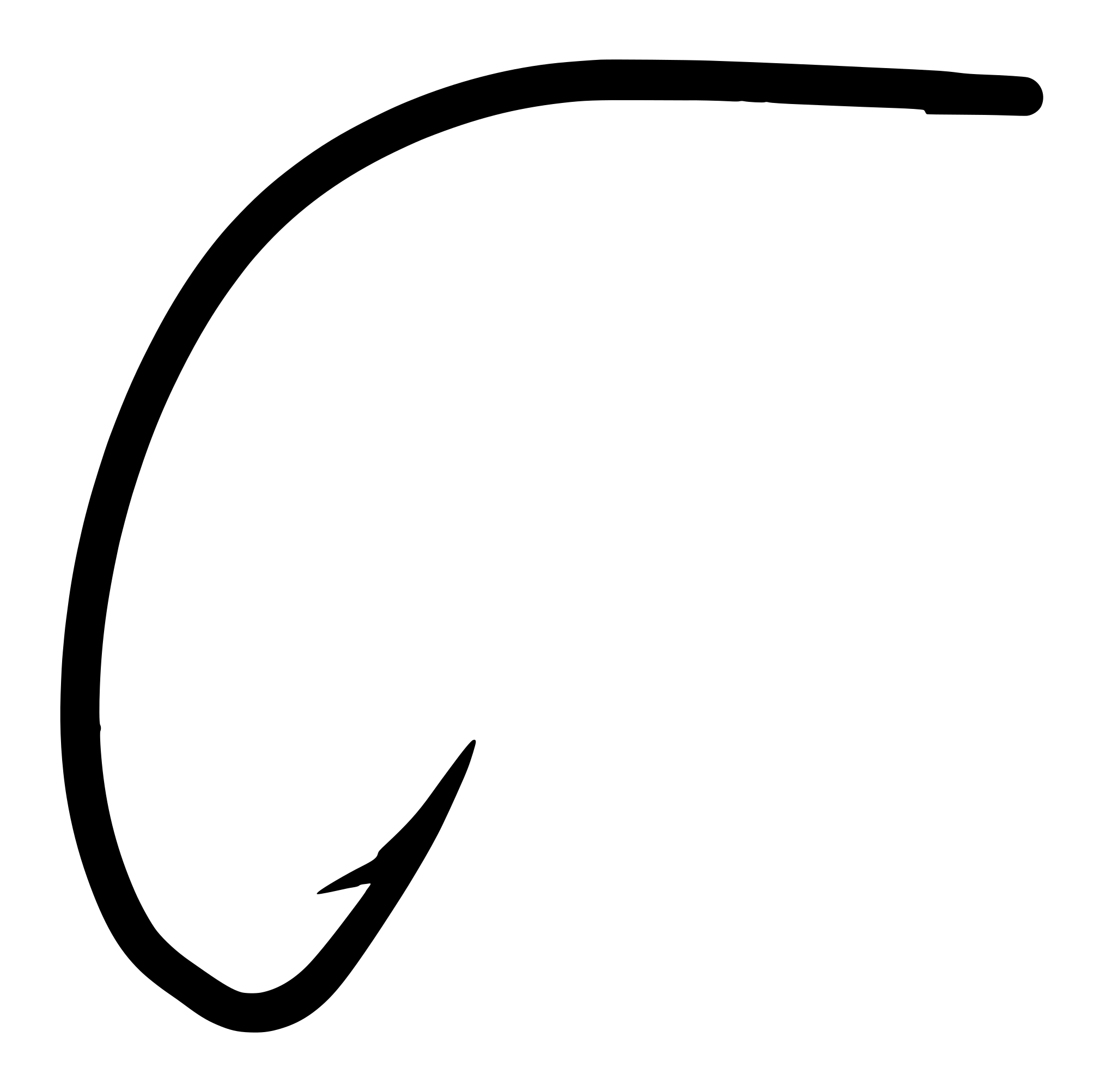
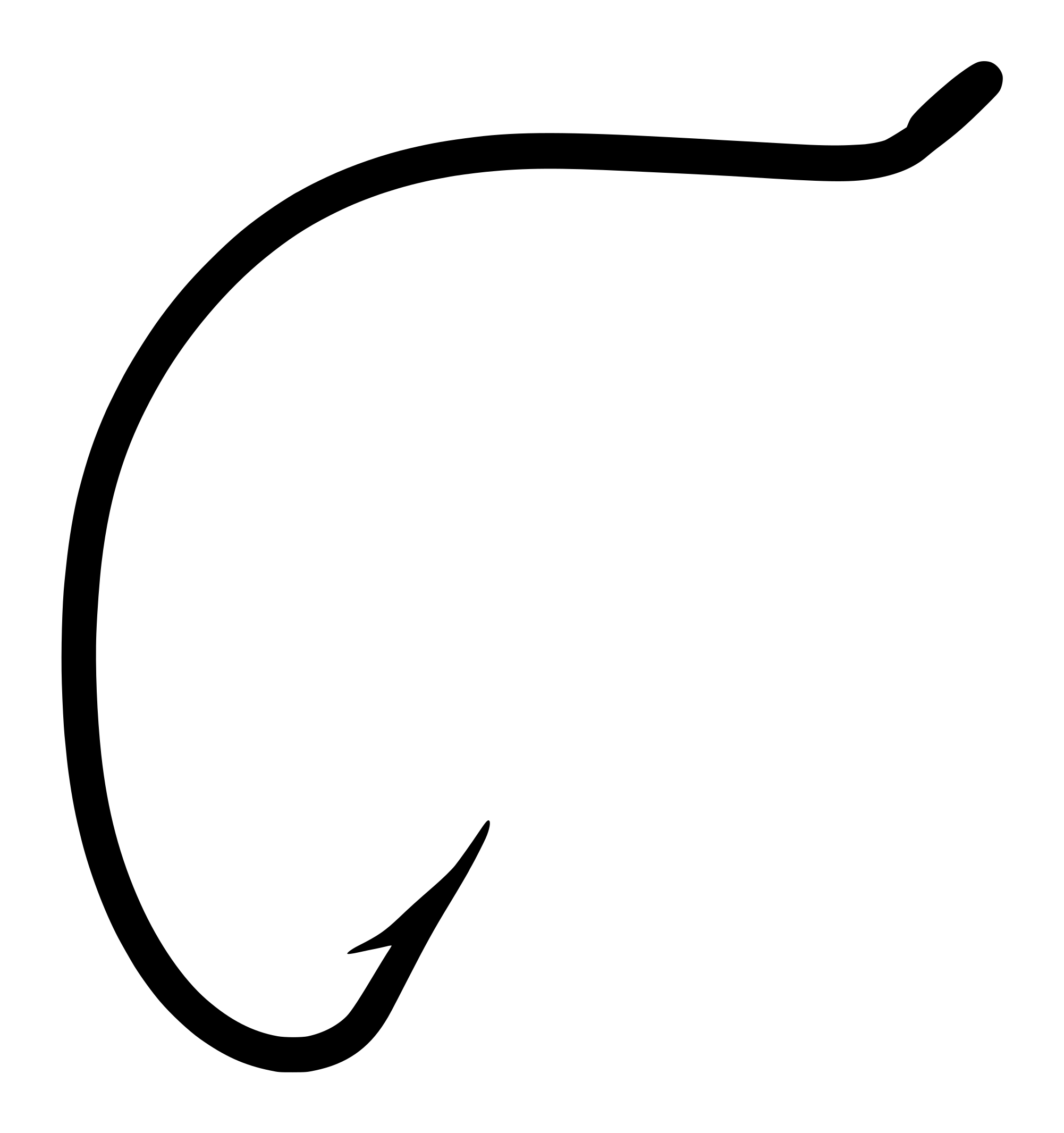
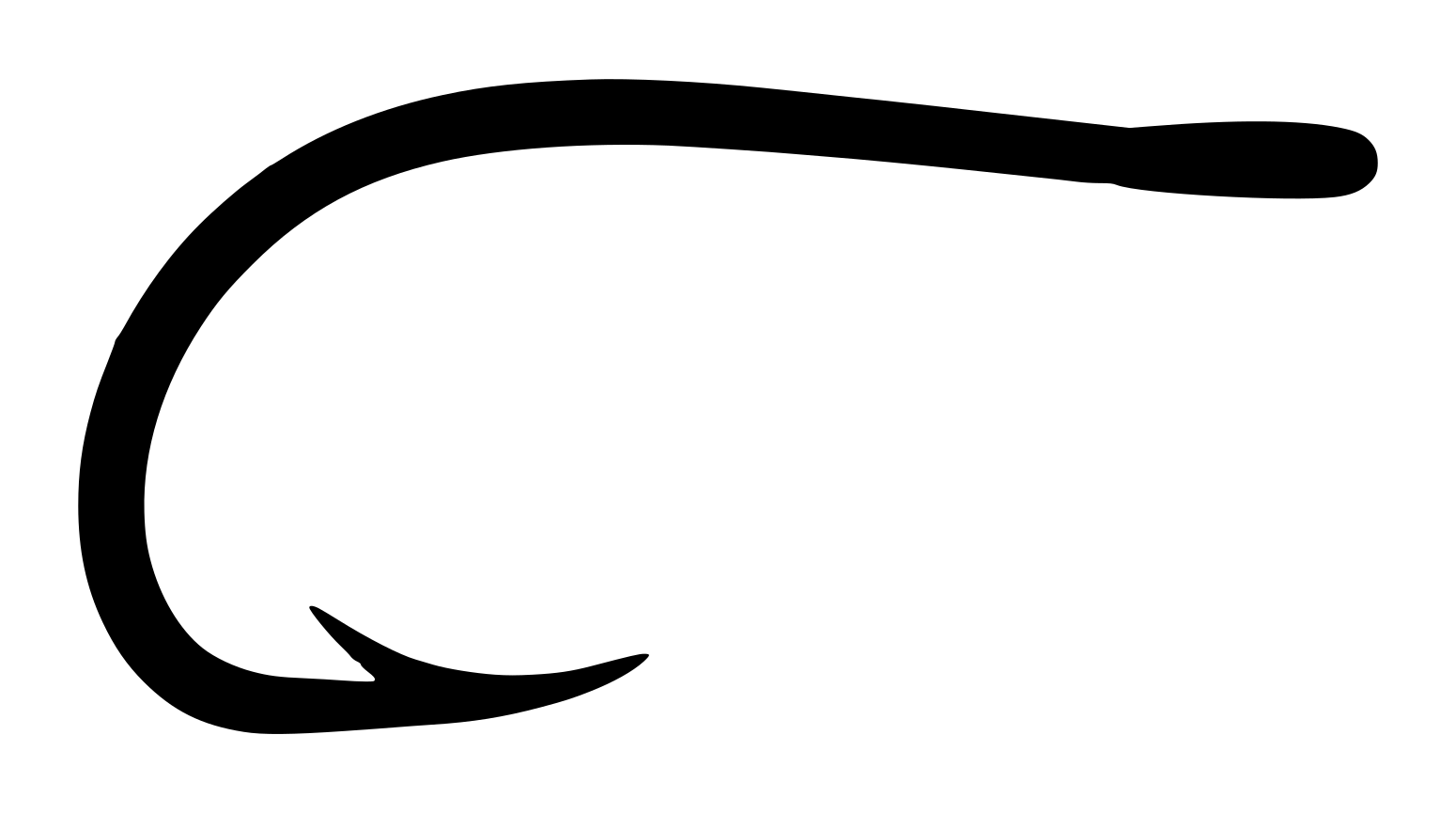
The Mustad 3777 Central Draught is a distinctive, kinked-shank bait and trolling hook manufactured by O. Mustad & Søn in Oslo, Norway during the post-WWII era (c. 1945-1960). Size 3/0 is a large specimen spanning approximately 1.18 inches (30 mm) overall, with heavy-gauge bronze-finished steel and a straight ringed eye.
The hook’s defining feature is its pronounced central kink in the shank—a deliberate geometric design that aligns the point directly beneath the eye and line of pull. This engineering solves a fundamental physics problem in hook retention: standard J-hooks create a lever arm that can torque the hook open under side pressure, whereas the Central Draught’s aligned geometry drives the point straight through tissue. This design was marketed for large live-bait presentations and heavy saltwater trolling where hook-retention and anti-rotation properties were paramount.
The 3777 is now discontinued and highly sought by tackle historians and collectors interested in experimental hook geometries and mid-twentieth-century engineering innovation. The original Mustad eight-line label and pristine card packaging significantly enhance its archival and collectible value, making it a museum-quality example of industrial hook design before the widespread adoption of circle hooks and modern gap geometries.
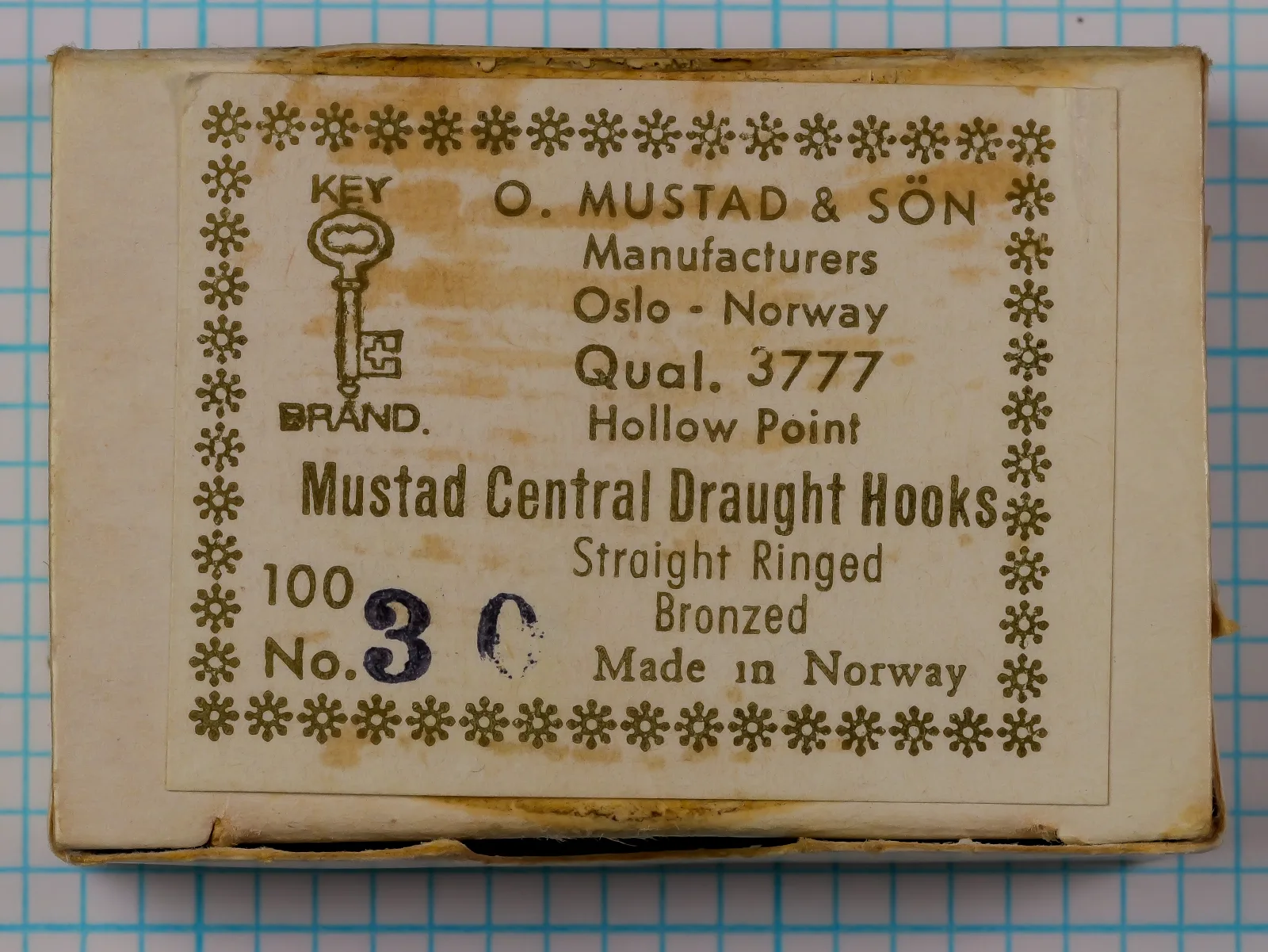
Original Mustad 3777 cardboard box with characteristic eight-line label format, showing Key Brand logo, Oslo - Norway origin, and Hollow Point / Straight Ringed / Bronzed specifications.
Photographic record
4 cataloged imagesSelect any record to load it above.
4 images shown
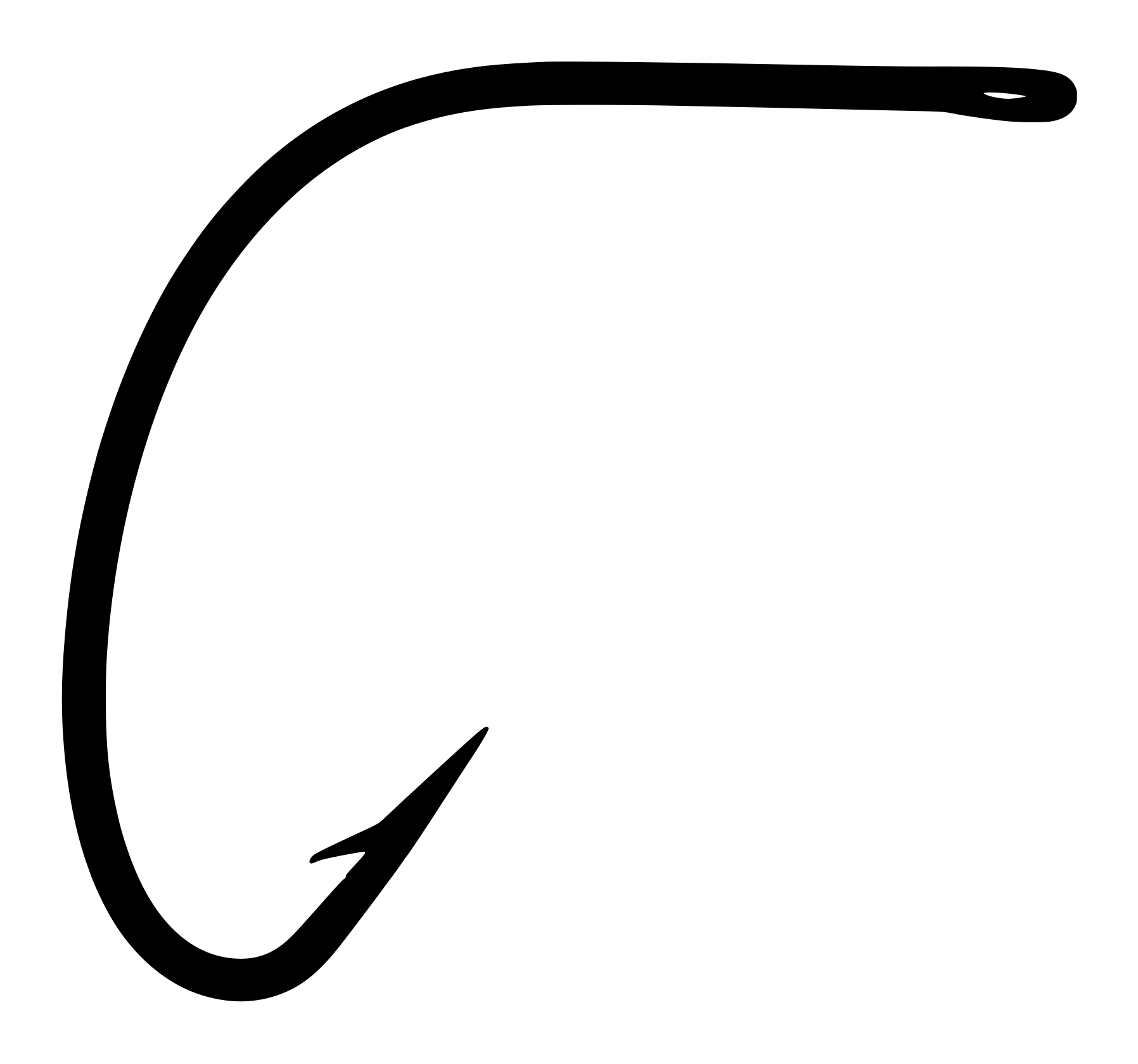
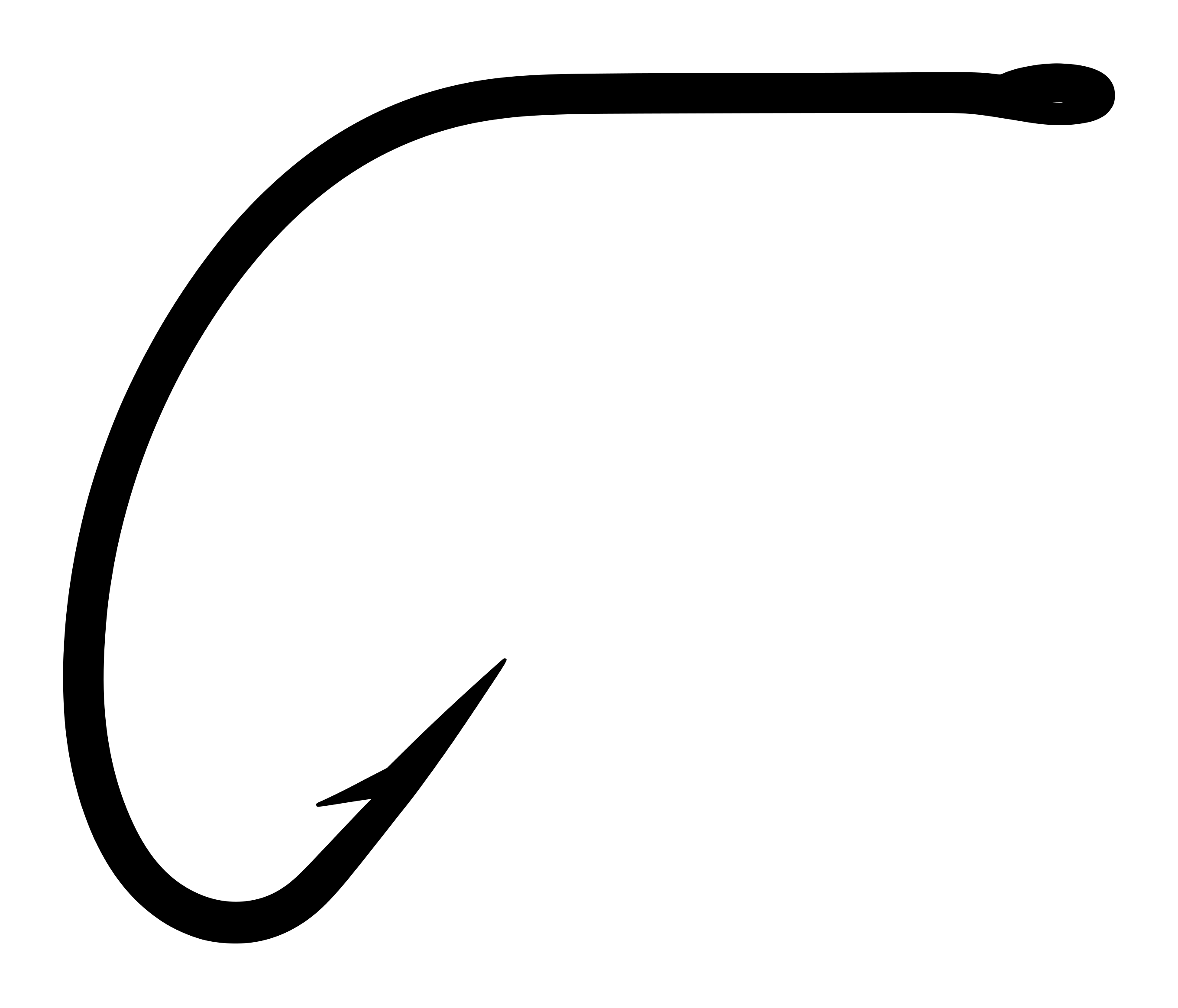
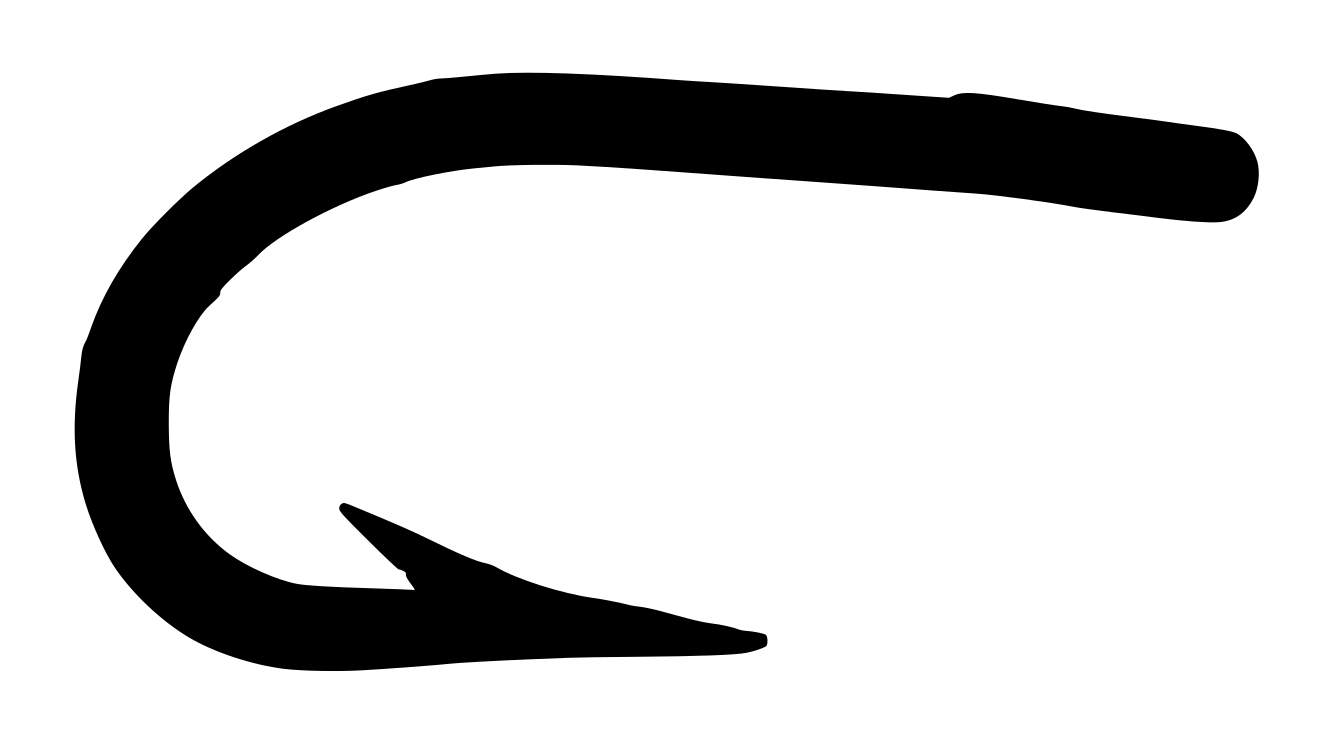
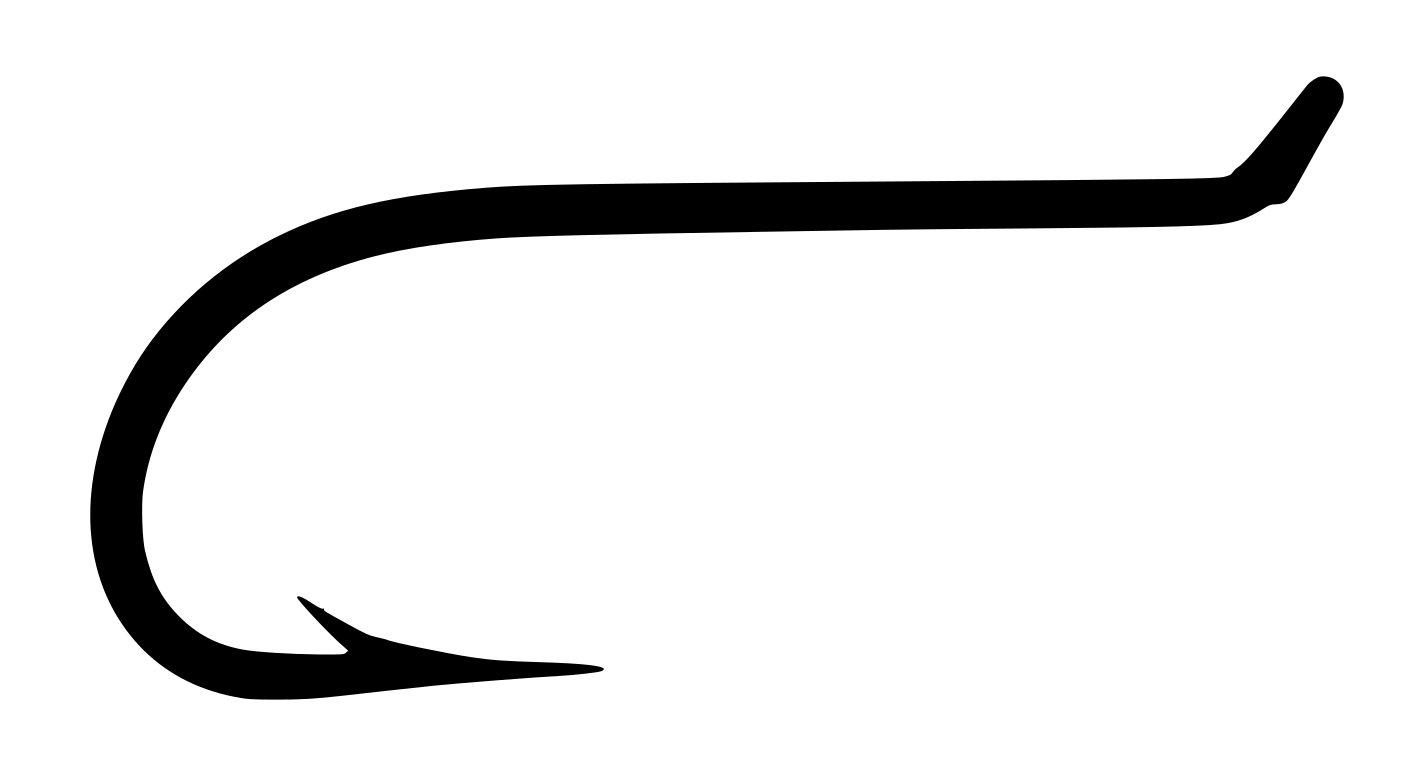
Mustad 3777 Central Draught Box Label Size 3/0 Oslo NorwayOriginal Mustad 3777 cardboard box with characteristic eight-line label format, showing Key Brand logo, Oslo - Norway origin, and Hollow Point / Straight Ringed / Bronzed specifications.Open originalMustad 3777 Central Draught Hook Profile Point Detail Size 3/0Side profile close-up of the Mustad 3777 showing the characteristic hollow-ground point with concave inner face and the distinctive central kink in the shank that defines this experimental design.Open originalMustad 3777 Central Draught Full Hook Profile Size 3/0Complete profile view of the Mustad 3777 Central Draught Hook, size 3/0, on the 1/10-inch measurement grid, showing the overall length, shank geometry with central kink, rounded bend, ringed eye, and relative proportions.Open originalMustad 3777 Central Draught Comparative Profiles Size 3/0Two Mustad 3777 hooks photographed at different angles on the measurement grid, demonstrating the consistency of the kinked-shank geometry across multiple specimens and the relationship between the kink position, shank length, and bend profile.Open original
Technical profile
Eye
Ball Eye, Straight / InlineStraight ringed eye, formed by bending terminal wire back onto the main shank. Ball is uniform and well-formed. Eye sits perfectly in line with the shank axis, characteristic of bait and trolling hooks. P
Wire
Fine (1X Fine), Round
Shank
1X Long — Kinked
Bend
Standard gapThe defining feature is the pronounced central 'kink' or deflection in the shank, approximately midway between eye and bend. This kinked geometry was engineered to align the point directly beneath the line of pull, eliminating the lateral lever arm of standard round-bend hooks and ensuring perpendicular force application. The bend itself is rounded at the bottom, neither Sproat nor Aberdeen profile — a specialized utility bend designed for functional advantage rather than aesthetic symmetry. P
Point
Hollow Point (concave inner face)Short, close-cut barb set at a modest angle. The barb sits firmly against the point without a pronounced sweep. Barb is proportionate to the heavy wire gauge and large hook size. P
Finish
Bronzed — Confirmed (stated on packaging)Bronzed finish with warm, brownish-gold tone characteristic of vintage Mustad bronzing process. Color is uniform across the visible specimen. The finish shows light patina development consistent with age and storage in non-ideal conditions, but lacks active corrosion or flaking. Tone suggests baked-on lacquer or chemical compound rather than electroplating. P
The specimen is bright and free of active corrosion. The bronzed finish shows light patina appropriate to age, with no flaking or scaling. No mechanical damage to the point, which remains sharp. Original packaging (card and box) shows age-appropriate toning and minor edge wear but remains legible and structurally sound.
The hollow point on the 3777 features the characteristic concave, inwardly-curved geometry that provides rapid penetration with minimal applied force—ideal for the soft tissues of large baitfish and the responsive jaw musculature of pike and musky. The point is ground with a dished-out profile from tip to barb, creating a razor-sharp edge that flares rapidly toward the barb. This geometry minimizes the pressure required for initial hook-set, a critical advantage when fishing with heavy tackle where the angler cannot execute a violent, precise strike.
The heavy-gauge round-profile wire provides the structural rigidity necessary to withstand the head-shaking and thrashing of large predatory fish without bending or straightening. The bronzed finish—a baked-on lacquer compound—seals the high-carbon steel from moisture, making the hook suitable for prolonged immersion in both fresh and brackish water. The kinked shank, however, is the true engineering marvel: by introducing a deliberate deflection in the shank axis, Mustad eliminated the lateral offset that creates torque under side loading. The result is a hook that drives the point straight into tissue rather than twisting or rolling under the side pressure of a fighting fish.
This entry documents the first publicly cataloged analysis of the Mustad 3777 Central Draught pattern on garrenwood.com. The kinked-shank geometry is a rare experimental design not widely documented in modern hook reference literature, making this specimen historically significant to the study of mid-twentieth-century hook engineering innovation.
Own this hook? Help us measure it.
We don't have measured sizes for this hook yet. Own one? Submit calipered measurements and we'll review and add them. Thank you!
Historical context
mustad
O. Mustad & Søn was founded in 1832 in Gjøvik, Norway as ‘Brusveen Spiger- og Staltradfabrikk’ (a manufacturer of nails and steel wire). In 1877, the firm revolutionized hook manufacturing when engineer Mathias Topp invented the first fully automated hook-making machine—a mechanical system that could autonomously cut, bend, barb, and point hooks at unprecedented scale and speed. The Mustad family strategically declined to patent this technology (patent disclosure would have required public revelation of mechanical schematics) and instead relied on strict secrecy and restricted factory access to maintain competitive advantage. This strategy proved devastatingly effective against rival manufacturers in Redditch, England, and emerging producers in Japan and the United States. By the 1950s, Mustad controlled approximately 50% of global hook production and had established sales offices and satellite factories on multiple continents. The company’s relocation from Gjøvik to Oslo in the mid-twentieth century reflected Norway’s post-WWII industrial modernization and improved logistics. Today, O. Mustad & Søn remains one of the world’s largest and most recognized fishhook manufacturers.
Series History
The Central Draught (Qual. 3777) was a specialized bait and trolling pattern introduced in the 1940s as part of Mustad’s experimental hook-geometry program. Unlike the company’s flagship patterns (Sproat, Aberdeen, Limerick), which derived from British regional blacksmith traditions, the Central Draught was entirely engineered—designed from first principles to solve a specific functional problem rather than to replicate a proven regional design. The model remained in production through the 1950s and early 1960s but never achieved broad market adoption, possibly because its manufacturing complexity (the kinked-shank geometry requires specialized bending machinery and calibration) made it more expensive than simpler alternatives. The model was discontinued by the late 1960s as Mustad’s focus shifted to newer experimental designs and as modern wide-gap and circle-hook concepts gained traction. No direct successor exists in the modern Mustad catalog; the design philosophy it represented—precision-engineered geometric solutions to leverage and retention problems—was eclipsed by simpler, more cost-effective approaches. The 3777 remains a curiosity and collector’s favorite precisely because it represents a road not taken in hook design evolution.
Era and Packaging Dating
Line 3 of label reads 'Oslo - Norway' (not 'Christiania'), indicating post-1925 production. The 'Key Brand' logo and eight-line label format are typical of Mustad's mid-twentieth-century export packaging. Offset printing with clean registration, period-appropriate typographic styling, and absence of barcode (UPC system not standard until 1970s) all suggest 1945-1960 window. Post-WWII paper stock quality and ink tone consistent with late 1940s-early 1950s production.
The Anti-Twist Wars: Mustad's Kinked-Shank Solution
The Mustad 3777 Central Draught was part of a broader experimental wave in the 1940s-1950s during which Norwegian and English hook makers competed frantically to engineer 'anti-twist' designs that would prevent hooked fish from dislodging hooks through lateral head-shakes and body rolls. Mustad's kinked-shank approach was elegant but labor-intensive to manufacture, requiring precise bending machinery and careful quality control. Competitors produced similar concepts (reversed bends, offset points, asymmetrical sheaths) but none achieved commercial dominance. By the 1970s, the rise of circle hooks and modern gap geometries rendered these experimental designs obsolete—ironically, modern hook engineering solved the same retention problem without the design complexity that made the Central Draught a marvel of mid-century precision manufacturing.
Design lineage and influence
The Central Draught concept emerged in the early twentieth century as an experimental response to the fundamental physics problem of hook leverage under lateral stress. While most hook designs of the 1920s-1940s followed the traditional J-shape (round or angular bend with the point projecting laterally from the shank axis), Mustad engineers recognized that this geometry created a lever arm: when a hooked fish thrashed sideways, the lateral offset of the point caused torsional stress that could straighten or flex the hook open.
The Central Draught design—with its distinctive mid-shank kink—attempted to solve this problem by aligning the point directly beneath the line of pull, forcing penetration force to act perpendicular to the shank rather than creating a moment arm. This concept influenced some experimental designs through the 1950s but was ultimately superseded by modern wide-gap and circle-hook geometries, which achieved similar retention benefits through different structural approaches. The 3777 represents a fascinating dead-end in hook design evolution: a sophisticated solution to a real engineering problem, rendered obsolete not by failure but by the introduction of geometries that addressed the same challenge more elegantly and with lower manufacturing cost.
Best matchRelated by Attribute
Computed automatically from catalog data — updated as new hooks are added.
Matches: Bend, Eye, Eye Orient., Point, Finish +3 moreDiffers: Shank: 1X Long vs Standard; Wire: Fine (1X Fine) vs Standard; Gap: Standard vs Wide +1 more
Matches: Bend, Gap, Eye, Point, Forging +2 moreDiffers: Shank: 1X Long vs Standard; Wire: Fine (1X Fine) vs Standard; Eye Orient.: Straight / Inline vs Turned Up +2 more
Matches: Bend, Gap, Eye, Eye Orient., Point +4 moreDiffers: Shank: 1X Long vs Standard; Wire: Fine (1X Fine) vs Standard; Shank Feat.: Kinked vs Plain +1 more
Matches: Bend, Wire, Eye, Eye Orient., Point +2 moreDiffers: Shank: 1X Long vs Short (1X–2X Short); Gap: Standard vs Wide; Finish: Bronzed vs Gold-Plated +2 more
The Mustad 3777 Central Draught was engineered for bait fishing with large live baits (minnows, shiners, crayfish) and for trolling large saltwater streamers and bucktails. In large sizes like 3/0, it excels for pike, musky, and sea-run species where a secure hook-set and resistance to thrashing are paramount. The kinked shank geometry centers the point directly beneath the eye, eliminating the lateral lever arm of standard J-hooks and ensuring the pull force drives straight through tissue rather than torquing the hook open.
Secondary Applications
Large saltwater flies, offshore trolling, heavy live-bait presentations for pike and musky.
Classic Fly Patterns
Not typically used for fly tying; primarily a bait and trolling hook.
Modern Equivalents
Hook
Match Quality
Notes
Mustad 3261 Aberdeen, Long Shank
Moderate
Modern long-shank utility pattern for bait fishing; lacks the kinked-shank geometry and carries different industrial design philosophy.
Mustad 34007 O'Shaughnessy
Moderate
Modern heavy saltwater trolling hook; more robust forged construction but loses the central-kink alignment feature.
Gamakatsu Octopus, Extra Strong
Good
Contemporary bait hook with heavy wire and excellent retention; functional equivalent for modern large live-bait presentations.
Collector notes
The 3777 is rare and highly collectible due to its distinctive kinked-shank geometry, discontinued status, and museum-quality original packaging. However, its large size (3/0) and specialized bait-fishing heritage limit appeal to the broader fly-tying collector base, slightly constraining demand.
Reference value
$25 – $75 USD estimate
Packaging format
GW-M-CARD-3777Catalog code
Positive Factors: Discontinued model with unique geometric design not replicated in modern Mustad catalog. Pristine original packaging with legible eight-line label and intact cardboard box is a major rarity factor. Size 3/0 is substantial and visually impressive. The kinked-shank geometry represents mid-twentieth-century experimental engineering now largely abandoned—historical significance to hook design historians. Bronzed finish is attractive and age-appropriate. Post-WWII Oslo production dating adds temporal specificity.
Limiting Factors: Large bait-hook sizes appeal primarily to collectors of saltwater and pike fishing traditions, not dry-fly or nymph specialists. The functional design (as opposed to aesthetic) limits appeal to decorative display collectors. Size 3/0 is uncommon in vintage hook collections, which tend to focus on smaller, more versatile sizes. Kinked shank can be easily confused with bent or damaged hooks by casual buyers, reducing market visibility.
Packaging
Original cardboard box containing 100-hook card. Box exterior is cream-colored stock with offset-printed olive-green text and decorative snowflake border motif. Label adheres to Mustad's standardized eight-line format: Key Brand logo with key graphic, 'O. MUSTAD & SÖN', 'Manufacturers', 'Oslo - Norway', 'Qual. 3777', 'Hollow Point', 'Mustad Central Draught Hooks', 'Straight Ringed', 'Bronzed', 'Made in Norway', and handstamped quantity notation '100 No. 3/0'. Card interior holds hooks in two parallel rows. Paper stock is typical mid-twentieth-century manila/cream cardboard with moderate aging patina. Printing is clean offset lithography with sharp registration. No barcode. Box shows minor edge wear and light toning consistent with storage in dry conditions.
Market Value Notes
Vintage lots with original Mustad boxes in this era and condition typically command USD 25-50 per box (100 hooks) on specialist platforms. Premium pricing (USD 50-100+) occurs when packaging is pristine and the hook demonstrates historical rarity or unique geometry. Size 3/0 commands slight premiums relative to standard sizes due to the visual impression and specialized use. eBay specialist hook dealers and tackle fair venues are primary discovery points. Collector networks focused on Norwegian manufacturing and experimental hook designs show strongest interest.
Where to Find
Specialist vintage fishing tackle dealers, eBay (search 'Mustad 3777' or 'Central Draught'), international tackle fairs and collector conventions, Scandinavian and European vintage tackle networks.
Preservation
Storage and Preservation
The Mustad 3777 should be stored in a cool, dry environment with minimal humidity fluctuation. The original cardboard box and printed card are valuable archival components—store the entire package rather than removing individual hooks. The bronzed finish is susceptible to patina development with humidity exposure; light surface patina is generally considered desirable by collectors and may indicate authentic age, but active corrosion (scaling, flaking, or rust bloom) should be prevented by maintaining relative humidity below 50%. Store in a location protected from direct sunlight, which can fade the printed label and degrade the box paper stock. Avoid contact with other metals to prevent galvanic corrosion. If the hooks are removed from the original card, store them in a silica-gel-lined container or acid-free tissue paper. The original packaging is a significant component of the specimen’s collectible value—preservation of the box and label should be a priority. Periodic gentle inspection is acceptable, but avoid handling the hook itself unnecessarily, as fingerprint oils can accelerate corrosion of the bronzed finish.
Size Note
Size Notation and the '3/0' Designation
The label notation ‘No. 3/0’ (handstamped in period ink) refers to the ‘aught’ or ‘/0’ sizing convention used for large hooks. In vintage Mustad nomenclature, sizes progress from small to large: No. 16, 14, 12, 10, 8, 6, 4, 2, then shift to the ‘aught’ scale: 1/0, 2/0, 3/0, 4/0, and larger. The 3/0 designation denotes a hook significantly larger than standard freshwater patterns, appropriate for pike, musky, large saltwater species, and heavy trolling applications. The measured overall length of 1.18 inches (29.97 mm) confirms this is indeed a large specimen; standard small hooks (No. 16-12) measure only 5-8 mm. It is critical not to confuse the handstamped ‘3/0’ with a modern size notation or numerical label—the slash and zero are integral to the aught system and reflect manufacturing convention of the period.
Primary Source
The Eight-Line Label as Technical Documentation
Source: Mustad 3777 Original Label, c. 1945-1960
The Mustad label on this box exemplifies the standardized eight-line format that served as the de facto technical specification sheet for global tackle distribution. Each line carries explicit engineering data: Line 1 establishes manufacturer identity (O. MUSTAD & SÖN), Line 2 confirms industrial role (Manufacturers — differentiating from import agents and repackagers), Line 3 provides geographic origin and chronological bracket (Oslo – Norway, confirming post-1925 production), Line 4 specifies the quality/model tier (Qual. 3777), Line 5 defines the penetration geometry (Hollow Point), Line 6 identifies the pattern family (Central Draught Hooks), Line 7-8 enumerate anatomical and finish specifications (Straight Ringed, Bronzed, Made in Norway). This compact typographic system encoded sufficient technical information for international wholesalers and regional retailers to understand the hook’s intended application and construction without requiring verbal communication or supplementary documentation. The presence of ‘Made in Norway’ at the bottom reinforces national origin—a marketing assertion of Norwegian manufacturing quality during the post-WWII era when Scandinavian industrial reputation was rising globally.
Additional
The Kinked-Shank Geometry: Engineering Innovation in Hook Design
The Central Draught’s most distinctive feature—the pronounced kink or deflection in the shank approximately midway between eye and bend—represents a sophisticated response to a fundamental problem in hook mechanics. In a standard J-hook (round-bend or Sproat profile), the point projects laterally from the shank axis. When a hooked fish thrashes sideways, this lateral offset creates a moment arm (lever) that generates torque, potentially straightening or springing the hook open. Mustad engineers reasoned that if the point could be aligned directly beneath the line of pull, the applied force would act perpendicular to the shank rather than creating torsional stress.
The solution: introduce a deliberate kink in the shank so that when the angler pulls the line straight back through the eye, the point drives forward in perfect alignment—no lateral offset, no lever arm, no torque. The geometry is elegant but manufacturing-intensive: the kink must be formed with precision to ensure the point sits true after the bend is forged, and quality control requires verification that each hook maintains this critical alignment. This is likely why the Central Draught remained a specialty item rather than achieving volume production—the added manufacturing cost and complexity were justified only for specialized high-value applications like large saltwater trolling and pike fishing, where retention under extreme stress was paramount.
Ironically, modern hook design eventually abandoned this principle in favor of even simpler solutions: the circle hook (with its naturally inward-rolling geometry) and wide-gap designs achieve similar anti-rotation benefits without requiring kinked shanks. Yet the Central Draught remains a fascinating artifact of mid-twentieth-century precision engineering, demonstrating that pre-digital hook makers were deeply engaged in biomechanical and mechanical analysis.
Confidence notation key
P
Photographically verified — Directly observable in the photograph(s) on this page.
V
Verified by documentation — Confirmed by manufacturer catalog, spec sheet, or published reference.
I
Inferred — A logical deduction from observable or documented evidence, not directly stated.
E
Estimated — An approximation based on visual comparison, proportional analysis, or limited data.
S
Speculative — A reasoned hypothesis that cannot be confirmed from available evidence.
Claims with no notation are confirmed by multiple independent sources. All photographs on garrenwood.com are taken on a measurement grid where each square equals 1/10 inch (0.1″ / 2.54 mm).