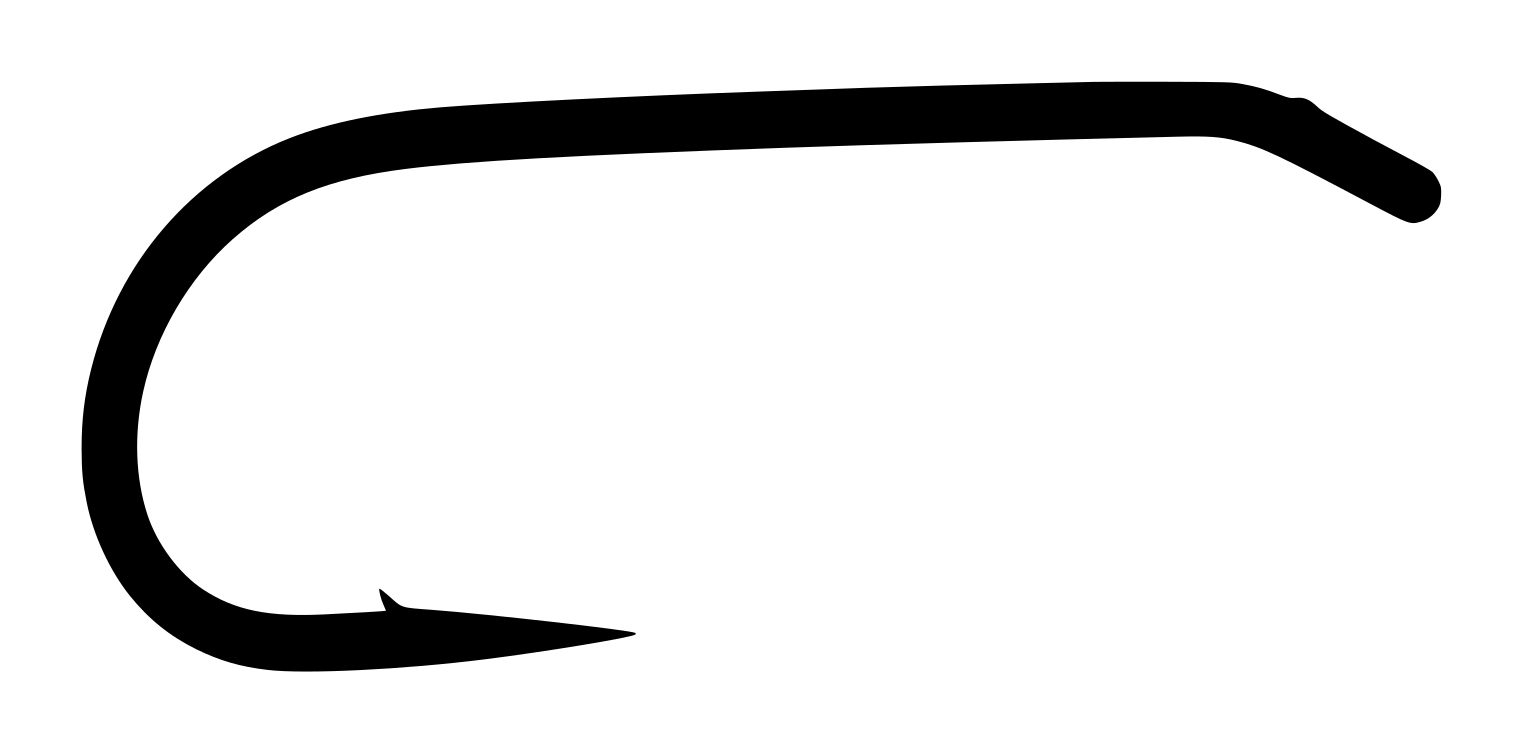
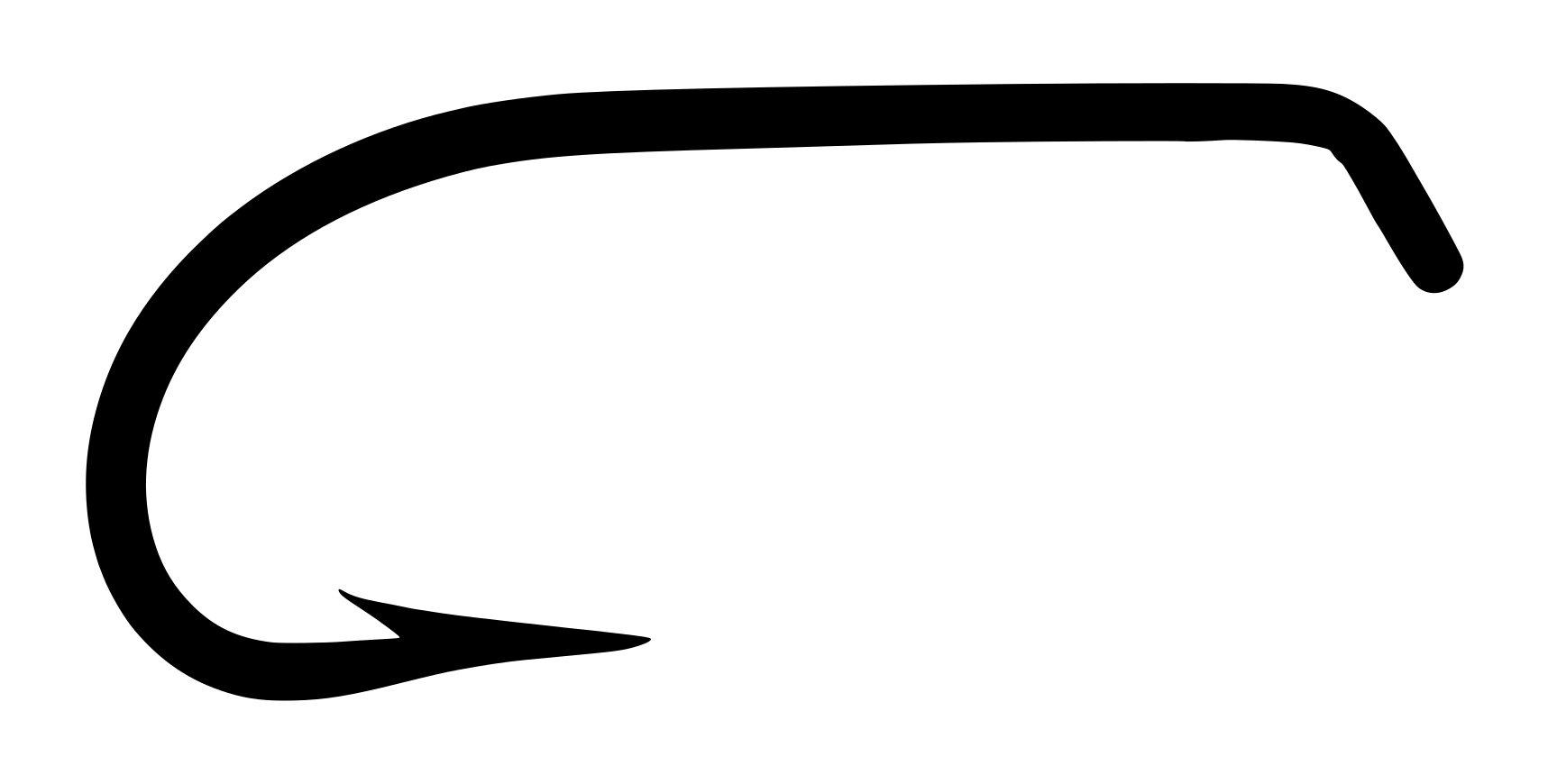
Dealer listings describe the Daiichi 1530 as a Heavy Wet Fly Hook in 2X-heavy wire V. It is made in even sizes 4 through 16 V.
Photographic record
2 photographs · Hold Ctrl and scroll to zoom · drag to pan · double-click for 100%
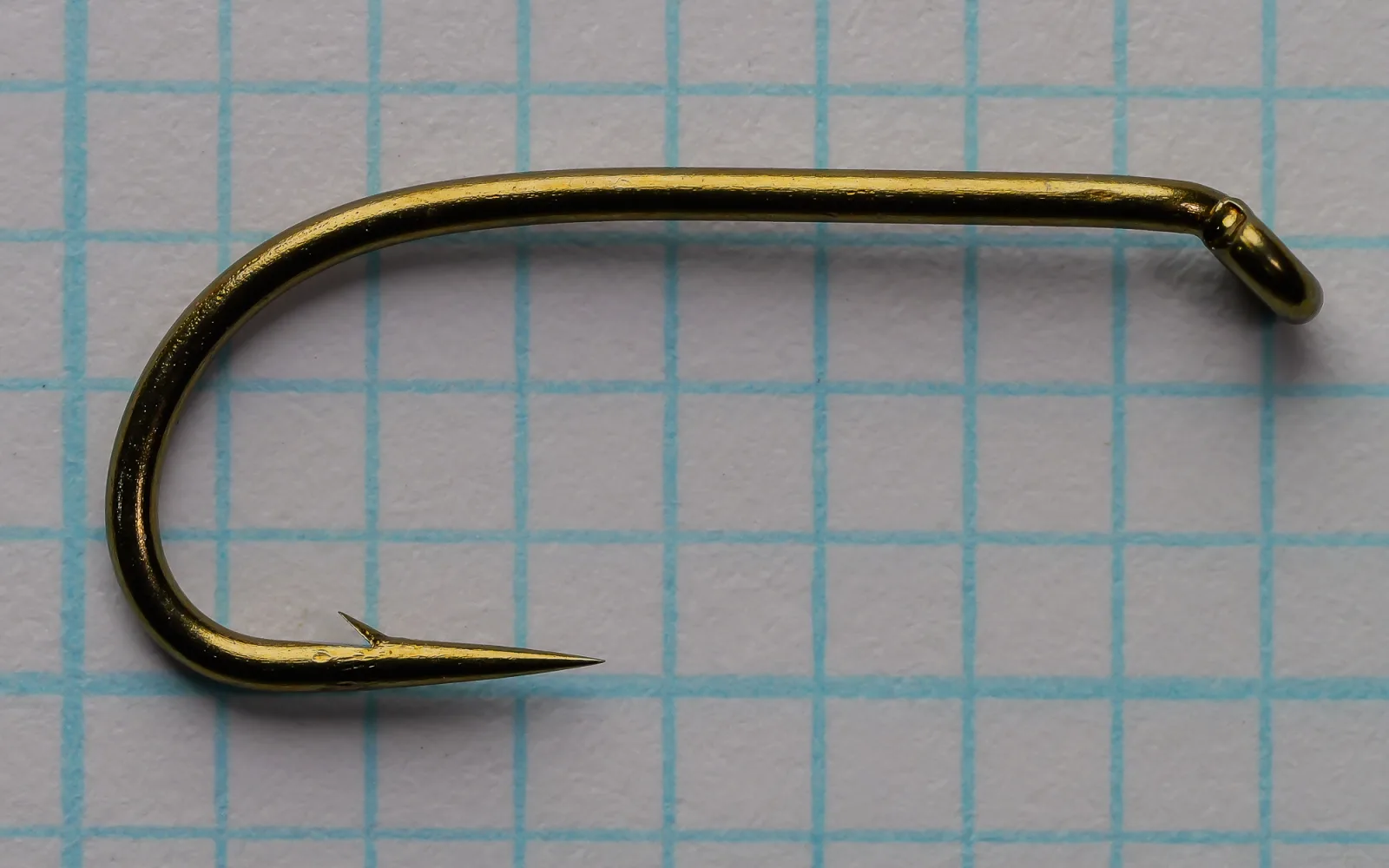
IMG-1Daiichi — New entry — image 1 Daiichi 1530, size 6 specimen, lying flat on grid paper. The grid spacing is not labeled.
2How to identify it
No maker name or size is stamped on the shank or bend of the photographed hook P. Identification of a loose hook therefore rests on its packaging or the seller’s labeling I. A pack or box showing the model number and size is the firmest identification.
Uniform glossy bronze over shank, bend, point, and eye, with no bare steel or wear-through visible P. Dealer listings give a bronze finish V.
OBS-6SRC-2SRC-3
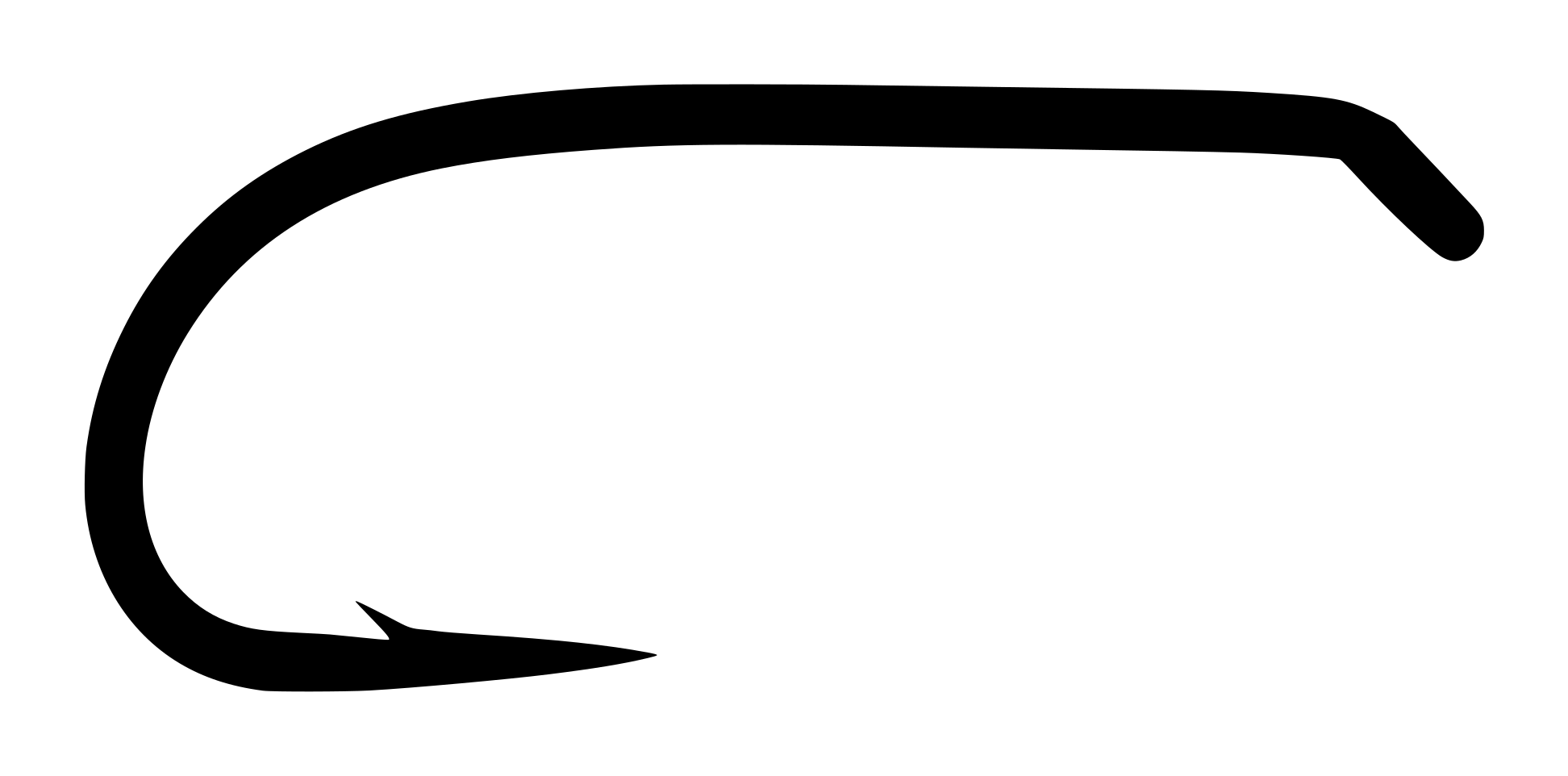
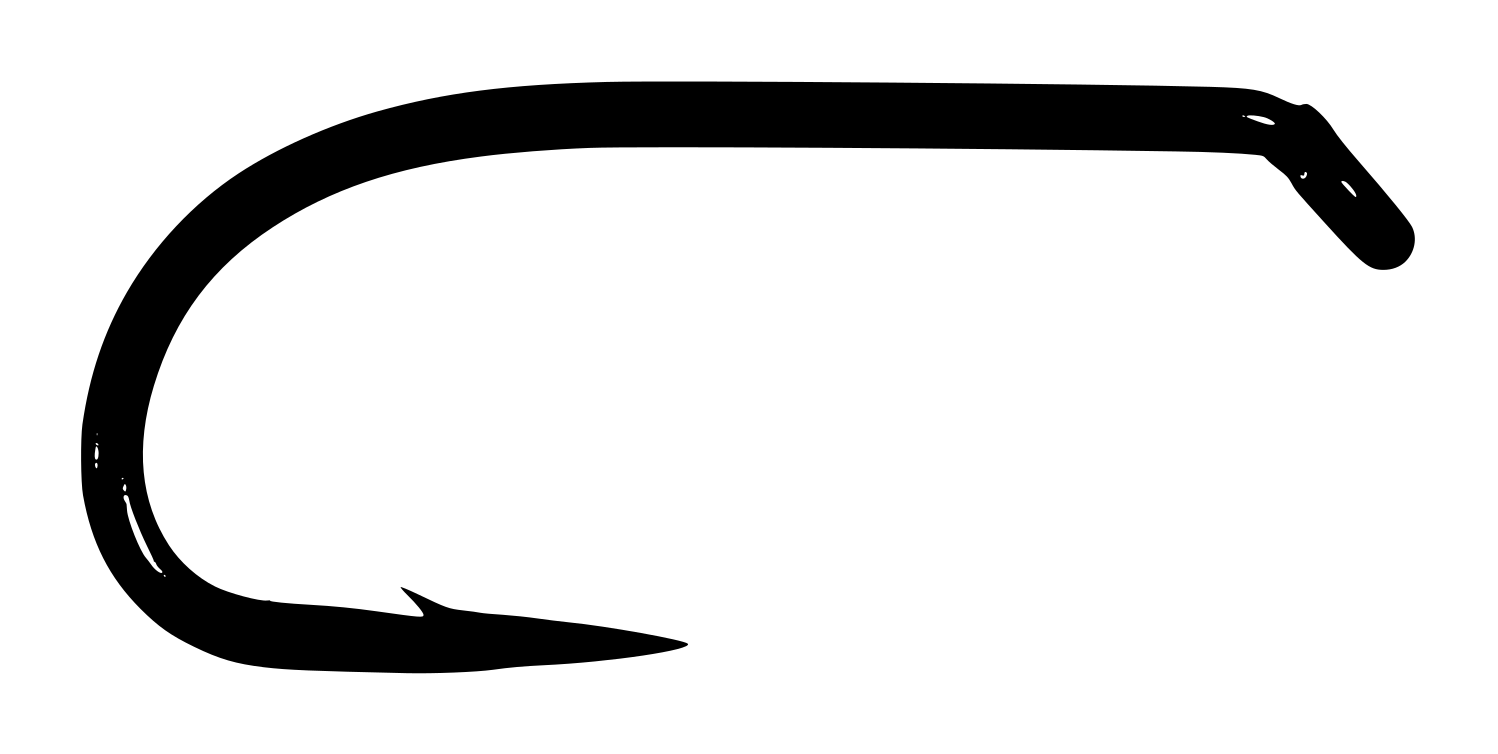
Dealer listings describe the 1530 with a Sproat bend, a down-eye, a bronze finish, 2X-heavy wire, and a 1X-short shank V. Sproat names a bend family in which the wire leaves the shank in a gradual curve.
On the size 6 specimen the shank is straight and plain, with no ridges, slices, kinks, or bait-holder barbs P. The wire runs in one continuous arc through the bend P. The point is a long, evenly tapered cone with no flat spear facets visible P.
One dealer listing states that Daiichi hooks use a 12-degree constant-taper ground needle point V. That statement covers Daiichi hooks generally, so its application to the 1530 is inferred I.
On the site’s catalog scale, the specimen’s shank proportion falls in the standard group and its wire in the heavy group I. Dealer wording for these two points is 1X-short and 2X-heavy.
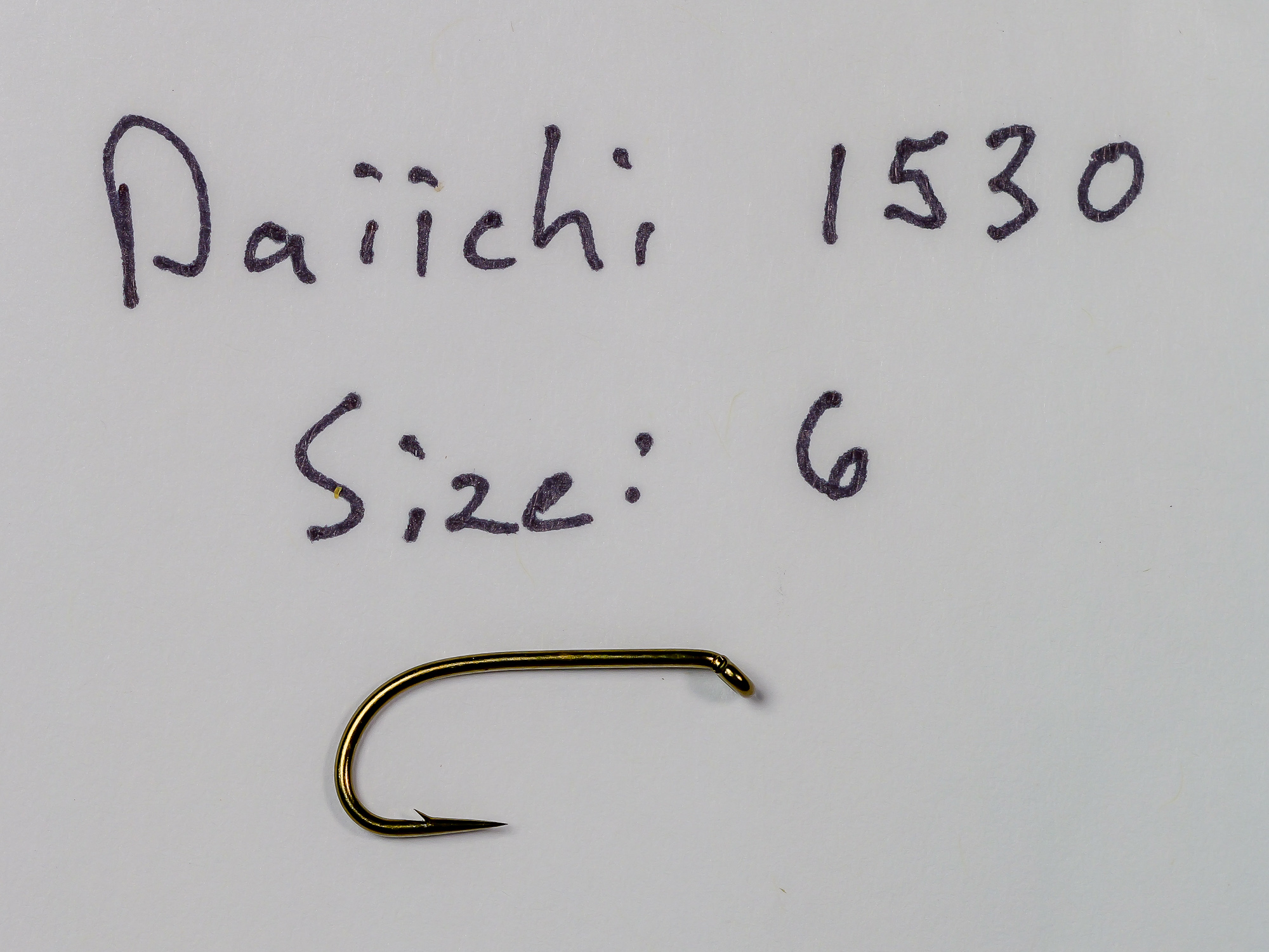
No manufacturer packaging or printed label appears with this specimen P. It was photographed loose on grid paper and beside the handwritten sheet. The hook beside the sheet is assigned to this specimen as probable, on matching eye, barb, and finish I.
What the label says
LBL-1 handwritten · upper sheet, first handwritten line, dark ink fromIMG-2
Daiichi 1530
LBL-2 handwritten · middle of sheet, second handwritten line, dark ink fromIMG-2
Size: 6
As entered on the specimen record
Later marks
Daiichi 1530
Size: 6
Dark ink on a plain light sheet. The sheet is an identification note placed beside the hook, not a maker marking P.
Dealer listings give the 1530’s use as short-bodied wet flies V.
Other uses
Nymphs; steelhead flies V
7Collecting and buying
1.5 / 10CollectabilityRarity: Common
Rated 1.5, common: dealer listings show the model in regular retail supply V, and no collector demand beyond use is documented.
Basis: Offered for sale by four dealers V. No production dates, discontinuation, or catalog listing is documented that would make the model scarce.
Four dealer listings offer the model for sale V. Nothing documented marks it as hard to find: no production dates, discontinuation, or catalog scarcity is on file.
The rating describes the model as usually found, not the photographed specimen.
No sold sales are documented for this model, so no value range is given.
Where to find
Fly-tying and sporting-goods dealers list the 1530 V.
8Modern equivalents and related hooks
Best matchRelated by Attribute
Computed automatically from catalog data — updated as new hooks are added.