
Daiichi
Daiichi
- Founded
- 1988Japan
- Documented entries
- 3432 spec records
- Era range
- 19902 dated entries
Daiichi has become one of the most recognizable Japanese hook brands in modern fly tying. Known especially for precisely formed hook profiles, chemically sharpened points and an extensive selection of specialty patterns, Daiichi helped establish Japanese hooks as premium alternatives to the traditional European and American brands that had long dominated the fly-fishing market.
Unlike older manufacturers such as Mustad, Allcock and Partridge, Daiichi’s earliest corporate history is not well documented in English-language sources. The clearest verified date associated with the modern hook brand is November 10, 1988, which is recorded as the Daiichi trademark’s first use in commerce for fishing hooks. The name Daiichi translates from Japanese as “first” or “number one,” reflecting the brand’s emphasis on premium quality and technical performance.
Establishing the Daiichi Brand
Daiichi entered the international hook market during a period of major change in fishing-tackle manufacturing. By the late 1980s, Japanese companies were earning strong reputations for producing hooks with consistent tempering, cleanly formed eyes, accurate proportions and exceptionally sharp points. These qualities were particularly important to fly tyers, who expected hooks of the same model and size to remain nearly identical from one package to another.
The Daiichi name began appearing in the North American fly-fishing trade at approximately the same time that Angler Sport Group was established. Founded in 1989 in upstate New York, Angler Sport Group became Daiichi’s principal North American representative and distributor. This relationship gave American fly shops and professional tyers access to a growing range of Japanese-made dry-fly, wet-fly, nymph, streamer, salmon and steelhead hooks.
Rather than competing solely on price, Daiichi positioned its hooks as precision tools. Product literature emphasized the use of high-carbon steel, carefully controlled hardening and tempering, smoothly applied finishes and points formed with a consistent taper. The hooks were then chemically treated to remove small burrs and irregularities from the point. Daiichi also promoted a low-profile barb intended to reduce the amount of metal displaced from the hook wire.
These manufacturing features helped support the company’s long-running marketing description, “The World’s Sharpest Hooks.”
A Focus on Hooks Designed for Fly Tyers
One of Daiichi’s most important contributions was its willingness to develop hooks for specific fly patterns and tying methods rather than limiting its catalog to conventional hook shapes.
The company worked with prominent fly tyers and designers to create models with specialized bends, shank lengths, wire weights, eye configurations and finishes. This approach produced a catalog that included both practical fishing hooks and elegant platforms for display flies and historically inspired salmon patterns.
An early example was the Daiichi 1250 Glass Bead Hook, developed in association with Dennis Brown during the growth of glass-bead fly tying in the early 1990s. Its continuous bend, upturned eye, barbless construction and standard wire allowed small-hole glass beads to slide onto the hook more easily. Rather than adapting a conventional hook to a new technique, Daiichi and its North American partners created a hook specifically around the needs of the tyer.
Daiichi also became closely associated with Alec Jackson, whose graceful steelhead and Spey-hook designs were produced in several finishes and wire weights. The sweeping bends and tapered loop eyes of the Alec Jackson series made the hooks popular with both working steelhead anglers and tyers creating presentation-quality flies.
Other notable collaborations included classic salmon hooks designed by Bob Veverka, curved salmon and steelhead styles associated with Bob Johns, and the long-shank Model 2370 streamer hook designed by author and fly tyer Dick Talleur. These specialty models demonstrated Daiichi’s ability to combine modern manufacturing with shapes inspired by nineteenth- and early-twentieth-century handmade hooks.
Modern Hook Geometry
Daiichi’s catalog grew to include a particularly broad selection of curved and specialty hook designs. Some models retained familiar Sproat, Limerick and O’Shaughnessy influences, while others employed more modern continuous or extended curves.
The company used the term York bend for several elongated curved-shank hooks intended to create a more natural body profile in nymphs, terrestrials and other extended patterns. Models such as the 1270 helped popularize this style among fly tyers who wanted a smoother transition from the shank into the bend than was normally available on a conventional straight-shank hook.
Over time, Daiichi expanded beyond standard dry-fly and nymph hooks into barbless competition hooks, jig hooks, tube-fly hooks, saltwater models, chironomid hooks, colored hooks and specialized salmon and steelhead irons. Different models were offered in bronze, black, nickel, gold, blue and red finishes, allowing the hook to become either a subtle part of the fly or a deliberate visual element.
Ownership and Distribution Changes
For much of the brand’s North American history, Daiichi hooks were distributed by Angler Sport Group. Ranger Outdoors acquired Angler Sport Group in 2016 and acquired the Daiichi brand in 2017. The trademark ownership was subsequently transferred from Angler Sport Group to Ranger Outdoors.
Manufacturing initially remained primarily in Japan following the acquisition. In 2019, however, Daiichi began expanding into global production. This marked a significant change from the brand’s earlier identity as an almost exclusively Japanese-manufactured hook line. Daiichi states that hooks produced through its international manufacturing network must meet a common global quality standard.
In 2022, Ranger Outdoors introduced an updated Daiichi brand identity and packaging program. The relaunch retained the established Daiichi name while presenting the company as a broader international fishing-hook brand rather than only a supplier of traditional fly-tying hooks. Angler Sport Group continues to serve as the brand’s exclusive North American distributor.
Angler Sport Group remained in upstate New York until 2024, when its operations moved to southeastern Tennessee. Daiichi is presently part of the Ranger Outdoors family of fishing brands.
Daiichi’s Place in Hook-Making History
Daiichi belongs to the generation of Japanese manufacturers that transformed expectations for modern fishing hooks during the late twentieth century. Older European companies had built their reputations around generations of hand skills, regional hook patterns and industrial traditions. Daiichi approached hook making through tightly controlled geometry, highly consistent production and points designed to be exceptionally sharp when removed from the package.
Its greatest influence may be seen in the modern expectation that a fly hook can be designed around a particular pattern, material or tying technique. A curved shank for a specific nymph profile, an oversized eye for easier threading, a special bend for glass beads or a historically proportioned salmon iron could each justify a separate model.
This design-driven approach made Daiichi especially attractive to innovative fly tyers. The company did not simply reproduce established hook patterns; it also provided designers with a way to convert their ideas into repeatable commercial products.
Daiichi Hooks as Collectibles
Most Daiichi hooks are modern working tackle rather than rare collectibles. Nevertheless, older packages are becoming increasingly interesting to collectors documenting the development of modern fly-tying hooks.
Early Japanese-made packets, discontinued finishes, older Angler Sport Group labels and designer-branded models can help establish when particular styles entered the market. Alec Jackson hooks in unusual finishes, discontinued salmon irons and early packages bearing older Daiichi graphics may be especially appealing to collectors of fly-tying history.
Packaging is also useful for distinguishing production periods. Collectors should document the country-of-origin statement, distributor address, logo style, package quantity, model number and any designer attribution. Because Daiichi began expanding beyond primarily Japanese production in 2019, the manufacturing statement on a package can be an important part of identifying its period.
Legacy
Daiichi’s history is shorter than that of the great nineteenth-century hook makers, but its influence on contemporary fly tying is substantial. The company helped demonstrate that a hook could be treated as a carefully engineered component of the fly rather than simply the frame beneath it.
Through precision manufacturing, chemical sharpening and collaborations with influential fly designers, Daiichi created a catalog that bridges traditional hook forms and modern fly-tying innovation. Its hooks have been used for everything from tiny trout flies and competition nymphs to steelhead patterns and fully dressed Atlantic salmon flies.
Today, Daiichi remains best known for the qualities that established its reputation in the late 1980s and 1990s: sharp points, consistent construction and an unusually diverse range of specialized hook designs.
Complete index
34 entries
| Model | Name | Specification | Application | Era | Collectability | |
|---|---|---|---|---|---|---|
| 1100 | Wide Gape Dry Fly Hook Spec | RoundFine | Dry | — | — | |
| 1120 | Heavy Wide Gape Scud Hook Spec | OtherXH1XS | Nymph | — | — | |
| 1130 | Wide Gape Scud Hook Spec | OtherFine1XS | Nymph | — | — | |
| 1140 | 60 Degree Barbless Jig Hook Spec | OtherHeavy | Nymph | — | — | |
| 1160 | Klinkhammer Hook Spec | OtherStd | Dry Nymph | — | — | |
| 1167 | Klinkhammer Hook Spec | OtherStd | Dry Nymph | — | — | |
| 1170 | Standard Dry Fly Hook Spec | RoundFine | Dry | — | — | |
| 1180 | Standard Dry Fly Hook, "Mini-Barb" Spec | RoundStd | Dry | — | — | |
| 1188 | Standard Barbless Dry Fly Hook Spec | RoundStd | Dry | — | — | |
| 1189 | Matte Black Barbless Dry Fly Hook Spec | RoundStd | Dry | — | — | |
| 1190 | Barbless Dry Fly Hook Spec | RoundStd | Dry | — | — | |
| 1260 | Bead Head Nymph Hook Spec | RoundStd2XL | Nymph | — | — | |
| 1280 | 2x Long Dry Fly Hook Spec | RoundFine2XL | Dry | — | — | |
| 1530 | Heavy Wet Fly Hook Spec | SproatHeavy1XS | Wet Nymph Sea trout | — | — | |
| 1550 | Standard Wet Fly Hook Spec | SproatStd | Wet Nymph | — | — | |
| 1560 | Traditional Nymph Hook Spec | SproatHeavy1XL | Wet Nymph | — | — | |
| 1710 | 2x Long Nymph Hook Spec | RoundHeavy2XL | Nymph Streamer | — | — | |
| 1718 | Standard Barbless Nymph Hook Spec | RoundHeavy2XL | Nymph | — | — | |
| 1720 | 3x Long Nymph Hook Spec | RoundHeavy3XL | Nymph Streamer | — | — | |
| 1730 | Stonefly Nymph Hook Spec | RoundHeavy3XL | Nymph | — | — | |
| 1750 | Straight Eye Streamer Hook Spec | RoundHeavy4XL | Streamer | — | — | |
| 1760 | 2x Heavy Curved Nymph Hook Spec | RoundXH2XL | Nymph Salmon Sea trout | — | — | |
| 1920 | Heavy Barbless Scud Hook Spec | OtherHeavy | Nymph | — | — | |
|
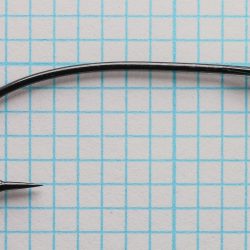
2051 | Daiichi 2051 Alec Jackson Spey | BartleetXF1XLJapanned | Salmon Sea trout Spey | c. 1990-2010 | |
| 2110 | Van Klinken Bomber Hook Spec | LimerickHeavy2XL | Dry Salmon Sea trout | — | — | |
| 2161 | Curved Shank Salmon Hook Up Eye Spec | BartleetHeavy2XL | Salmon | — | — | |
| 2220 | 4x Long Streamer Hook Spec | RoundHeavy4XL | Streamer | — | — | |
|
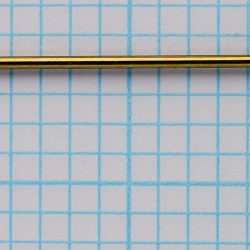
2370 | Daiichi 2370 | LimerickHeavyXXLBronzed | Streamer | c. 1990-2022 (this packaging style; model remains in production) | |
| 2421 | Low Water Salmon Hook Spec | LimerickStd2XL | Salmon Sea trout | — | — | |
| 2441 | Traditional Salmon Hook Spec | LimerickHeavy2XL | Salmon Sea trout | — | — | |
| 2461 | Long Shank Aberdeen Hook Spec | AberdeenStd2XL | — | — | ||
| 2546 | Stainless Salt Water Hook Spec | O'ShaughnessyHeavy1XL | Salmon SW | — | — | |
| 4640 | 60 Degree Heavy Jig Hook Spec | LimerickHeavy2XL | Nymph | — | — | |
| 4660 | 90 Degree Jig Hook Spec | RoundStd | Nymph | — | — |