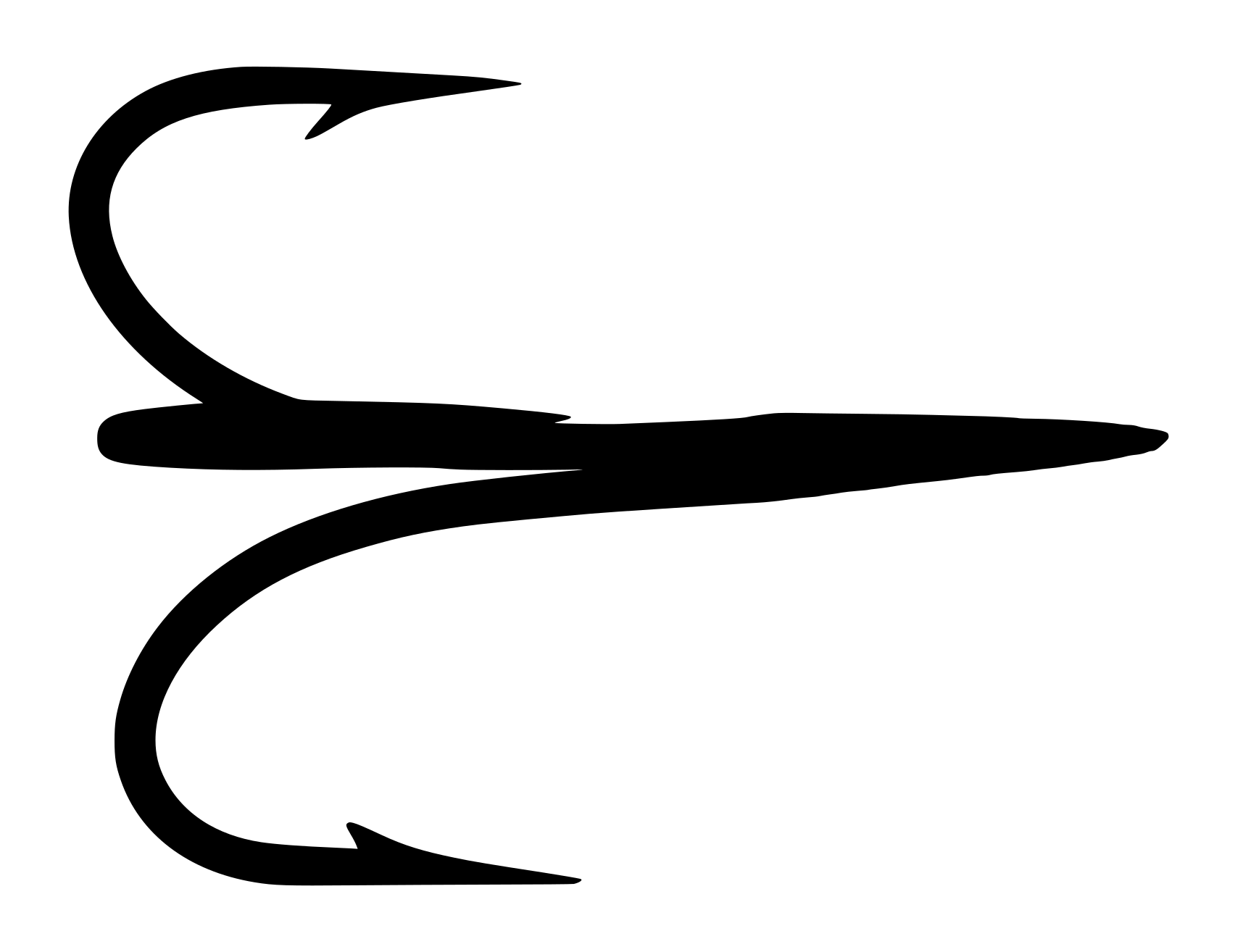
The Mustad 3601 Treble is a classic multi-hook configuration manufactured by O. Mustad & Son in Oslo, Norway. This size No. 2 specimen features three identical Sproat bends joined at a tapered blind eye, bronzed finish, and hollow points — a specification designed for bait fishing, trolling, and lure replacement applications in saltwater and freshwater contexts.
The tapered blind-eye construction is characteristic of pre-1970s Mustad treble designs and differs markedly from later ball-eye trebles. The bronzed finish, combined with the absence of a barcode on the original packaging, indicates production sometime between the 1950s and early 1970s. The hand-annotated size label and aged paper stock further support a production era of c. 1955–1970.
While individual treble hooks are common in vintage collections, complete original cards with period packaging remain moderately scarce, particularly in smaller sizes. The 3601 is sought by collectors interested in vintage saltwater tackle and treble-hook evolution, and by practical tyers building lures. This specimen retains its original box label in excellent readable condition, substantially enhancing its reference and collectible value.
Side profile of the Mustad 3601 Treble Hook, size No. 2, showing the three independent Sproat bends converging at a tapered blind eye and the bronzed finish, photographed on measurement grid.
Photographic record
3 cataloged imagesSelect any record to load it above.
3 images shown
Mustad 3601 Treble Size 2 Side Profile BronzedSide profile of the Mustad 3601 Treble Hook, size No. 2, showing the three independent Sproat bends converging at a tapered blind eye and the bronzed finish, photographed on measurement grid.Open originalMustad 3601 Treble Size 2 Top View Hollow PointsTop-down view of the Mustad 3601 showing the three barbs radiating from the central tapered eye, with hollow-point barb geometry and bronzed finish clearly visible.Open originalMustad 3601 Original Box Label Size 2 BronzedOriginal manufacturer box label for Mustad 3601 Treble Hooks, size No. 2, Tapered Bronzed, hand-annotated with 'TREBLE' in blue ballpoint pen. Label shows offset printing with decorative border, Oslo Norway manufacturer attribution, and quality specification.Open original
Technical profile
O. Mustad & Son, Oslo — Norway | Qual. 3601 | Hollow Point | Tapered Bronzed | Size No. 2
Eye
Blind — Tapered ShankTapered blind eye — the shank tapers to a smooth rounded point with no flattening or spade construction. Gut attached via loop tied around the taper. P
Wire
Standard, Round
Shank
Standard — Plain
Bend
Sproat, Standard gapSymmetric rounded Sproat bend with moderate depth; three independent bends share a common junction at the tapered eye. Bend geometry is proportionate for the size.
Point
Hollow Point (concave inner face)
Finish
Bronzed — Inferred (photographically likely)Warm brown tone visible in photograph, consistent with bronzed finish specification on packaging. Steel grain texture visible through the coating layer. P
Specimen hooks are bright, clean, and show no visible corrosion or pitting. Original bronzed finish is uniform and intact across both visible specimens. Original box label shows light age toning consistent with 1955–1970 production; printing remains sharp and legible. No damage to label, no loss of detail. Box exterior shows expected edge wear and color fading typical of 70-year-old cardboard but is structurally sound.
Hollow Point Geometry: The hollow point on this specimen is confirmed by the strongly concave inner face of each barb, creating an inward curve rather than a nearly flat taper. This geometry concentrates hook force at the barb tip and creates a sharp, bite-prone edge — critical for the rapid strikes required when bait fishing or trolling. Hollow points are known to penetrate faster than superior (straight-taper) points, making them ideal for distant casting and situations where hook-set speed matters.
Tapered Blind-Eye Construction: Instead of a welded ball eye, the shank is drawn down to a smooth, tapered terminus with no flattening or spade construction. Gut or line is looped around this taper and secured with a knot, allowing the entire assembly to pivot freely. This method distributes stress more evenly than a flatted eye and was preferred for heavy-duty saltwater applications where durability was paramount. However, it required additional hand labor, which is why ball-eye standardization eventually displaced this technique.
Sproat Bend Profile: The characteristic rounded bottom of the Sproat bend provides a balanced hook geometry suitable for both bait and lure applications. The three bends meet at a junction point near the eye without crossing or interference, allowing each barb to work independently during the strike.
Size & scale lab
Selected size
2
Physical specimen
Overall Length
27.8 mm
Shank Length
18.6 mm
Gap Width
9.3 mm
Bend Depth
13 mm
Wire Diameter
0.89 mm
Weight
.572g
Shank-to-Gap Ratio
~2.0:1
Confidence
P
Physical specimen
Physical measurement with calipers
Own this hook? Help us measure it.
We have measurement for size 2. Know any others? Submit calipered measurements and we'll review and add them. Thank you!
Historical context
mustad
O. Mustad & Son was founded in Oslo, Norway, in 1877 by Olaf Mustad, establishing the Gjøvik factory as a major center of industrial hook manufacturing. By the early 20th century, Mustad had become the largest hook producer in the world, supplying tackle manufacturers across North America, Europe, and colonial territories. The company developed a deep catalog of patterns ranging from tiny dry-fly hooks to massive sea-fishing trebles, establishing itself as a standard reference in the international tackle trade.
During the 1950s–1970s, Mustad modernized its production lines while maintaining product diversity. The tapered blind-eye construction visible on this specimen reflects the company’s commitment to precision engineering during this transitional period. By the 1970s, however, mechanization and the push toward cost reduction led Mustad to standardize on ball-eye designs and simpler manufacturing processes, phasing out hand-labor-intensive methods like tapered-eye assembly.
Mustad’s Oslo and Gjøvik factories remained operational until the late 20th century, when production gradually shifted to contract manufacturers in Asia. The company continues today as a major hook supplier under the Mustad brand, though most modern production occurs outside Norway.
Series History
The Mustad Treble Hooks line (model series 3600–3699) represents the company’s dedicated multi-hook offering for bait, saltwater, and lure-replacement applications. These hooks were introduced in the early-to-mid 20th century and remained in active production throughout the 1950s–1970s. The 3601 specifically denotes a Sproat-bend treble with hollow point in standard sizes (typically No. 1 through 4/0).
The tapered blind-eye construction on this specimen places it in the earlier production era of the line, before the standardization to ball-eye designs in the 1970s–1980s. The packaging label indicates “Qual. 3601,” confirming the model designation and quality standard. No significant design changes are documented in surviving catalogs between the 1950s and 1970s, suggesting the 3601 remained relatively consistent throughout this period. The series was gradually discontinued or consolidated as Mustad rationalized its product lines in the 1980s, though treble hooks under various model codes remain in production today.
Era and Packaging Dating
No barcode present on packaging — indicates pre-1974 manufacture. Offset printing on box label with aged paper stock (light tan, aged tone) consistent with 1950s–1960s production. Hand-written size annotation in blue ink typical of early post-war Norwegian manufacturing practices. Logo style and layout match known Mustad packaging from the 1960s. Address format (Oslo, Norway) without postal code is standard for Norwegian packaging of this era. Combined evidence strongly suggests 1955–1970 window.
The Tapered Blind Eye: A Lost Art
The tapered blind eye visible on this 1960s Mustad 3601 represents an earlier era of treble-hook manufacturing, before the industry standardized on the modern ball-eye design. Mustad engineers tapered the shank to a smooth, rounded point and wound gut or line around the taper itself — a construction method requiring hand assembly and greater skill than the modern welded-ball approach. By the 1970s, this method had nearly vanished, replaced by efficiency and standardization. Today, trebles with tapered blind eyes are increasingly rare and prized by lure builders and tackle historians as examples of pre-mechanized precision manufacturing.
Design lineage and influence
Best matchRelated by Attribute
Computed automatically from catalog data — updated as new hooks are added.
Matches: Shank, Gap, Eye, Eye Orient., Point +3 moreDiffers: Bend: Sproat vs O'Shaughnessy; Wire: Standard vs Heavy (1X Heavy); Finish: Bronzed vs Black Japanned +1 more
The Mustad 3601 Treble is designed as a multi-hook bait and lure system, primarily for saltwater fishing and live-bait applications. The treble configuration provides three independent strike points, increasing hook-up probability when casting small baitfish, spinners, or as a replacement hook on plugs and soft plastics. The tapered bronzed finish provides corrosion resistance in marine environments while maintaining visibility. Historically, treble hooks of this pattern were common on both trolling lures and light saltwater rigs in the mid-20th century.
Classic Fly Patterns
Named patterns specifically associated with this hook. Leave blank if none formally documented. Do not speculate — only include patterns with a confirmed association.
Modern Equivalents
Hook
Match Quality
Notes
Mustad 3551
Very Good
Modern Mustad treble, Sproat bend, ball eye, available in comparable sizes
Gamakatsu F314
Good
Contemporary treble hook for saltwater and bait applications
Collector notes
Rated 4.5/10 — vintage Mustad trebles are moderately uncommon as complete original packages, particularly with hand-labeled sizing and period box construction. Collector demand is moderate among saltwater tackle historians and treble-hook specialists. Size No. 2 trebles were produced in larger quantities than specialty sizes, limiting rarity; however, preservation of original labeling and box adds significant reference value.
Reference value
$12 – $28 USD estimate
Packaging format
MUS-BOX-001Catalog code
Positive Factors: Complete original box with hand-annotated period label is a major asset, substantially rarer than loose hooks or modern-era packaging. The tapered blind-eye construction represents an earlier manufacturing era (pre-ball-eye standardization) and is historically significant. Bronzed finish is stable and unlikely to deteriorate further. Era dating is clear and supportable by packaging evidence alone. Norwegian manufacture from the Gjøvik/Oslo industrial period adds geographic and industrial-history appeal.
Limiting Factors: Size No. 2 is a common production size — Mustad made trebles in this size in large quantities throughout the 1950s–1970s. Individual treble hooks themselves are abundant and inexpensive. The hook type (treble) appeals to a narrower collector base than single-hook designs — primarily saltwater and lure-building specialists rather than traditional fly tyers. Market demand for vintage trebles is lower than for single-eye Sproat, Aberdeen, or O’Shaughnessy patterns.
Most Desirable Variants: Original boxes with readable labels in any condition command a significant premium over loose cards. Smaller sizes (No. 6, No. 4) and larger specialty sizes (2/0, 3/0) are proportionally scarcer than No. 2. Sealed or near-sealed boxes in mint condition would achieve the high end of the valuation range. Sets of multiple sizes (if such packaging existed) would be exceptionally valuable.
Condition Factors Affecting Value: Box label legibility is critical — faded or damaged labels reduce value significantly. Missing hooks reduce value by 10–20% per missing specimen (trebles have three hooks per card). Original insert or mounting board present adds 15–25% premium. Rust or corrosion on hooks drops value substantially; this specimen shows no corrosion, supporting higher valuation.
Packaging
Original manufacturer box with glued-on printed label. Box constructed from kraft-faced cardboard, light tan color, externally worn and aged. Printed label centered on top face, 2.75" × 2" approximately, printed in offset brown and gold inks on aged kraft paper. Label text reads: 'Key O. MUSTAD & SON, Manufacturers, OSLO — NORWAY, Qual. 3601, Hollow Point, Brand Mustad-Treble Hooks, 1/2 Gr., Tapered Bronzed, No. 2, Made In Norway' — with decorative asterisk border. Blue handwritten annotation 'TREBLE' in upper left corner of box. Hooks mounted on original box insert or kraft board (not visible in photograph). Label surface shows age toning and minor surface wear; text remains fully legible.
Market Value Notes
Low ($12): Good condition; opened original box, label readable, all or most hooks present, minor wear to packaging<br />
High ($28): Excellent/Mint condition; box intact with minimal toning, complete hook count, label sharp and legible, hooks bright<br />
Premium factors: Original box with readable label; tapered blind-eye construction (pre-1960s); hand-annotated period labeling; complete hook count; absence of corrosion<br />
Platforms: eBay vintage tackle sections, specialist tackle dealers, online auction sites focused on fishing collectibles<br />
Confidence: E estimated — based on limited comparable sales data for period Mustad trebles with original box packaging; treble hooks trade less frequently than single-hook patterns
Where to Find
eBay vintage fishing section (search: Mustad treble hook vintage box); tackle-focused online auction platforms; regional fishing tackle antique dealers in Scandinavia and UK; specialist vintage lure and saltwater tackle forums.
Preservation
Storage and Preservation
The bronzed finish on this hook is relatively stable but will develop patina over time when exposed to humidity. Store in a cool, dry environment away from moisture and direct sunlight. The original box packaging is a significant asset — keep the hook mounted on its original insert or card if possible, as removal and handling increase corrosion risk. If displaying, consider UV-protective glass or acrylic cases to minimize light exposure and slow finish oxidation.
Avoid contact with other metals (steel, iron, copper wire, etc.) that could trigger galvanic corrosion. Do not store in damp basements or high-humidity environments; relative humidity below 50% is ideal for long-term preservation. The original paper label and kraft box should be kept intact — do not attempt to clean or refinish them, as this will reduce historical and financial value. If the label shows signs of mold or mildew, isolate the specimen in a dry area with silica gel packets for 2–3 weeks rather than attempting chemical cleaning.
For specimens in daily use (as treble replacements on lures), periodic light oiling of the bronzed surface will slow oxidation and maintain finish appearance. Rinse with fresh water after saltwater exposure and dry immediately to prevent rust.
Marking Analysis
Hand-Annotated Labeling
The blue ballpoint-pen annotation ‘TREBLE’ handwritten in the upper left corner of the original box is a significant detail. This marking indicates the hook was hand-sorted or labeled during packaging or inventory control — a common practice in mid-20th-century manufacturing when stock items required manual lot identification. The handwriting style (rounded letterforms, consistent pressure, commercial script) is consistent with Norwegian or Northern European handwriting conventions of the 1960s.
The hand-written size number ‘No. 2’ also appears on the label area in similar ink and style, suggesting a single individual may have processed this batch. Such annotations can indicate factory overrun stock, repackaging operations, or inventory correction — all normal practices but now valuable as evidence of manufacturing history and period labor practices. Collectors value such handwritten details as authentic period markers distinguishing vintage stock from modern reproductions.
Size Note
Treble Size Specification and Scale
Treble hooks are sized according to a standard but often confusing convention where the size number refers to each individual hook within the treble rather than the overall assembly. The notation ‘No. 2’ on this package indicates that each of the three barbs is individually a No. 2 hook — equivalent in barb size and point sharpness to a single No. 2 hook. However, the overall length and gap width of the treble assembly are proportionally smaller than a single No. 2 hook would be, since the three bends share a common junction point.
This can cause confusion: a collector familiar with single-hook sizes might expect a ‘No. 2 treble’ to match the overall dimensions of a No. 2 single hook, but it does not. The treble is effectively a compact triple-point system, with each point being No. 2 quality. The confirmed dimensions (1.01″ overall length, 0.34″ gap) reflect this treble-specific sizing convention and are not anomalous — they accurately represent No. 2 treble proportions in the Mustad standard.
Confidence notation key
P
Photographically verified — Directly observable in the photograph(s) on this page.
V
Verified by documentation — Confirmed by manufacturer catalog, spec sheet, or published reference.
I
Inferred — A logical deduction from observable or documented evidence, not directly stated.
E
Estimated — An approximation based on visual comparison, proportional analysis, or limited data.
S
Speculative — A reasoned hypothesis that cannot be confirmed from available evidence.
Claims with no notation are confirmed by multiple independent sources. All photographs on garrenwood.com are taken on a measurement grid where each square equals 1/10 inch (0.1″ / 2.54 mm).