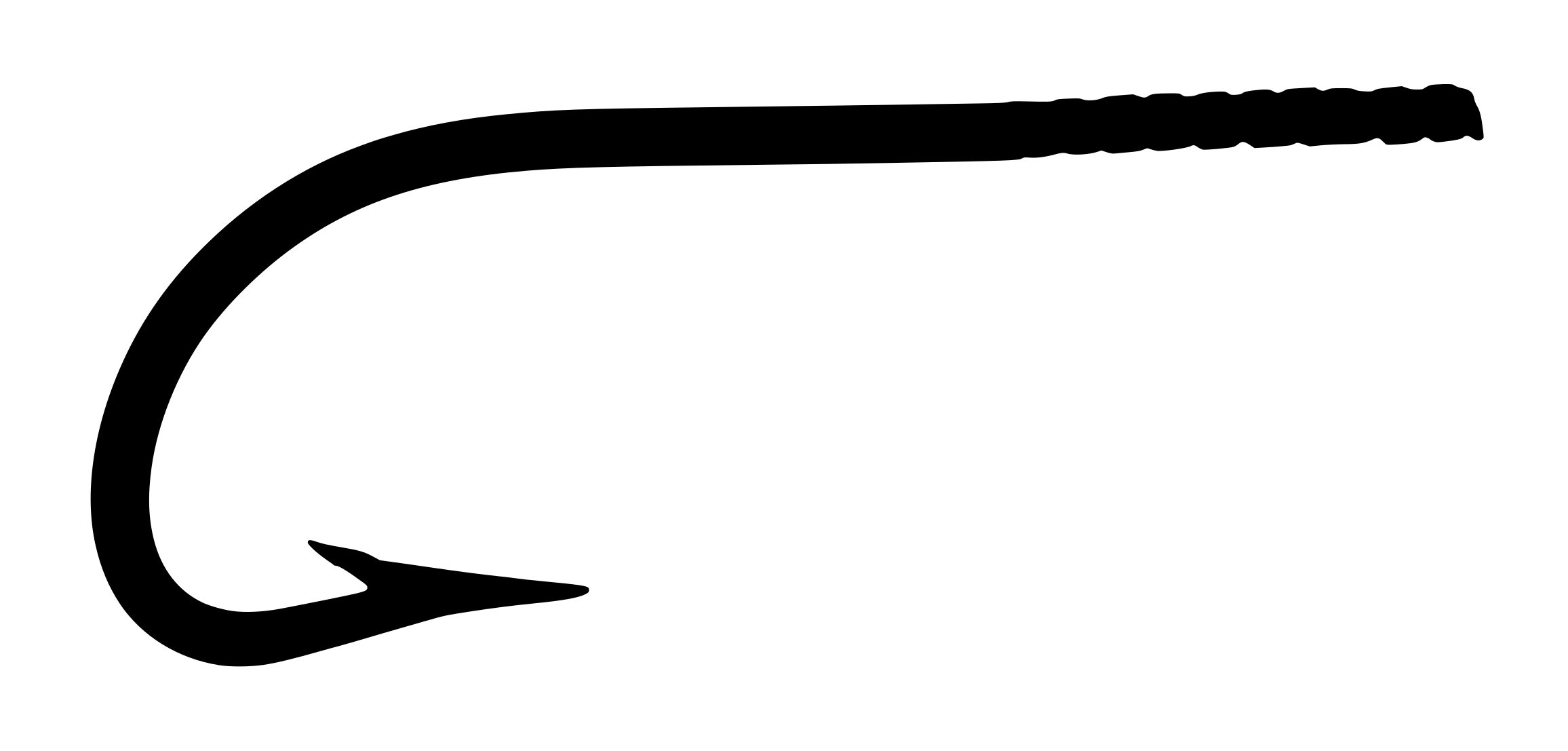
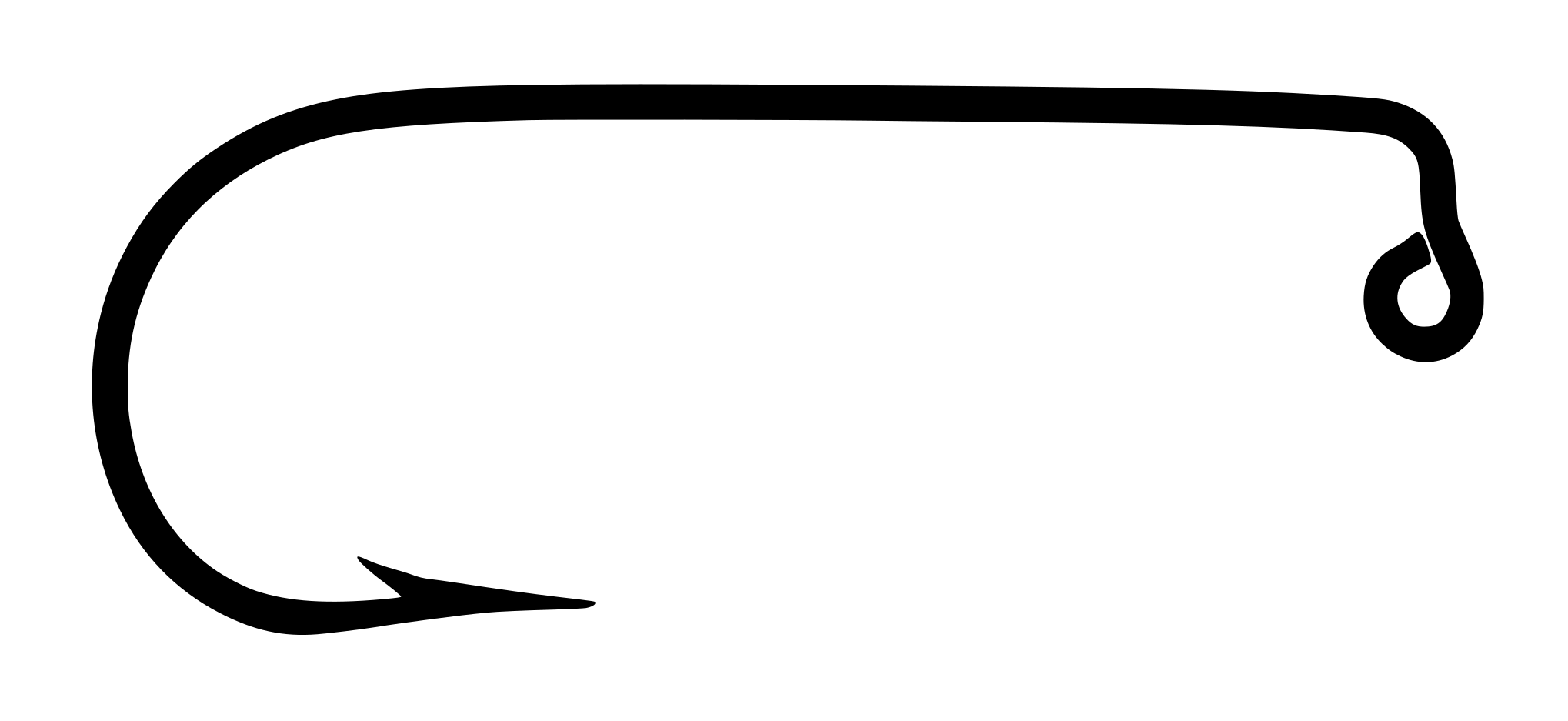
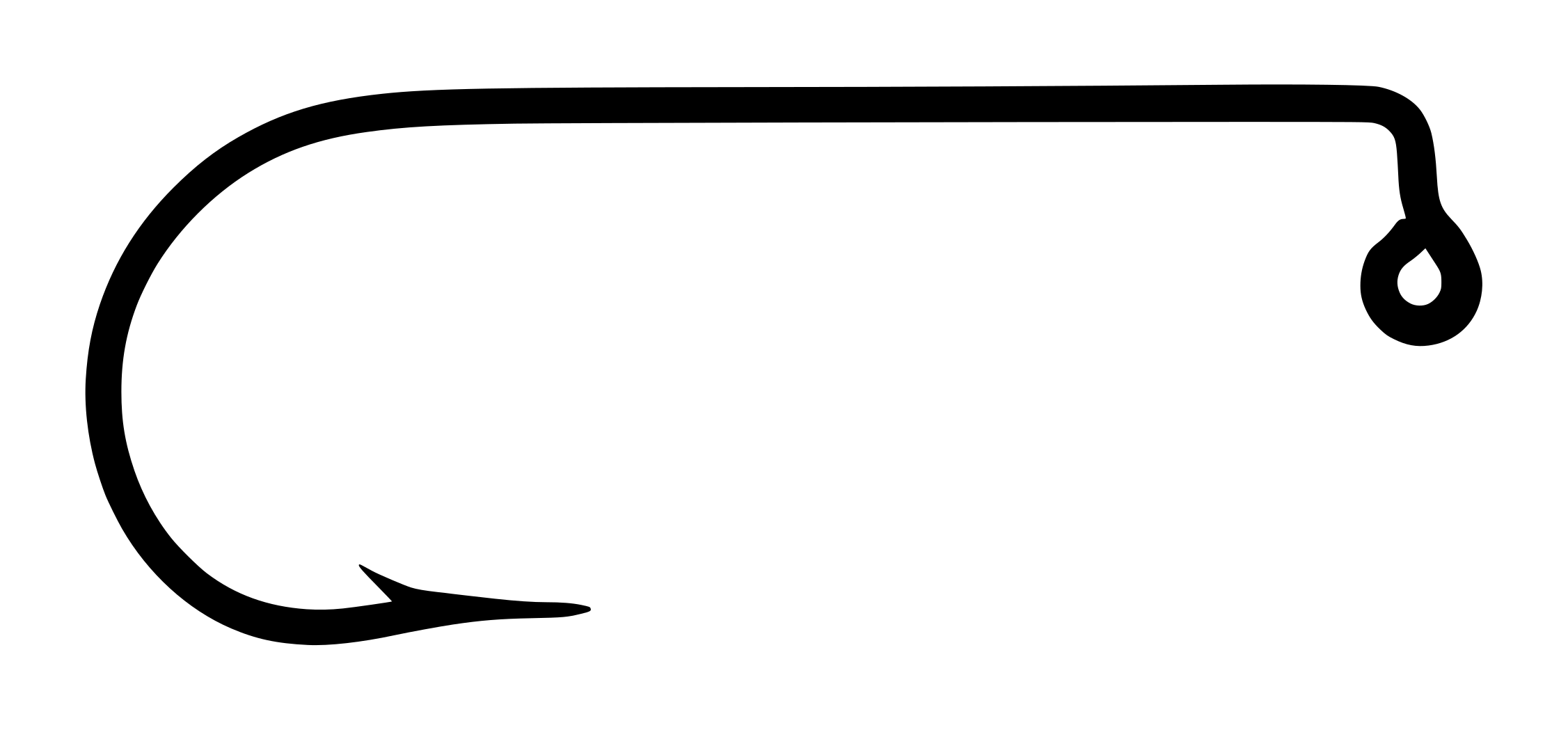
The Mustad pattern 3106 is a classic example of early 20th-century blind-eye hook construction, manufactured in Christiania (now Oslo), Norway before 1925 V. The shank is eyeless, with a knurled, ‘marked’ terminus designed to grip a snelled gut leader – not a hammered spade end – paired with the angular Limerick bend P.
The ‘Rustproof’ treatment advertised on the box, the bronzed finish visible on the specimen, and the heavy decorated paperboard packaging reflect Mustad’s early industrial-era presentation P. The Christiania place-name dates the box to before the city’s 1925 rename to Oslo, which collectors generally regard as more desirable than later Oslo-marked examples I.
Originally intended for wet-fly and bait presentation with snelled gut leaders, these hooks are today valued chiefly as historical and display pieces and for recreating traditional snelled patterns I.
Original Mustad Quality 3106 box showing the rare Christiania, Norway location marking that dates this package to before 1925.
Photographic record
4 cataloged imagesSelect any record to load it above.
4 images shown
Mustad 3106 Superior Limerick Box Christiania NorwayOriginal Mustad Quality 3106 box showing the rare Christiania, Norway location marking that dates this package to before 1925.Open originalMustad 3106 Superior Point Detail Grid ScaleClose-up detail of the Mustad 3106 superior point style, showing the characteristic straight inner taper and bronzed finish on measurement grid.Open originalMustad 3106 Full Profile Limerick Bend Marked ShankComplete profile view of the Mustad 3106 showing the angular Limerick bend, marked ridged shank, and blind flatted eye construction.Open originalMustad 3106 Hook Specimens Comparison GridTwo Mustad 3106 hook specimens showing consistent manufacturing quality and excellent preservation of the rustproof bronzed finish.Open original
Technical profile
Eye
Other, OtherEyeless (blind) construction. The shank terminus is knurled ('marked') to grip a snelled gut leader and tapers to roughly shank width — it is NOT hammered into a flat spade/paddle end P.
Wire
Heavy (1X Heavy), Round, Est. ~0.030"-0.035" (~0.76-0.89 mm) E
Shank
Standard — Marked / Ridged
Bend
Limerick, Standard gapClassic Limerick geometry with angular bottom transition and relatively sharp bend radius P. Bend depth appears standard for the pattern with good proportional balance E.
Point
Superior (near-straight inner taper)Prominent cut barb with a moderate backward angle, proportional to the hook size and cleanly cut P. Standard for a Limerick-pattern spear point. Note: 'Superior' on the box is the product-line label, not a point style — there is no distinct 'Superior' point geometry P.
Finish
Bronzed — Confirmed (stated on packaging)Warm brown bronzed finish with a slight metallic luster, clearly visible in the photographs P. 'Rustproof' on the box is Mustad's marketing term and is not the finish identification; the observed finish is bronzed. Specimen shows excellent preservation with no visible corrosion or wear P.
Hooks display excellent preservation with bright bronzed finish and sharp points. Original packaging shows age-appropriate toning and edge wear but remains structurally sound with all text clearly legible.
The shank terminates in a knurled, or ‘marked,’ section rather than a hammered spade end; the ridges provide mechanical grip for the snell wrapping that secures the gut leader to this eyeless hook P. The bend is a Limerick, with its characteristic angular lower sweep P. The point is a cut-barb spear point of standard proportions for the pattern P. The finish is a warm bronze; Mustad marketed the treatment as ‘Rustproof,’ though bronzing in general offers only modest corrosion resistance, so the term is best read as period marketing rather than a measured performance claim I.
We don't have measured sizes for this hook yet. Own one? Submit calipered measurements and we'll review and add them. Thank you!
Historical context
mustad
O. Mustad & Son traces its origins to a manufacturing works founded in 1832 by Hans Skikkelstad at Brusveen, near Gjøvik, Norway. Ole Mustad took over the business in 1843, and the firm adopted the name ‘O. Mustad & Søn’ in 1874. Originally producing nails, wire, and agricultural and household goods, the company began mechanized fishhook manufacture around 1877 and grew over the following decades into the world’s largest fishhook producer. By the early 1900s, when this box was produced, Mustad had established broad international distribution and supplied a large share of the world’s commercial and sporting hooks. Its Norwegian manufacturing emphasized mechanized precision and consistency, helping set production standards across the industry. Mustad’s expansion during this era coincided with the golden age of Atlantic salmon fishing, when its hooks were widely used by anglers throughout Europe and North America.
Series History
On this packaging, ‘Qual. 3106’ denotes Mustad’s pattern (quality) number 3106 – a catalog designation for this specific blind-eye Limerick pattern, not a separate premium product line V. The pattern was intended for the traditional snelling techniques used by salmon, sea trout, and bait anglers in the early 20th century, in which the gut leader was whipped directly to the eyeless shank. The knurled (‘marked’) shank gave the snell something to grip, while the Limerick bend supplied the angular geometry long favored for wet-fly and bait work I. Blind-eye patterns of this type were gradually displaced as eyed hooks became standard through the 20th century, leaving surviving boxed examples increasingly scarce among collectors I.
Era and Packaging Dating
The 'Christiania' place-name dates the box to before January 1, 1925, when the city was renamed Oslo — a firm pre-1925 terminus V. The c. 1900 start is an estimate based on typography and paper stock rather than a documented date E. Note also that the 'Christiania' (Ch) spelling was the traditional commercial form and was retained by many firms after the municipality moved toward 'Kristiania' (K) in the late 19th century, so the spelling alone is not a precise date marker.
The Christiania Time Capsule
The city name 'Christiania' on this box dates it to before January 1, 1925, when Norway's capital was renamed Oslo. This makes every Mustad box marked 'Christiania' at least 100 years old, representing a fascinating snapshot of early 20th century tackle manufacturing when snelling hooks was standard practice among serious salmon anglers.
Design lineage and influence
The 3106 sits within the European blind-eye tradition, with a Limerick bend whose lineage traces to British Redditch hook making, produced by Mustad with mechanized Norwegian manufacture. Its eyeless, knurled shank reflects the snelling practice that remained common into the early 20th century. Mustad later offered eyed Limerick patterns as the eyed-hook convention became standard; any specific descent from the 3106 to a particular later catalog number (such as the 3366) should be confirmed against period Mustad catalogs before being asserted S.
Best matchRelated by Attribute
Computed automatically from catalog data — updated as new hooks are added.
Matches: Bend, Shank, Wire, Gap, Point +2 moreDiffers: Eye: Other vs Ball Eye; Eye Orient.: Other vs Straight / Inline; Finish: Bronzed vs Black Japanned +2 more
Matches: Bend, Gap, Point, Forging, Application +2 moreDiffers: Shank: Standard vs 2X Long; Wire: Heavy (1X Heavy) vs Standard; Eye: Other vs Blind — Marked Shank +2 more
Matches: Bend, Shank, Wire, Gap, Point +2 moreDiffers: Eye: Other vs Ball Eye; Eye Orient.: Other vs Turned Down; Finish: Bronzed vs Black Japanned +2 more
Matches: Bend, Shank, Wire, Gap, Forging +1 moreDiffers: Eye: Other vs Ball Eye; Eye Orient.: Other vs Straight / Inline; Point: Superior vs Hollow Point +3 more
Matches: Bend, Shank, Gap, Point, Forging +1 moreDiffers: Wire: Heavy (1X Heavy) vs Standard; Eye: Other vs Ball Eye; Eye Orient.: Other vs Straight / Inline +3 more
These hooks were intended for traditional wet-fly and bait presentation, where an eyeless (blind) hook was snelled directly to a gut leader I. The knurled, ‘marked’ shank – visible in the photographs – provided grip for the snell wrapping, holding it securely on the eyeless shank without a formed eye P. Hooks of this Limerick pattern saw use for salmon, sea trout, and bait fishing in the early 20th century I.
Secondary Applications
Bait fishing with snelled gut leaders, historical fly pattern recreation
Classic Fly Patterns
Traditional wet flies, salmon patterns requiring snelled attachment
Modern Equivalents
Hook
Match Quality
Notes
Partridge CS20 Blind Eye Salmon
Very Good
Provisional. Confirm the exact Partridge code and that it is a blind-eye (eyeless) salmon pattern with a Limerick-type bend before presenting it as an equivalent; treat match quality as unverified pending catalog confirmation (S).
Mustad 3366 Limerick
Good
Verify the 3366's actual bend family against a Mustad catalog before describing it as a Limerick; several classic Mustad patterns in this number range are not Limerick bends. If it is not a Limerick, revise or remove this equivalence (S).
Collector notes
High collectability driven by the rare Christiania marking and complete original packaging, though limited by the specialized blind-eye construction that restricts modern usage.
Reference value
$45 – $85 USD estimate
Packaging condition
Very Good — light wear, fully legibleRecorded specimen
Packaging format
MUS-CB-01Catalog code
This example commands strong collector interest due to several positive factors: the definitive pre-1925 Christiania location marking, complete original 100-hook packaging, excellent specimen condition, and representation of traditional Norwegian hook-making craft. The decorative border design and premium ‘Quality’ branding add visual appeal for display collectors.
Limiting factors include the specialized blind-eye construction that requires snelling knowledge for practical use, and the relatively common 3106 model number within Mustad’s extensive catalog. However, the Christiania marking significantly elevates value above standard Oslo-marked examples, making this a desirable piece for serious vintage tackle collectors.
Packaging
Heavy cream-colored paperboard box with black letterpress printing. Decorative floral border pattern frames all edges. Contains manufacturer name, model information, quantity, and product specifications. Shows period-appropriate aging and light edge wear. Dimensions approximately 3.5 x 2.5 inches.
Market Value Notes
Complete Christiania boxes typically command premium pricing. Condition of packaging significantly affects value. Individual hooks worth $2-4 each to fly tiers interested in historical patterns.
Where to Find
Specialized vintage tackle dealers, European fishing memorabilia auctions, estate sales in traditional fishing regions. Rarely appears on general eBay listings.
Collector's Identification Tips
Authenticate by verifying the Christiania spelling and decorative border print quality. Original boxes have crisp letterpress printing and heavy paper stock. Reproduction boxes typically show offset printing characteristics and lighter paper weight.
Preservation
Storage and Preservation
Store in a cool, dry environment away from moisture to prevent corrosion of the rustproof bronzed finish. The original paperboard packaging is historically significant – keep hooks on the original card rather than transferring to modern storage. Avoid handling the hooks directly; use tweezers to prevent oil transfer from skin. The decorative box border is susceptible to fading, so store away from direct sunlight. Consider archival sleeves for the box if displaying in humid conditions.
Primary Source
Package Text Analysis
Source: Original Mustad Quality 3106 package text, pre-1925 Christiania production
The package text ‘Qual. 3106’ uses the abbreviated ‘Qual.’ format typical of early 20th century Mustad packaging, indicating their premium Quality series. The ‘Superior’ designation refers specifically to the point style – a technical specification that distinguished these hooks from hollow point alternatives. ‘Marked Rustproof’ indicates both the ridged shank feature and the corrosion-resistant finish, combining functional and protective elements in the marketing language of the era.
Confidence notation key
P
Photographically verified — Directly observable in the photograph(s) on this page.
V
Verified by documentation — Confirmed by manufacturer catalog, spec sheet, or published reference.
I
Inferred — A logical deduction from observable or documented evidence, not directly stated.
E
Estimated — An approximation based on visual comparison, proportional analysis, or limited data.
S
Speculative — A reasoned hypothesis that cannot be confirmed from available evidence.
Claims with no notation are confirmed by multiple independent sources. All photographs on garrenwood.com are taken on a measurement grid where each square equals 1/10 inch (0.1″ / 2.54 mm).