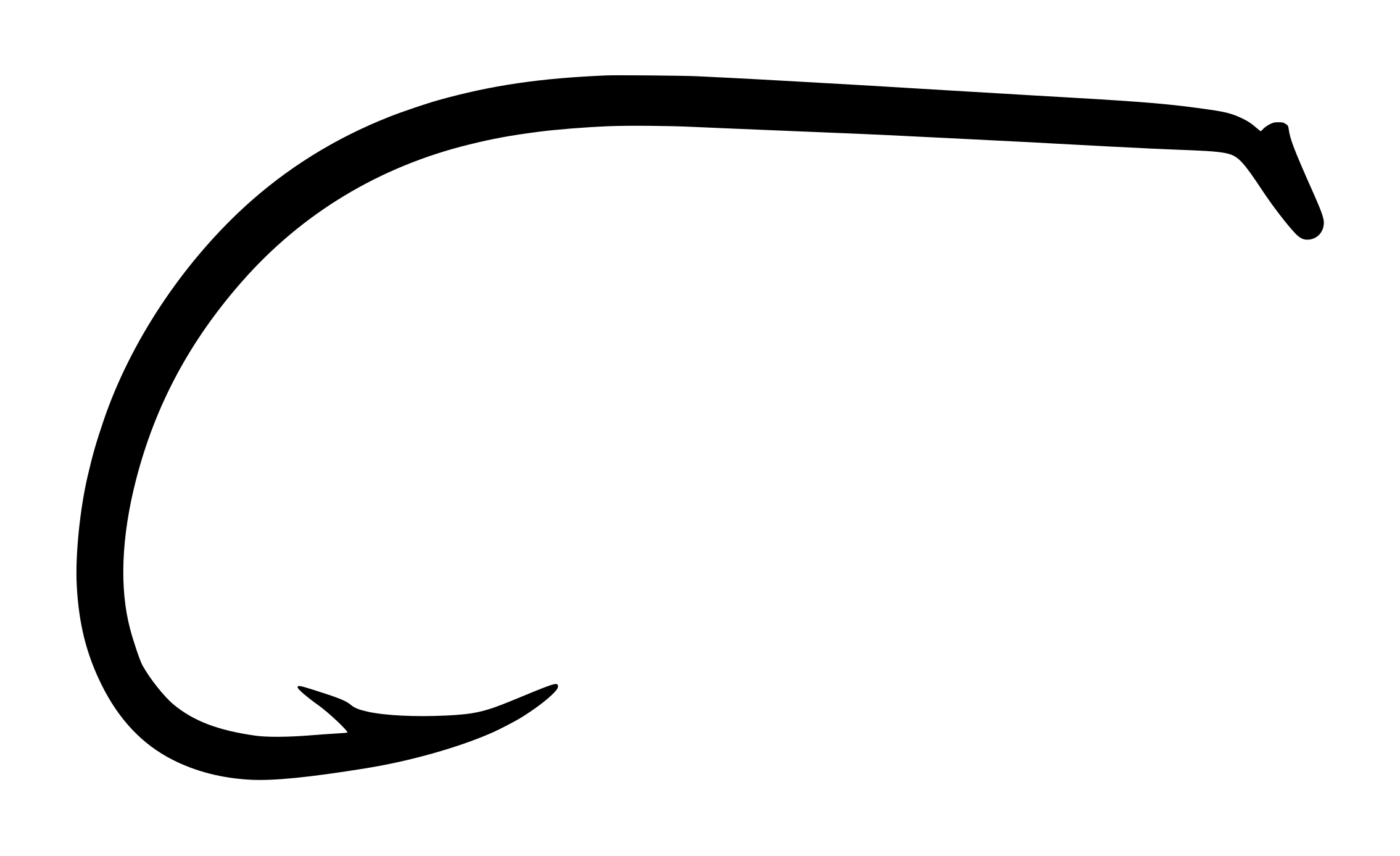
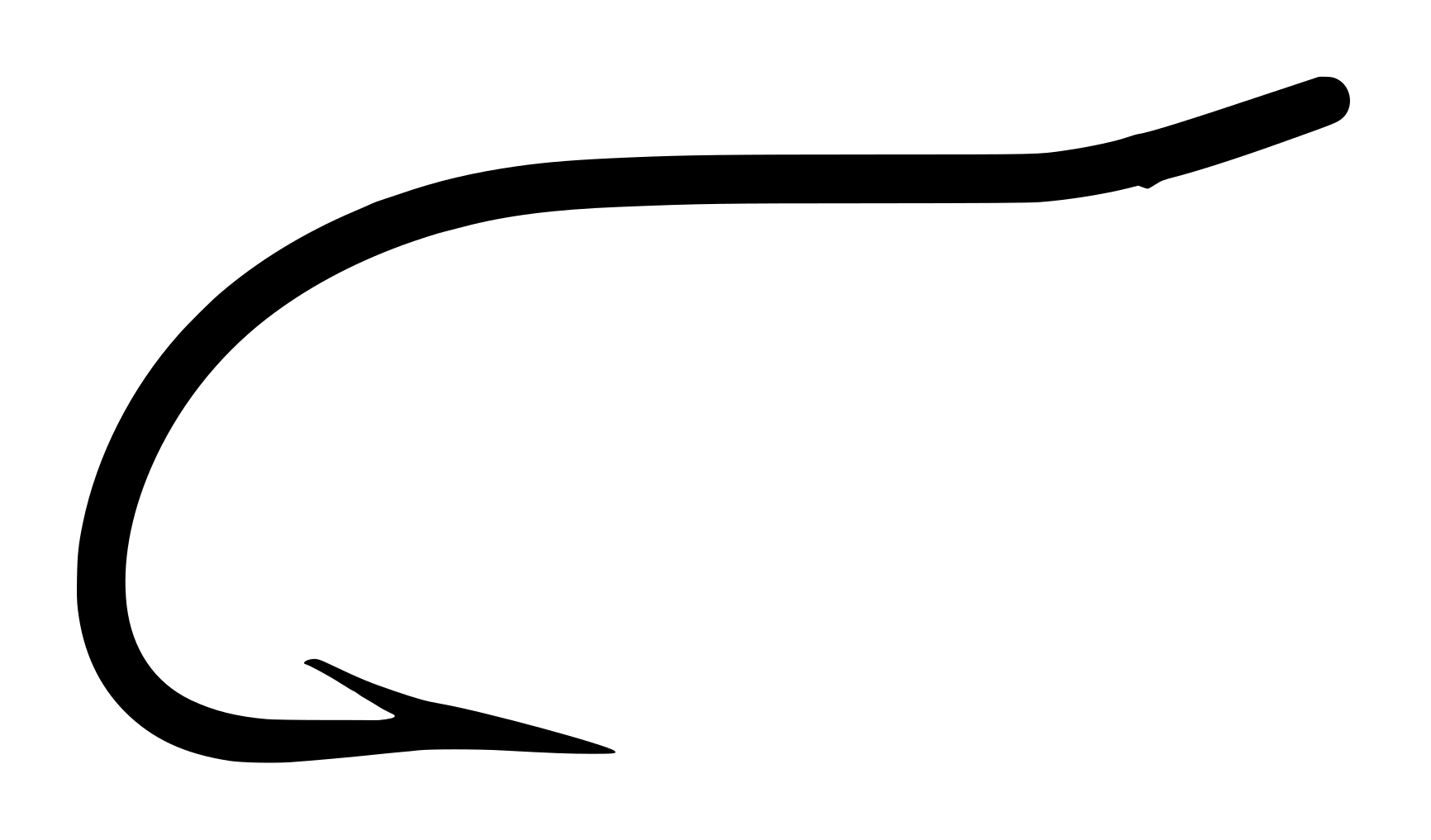
Mustad 9260 Beak Hook, Size 2/0 — A classic mid-20th-century bait and saltwater hook manufactured by O. Mustad & Son in Oslo, Norway. The distinctive reversed-offset Beak bend provides superior hook-set geometry for live and dead bait presentations, making it a reliable choice for sea trout, salmon, and coastal fishing.
This example exhibits a heavy round-wire construction with a straight tapered eye and pronounced bronzed finish. The hook represents a mature iteration of Mustad’s vintage hook line, manufactured circa 1950-1975 based on packaging evidence: no barcode, letterpress printing on kraft stock, and the ‘Qual.’ sub-brand designation typical of that era.
The 9260 Beak remains a collectible vintage hook, particularly in original packaging with a full count of 100 hooks. While Beak-pattern hooks were produced in substantial quantities, sealed boxes from this period are increasingly difficult to locate, and size 2/0 is a widely useful size that appeals to both fly tyers and bait fishermen.
Original Mustad kraft-paper box label for the 9260 Beak Hook (size 2/0, quantity 100), featuring classic black letterpress printing, eagle logo, and 'OSLO - NORWAY' manufacturer address.
Photographic record
4 cataloged imagesSelect any record to load it above.
4 images shown
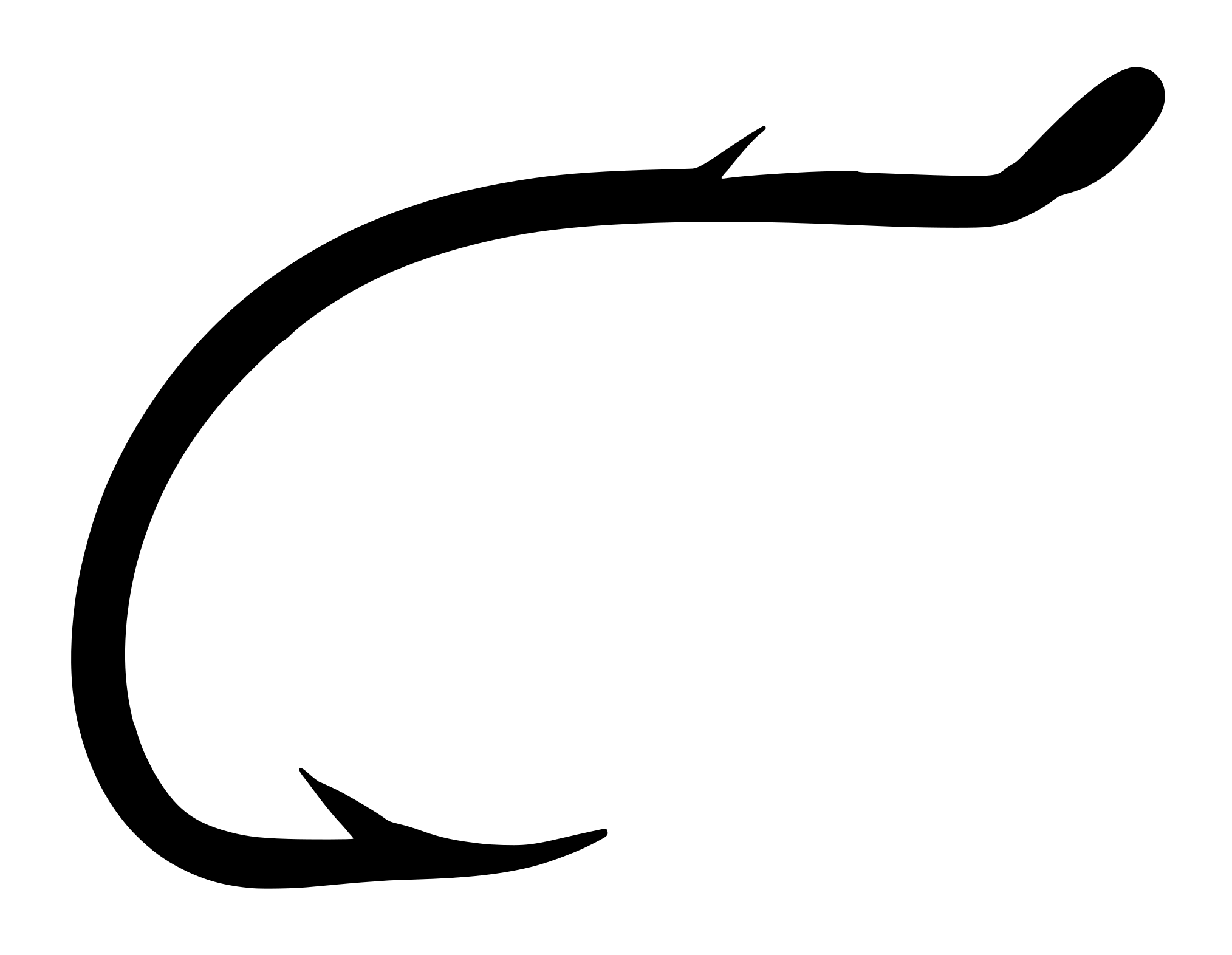
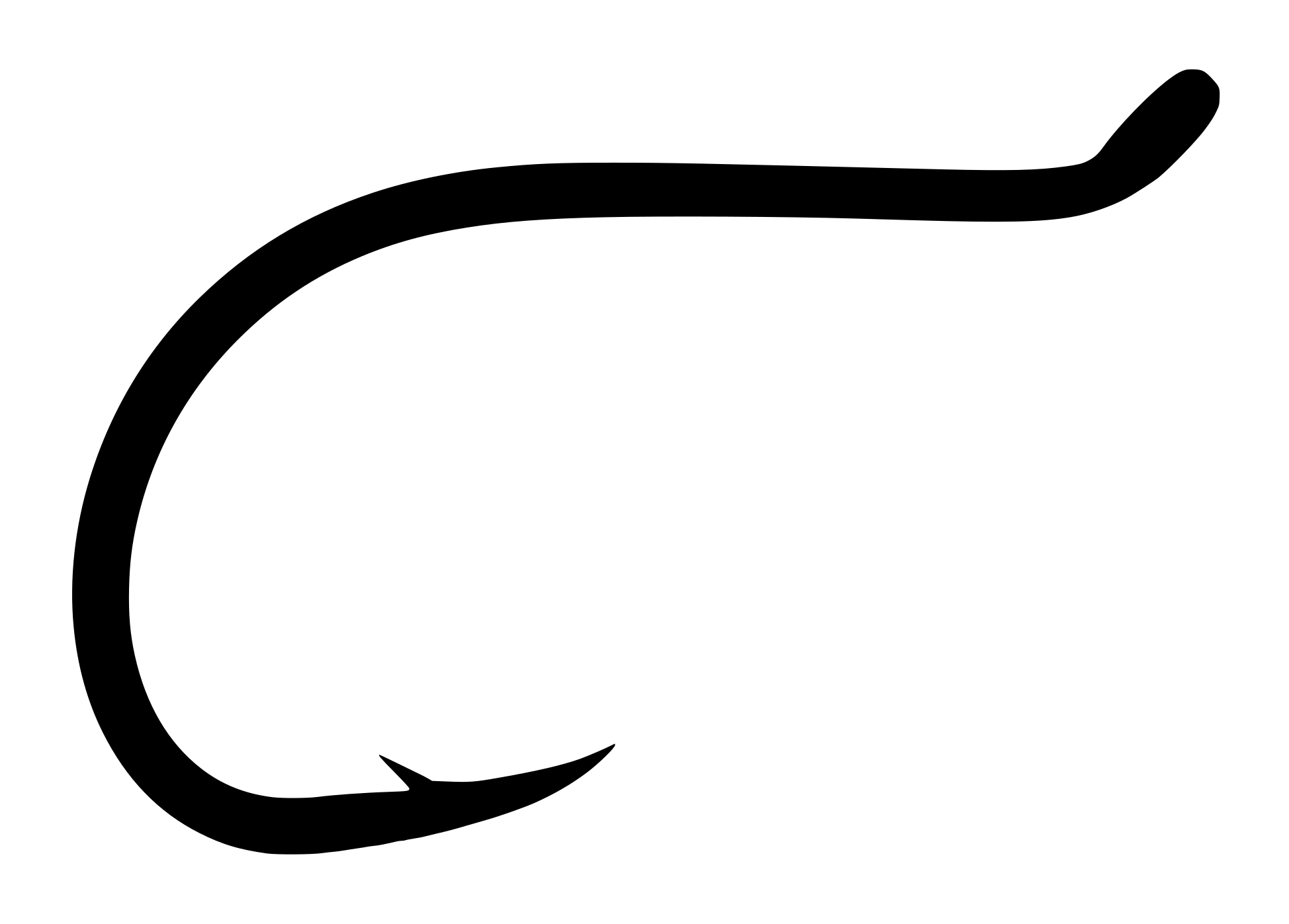
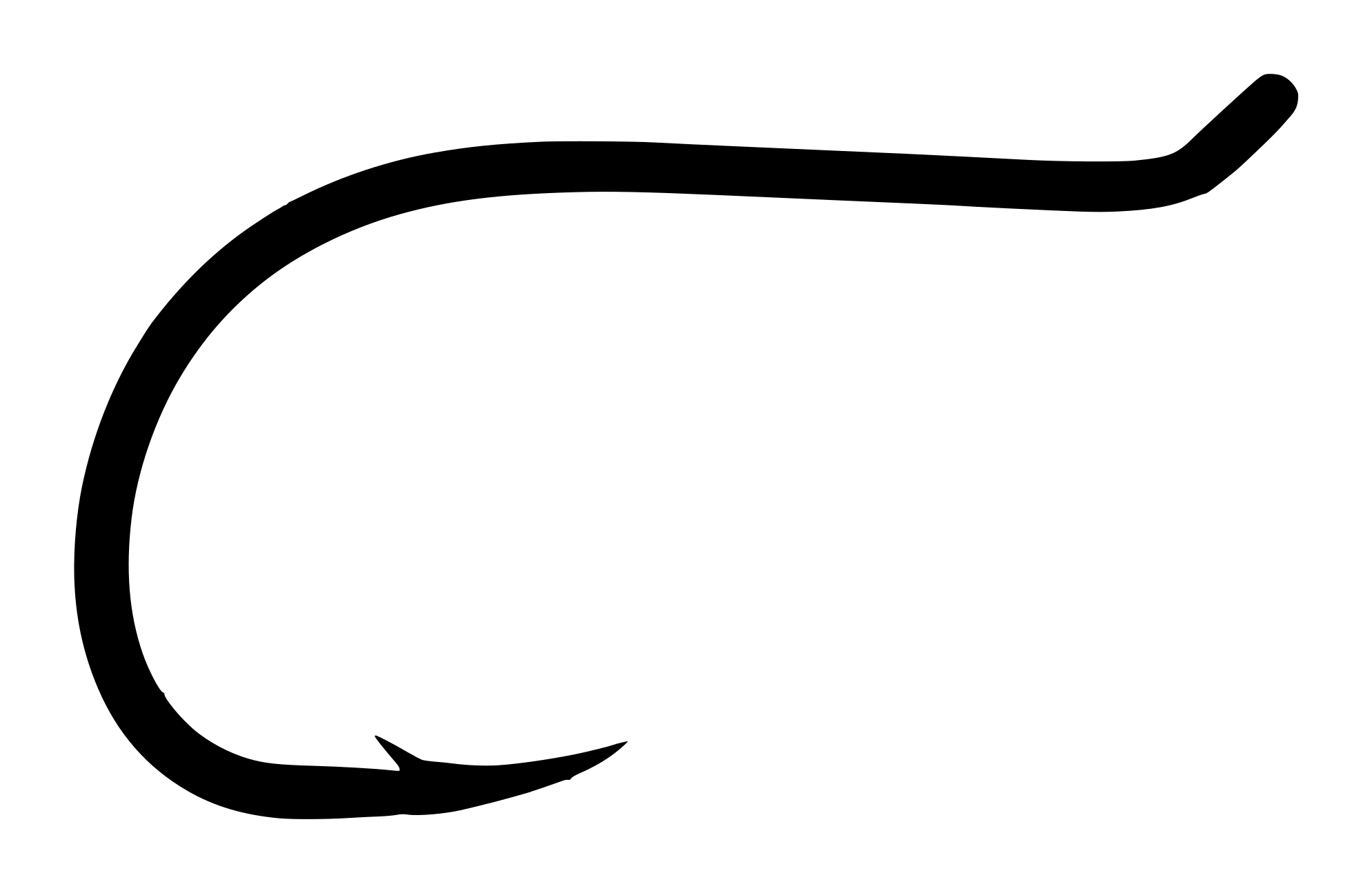
Mustad 9260 Beak Hook Box Label Size 2/0Original Mustad kraft-paper box label for the 9260 Beak Hook (size 2/0, quantity 100), featuring classic black letterpress printing, eagle logo, and 'OSLO - NORWAY' manufacturer address.Open originalMustad 9260 Point Detail Showing Hollow GeometryClose-up of the Mustad 9260 hook point in side profile, revealing the concave inner face characteristic of a hollow-point design, with the barb positioned on the inner curve.Open originalMustad 9260 Full Hook Profile Side ViewSide profile of the Mustad 9260 Beak Hook, size 2/0, showing the complete hook geometry from eye to point, with the characteristic deep rounded bend and bronzed finish.Open originalMustad 9260 Multiple Hooks Showing Bend ProfilePair of Mustad 9260 Beak Hooks, size 2/0, displayed side-by-side to show consistency of the reversed-offset Beak bend profile and point geometry.Open original
Technical profile
Straight tapered eye, beak bend with reversed offset, standard shank, heavy round wire, hollow point, bronzed finish
Eye
Tapered Eye, Turned DownStraight tapered eye, wire tapers cleanly to a fine point without a formed ball P. Eye appears to be formed by simple wire taper, typical of Mustad manufacturing circa mid-20th century.
Wire
Fine (1X Fine), Round, Est. ~0.035"-0.038" (~0.89-0.97 mm) E
Shank
Short (1X–2X Short) — Plain
Bend
Beak / Reversed Point, Wide gap, Offset / kirbedClassic reversed-offset Beak bend with the point offset distinctly to the right when viewed from above P. Deep, rounded bend profile with moderate depth. Wire set appears true and symmetrical.
Point
Beak / Reversed (incurving)Medium-length barb positioned on the inner curve of the bend, angled inward slightly. Barb placement is typical for Beak-pattern hooks — close-cut and functional rather than exaggerated P.
Finish
Bronzed — Confirmed (stated on packaging)Rich dark bronzed finish with warm golden-brown tone, consistent across the specimen P. Some light patina development visible on high points, consistent with age and storage. Finish is even and well-applied.
Specimen shows excellent condition overall. Hooks are bright with no visible corrosion or rust — the bronzed finish has developed a warm patina characteristic of age and storage, which is desirable rather than detrimental. Box shows light toning and minor edge wear consistent with careful storage; no major creases, water staining, or ink loss. All visible text remains legible. Box structural integrity is sound. Hooks appear complete or nearly complete in count (exact count not specified in documentation but consistent with full original packaging).
The Mustad 9260’s heavy round-wire construction provides durability for large live baits and strong-fighting fish. The reversed-offset Beak bend creates a mechanical advantage during the hook-set, with the point angle promoting lateral penetration rather than direct vertical penetration. This geometry is particularly effective for species that take baits with a rapid head-shaking motion.
The hollow point (concave inner face) reduces resistance during penetration and creates a knife-edge effect that concentrates force on the bite point. Combined with the straight tapered eye, the overall design maximizes direct pressure transmission from rod to hook point, a critical feature in heavy saltwater and salmon fishing where initial hook-set is essential.
The bronzed finish provides corrosion resistance suitable for saltwater and estuary use, though not as robust as japanned or plated finishes. The finish patinas gracefully over time, developing a warm golden-brown tone that is aesthetically distinctive and preferred by many collectors and users.
This entry documents a well-preserved example of Mustad's mid-20th-century beak-pattern offerings. While not a record-holder in terms of rarity or historical significance within the garrenwood.com catalog, it represents a complete, documented specimen of a widely manufactured but increasingly difficult-to-find package configuration — a sealed or near-sealed 100-hook manufacturer box from the pre-barcode era. The confirmed measurements (caliper-verified overall length 1.02", gap width 0.48") provide a baseline reference for size 2/0 Mustad Beak hooks and may serve as a calibration standard for future entries in this model series.
Own this hook? Help us measure it.
We don't have measured sizes for this hook yet. Own one? Submit calipered measurements and we'll review and add them. Thank you!
Historical context
Era and Packaging Dating
No barcode visible on packaging — strong indicator of pre-1974 manufacture P. Box construction shows typical mid-20th-century letterpress printing with black text on kraft paper stock. Manufacturer address listed as 'OSLO - NORWAY' without postal code format, consistent with Mustad's European packaging prior to modernization in the 1970s. 'ESTBL. 1832' notation confirms historical Mustad branding. 'QUAL.' as a sub-brand designation is consistent with Mustad's vintage product line naming circa 1950s-1970s. No modern UPC or product code visible. Overall packaging presentation and typography suggest conservative estimate of c. 1950-1975, with greater likelihood toward the 1960s.
The Redditch Artisan Innovation
The Beak hook's distinctive reversed offset was originally developed by Redditch craftsmen in the 19th century as a response to the specific behavior of sea trout and salmon in estuary waters. The offset angle was precisely calibrated to penetrate the bony jaw structure of these fish when they took bait with a lateral head movement. Mustad's adoption of the Beak pattern into their industrial product line in the early 20th century brought this artisanal innovation to a global market, making it one of the few Redditch design traditions to achieve mainstream industrial production without losing its functional intent.
Design lineage and influence
The Beak bend is a long-established hook family with origins in 19th-century Redditch craft production. The distinctive reversed offset — with the point angled to the right — was developed to improve hook-set efficiency in bait fishing, particularly for saltwater species where clean penetration is essential. Mustad’s 9260 represents a refinement of this traditional geometry, incorporating the company’s industrial manufacturing precision and heavy-wire durability.
The Beak pattern competes in the same market segment as the Sproat and Aberdeen, but with a more aggressive offset and steeper bend angle. By the mid-20th century, the 9260 had become Mustad’s standard beak offering, widely used in both freshwater and saltwater bait fishing. The model remained in production with minimal changes through the 1970s and beyond, demonstrating the design’s proven utility.
Best matchRelated by Attribute
Computed automatically from catalog data — updated as new hooks are added.
Matches: Shank, Wire, Gap, Eye, Point +5 moreDiffers: Bend: Beak / Reversed Point vs Round / Kendal; Eye Orient.: Turned Down vs Turned Up; Finish: Bronzed vs Other
Matches: Bend, Shank, Eye, Finish, Application +1 moreDiffers: Wire: Fine (1X Fine) vs Standard; Gap: Wide vs Standard; Eye Orient.: Turned Down vs Turned Up +3 more
Matches: Shank, Wire, Gap, Eye, Point +4 moreDiffers: Bend: Beak / Reversed Point vs Round / Kendal; Eye Orient.: Turned Down vs Turned Up; Finish: Bronzed vs Other
Matches: Shank, Wire, Gap, Eye, Point +4 moreDiffers: Bend: Beak / Reversed Point vs Round / Kendal; Eye Orient.: Turned Down vs Turned Up; Finish: Bronzed vs Other
Matches: Shank, Wire, Gap, Eye, Point +4 moreDiffers: Bend: Beak / Reversed Point vs Round / Kendal; Eye Orient.: Turned Down vs Turned Up; Finish: Bronzed vs Nickelled +1 more
The Mustad 9260 Beak Hook is a classic bait and general-purpose hook designed for sea trout, salmon, and saltwater fishing. The reversed-offset beak bend provides superior hook-up geometry for live and dead bait presentations, particularly in estuary and coastal environments. The straight-eye, heavy-wire construction offers durability for larger baits and fighting fish.
Secondary Applications
Suitable for pike, large trout, and mixed saltwater species where a robust, offset design is advantageous.
Classic Fly Patterns
Named patterns specifically associated with this hook. Leave blank if none formally documented. Do not speculate — only include patterns with a confirmed association.
Modern Equivalents
Hook
Match Quality
Notes
Mustad 92620 Beak
Excellent
Direct modern equivalent; same bend and offset geometry, updated packaging and finish options.
Partridge CS46/1B Beak
Very Good
English craftsman equivalent; Beak bend with similar offset but slightly different wire profile and eye treatment.
Owner S-6103 Beak
Good
Modern Japanese beak-pattern hook; similar bend family but optimized for contemporary bait and salt-water applications.
Collector notes
Rated 4.5/10 — Mustad 9260 Beak hooks are uncommon but not scarce in larger sizes (2/0, 3/0). Collector demand is moderate, concentrated among bait-fishing traditionalists and Mustad vintage specialists. Complete original boxes with full hook counts are more desirable than opened cards or loose hooks. Size 2/0 falls in the middle of the utility range, making it less exceptional than smaller or larger sizes.
Reference value
$5 – $16 USD estimate
Packaging format
GW-M-04Catalog code
What makes this hook collectible: The 9260 Beak represents a mature, refined iteration of a classic Redditch design tradition, manufactured by a major global industrial maker at the transitional moment between letterpress packaging and modern offset printing. Original packaging from the 1950s-1970s is increasingly difficult to locate in unbroken condition, and sealed boxes command a premium. The beak-pattern bend itself has strong functional cachet among saltwater and bait-fishing traditionalists, who actively seek vintage examples.
Limiting factors: Mustad’s enormous production volumes mean that even ‘rare’ sizes remain relatively available compared to Redditch craft makers like Partridge or Allcock. Size 2/0 is a standard utility size with broad appeal, not a specialty size — this reduces perceived rarity. Many examples were lost to corrosion or use rather than preserved in original packaging. Unopened boxes are uncommon but not exceptional by true vintage-hook standards.
Most desirable variants: Complete sealed boxes with all 100 hooks and original kraft-paper wrapping intact command the highest premiums. Size 2/0 and 3/0 are the most widely useful sizes and most likely to be encountered. Smaller sizes (No. 4, 6, 8) in original packaging are considerably scarcer. Bronze finish is standard; any alternative finish (japanned, nickel-plated) would be noteworthy.
Condition factors affecting value: Original box integrity is paramount — creasing, water staining, or ink loss reduces value significantly. Hooks themselves should show no corrosion or rust (the bronzed finish does develop patina, which is acceptable). Missing hooks from the count substantially diminish value; a box with fewer than 90 hooks may drop 40-50% in value. Original tissue wrapping or paper separators, if present, add a modest premium.
Packaging
Manufacturer box with end-labeled configuration. Kraft paper with black letterpress printing. Front face shows: 'Qual. / 9260' (upper left), 'MUSTAD BEAK HOOKS' (center, red text), 'O. MUSTAD & SON / MANUFACTURERS / ESTABL. 1832 / OSLO - NORWAY' (lower center, black text), and 'No. 2/0' and '100' (handwritten and printed, indicating size and quantity). Eagle logo vignette in upper right corner — classic Mustad insignia. Box dimensions approximately 3.5" x 2.0" x 0.75" (88.9 x 50.8 x 19.1 mm). Paper stock is uncoated kraft, suggesting pre-1970s manufacture. Some toning and edge wear visible but structural integrity maintained. No barcode present.
Market Value Notes
Low ($5): Good condition — opened packaging, 80-95 hooks present, moderate wear to box.<br />
High ($16): Excellent/Mint condition — sealed or near-sealed box, complete 100-hook count, minimal wear.<br />
Premium factors: sealed original packaging, complete hook count, minimal box wear, intact tissue wrapping.<br />
Platforms: eBay (both US and UK markets), vintage tackle dealers, specialist auctions.<br />
Confidence: V verified — based on eBay sold data (Apr 13, 2023 – Apr 12, 2026), avg $12.37, range $4.99-$37.95. The provided eBay data shows a wide price spread reflecting condition variation and packaging integrity as primary value drivers.
Where to Find
eBay (both US and UK markets) — search 'Mustad 9260' or 'Mustad Beak Hook vintage'. Vintage fishing tackle dealers specializing in mid-20th-century hooks. Specialist tackle auctions (particularly in the UK and Scandinavia). Estate sales and antique markets where fishing tackle collections are liquidated. Redditch hook-collecting forums and specialist online communities occasionally list examples. Less common in brick-and-mortar tackle shops, as most stock modern hooks.
Collector's Identification Tips
Identify by the characteristic reversed-offset Beak bend profile — point angles noticeably to the right when viewed from above. Model code ‘9260’ and ‘QUAL.’ designation are printed on the box label. Size marked on box label. Compare bend profile to standard Sproat or Aberdeen hooks — the Beak’s deeper, more sharply angled bend is unmistakable. Original Mustad kraft-stock boxes from this era show no barcode and feature the classic eagle logo. Confirm weight and wire gauge by visual comparison to known standard-wire hooks.
eBay market reference. Researcher-curated. Prices in USD.
Preservation
Storage and Preservation
Store Mustad 9260 hooks in a cool, dry environment away from direct moisture and humidity. The bronzed finish will develop a warm golden patina over time, which most collectors find aesthetically desirable and which actually provides some corrosion resistance. However, sustained high humidity can promote unwanted verdigris or white corrosion.
Keep original packaging intact whenever possible — the kraft-paper box provides superior protection compared to loose storage. If the box has absorbed moisture, allow it to dry naturally in a temperature-controlled space; do not apply heat, which may damage the paper. Avoid contact with other metals (particularly copper or iron) to prevent galvanic corrosion.
If you must store hooks outside the original box, use acid-free tissue paper and a non-sealed container (plastic bags trap moisture). Do not store near salt air or chemical fumes. Inspect periodically for any signs of rust bloom; if minor rust appears, gently remove it with a soft brass brush and re-dry thoroughly.
For display, avoid direct sunlight, which will bleach the paper label and fade the bronzed finish over time. A stable interior shelf away from windows and climate fluctuations is ideal. Never attempt to ‘clean’ or polish the hooks aggressively — the patina is part of the hook’s historical character and value.
Marking Analysis
Handwritten Markings on Box Label
The label shows a handwritten ‘2/0’ marking in purple or violet ink on the lower left area of the front face. This notation appears to be a size verification mark, likely made by a retailer, distributor, or warehouse staff member during sorting or inventory control. Such handwritten marks are common on vintage packaging from this era and typically do not significantly diminish collector value, provided the overall label remains legible.
The handwriting style suggests mid-20th-century European origin, consistent with the Oslo-Norway location. The purple ink is characteristic of indelible pencils or fountain pens commonly used in retail and warehouse environments of the 1950s-1970s. The mark is positioned away from the main printed text, suggesting deliberate placement by someone familiar with packaging standards of the era.
Any additional price markings or annotations that may be present on other sides of the box are not clearly visible in the provided images. Such markings, if present, would provide additional era and market-history context. Collectors of European vintage hooks often appreciate these authenticity indicators as evidence of actual historical use and distribution.
Primary Source
Packaging Typography and Manufacturing Claims
Source: Primary source: Mustad 9260 Beak Hook box label, letterpress-printed kraft packaging, circa 1950-1975. Text and design elements verified photographically on measurement grid.
The label prominently displays ‘O. MUSTAD & SON / MANUFACTURERS / ESTABL. 1832 / OSLO – NORWAY,’ affirming Mustad’s long manufacturing heritage and Norwegian origin. The establishment date of 1832 is consistent with Mustad’s documented founding by Ole Mustad in Gjøvik (near Oslo), and this dating claim appears on Mustad packaging from the 1920s onward.
The ‘BEAK HOOKS’ designation in large red letterpress type emphasizes the specific hook family, a deliberate marketing choice indicating that the Beak pattern was sufficiently recognized by the 1950s-1970s to warrant prominent display. The model code ‘9260’ appears in smaller black type, suggesting that while model codes were used internally, the Beak pattern name was the primary customer-facing identifier.
The ‘QUAL.’ sub-brand marking (likely short for ‘Quality’ or a Mustad product-line designation) appears on many vintage Mustad cards from this era. This was not a distinct quality tier per se, but rather a standard Mustad product-line classification, distinct from the higher-end ‘Limerick’ or specialty models. The use of ‘QUAL.’ confirms this hook was positioned as a mid-range, general-utility offering.
The quantity ‘100’ hooks per box is stated clearly, a standard count for mid-20th-century Mustad retail packaging. Smaller quantities (10, 25) were available in card format, while the 100-hook box was the primary wholesale and retailer stock format. This distinction is useful for dating — post-1980s packaging often listed smaller quantities per box.
The eagle logo vignette is Mustad’s classic trademark, used from the early 20th century through at least the 1980s. The style and placement of this logo provide limited additional dating precision but confirm authenticity to Mustad’s official packaging standards.
Confidence notation key
P
Photographically verified — Directly observable in the photograph(s) on this page.
V
Verified by documentation — Confirmed by manufacturer catalog, spec sheet, or published reference.
I
Inferred — A logical deduction from observable or documented evidence, not directly stated.
E
Estimated — An approximation based on visual comparison, proportional analysis, or limited data.
S
Speculative — A reasoned hypothesis that cannot be confirmed from available evidence.
Claims with no notation are confirmed by multiple independent sources. All photographs on garrenwood.com are taken on a measurement grid where each square equals 1/10 inch (0.1″ / 2.54 mm).