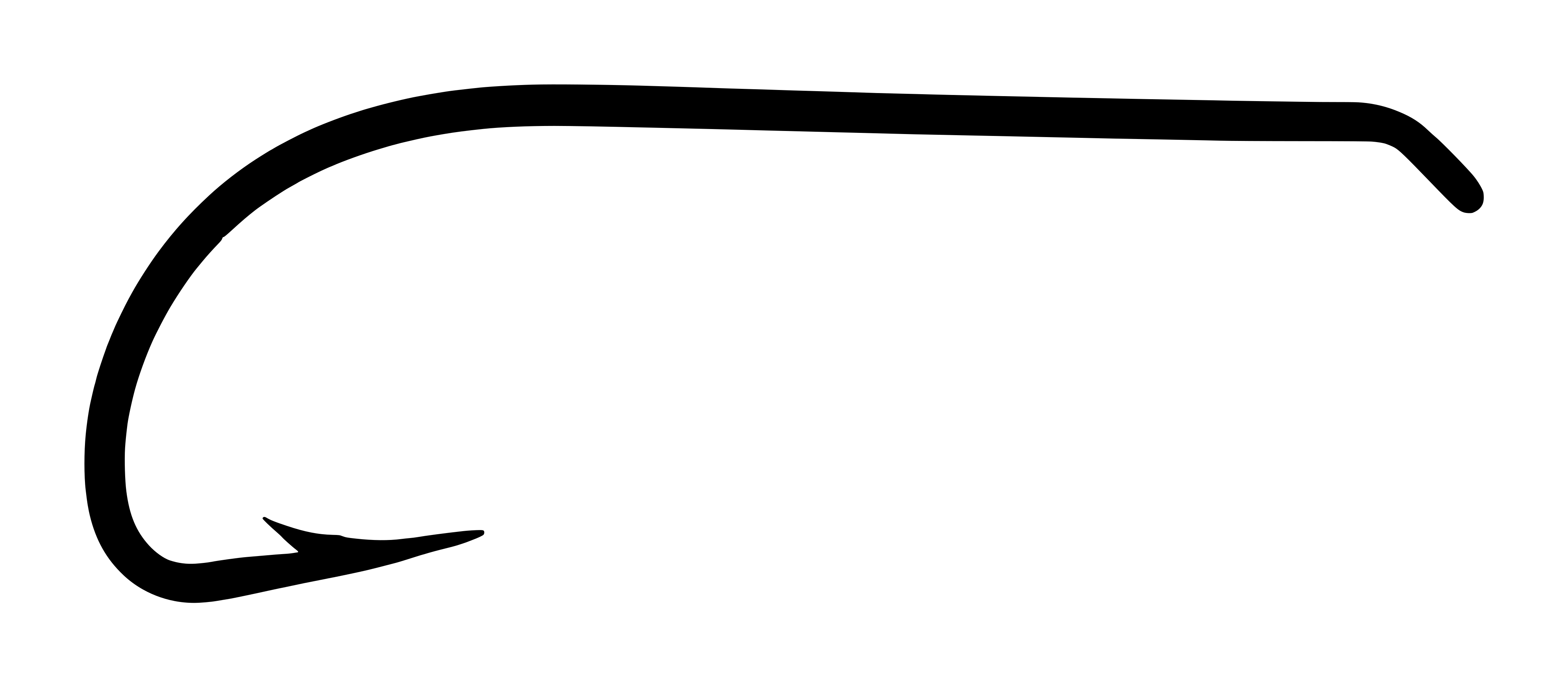
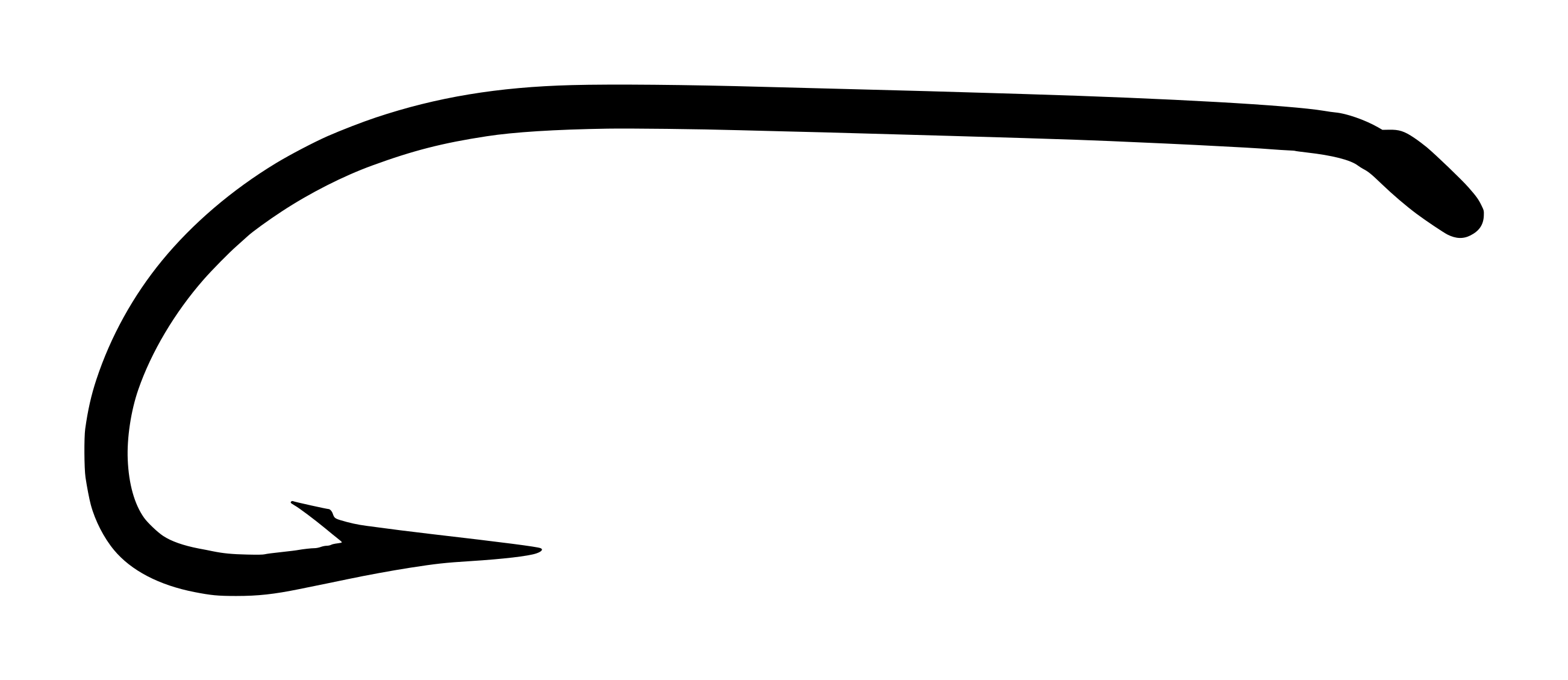
The Mustad 3121 represents the classic Limerick trout hook, featuring the distinctive angular bend geometry that originated in Irish fishing traditions P. This size 1 specimen displays the superior point style and bronzed finish typical of mid-20th century Mustad production, with a turned-up loop eye designed for both fly tying and bait fishing applications.
Dating from approximately 1950-1970 based on the handwritten identification and model numbering system, this hook exemplifies Mustad’s success in mechanizing traditional European hook patterns for global distribution I. The 3121 served as a versatile pattern for wet fly fishing and worm presentation, popular among both fly fishers and bait anglers.
While individually common due to bulk distribution, these hooks represent an important transition period when traditional regional patterns became standardized industrial products. Collectors value examples with original packaging or shop documentation, making this loose specimen of modest but genuine historical interest.
Close-up view of the Mustad 3121's superior point showing the characteristic near-straight inner taper and sharp cutting edge.
Photographic record
2 cataloged imagesSelect any record to load it above.
2 images shown
Mustad 3121 Superior Point Detail Size 1Close-up view of the Mustad 3121's superior point showing the characteristic near-straight inner taper and sharp cutting edge.Open originalMustad 3121 Full Profile Size 1 Limerick BendComplete side view of the Mustad 3121 on measurement grid showing the distinctive angular Limerick bend and turned-up loop eye.Open original
Technical profile
Eye
Tapered Eye, Turned UpWell-formed turned-up loop eye with clean closure and consistent wire forming. Eye positioned for optimal snelling angle P.
Wire
Standard, Round
Shank
2X Long — Plain
Bend
Limerick, Standard gapClassic Limerick geometry with sharp angular transition at bend bottom, creating the distinctive 'corner' that differentiates it from rounded Sproat bends P. Depth and symmetry consistent with quality Mustad forging standards.
Point
Superior (near-straight inner taper)Medium-length barb with standard angle and sharp cut. Proportional to hook size with clean finish work P
Finish
Bronzed — Confirmed (stated on packaging)Warm bronze tone with good coverage and minimal wear. Finish shows the characteristic golden-brown color of traditional bronzing process P.
The Limerick bend’s defining angular geometry at the curve bottom creates a more pronounced hook set angle compared to rounded bends. The superior point geometry—with its nearly flat inner face—provides reliable penetration without the fragility of hollow points. The turned-up loop eye allows easy snelling while maintaining strength for larger fish. Standard wire gauge balances strength with appropriate presentation for size 1 applications P.
Size & scale lab
Selected size
(unspecified)
Physical specimen
Overall Length
21.5 mmE
Shank Length
9.5 mmE
Gap Width
8.5 mmE
Bend Depth
7 mmE
Confidence
P
Physical specimen
Grid-derived from photograph (1/10" grid)
Own this hook? Help us measure it.
We don't have measured sizes for this hook yet. Own one? Submit calipered measurements and we'll review and add them. Thank you!
The Mustad 3121 was part of their core trout hook series, featuring the classic Irish Limerick bend design. Introduced in the early-to-mid 20th century, this model served as Mustad’s answer to English Limerick patterns from Redditch manufacturers I. The angular bend geometry, derived from traditional Irish hook smiths, was believed to provide superior holding power compared to rounded Sproat bends. The series remained in production through the 1970s before being largely superseded by chemically sharpened modern equivalents S.
Era and Packaging Dating
Handwritten identification on plain paper suggests loose stock from mid-century tackle shop bulk bin. The 3121 model code corresponds to Mustad's mid-20th century catalog numbering system. Lack of modern packaging or printed labels supports 1950-1970 timeframe.
The Irish Advantage
The Limerick bend originated in Ireland's fishing traditions and was named after the city of Limerick. Irish hook smiths believed the angular bend held fish more securely than English round bends, leading to heated debates in 19th-century angling literature about bend geometry superiority. Mustad's mechanized production made these traditionally hand-forged Irish patterns available worldwide.
Design lineage and influence
Best matchRelated by Attribute
Computed automatically from catalog data — updated as new hooks are added.
Matches: Bend, Wire, Gap, Point, Finish +4 moreDiffers: Shank: 2X Long vs 1X Long; Eye: Tapered Eye vs Ball Eye; Eye Orient.: Turned Up vs Straight / Inline
Matches: Bend, Wire, Gap, Eye, Finish +3 moreDiffers: Shank: 2X Long vs 1X Long; Eye Orient.: Turned Up vs Turned Down; Point: Superior vs Hollow Point +4 more
Matches: Bend, Shank, Gap, Point, Forging +3 moreDiffers: Wire: Standard vs Heavy (1X Heavy); Eye: Tapered Eye vs Ball Eye; Eye Orient.: Turned Up vs Straight / Inline +2 more
Matches: Bend, Gap, Eye, Point, Finish +4 moreDiffers: Shank: 2X Long vs 1X Long; Wire: Standard vs Heavy (1X Heavy); Eye Orient.: Turned Up vs Turned Down +2 more
Classic Limerick trout hook designed for traditional wet fly fishing and bait presentation. The angular Limerick bend and turned-up loop eye made this a favored pattern for threading nightcrawlers and for tying large traditional wet flies like March Brown and Greenwell’s Glory P. The superior point and bronzed finish provided reliable hooksets in both stream and lake fishing I.
Secondary Applications
Small bait fishing, particularly nightcrawlers and worms
Classic Fly Patterns
March Brown, Greenwell's Glory, Partridge and Orange, traditional wingless wet flies
Modern Equivalents
Hook
Match Quality
Notes
Mustad S70
Good
Modern Limerick bend pattern, though often longer shank
Mustad 3399
Moderate
Standard wet fly hook but with Sproat bend rather than Limerick
Collector notes
Modest collecting interest due to classic Limerick design and mid-century vintage, but limited by common availability as loose stock.
Positive factors: Represents classic Irish Limerick bend tradition, mid-20th century Mustad quality, bronzed finish shows well when preserved. Appeals to collectors of traditional wet fly patterns and vintage bait hooks.
Limiting factors: Sold in bulk quantities making individual specimens common, lacks original retail packaging, size 1 is mid-range rather than specialty sizing. More valuable examples retain original paper envelopes or shop cards.
Packaging
Loose hook with handwritten identification on plain paper. No original retail packaging present. Handwriting in black ink identifies 'Mustad 3121 1' in clear script.
Market Value Notes
Individual loose hooks $2-4, small lots $5-8. Premium for hooks with original shop packaging or documentation.
Store in a cool, dry environment to preserve the bronzed finish, which can develop attractive patina over time. Individual hooks should be kept in small envelopes or compartmentalized boxes to prevent point damage and finish wear from contact with other hooks. The bronzing process makes these hooks more corrosion-resistant than bright steel, but humidity should still be minimized.
Any original packaging or shop documentation significantly increases collecting value and should be preserved with archival materials. Handle by the shank rather than the point to maintain sharpness for functional use or display purposes.
Marking Analysis
Dealer Documentation
The handwritten identification ‘Mustad 3121 1’ appears in black ink on plain paper, consistent with mid-century tackle shop inventory practices P. The clear script and systematic notation suggest professional dealer stock management rather than casual angler labeling. Such documentation, while lacking the premium appeal of original manufacturer packaging, provides authentic period context and confirms the hook’s commercial distribution history I.
Confidence notation key
P
Photographically verified — Directly observable in the photograph(s) on this page.
V
Verified by documentation — Confirmed by manufacturer catalog, spec sheet, or published reference.
I
Inferred — A logical deduction from observable or documented evidence, not directly stated.
E
Estimated — An approximation based on visual comparison, proportional analysis, or limited data.
S
Speculative — A reasoned hypothesis that cannot be confirmed from available evidence.
Unnotated claims are the compiler’s synthesis; see Sources. All photographs on garrenwood.com are taken on a measurement grid where each square equals 1/10 inch (0.1″ / 2.54 mm).