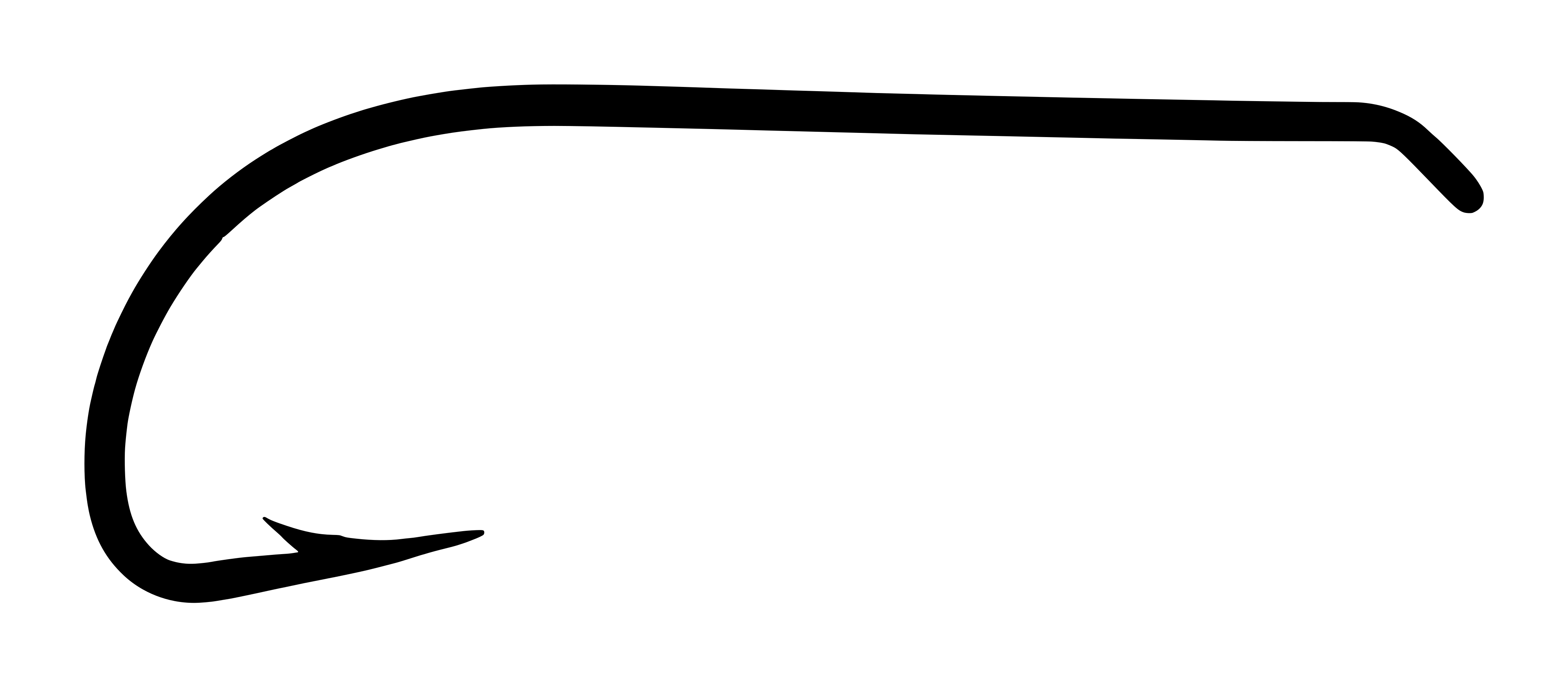
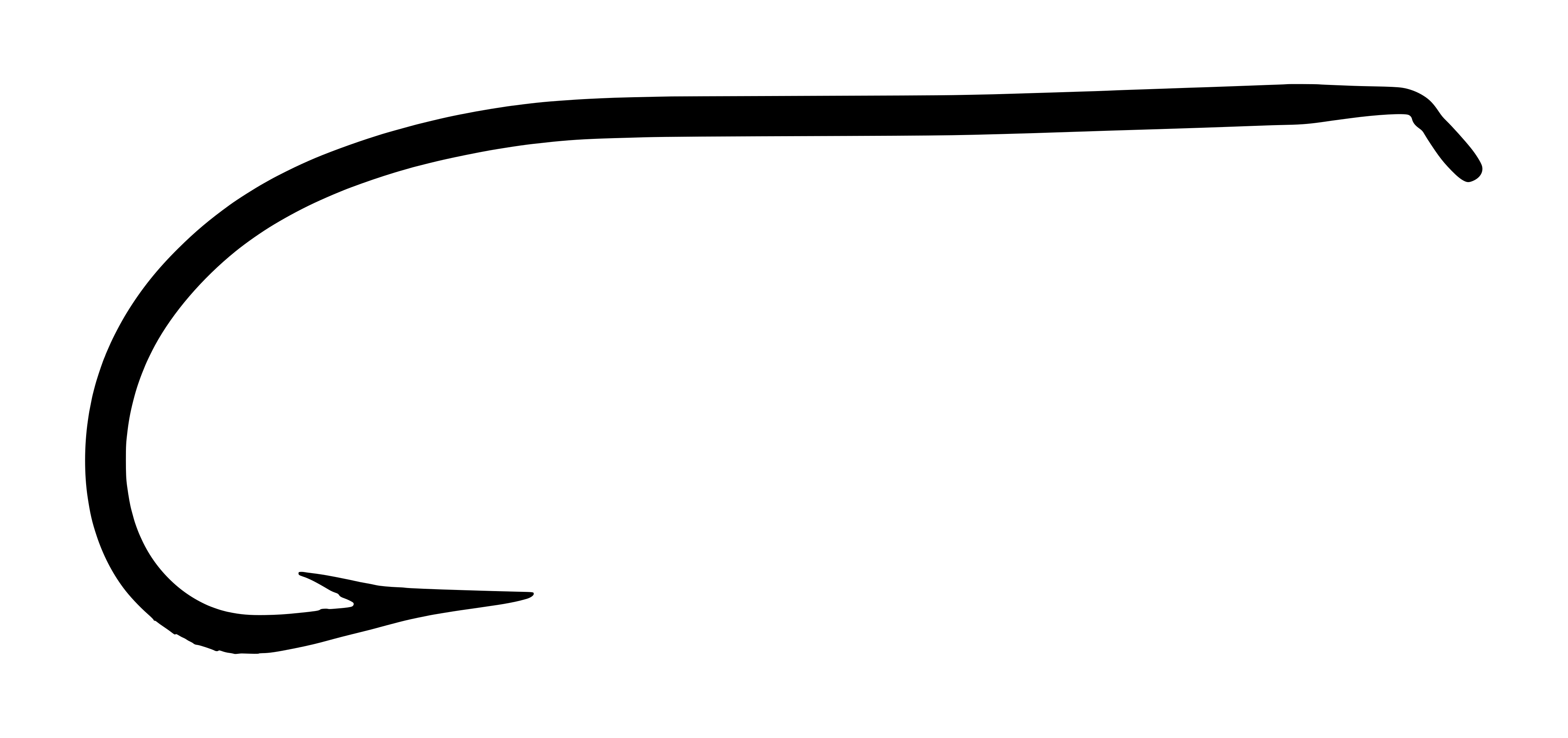
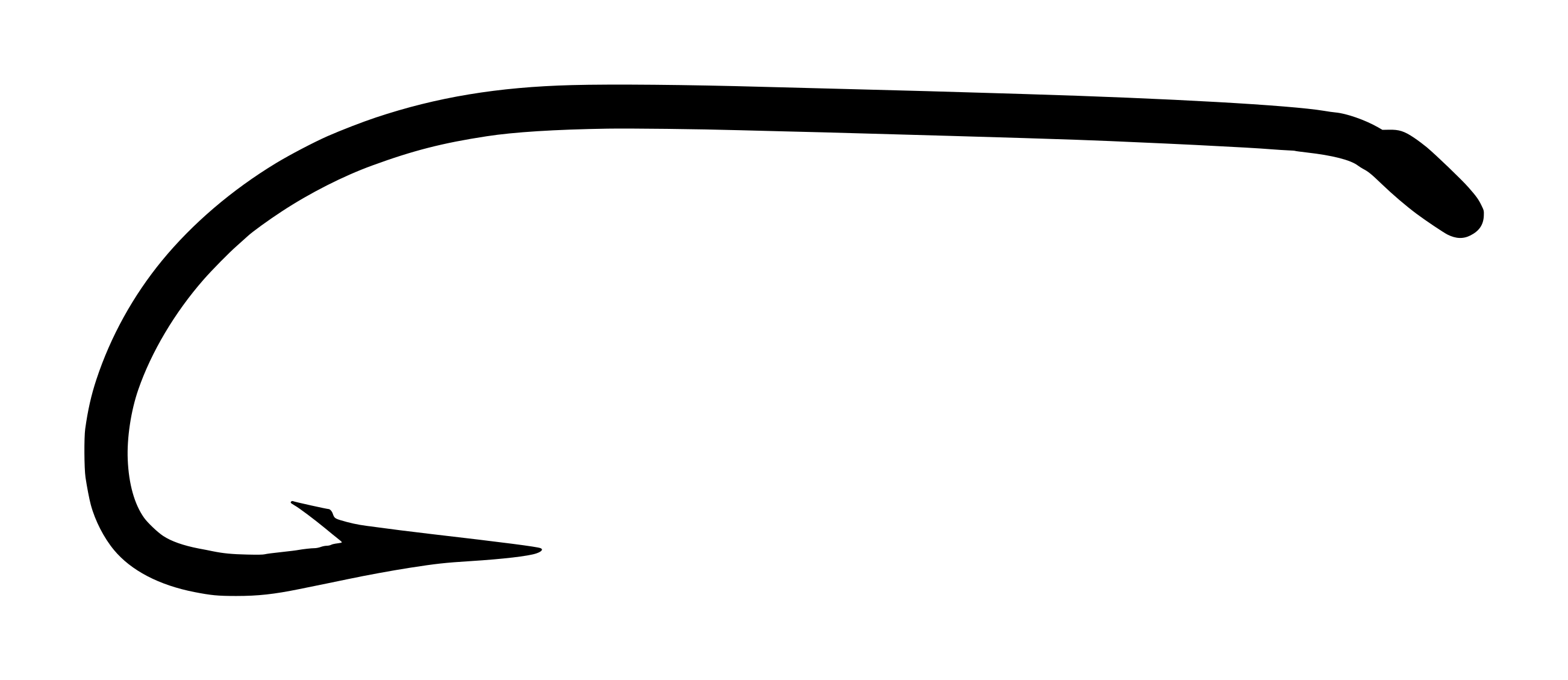
The Mustad 19540 represents premium Norwegian hook manufacturing from the mid-20th century, featuring the company’s distinctive Key Brand export packaging with gold snowflake border design. This size 1 Limerick bend hook showcases the now-rare tapered eye construction, where the wire was physically ground down before eye formation to create a neat, small profile.
The hollow point geometry and reversed (offset) configuration indicate dual-purpose design for both wet fly tying and bait fishing applications. The forged construction and extra strong wire gauge made this pattern suitable for demanding freshwater and light saltwater use.
Dating evidence includes the Oslo – Norway marking (post-1925), pre-barcode era packaging, and the characteristic red handwritten size stamp. The Key Brand logo style and letterpress printing on cream paper stock strongly suggests 1950s-1960s production, representing Mustad’s golden age of export marketing.
For collectors, this hook represents both technical excellence in the tapered eye construction and historical significance as an example of Mustad’s global market dominance during the post-war period.
Original Key Brand export packaging showing the distinctive gold snowflake border design and Oslo - Norway marking, characteristic of 1950s-1960s Mustad premium hooks.
Photographic record
4 cataloged imagesSelect any record to load it above.
4 images shown
Mustad 19540 Key Brand Box Size 1Original Key Brand export packaging showing the distinctive gold snowflake border design and Oslo - Norway marking, characteristic of 1950s-1960s Mustad premium hooks.Open originalMustad 19540 Hollow Point Detail Size 1Detailed view of the hollow point construction showing the characteristic concave inner face that distinguishes this point style from superior points.Open originalMustad 19540 Full Profile Size 1Complete side view displaying the Limerick bend profile, forged shank construction, and premium tapered eye where the wire is reduced before eye formation.Open originalMustad 19540 Hook Pair Size 1Two hooks from the same package demonstrating the consistency of Mustad's industrial manufacturing during the mid-20th century.Open original
Technical profile
Hollow Point | Mustad Limerick Hooks | Forged | Reversed | Turned Down Tapered Eye | Bronzed | Extra Strong | Made in Norway
Eye
Tapered Eye, Turned DownPremium tapered eye construction where wire is physically ground down before forming the eye, creating a neat small profile that was costly to produce and rarely seen on modern hooks P
Wire
Standard, Forged, Est. ~0.04" (~1.0 mm)
Shank
1X Long — Plain
Bend
Limerick, Standard gap, Offset / kirbedClassic Limerick bend with angular bottom transition, slightly sharper than Sproat bend geometry P
Point
Hollow Point (concave inner face)
Finish
Bronzed — Confirmed (stated on packaging)Warm bronze tone finish showing characteristic golden-brown coloration of traditional bronzing process P
Hook shows excellent condition with bright bronzed finish and sharp point. Packaging shows age-appropriate toning but remains structurally sound with all printing legible.
The hollow point construction creates a concave inner face that penetrates more efficiently than straight-tapered points, requiring less force to achieve initial penetration. The forged construction flattens the wire sides, increasing strength by up to 25% compared to round wire of equivalent diameter while maintaining the original wire’s flexibility characteristics.
The tapered eye represents premium manufacturing where the wire diameter is reduced through grinding before eye formation, eliminating the bulk typically associated with heavy-gauge hooks. This feature allows for neater thread finishes in fly tying and reduces the overall weight of the finished fly or rig.
The 19540 was part of Mustad’s premium Limerick hook series, designed for both fly fishing and bait fishing applications. Introduced in the 1940s, this series featured the company’s advanced tapered eye construction, which required additional manufacturing steps and represented a significant cost increase over standard eye formation.
The series was marketed primarily to professional guides and serious anglers who demanded the strongest possible hooks with the most refined finishing. The tapered eye feature was gradually phased out in the 1970s due to manufacturing costs, making these hooks increasingly sought after by collectors and traditional fly tiers who appreciate the superior thread finishing capabilities.
The 19540 series was discontinued in its original tapered eye configuration around 1975, replaced by more cost-effective straight-loop eye alternatives in Mustad’s modernized product line.
Era and Packaging Dating
Key Brand logo with gold snowflake/asterisk border is characteristic of Mustad's mid-20th century export packaging. Oslo - Norway marking confirms post-1925 era (after Christiania name change). Paper stock quality and letterpress typography indicate pre-1970s production. No barcode confirms pre-1974 era. Red handwritten size stamp typical of 1950s-1960s Mustad quality control practices.
The Norwegian Key to Success
The Key Brand trademark became so associated with quality that Norwegian tackle shops would display the distinctive key logo as a mark of prestige. Mustad's tapered eye process required specialized grinding wheels that were individually maintained by master craftsmen, making each hook a small piece of precision engineering.
Design lineage and influence
The Limerick bend traces its origins to Irish hook makers of the 18th century, designed specifically for holding fish in fast-moving water. Mustad adopted and refined this geometry for their industrial production, adding the hollow point and tapered eye innovations that became signatures of their premium export lines.
This design influenced competing manufacturers throughout Europe and America, though few matched Mustad’s precision in the tapered eye construction. The pattern served as a template for modern salmon and steelhead hooks, though with simplified eye construction.
Best matchRelated by Attribute
Computed automatically from catalog data — updated as new hooks are added.
Matches: Bend, Shank, Wire, Gap, Finish +2 moreDiffers: Eye: Tapered Eye vs Ball Eye; Eye Orient.: Turned Down vs Straight / Inline; Point: Hollow Point vs Superior +2 more
Matches: Bend, Wire, Gap, Eye, Finish +3 moreDiffers: Shank: 1X Long vs 2X Long; Eye Orient.: Turned Down vs Turned Up; Point: Hollow Point vs Superior +4 more
Matches: Bend, Wire, Gap, Eye, Eye Orient. +5 moreDiffers: Shank: 1X Long vs Standard; Point: Hollow Point vs Standard / Spear; Application: Wet Fly, Bait vs Wet Fly, Salmon, Sea Trout, Bait +2 more
Matches: Bend, Shank, Gap, Eye, Eye Orient. +5 moreDiffers: Wire: Standard vs Heavy (1X Heavy); Point: Hollow Point vs Superior; Forging: Forged vs Round +1 more
Matches: Bend, Gap, Eye, Eye Orient., Point +4 moreDiffers: Shank: 1X Long vs Standard; Wire: Standard vs Heavy (1X Heavy); Forging: Forged vs Round +2 more
Designed primarily for large traditional wet flies and bait fishing applications. The size 1 designation indicates this is a substantial hook suitable for bass, sea trout, and salmon patterns. The reversed (offset) point configuration makes it particularly effective for bait fishing where secure hooking is prioritized over easy release.
Secondary Applications
Vintage fly display and framing due to the premium tapered eye construction
Classic Fly Patterns
Large traditional wet flies, bass patterns, sea trout flies
Modern Equivalents
Hook
Match Quality
Notes
Mustad 3399A
Good
Similar size and application but with standard loop eye and Sproat bend
Daiichi 2141
Moderate
Features Limerick bend but typically in salmon hook proportions
Kamasan B175
Moderate
Heavy gauge wet fly hook with similar strength characteristics
Collector notes
Moderate collectability driven by the discontinued tapered eye construction and mid-century Key Brand packaging design, but limited by the model's relatively common production numbers.
Reference value
$8 – $15 USD estimate
Packaging condition
Very Good — light wear, fully legibleRecorded specimen
Packaging format
MUS-KB-01Catalog code
Positive factors include the now-discontinued tapered eye construction, which is highly valued by traditional fly tiers and represents a manufacturing technique that became too costly for modern production. The Key Brand export packaging with its distinctive gold border design is characteristic of Mustad’s golden age and appeals to packaging collectors.
Limiting factors include the relatively large production numbers during the 1950s-1960s era and the fact that Mustad hooks, while quality products, were mass-produced industrial items rather than boutique craftsmanship. The size 1 designation is common compared to the more scarce larger or smaller sizes in the series.
Packaging
Cream-colored cardboard box with gold letterpress printing. Key Brand logo with ornate snowflake/asterisk border design. Box measures approximately 3.5 x 2.5 inches. Shows characteristic age toning and minor edge wear. Red handwritten size marking in ink.
Market Value Notes
Values for complete cards with original packaging. Individual hooks bring $1-2. Premium for cards with all 100 hooks intact and minimal packaging wear.
Where to Find
eBay vintage tackle sections, Norwegian tackle collectors, estate sales in fishing communities, tackle shop old stock
Collector's Identification Tips
Look for the distinctive Key Brand logo with ornate border, Oslo – Norway marking, and red handwritten size stamps. Tapered eye should show visible wire reduction before eye formation. Authentic boxes have cream-colored cardboard with gold letterpress printing, not offset printing.
Preservation
Storage and Preservation
Store hooks in original packaging when possible, as the Key Brand boxes represent significant historical value. Keep in a cool, dry environment away from humidity to prevent finish deterioration. The bronzed finish is relatively stable but can develop patina over time, which some collectors find desirable.
Handle hooks by the shank to avoid point damage and fingerprint deposits on the finish. Original packaging should be stored flat with acid-free tissue paper between boxes if stacking. Avoid exposure to other metals to prevent galvanic corrosion of the bronze finish.
Marking Analysis
Red Ink Size Marking
The red ‘No. 1’ marking appears to be applied by hand using a rubber stamp or similar marking device, typical of Mustad’s quality control practices during the 1950s-1960s. The ink shows characteristic fading and slight bleeding into the paper stock, consistent with period water-based marking inks.
This type of size marking was applied at the factory during packaging and serves as an important authenticity indicator. Modern reproductions or relabeled packages typically lack this hand-applied quality control marking.
Primary Source
Key Brand Export Marketing
Source: Original Key Brand packaging, c. 1950-1970
The packaging text ‘O. MUSTAD & SÖN Manufacturers OSLO – NORWAY’ represents Mustad’s deliberate export marketing strategy, emphasizing Norwegian craftsmanship and precision manufacturing. The ‘Key Brand’ designation with its ornate border was specifically developed for international markets to distinguish Mustad products from local competitors.
The technical specifications listed (‘Forged Reversed T.d. tapered eye Bronzed Ex. strong Made in Norway’) demonstrate the comprehensive product communication typical of mid-20th century industrial marketing, where each manufacturing feature was considered a selling point worth highlighting.
Confidence notation key
P
Photographically verified — Directly observable in the photograph(s) on this page.
V
Verified by documentation — Confirmed by manufacturer catalog, spec sheet, or published reference.
I
Inferred — A logical deduction from observable or documented evidence, not directly stated.
E
Estimated — An approximation based on visual comparison, proportional analysis, or limited data.
S
Speculative — A reasoned hypothesis that cannot be confirmed from available evidence.
Unnotated claims are the compiler’s synthesis; see Sources. All photographs on garrenwood.com are taken on a measurement grid where each square equals 1/10 inch (0.1″ / 2.54 mm).