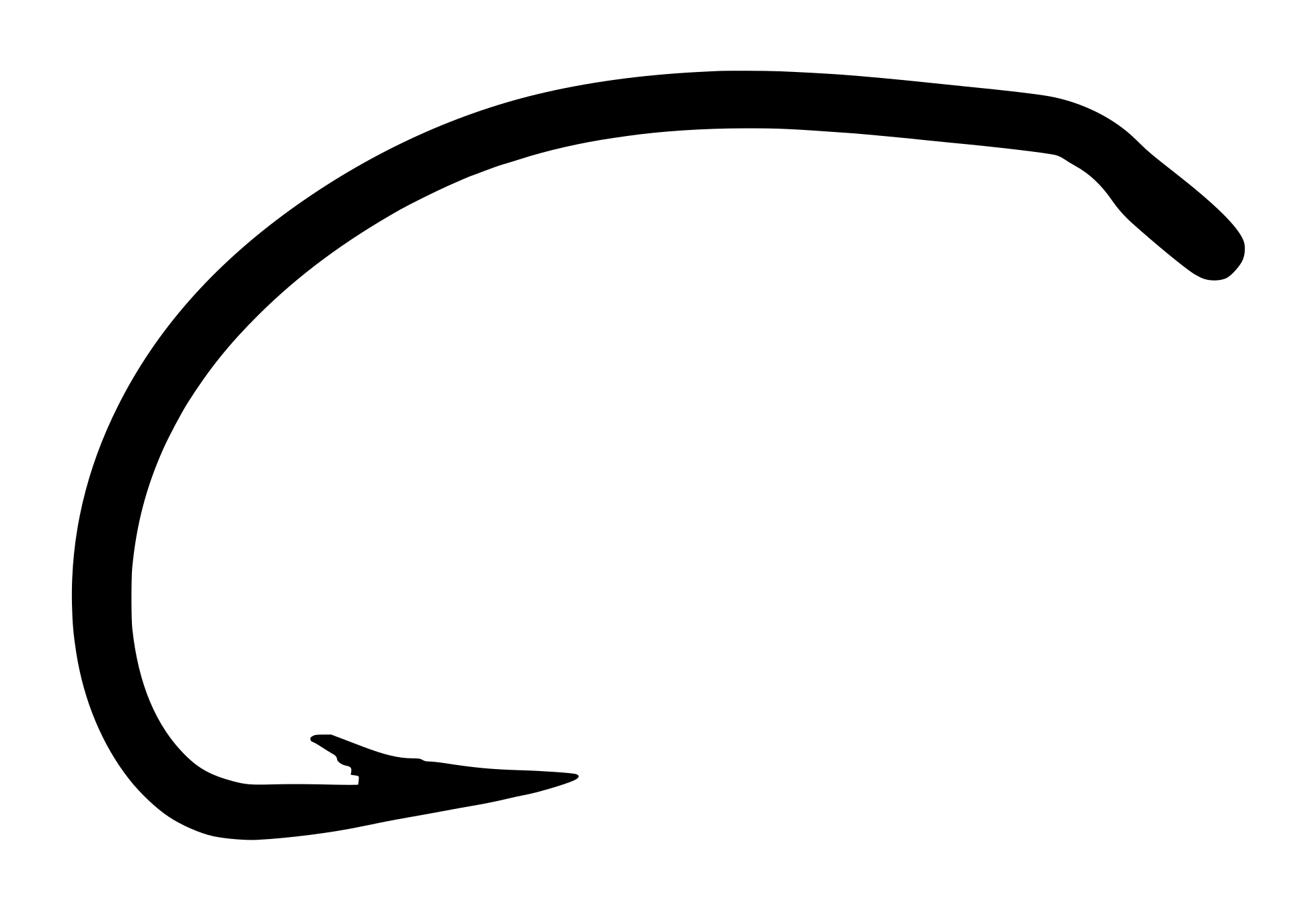
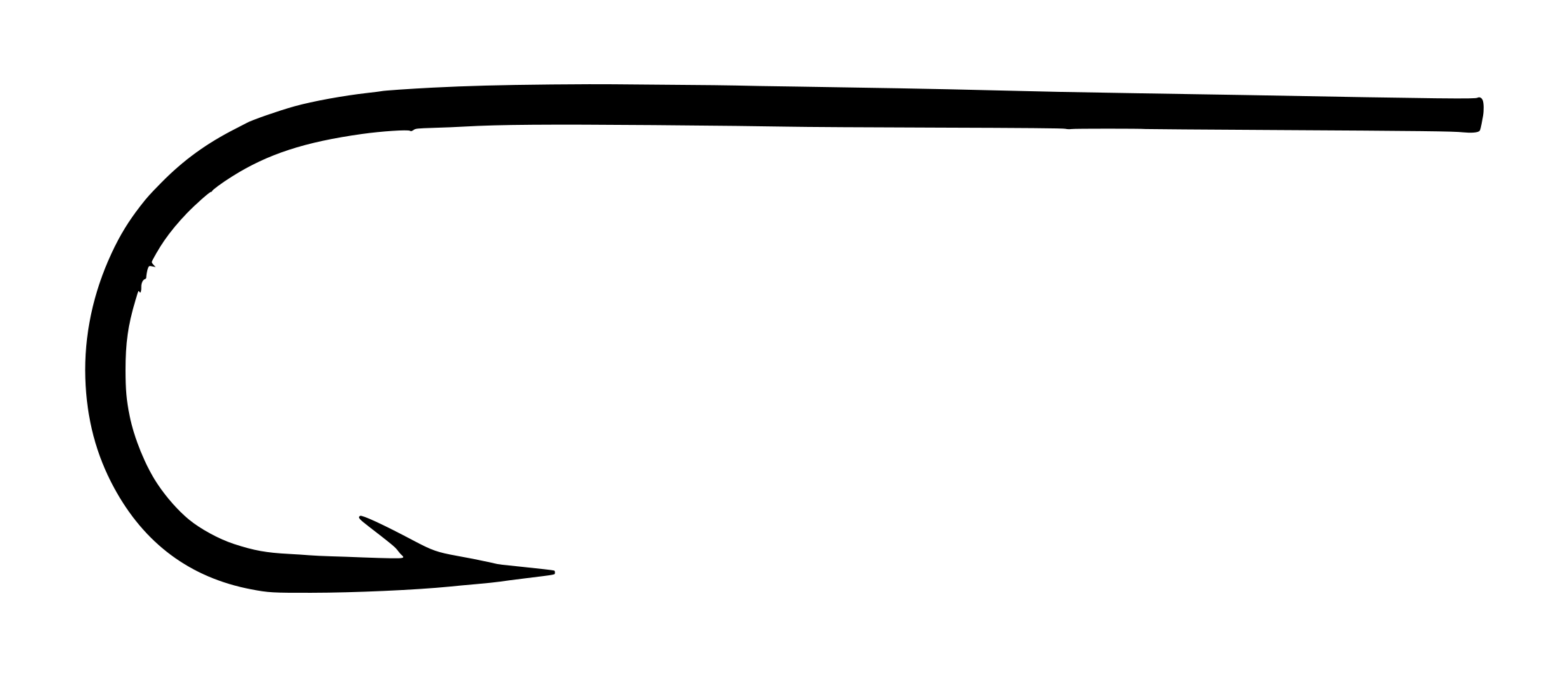
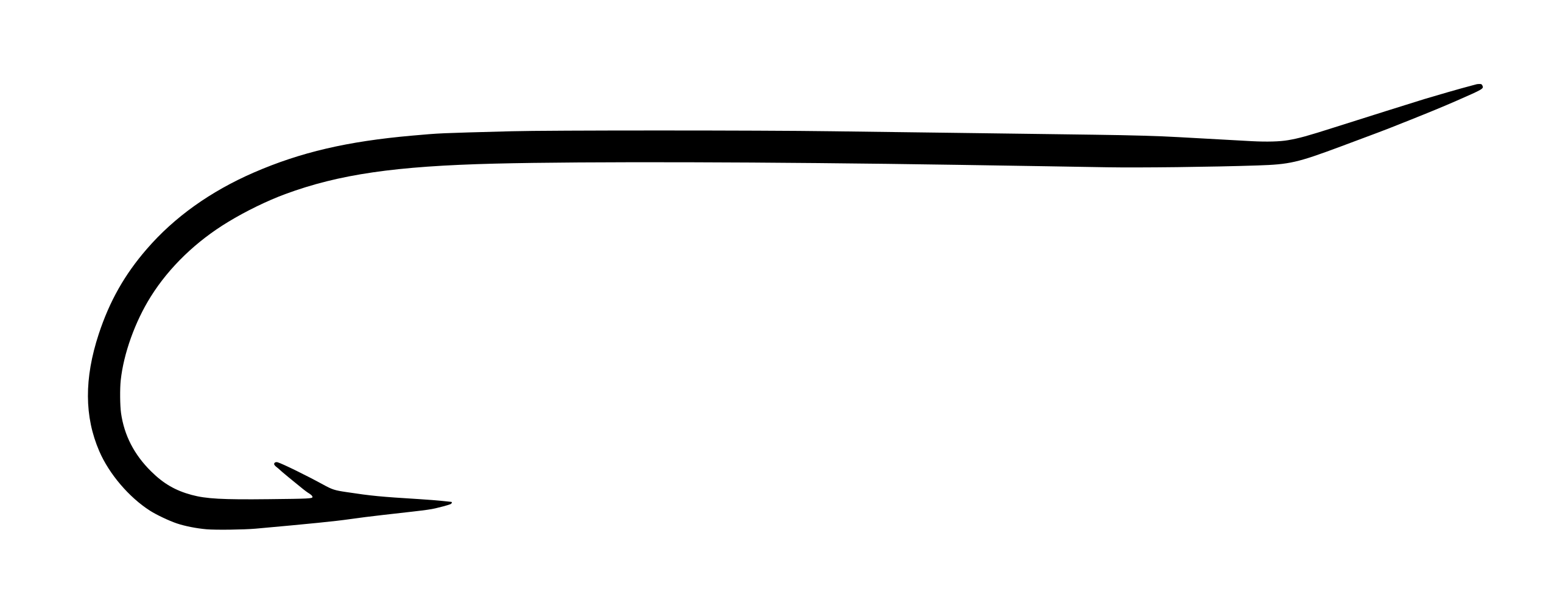
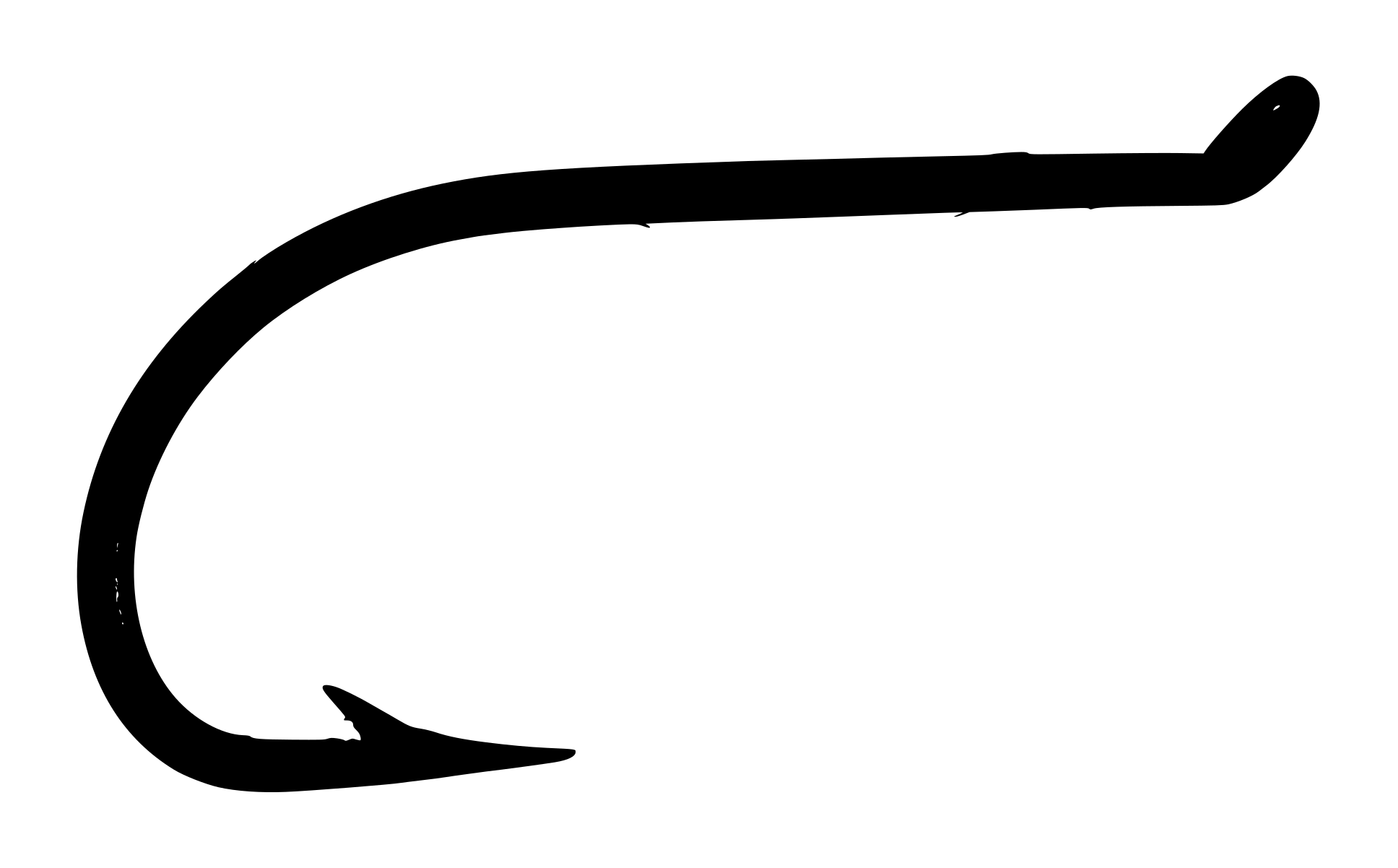
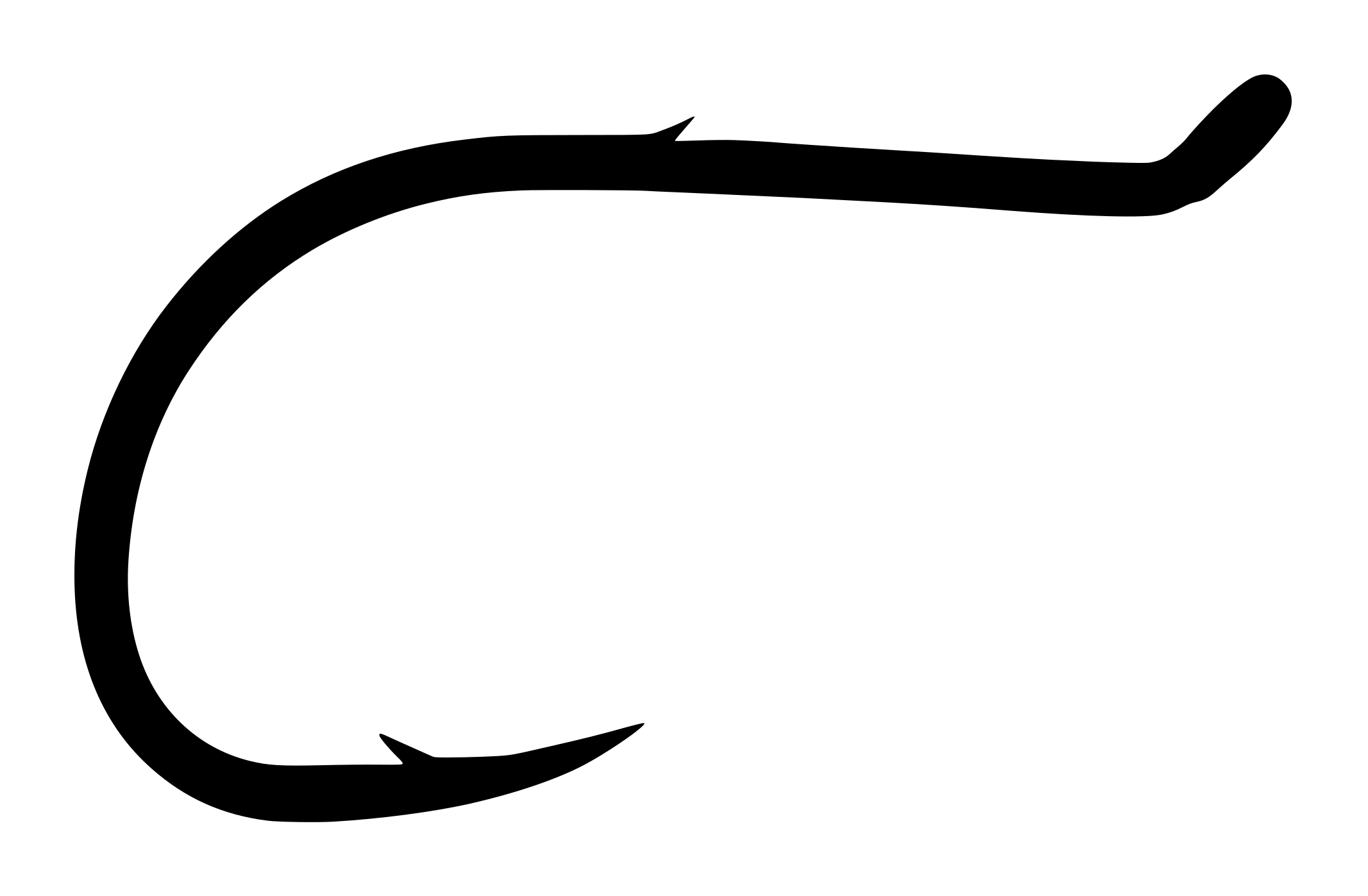
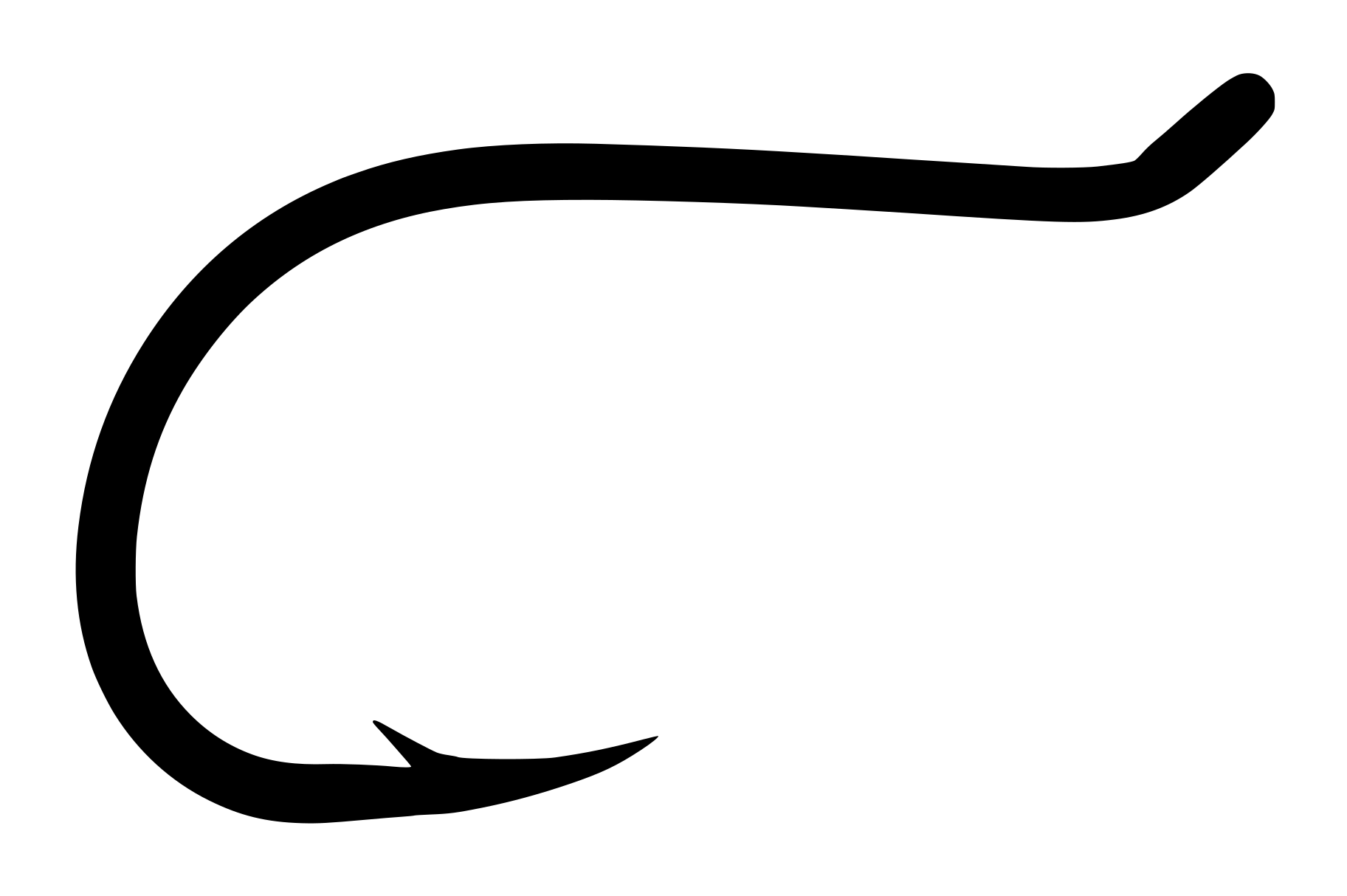
The Partridge Grub Hook series represents one of the classic British hook styles developed for tying curved-bodied wet flies, grubs, pupae, and emerging insect imitations. Manufactured by Partridge of Redditch, these hooks became highly regarded for their forged strength, elegant bend geometry, and traditional bronze finish. Designed primarily for subsurface trout and salmon fly patterns, the Grub Hook profile combines a short-to-medium shank with a pronounced curved bend that naturally suggests caddis pupae, larvae, shrimp, and other aquatic food forms. The defining feature is the deep, rounded curvature that produces lifelike silhouette and movement without requiring excessive dressing material.
Produced during the golden era of classic British fly tying in the mid-to-late twentieth century, Partridge grub-style hooks became staples among traditional wet fly and nymph tiers who valued functional design as much as refined craftsmanship. Many models incorporated the famous Captain Hamilton-style forged bend geometry associated with historic Partridge patterns, offering a wide gape and strong hooking efficiency despite compact proportions. These hooks gained enduring popularity among anglers tying spiders, Czech-style nymphs, caddis pupae, and soft hackles where a curved natural profile improved presentation and hook-up performance.
Today, vintage Partridge Grub Hooks remain highly collectible and actively fished by traditional fly dressers who appreciate classic Redditch manufacturing quality. Their importance lies not only in practical fishing performance, but also in their influence on modern curved-shank nymph and pupa hook design. Many contemporary fly hooks trace their proportions and concepts back to these original Partridge forms, making the Grub Hook series an important reference point in the evolution of modern fly-tying hook geometry.
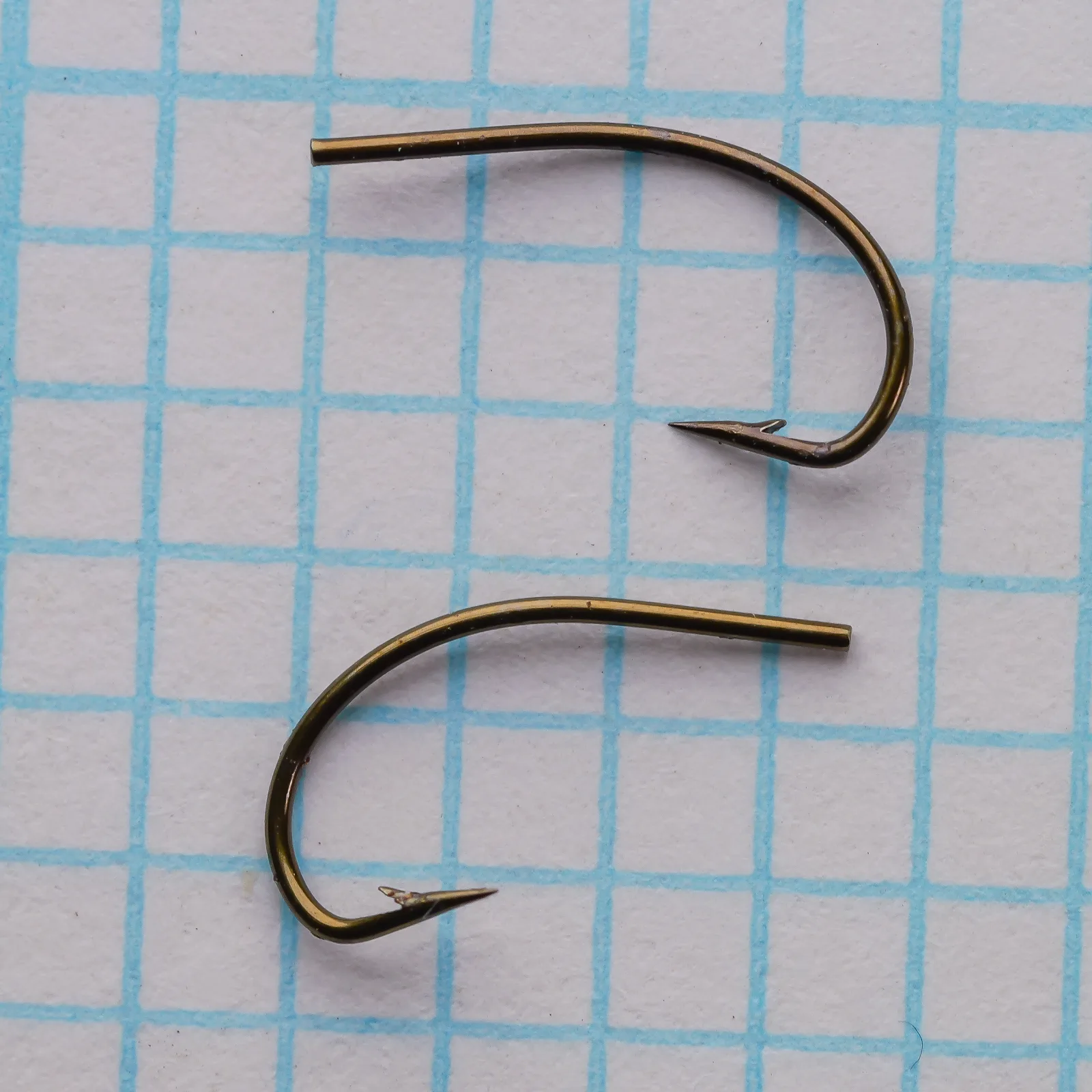
Two size-14 Partridge Grub/Shrimp hooks displayed on measurement grid (1/10-inch divisions). Curved shank and tapered blind eye construction clearly visible. Bronzed finish shows characteristic warm reddish-brown tone typical of Redditch-era production.
Photographic record
2 cataloged imagesSelect any record to load it above.
2 images shown
Partridge Grub Size 14 Redditch BronzedTwo size-14 Partridge Grub/Shrimp hooks displayed on measurement grid (1/10-inch divisions). Curved shank and tapered blind eye construction clearly visible. Bronzed finish shows characteristic warm reddish-brown tone typical of Redditch-era production.Open originalPartridge Original Redditch Envelope PackagingOriginal cream-cardstock envelope for Partridge hooks, size 14, with internal factory notation handwritten in purple ink ('14 G.4/S.P00KS'). Letterpress printing and envelope construction are consistent with Redditch-era production circa 1950–1970. No barcode present — strong indicator of pre-1974 manufacture.Open original
Technical profile
Eye
Blind — Tapered Shank
Wire
Fine (1X Fine), Forged
Shank
Short (1X–2X Short) — Curved / Humped, Tapered
Bend
Kirby (offset), Standard gap, Offset / kirbedCompact curved shank characteristic of Partridge Grub/Shrimp pattern — downturned curve from eye through barb. Heavy forged construction. P
Point
Standard / SpearShort, close-cut barb positioned immediately behind the bend apex. Standard Partridge barb profile. P
Finish
Bronzed — Confirmed (stated on packaging)Warm reddish-brown bronzed finish, characteristic of classic Partridge trout patterns. Even tone across specimen. P
Specimen envelope shows light age toning and minor creasing at fold edges. Printed text remains legible. Handwritten notation clear and unfaded. Hooks appear bright with no corrosion visible; specimens shown in photograph are unmarked and sharp. Envelope has not been opened — original seal integrity cannot be definitively assessed from photographs, but envelope structure is intact.
The Grub hook employs a compact forged curved shank optimized for short-bodied nymph and shrimp imitations. The heavy forged wire (standard gauge, not fine) provides adequate holding power for weighted dubbing bodies and synthetic cases, while the curved geometry allows efficient space utilization on the shank. The moderate wire diameter permits smooth dubbing builds without bulk.
The blind eye is the defining engineering feature. Rather than a looped or formed eye ring, the shank tapers smoothly to a rounded terminal point, permitting the fly tier to attach a length of gut (or modern nylon tippet) via a simple clinch knot or loop around the taper. This construction eliminates the visual obstruction of a traditional eye, creating a cleaner profile suitable for delicate emerger and nymph presentations. The taper itself is gentle enough to accept a loop knot without stress concentration, and the smooth rounded terminus minimizes damage to fragile gut materials.
The point is a standard-profile spear with moderate barb placement and short barb length — optimized for reliable hook-up in soft-bodied targets (nymphs, larvae) without the deep penetration geometry required for hard-jawed insects or larger prey.
We don't have measured sizes for this hook yet. Own one? Submit calipered measurements and we'll review and add them. Thank you!
Historical context
Era and Packaging Dating
Handwritten marking '14 G.4/S.P00KS' on envelope indicates internal stock notation in purple ink — consistent with Redditch factory circa 1950s-1970s. Envelope construction (single-fold cream cardstock, letterpress print) matches Partridge era packaging methodology pre-1980. No barcode present — strong indicator pre-1974. Absence of postal code on address (if readable) and letterpress/letterpress-style printing are consistent with pre-1970s Redditch production. The K4A Grub designation first documented in Partridge catalogs by the early 1950s; continuous production through the Bramley era (1970-1996). This specimen is almost certainly 1950s-1970s Redditch English-made production.
The Classical Nymph Tradition
The Partridge K-series curved-shank patterns reflect a century-old Redditch tradition of pattern specialization — the concept that a dedicated shank geometry, refined for a specific target insect, yields superior fishing results. In the post-war era, when fly-fishing literature was increasingly focused on entomological precision, these patterns embodied a 'one hook, one fly, one insect' philosophy. The tapered blind eye, in particular, harks back to the Victorian salmon-fly era, when gut loops were standard. By the 1960s, when monofilament tippets became the norm, the blind eye seemed anachronistic—yet Partridge continued offering it, serving a devoted corps of classical fly tyers who preferred the aesthetic and believed it enhanced presentation delicacy. That tradition continues today in the Fishing Matters Heritage line.
Design lineage and influence
The curved-shank Grub/Shrimp concept originated in English chalk-stream tradition, where compact nymph imitations were necessary for selective trout in clear, slow water. The K4A represents Partridge’s interpretation of this principle, blending the curved geometry with the tapered blind-eye construction inherited from Victorian-era salmon and sea-trout flies.
Competitor equivalents include the Mustad C49ST (also a curved-shank nymph), the Allcock round-bend shrimp hooks (discontinued), and various Redditch maker variants of short-shank patterns. The K4A’s differentiation lies in its consistent manufacturing standard and the combination of forged wire with the tapered blind eye — a feature less common on comparable hooks from other makers.
Post-1980 influence: The K4A has been superseded in modern production by straight-eyed competitors (H-series flat-body, contemporary competition nymphs), but the pattern retains symbolic value in classical English fly-tying circles and has influenced modern recreations of historical English nymph patterns. Daiichi 1180 and Ahrex NS110 are contemporary functional substitutes, though they employ standard loop eyes rather than tapered blind construction.
Best matchRelated by Attribute
Computed automatically from catalog data — updated as new hooks are added.
Matches: Wire, Gap, Eye, Eye Orient., Finish +2 moreDiffers: Bend: Kirby (offset) vs Round / Kendal; Shank: Short (1X–2X Short) vs Standard; Point: Standard / Spear vs Superior +2 more
Matches: Gap, Eye, Eye Orient., Point, Finish +2 moreDiffers: Bend: Kirby (offset) vs Round / Kendal; Shank: Short (1X–2X Short) vs Standard; Wire: Fine (1X Fine) vs Standard +2 more
Matches: Bend, Gap, Eye Orient., Point, Finish +3 moreDiffers: Shank: Short (1X–2X Short) vs Standard; Wire: Fine (1X Fine) vs Standard; Eye: Blind — Tapered Shank vs Blind — Marked Shank +3 more
The Grub/Shrimp is a traditional English trout nymph and wet-fly hook designed for short, sturdy aquatic insect imitations. The compact curved shank and moderate wire weight are optimized for nymph and shrimp-pattern dressing, particularly cased caddis larvae, freshwater amphipod imitations, and short-bodied emerger patterns. The tapered blind eye permits traditional gut-loop attachment for classic presentation. Used across English and Scottish trout fisheries from the 1950s onward.
Rated 4.5/10 — the Grub is a respected classic Partridge pattern with documented continuous production from the 1920s through the modern era, but it is neither exceptionally scarce nor a prestige Redditch-era specialist hook. Redditch-era (pre-1996) specimens are uncommon; modern production is readily available. Collector interest is moderate among English trout-pattern specialists and Partridge enthusiasts.
Reference value
$4 – $14 USD estimate
Packaging format
envelope_cream_cardstockCatalog code
Positive factors: Authentic Redditch-era production (pre-1996) with original envelope packaging commands genuine collector interest. The K4A is a named Partridge model with continuous lineage from the 1950s to present — documented in period catalogs and in current production. The tapered blind-eye construction is a traditional detail increasingly valued by modern fly tyers seeking classical presentation methods. Complete, unopened envelopes in good condition are scarce.
Limiting factors: The K4A has never been a prestige or signature-designer hook. Production volumes across the Redditch era were substantial — this is a workman’s pattern, not a craft-maker limited release. Size 14 is a common commercial size; sizes 16+ would be more uncommon. Modern Chinese-production K4A hooks are readily available at low cost, which dampens enthusiasm for vintage examples among casual collectors. Condition of envelope and number of hooks present are the primary value discriminators.
Value drivers: Redditch-made examples (confirmed by ‘Made in England’ marking or envelope style) command a premium over post-2000 Chinese production. Complete, sealed envelopes are valued 50-100% above opened cards. The K4A/S variant (curved down variant) and K4A/H (heavy wire) are less commonly encountered than standard K4A and command modest premiums among specialists.
Packaging
Cream-colored single-fold envelope with letterpress printing. Front face printed with purple/dark purple ink: model code and size notation. Handwritten notation in purple ink: '14 G.4/S.P00KS' (internal factory stock code or variant notation). Envelope dimensions approximately 4.5" x 2.25" (folded). Paper stock is thin cream cardboard typical of mid-20th-century British packaging. No barcode. Postmark or postal information not visible in photograph. Flap closure with printed or stamped text on rear (not clearly legible in image). No retail price visible. Consistent with Redditch-era factory envelope format used for hook distribution to retailers or internal assembly.
Market Value Notes
Low ($4): Good condition — opened envelope, 8-10 hooks present, minor wear<br />
High ($14): Excellent condition — sealed or near-sealed envelope, complete hook count (likely 12-25), minimal age patina<br />
Premium factors: Redditch-made (England) origin, sealed envelope, complete hook count, K4A/S or K4A/H variant, package condition with legible printing<br />
Platforms: eBay UK specialty tackle, European fly-fishing forums, dealer private sales<br />
Confidence: E estimated — based on comparable Partridge classic-pattern envelopes and limited recent eBay sales data for K4A variants. Size 14 is common size; rarer sizes (16+) command higher premiums.
Where to Find
eBay UK (search 'Partridge K4A' or 'Partridge Grub'), Sprite Fishing (UK dealer, spritefishing.com), flyhooks.org Partridge marketplace, occasional specialist tackle auctions in England (Midlands/Redditch region), European fly-tying shops stocking Partridge Heritage range
Preservation
Storage and Preservation
Store the K4A hooks in a cool, dry environment, ideally in original envelope or archival-quality paper packet to protect the bronzed finish from moisture exposure. Avoid plastic bags or sealed containers that trap humidity, which can accelerate oxidation and patina formation on the bronzed wire. The envelope packaging, if intact, adds significant collector value and should be preserved as-is rather than removed.
The bronzed finish will naturally patina over decades, developing a darker, warmer brown tone — collectors often find this desirable as evidence of authenticity and age. However, active corrosion (green verdigris, white oxidation) indicates moisture intrusion and should prompt relocation to a drier storage space. Avoid direct sunlight and temperature fluctuations.
If the envelope has been opened, store the loose hooks on an archival-quality card or tissue paper, separated by tissue layers to prevent wire-to-wire contact. Keep away from ferrous metals (iron, steel) to prevent galvanic corrosion at contact points. A dedicated hook storage box with acid-free dividers is ideal for long-term preservation. Check periodically for signs of corrosion or pest activity.
If you intend to fish or tie with these hooks, remove only what you need and return the remainder to storage immediately. The combination of handling and aerial exposure introduces moisture and oils that accelerate finish deterioration.
Marking Analysis
Envelope Notation — Internal Factory Marking
The purple-ink handwritten notation ’14 G.4/S.P00KS’ on the envelope face is a factory-applied internal stock code or variant identifier. The notation is not a modern annotation — the ink color, hand style, and application technique (ballpoint or fountain pen on aged cardstock) are consistent with mid-20th-century factory practice. The purple ink was a standard marking medium in Redditch hook factories for size and model variant identification.
Decoding: ’14’ = size 14 (clearly legible). ‘G.4’ likely refers to a production batch or variant code within the K-series group (G could indicate ‘Grub’ or a production batch designation; ‘4’ is the numeric identifier). ‘S.P00KS’ is harder to parse — it may indicate a sub-batch, a hook variant (straight vs curved point?), or a supplier routing code for internal distribution. The ’00’ suggests a zero-padded numeric sequence, common in factory ledger systems.
This notation is evidence of factory origin and internal quality control. Envelope specimens bearing such markings are considered more authentically Redditch-made than unmarked examples, and the notation adds both historical documentation value and confidence in the product’s age and provenance.
Size Note
Size 14 — Standard Commercial Size
Size 14 is a standard commercial size for the K4A Grub/Shrimp throughout its production history. The measured overall length of ~0.37″ (9.40 mm) and gap width of ~0.18″ (4.57 mm) fall within expected parameters for a size-14 Partridge pattern. There is no anomaly in sizing — this is a typical specification.
However, collectors should note that size 14 is the most common surviving size for the K4A, due to its utility in contemporary trout fishing. Sizes 12 and 16 are less frequently encountered; sizes 18+ are quite scarce. If you encounter a K4A in size 16 or smaller, premium collector interest (and value) increases proportionally. Sizes 8–10 in the K4A are exceptionally rare and are mostly found in Bramley-era (1970–1996) production runs targeted at pike and sea-trout fly tyers.
Primary Source
Envelope Printing — Era and Packaging Evidence
The envelope exhibits letterpress printing — a relief printing method where raised metal or wood type is inked and pressed directly onto paper. This technique was the dominant method for hook-package printing through the 1960s–1970s in Redditch. The print quality visible in the photograph shows the characteristic features of letterpress: slightly uneven impression, variable ink density, and slight embossing into the cardstock surface. Offset printing (which became standard by the 1980s) would show uniform, flatter ink density with no embossed relief.
Letterpress equipment was expensive and slow; by the 1990s, even small Redditch makers had transitioned to offset or flexographic printing. The presence of letterpress therefore strongly indicates pre-1980 manufacture, likely 1950s–1970s. This is one of the strongest single dating signals on the package.
The cream-colored cardstock is typical of British hook packaging from this era — warmer in tone than modern white card, thinner than modern alternatives, and showing age toning consistent with 50–70 years of storage. The single-fold envelope design was the dominant format for Partridge hooks in this period; later Partridge envelopes employed heavier cardstock and different closure mechanics.
No retail price is visible on this specimen, which is typical of internal factory or trade-distributor packaging. This suggests the envelope may be factory clearance stock or a bulk envelope intended for jobber/retailer repackaging, rather than original point-of-sale packaging. However, the factory notation and sealed condition suggest it was never opened at retail, making it a valuable intact specimen regardless of its intended distribution channel.
Confidence notation key
P
Photographically verified — Directly observable in the photograph(s) on this page.
V
Verified by documentation — Confirmed by manufacturer catalog, spec sheet, or published reference.
I
Inferred — A logical deduction from observable or documented evidence, not directly stated.
E
Estimated — An approximation based on visual comparison, proportional analysis, or limited data.
S
Speculative — A reasoned hypothesis that cannot be confirmed from available evidence.
Claims with no notation are confirmed by multiple independent sources. All photographs on garrenwood.com are taken on a measurement grid where each square equals 1/10 inch (0.1″ / 2.54 mm).