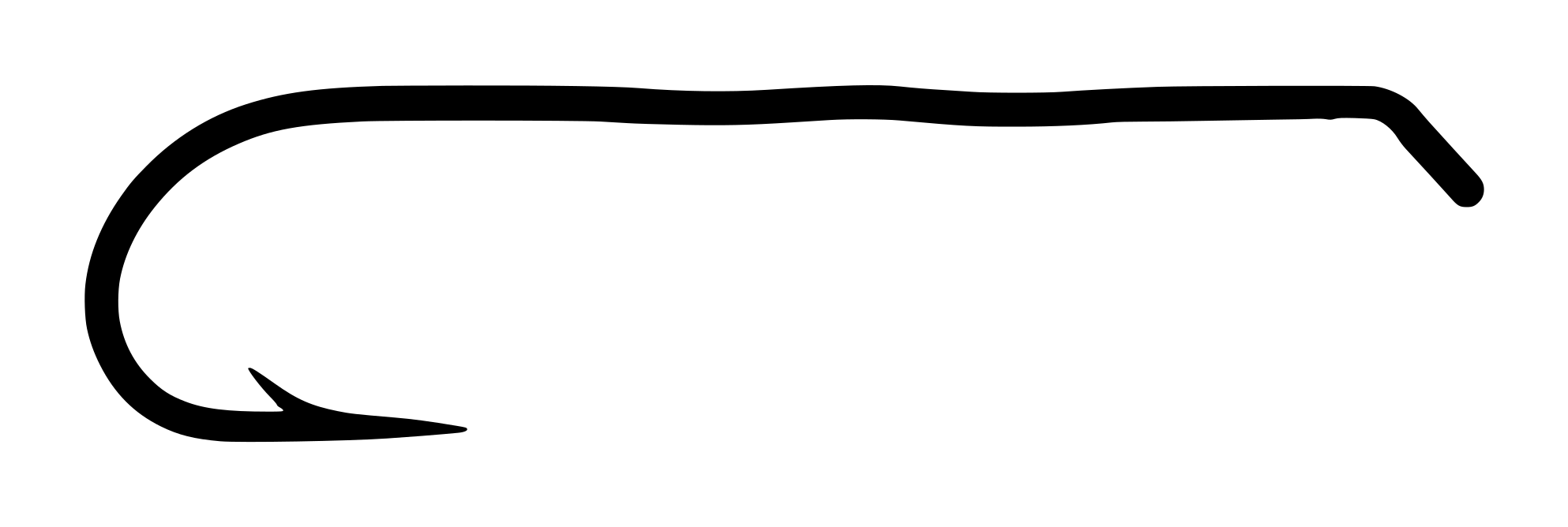
T. Hemming & Son Ltd Celebrated No. 993 — Sproat Bend Wet Fly and Salmon Hook
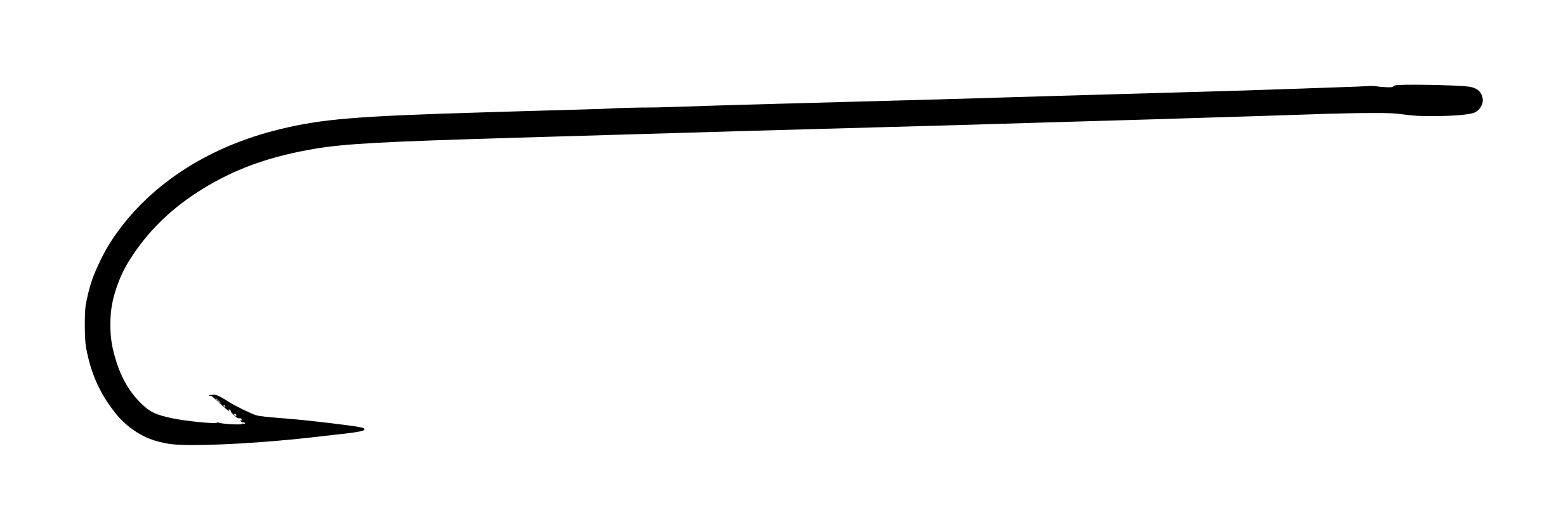
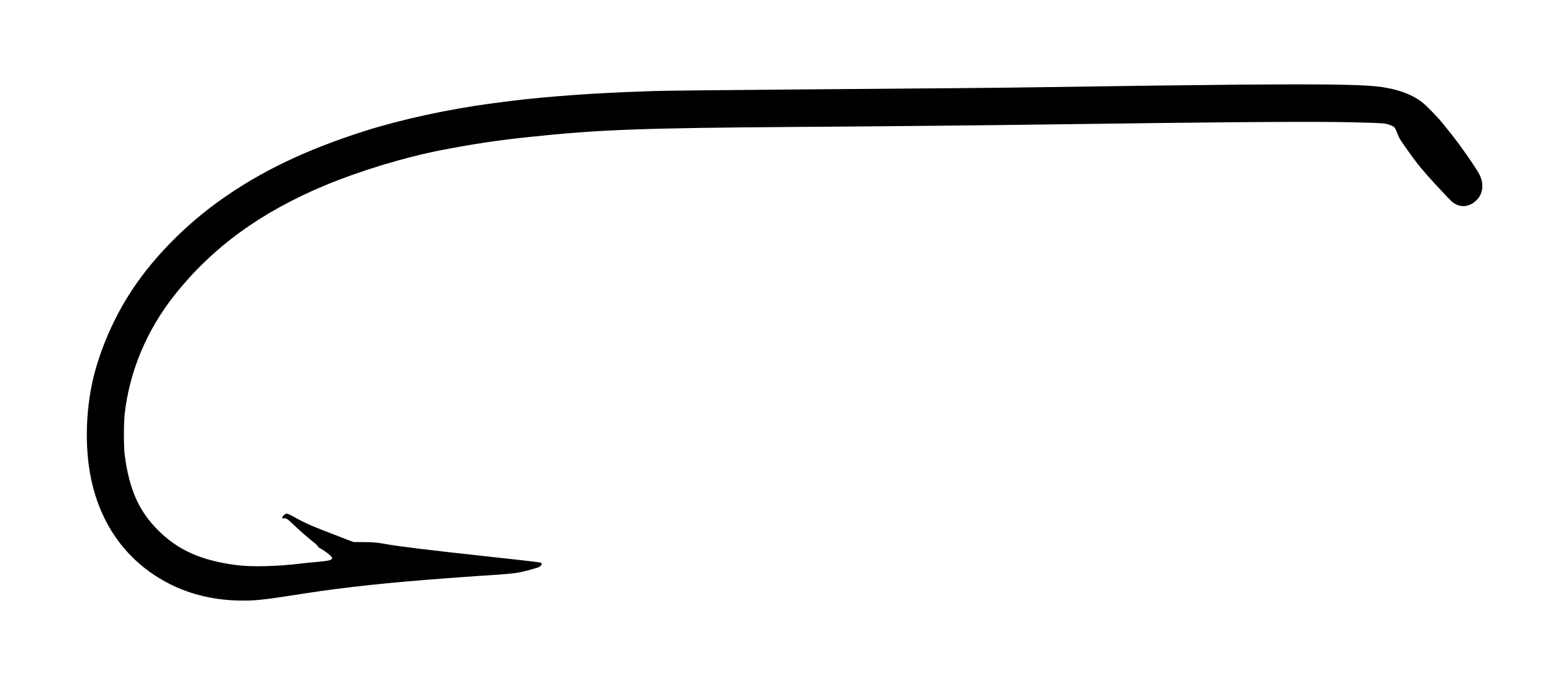
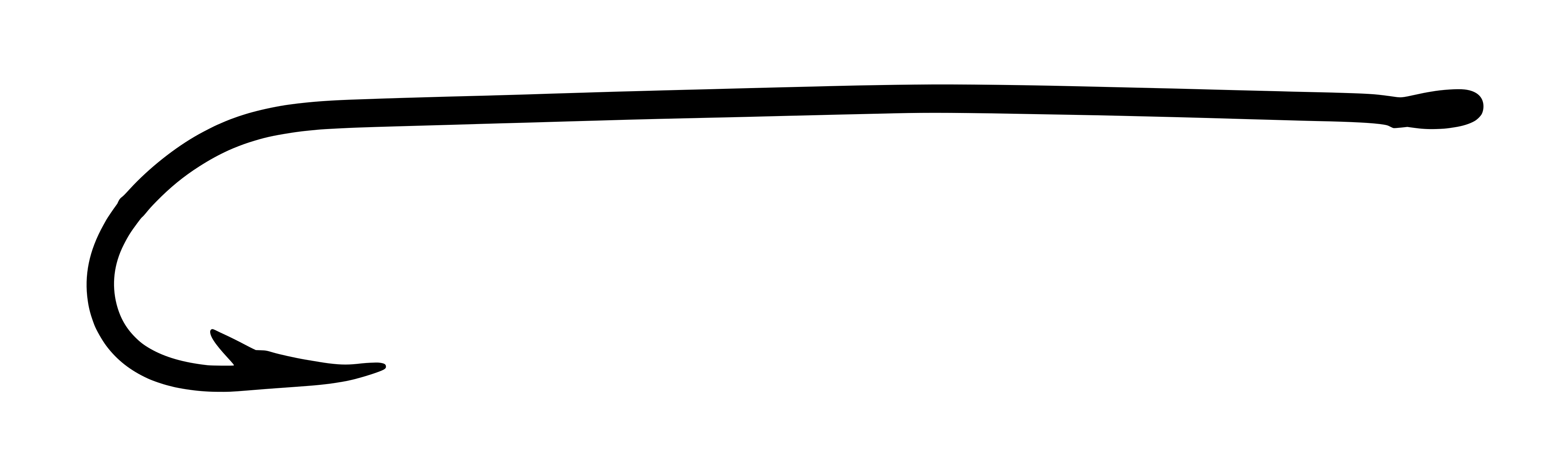
This is a classic British wet fly and salmon hook manufactured by T. Hemming & Son Ltd of Redditch, England, and sold in America through Herters as the ‘Celebrated No. 993.’ The hook features a Sproat bend with a near-perfect rounded bottom, a loose straight ring eye (typical of British Redditch tradition), and a superior point with a fine near-straight taper. The shank is plain and gently tapered, with standard-gauge round wire bronzed for corrosion resistance.
This particular specimen is size 4, measured at 1.77″ overall length with a 0.38″ gap width. The hook is well-suited for wet flies, salmon flies, and sea trout patterns in medium sizes. The double bronzed finish, ringed eye, and sproat bend are hallmarks of mid-20th-century British fly-tying tradition, when ringed hooks were preferred for larger flies and wet-fly work.
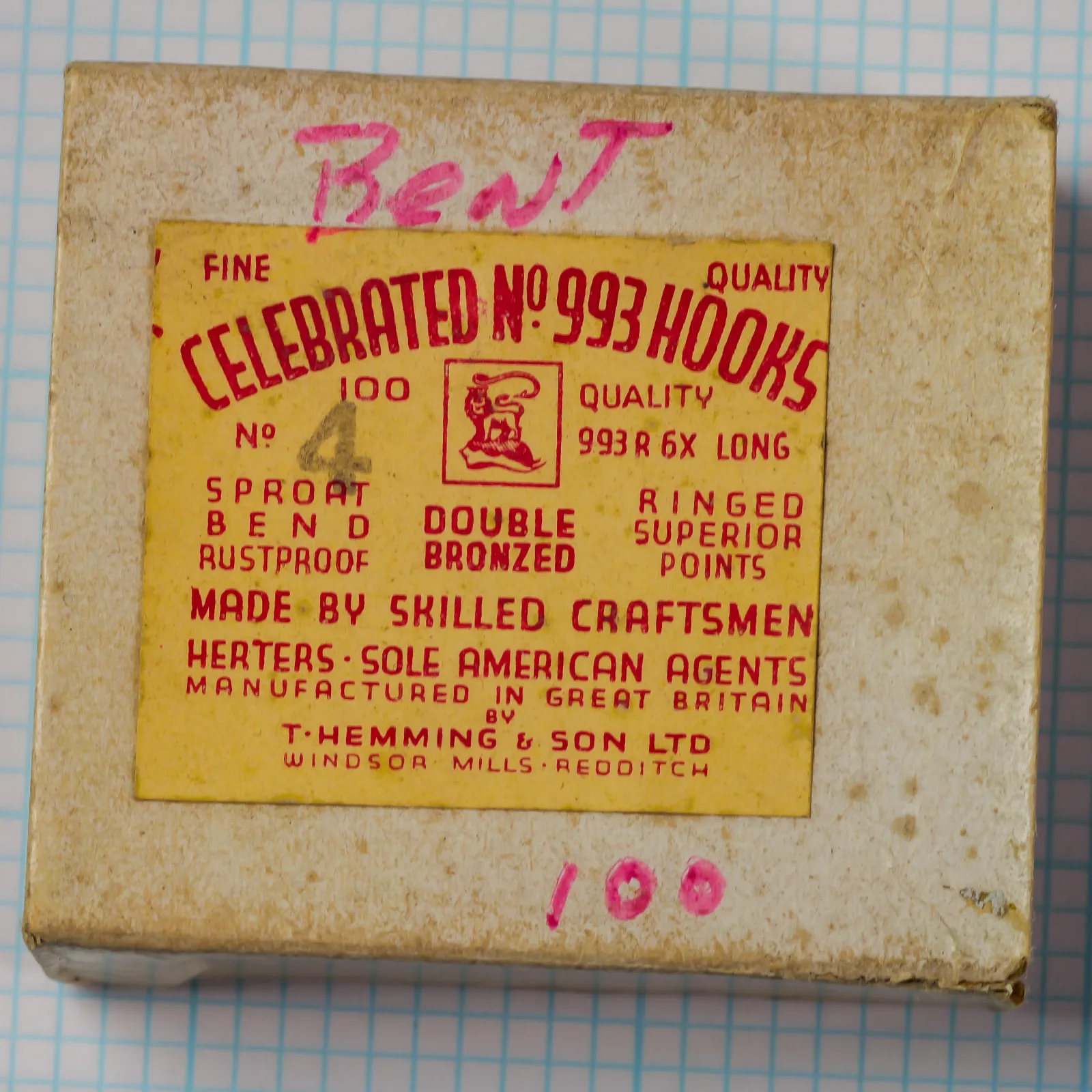
The packaging — a kraft cardboard box with an original yellow paper label, hand-marked for Herters wholesale distribution — dates the production to approximately 1960–1965. The label explicitly credits ‘Skilled Craftsmen’ and emphasizes ‘Superior Points,’ reflecting the premium positioning of British Redditch hooks in the American market during the postwar boom in fly fishing.
Collecting significance: Redditch-era British hooks with original packaging are increasingly difficult to find. The combination of T. Hemming & Son workmanship, Herters branding, complete original box, and the ringed eye construction makes this a valuable reference specimen for collectors of British and American vintage fly-fishing tackle.
Original kraft cardboard box for T. Hemming & Son Celebrated No. 993 Hooks, size 4, with intact yellow paper label and hand-marked Herters notation. The box and label are key evidence for dating and provenance.
Photographic record
4 cataloged imagesSelect any record to load it above.
4 images shown
Hemming No. 993 Size 4 Sproat Hook Original BoxOriginal kraft cardboard box for T. Hemming & Son Celebrated No. 993 Hooks, size 4, with intact yellow paper label and hand-marked Herters notation. The box and label are key evidence for dating and provenance.Open originalHemming No. 993 Size 4 Superior Point DetailClose-up side profile of the superior point and barb, showing the nearly straight inner face taper characteristic of the superior point design. The fine barb is clearly visible just above the bend curve.Open originalHemming No. 993 Size 4 Side ProfileComplete side profile of the Hemming No. 993 on measurement grid, showing the full Sproat bend geometry, the plain tapered shank, and the straight ring eye at the head.Open originalHemming No. 993 Size 4 Comparative ProfileComparison of two size 4 specimens showing consistency of the Sproat bend and eye construction across the batch. Both hooks exhibit uniform bend profile, ring eye formation, and wire gauge.Open original
Technical profile
Eye
Ball Eye, Straight / InlineStraight ring is a separate loose ring of wire at the eye end, typical of British Redditch manufacture mid-20th century. Ring rotates freely on the shank.
Wire
Standard, Round
Shank
Extra-Extra Long (XXL)
Bend
Sproat, Standard gapClassic Sproat bend with well-rounded bottom and smooth U-shaped curve. Bend depth ~0.48-0.50" (12.2-12.7 mm), moderate depth relative to shank length, typical of Sproat pattern.
Point
Superior (near-straight inner taper)Short close-set barb positioned just above the bend, characteristic of British craftsman hooks of this era. Barb appears well-formed with clean cut.
Finish
Bronzed — Confirmed (stated on packaging)Double bronzed finish per label specification. Specimen shows warm brown-gold tone characteristic of bronzing, with light patina consistent with age and storage.
The superior point employed here represents British craftsman practice: a near-straight inner face with a fine taper that penetrates cleanly and holds securely without the pronounced hollow or knife-edge of other designs. This geometry is ideal for wet-fly fishing where the hook must set quickly in the mouth of a moving fish but hold under load.
The Sproat bend — with its generous rounded bottom and smooth U-shape — distributes force evenly across the bend and is exceptionally strong for its wire gauge. This makes it an excellent choice for salmon and sea trout where larger, more aggressive fish require reliable bend geometry.
The straight ring eye allows the fly dresser to attach the leader directly to a rotating loop, reducing leverage stress on the eye itself during casting and fishing. This is particularly valuable in salmon and sea-trout work where larger flies and heavier leaders are common.
The round wire profile with double bronzed finish provides good corrosion resistance in freshwater environments. Standard gauge wire (approximately 0.14–0.15 inch diameter) is appropriately robust for wet-fly work on larger waters.
We don't have measured sizes for this hook yet. Own one? Submit calipered measurements and we'll review and add them. Thank you!
Historical context
herters
T. Hemming & Son Ltd was a respected Redditch, England hook and fishing tackle manufacturer active throughout the mid-20th century. Redditch was the global center of hook manufacturing, with dozens of competitors and specialists occupying the same industrial landscape. Hemming specialized in high-quality wet-fly and salmon hooks, emphasizing hand-finished construction and premium materials.
The company’s partnership with Herters, a major American sporting goods distributor based in Iowa, brought British Redditch hooks to American fly fishers during the postwar boom (1950s–1960s). Herters’ catalogs prominently featured British imports, positioning them as premium alternatives to American mass-produced hooks from Mustad and Wright & McGill.
T. Hemming & Son maintained traditional Redditch craftsmanship standards — hand-finished points, careful tempering, and individual quality control — even as other manufacturers transitioned to semi-automated production. This commitment to quality is evident in the precision of the point geometry and the consistency of the bronzed finish across surviving specimens.
Series History
The Celebrated No. 993 is Hemming’s flagship wet-fly and salmon hook. The ‘Celebrated’ designation appears on other Hemming hooks of the era and reflects the brand positioning: premium British craftsmanship marketed to American anglers as proven, established patterns.
The No. 993 designation likely reflects Hemming’s internal numbering system rather than a cross-industry standard (unlike Mustad’s 9000-series codes). The hook was available across a range of sizes, from size 10 (small wet flies) through size 2/0 and larger (salmon and sea trout).
The ‘Ringed Superior Points’ specification on the label was Hemming’s way of emphasizing two premium features: the rotating eye (less common than tapered or ball eyes in mass production) and the superior point geometry (sharper, more refined than the hollow points favored by some competitors). These features commanded a price premium in Herters catalogs relative to standard Aberdeen or Limerick patterns.
Production appears to have continued through the mid-to-late 1960s before Hemming’s independent operations were absorbed into larger manufacturers or ceased as British hook manufacturing consolidated.
Era and Packaging Dating
T. Hemming & Son Ltd was an active Redditch manufacturer through the 1960s. No barcode present (barcode adoption began 1974). Yellow label with letterpress-style printing typical of 1950s–1960s. Kraft cardboard box with hand-marked wholesale notation ('Bent 100') indicates bulk packaging format consistent with 1960s period. Ringed eye construction was standard British practice through early 1970s but declining by late 1960s. Combination of label style, box construction, and Herters American agency relationship suggests mid-1960s production.
The Redditch Tradition Meets American Mail Order
T. Hemming & Son was one of the few independent Redditch hook makers that successfully navigated the postwar boom in American fly fishing through direct partnerships with mail-order importers like Herters. While giants like Partridge and Allcock dominated the market, Hemming carved a niche by emphasizing hand-finished superiority and premium features like the ringed eye — a design choice that reflected traditional British salmon-fishing practice. The 'Celebrated' brand designation and explicit claims of 'Skilled Craftsmen' on the label were marketing responses to cheaper American mass production. By the 1970s, Hemming's independence ended as Japanese manufacturers and industrial consolidation reshaped the global hook industry, making surviving Hemming packages with original Herters branding increasingly rare artifacts of a vanished era of British craftsmanship.
Design lineage and influence
Best matchRelated by Attribute
Computed automatically from catalog data — updated as new hooks are added.
Matches: Bend, Gap, Eye, Point, Finish +2 moreDiffers: Shank: Extra-Extra Long vs 4X Long; Wire: Standard vs Heavy (1X Heavy); Eye Orient.: Straight / Inline vs Turned Down +1 more
Matches: Bend, Shank, Gap, Eye, Eye Orient. +3 moreDiffers: Wire: Standard vs Heavy (1X Heavy); Point: Superior vs Standard / Spear; Finish: Bronzed vs Gold-Plated +1 more
The Celebrated No. 993 Sproat is a classic British wet-fly hook for brown trout, sea trout, and Atlantic salmon. The Sproat bend is beloved by traditional wet-fly dressers for its strength and the smooth curve that allows flies to move naturally in current. Size 4 is ideal for medium to large wet-fly patterns and smaller salmon flies.
In British and European fly-fishing tradition, wet flies are fished on a dead drift or slight pull across the current, often in teams of two or three on a single leader. The ringed eye reduces leverage stress and allows leaders to turn smoothly. The superior point ensures a clean, quick hook-set even when the fish is moving or shaking its head.
Hemming’s No. 993 is particularly valued for sea trout fishing — night fishing in estuaries and coastal streams where larger, more aggressive flies are the norm. The standard wire gauge, Sproat bend, and superior point make it equally suitable for salmon work in rivers such as the Spey, Dee, and Tweed.
Classic Fly Patterns
March Brown, Greenwell's Glory, Partridge and Orange, Silver Sedge, Wickham's Fancy, Black and Peacock Spider, Invicta, Mallard and Claret
Modern Equivalents
Hook
Match Quality
Notes
Tiemco TMC 7989
Very Good
Modern Sproat bend wet-fly hook with similar proportions and ringed eye option. Japanese-made, superior point equivalent.
Mustad 3906B
Good
Modern Sproat with ball eye and superior point; loses the ringed eye character but maintains bend profile.
Partridge Bartleet
Moderate
British-made Sproat alternative, but uses different eye and point geometry; represents modern British craft approach.
Collector notes
Rated 5.5/10 — scarce in original packaging with intact label. T. Hemming & Son hooks are uncommon in American collections and increasingly difficult to find with original Herters branding and complete boxes. Collector demand is strong among British tackle specialists and Redditch hook historians, but limited by the smaller production volumes compared to Mustad or Partridge. The complete original box significantly enhances value.
Reference value
$22 – $48 USD estimate
Packaging condition
Good — moderate wear, legibleRecorded specimen
Packaging format
GW-HEM-01Catalog code
Positive factors: Original kraft box with intact yellow label and Herters branding is exceptional. Size 4 is a practical, versatile size that appeals to working fly fishers as well as collectors. The ringed eye and superior point represent premium British craftsmanship and are increasingly rare in vintage market. T. Hemming & Son is a recognized name among British tackle historians. No barcode confirms pre-1974 manufacture, adding historical weight. The Sproat bend is beloved by traditional wet-fly tyers and remains functionally desirable.
Limiting factors: T. Hemming & Son never achieved the production volume or market penetration of Mustad or Partridge, making the brand less familiar to casual collectors. American distribution was primarily through Herters, and Herters catalogs have become scarce themselves, limiting documentation. The ‘Celebrated’ series designation is not widely recognized in modern hook databases. Bronzed finish is more susceptible to patina development than some alternatives, which some collectors view as desirable aging and others view as degradation. Size 4 is smaller than the 2/0–4/0 range that commands highest prices in the vintage market.
Most desirable variants: Original boxes with complete label are highly sought. Larger sizes (2/0, 3/0, 4/0) in original packaging command premium. Size 10–12 in original packaging are exceptionally scarce. Any Herters-branded vintage packaging is desirable due to Herters’ historical significance to American fly fishing.
Condition factors affecting value: Intact label is essential — significant label loss reduces value by 30–40%. Missing hooks from original count reduces value proportionally. Hooks in bright, uncorroded condition command 10–15% premium over patinated specimens. Original tape seals (if any remain) add 5–10% premium.
Packaging
Kraft cardboard box approximately 4.75" × 3.5" × 1.25", sealed with kraft paper tape. Yellow adhesive label (approximately 3.5" × 2.75") affixed to lid, printed in red letterpress ink. Label text in all-caps sans-serif font. Box top and side hand-marked in magenta crayon: 'Bent' and '100'. No manufacturer printed box label other than the yellow paper label. Simple kraft construction with no interior packaging visible. Format indicates wholesale bulk packaging for Herters distribution.
Market Value Notes
Low ($22): Good condition, box opened, label intact but with light wear, all or most hooks present (95+ of 100)<br />
High ($48): Mint condition, box sealed or effectively sealed, label perfect or near-perfect, complete 100-hook count<br />
Premium factors: Original Herters branding, complete factory box, intact yellow label, all hooks present, bright uncorroded condition, size 4 (practical and popular), British Redditch provenance<br />
Platforms: eBay UK vintage tackle auctions, specialist British tackle dealers, regional UK fishing fairs<br />
Confidence: E estimated — limited comparable sales data; based on pattern of British Redditch hook pricing ($15–65 range for scarce models with packaging) and Herters-branded premium. T. Hemming & Son appears infrequently; extrapolated from similar-era Partridge and Allcock pricing at lower end due to less brand recognition.
Where to Find
Specialty eBay UK searches for 'Hemming hooks' or 'Herters vintage' occasionally yield results. British regional tackle auctions (Cheshire, North West England) are most likely sources. Dealer searches: vintage British tackle specialists in UK have online presence; search 'Redditch hook dealer vintage.' Fishing heritage museums and auctions (Scotland, England) occasionally feature pre-1970s British boxes. North American sources are rare — check specialized fly-fishing antique dealers in areas with strong Atlantic salmon or sea-trout traditions (Northeast US, West Coast).
Preservation
Storage and Preservation
Store the original kraft box in a cool, dry environment away from direct sunlight and moisture. The double bronzed finish will naturally develop a warm patina over time, which many collectors consider desirable aging. Avoid contact with moisture to prevent rust formation on the steel wire.
If the box must be opened, handle the yellow label with care — it is the most fragile and valuable element of the packaging. Do not attempt to clean or restore the label; original patina and aging marks are preferable to modern touch-up. Store hooks on the original card or in a small box separated from other metal objects to prevent galvanic corrosion.
For working specimens not in original packaging, store in a dry tackle box with a desiccant packet (silica gel). Bronzed finish is more corrosion-resistant than bare steel but still benefits from dry storage. Occasional light oil coating is acceptable for working hooks but not recommended for archive specimens.
Avoid stacking heavy objects on top of the box or applying pressure that might crush the corners or crack the old kraft cardboard. If display is intended, use acid-free mounting materials and keep away from kitchen, bathroom, or high-humidity areas.
Marking Analysis
Markings and Annotations
The kraft box top and side bear two handwritten annotations in magenta crayon: ‘Bent’ and ‘100’. These markings are consistent with wholesale inventory notation — ‘Bent’ likely refers to a warehouse location, lot designation, or quality assessment code; ‘100’ explicitly indicates the quantity per box. The crayon marking style is typical of mid-20th-century warehouse and shipping practices, predating modern barcode and sticker labeling.
The style of the handwriting and the choice of magenta crayon are consistent with 1950s–1960s American wholesale operations. No other markings, pricing, or retail notations are visible, suggesting this box was handled as bulk wholesale stock destined for Herters’ distribution network rather than retail shelf stock.
The presence of these marks actually enhances the historical value — they document the journey of the box from Redditch production through to American wholesale distribution, providing a tangible link to Herters’ sourcing and inventory practices.
Primary Source
Label Analysis — Manufacturing Claims and Specifications
Source: T. Hemming & Son Ltd Celebrated No. 993 Hook Box Label, c. 1960–1965
Printed Text on Yellow Label (Red Letterpress Ink):
‘FINE QUALITY CELEBRATED No. 993 HOOKS’ — the word ‘Celebrated’ is a brand/prestige designation emphasizing established reputation. No manufacturing date or edition number is printed.
‘No. 4 SPROAT BEND DOUBLE BRONZED’ — explicit specification of size, bend pattern, and finish type. ‘Double Bronzed’ is a premium finish claim, indicating two applications of bronzing compound for enhanced corrosion resistance.
‘QUALITY 993 R 6X LONG’ — this notation requires interpretation. The ‘6X’ likely indicates a length modifier (longer shank than standard), and ‘R’ may denote ‘Ringed’ eye. The full specification code ‘993 R 6X LONG’ would be Hemming’s internal product designation.
‘RINGED SUPERIOR POINTS’ — explicit claim of both features. ‘Ringed’ refers to the straight ring eye (the rotating wire loop at the head). ‘Superior Points’ refers to the superior point geometry, emphasizing the sharp, refined taper of the point.
Manufacturer Attribution: ‘MADE BY SKILLED CRAFTSMEN’ — a marketing claim emphasizing hand-finished quality and artisanal production standards, contrasting with mass-produced imports from other makers.
Manufacturer and Distribution: ‘HERTERS · SOLE AMERICAN AGENTS MANUFACTURED IN GREAT BRITAIN BY T. HEMMING & SON LTD WINDSOR MILLS · REDDITCH’ — this text establishes the complete supply chain: Hemming as manufacturer and Herters as exclusive American distributor.
Historical Significance of Claims: The emphasis on ‘Skilled Craftsmen,’ ‘Superior Points,’ and ‘Double Bronzed’ reflects the postwar positioning of British Redditch hooks as premium alternatives to American mass production. These claims would have justified a price premium in Herters catalogs relative to standard Mustad or Wright & McGill patterns.
Additional
Herters and British Hook Imports — Historical Context
Herters’ Role in British Hook Distribution: Herters, Inc., a major American sporting goods mail-order house based in Waseca, Minnesota (later moved to Iowa), was one of the primary importers of British fly-fishing tackle to the United States in the postwar period. Herters’ extensive catalogs (1950s–1970s) prominently featured British hooks from Redditch makers, positioning them as premium, proven alternatives to American manufacturers.
The British vs. American Hook Market: British Redditch hooks were hand-finished and traditionally crafted, with emphasis on superior point geometry and reliable bend strength. American hooks (especially Mustad’s mass-produced Aberdeen and Limerick patterns) were cheaper and available in vast quantities but often considered lower-quality by serious anglers. Herters capitalized on this perception by marketing British imports as ‘craftsman-made’ and positioning them for the higher-end fly-fishing segment.
T. Hemming & Son in the Redditch Ecosystem: Hemming was one of dozens of independent Redditch makers, ranging from tiny cottage operations to larger industrial works. The company maintained a reputation for consistent quality and innovation, particularly in wet-fly and salmon hook designs. The ‘Celebrated’ brand designation reflected Hemming’s confidence in these designs and their established track record among British and European anglers before American distribution.
Decline and Consolidation: By the 1970s, British hook manufacturing was in decline. Rising labor costs, competition from Japanese manufacturers (particularly Tiemco), and consolidation (Partridge absorbed smaller makers, Mustad acquired British operations) reduced the number of independent Redditch manufacturers. T. Hemming & Son’s independent operations did not survive the 1970s consolidation, making surviving examples increasingly scarce.
Collecting Significance: Herters-branded British hooks are particularly sought by American collectors as they document a specific window (1950s–1960s) when American fly fishing was heavily influenced by British tradition and imported tackle. The Hemming No. 993 with Herters branding is a material artifact of this transatlantic fly-fishing culture.
Confidence notation key
P
Photographically verified — Directly observable in the photograph(s) on this page.
V
Verified by documentation — Confirmed by manufacturer catalog, spec sheet, or published reference.
I
Inferred — A logical deduction from observable or documented evidence, not directly stated.
E
Estimated — An approximation based on visual comparison, proportional analysis, or limited data.
S
Speculative — A reasoned hypothesis that cannot be confirmed from available evidence.
Claims with no notation are confirmed by multiple independent sources. All photographs on garrenwood.com are taken on a measurement grid where each square equals 1/10 inch (0.1″ / 2.54 mm).